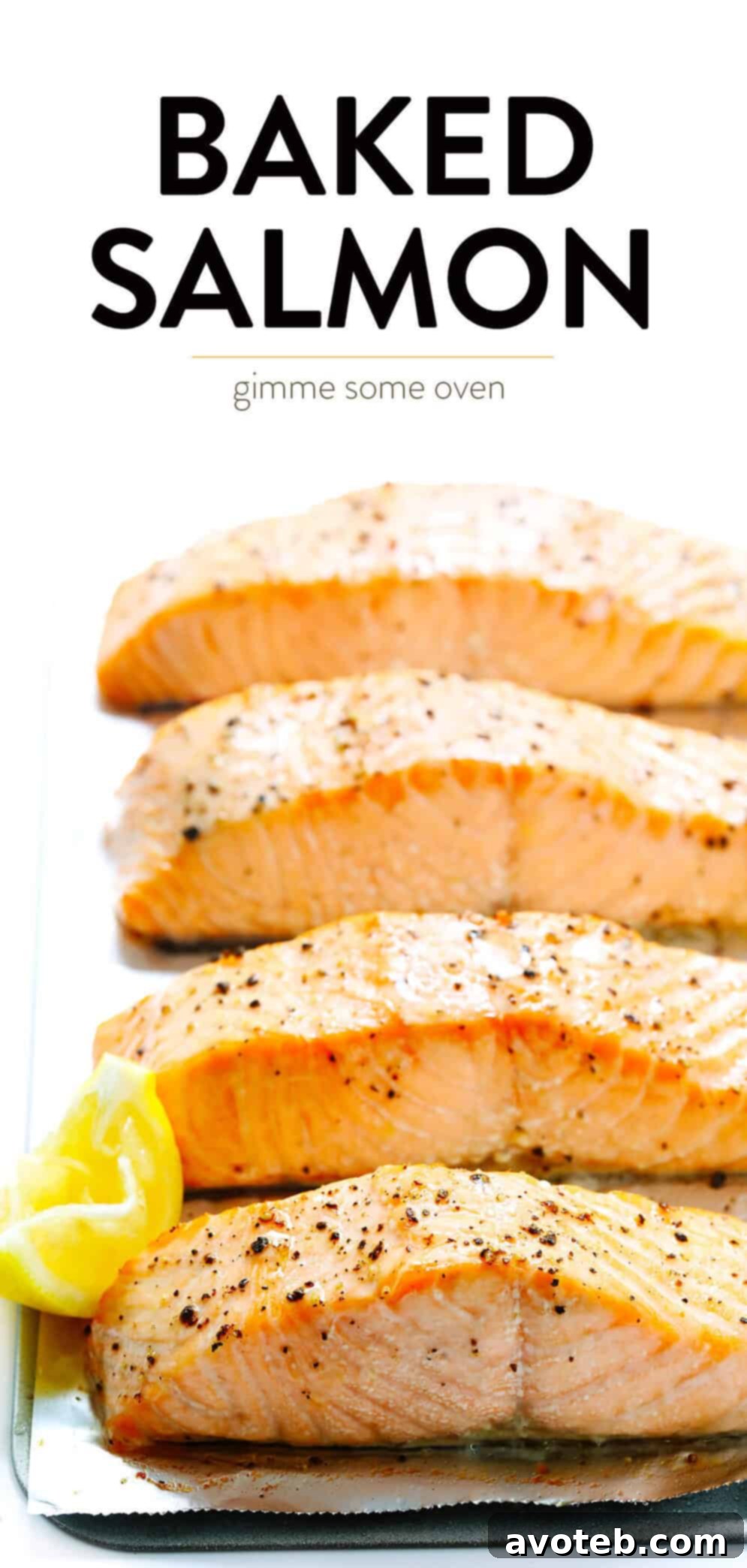
Discover the ultimate guide to making perfectly baked salmon in your oven. This incredibly easy recipe is ready in less than 15 minutes, infinitely customizable with your favorite seasonings, and guaranteed to deliver flaky, moist results every time.
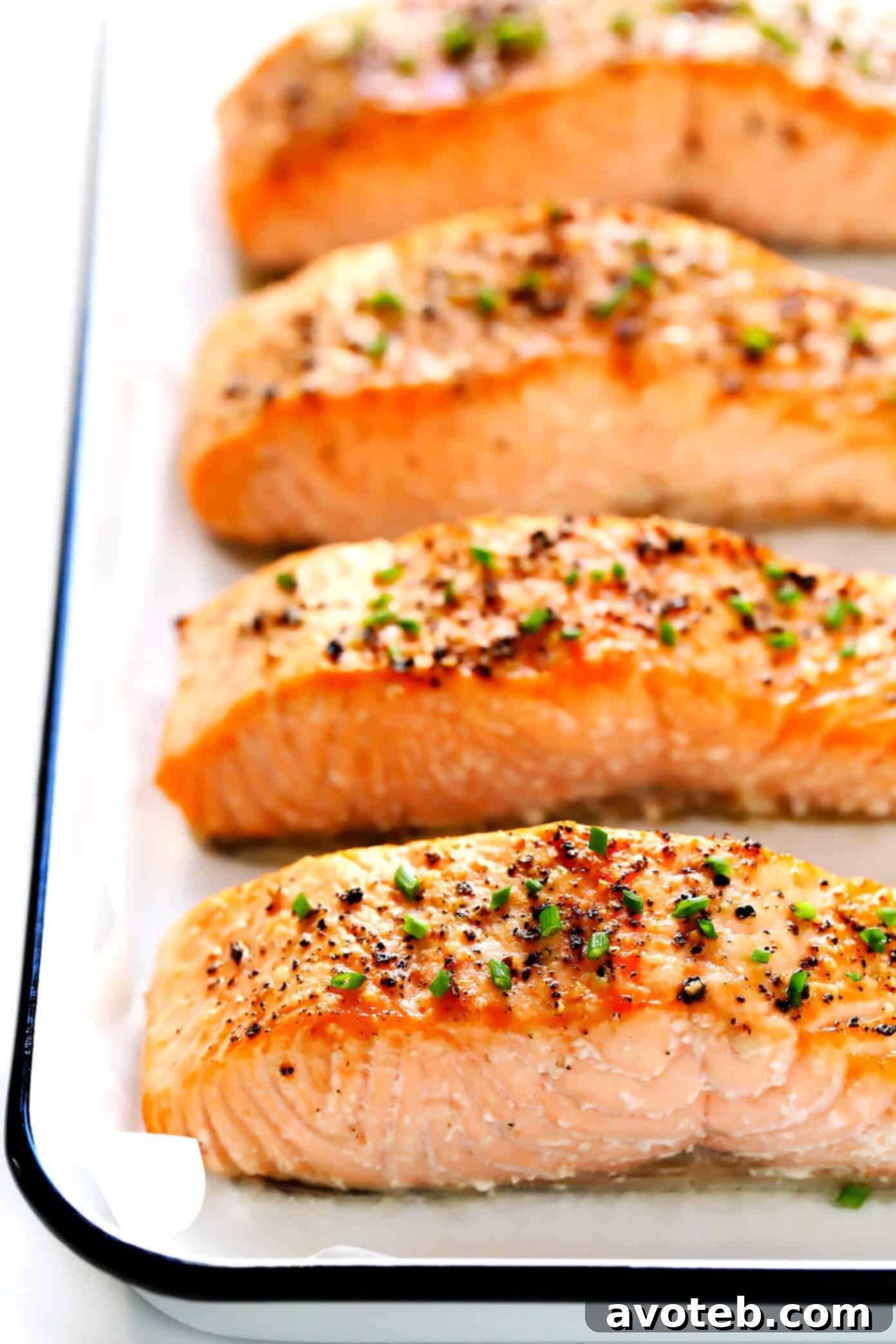
Today, we’re diving deeper into our popular series on baked proteins, transitioning from land-based favorites like chicken breast, steak, and pork chops, to the delights of seafood, following our guide to baked shrimp. Our focus now shifts to one of the ocean’s most beloved and beneficial offerings: salmon.
Specifically, we’re dedicating this comprehensive guide to mastering the art of oven-baked salmon. ♡ You, our wonderful readers, overwhelmingly requested salmon as the next topic in our series, and it’s easy to see why. Salmon is a truly exceptional fish – not only is it incredibly delicious and widely available, but it’s also a powerhouse of nutrition. Each succulent fillet is packed with lean protein, essential omega-3 fatty acids, and a wealth of other vital nutrients, making it a cornerstone of a healthy diet. Its mild yet rich flavor profile also makes it incredibly versatile, pairing beautifully with an endless array of seasonings, marinades, and sauces.
Baking salmon in the oven is, without a doubt, my favorite method of preparation. It’s remarkably simple, requiring minimal effort for maximum flavor and perfect texture. While we’ve previously explored delicious variations like honey mustard salmon wrapped in foil and garlic-infused salmon in foil, today we’re returning to the fundamentals. This guide will walk you through the basic steps to achieve flawlessly baked salmon fillets on their own, guaranteeing a perfectly crispy exterior and a wonderfully moist, tender, and flaky interior. Once you master this foundational technique, you’ll be empowered to enjoy it plain, or elevate it with your favorite toppings. Trust me, it’s far simpler than you might imagine.
So, let’s unlock the secrets to baking the most exquisite salmon you’ve ever tasted!
THE ULTIMATE BAKED SALMON RECIPE | 1-MINUTE VIDEO GUIDE
ESSENTIAL INGREDIENTS & COOKING TOOLS FOR BAKED SALMON
Before we begin cooking, let’s ensure you have everything you need for this fantastic baked salmon recipe. A successful dish starts with quality ingredients and the right equipment.
- Salmon: The foundation of our dish is, of course, the salmon itself. When selecting your fillets, keep these important points in mind to guarantee the best flavor and texture:
- Quality Matters: Prioritizing good-quality salmon is crucial. I always advocate for wild-caught and sustainably harvested options. Look for varieties like Pacific or Alaskan Salmon, which offer robust flavor and are often sourced responsibly. When inspecting the fish, seek out fillets with bright, silvery skin and flesh that is vibrant in color, firm to the touch, and visibly moist and shiny. A fresh salmon should have a clean, oceanic smell, not an overly “fishy” odor. Investing in high-quality fish truly elevates the final dish.
- Skin-On is Best: Even if you don’t typically consume salmon skin, I strongly recommend purchasing fillets with the skin still on. The skin acts as a natural barrier, protecting the delicate flesh from drying out during the baking process and ensuring it remains incredibly moist and tender. It also helps the fillet hold its shape. You can easily remove the skin after cooking, or, if prepared correctly, enjoy it crispy!
- High-Heat Oil: A good cooking oil is essential for achieving that desirable crispy exterior and preventing sticking. Choose an oil with a high smoke point that can withstand the oven’s heat. My personal preference for this recipe is avocado oil, known for its neutral flavor and excellent heat stability. Other suitable options include grapeseed oil or light olive oil.
- Simple, Flavorful Seasonings: For a classic, universally appealing baked salmon, a straightforward seasoning blend is often all you need to let the natural flavors of the fish shine. I typically season my salmon with a harmonious mix of aromatic garlic powder, flaky kosher salt (or a good quality seasoned salt), and freshly-cracked black pepper. These staples enhance the salmon without overpowering it. After baking, a generous sprinkle of fresh herbs – such as dill, parsley, or chives – and a bright, zesty squeeze of fresh lemon juice provide the perfect finishing touch, adding a burst of freshness that complements the rich salmon beautifully.
You will also benefit from these helpful kitchen tools (affiliate links included):
- An Instant-Read Thermometer: As a firm believer in precision cooking, I cannot stress enough the importance of an instant-read thermometer. For truly perfectly cooked salmon – never overdone or undercooked – this tool is indispensable. It takes the guesswork out of achieving the ideal internal temperature, ensuring consistent results every time. It’s incredibly user-friendly and a worthy investment for any home cook. I recommend either:
- Dual-probe wireless meat thermometer: This is a fantastic option for oven cooking as it can remain inside the hot oven, allowing you to monitor the temperature remotely. It’s especially useful for larger cuts of meat, but perfect for ensuring your salmon reaches the exact desired doneness without opening the oven repeatedly. Retails for approximately $24.99 on Amazon.
- Instant-read cooking thermometer: A simpler, more affordable choice that I’ve used for years. While it can’t stay in the oven, it provides an immediate and accurate reading when inserted, ensuring your salmon is cooked to perfection. Retails for about $9.99 on Amazon.
- A Fish Spatula: This specialized spatula, with its thin, flexible, and angled blade, is an absolute game-changer when handling delicate fish. It allows for easy and clean transfer of baked salmon fillets from the baking sheet to your serving plate, minimizing the risk of breakage. I own one similar to this, and it makes serving fish effortless.
HOW TO BAKE SALMON FOR PERFECT, FLAKY RESULTS
Now that you have your ingredients and tools ready, let’s walk through the simple steps to achieve perfectly baked salmon in your oven. This method is designed for efficiency and deliciousness:
- Bring Salmon to Room Temperature: This initial step is crucial for even cooking. Remove your salmon fillets from the refrigerator approximately 15 to 30 minutes before baking, allowing them to (at least mostly) come to room temperature. This prevents the outside from overcooking before the inside reaches the desired doneness.
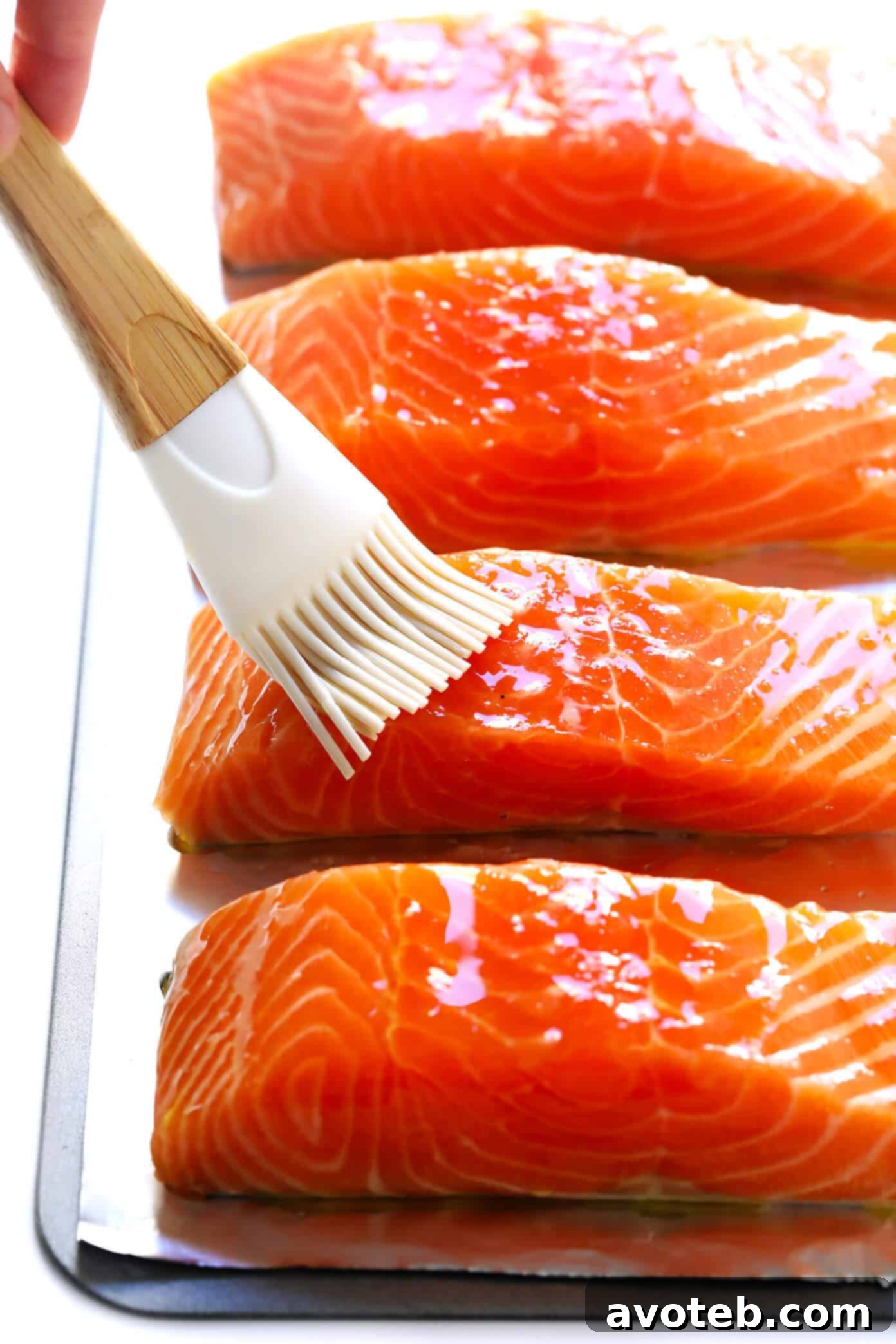
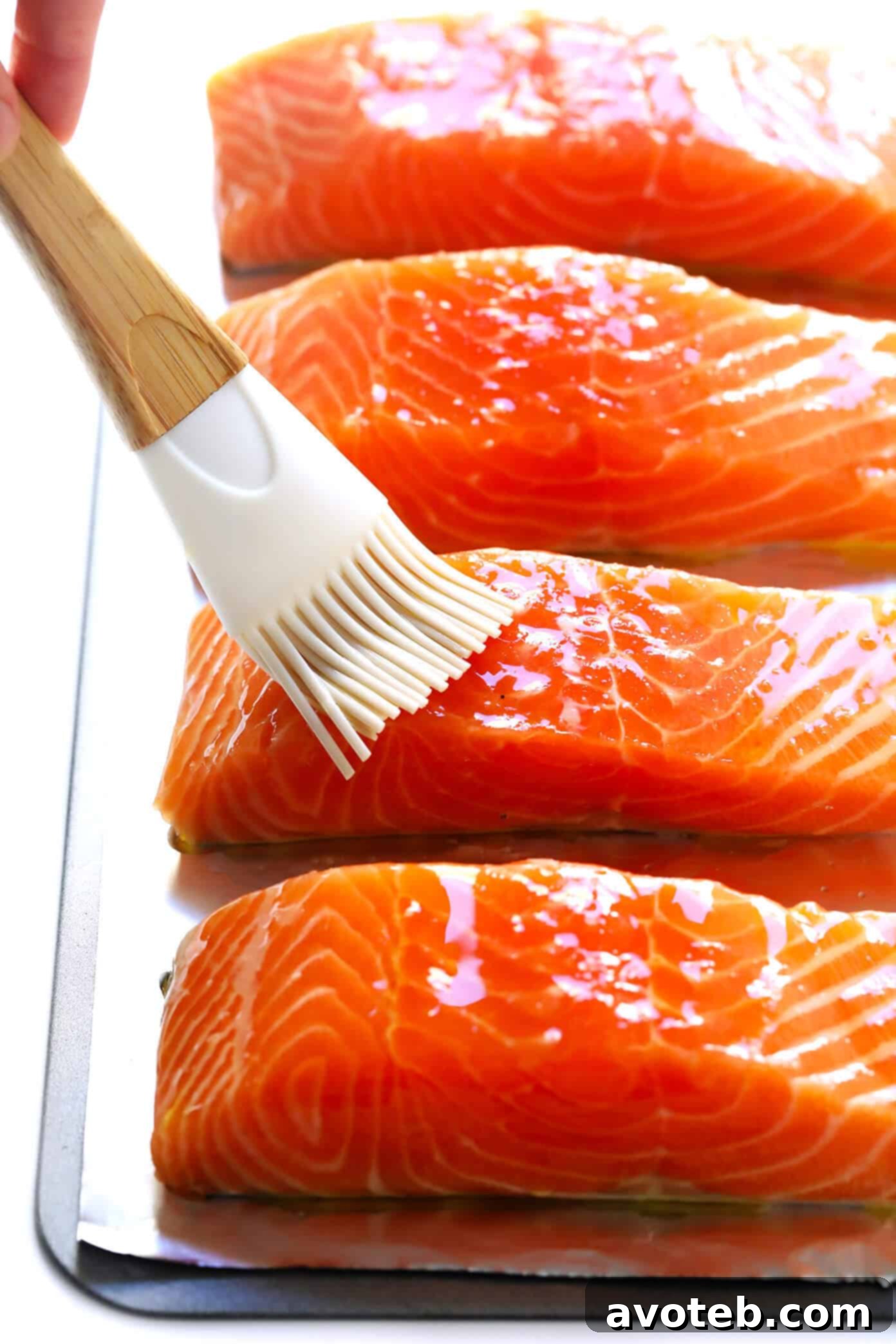
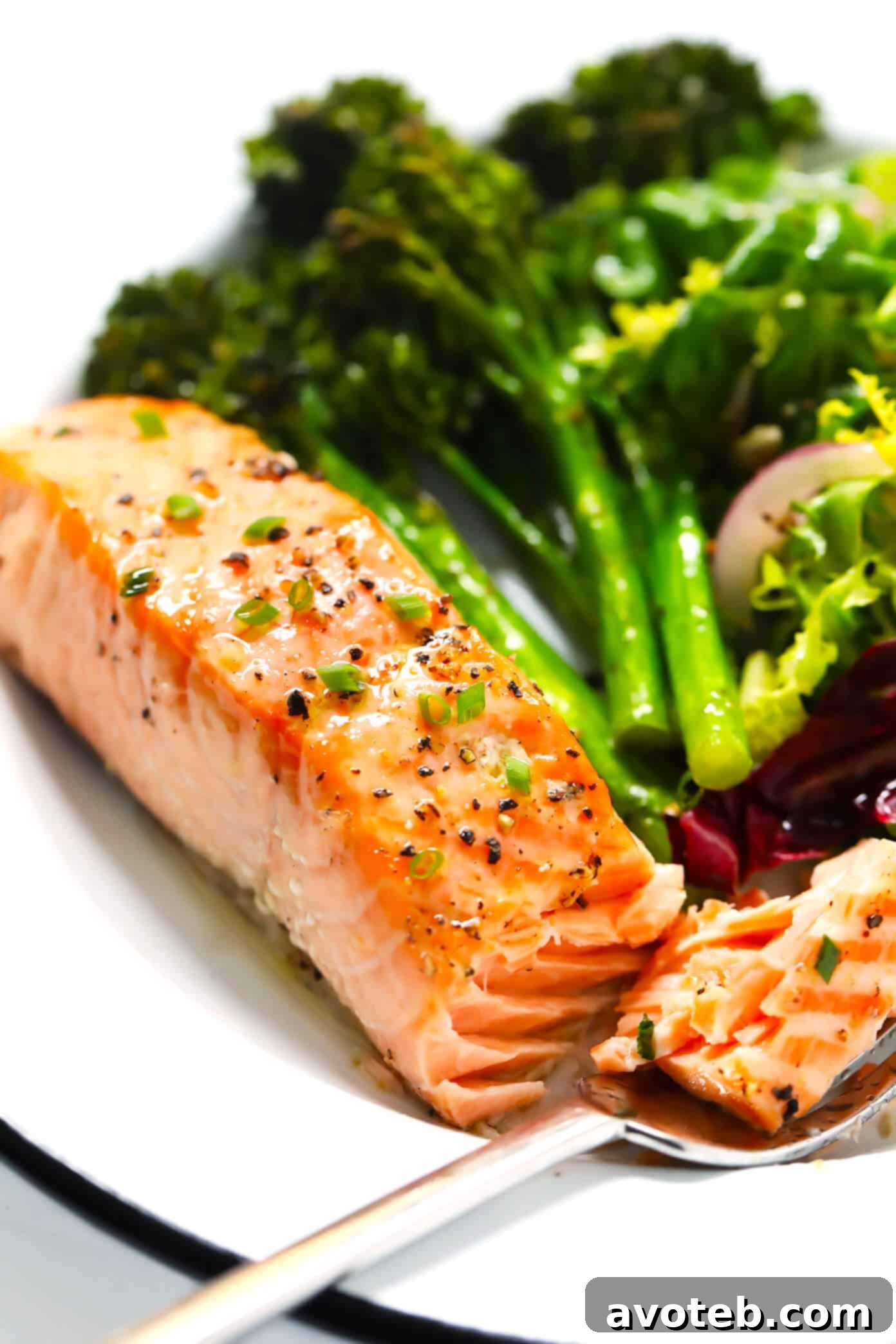
- Prepare and Season the Salmon: First, gently blot the salmon fillets thoroughly on all sides with paper towels. This removes excess moisture, which is key for achieving a beautifully crispy skin. Next, place the salmon skin-side-down onto a foil-covered baking sheet (for easy cleanup) or directly into an oven-proof, non-stick skillet, such as a cast iron pan. If you notice any particularly thin ends on your fillets, simply fold them under slightly; this ensures more uniform thickness and promotes even cooking throughout the entire piece of fish. Brush all exposed sides (everything except the bottom, skin-side) with your chosen high-heat oil. Finally, generously sprinkle with your desired dry seasonings. My go-to blend includes garlic powder, kosher salt, and freshly ground black pepper for a classic and robust flavor.
- Bake to Perfection: Carefully transfer the baking sheet or skillet to your preheated oven at 450°F (232°C). Bake until the internal temperature of the salmon reaches 140°F (60°C)* when measured at the thickest part of the fillet with your instant-read thermometer. For those who prefer their salmon slightly less cooked, I personally aim for 135°F (57°C)*. As a general guideline, baking time is approximately 4-6 minutes per half-inch of salmon thickness. If you don’t have a thermometer, you can also test for doneness by gently inserting a fork or knife into the thickest part of the salmon and twisting it slightly; the fish should appear opaque throughout and flake easily. Avoid overcooking, as this can result in dry salmon.
- Rest and Garnish: Once cooked, promptly remove the pan from the oven. Using your fish spatula, carefully transfer the beautifully baked salmon fillets to a clean serving plate. At this point, you can choose to serve them with the crispy skin on, or easily slide your spatula just above the skin to separate the fillet. For a burst of fresh flavor, sprinkle each fillet with a generous squeeze of fresh lemon juice and a scattering of fresh herbs, such as chopped dill, parsley, or chives, if desired.
- Serve Warm and Enjoy: Present your exquisite baked salmon immediately while it’s still warm. This dish is perfect on its own or paired with your favorite side dishes.
Once cooled, cooked salmon can be stored in an airtight container in the refrigerator for up to 2 days, making it ideal for meal prep or quick leftovers. For longer storage, it can be frozen for up to 3 months, ensuring you always have a healthy protein option on hand.
FREQUENTLY ASKED QUESTIONS ABOUT BAKING SALMON
Here are some common questions about baking salmon, along with expert tips to help you master this delicious dish:
Is salmon skin safe to eat? Absolutely! Salmon skin is not only safe but also incredibly delicious and highly nutritious when cooked properly. It becomes wonderfully crispy and offers a unique textural contrast to the tender flesh. While you’re welcome to discard it if you prefer, I highly recommend cooking the salmon with the skin on. The skin helps protect the delicate meat from drying out and enhances overall flavor. To achieve super crispy skin, ensure it’s thoroughly patted dry before cooking and use a high-heat method. After cooking, you can either enjoy it, or, to serve without the skin, simply run your fish spatula just above the skin, and the cooked salmon fillet should lift right off, leaving the skin behind.
How do I prevent salmon skin from sticking to the foil or pan? Preventing sticky skin is straightforward with a few key steps. First, and most importantly, ensure the salmon skin is completely dry before placing the fillet on the foil or in the pan. Use paper towels to blot away any moisture. Second, always use a generous amount of oil on the foil or cooking surface itself, even if it’s non-stick. This creates a barrier. If using foil, a light spray of cooking spray or a brush of oil before placing the fish down works wonders. For cast iron or other oven-safe pans, ensure the pan is well-oiled and preheated if possible to create an initial sear that prevents sticking.
Can I cook my salmon more or less than the recipe suggests? Definitely! The beauty of cooking salmon is that doneness can be a matter of personal preference, just like steak. Some people prefer their salmon slightly rarer, with a translucent center, while others like it cooked through to be more well-done. The temperature range I recommend (135°F-140°F) results in very moist, tender salmon with a perfect medium doneness. I personally prefer my salmon on the medium-rare side, so I take it out of the oven when it reaches 135°F. However, for food safety, the FDA recommends cooking salmon to an internal temperature of 145°F (measured with a cooking thermometer in the thickest part of the fillet). Remember that salmon, like most proteins, will continue to cook slightly from residual heat (carry-over cooking) after it’s removed from the oven, so account for a few degrees increase as it rests.
VERSATILE SALMON SEASONINGS, MARINADES, AND SAUCES
While I’m a huge advocate for the simple yet exquisite garlic powder, salt, and pepper mix with a squeeze of fresh lemon juice – a combination that effortlessly complements almost any cuisine – salmon is incredibly versatile, inviting endless culinary creativity. Feel free to experiment and customize your baked salmon to suit any taste preference.
For dry seasonings, consider blending in herbs like dried dill, thyme, or oregano for a Mediterranean touch. A pinch of smoked paprika can add depth and a lovely color, while a dash of cayenne pepper or red pepper flakes will introduce a subtle warmth or spicy kick. For an Asian-inspired twist, try a sprinkle of ginger powder and white pepper. Lemon pepper seasoning is another quick and easy way to add bright, zesty notes.
If you’re inclined to infuse deeper flavors, marinating your salmon is a fantastic option. A simple marinade made with soy sauce, ginger, garlic, and a touch of honey creates a delicious teriyaki-style salmon. For a more herbaceous profile, try a marinade of olive oil, chopped fresh herbs (like rosemary and thyme), lemon zest, and garlic. Just be mindful not to marinate salmon for too long – typically up to 30 minutes is sufficient – as the acid can begin to “cook” the delicate fish (ceviche-style). Longer marinating can result in a mushy texture.
Finally, once your salmon is baked to perfection, consider serving it with a complementary finishing sauce. A creamy dill sauce, a vibrant pesto, a tangy honey mustard glaze, or even a simple vinaigrette can elevate the dish to new heights. The beauty of baked salmon lies in its adaptability, allowing you to explore a world of flavors with ease.
DELICIOUS SIDE DISH RECIPE IDEAS FOR BAKED SALMON
Enhance your baked salmon dinner with these perfect pairings. These side dishes are selected for their ability to complement salmon’s rich flavor and healthy profile:
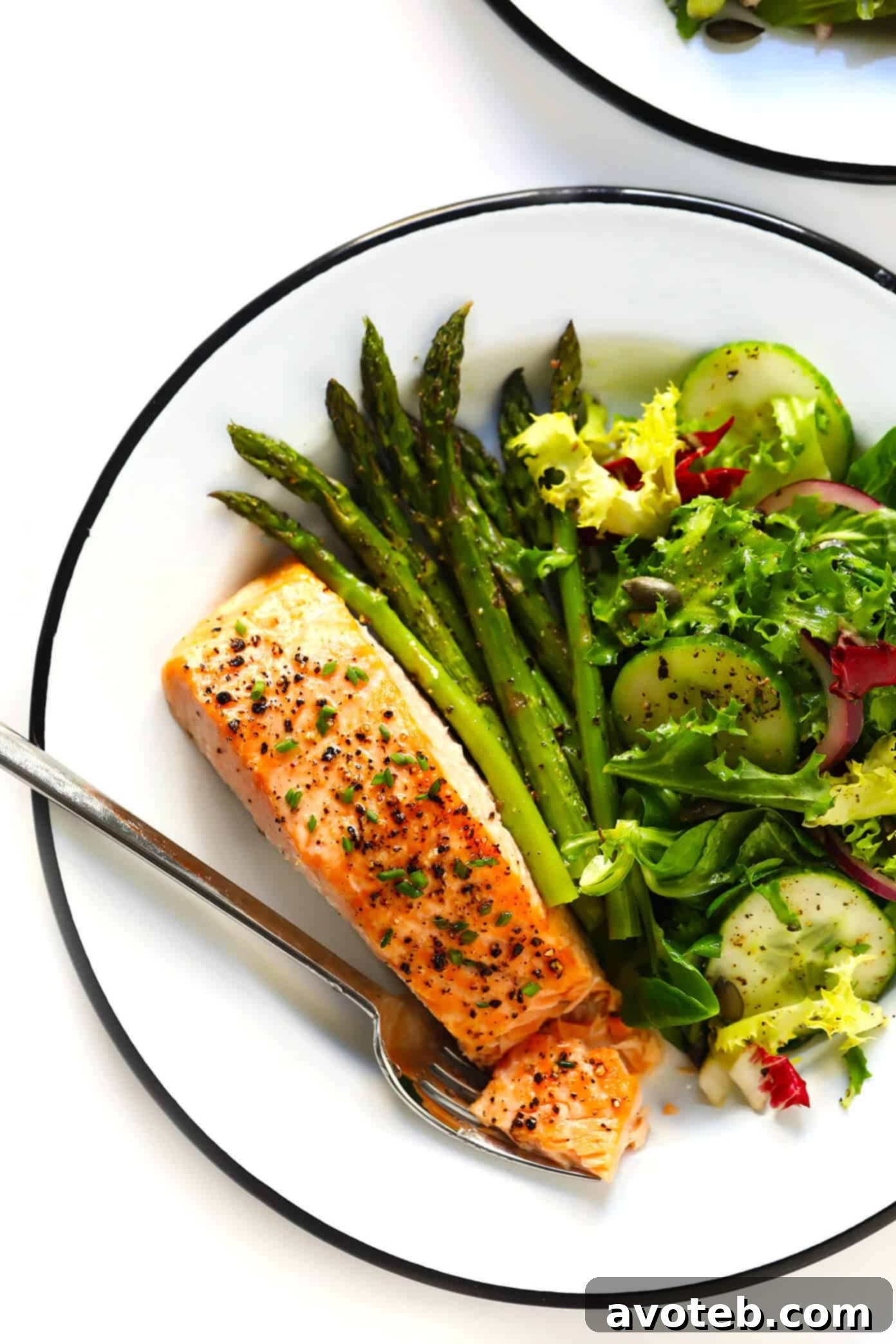
- Everyday Salad (pictured above): A fresh, crisp green salad provides a light and refreshing contrast to the richness of salmon, balancing the meal beautifully. Or try Our Family’s Favorite Salad for a more robust option.
- Scalloped Potatoes: Creamy, savory, and comforting, scalloped potatoes offer a hearty side that pairs wonderfully with the delicate texture of baked fish. Alternatively, go for classic The Best Baked Potatoes or crispy Baked Sweet Potato Fries for a touch of sweetness.
- Roasted Asparagus (pictured above): Simple, elegant, and quick to prepare, roasted asparagus highlights the seasonal flavors and adds a vibrant green to your plate. Or consider Perfect Roasted Brussels Sprouts for another flavorful vegetable option.
- Berry Fruit Salad: For a touch of natural sweetness and freshness, a light fruit salad can be an unexpected but delightful complement, especially with a lemony salmon. Try a vibrant Winter Fruit Salad for cooler months.
EXPLORE MORE BAKED PROTEIN TUTORIALS
If you enjoyed mastering this baked salmon recipe, be sure to explore our extensive collection of other baked protein tutorials designed to make healthy and delicious meals a breeze:
- Baked Chicken Breasts: Achieve consistently juicy and tender chicken breasts every time.
- Baked Pork Chops: Learn the secrets to perfectly cooked, flavorful pork chops that aren’t dry.
- Baked Tofu: Discover how to transform humble tofu into a crispy, flavorful plant-based protein.
- Baked Steak (How To Cook Steak In The Oven): Get perfectly seared and wonderfully tender steak using your oven.
- Baked Shrimp (The Easiest Way To Cook Shrimp!): Master the quickest and simplest method for succulent, delicious shrimp.
Enjoy your culinary adventures, everyone!
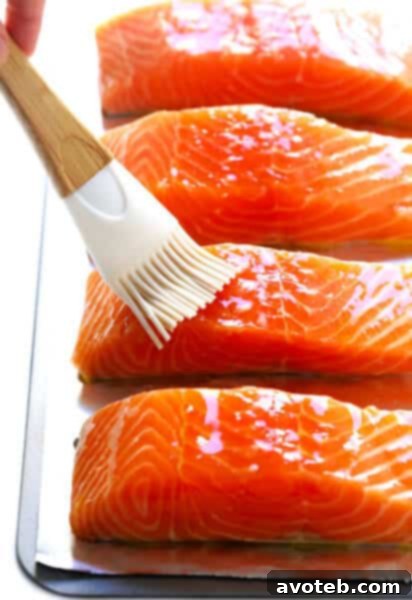
Baked Salmon
Prep Time: 5 minutes
Cook Time: 10 minutes
Total Time: 15 minutes
Yield: 4 servings 1x
Description
This baked salmon recipe is easy to customize with your favorite seasonings, and only takes about 15 minutes from start to finish. Achieve perfectly crispy skin and moist, flaky fish every time.
Ingredients
Scale
- 4 salmon fillets, skin-on (about 6–8 ounces each)
- 2 tablespoons high-heat oil, such as avocado oil or canola oil
- Kosher salt and freshly-cracked black pepper, to taste
- Fresh lemon wedges, for serving
- Optional: Garlic powder or other preferred dry seasonings
Instructions
- Allow salmon fillets to rest on the counter for 15-30 minutes, bringing them (at least mostly) to room temperature for more even cooking.
- Preheat your oven to 450°F (232°C). Line a baking sheet with aluminum foil for easy cleanup, or use an oven-proof non-stick skillet (like cast iron).
- Gently blot the salmon fillets dry on all sides with paper towels to ensure crispy skin. Place the salmon skin-side-down on the prepared baking sheet or skillet. If any ends of the salmon fillets are noticeably thinner, tuck them under slightly to promote uniform cooking.
- Brush all exposed sides (excluding the skin-side) of the salmon with your chosen high-heat oil. Season each fillet generously with kosher salt and freshly-cracked black pepper, along with any other dry seasonings you prefer (such as garlic powder).
- Bake for approximately 4-6 minutes per half-inch of thickness (measured at the thickest part of the fillet) or until the internal temperature of the salmon reaches 135-140°F* (57-60°C). You can also check for doneness by inserting a fork or knife into the salmon and gently twisting; the fish should be opaque throughout and flake easily.
- Carefully remove the pan from the oven. Using a fish spatula, transfer the salmon to a clean serving plate. You can either serve with the crispy skin on or easily slide your spatula to separate the fillet from the skin. Finish each fillet with a good squeeze of fresh lemon juice, and a sprinkle of fresh herbs or a drizzle of your favorite sauce, if desired. Serve immediately and enjoy!
Notes
*The FDA recommends cooking salmon to an internal temperature of 145°F (63°C), measured in the thickest part of the salmon fillets. Please note that salmon will continue to cook a bit more from residual heat once it has been removed from the oven (this is called carry-over cooking). For this reason, I recommend pulling it out of the oven once it reaches an internal temperature of 140°F (60°C). If you prefer your salmon slightly less cooked (as I do for a more tender, medium-rare result), I would recommend pulling it out at 135°F (57°C).
Recipe slightly adapted from Better Homes & Gardens.