
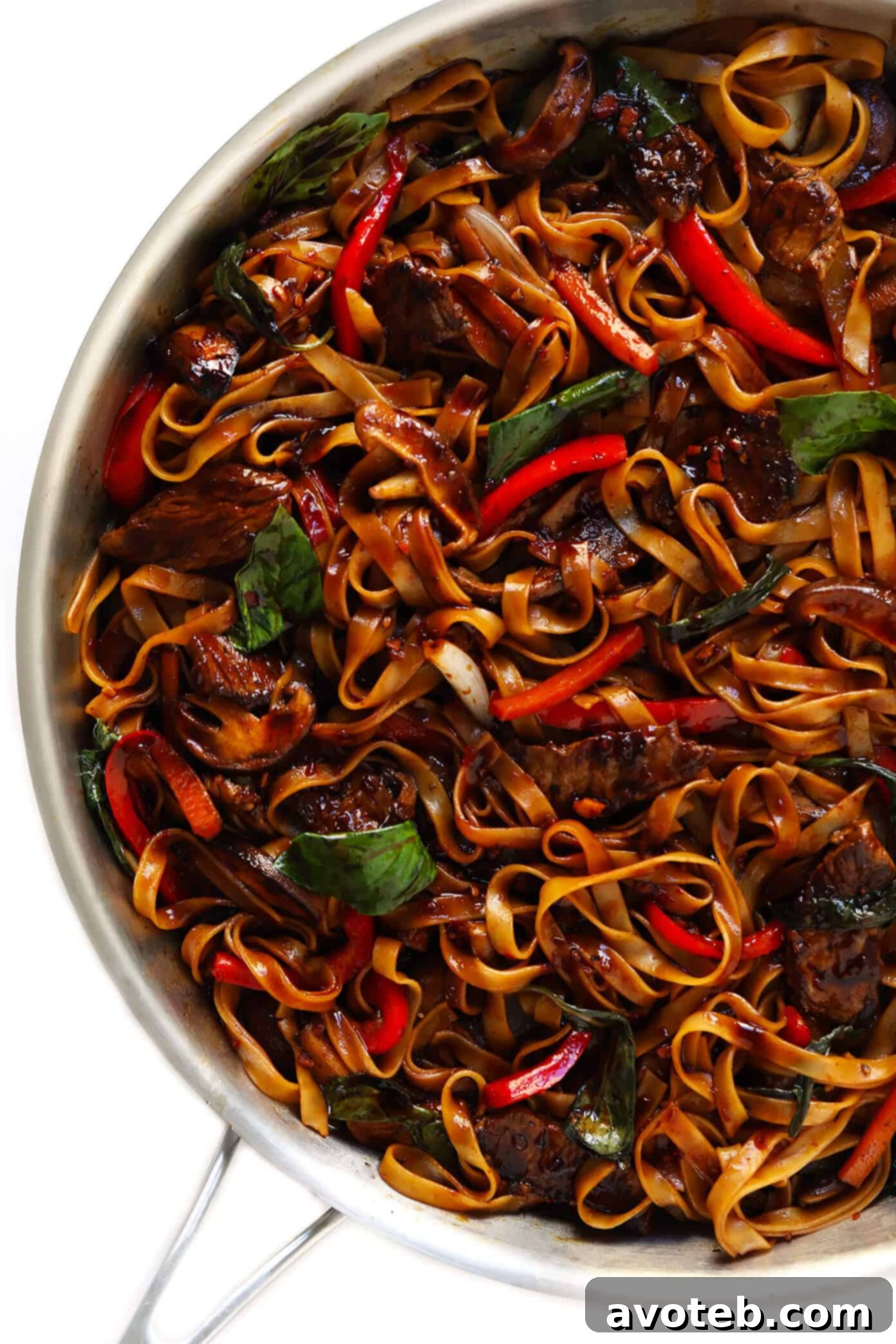
This Thai Basil Beef Noodle Stir-Fry recipe is not just easy to make; it’s a culinary journey infused with the most savory and authentic Thai basil sauce. While beef is a classic choice, feel free to substitute with succulent chicken, tender pork, fresh shrimp, or crispy tofu for a personalized twist!
Breaking culinary news from my corner of Barcelona: after an extensive two-year search, I’ve finally discovered a reliable source for fresh Thai basil in this vibrant city! For far too long, my attempts at recreating beloved Thai dishes relied on the more common Italian basil, a pale imitation of its irresistibly savory, subtly spicy, and distinctly anise-flavored cousin. The absence of authentic Thai basil was a constant pang for my taste buds, limiting the true essence of my favorite recipes.
Earlier this month, a serendipitous detour through an unfamiliar part of town led me to an Asian market. As I browsed for various ingredients, my eyes landed on a sight that filled me with pure culinary joy: rows upon rows of fresh Thai basil, its fragrant leaves promising the authentic flavors I had so missed. Naturally, I departed with an overflowing bouquet, eager to rekindle my passion for Thai cooking.
That very evening, with my vegetarian husband out, I seized the opportunity to create a quick and intensely flavorful Thai basil beef and noodle stir-fry. The result was so unexpectedly delicious, so perfectly balanced, that I simply had to share this newfound gem with you all. It truly hit the spot, evoking the bold and aromatic spirit of Thai cuisine.
This recipe is essentially a slightly simplified, yet equally satisfying, rendition of a classic drunken noodles (Pad Kee Mao) dish. It features an abundance of tender steak, perfectly al dente rice noodles, a medley of crisp vegetables, and a signature savory stir-fry sauce where fresh Thai basil shines brightest. This dish is a testament to the fact that authentic, restaurant-quality Thai flavors can be achieved right in your home kitchen, and quickly too.
What makes this Thai Basil Beef Noodle Stir-Fry truly exceptional? Firstly, its incredible depth of flavor. Every bite is packed with the aromatic complexity of Thai basil, balanced by the rich, umami notes of the stir-fry sauce. Secondly, its remarkable speed – you can have this vibrant meal on your table in under 30 minutes, making it perfect for busy weeknights. Thirdly, its versatility is unmatched; easily customize it with your favorite proteins like chicken, pork, shrimp, or even crispy tofu, and any vegetables you have on hand. And as the sole meat-eater in my household, I can personally attest that it makes for absolutely fantastic leftovers, often tasting even better the next day.
If you appreciate a truly great stir-fry that bursts with fresh, bold flavors as much as I do, then this Thai Basil Beef Noodle Stir-Fry is about to become your new favorite. Let’s get stirring!
Mastering the Ingredients for Your Authentic Thai Basil Beef Noodle Stir-Fry
Creating an exceptional Thai Basil Beef Noodle Stir-Fry begins with understanding and selecting the right ingredients. Each component plays a vital role in building the layered flavors and textures that define this beloved dish. Here’s a closer look at what you’ll need and why:
The Star of the Show: Fresh Thai Basil
- Thai Basil: This isn’t just an herb; it’s the heart and soul of this recipe. Fresh Thai basil, with its distinct anise-like aroma and a subtle peppery kick, elevates this dish from good to unforgettable. It’s truly worth the effort to seek it out. You’ll most commonly find it at Asian grocery stores. When selecting, look for vibrant green leaves without any wilting or discoloration. Store it by placing the stems in a glass of water, covered loosely with a plastic bag, in the refrigerator to keep it fresh for longer. If fresh Thai basil is genuinely unavailable, regular Italian basil can be used as a last resort, but be aware the flavor profile will be milder and lack that characteristic Thai essence.
Choosing Your Noodles Wisely
- Noodles: Rice noodles are the traditional choice for their delicate texture and ability to soak up the sauce beautifully. I prefer wider flat rice noodles (like those used in Pad See Ew or Drunken Noodles), but medium or thin rice vermicelli can also work. The key is to cook them just until al dente – tender but still firm to the bite – to prevent them from becoming mushy in the stir-fry. Other excellent alternatives include fresh egg noodles, udon noodles for a chewier texture, or even soba noodles for a slightly nutty flavor. Always follow package instructions for cooking, and a quick rinse in cold water after draining can prevent sticking.
Selecting the Perfect Beef Cut
- Steak: For a tender and flavorful stir-fry, flank steak or sirloin are highly recommended. These cuts are lean but become incredibly tender when sliced thinly against the grain and cooked quickly over high heat. Slicing against the grain is crucial for preventing toughness. Aim for uniform, bite-sized pieces to ensure even cooking. If you prefer, ground beef can also be used for a different texture, or you can explore other proteins like thinly sliced chicken breast or thigh, pork tenderloin, or shrimp.
Vibrant Vegetables for Flavor and Crunch
- Veggies: I opted for a simple yet effective combination of red bell pepper, sweet onion, earthy shiitake mushrooms, and aromatic garlic. This trio provides a fantastic balance of sweetness, savory notes, and texture. However, the beauty of a stir-fry lies in its adaptability! Feel free to incorporate any stir-fry friendly vegetables you love. Broccoli florets, snap peas, green beans, shredded carrots, baby corn, bok choy, or zucchini would all be delicious additions, adding both nutritional value and visual appeal.
The Secret Weapon: The Savory Thai Basil Sauce
- Stir-Fry Sauce: This quick-to-prepare sauce is where the magic truly happens, bringing together a symphony of sweet, salty, savory, and spicy flavors.
- Low-Sodium Soy Sauce: Provides the foundational salty and umami notes without overpowering the dish.
- Dark Soy Sauce: Offers a richer, slightly sweeter flavor and a beautiful dark color, enhancing the visual appeal of the stir-fry.
- Oyster Sauce: A cornerstone of many Asian stir-fries, it adds a deep, savory, and slightly sweet umami richness.
- Fish Sauce: Essential for authentic Thai flavor, fish sauce provides a pungent, savory depth that can’t be replicated. Don’t worry about the smell; it transforms beautifully when cooked.
- Garlic Chili Sauce: Delivers a balanced heat and garlicky kick. Adjust the amount to your preference for spice.
Elevate Your Dish with Toppings
- Toppings: While optional, a sprinkle of fresh toppings can add a delightful contrast in texture and bursts of flavor. Consider sliced green onions for a fresh, mild oniony bite, toasted sesame seeds for a nutty aroma, chopped peanuts for crunch, fried garlic for intense savory notes, and fresh lime wedges to squeeze over the finished dish for a bright, zesty finish.
Step-by-Step: Crafting Your Perfect Thai Basil Beef Noodle Stir-Fry
The key to a successful stir-fry lies in preparation, often referred to as “mise en place.” Since stir-fries cook very quickly over high heat, having all your ingredients prepped and ready before you start cooking is paramount. This ensures a smooth cooking process and perfectly textured results. Once everything is chopped, measured, and within reach, the actual cooking is incredibly straightforward and fast!
- Prep the Sauce: In a small bowl or liquid measuring cup, combine all the sauce ingredients: low-sodium soy sauce, dark soy sauce, oyster sauce, fish sauce, and chili garlic sauce. Whisk them together until they are well combined and smooth. Set this aside, ready for action.
- Prep the Noodles: Bring a large pot of water to a boil. Cook your chosen rice noodles according to the package instructions until they are perfectly al dente – tender but still retaining a slight chew. Immediately drain the noodles in a colander. To prevent them from sticking together while you finish prepping other components, I highly recommend tossing them with a small drizzle of neutral cooking oil (like sesame or canola oil). Set them aside.
- Sear the Beef: Heat 1 tablespoon of cooking oil in a large sauté pan or wok over medium-high heat until shimmering. Season your bite-sized steak pieces generously with a pinch of fine sea salt and freshly cracked black pepper. Add the seasoned steak to the hot pan, ensuring not to overcrowd it (cook in batches if necessary to achieve a good sear). Sauté for 3-4 minutes, stirring only occasionally to allow the beef to brown nicely on all sides. Once browned, transfer the cooked steak to a separate, clean plate and set aside. Return the pan to the heat.
- Cook the Veggies: Add the remaining 1 tablespoon of oil to the same pan, along with the thinly sliced white onion. Sauté for about 2 minutes, stirring occasionally, until the onion begins to soften and become translucent. Next, add the sliced mushrooms, red bell pepper, and minced garlic. Continue to sauté for another 3-5 minutes, stirring frequently, until the vegetables reach your desired level of tenderness – crisp-tender is ideal for a stir-fry.
- Combine Everything Together: With the vegetables cooked, it’s time to bring everything together quickly. Immediately add the cooked and prepared noodles, the savory stir-fry sauce, the seared beef, and the generous amount of fresh Thai basil leaves directly into the pan with the vegetables. Using tongs or a large spoon, toss everything vigorously until all the ingredients are thoroughly coated evenly with the sauce. This step should be quick, just enough to heat through and coat. Remove the pan from the heat as soon as everything is combined to prevent overcooking the noodles or basil.
- Serve Warm: Transfer the Thai Basil Beef Noodle Stir-Fry to serving plates or bowls immediately while it’s piping hot. Garnish with any of your desired toppings, such as sliced green onions, toasted sesame seeds, chopped peanuts, fried garlic, or a squeeze of fresh lime juice, for an extra layer of flavor and texture. Enjoy this delicious, vibrant meal right away!
Customization & Pro Tips for Your Thai Basil Beef Noodle Stir-Fry
One of the many joys of stir-fries is their incredible flexibility. This Thai Basil Beef Noodle Stir-Fry recipe serves as a fantastic base, but don’t hesitate to make it your own! Here are several ways to customize your dish and some pro tips for success:
Make It Spicy!
- If you love a fiery kick, there are several ways to amp up the heat. Add some thinly sliced fresh Thai bird chiles directly into the stir-fry with the vegetables, or incorporate a generous squeeze of sriracha sauce into the stir-fry sauce. A sprinkling of crushed red chili flakes at the end or even during the veggie cooking stage can also provide a pleasant warmth. Remember, you can always add more spice, but it’s hard to take it away, so start cautiously!
Protein Power-Ups
- Beyond beef, this stir-fry is incredibly versatile with other proteins.
- Chicken: Use thinly sliced chicken breast or thighs. Marinating chicken briefly (15-20 minutes) in a little soy sauce and cornstarch can keep it exceptionally tender.
- Pork: Thinly sliced pork tenderloin or pork shoulder works wonderfully.
- Shrimp: Add raw shrimp during the last 2-3 minutes of cooking, as they cook very quickly.
- Tofu: For a vegetarian option, use extra-firm tofu, pressed and cubed, then pan-fried until crispy before adding to the stir-fry.
- No Protein: For a truly veggie-centric meal, skip the protein entirely and simply load up on extra vegetables!
Veggie Variety
- Expand your vegetable horizons! Almost any stir-fry friendly vegetable will taste fantastic in this dish. Consider adding:
- Broccoli florets or broccolini
- Shredded carrots or thinly sliced carrots
- Snap peas or snow peas for a sweet crunch
- Green beans, trimmed
- Zucchini or yellow squash, sliced into half-moons
- Baby corn or water chestnuts for texture
- Bok choy or other Asian greens for a fresh, leafy element
- Mushrooms beyond shiitake, such as cremini or oyster mushrooms
Noodle Alternatives
- While rice noodles are classic, feel free to experiment with other noodle types based on your preference or what you have on hand:
- Udon Noodles: Thick, chewy, and satisfying.
- Egg Noodles: Provide a rich, eggy flavor and springy texture.
- Soba Noodles: Buckwheat noodles offer a unique, slightly earthy taste.
- Sweet Potato Noodles (Japchae noodles): Gluten-free and wonderfully chewy.
Dietary Adaptations
- Gluten-Free: Easily make this recipe gluten-free by substituting regular soy sauce with tamari and ensuring your oyster sauce and fish sauce are certified gluten-free.
- Vegetarian/Vegan: As mentioned, crispy tofu is an excellent protein substitute. For the sauce, replace oyster sauce with a vegetarian mushroom-based oyster sauce and fish sauce with a vegetarian fish sauce alternative or simply a bit more soy sauce and a pinch of seaweed powder for umami depth.
Pro Tips for Stir-Fry Success:
- High Heat, Quick Cook: Stir-fries thrive on high heat and fast cooking. Ensure your pan or wok is very hot before adding ingredients.
- Don’t Overcrowd: Cook ingredients in batches if necessary, especially the beef. Overcrowding cools the pan and steams ingredients instead of searing them, leading to less flavor and mushy textures.
- Mise en Place is Key: Seriously, have everything prepped and within arm’s reach before you start cooking. The process moves too fast to chop or measure as you go.
- Wok Hei (Breath of the Wok): While a home stove might not replicate true wok hei, using a carbon steel wok over high heat and keeping ingredients moving helps simulate that characteristic smoky flavor.
This Thai Basil Beef Noodle Stir-Fry is a celebration of vibrant flavors and textures, promising a satisfying meal every time. Whether you stick to the original or get creative with your additions, the result will be a dish that is both comforting and exhilaratingly fresh. Enjoy the process of creating this fantastic recipe, and savor every aromatic bite!
Print Recipe
Thai Basil Beef Noodle Stir-Fry
Author: Ali
Description
This Thai Basil Beef Noodle Stir-Fry recipe offers a quick, flavorful, and authentic weeknight meal. Featuring tender beef, al dente rice noodles, and a medley of fresh vegetables, all coated in a rich, savory Thai basil sauce, it’s a dish that promises to satisfy. Its balance of aromatic Thai basil, umami-rich sauces, and customizable ingredients makes it a culinary delight. Perfect for a quick dinner or meal prep, this recipe is designed to bring the vibrant tastes of Thailand directly to your kitchen. Easily adaptable with your choice of protein—chicken, pork, shrimp, or crispy tofu—it’s a versatile dish that can be tailored to any preference, ensuring a delicious outcome every time.
Ingredients
Scale
For the Stir-Fry:
- 8 ounces (uncooked) wide flat rice noodles (or your preferred noodle type)
- 2 tablespoons neutral cooking oil (such as canola or vegetable oil), divided
- 1 ¼ pounds sirloin or flank steak, trimmed and thinly sliced against the grain into bite-sized pieces
- Fine sea salt and freshly-cracked black pepper, to taste
- 1 small white onion, peeled and thinly sliced
- 8 ounces fresh shiitake or baby bella mushrooms, sliced
- 1 medium red bell pepper, cored, seeded, and thinly sliced
- 4 cloves garlic, freshly peeled and minced
- 1 ½ cups packed fresh Thai basil leaves, roughly chopped
- Optional toppings: sliced green onions, toasted sesame seeds, chopped roasted peanuts, crispy fried garlic, and/or fresh lime wedges for serving
For the Savory Thai Basil Sauce:
- 3 tablespooons low-sodium soy sauce
- 2 tablespoons oyster sauce (or vegetarian mushroom oyster sauce for a vegetarian option)
- 2 tablespoons fish sauce (or a vegetarian fish sauce alternative)
- 1 tablespoon sweet dark soy sauce
- 1 tablespoon chile garlic sauce, or more/less to adjust your preferred spice level
Instructions
- Prepare the Sauce: In a small bowl or a liquid measuring cup, thoroughly whisk together all the sauce ingredients: low-sodium soy sauce, oyster sauce, fish sauce, sweet dark soy sauce, and chile garlic sauce. Ensure it’s well combined, then set it aside.
- Cook the Noodles: Cook your chosen noodles according to the package directions until they are perfectly al dente. Drain them immediately in a colander. For best results and to prevent sticking, toss the drained noodles with a small drizzle of cooking oil if you won’t be adding them to the stir-fry right away. Set aside until needed.
- Sear the Beef: Heat 1 tablespoon of the cooking oil in a large sauté pan or wok over medium-high heat until it shimmers. Season the thinly sliced steak generously with fine sea salt and freshly cracked black pepper. Add the steak to the hot pan (do not overcrowd; cook in batches if necessary). Sauté for 3-4 minutes, stirring only occasionally, allowing the beef to achieve a beautiful brown sear on all sides. Once cooked, transfer the seared steak to a separate, clean plate and set aside. Return the pan to the heat.
- Sauté the Vegetables: Add the remaining 1 tablespoon of oil to the same pan. Add the thinly sliced onion and sauté for about 2 minutes, stirring occasionally, until it starts to soften. Next, add the sliced mushrooms, red bell pepper, and minced garlic. Continue to sauté for an additional 3-5 minutes, stirring frequently, until the vegetables are cooked to your desired level of tenderness (crisp-tender is ideal for stir-fries).
- Combine All Ingredients: Immediately add the cooked noodles, the prepared savory Thai basil sauce, the seared beef, and the fresh Thai basil leaves into the pan with the vegetables. Using tongs or a large spatula, toss all ingredients vigorously and thoroughly until everything is evenly coated with the sauce. This step should be quick, just enough to incorporate and warm through. Remove the pan from the heat once combined.
- Serve and Garnish: Serve the Thai Basil Beef Noodle Stir-Fry immediately while it’s hot. Garnish generously with any of your preferred toppings, such as sliced green onions, toasted sesame seeds, chopped peanuts, fried garlic, or a refreshing squeeze of fresh lime juice. Enjoy your flavorful homemade Thai feast!
Print Recipe
Thai Basil Beef Noodle Stir-Fry
Ingredients
(Please refer to the detailed ingredient list in the first recipe card above for specific measurements and preparation notes.)