
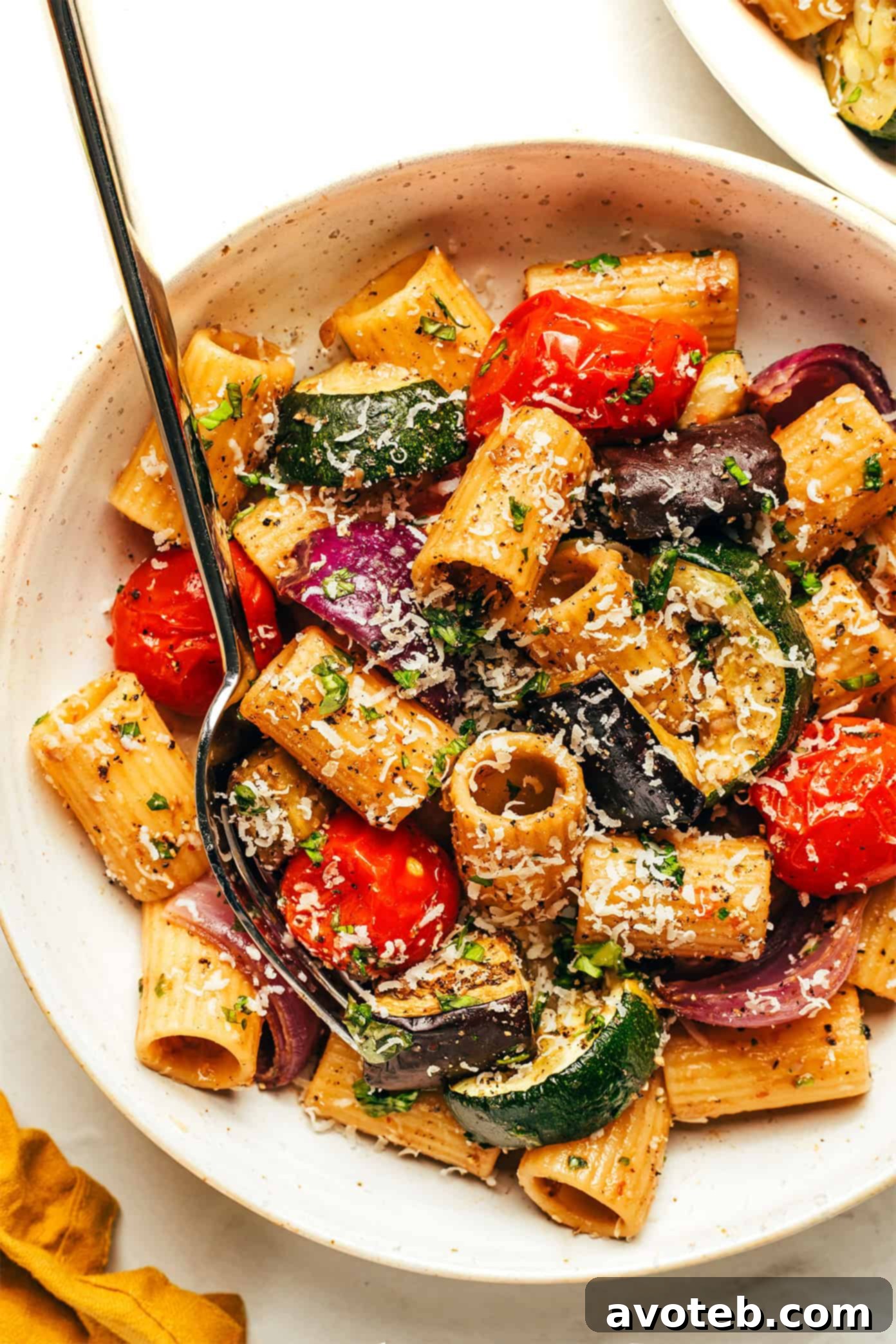
The Ultimate Roasted Vegetable Pasta: A Flavorful & Effortless Weeknight Delight
This roasted vegetable pasta is a vibrant culinary masterpiece, combining the irresistible sweetness of caramelized roasted vegetables with a luxurious balsamic garlic butter sauce. It’s a testament to simple, delicious cooking that brings fresh, wholesome flavors to your table with minimal fuss. Prepare to be amazed by how easily such a satisfying and mouth-watering dish comes together!
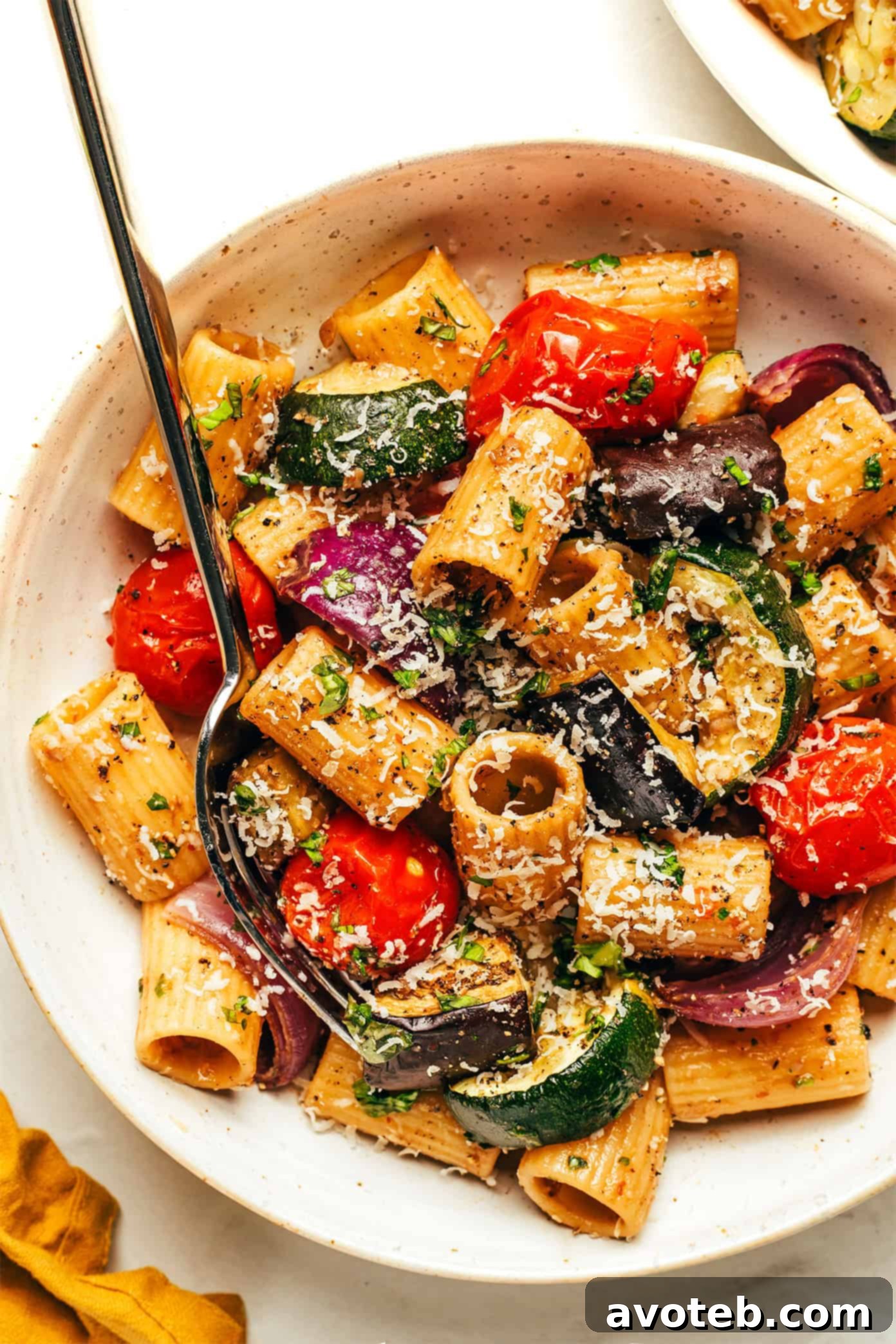
Discovering this roasted veggie pasta was a game-changer in our household, instantly becoming a cherished favorite. There’s an undeniable magic that happens when a generous medley of beautifully caramelized vegetables meets perfectly cooked pasta. What truly sets this recipe apart, however, is the elegantly simple yet profoundly flavorful butter-balsamic-garlic sauce. It’s crafted to enhance, rather than overshadow, the natural sweetness and depth of the roasted produce, creating a harmonious blend that tantalizes the taste buds.
Each forkful bursts with big, fresh, summertime flavors, especially when generously tossed with a handful of salty, freshly-grated Parmesan cheese and a shower of fragrant, fresh basil. This dish isn’t just a meal; it’s an experience that evokes sunny days and garden-fresh produce. We found ourselves reaching for seconds, and then thirds, unable to get enough of its delightful taste. It’s comforting yet light, indulgent yet wholesome – truly a recipe that satisfies on every level. The beauty of this pasta also lies in its adaptability. While incredibly delicious hot and fresh from the oven, we can personally attest to its equally stellar performance as a chilled pasta salad, making those leftovers a highly anticipated treat.
The selection of vegetables is entirely up to your preference, allowing for ultimate flexibility. Whether you’re utilizing a bounty from your garden, selecting what’s freshest at the market, or simply using what you have on hand, this recipe welcomes your creativity. Feel free to incorporate an extra protein, such as grilled chicken, savory sausage, or succulent shrimp, to transform it into an even heartier meal. This dish celebrates fresh ingredients and simple techniques, proving that extraordinary flavor doesn’t require complex steps. Let’s dive in and create some truly unforgettable veggie pasta!
Why You’ll Fall in Love with This Roasted Vegetable Pasta
This Roasted Vegetable Pasta isn’t just another dinner recipe; it’s an invitation to enjoy vibrant, wholesome food that’s incredibly easy to make. Here’s why it’s destined to become a staple in your kitchen:
- Explosion of Flavor: Roasting vegetables at a high temperature coaxes out their natural sugars, resulting in a sweet, smoky, and deeply caramelized flavor profile that’s simply irresistible. This is beautifully complemented by the rich, tangy balsamic garlic butter sauce.
- Effortless Preparation: With straightforward steps and minimal active cooking time, this recipe is perfect for busy weeknights or when you crave a gourmet-tasting meal without the fuss. Most of the magic happens in the oven!
- Nutrient-Rich & Wholesome: Packed with a colorful array of fresh vegetables, this pasta dish is a fantastic way to boost your daily nutrient intake. It’s satisfying yet light, making it a healthy choice for the whole family.
- Infinitely Customizable: This recipe is a blank canvas for your culinary imagination. Easily swap out vegetables, add your favorite protein, or adjust seasonings to suit your personal taste and dietary needs.
- Versatile Serving Options: Delicious served warm straight from the pan, it also transforms into a delightful cold pasta salad for lunches or picnics. Its versatility makes it perfect for meal prepping.
- Simple, Pantry-Friendly Ingredients: You likely have most of the sauce ingredients on hand, and the vegetables can be whatever is fresh and in season, making it a practical and economical choice.
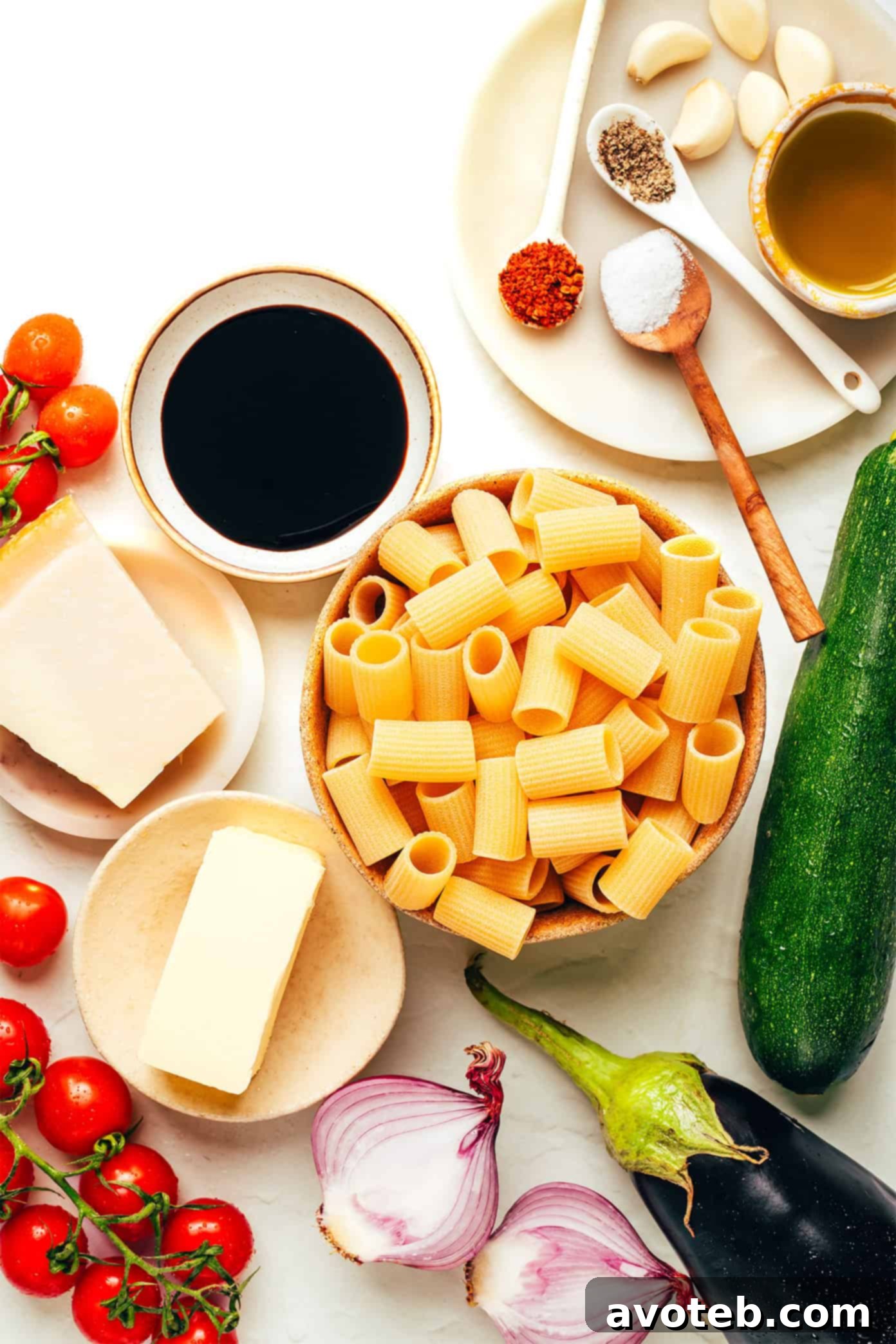
Key Ingredients for Your Perfect Roasted Vegetable Pasta
Crafting this incredible roasted veggie pasta begins with selecting quality ingredients. Here are a few essential notes on what you’ll need, along with tips for making the most of each component:
- Veggies: The heart of this dish! We adore a summery blend of fresh zucchini, tender eggplant, and pungent red onion for their robust flavors and how beautifully they caramelize. When cut into uniform, bite-sized pieces and generously coated with olive oil, salt, and pepper, they roast to perfection, developing a delightful sweetness and slightly crisp exterior. Don’t be afraid to experiment with other seasonal favorites like bell peppers, broccoli florets, or even asparagus.
- Cherry or Grape Tomatoes: These small wonders burst with juicy sweetness and provide a lovely touch of acidity, balancing the richness of the sauce. They cook faster than the other, denser vegetables, so adding them halfway through the roasting process ensures they soften and slightly blister without turning mushy. Their vibrant color and flavor are key!
- Pasta: The ultimate vessel for our delicious sauce and veggies! We used mezze rigatoni for the batch pictured here, with its ridged surface perfect for catching every drop of flavor. However, almost any short pasta shape will work wonderfully, such as penne, rotini, farfalle, or orecchiette. For a gluten-free version, simply choose your favorite high-quality gluten-free pasta brand and cook according to package directions.
- Salted Butter: This forms the foundational creamy, rich base of our luscious balsamic garlic sauce. If you only have unsalted butter in your pantry, simply add an extra 1/8 to 1/4 teaspoon of fine sea salt to the sauce to achieve the perfect seasoning balance. The browning of the butter adds a nutty depth that is truly exceptional.
- Fresh Garlic: Absolutely essential for that aromatic punch! Use fresh garlic cloves, either pressed or finely minced, to infuse the sauce with its irreplaceable savory warmth. Garlic powder is not an adequate substitute here; the fresh aroma makes all the difference.
- Crushed Red Pepper Flakes: For just a touch of delightful warmth and a subtle spicy kick. The amount can be easily adjusted to your preference – add more for a bolder heat, or less if you prefer a milder flavor profile.
- Balsamic Vinegar: This ingredient is crucial for adding a sweet and tangy acidity to the sauce, cutting through the richness of the butter and complementing the roasted vegetables. A good quality balsamic vinegar will elevate the overall flavor of the dish, so choose wisely.
- Freshly-Grated Parmesan Cheese: A generous amount of freshly-grated Parmesan is stirred into the sauce, contributing a salty, umami-rich, and cheesy depth that beautifully coats the pasta. For the smoothest melt and best flavor, always opt for a block of Parmesan and grate it yourself. Pre-grated cheeses often contain anti-caking agents that can prevent them from melting seamlessly into sauces.
- Fresh Basil: The vibrant finish! A generous sprinkling of finely-chopped fresh basil leaves adds a burst of herby freshness and a beautiful aromatic quality that brightens the entire dish. Its sweet, peppery notes are the perfect complement to the roasted vegetables and tangy sauce.
- Olive Oil: Used for tossing the vegetables before roasting, helping them to crisp up and achieve that desirable caramelization.
- Fine Sea Salt & Freshly-Ground Black Pepper: Basic but vital seasonings that enhance the natural flavors of all the ingredients. Don’t forget to generously salt your pasta water!
Mastering Your Roasted Vegetable Pasta: Step-by-Step Guide
Achieving a perfectly balanced and flavorful roasted vegetable pasta is all about mindful preparation and execution. Follow these detailed steps to ensure your dish is a resounding success:
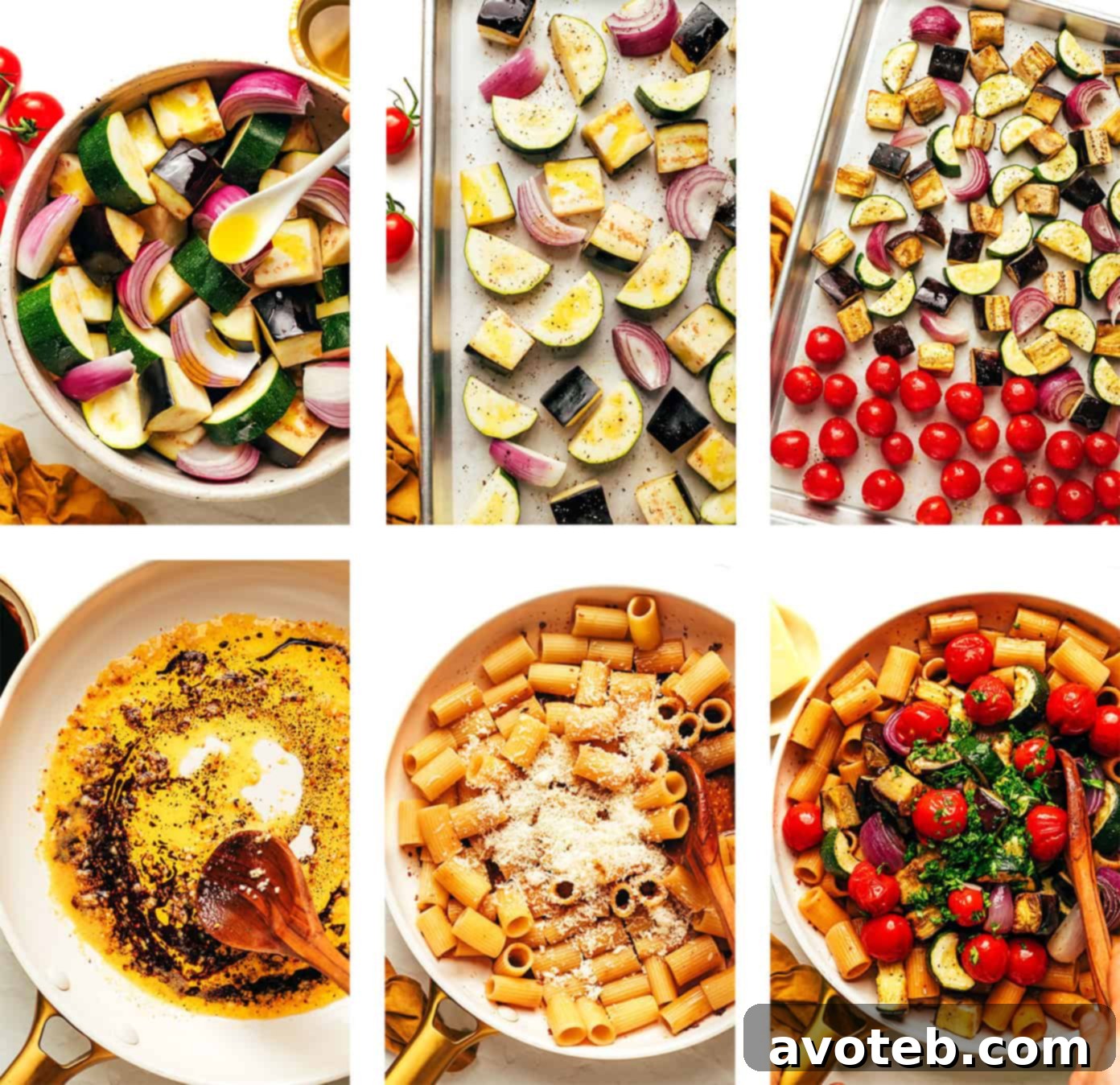
- Prepare Your Oven, Baking Sheet, and Pasta Water: Preheat your oven to a robust 425°F (220°C). This high heat is crucial for achieving that desirable caramelization on your vegetables. Line a large baking sheet with parchment paper to prevent sticking and make cleanup a breeze. Simultaneously, bring a large stockpot of generously-salted water to a rolling boil for your pasta. Salting the pasta water is essential as it’s your primary chance to season the pasta itself from the inside out. Aim for water that tastes like the sea.
- Begin Roasting the Vegetables: In a spacious mixing bowl, combine your prepped zucchini (cut into half moons), diced eggplant (into 1-inch cubes), and thickly sliced red onion. Drizzle these vegetables with 2 tablespoons of olive oil, then toss thoroughly until every piece is lightly coated. Spread the seasoned vegetables out in a single, even layer on your prepared baking sheet. It’s important not to overcrowd the pan; this ensures the vegetables roast and caramelize beautifully rather than steam. Season them generously with fine sea salt and freshly-ground black pepper. Transfer the baking sheet to the preheated oven and roast for 15 minutes. While they roast, toss your cherry or grape tomatoes in the same mixing bowl with the remaining 1 tablespoon of olive oil, seasoning them lightly with salt and pepper. After 15 minutes, remove the baking sheet from the oven, gently scoot the partially roasted vegetables to make space, then add the seasoned cherry tomatoes to the sheet. Return to the oven and roast for an additional 15 minutes, or until all vegetables are tender and beautifully caramelized.
- Cook Your Pasta to Al Dente Perfection: Once the baking sheet, now laden with tomatoes, is back in the oven, it’s time to cook your pasta. Add the pasta to your vigorously boiling, salted water and cook until it is *just* al dente. This means it should be firm to the bite, as it will continue to cook slightly when combined with the warm sauce. Avoid overcooking! While the pasta cooks, proceed to prepare your sauce.
- Craft the Aromatic Garlic Brown Butter Balsamic Sauce: In a large nonstick sauté pan, melt 4 tablespoons of salted butter over medium-high heat. Allow the butter to completely melt and gently foam. Watch it carefully as it continues to cook, transforming into a rich, nutty brown butter. This browning process adds incredible depth of flavor. As soon as it reaches a light golden-brown color and smells nutty, add the pressed or minced garlic and crushed red pepper flakes. Sauté for about 1 minute, stirring constantly, to allow the garlic to become fragrant without burning. Immediately turn off the heat to prevent further cooking of the butter and garlic. Pour in the 2 tablespoons of balsamic vinegar and stir vigorously to combine; the vinegar will deglaze the pan and create a wonderfully fragrant sauce. Around this moment, your pasta should be perfectly al dente. Use a spider strainer or slotted spoon to transfer the cooked pasta directly into the brown butter balsamic sauce. Toss gently to coat. Add the 1 ounce of freshly-grated Parmesan cheese and continue tossing. If the sauce seems too thick or the cheese isn’t melting smoothly, add a small scoop (1/4 cup at a time) of the starchy pasta water. This starchy water helps emulsify the sauce, creating a glossy, cohesive coating for your pasta. Continue tossing until the cheese has melted into a luxurious sheen.
- Gently Combine All Components: With your pasta perfectly coated in its savory sauce, add all of the warm, roasted vegetables and the 1/3 cup of finely-chopped fresh basil. You can do this either directly in the large sauté pan or, if preferred, pour out the remaining pasta water from your stockpot and use that larger vessel for easier tossing. Toss very gently to combine all the ingredients. The roasted vegetables will be quite soft and tender, so a light hand is key to prevent them from breaking apart.
- Serve Immediately for Best Enjoyment: This roasted vegetable pasta is best enjoyed piping hot, right after preparation. Divide among serving bowls and garnish generously with extra fresh basil leaves, an additional sprinkle of freshly-grated Parmesan cheese, and a few twists of freshly-ground black pepper to enhance the flavors.
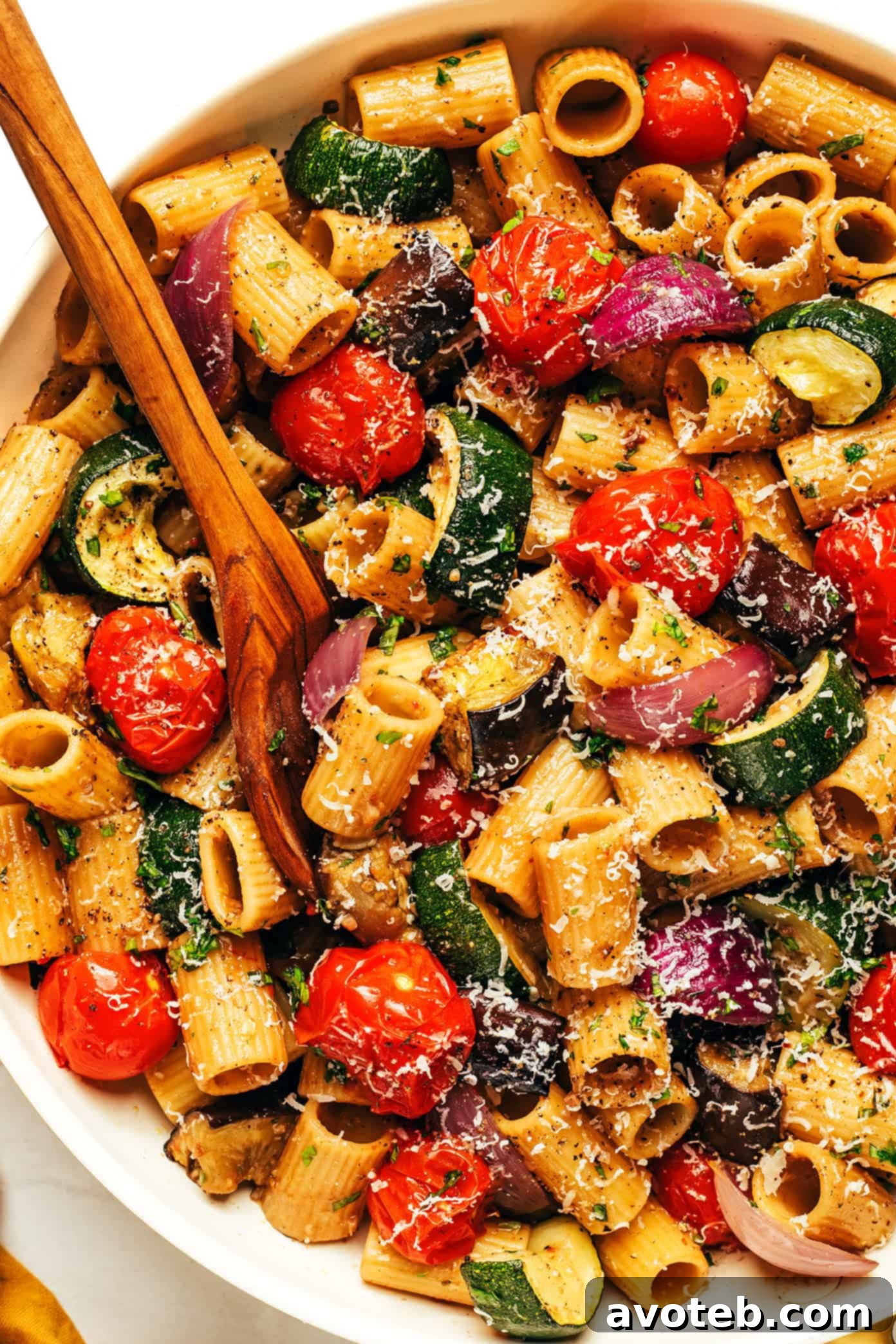
Endless Possibilities: Customize Your Veggie Pasta
One of the many joys of this roasted vegetable pasta recipe is its incredible adaptability. It serves as a fantastic base for customization, allowing you to tailor it to your preferences, seasonal availability, or dietary needs. Here are a few ways to get creative:
- Add a Protein Boost: To transform this into an even heartier main course, easily incorporate a cooked protein of your choice. Think savory Italian sausage (crumbled and browned), tender grilled chicken strips, pan-seared steak, succulent shrimp, flaky salmon, or delicate scallops. For vegetarian options, consider roasted chickpeas, white beans, or lentils.
- Introduce Textural Elements with Nuts or Seeds: Elevate the texture and add a layer of rich, nutty flavor by mixing in toasted pine nuts, chopped walnuts, or even pepitas (pumpkin seeds). These add a delightful crunch that contrasts beautifully with the soft vegetables and pasta.
- Experiment with Different Herbs: While fresh basil is a star here, don’t hesitate to explore other fresh herbs. Chopped fresh rosemary, thyme, or sage can introduce different aromatic profiles and enhance the complexity of the sauce. A sprinkle of fresh oregano or parsley also works wonderfully.
- Rotate Your Veggies and Greens: This recipe is a fantastic way to use up whatever vegetables are in season or lingering in your fridge. Beyond the core zucchini, eggplant, and red onion, consider roasting asparagus spears, colorful bell peppers, tender broccoli or cauliflower florets, crisp green beans, earthy mushrooms, or sweet yellow squash. For a pop of freshness and added nutrition, fold in a handful of fresh spinach or arugula at the very end; the residual heat will wilt them perfectly.
- Make it Gluten-Free and/or Vegan:
- Gluten-Free: Simply swap out traditional pasta for your favorite brand of gluten-free pasta. There are many excellent options available today made from corn, rice, lentils, or chickpeas that hold up beautifully.
- Vegan: Achieve a delicious vegan version by making a couple of simple substitutions. Replace the salted butter with an equal amount of high-quality olive oil for the sauce base. For the cheesy umami, omit the Parmesan cheese entirely, or use a dairy-free Parmesan alternative. Nutritional yeast can also provide a wonderful cheesy, savory flavor when sprinkled over the finished dish.
- Spice It Up: If you enjoy more heat, increase the amount of crushed red pepper flakes, or add a pinch of cayenne pepper to the sauce. You could also finish the dish with a drizzle of a spicy chili oil.
- Creamy Twist: For an even richer, creamier sauce, stir in a splash of heavy cream or a dollop of mascarpone cheese right before adding the Parmesan.
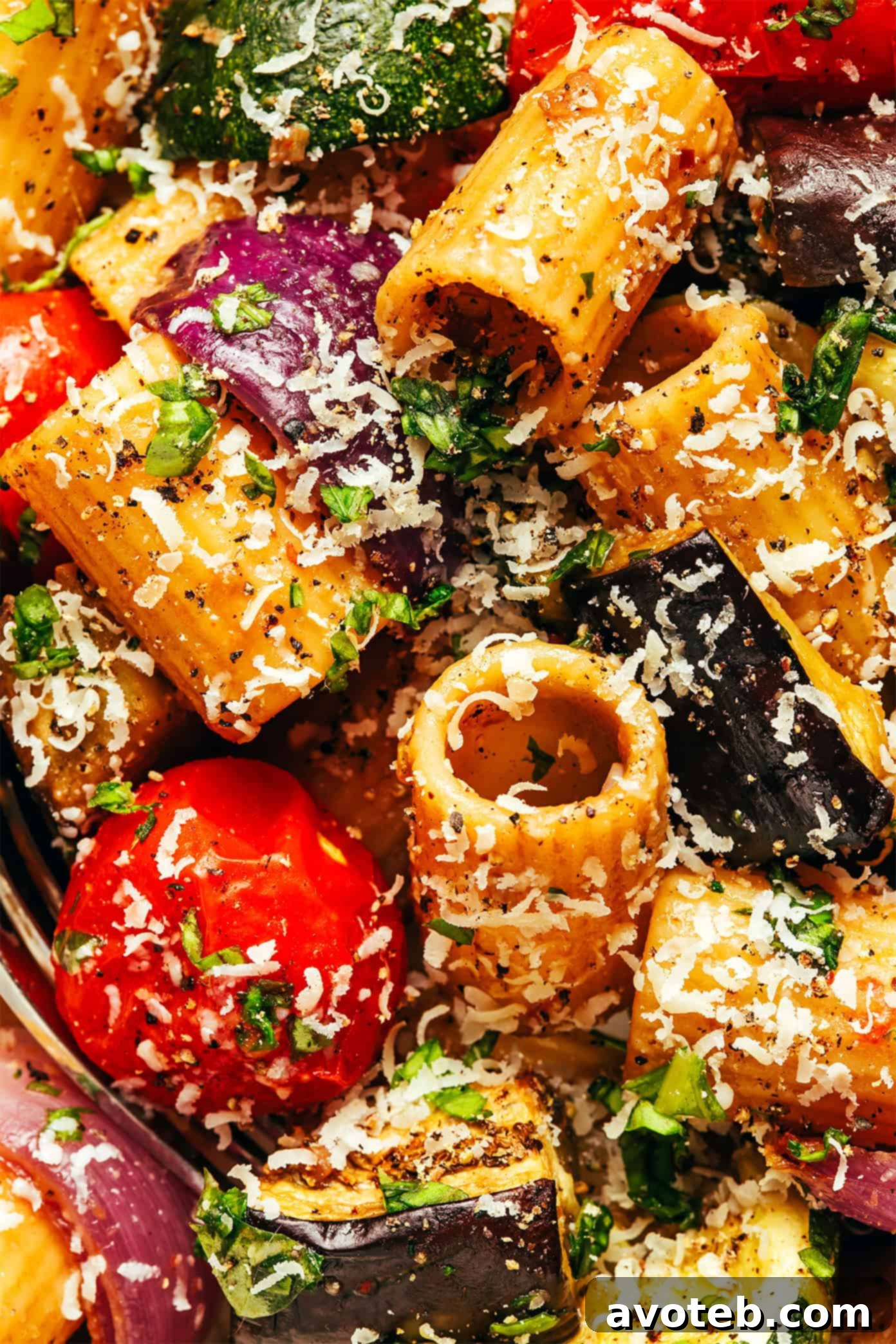
Perfect Pairings and Serving Suggestions
While this Roasted Vegetable Pasta is a complete and satisfying meal on its own, thoughtful pairings can elevate your dining experience. Here are some ideas to complete your meal:
- Crisp Green Salad: A simple, fresh green salad with a light vinaigrette provides a refreshing contrast to the richness of the pasta. Think mixed greens, cucumbers, and a lemon-herb dressing.
- Garlic Bread or Crusty Ciabatta: There’s nothing quite like warm, buttery garlic bread to soak up any leftover sauce or to enjoy alongside each bite of pasta. A crusty loaf of ciabatta with good olive oil is also an excellent choice.
- Simple Roasted Chicken or Fish: If you want an additional lean protein without integrating it directly into the pasta, a simply seasoned roasted chicken breast or a flaky baked white fish like cod or halibut would complement the flavors beautifully.
- White Wine Pairing: For adult guests, a crisp, dry white wine pairs wonderfully. Consider a Sauvignon Blanc, Pinot Grigio, or an unoaked Chardonnay to complement the fresh flavors and acidity of the balsamic.
- For Lunch or Meal Prep: As mentioned, this pasta is equally delicious served cold. Portion it into containers for quick and easy lunches throughout the week. It makes for a sophisticated and flavorful desk lunch!
Make Ahead and Storage Tips
This roasted vegetable pasta is best enjoyed fresh, but it also holds up beautifully for make-ahead meals and leftovers:
- Make Ahead: You can roast the vegetables and prepare the sauce up to a day in advance. Store the roasted vegetables in an airtight container in the refrigerator. Store the sauce separately or with the pasta, if already tossed, also in the refrigerator. When ready to serve, gently reheat the sauce and pasta (if combined) on the stovetop over low heat, adding a splash of vegetable broth or water to loosen if needed. Then, gently fold in the reheated vegetables.
- Storage: Leftovers should be stored in an airtight container in the refrigerator for up to 3-4 days.
- Reheating: To reheat, gently warm the pasta in a skillet over medium-low heat on the stovetop, adding a tablespoon or two of water or broth to help rehydrate the sauce and prevent drying. You can also microwave individual portions until just warm. Be careful not to overheat, which can make the pasta mushy.
- Freezing: Freezing this dish is generally not recommended as roasted vegetables can become overly soft and watery upon thawing, and pasta can change in texture. It’s best enjoyed fresh or from the refrigerator.
Roasted Vegetable Pasta
Author: Ali
Ingredients
Scale
Roasted Vegetables:
- 2 medium zucchini (1 pound), cut into half moons
- 1 small eggplant (1 pound), diced into 1-inch cubes
- 1 small red onion, thickly sliced
- 3 tablespoons olive oil, divided
- fine sea salt and freshly-ground black pepper
- 1 pound cherry or grape tomatoes
Garlic Balsamic Pasta:
- 1 pound pasta (I used mezze rigatoni)
- 4 tablespoons salted butter
- 5 large garlic cloves, pressed or minced
- 1/2 teaspoon crushed red pepper flakes
- 2 tablespoons balsamic vinegar
- 1 ounce freshly-grated Parmesan cheese, plus extra for serving
- 1/3 cup finely-chopped fresh basil, plus extra for serving
Instructions
- Prep the oven, baking sheet and pasta water. Heat the oven to 425°F. Line a large baking sheet with parchment paper. Bring a large stockpot of generously-salted pasta water to boil.
- Roast the vegetables. Combine the zucchini, eggplant and red onion in a large mixing bowl and drizzle with 2 tablespoons olive oil. Toss to combine, then arrange the vegetables in an even layer on the prepared baking sheet. Season generously with salt and pepper. Roast for 15 minutes. Meanwhile, toss the cherry tomatoes in the mixing bowl with the remaining oil and season with salt and pepper. Remove the baking sheet from the oven, gently scoot the veggies over slightly to make room for the tomatoes, then add the cherry tomatoes to the sheet. Roast for 15 more minutes.
- Cook the pasta. Once you have returned the baking sheet to the oven with the cherry tomatoes, add the pasta to the water and cook until *just* al dente. Meanwhile…
- Make the garlic brown butter balsamic sauce. Add the butter to a large nonstick sauté pan and heat over medium-high heat until it is completely melted and barely begins to foam. Add the garlic and crushed red pepper flakes and sauté for 1 minute, stirring, while the butter continues to brown. Turn off the heat, add the balsamic vinegar, and stir to combine. Around this point, the pasta should be ready to go. Use a spider strainer to transfer the pasta directly to the butter sauce and toss until combined. Add the Parmesan and continue tossing, adding in a small scoop of the starchy pasta water if needed, until the cheese has melted and formed a glossy coating for the pasta.
- Combine. Add all of the roasted veggies and basil to the pasta (you can either do this in the sauté pan, or pour out the pasta water and use the stockpot) and toss very gently until combined.
- Serve. Serve immediately, garnished with extra basil, grated Parmesan and a few twists of black pepper.