
Welcome back to our “Gimme Sommelier” series, your premier guide to uncorking the fascinating world of wine! In this series, we dive deep into everything from diverse varietals and renowned regions to expert tasting techniques. Today, we’re particularly excited to feature our friend Maureen, who will expertly guide us through an essential skill: navigating any wine tasting event with confidence and flair. Get ready to transform your approach to wine appreciation, and see if you can anticipate the legendary 5 S’s before we reveal their secrets!
For many, the nuanced world of wine tasting can initially appear shrouded in mystery, often feeling intimidating or exclusive. Whether you’re a complete novice eager to learn or a budding enthusiast looking to refine your palate, the idea of stepping into a structured tasting event, especially outside traditional wine country, might evoke a sense of trepidation. You might ponder where to even begin, or how to genuinely appreciate what’s in your glass without feeling out of place amongst perceived “wine connoisseurs.” But here’s an empowering secret: truly enjoying wine is a personal and accessible journey. With a few simple, actionable techniques, you’ll soon be tasting like a seasoned pro, often knowing just as much, if not more, than those self-proclaimed experts.
The beautiful essence of wine tastings lies in discovery, enjoyment, and expanding your personal appreciation for a diverse array of styles and flavors. They offer an unparalleled opportunity to explore new wines, potentially uncover a new lifelong favorite, and certainly to partake in a delightful, enriching experience – often for a modest fee, or sometimes even free! Discard any pressure or anxiety; rest assured, no one will quiz you on obscure tannin levels or complex aromatic compounds afterward. The ultimate goal is to relax, fully engage your senses, and savor every moment. If you’re seeking public tasting events, consider visiting your local boutique wine shop – many, much like our and Ali’s favorite Kansas City wine shop, regularly host engaging tastings on evenings and weekends. Alternatively, you can effortlessly curate your own intimate at-home wine tasting with friends, drawing inspiration from our previously recommended wines. (And excitingly, there’s more content on the horizon to help you plan even grander tasting adventures!)
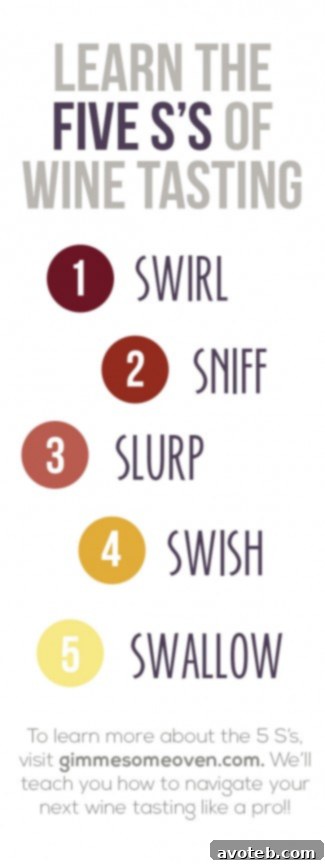
Regardless of where your personal wine tasting journey takes you, mastering a few fundamental techniques will unlock a profoundly deeper level of understanding and pleasure. All you need to remember are these five essential principles, universally revered as the 5 S’s of wine tasting. Let’s embark on this journey together to demystify the process and empower you to explore every exquisite nuance of your next glass.
Mastering the Art of Wine Tasting: The 5 Essential S’s
Learning how to properly taste wine extends far beyond simply consuming it; it’s about consciously engaging all your senses to fully appreciate its inherent complexity and the meticulous craftsmanship behind it. This systematic approach, universally known as the 5 S’s, provides a structured framework that even the most seasoned professional sommeliers utilize. Let’s thoroughly break down each step, revealing how these seemingly simple actions can profoundly deepen and enrich your overall wine experience.
1. Swirl: Awaken the Aromas and Enhance Perception
The inaugural step in truly appreciating any fine wine, particularly a robust red, involves proper aeration. Swirling is a pivotal component of this vital process, as it meticulously introduces oxygen to the wine, encouraging it to “open up” and generously release its full spectrum of aromatic compounds. Consider this action as gently awakening the wine from its slumber within the bottle. This aeration is absolutely essential for several reasons: it softens pronounced tannins often found in younger red wines, making them more approachable, and it allows volatile compounds responsible for the wine’s complex and captivating aromas to evaporate into the air, subsequently reaching your olfactory senses.
While swirling is remarkably effective, it’s just one of several valuable aeration methods. For older or more robust red wines, a traditional approach involves simply opening the bottle at least 30 minutes to an hour before serving, allowing the wine to breathe naturally. Other highly effective tools include a wine decanter, which dramatically increases the wine’s surface area exposure to oxygen, or an instant aerator, designed to quickly and efficiently infuse air into the wine as it’s poured.
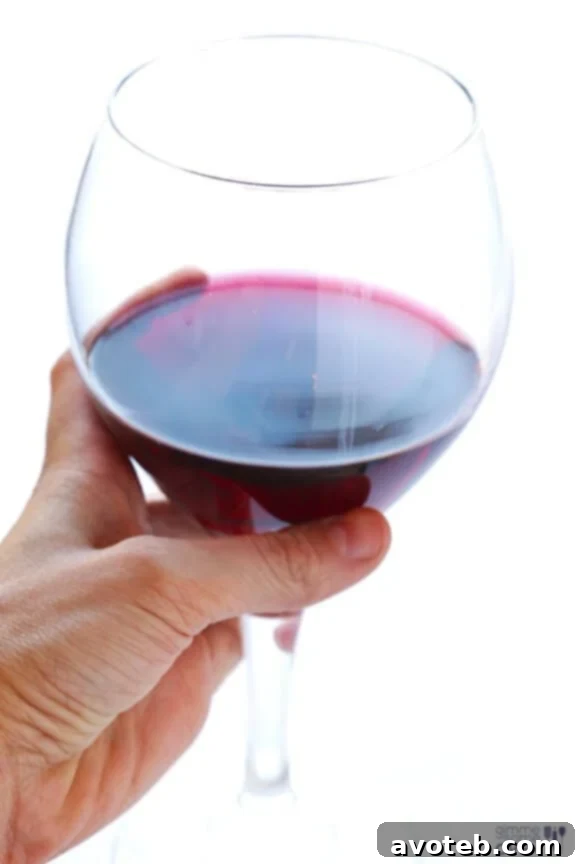
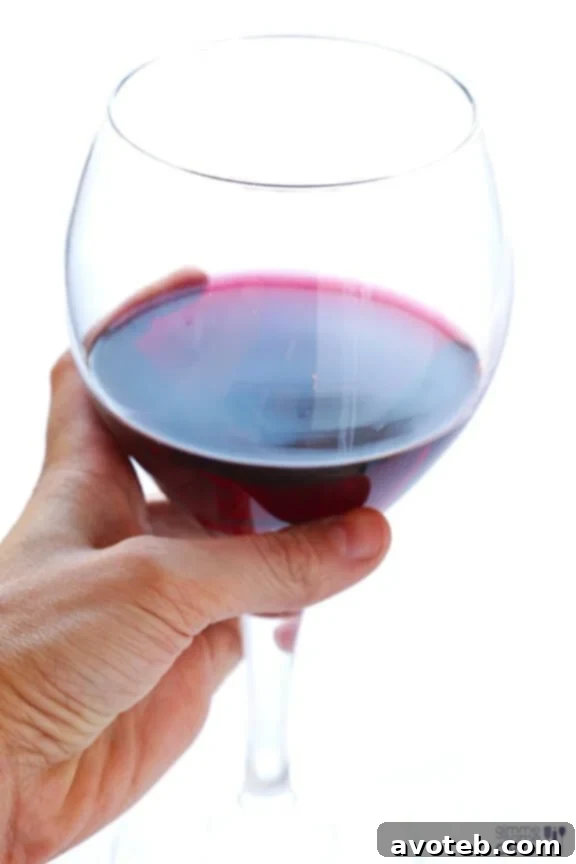
The reason wine glasses at reputable wine bars or esteemed wineries often appear so impressively large isn’t merely for aesthetic appeal; their specific shape and generous size are meticulously engineered for optimal swirling and aromatic concentration. A wide, capacious bowl allows you to gently rotate the wine without any risk of spillage, while simultaneously providing an expansive air surface for the wine’s intricate aromas to develop and intensify. For red wines, the classic “large Bordeaux” style glass is frequently recommended due to its substantial bowl, which is ideal for capturing and concentrating those rich, released aromatics. White wines, conversely, typically benefit from smaller, narrower bowls that help preserve their cooler serving temperatures and delicate, often subtle, floral and fruity notes.
To execute a perfect swirl, grasp the stem of your glass firmly and confidently. If you’re new to this technique, it can be helpful to initially place the base of your glass on a flat surface, making small, gentle circular motions. As your confidence grows, you can elegantly lift the glass and swirl it gracefully in the air. Observe closely how the wine delicately clings to the inner sides of the glass, forming what are often referred to as “legs” or “tears.” While frequently misinterpreted as a direct indicator of wine quality, these legs are simply a visual manifestation of the wine’s alcohol content and glycerol, a natural component. They do not necessarily reflect the wine’s inherent character or complexity. The true, profound benefit of swirling lies entirely in the magnificent release of its aromatic compounds. So, if you happen to be without the perfectly designed glass, simply swirl carefully to prevent any unintended spills and focus on unlocking those captivating scents!
2. Sniff: Unlocking the Bouquet of Flavors
Our senses of taste and smell are profoundly and intricately linked; an astonishing approximately 80% of what we consciously perceive as “taste” actually originates from our highly developed sense of smell. This makes the act of sniffing an absolutely critical and indispensable step in the comprehensive wine tasting process. After you’ve effectively swirled the wine to unleash its volatile aromas, it’s time to deeply engage your olfactory senses. A fine red wine, properly aerated, can present an incredibly inviting and complex bouquet that tantalizes the senses even before the first sip.
To extract the maximum benefit from this crucial step, bring your nose well into the wine glass. Don’t be shy – you should be daringly close to dipping the very tip of your nose into the liquid itself! Take a good, long, and deliberate sniff. What distinct aromas do you detect? Are there vibrant notes of fresh fruit, such as succulent berries, ripe cherries, or juicy plums? Perhaps subtle hints of dried fruit, like sweet raisins or figs? Can you identify delicate floral notes, such as violet or rose? Delve deeper: can you pick up on earthy undertones, reminiscent of mushroom or a damp forest floor? Are there warm spices like cinnamon, clove, or vanilla? Or even savory elements like leather or tobacco? These diverse aromatic compounds are broadly categorized into three significant groups:
- Primary Aromas: These are directly derived from the grape varietal itself and the unique characteristics of its terroir (e.g., specific fruit, floral, or herbal notes inherent to the grape).
- Secondary Aromas: These intriguing aromas develop during the intricate winemaking process, particularly during fermentation (e.g., yeasty, bread-like, or subtle dairy notes).
- Tertiary Aromas: These complex aromas evolve during the crucial aging process, whether the wine matures in oak barrels or within the confines of the bottle (e.g., rich vanilla, toasted notes, luxurious leather, fragrant tobacco, or earthy mushroom).
For a truly fun and insightful sensory exercise, try this intriguing experiment: block one nostril and take a sniff with the other, then switch and repeat the process. Do you perceive different scents or nuances emerging more prominently from each individual nostril? Sometimes, certain aromatic compounds are more readily detected by one side of your sophisticated olfactory system. Subsequently, compare this sensation to sniffing with both nostrils simultaneously. You might be genuinely surprised at the subtle yet distinct nuances you can uncover through this simple test, profoundly demonstrating the incredible complexity and sensitivity of our sense of smell and its paramount impact on overall wine perception.
3. Slurp: Aerating for Peak Flavor Intensity and Revelation
While it might initially appear unconventional and perhaps even generate a slight sound, the “slurp” is, in fact, a highly regarded professional tasting technique that significantly enhances your ability to perceive the full and intricate flavor profile of a wine. This crucial step is fundamentally about deliberately introducing even more air into the wine as it enters your mouth, effectively continuing and intensifying the aeration process that commenced with the swirl. This isn’t merely a casual sip; it’s a controlled, purposeful “sucking” action that meticulously mixes air with the wine directly on your palate.
Visualize the action akin to sipping a particularly thick milkshake through a straw, where you intentionally draw in a modest amount of air along with the liquid to get every last drop. When you apply this technique to wine, the influx of air further oxidizes the liquid, releasing additional aromatic compounds that then travel upward through the retro-nasal passage to your highly sensitive olfactory receptors. This process, known as retro-nasal olfaction, is absolutely crucial; it’s precisely how we truly “taste” many of the complex and nuanced flavors that are, in reality, aromas perceived from within the oral cavity.
By consciously slurping, you are actively assisting the wine in expressing its absolute best, fullest, and most vibrant flavor. This technique allows the subtle nuances, intricate layers, and underlying characteristics of the wine to become remarkably more pronounced and discernible, rendering the entire tasting experience significantly more dynamic, informative, and enjoyable. There’s no need to worry about appearing unsophisticated; in the dedicated world of wine tasting, this technique is a hallmark of someone genuinely and seriously engaged in understanding the wine’s complete essence. Practice gently at first to master control over the amount of air and wine, ensuring a comfortable yet highly effective slurp that unlocks new dimensions of flavor.
4. Swish: Engaging Every Taste Bud for Comprehensive Perception
Once the wine is comfortably in your mouth and you’ve completed the enlightening “slurp,” the next truly crucial step is to vigorously “swish” it around, much like you would with mouthwash before a meticulous dentist’s visit. While this action might initially feel a bit unconventional or perhaps less than elegantly refined, its fundamental purpose is entirely scientific and remarkably effective: to ensure that the wine makes complete and thorough contact with every single part of your tongue and the entirety of your palate.
Our tongues are not merely a uniform organ of taste perception; rather, they possess different regions and types of taste buds that are more sensitively attuned to specific flavors. While the antiquated “taste map” of the tongue (which falsely claimed sweet at the tip, bitter at the back, etc.) has been largely debunked by modern science, it remains profoundly true that thoroughly coating your entire mouth ensures maximum exposure to the wine’s myriad components. This comprehensive process allows you to fully appreciate the five fundamental basic tastes – sweetness, sourness (acidity), bitterness (often derived from tannins or specific varietals), saltiness (a rarer but sometimes present note in certain wines), and umami (even rarer but a subject of fascinating ongoing research in wine) – as well as critical textural elements.
As you actively swish the wine, pay close and deliberate attention not only to the immediate flavors but also to the intricate mouthfeel. Does the wine feel rich, velvety, and full-bodied, or is it light, crisp, and delicately structured? Does it present as smooth and supple, or does it impart an astringent, drying sensation? This astringency is often attributable to tannins, particularly prominent in red wines, which create that characteristic drying feeling. How strong and vibrant is the acidity? Does it induce a pleasant, salivating sensation in your mouth? By actively engaging all these sensory inputs through swishing, you gain a holistic and profound understanding of the wine’s intricate structure, impeccable balance, and unique character. This comprehensive and deliberate contact ensures that you don’t miss any of the subtle, nuanced, or dominant flavors and sensations that the wine has so generously to offer.
5. Swallow (Slowly) or Spit: Evaluating the Enduring Finish
So, whether you’re savoring that exquisite first sip from a newly opened bottle in the comfort of your home, or actively participating in a lively and enlightening weekend tasting event at your cherished local wine shop, you now possess the fundamental and essential tools to maximize your wine tasting experience. By diligently and systematically following these 5 S’s, you will not only precisely discover whether you genuinely love a particular wine but also gain a much more thorough and nuanced understanding of its diverse aspects and intricate flavors. This structured, systematic approach beautifully builds upon the foundational knowledge we began exploring in our Wine 101 guide, thereby enriching your personal journey into the truly wonderful and endlessly fascinating world of wine.
Remember, wine tasting is an ongoing adventure – a continuous journey of sensory discovery and personal growth. The more consistently you practice these proven techniques, the more finely attuned your senses will become, and the more profoundly you’ll appreciate the intricate stories each bottle has to tell. Never hesitate to trust your own unique palate and personal preferences; after all, the “best” wine is, ultimately and unequivocally, the one you personally enjoy the most. Cheers to your enhanced wine journey!
Dive deeper into the captivating world of wine with our other highly informative posts, designed to elevate your expertise:
- Wine 101: The Basics of Wine Appreciation and Understanding
- Wine Recommendations for Drinking and Gifting: Perfect Picks for Any Occasion
- (And keep an eye out for even more exciting content coming soon to expand your sommelier knowledge and delight your palate!)