
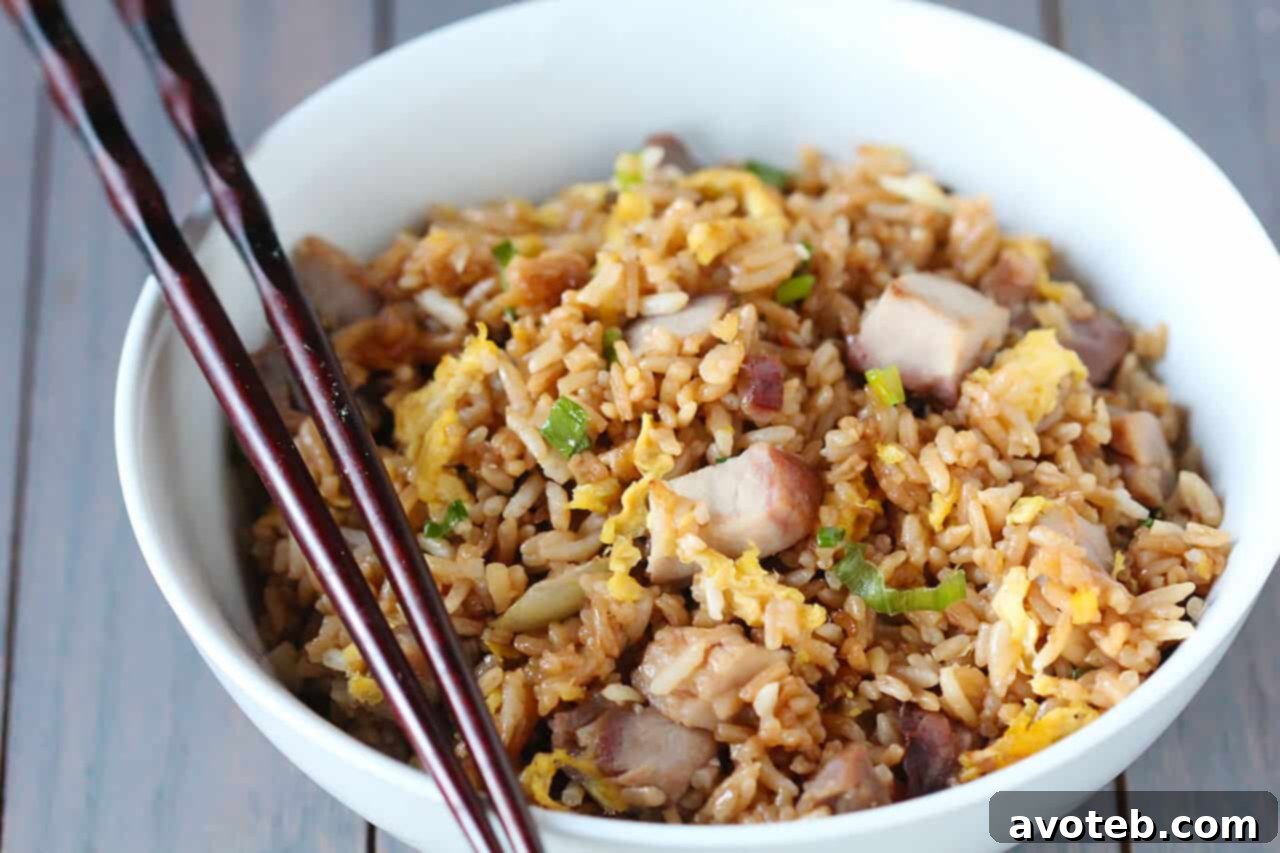
The Enduring Comfort of Pork Fried Rice and a Dash of Kikkoman Tradition
Today, I’m thrilled to share a culinary journey that connects two deeply cherished elements from my childhood: the timeless appeal of Kikkoman soy sauce and the irresistible flavor of homemade pork fried rice. These aren’t just ingredients or a dish; they are cornerstones of countless family memories, evoking a profound sense of nostalgia and comfort.
For as long as I can remember, our family upheld a treasured Saturday tradition: lunch at Lotus Gardens, our beloved local Chinese restaurant. This wasn’t just a meal; it was a ritual, a weekly anchor around which our lives revolved. From my sister and me squirming in booster seats, to competitive elementary schoolers racing through math problems scribbled by our dad on paper placemats, to “too-cool-for-school” middle schoolers sporting questionable fashion choices and oversized glasses, all the way to high schoolers bringing along new friends and budding romances, and even college students making it their first stop within 24 hours of every visit home – those Saturday lunches forged some of our family’s most enduring and heartwarming memories.
Each family member had their unyielding order, a personal culinary signature. Dad consistently chose #7, Mom opted for #13, meticulously requesting “no bamboo shoots,” while my sister Sarah never strayed from her chow mein. My choice was equally steadfast: a large bowl of comforting egg drop soup paired with a generous serving of savory pork fried rice. But no meal, regardless of our individual preferences, was ever truly complete without “the bottle with the red cap” – our essential Kikkoman Soy Sauce. It was passed around the table, a communal act of seasoning, often circling back for second or even third dashes. Our family’s collective love for this iconic soy sauce was, and remains, undeniable.
The Kikkoman Difference: A Taste of Authenticity
My mother can still recount the vivid story of a small, rather dramatic tantrum I threw when she once dared to bring home an “off-brand” soy sauce for a stir-fry. Even as a child, my palate was discerning enough to detect the subtle, yet significant, difference in taste. I wrinkled my young nose and complained persistently until, later that week, she relented and returned to the store to acquire “the real deal.” This unwavering loyalty to Kikkoman has stayed with me into adulthood. Today, my pantry and refrigerator are well-stocked with a diverse array of Kikkoman products, extending far beyond the classic soy sauce to include teriyaki, panko, various rice vinegars, hoisin, plum, oyster, Thai chili, and black bean sauces, among others. It has been truly inspiring to witness the remarkable growth and evolution of this company over the years, all while maintaining its commitment to quality and tradition.
This deep personal connection to the brand made me incredibly excited when I learned about “Make Haste Slowly: The Kikkoman Creed,” a new short documentary directed by the acclaimed Academy Award nominee Lucy Walker. Having recently had the privilege to watch it, I can attest that it is an exquisitely produced film. Prior to viewing, I was entirely unaware of Kikkoman’s profound history. The documentary reveals that the brand boasts a remarkable heritage stretching back over 300 years, founded by women during an era when such entrepreneurial endeavors were virtually unheard of for women. From its very inception, the company committed itself to an inspiring family creed, a philosophy of excellence and integrity passed down through an astounding nineteen generations. This steadfast dedication to their values accompanied them when they courageously ventured into the United States in the 1970s, becoming one of the first Japanese companies to establish operations there. The narrative of how they consistently honor their product and tradition, and perhaps even more remarkably, their unwavering respect for the people who craft these products, is nothing short of amazing.
I genuinely encourage anyone, the next time you’re enjoying some Chinese takeout or preparing a homemade stir-fry, to take just 24 minutes to watch “Make Haste Slowly.” I can guarantee that your perception of that familiar little bottle with the red cap will be forever transformed. It’s a powerful testament to heritage, perseverance, and the timeless pursuit of quality, values that resonate deeply with the simple joy of sharing a meal.
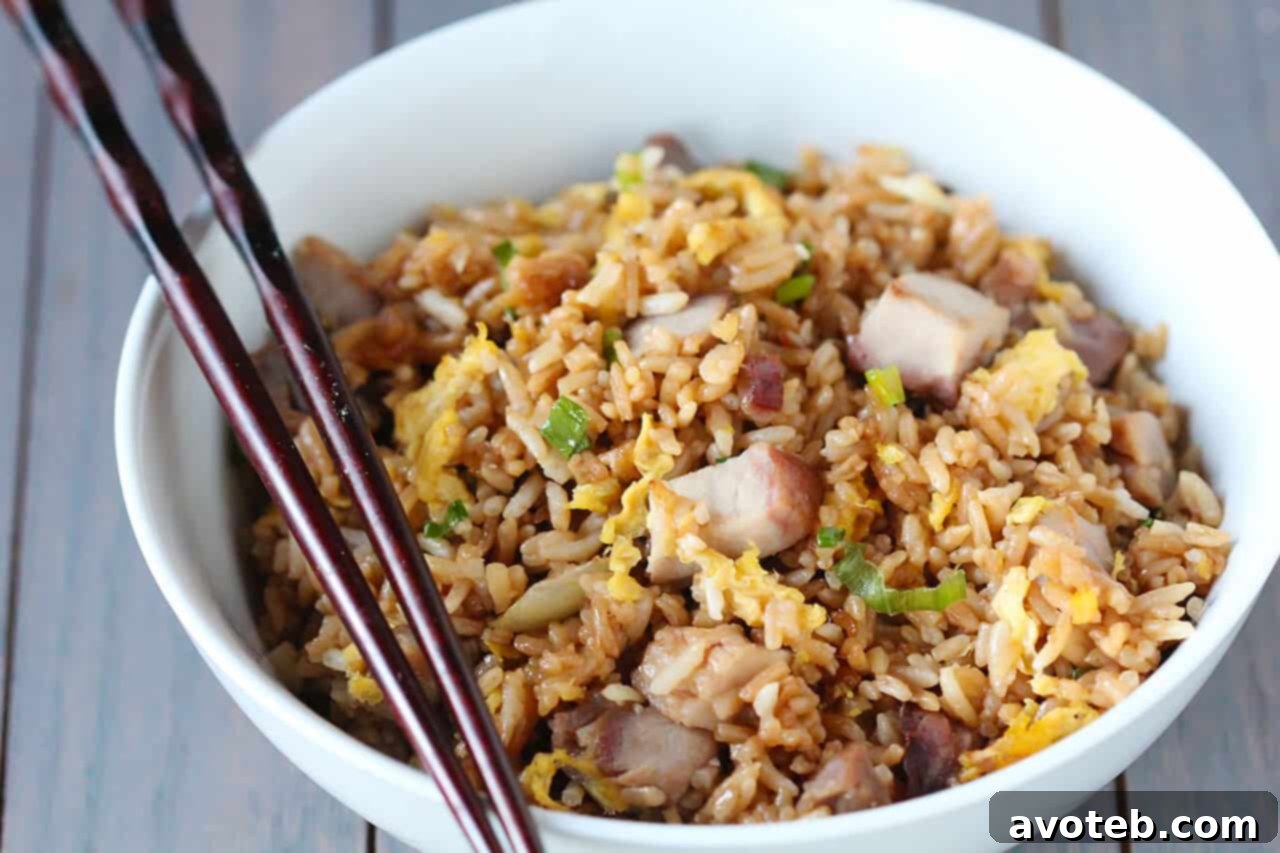
Pork Fried Rice
- Prep Time: 20 minutes
- Cook Time: 10 minutes
- Total Time: 30 minutes
- Yield: 4 – 6 servings
Description
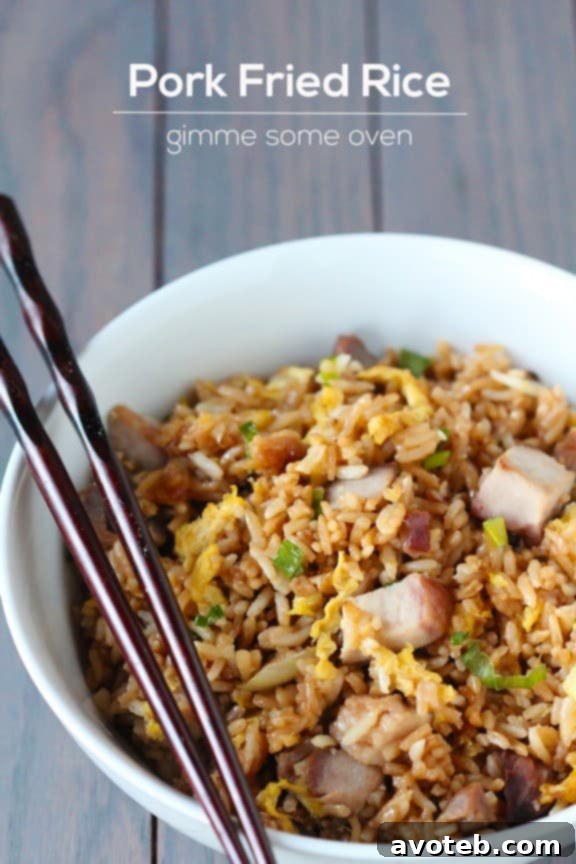
Experience the ultimate homemade pork fried rice – a savory, comforting classic that rivals any restaurant dish. This recipe brings together simple ingredients for a delicious meal perfect for family dinners or entertaining guests. The key to its authentic flavor lies in fresh ingredients and proper technique, ensuring a fragrant and perfectly textured fried rice every time.
Ingredients
- 2 large eggs, beaten
- 1 Tbsp. light soy sauce (divided)
- 1 1/2 tsp. sesame oil (divided)
- 3 Tbsp. vegetable oil (divided)
- 2 cloves of garlic, minced
- 4 cups cold, cooked rice (day-old rice works best for texture)
- 2 spring onions, green and white parts separated, then thinly sliced
- 2 cooked Chinese sausages (lap cheong), quartered lengthwise then diced (or substitute with cooked char siu pork or bacon)
- 2 medium carrots, diced and cooked until tender-crisp
- 1/2 cup frozen green peas (optional, but adds color and sweetness)
- 1 Tbsp. oyster sauce (for umami depth)
Instructions
- Begin by preparing the eggs. In a small bowl, beat the 2 eggs together with 1 teaspoon of the light soy sauce and 1/2 teaspoon of the sesame oil. Heat a non-stick frying pan over medium heat and add 1 tablespoon of vegetable oil. Once hot, pour in the beaten egg mixture, swirling it to evenly coat the bottom of the pan, much like making a thin omelet. As the egg begins to set, gently push the cooked edges towards the center, allowing any uncooked egg to flow outwards. When the egg is mostly set but still slightly moist, flip it over to cook briefly on the other side. Transfer the cooked egg sheet to a chopping board and cut it into small, uniform square pieces. Set aside.
- Next, prepare the main fried rice base. Heat a large wok or a very large frying pan over high heat until it’s smoking slightly. Add the remaining 2 tablespoons of vegetable oil. Add the minced garlic and stir-fry rapidly for about 30 seconds to 1 minute, until fragrant but not browned. Immediately add the cold cooked rice to the wok, along with the remaining 2 teaspoons of light soy sauce. Fry on high heat, breaking up any clumps of rice with your spatula, for approximately 5-7 minutes. The goal is for the rice to become hot, slightly toasted, and wonderfully fragrant. Transfer the cooked rice to a bowl and set it aside to prevent overcooking.
- Clean the wok if necessary, then return it to high heat. Add the final 1 tablespoon of vegetable oil. Add the diced Chinese sausages (or chosen pork substitute) and the white parts of the sliced spring onions. Stir-fry for about 2 minutes, allowing the sausages to crisp up slightly and release their flavor. Then, add the diced cooked carrots and the optional green peas. Pour in the oyster sauce and continue to stir-fry for another 2 minutes, ensuring all the vegetables are well coated and heated through.
- Return the previously cooked rice to the wok with the vegetables and sausage. Stir everything together vigorously, mixing until all ingredients are evenly distributed and the entire mixture is piping hot, which should take about 3-4 minutes. Finally, add the diced cooked egg and the green parts of the spring onions. Give it one final stir-fry for about 1 minute to gently incorporate the eggs and slightly warm the spring onion greens. Turn off the heat immediately. Your delicious homemade pork fried rice is now ready to serve! Garnish with extra sliced green onions if desired, and enjoy this incredibly satisfying dish.
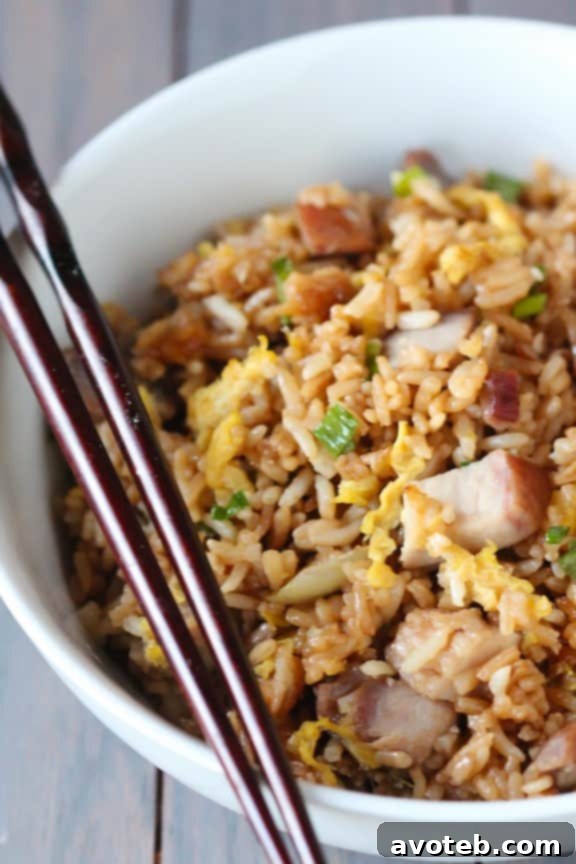
Tips for Perfect Homemade Fried Rice
Achieving restaurant-quality fried rice at home is simpler than you might think, and a few key techniques can make all the difference. Firstly, always use **cold, day-old rice**. Freshly cooked rice is too moist and will lead to a mushy texture rather than the distinct, fluffy grains we all love in fried rice. Spreading leftover rice on a baking sheet and refrigerating it for a few hours or overnight helps it dry out, which is crucial for the perfect stir-fry.
Secondly, **high heat is your friend**. A hot wok or a large, heavy-bottomed skillet is essential. The high temperature allows the ingredients to cook quickly and develop that characteristic “wok hei” – the smoky, complex flavor imparted by intense heat. Don’t overcrowd the pan; if you’re making a large batch, it’s better to cook it in two smaller batches to maintain the high temperature and ensure everything fries rather than steams.
Thirdly, **prep all your ingredients beforehand**. Fried rice cooks incredibly fast, so having all your minced garlic, sliced spring onions, diced sausages, and cooked carrots ready to go will ensure a smooth cooking process. This is often referred to as “mise en place” and is fundamental to Asian stir-frying techniques.
Finally, don’t be afraid to **customize your fried rice**. While this recipe offers a delicious classic pork version, fried rice is incredibly versatile. You can easily substitute the pork with chicken, shrimp, beef, or even extra vegetables for a vegetarian option. Add a splash of fish sauce for extra depth, or a pinch of white pepper for a subtle spice. The beauty of homemade fried rice is that it can be adapted to your personal taste and whatever ingredients you have on hand.
Why Kikkoman Elevates Your Culinary Experience
Beyond the personal anecdotes and childhood memories, Kikkoman’s enduring appeal stems from its commitment to quality and authenticity. Their traditional brewing methods, which have been perfected over centuries, result in a soy sauce with a distinct aroma, rich umami flavor, and balanced sweetness that simply cannot be replicated by faster, chemically produced alternatives. This depth of flavor makes Kikkoman not just a condiment, but a fundamental ingredient that enhances the taste profile of countless dishes, from marinades and dressings to stir-fries and dipping sauces.
The story of Kikkoman, as beautifully told in “Make Haste Slowly,” is a testament to the power of tradition, innovation, and respect. It highlights how a company, rooted in ancient Japanese heritage and guided by a profound family creed, successfully navigated global expansion while maintaining its core values. This narrative extends beyond the product itself, offering insights into sustainable business practices and a deep reverence for employees and customers alike. Understanding this rich history adds an extra layer of appreciation to every drop of Kikkoman soy sauce, transforming it from a mere bottle on the shelf into a symbol of culinary excellence and cultural legacy.
Whether you’re recreating cherished family recipes like this pork fried rice or exploring new culinary horizons, choosing high-quality ingredients like Kikkoman can truly elevate your cooking. It’s a small detail that makes a significant impact, turning everyday meals into extraordinary experiences and continuing a tradition of flavor that has spanned generations.