
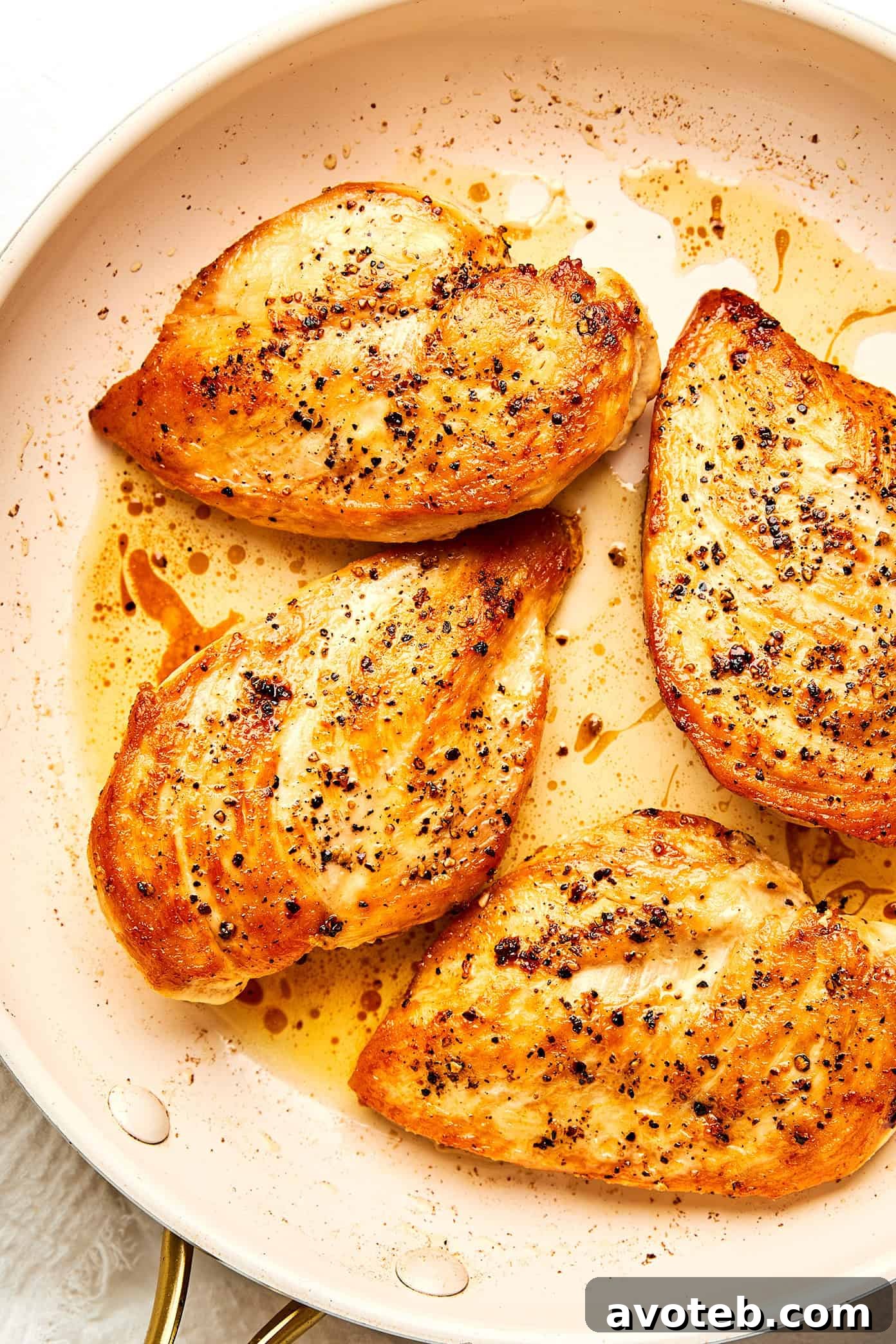
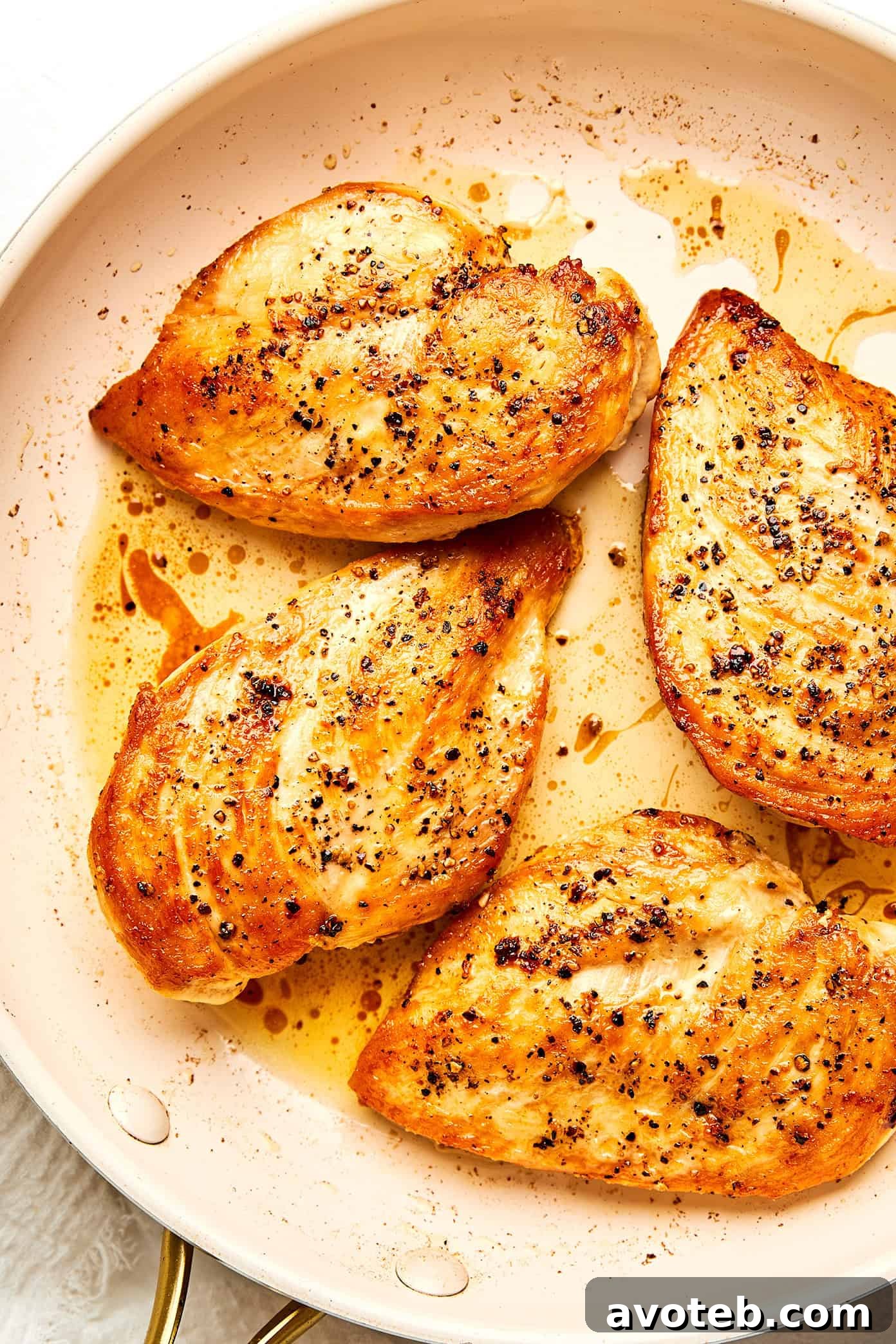
Foolproof Juicy Skillet Chicken Breasts

Cooking school time! Today we return to basics with an essential chicken recipe everyone should have in their repertoire. Pan-searing chicken breasts is a fast, versatile way to get a flavorful dinner, but it can be tricky to get right without a few key techniques. This guide covers the simple, reliable method I use to achieve juicy chicken with a beautiful golden crust every time.
Once you’ve mastered the basic approach, you can easily adapt it with different seasonings, herbs, or finishing touches. My personal favorite is the minimalist version—generous salt and freshly ground black pepper—because it highlights the chicken itself. If you have fifteen extra minutes, a quick brine helps keep the meat especially moist, but when time is short skipping the brine is perfectly fine. The essentials are good seasoning, a properly heated skillet, and knowing when to flip and when to remove the chicken to rest.
Pan-Seared Chicken Breast Tips
Pan-searing chicken looks simple, but a few small details make a big difference in the result. Follow these tips for consistently juicy, evenly cooked breasts with a golden crust:
- Pound the chicken to an even thickness. Chicken breasts are thicker on one end, which causes uneven cooking. Place each breast between parchment paper or plastic wrap and gently pound to about 1/2 to 3/4 inch thick so the pieces cook at the same rate.
- Brine if you have time. A 15–30 minute brine of salt and water improves moisture and flavor. If the chicken is already labeled as enhanced or injected with a sodium solution, skip the brine.
- Dry the chicken thoroughly. Pat the breasts completely dry before seasoning so they sear instead of steam. This is especially important after brining.
- Heat the pan first. Use a large skillet and heat the oil until it shimmers. A properly hot pan helps create a golden crust and prevents sticking.
- Leave the chicken alone while it sears. Resist the urge to move or lift the breasts. Allow a few uninterrupted minutes to develop a deep brown crust before flipping.
- Adjust heat as needed. If the chicken browns too quickly after flipping, lower the heat. You want a golden color rather than burned spots.
- Use a thermometer. An instant-read thermometer is the best way to avoid overcooking. Aim to remove the chicken around 155–160°F and let it rest to reach the safe internal temperature of 165°F.
- Rest before slicing. Let the cooked chicken rest for five minutes so the juices redistribute, keeping slices moist.
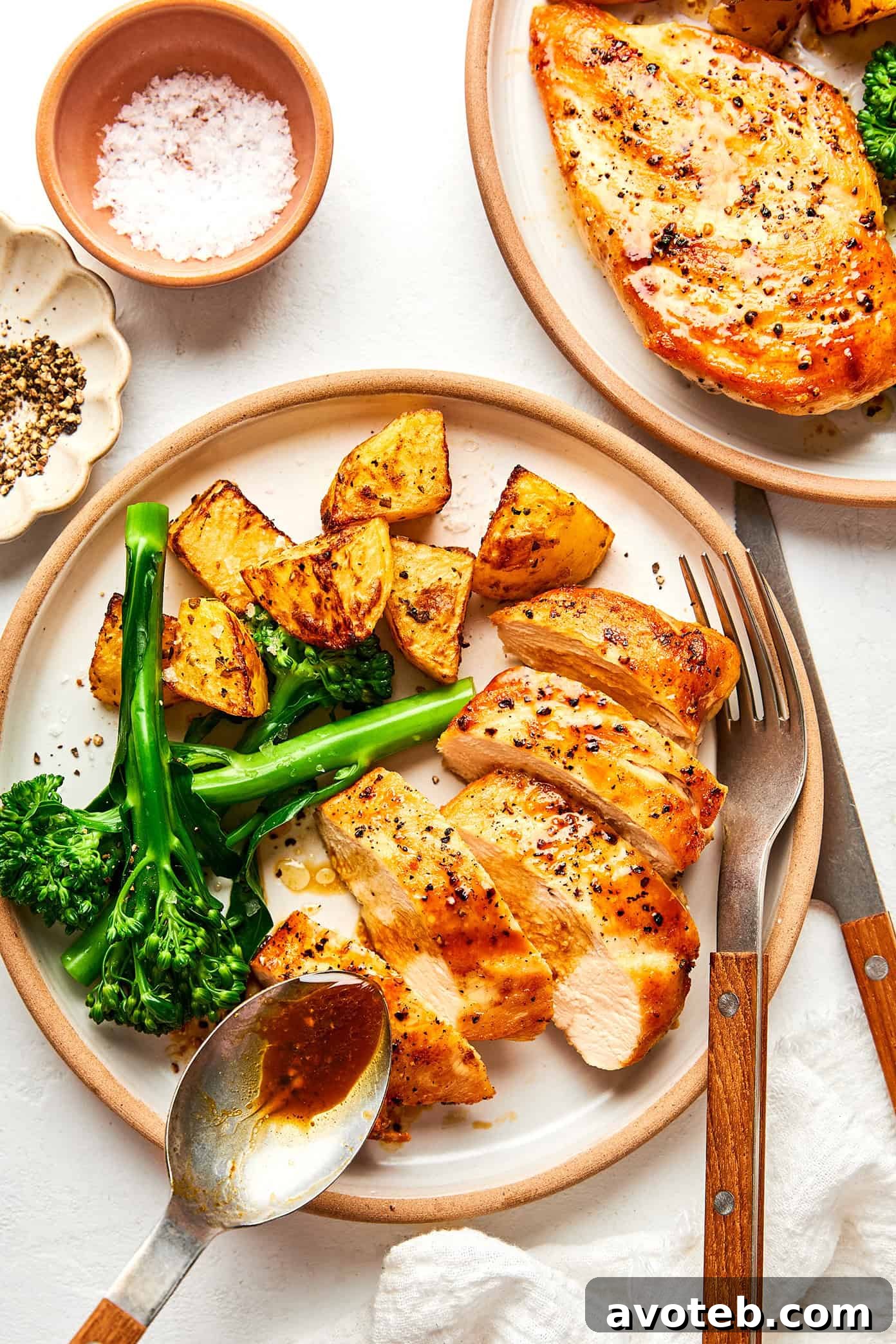
- Make a quick pan sauce. If the skillet has browned bits (fond), pour in a splash of chicken broth or water and scrape the bottom to loosen those flavorful bits. Simmer briefly and spoon over the sliced chicken.
Variations You Can Try
After you master the base technique, try these simple variations to change the flavor profile:
- Add garlic: Toss a few smashed garlic cloves into the pan after flipping and let them sizzle alongside the chicken for fragrant flavor.
- Finish with fresh herbs: Add sprigs of rosemary, thyme, or sage to the skillet in the final minutes to infuse aroma.
- Make it lemony: A squeeze of fresh lemon juice and a little zest at the end brightens the dish.
- Finish with butter: Add a tablespoon or two of butter after flipping and spoon the melted butter over the breasts while they finish cooking for a rich finish.
- Change the seasoning: Swap salt and pepper for a favorite blend—Italian seasoning, Cajun spices, smoked paprika and garlic powder, or any mix that suits your meal.
FAQ
A large stainless steel or cast-iron skillet is ideal because these pans hold and distribute heat well for a good sear. A high-quality nonstick skillet can also work and can be more forgiving for beginners.
Pound to an even thickness so they cook evenly, consider a short brine, and use an instant-read thermometer to avoid overcooking. Pull the chicken when it reaches about 155–160°F and allow carryover cooking while it rests to reach 165°F.
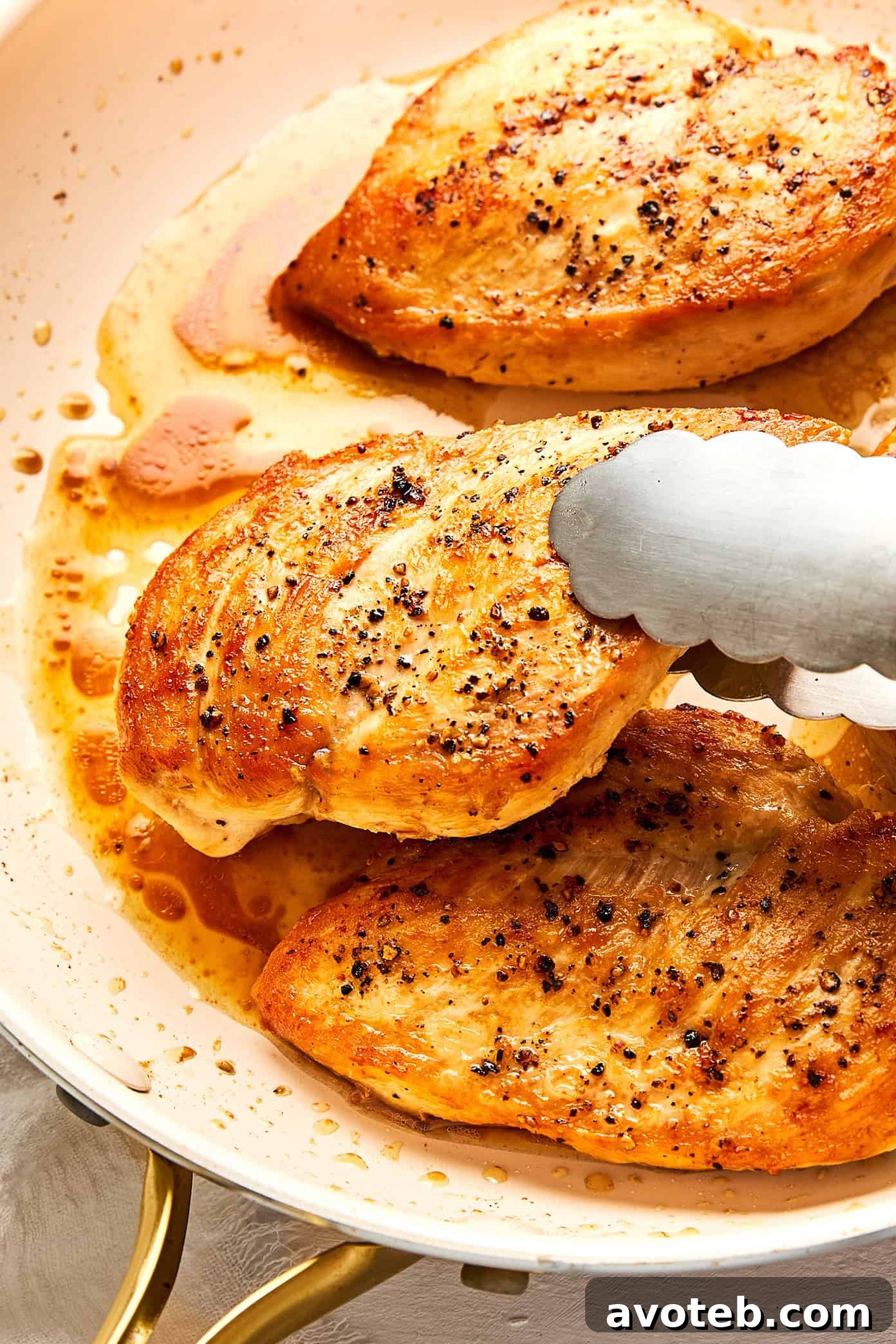
When the sides of the breasts look opaque about halfway up and the underside releases easily from the skillet, it’s usually ready to flip—typically after about 3–5 minutes, depending on thickness and heat.
Chicken often sticks initially and then releases once a proper crust has formed. A hot skillet, enough oil, and patience help prevent sticking and encourage a clean release.
Pan-Seared Chicken Breasts
10 minutes
10 minutes
15–30 minutes
20 minutes (plus brining time, if used)
4 servings
Equipment
- Instant-read cooking thermometer (recommended)
Ingredients
Chicken Breasts:
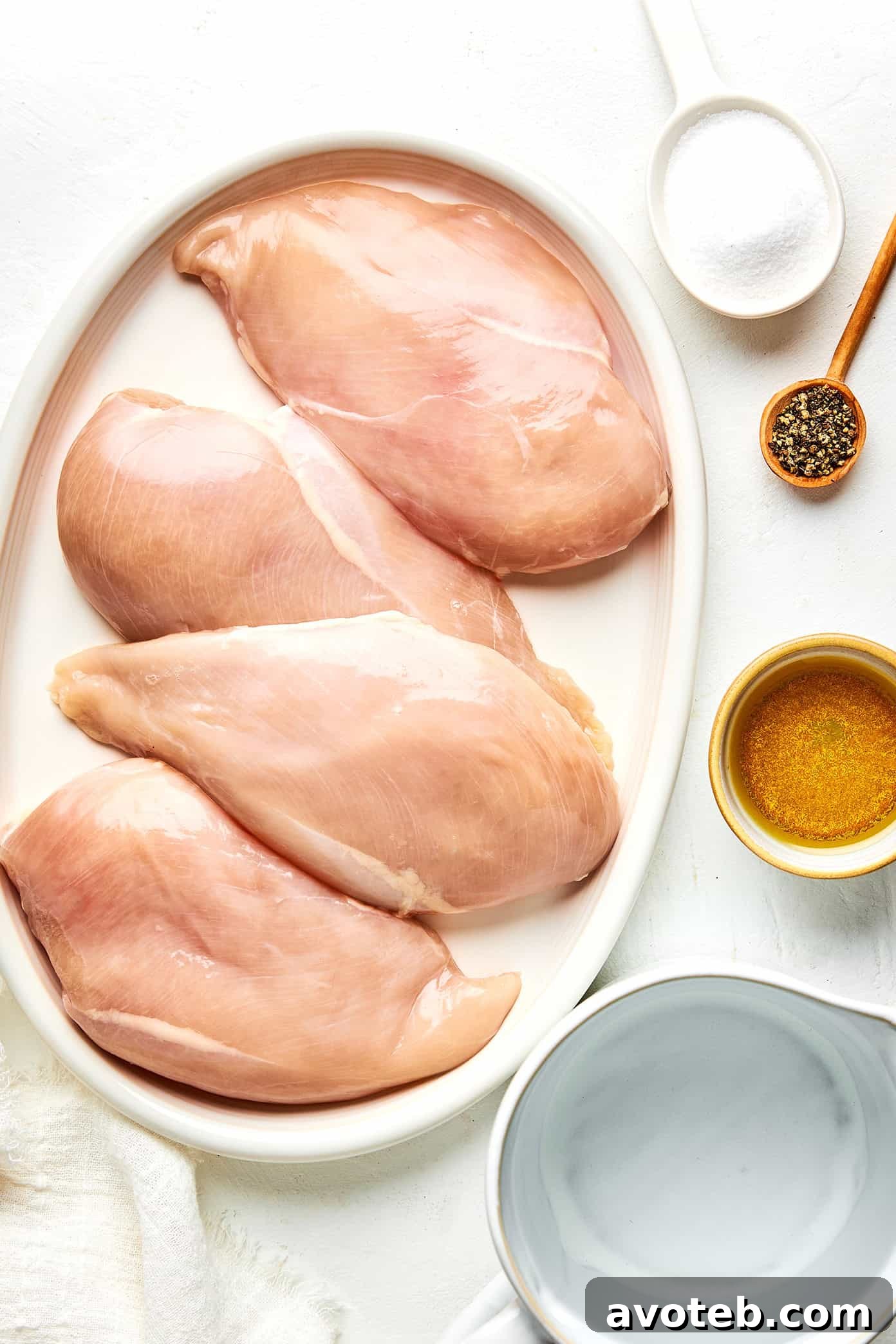
- 4 boneless skinless chicken breasts, about 6 to 8 ounces each
- 1 teaspoon fine sea salt (only if not brining)
- 1/2 teaspoon freshly ground black pepper
- 2 tablespoons avocado oil or another neutral high-heat oil
Optional Brine:
- 4 cups water, divided
- 2 1/2 tablespoons fine sea salt
Instructions
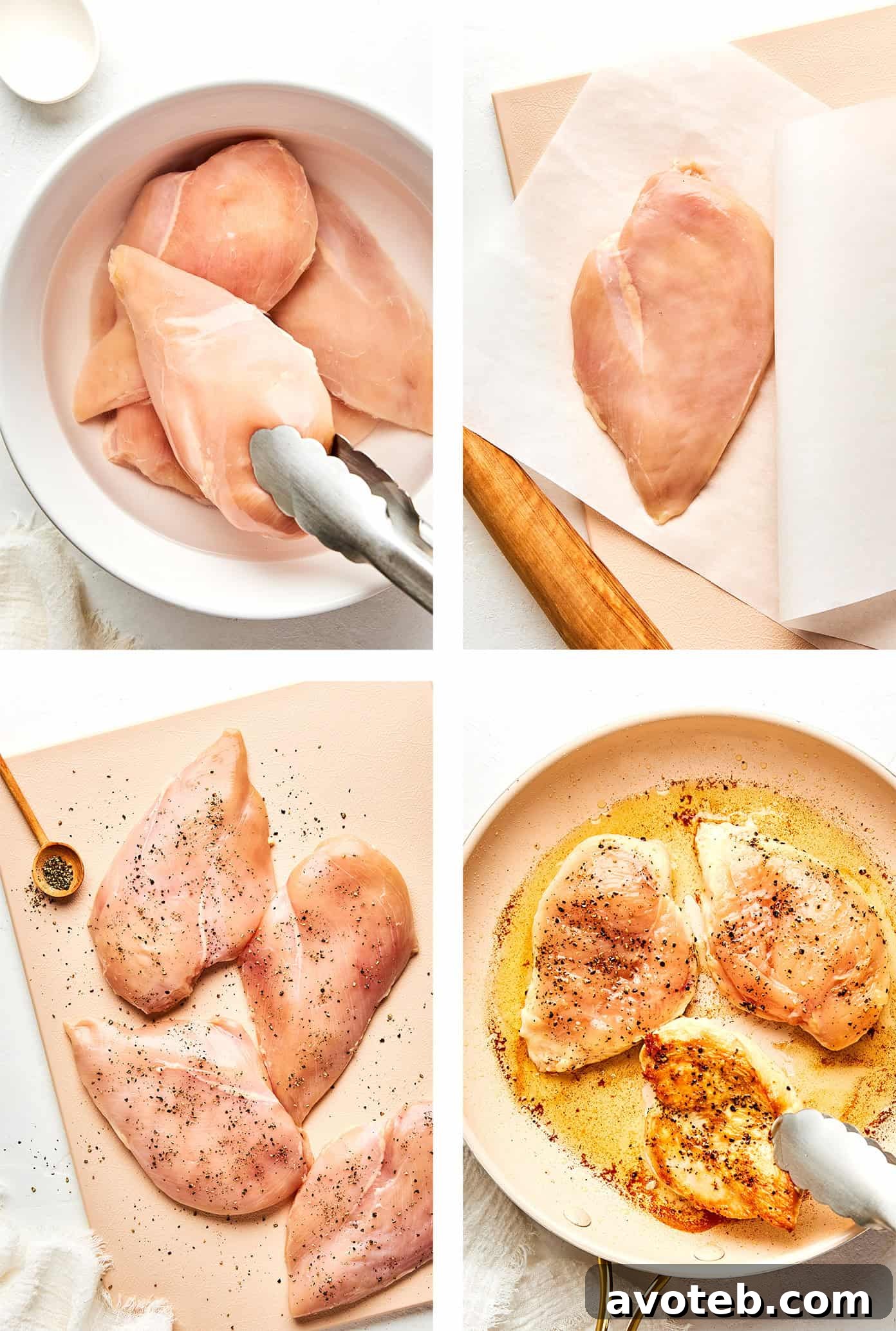
- Pound the chicken. Place the breasts between two sheets of parchment paper or plastic wrap and gently pound the thicker portions until each breast is an even 1/2 to 3/4 inch thick.
- Brine the chicken (optional). Check the package to ensure the chicken hasn’t already been enhanced. Stir 2 1/2 tablespoons fine sea salt into 2 cups lukewarm water until dissolved, then add 2 cups cold water. Submerge the chicken and brine for 15 to 30 minutes. Remove and pat very dry with paper towels.
- Season. Evenly season both sides with freshly ground black pepper. If you did not brine, also season with 1 teaspoon fine sea salt. If you brined, do not add additional salt.
- Sear the first side. Heat the oil in a large skillet over medium-high heat until shimmering. Add the chicken breasts in a single layer and cook without moving them for 3 to 5 minutes, until the underside is deeply golden and the sides look opaque about halfway up.
- Flip and finish. Flip the breasts, reduce the heat to medium, and cook uncovered for another 3 to 5 minutes, or until the thickest part registers 155–160°F. If the exterior browns too quickly, reduce heat to medium-low. The chicken will continue to cook while resting to reach 165°F.
- Rest. Transfer the chicken to a clean plate and let it rest for 5 minutes before slicing to allow juices to redistribute.
- Deglaze the pan (optional). While the skillet is still hot, carefully pour 1/4 cup water or chicken broth into the pan and scrape the browned bits with a wooden spoon. Simmer 1–2 minutes until slightly reduced, then spoon the pan juices over the sliced chicken.
- Serve. Slice the chicken against the grain and serve warm with the pan sauce or your preferred sides.

Did you make this?
Let me know how it turned out in the comments below!