
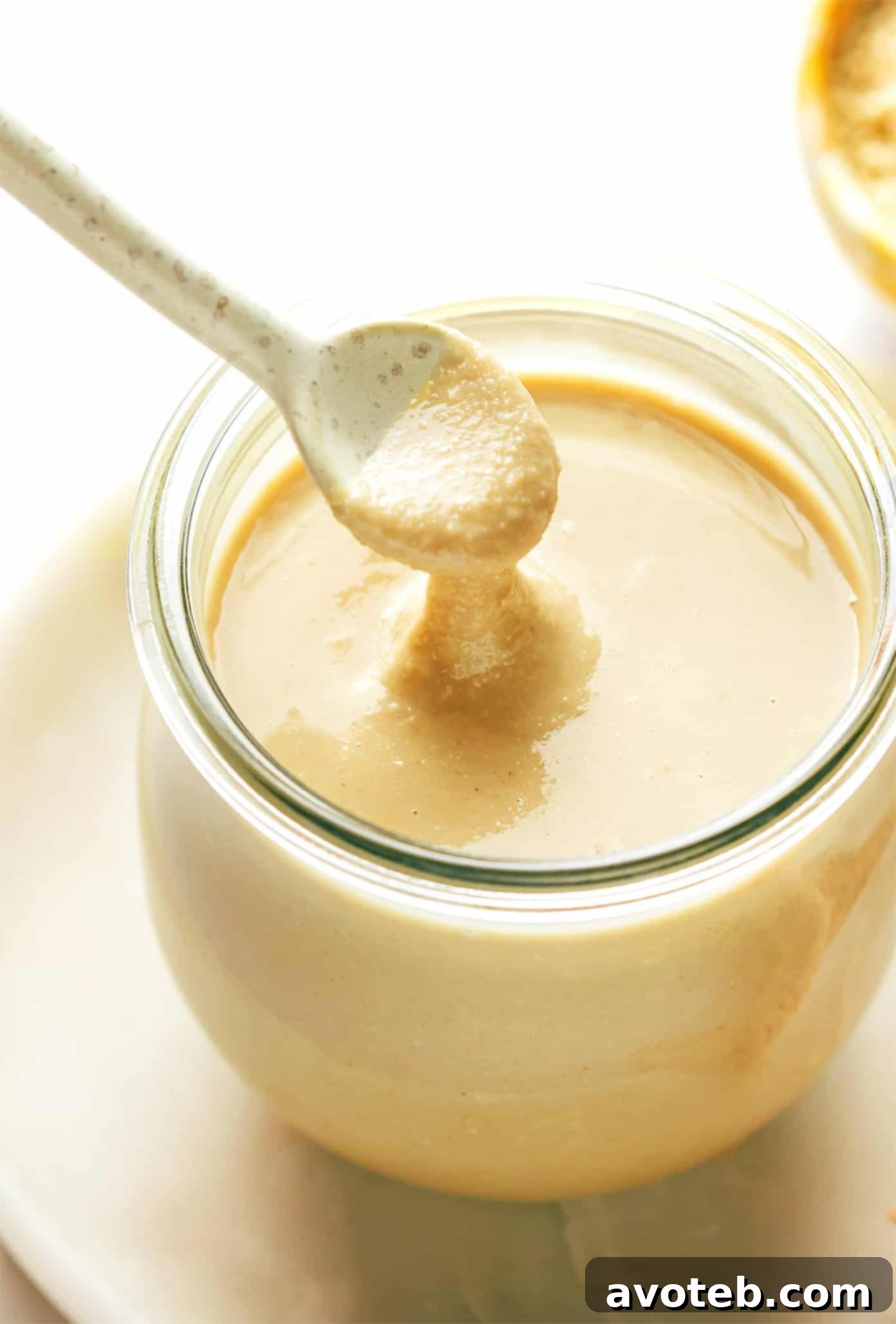
Discover how to make creamy, delicious homemade tahini with just 3 simple ingredients in under 15 minutes. This essential Middle Eastern condiment is incredibly versatile, perfect for elevating everything from savory dips and dressings to sweet treats. Naturally gluten-free, vegetarian, and vegan.
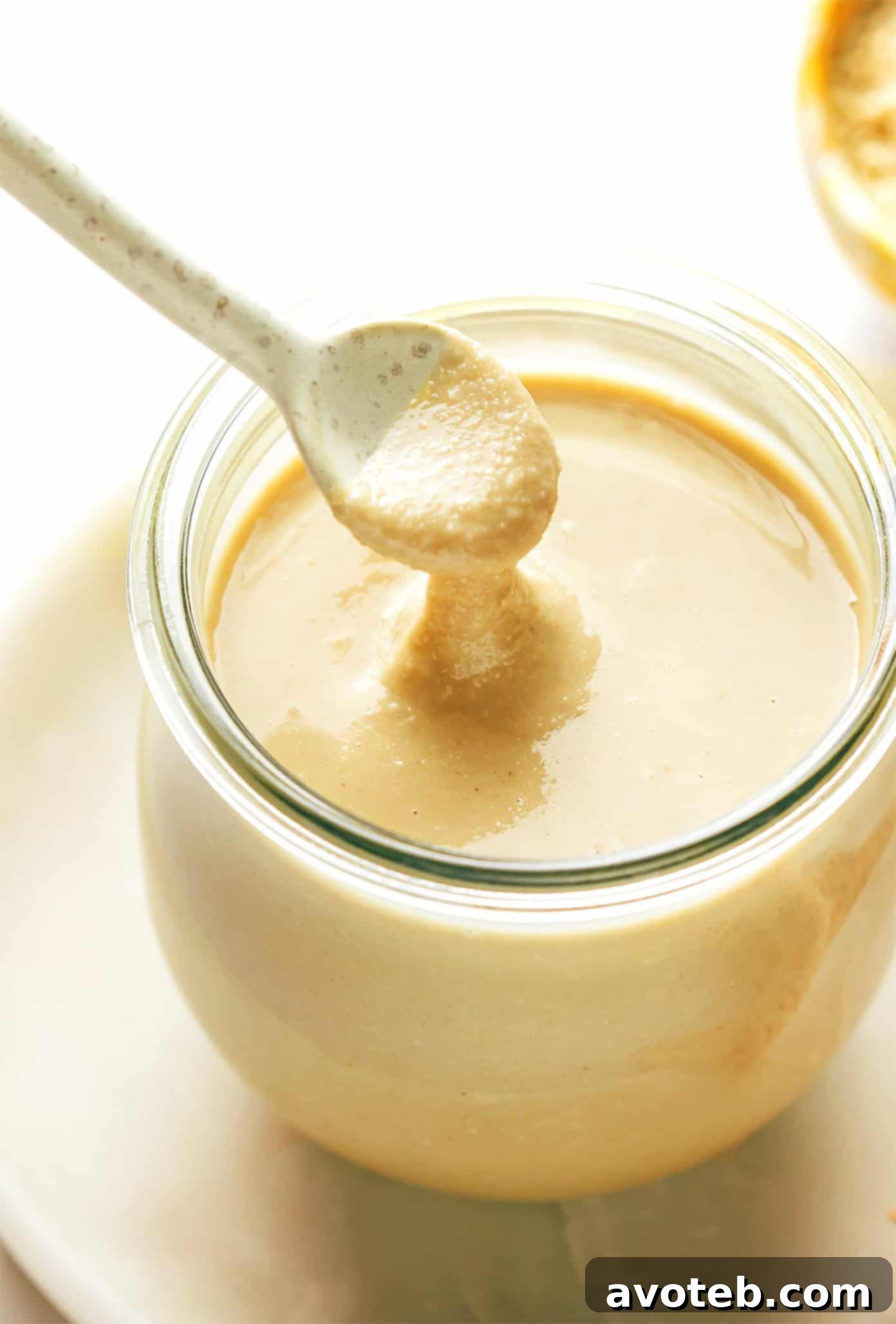
Have you ever considered the magic of making tahini from scratch? Tahini, a beloved creamy and nutty paste made from sesame seeds, is a cornerstone of Middle Eastern cuisine. While readily available in stores, the difference between store-bought and freshly made homemade tahini is truly remarkable. Crafting your own batch not only guarantees unparalleled freshness and flavor but also offers a satisfying culinary experience that takes surprisingly little effort. With just a few basic ingredients and a blender or food processor, you can transform humble sesame seeds into a rich, smooth, and incredibly versatile condiment.
This comprehensive guide will walk you through every step of making perfect homemade tahini, from selecting the best sesame seeds to achieving that desirable silky-smooth texture. We’ll delve into the nuances of ingredient choice, provide expert tips for preparation, discuss storage solutions, and explore a myriad of delicious ways to incorporate this nutritious staple into your daily cooking. Whether you’re a seasoned cook or a kitchen novice, preparing homemade tahini is an accessible and rewarding endeavor that promises to enhance your culinary repertoire.
Once you taste the vibrant, pure flavor of tahini made in your own kitchen, you might never go back to store-bought. It’s perfect for classic dishes like hummus or baba ganoush, but its potential extends far beyond. Imagine drizzling it over salads, blending it into smoothies, incorporating it into baked goods, or using it as a base for marinades. The possibilities are endless! So, gather your sesame seeds, and let’s embark on this delightful journey to create your very own batch of DIY tahini.
The Essential Ingredients for Homemade Tahini
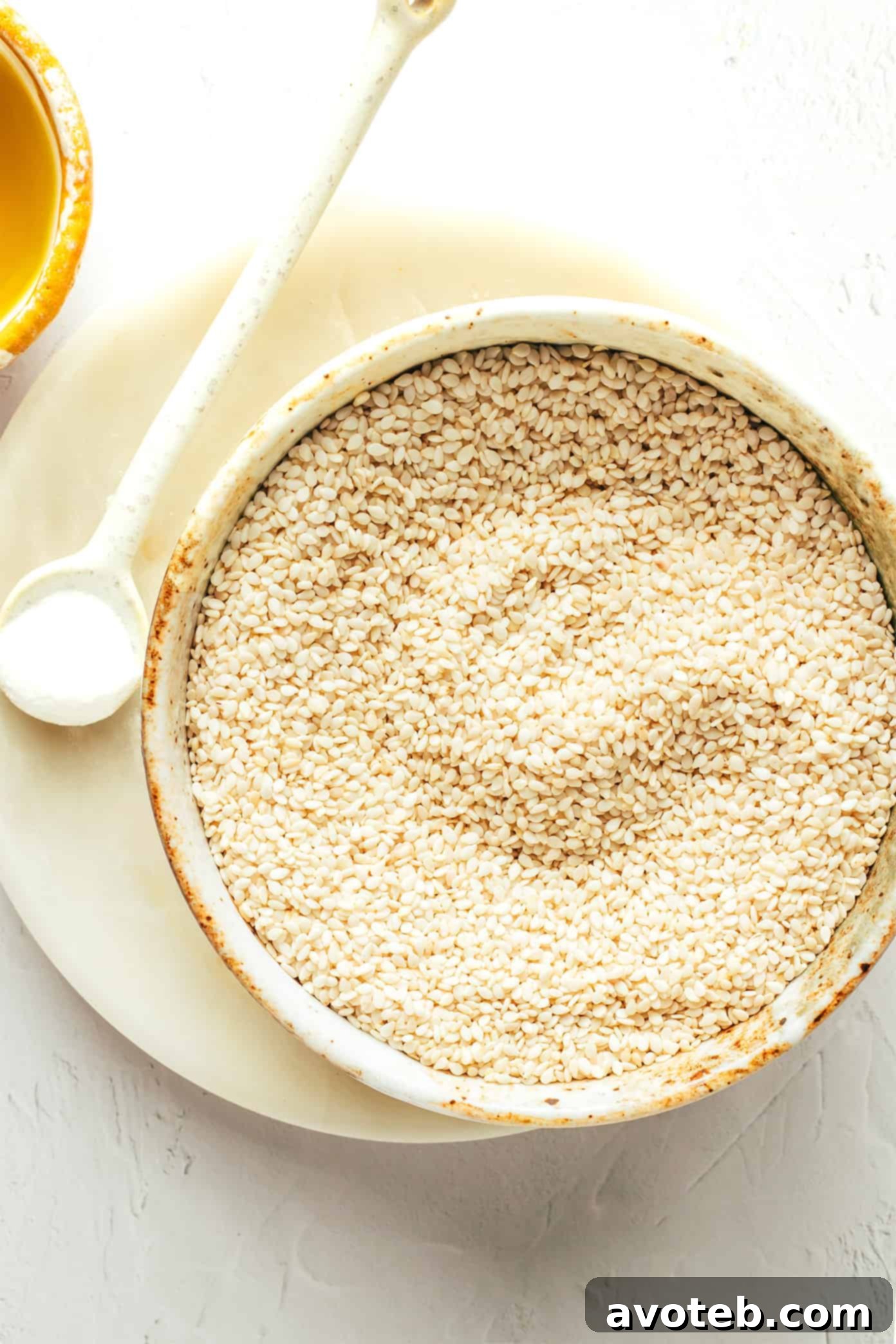
Making tahini requires a surprisingly short list of ingredients, emphasizing the purity and natural goodness of this ancient paste. The quality of each component plays a crucial role in the final flavor and texture. Here’s a detailed look at what you’ll need:
- Sesame Seeds: The undisputed star of tahini, sesame seeds are responsible for its distinctive nutty flavor and rich, oily consistency. For the best results, always opt for raw (untoasted) sesame seeds. The toasting process, which we’ll cover in the preparation section, is best done fresh to unlock their optimal flavor. When choosing sesame seeds, hulled varieties are highly recommended. Hulled sesame seeds, meaning their outer husks have been removed, yield a significantly creamier and lighter-colored tahini. While unhulled seeds can technically be used, they result in a slightly coarser texture and a more bitter, pronounced flavor due to the husks. Look for high-quality, plump sesame seeds from a reputable source, ideally in bulk, to ensure freshness and cost-effectiveness.
- Oil: Given that tahini is primarily sesame seeds and oil, the type of oil you choose will undoubtedly influence its overall taste. The goal is to select a neutral-flavored oil that complements, rather than overpowers, the delicate nutty notes of the sesame. Extra-virgin olive oil is a popular choice for its subtle fruitiness and health benefits, but ensure it’s a mild variety to avoid a strong olive flavor. Other excellent alternatives include grapeseed oil, sunflower oil, and avocado oil, all of which are light and neutral. It’s crucial to avoid toasted sesame oil, as its intense flavor is typically used as a finishing oil, not a base for tahini. Starting with a smaller amount of oil and adding more as needed allows you to achieve your desired consistency without making the tahini too thin.
- Salt: A small pinch of fine sea salt is a simple yet essential addition. Salt acts as a flavor enhancer, bringing out the inherent nuttiness and depth of the sesame seeds. It balances the richness and adds a subtle savory note that makes the tahini more complex and enjoyable. You can adjust the amount of salt to your personal preference, starting with a small pinch and adding more if desired after blending.
How to Make Tahini: A Step-by-Step Guide
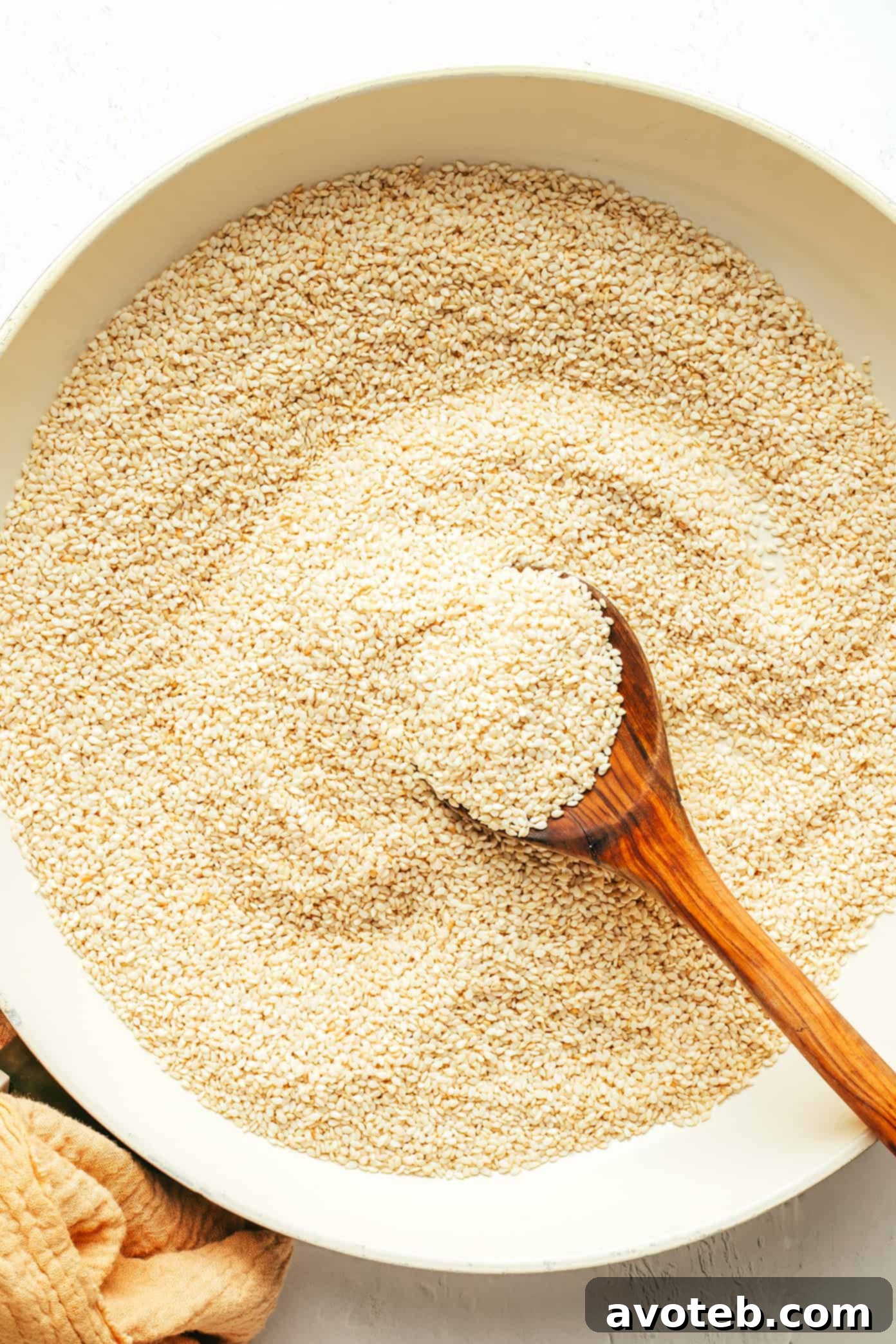
Crafting homemade tahini is a straightforward process that yields incredibly rewarding results. Follow these steps to create a batch of creamy, flavorful tahini:
- Toast the Sesame Seeds: This initial step is vital for developing the deep, nutty flavor of tahini. Add your raw sesame seeds to a large, dry sauté pan. Place the pan over medium heat and toast the seeds, stirring them frequently and continuously to ensure even browning. The key here is to achieve a *very light* toast. You want the seeds to become fragrant and develop a faint golden hue, but not turn dark brown. Over-toasting will result in bitter tahini. This process usually takes about 5-8 minutes on the stovetop. Alternatively, you can toast them in the oven: spread the seeds in a single layer on a baking sheet and bake at 350°F (175°C) for 5-8 minutes, watching them closely to prevent burning. The goal is primarily to heat them through and enhance their natural oils.
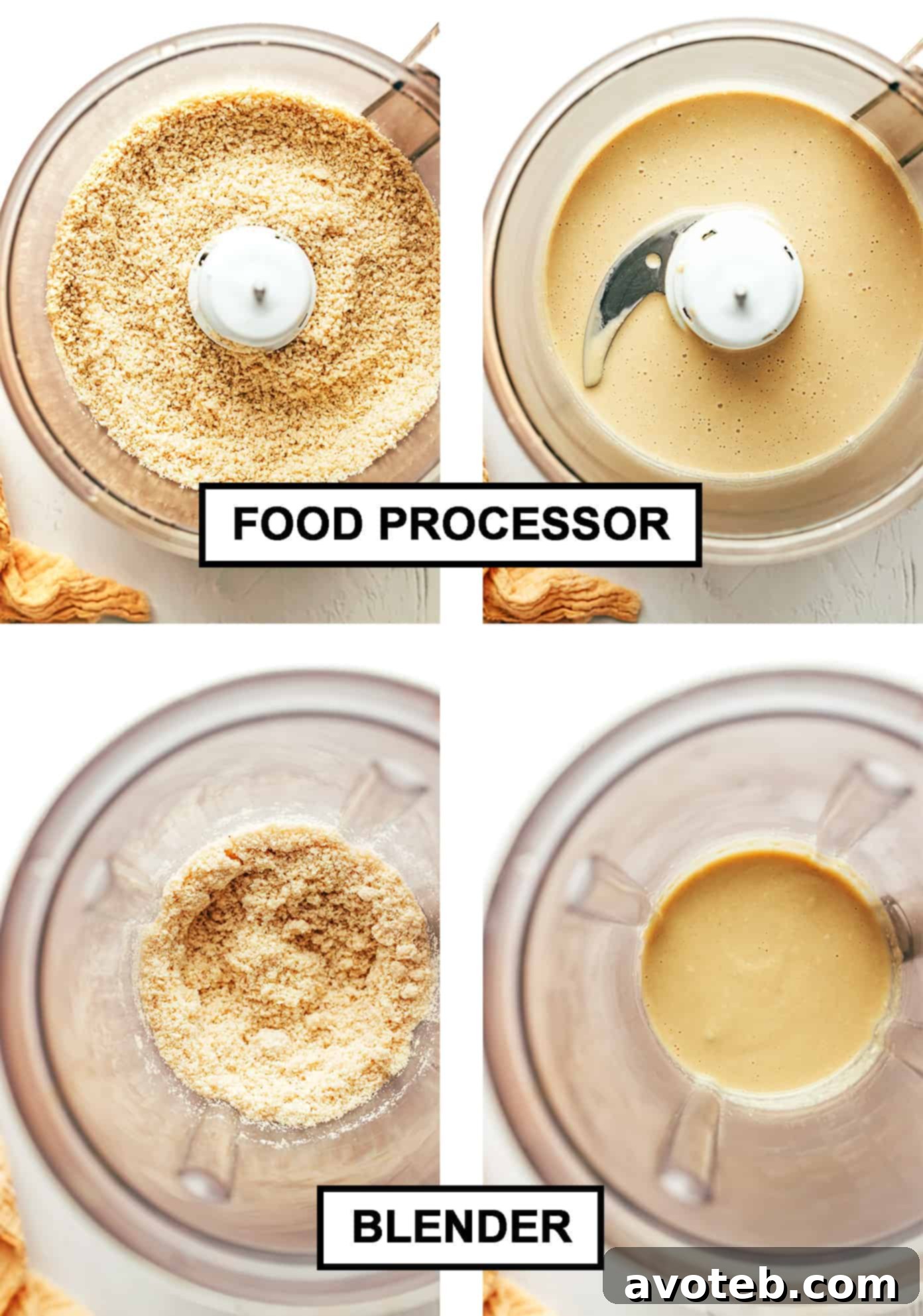
- Blend to Perfection: Immediately transfer the warm, toasted sesame seeds and the pinch of salt to a high-powered blender or a food processor. It’s important to blend them while they are still warm, as the residual heat helps release their natural oils more effectively. Begin by blending the seeds for 1-2 minutes until they break down into a coarse powder. You’ll need to pause periodically to scrape down the sides of the blender or processor with a spatula, ensuring all seeds are incorporated. Once a powder forms, begin streaming in 3 tablespoons of your chosen neutral oil while the machine is running. Continue blending for another 2-4 minutes. As the seeds and oil combine, they will transform from a crumbly paste into a smooth, pourable liquid. The total blending time can vary based on the power of your equipment. If the tahini appears too thick or isn’t achieving a pourable consistency, add more oil, one tablespoon at a time, until it reaches your desired smoothness. Patience is key here; the mixture will eventually release its oils and become incredibly creamy.
- Serve or Store: Once your tahini has reached a beautifully smooth and pourable consistency, it’s ready to be enjoyed! Transfer it to an airtight jar or container. While it’s tempting to dive in immediately, allowing it to rest for a few minutes can help the flavors meld.
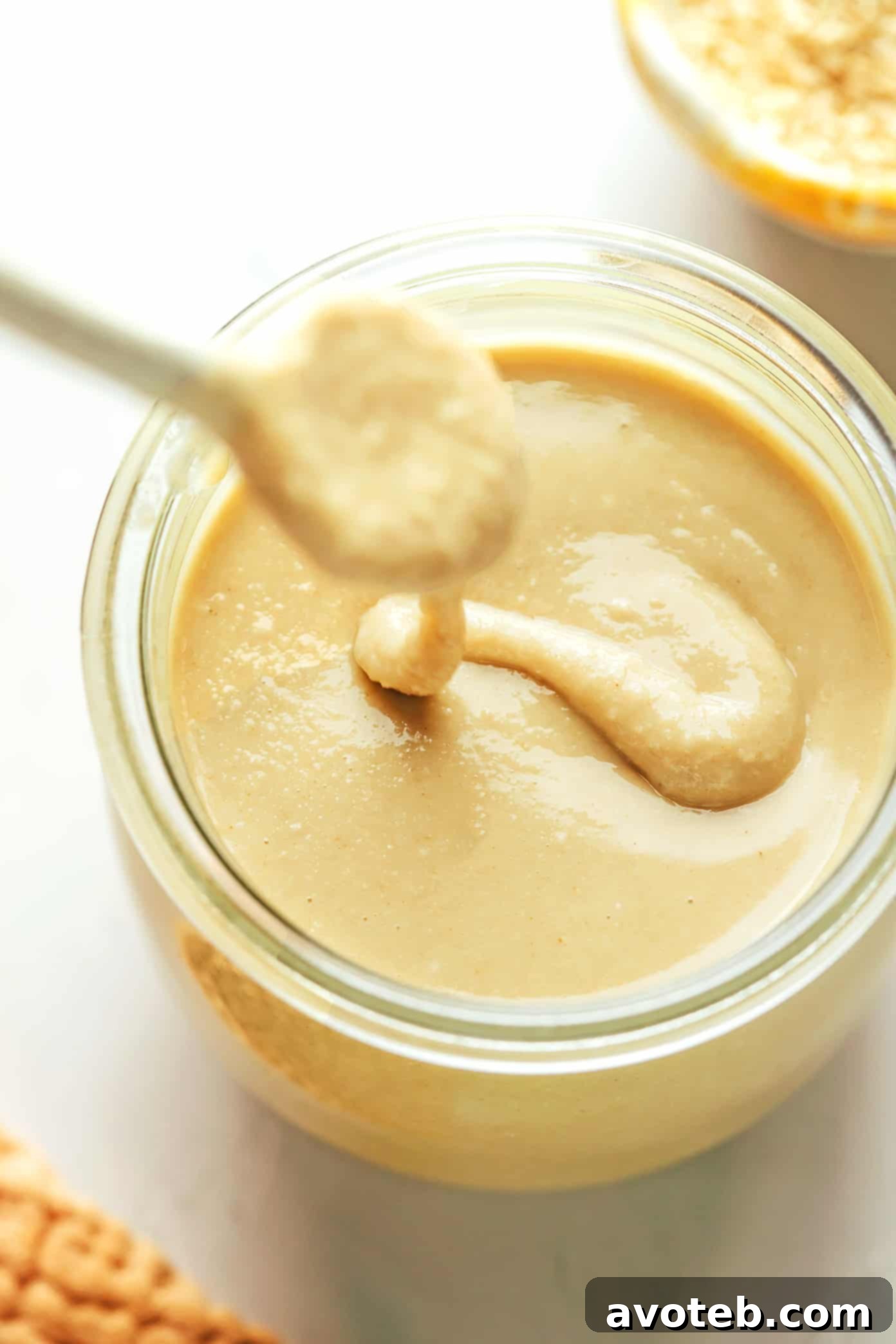
How to Store Homemade Tahini
Proper storage ensures your homemade tahini remains fresh and delicious for an extended period:
- Refrigeration: Store homemade tahini in an airtight jar or container in the refrigerator for up to 1 month. It’s completely normal for the oil and solids to separate over time; this is a natural characteristic of homemade tahini without added stabilizers. Before each use, simply give the tahini a good, vigorous stir to reincorporate the oil and restore its creamy texture.
- Freezing: For longer storage, tahini freezes beautifully for 3-4 months. To freeze, ensure the tahini is thoroughly stirred to prevent excessive separation. Transfer it to an airtight, freezer-safe container, leaving a small amount of headspace to account for slight expansion during freezing. Label the container with the date. When you’re ready to use frozen tahini, transfer it to the refrigerator to thaw slowly. Thawing may take several hours or overnight, depending on the quantity. Once thawed, stir it well to re-emulsify any separated oil before serving.
Tahini FAQ: Your Questions Answered
Here are answers to some common questions about making and using tahini:
Can I use pre-toasted sesame seeds? While you can, for the freshest and most superior flavor, it’s highly recommended to toast raw sesame seeds yourself. Pre-toasted seeds may have lost some of their aromatic oils and depth. Freshly toasted seeds provide a much brighter, more vibrant tahini.
Can I toast the sesame seeds in the oven? Absolutely! Spread the raw sesame seeds in a single, even layer on a baking sheet. Bake them in a preheated oven at 350°F (175°C) for approximately 5-8 minutes, stirring occasionally. Monitor them very closely to avoid over-toasting, as they can burn quickly. The goal is a light golden color and a fragrant aroma.
Can I substitute other nuts or seeds for sesame seeds? Tahini is specifically made from sesame seeds. While you can certainly make similar seed or nut butters from ingredients like pepitas (pumpkin seeds) or sunflower seeds, or even various nuts, the resulting paste will have a distinct flavor and texture entirely different from traditional sesame-based tahini. These alternatives are delicious in their own right but are not tahini.
Can I make tahini by hand? Historically, tahini was made using a mortar and pestle. This method is indeed possible but requires significant time, effort, and arm strength to achieve a truly smooth consistency. For most home cooks, a food processor or high-speed blender offers a much more efficient and practical solution.
Why does my tahini separate? Separation of oil and solids is a completely natural occurrence in homemade tahini, especially without the emulsifiers often found in commercial products. It indicates a pure product. Simply give it a good stir before each use to recombine the components and restore its creamy texture.
What are the health benefits of tahini? Tahini is a nutritional powerhouse! It’s rich in healthy monounsaturated and polyunsaturated fats, which are beneficial for heart health. It’s also an excellent source of plant-based protein and dietary fiber. Furthermore, tahini is packed with essential minerals, including calcium (important for bone health), iron (vital for energy), magnesium (supports muscle and nerve function), and phosphorus. As a bonus, tahini is naturally gluten-free, vegetarian, and vegan, making it suitable for a wide range of dietary preferences.
10 Delicious Ways To Use Tahini
Tahini’s unique nutty and slightly bitter flavor, coupled with its rich creaminess, makes it an incredibly versatile ingredient. Here are 10 fantastic ways to incorporate homemade tahini into your culinary creations:
- Hummus: This is arguably tahini’s most famous role. It lends hummus its characteristic creamy texture and distinctive earthy flavor. Pair it with chickpeas, lemon juice, garlic, and a touch of water for an authentic, irresistible dip.
- Salad Dressings: Tahini brings an unparalleled richness and creaminess to salad dressings. Whisk it with lemon juice, water, garlic, and a touch of maple syrup or honey for a vibrant, healthy dressing that coats greens beautifully.
- Tahini Sauce: A simple tahini sauce made with tahini, lemon juice, water, and garlic is a staple. It’s perfect for drizzling over falafel, roasted vegetables, grilled meats, grain bowls, or as a flavorful dip for pita bread.
- Smoothies: Add a tablespoon or two of tahini to your morning smoothie for an extra boost of healthy fats, protein, and creaminess. It pairs wonderfully with banana, dates, cocoa powder, berries, or almond milk, adding depth to the flavor profile.
- Baked Goods: Surprising to some, tahini can elevate baked goods by adding moisture and a complex, nutty flavor. Try incorporating it into cookies, brownies, cakes, or muffins, especially those with chocolate or caramel notes, for an unexpected depth.
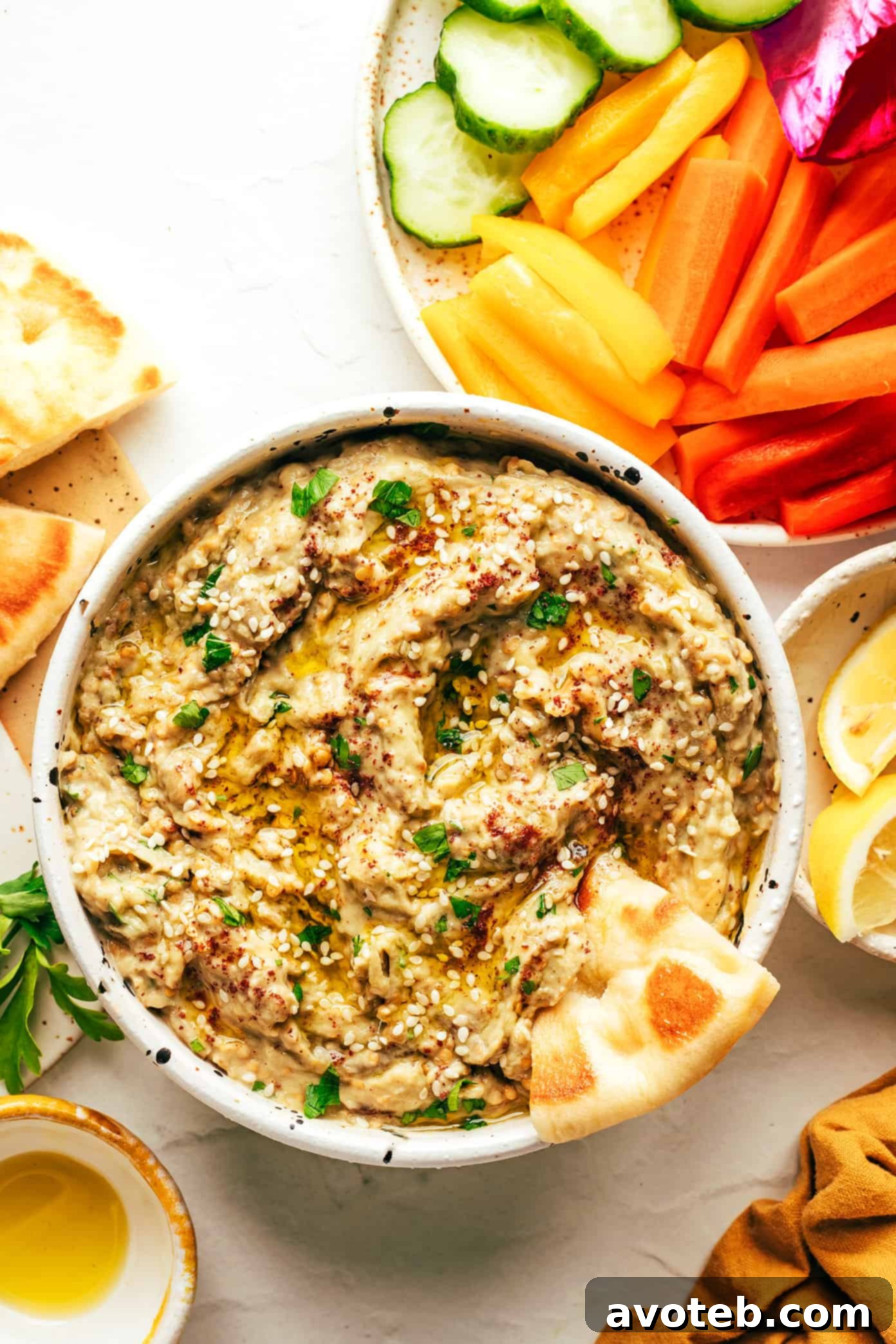
- Dips and Spreads: Beyond hummus, tahini is a base for numerous Middle Eastern dips like baba ganoush (eggplant dip). It can also be blended with yogurt for a tangy dip, combined with avocado for a creamy spread, or even mixed with chocolate for a unique dessert dip.
- Marinades and Sauces: Create savory marinades by combining tahini with ingredients like soy sauce, ginger, garlic, honey, and lime juice. Use it to tenderize and flavor tofu, chicken, fish, or vegetables before grilling, roasting, or stir-frying.
- Grain Bowls: Elevate simple grain bowls into satisfying meals by drizzling them with a tahini-based sauce. A mix of tahini, lemon juice, olive oil, and spices like cumin or turmeric creates a flavorful dressing that binds together quinoa, brown rice, roasted vegetables, and proteins.
- Tahini Desserts: Embrace tahini’s sweet side by incorporating it into unique desserts. Think tahini fudge, tahini-swirled ice cream, tahini caramel, or even simple tahini and honey drizzled over fresh fruit for a healthier treat.
- Roasted Vegetables: A simple drizzle of tahini over roasted broccoli, cauliflower, carrots, or Brussels sprouts before or after cooking adds incredible flavor and a beautiful caramelized finish. The heat intensifies its nutty notes.
Making tahini at home is a simple pleasure that opens up a world of culinary possibilities. From its rich nutritional profile to its incredible versatility, homemade tahini is a condiment you’ll want to keep stocked in your kitchen. Enjoy the process of creating this delicious Middle Eastern staple, and then savor the endless ways it can transform your meals. Happy blending!
Print Recipe
Homemade Tahini
- Author: Ali
- Prep Time: 5 mins
- Cook Time: 5 mins
- Total Time: 10 mins
- Yield: About 2 cups
Description
This homemade tahini recipe is easy to make with 3 ingredients and tastes so deliciously nutty and creamy.
Ingredients
- 2 cups raw white sesame seeds (preferably hulled)
- pinch of fine sea salt
- 3 to 4 tablespoons neutral oil (such as avocado, grapeseed, vegetable, or a mild olive oil)
Instructions
- Lightly toast the sesame seeds. Add the sesame seeds to a large sauté pan. Cook over medium heat, stirring frequently, until they are very very lightly toasted. (We mainly want to heat the seeds and avoid them turning golden; they should only have the slightest bit of toasted color.)
- Blend. Immediately transfer the hot seeds and salt to a high-powered blender or food processor. Blend for 1 to 2 minutes, pausing to scrape down the sides as needed, until the seeds form a coarse powder. Stream in 3 tablespoons of the oil and continue blending for 2 to 4 more minutes, pausing to scrape down the sides as needed, until the consistency is smooth and pourable. If the mixture seems too thick, add in more oil as needed.
- Serve. Serve the tahini immediately or refrigerate in a sealed container for up to 1 month.
Equipment
Sesame Seeds (Hulled)
Buy Now →
Vitamix Blender
Buy Now →
Food Processor
Buy Now →