
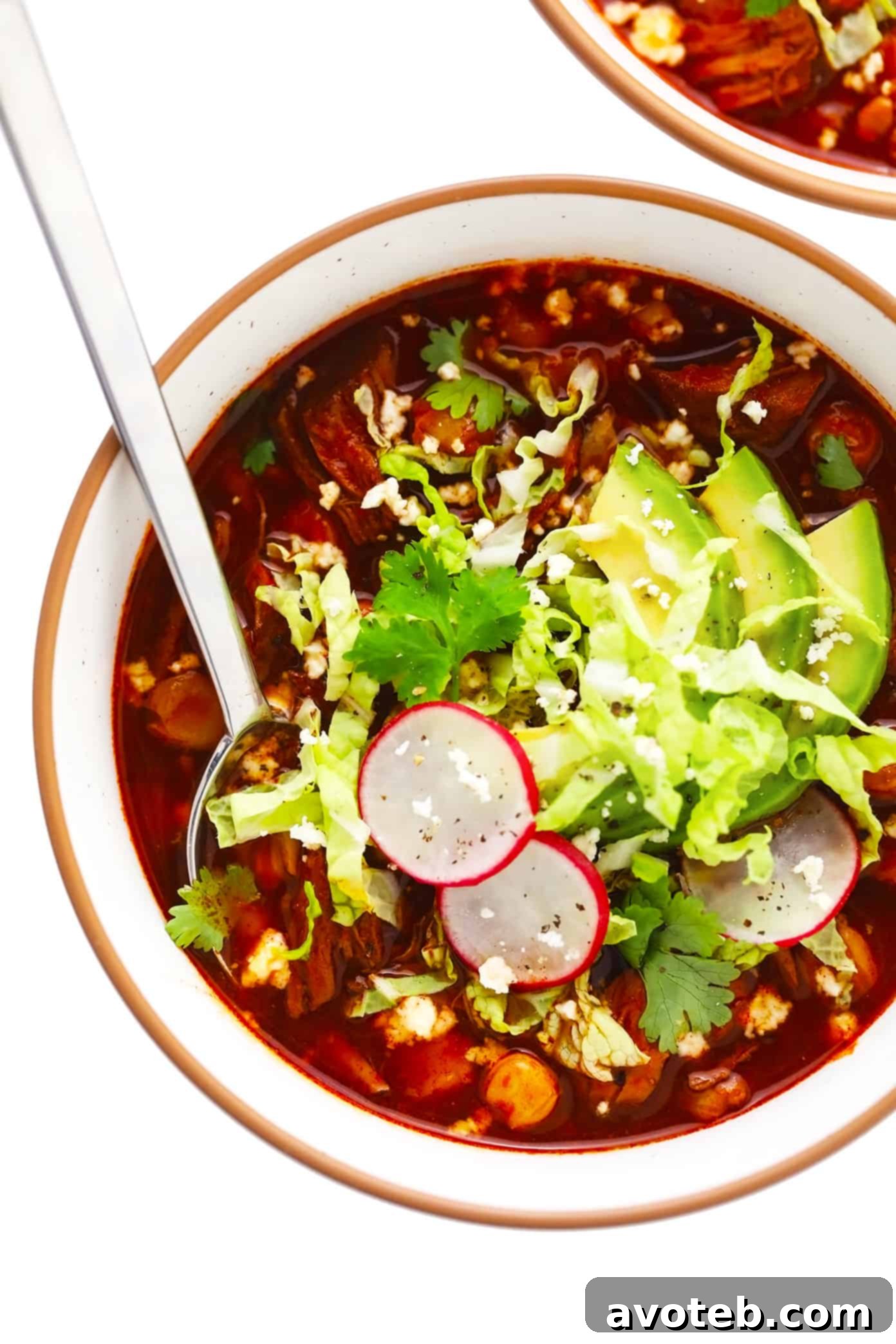
Authentic Pozole Rojo: A Hearty Mexican Stew with Rich Red Chile Broth
Experience the unparalleled comfort of this traditional Mexican pozole rojo, featuring tender pork and plump hominy, all slow-simmered in an incredibly flavorful red chile broth. This beloved stew is then generously piled high with an array of your favorite fresh toppings. Whether you prefer the classic stovetop method, the convenience of a Crock-Pot, or the speed of an Instant Pot, we’ve got you covered with detailed instructions. Prepare to savor a truly authentic and deeply satisfying meal.
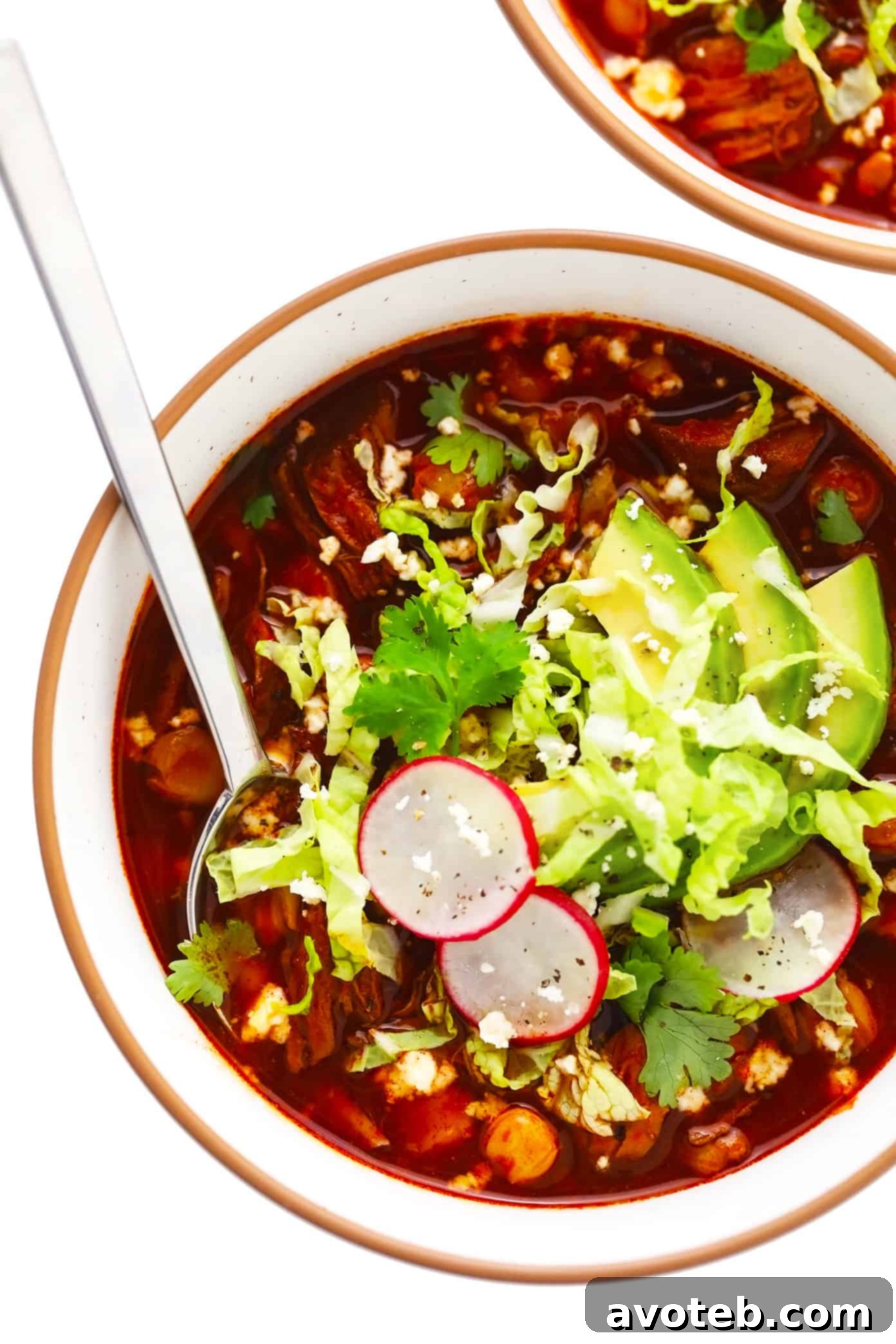
There are countless reasons to adore a well-made bowl of pozole, but for many, the true enchantment of this iconic Mexican soup lies in its distinctively rich, vibrant, and incredibly flavorful red chile broth. Unlike its lighter cousins, pozole blanco (white) or the herb-infused pozole verde (green), pozole rojo stands out with its robust blend of dried red chiles, crafting a broth that achieves an irresistible balance of savory, smoky, earthy, subtly sweet, and spicy notes.
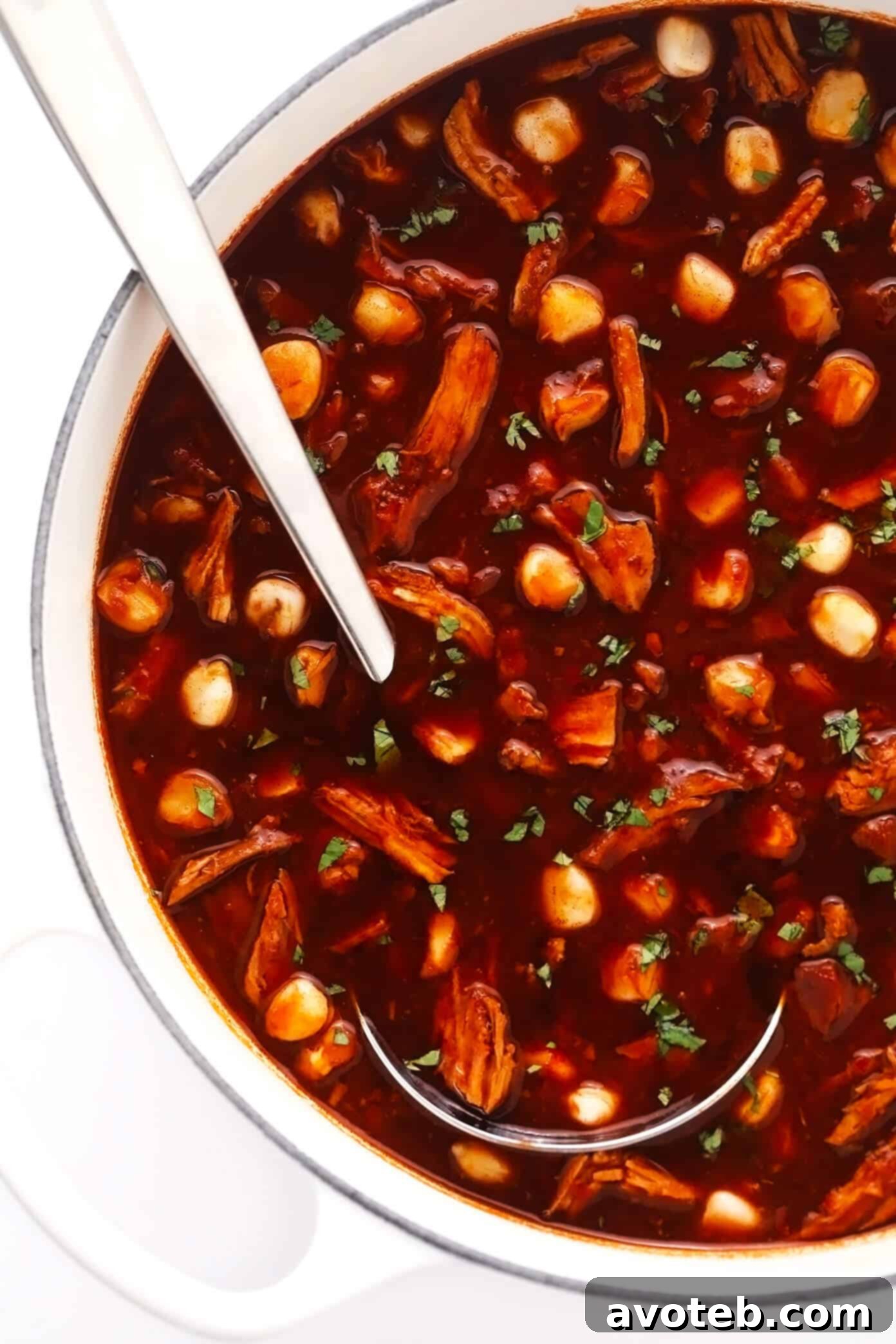
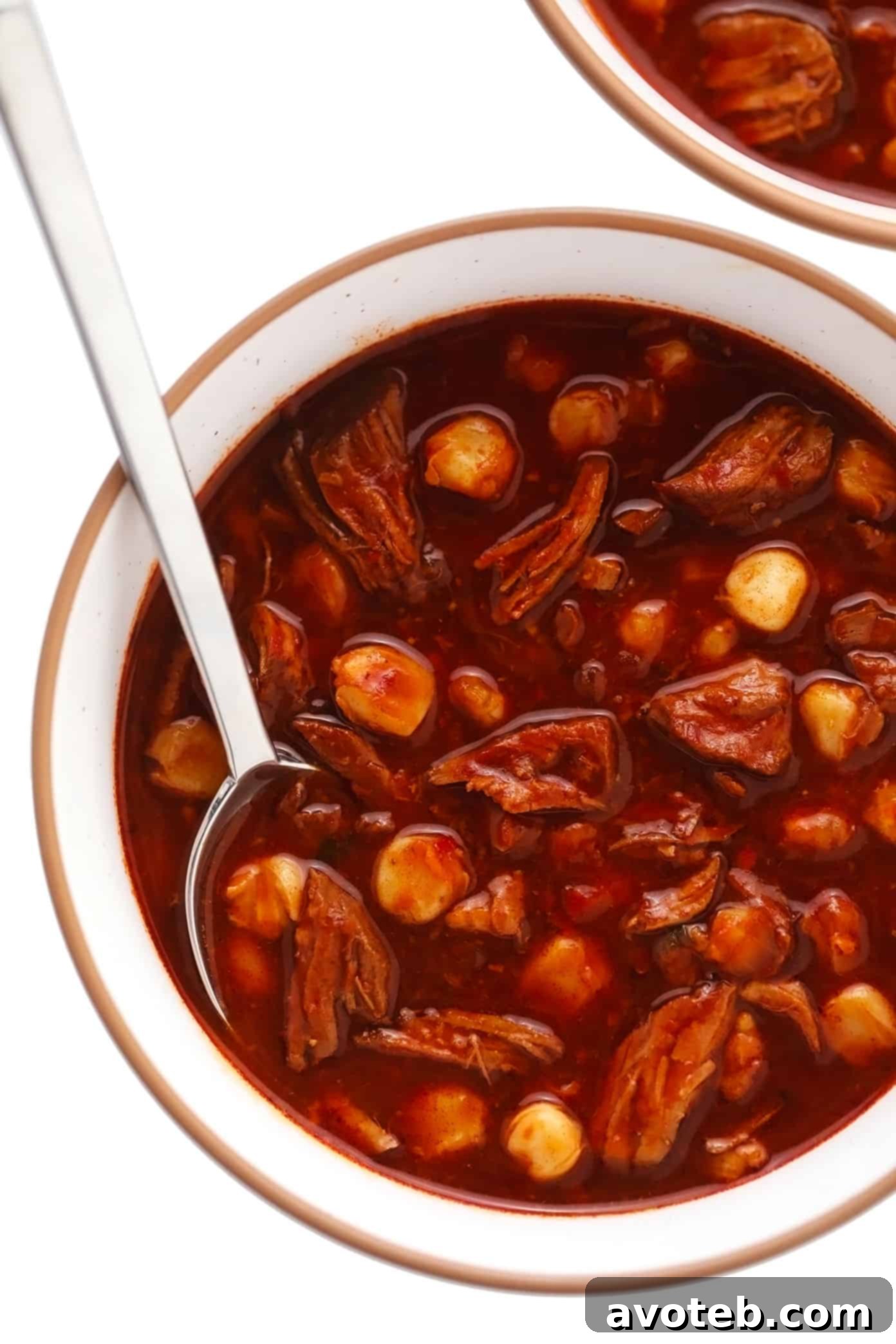
When this exquisite broth is slow-simmered with succulent, fall-apart tender pork and hearty, chewy hominy, and then crowned with a generous handful of fresh, crisp toppings, this classic Mexican stew transforms into the ultimate expression of cozy comfort food. The depth of flavor in every spoonful is simply extraordinary, making it a perfect dish for chilly evenings or festive gatherings.
Truth be told, the magic of this pozole broth is so captivating that I’ve often found myself brewing small batches just to sip from a mug on a brisk winter night. But when you crave a substantial and deeply satisfying meal, the traditional combination of pork and hominy in this recipe is guaranteed to impress. You have the flexibility to simmer all the ingredients for a few hours on the stovetop, or opt for the ease of an Instant Pot or Crock-Pot. While I strongly advocate for the use of dried Mexican chiles to achieve the authentic depth of this broth – no chili powder shortcuts here! – I assure you they are remarkably easy to work with and are absolutely essential for a truly authentic pozole. This recipe also includes notes on how to adjust the spice level to suit your preference, from mildly warm to intensely fiery. Furthermore, pozole freezes beautifully, so don’t hesitate to prepare a double batch and enjoy it whenever the craving strikes!
Embrace the comforting embrace of soup season and discover why this cherished pozole rojo recipe has been a favorite for many. Let’s dive into making a truly unforgettable bowl of pozole!
The Foundation of Flavor: Understanding Pozole Rojo
Pozole, a pre-Hispanic dish with deep roots in Mexican culture, translates to “hominy” and traditionally celebrates this unique maize kernel. While various regional interpretations exist, Pozole Rojo distinguishes itself with its signature red hue and profound flavor profile, derived entirely from an intricate blend of dried red chiles. This isn’t just about heat; it’s about building layers of smoky, sweet, and earthy notes that create a complex and inviting broth. The slow cooking process allows these flavors to meld beautifully, transforming simple ingredients into a rich and comforting stew.
Key Ingredients for Authentic Pozole Rojo
Crafting the perfect pozole rojo begins with selecting the right ingredients. Each component plays a vital role in achieving the dish’s iconic flavor and texture:
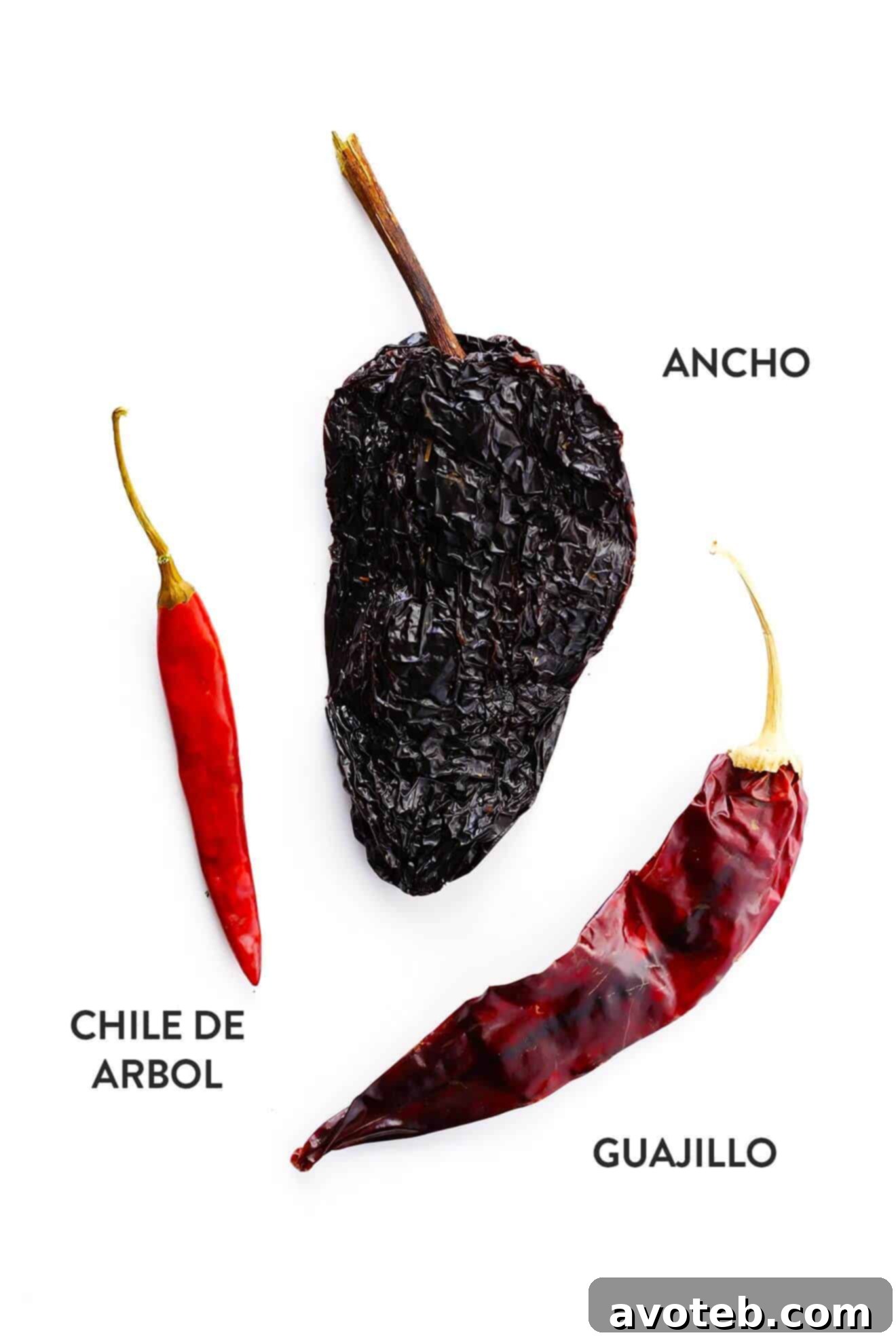
- Dried Chile Peppers: The soul of pozole rojo lies in its chile broth. This recipe utilizes a classic trio of dried chiles, each contributing unique characteristics to the flavor profile. These can typically be found in Latino grocery stores or online. Briefly toasting the chiles before soaking is a crucial step that intensifies their inherent flavors.
- Ancho Chiles: These are dried poblano peppers, known for their mild heat and rich, smoky, earthy, and raisin-like notes. They contribute a beautiful deep red color and body to the broth.
- Guajillo Chiles: Moderately hot with a distinct sharp, fruity, and slightly tangy flavor. Guajillos add brightness and a complex spice layer.
- Chiles de Árbol: These slender, bright red chiles pack a fiery punch. They are perfect for amping up the heat. If you prefer a milder soup, you can reduce their quantity or omit them entirely.
- Pork: Boneless pork shoulder (also known as pork butt) is the preferred cut for pozole. Its higher fat content and collagen break down beautifully during slow cooking, resulting in incredibly tender, shreddable meat that absorbs the broth’s flavors magnificently.
- Aromatics (Onion and Garlic): These foundational ingredients provide an aromatic base. Sautéing them at the beginning builds a layer of savory flavor. While typically sautéed, they can also be puréed directly into the chile sauce for a smoother broth.
- Chicken Stock: A high-quality chicken stock forms the essential liquid base for our pozole, enhancing the savory notes of the pork and chiles. Vegetable stock can be used for a slightly lighter flavor profile. Adjust the amount to achieve your desired broth consistency.
- Hominy: These large, puffy maize kernels (often labeled maíz para pozole) are integral to traditional pozole, providing a distinctive chewy texture and heartiness. Hominy absorbs the rich broth flavors wonderfully. It’s usually found canned in the international or canned vegetable aisle of most grocery stores.
- Seasonings: A simple yet effective blend of ground cumin, dried oregano (Mexican oregano is highly recommended for its earthy, citrusy notes), and bay leaves perfectly complements the chile broth, adding depth without overpowering.
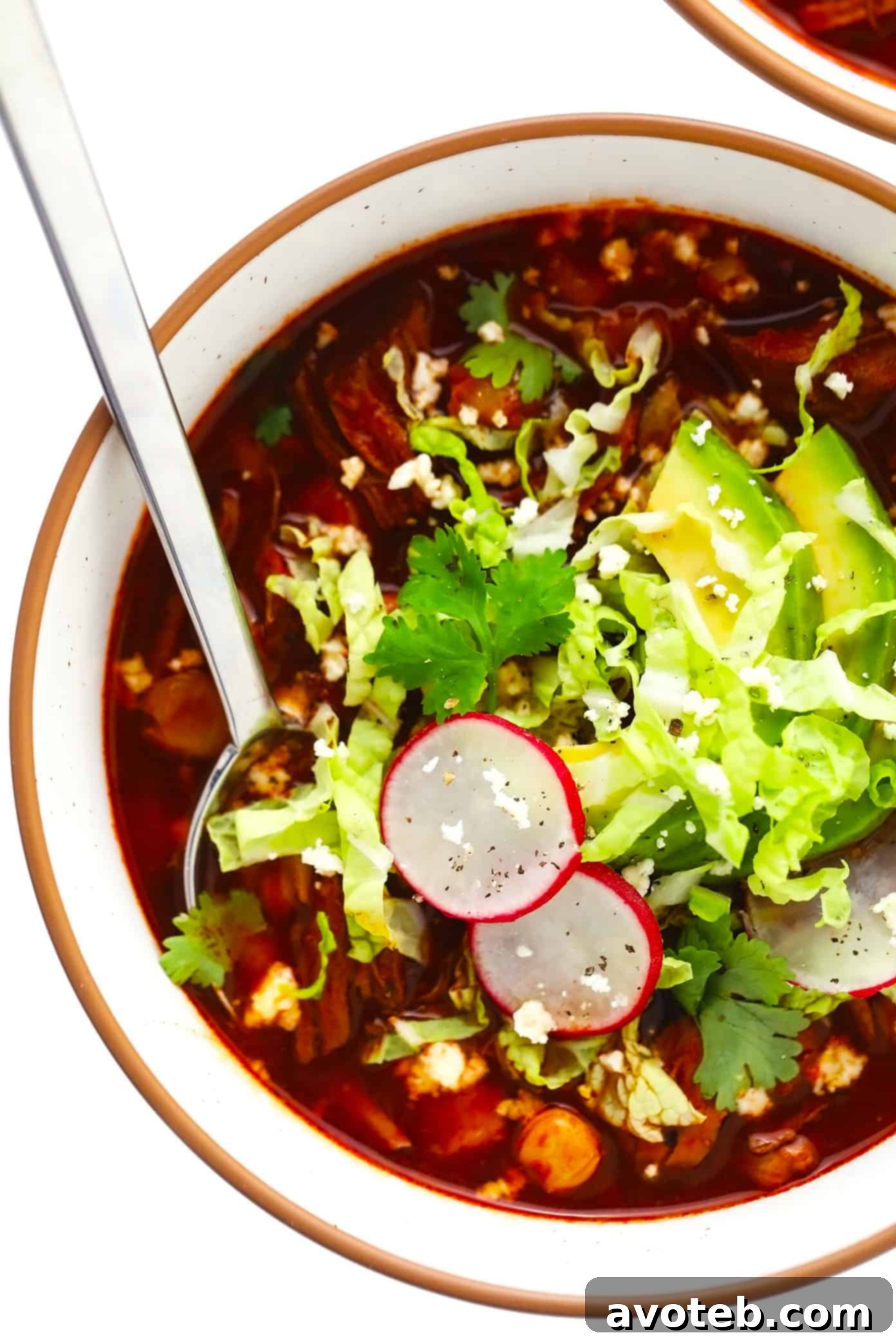
- Fresh Toppings: Toppings are paramount to the pozole experience, adding layers of freshness, crunch, and contrasting flavors. Highly recommended options include: chopped fresh cilantro, crumbled cotija cheese, diced or sliced avocado, fresh lime wedges (for acidity), finely shredded cabbage (for crunch), a drizzle of Mexican crema or sour cream, crunchy tortilla chips, and thinly-sliced radishes.
Mastering Pozole Rojo: A Step-by-Step Guide
Preparing this traditional Mexican pozole is a rewarding experience. Below is a comprehensive overview of the process, with detailed instructions for stovetop, Instant Pot, and Crock-Pot included in the full recipe card. These steps will guide you through creating a deeply flavorful and authentic stew.
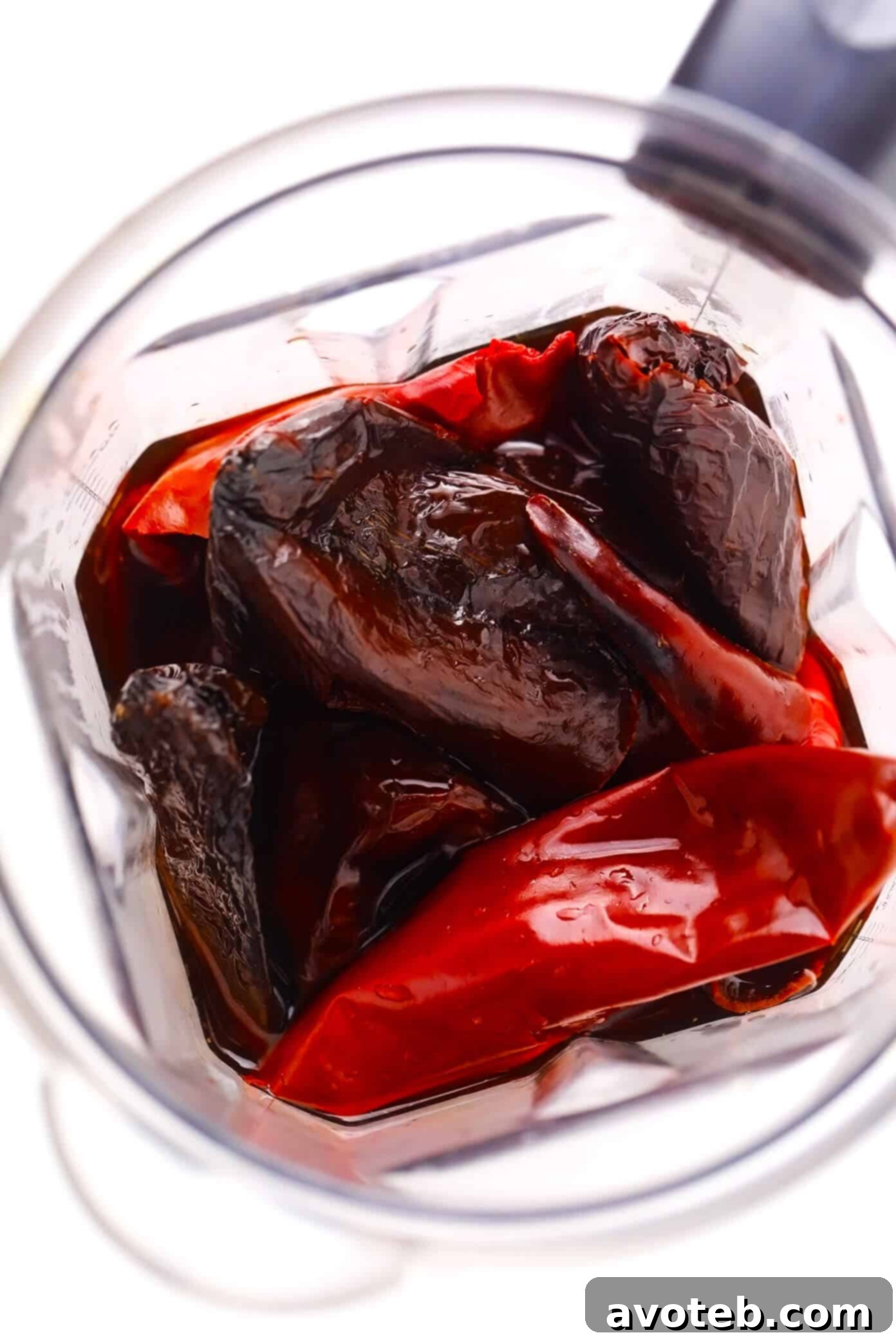
- Craft the Chile Sauce: Begin by carefully preparing your dried chiles. Remove and discard the stems and seeds from the ancho, guajillo, and chiles de árbol. Briefly toast the chiles over an open gas flame or press them into a hot dry skillet over medium-high heat for a few seconds per side until they become fragrant. This crucial step enhances their inherent flavors. Transfer the toasted chiles to a heat-safe bowl and cover them completely with boiling water, allowing them to soak for approximately 30 minutes until they are fully softened. Using tongs, carefully transfer the rehydrated chiles to a blender or food processor, along with about 2 cups of their soaking liquid. Purée until the mixture is completely smooth. When blending hot liquids, always remember to vent the blender lid slightly to allow steam to escape safely. Set this vibrant chile sauce aside.
- Sear the Pork (Optional, but Recommended): For an added layer of rich flavor, cut the boneless pork shoulder into 1.5-inch cubes. Heat 1 tablespoon of avocado oil in a large stockpot over medium-high heat. Add the pork cubes and sear them on all sides until lightly browned, which typically takes about 8-10 minutes. This browning creates a delicious crust and deepens the overall flavor of the stew through the Maillard reaction. Transfer the seared pork to a clean plate and set aside. While optional, especially for Crock-Pot or Instant Pot methods if you’re short on time, this step significantly contributes to the final depth of flavor.
- Sauté the Aromatics (Stovetop Method): If using the stovetop method, add the remaining 1 tablespoon of avocado oil to the same stockpot. Add the diced white onion and sauté for 4-5 minutes, stirring occasionally, until it has softened and become translucent. Then, add the minced garlic and continue to sauté for another 1-2 minutes until it becomes fragrant, stirring frequently to prevent burning. These aromatics form the essential savory base of your pozole.
- Combine and Simmer: Now, it’s time to bring all the elements together. Return the seared pork (if applicable) to the pot, or add the raw pork if skipping the searing step. Add the rinsed and drained hominy, 7-8 cups of chicken stock, bay leaves, ground cumin, and dried oregano. Finally, stir in the freshly puréed chile sauce. Stir everything to ensure it’s well combined. Bring the soup to a gentle simmer, then reduce the heat to medium-low, cover the pot, and allow it to cook for 1 1/2 to 2 hours (or according to your chosen cooking method’s specific timing for Instant Pot/Crock-Pot), stirring occasionally, until the pork is incredibly tender and easily shreds with a fork.
- Shred the Pork: Once the pork reaches its tender perfection, use tongs to carefully remove it from the soup and transfer it to a cutting board. Using two forks, shred the pork into bite-sized pieces. Return the shredded pork to the soup and stir it in, ensuring it’s evenly distributed throughout the rich broth.
- Season to Perfection: Taste the soup and adjust the seasonings as needed. If you find the broth too thick for your preference, feel free to stir in an additional cup of chicken stock to thin it out. Season generously with salt and freshly ground black pepper until the flavors are perfectly balanced.
- Serve and Enjoy: Ladle the hot pozole into individual serving bowls. This is where the magic of personalization happens! Garnish each serving generously with all of your favorite fresh toppings. The contrasting textures and flavors of the toppings elevate the pozole experience to another level. Serve immediately and savor every comforting spoonful!
Pozole Recipe Variations & Customization Tips
This pork pozole recipe is wonderfully adaptable. Here are a few ways you can customize it to your personal preferences and dietary needs:
- Strain the Chile Sauce: For an even smoother, thinner broth, some traditional recipes call for straining the puréed chile sauce through a fine-mesh strainer before adding it to the pot. This removes any remaining pulp or skin particles, resulting in a silkier texture.
- Adjust the Spice Level: To increase the heat, add extra chiles de árbol to the initial chile blend. For a milder soup, consider omitting the chiles de árbol entirely, or even reducing the quantity of guajillo chiles by half. You can always add a few whole chiles de árbol to the simmering broth later to infuse more heat, removing them before serving.
- Incorporate Extra Vegetables: While not strictly traditional, adding more vegetables can boost nutrition and flavor. Delicious additions include sliced mushrooms, cauliflower florets, diced potatoes, bell peppers, or zucchini, added during the last 30-60 minutes of simmering.
- Add Beans for Extra Protein: For a heartier and more protein-rich soup, stir in a can of rinsed and drained pinto beans or black beans during the last 30 minutes of cooking.
- Swap the Protein to Chicken Pozole: To make chicken pozole, substitute boneless chicken breasts or thighs for the pork. Cut the chicken into similar sized pieces and simmer until fully cooked and easily shreddable. Chicken will require significantly less cooking time than pork (typically 30-45 minutes on the stovetop, or shorter in a pressure cooker), so adjust accordingly to prevent overcooking.
- Vegetarian/Vegan Adaptations: For a plant-based version, omit the pork and use vegetable broth. You can add hearty vegetables like mushrooms, plantains, or additional beans to provide substance.
Pozole FAQ: Your Questions Answered
Curious about this delicious Mexican dish? Here are answers to some frequently asked questions about pozole:
How do you pronounce pozole? In Spanish, pozole is pronounced phonetically as “poh-SOH-leh,” with the emphasis on the second syllable.
Is it spelled pozole or posole? The correct spelling in Spanish is with a “z” (pozole). However, in some regions, particularly in the United States (like New Mexico), versions of this soup are occasionally spelled with an “s” (posole).
What does pozole mean? The Spanish word “pozole” is believed to have originated from a Nahuatl word, pozoll, which refers to “a variety of corn or maize.” This highlights the historical significance of hominy as a central ingredient in the dish.
When is pozole traditionally served? In Mexico, pozole is often traditionally served for significant gatherings and holidays. It’s a beloved dish for celebrations such as Mexican Independence Day (September 16th), Christmas, New Year’s Eve, and other family fiestas. Traditional red, white, and green pozole recipes vary widely from region to region across Mexico, with unique local interpretations, alongside popular New Mexican and Tex-Mex versions found today.
What pairs well with Pozole? Pozole is a complete meal on its own, especially with all the toppings. However, it can be accompanied by warm tortillas or crusty bread for dipping. A refreshing agua fresca (like horchata or jamaica) or a cold beer makes an excellent beverage pairing.
Expert Tips for the Best Pozole Rojo
To ensure your pozole is nothing short of spectacular, keep these tips in mind:
- Don’t Skip Toasting the Chiles: This simple step deeply enhances the smoky and complex flavors of the chiles, making a noticeable difference in the final broth.
- Make Ahead for Deeper Flavor: Like many stews, pozole often tastes even better the next day. The flavors have more time to meld and deepen. Prepare it a day in advance for an even richer experience.
- Freeze for Future Enjoyment: Pozole freezes wonderfully. Once cooled, store portions in airtight containers or freezer-safe bags for up to 3 months. Thaw in the refrigerator overnight and reheat gently on the stovetop.
- Taste and Adjust Seasoning: Always taste your pozole before serving and adjust salt, pepper, or other seasonings as needed. The flavors develop as it simmers, so a final adjustment is key.
- Source Quality Ingredients: For truly authentic flavor, seek out fresh, high-quality dried chiles from a Mexican grocery store or a reputable online vendor. Mexican oregano also offers a distinct flavor compared to Mediterranean oregano.
More Mexican-Inspired Soup Recipes to Explore
If you’ve enjoyed the comforting flavors of this pozole, you might love these other Mexican-inspired soup recipes:
- Sopa Azteca (Traditional Tortilla Soup)
- Easy 5-Ingredient White Chicken Chili
- Hearty Sweet Potato Enchilada Soup
- Flavorful Mexican-Inspired Chicken Lentil Soup
Pozole Rojo Recipe
- Prep Time: 15 minutes
- Cook Time: 2 hours
- Total Time: 2 hours 15 minutes
- Yield: 8 to 10 servings
Description
This traditional Mexican pozole recipe is made with tender pork and hominy and simmered in the most delicious chile broth, then piled high with your favorite fresh toppings. Crock-Pot and Instant Pot options included in the notes below for your convenience.
Ingredients
Scale: 1x
- 2 ounces dried ancho chiles
- 2 ounces dried guajillo chiles
- 2 to 3 chiles de arbol (optional, for heat)
- 2 tablespoons avocado oil, divided
- 2 pounds boneless pork shoulder, cut into 1.5-inch cubes
- 1 medium white onion, peeled and diced
- 8 cloves garlic, peeled and minced
- 7 to 8 cups chicken stock
- 3 (15-ounce) cans hominy, rinsed and drained
- 2 bay leaves
- 1 tablespoon ground cumin
- 1 tablespoon dried oregano (preferably Mexican oregano)
- Optional toppings: chopped fresh cilantro, crumbled cotija cheese, diced avocado, fresh lime wedges, shredded cabbage, Mexican crema or sour cream, and/or thinly-sliced radishes
Instructions
- Make the chile sauce. Cut off and discard the stems of the ancho chiles, guajillo chiles, and chiles de arbol. Shake out and discard their seeds. Briefly toast the chiles over an open gas flame or by pressing them into a hot dry stockpot over medium-high heat for a few seconds per side until fragrant. Transfer all of the chiles to a heat-safe mixing bowl and cover them completely with boiling water. Let the chiles soak for about 30 minutes or until softened. Carefully use tongs to transfer the chiles to a blender or food processor, along with 2 cups of their soaking liquid. Puree for 1 minute or until completely smooth. (When blending hot liquids, always vent the cap on the blender lid slightly open so hot air can escape.) Set the chile sauce aside.
- Brown the pork. While the chiles are soaking, heat 1 tablespoon of avocado oil in a large stockpot over medium-high heat. Add the pork cubes and sauté, rotating the pieces every few minutes, until all sides are seared and lightly browned (about 8-10 minutes). Transfer the pork to a clean plate and set aside.
- Sauté the veggies. Add the remaining 1 tablespoon of avocado oil to the same stockpot. Add the diced onion, and sauté for 4-5 minutes until softened, stirring occasionally. Add the minced garlic and sauté for 1-2 minutes more until fragrant, stirring frequently.
- Combine and simmer. Add in 7 cups of the chicken stock, the rinsed and drained hominy, bay leaves, ground cumin, dried oregano, the cooked pork, and the puréed chile sauce. Stir to combine. Continue cooking until the soup reaches a simmer, then reduce heat to medium-low to maintain a very low simmer. Cover and cook for 1 1/2 to 2 hours, stirring occasionally, until the pork is tender and shreds easily.
- Shred the pork. Once the pork is tender, use tongs to transfer it to a cutting board and shred it into bite-sized pieces using two forks. Return the shredded pork to the soup and stir to combine.
- Season. If the broth is too thick for your liking, feel free to add in 1 more cup of chicken stock to thin it out. Stir, taste, and season the soup with salt and pepper (or any other seasonings) as needed until perfectly balanced.
- Serve. Serve hot, ladled into bowls and garnished generously with all of your favorite toppings. Enjoy!
Equipment
Dried Ancho Chiles
Buy Now →
Dried Guajillo Chiles
Buy Now →
Dried Chiles de Árbol
Buy Now →
Notes
Chiles de árbol: These chiles are significantly spicier than the guajillo and ancho chiles. If you prefer a milder soup, feel free to make the chile mixture without them. You can always add a few whole chiles de árbol directly to the broth later if you decide you would like some extra heat, simmering them with the soup and discarding before serving.
Crock-Pot Pozole Instructions: To make this slow cooker pozole, follow Step 1 (Make the chile sauce) as described above. Then, add the prepared chile paste and all of the remaining ingredients (excluding toppings) into a large slow cooker. Cover and cook on low for 6-8 hours, or on high for 4-5 hours, until the pork is fork-tender and shreds easily. Once cooked, proceed with Steps 5-7 to shred the pork, season, and serve your delicious pozole.
Instant Pot Pozole Instructions: For pressure cooker pozole, begin by following Step 1 (Make the chile sauce) as outlined above. Add the chile paste and all other ingredients (again, excluding toppings) to the inner pot of an Instant Pot. Secure the lid and pressure cook on high for 30 minutes, followed by a quick release of pressure. After the pressure is released, continue with Steps 5-7 to shred the pork, season the soup, and serve.
Source: This recipe is slightly adapted from traditional approaches found on The Food Network and Simply Recipes, refined for home cooking.
This post contains affiliate links.