
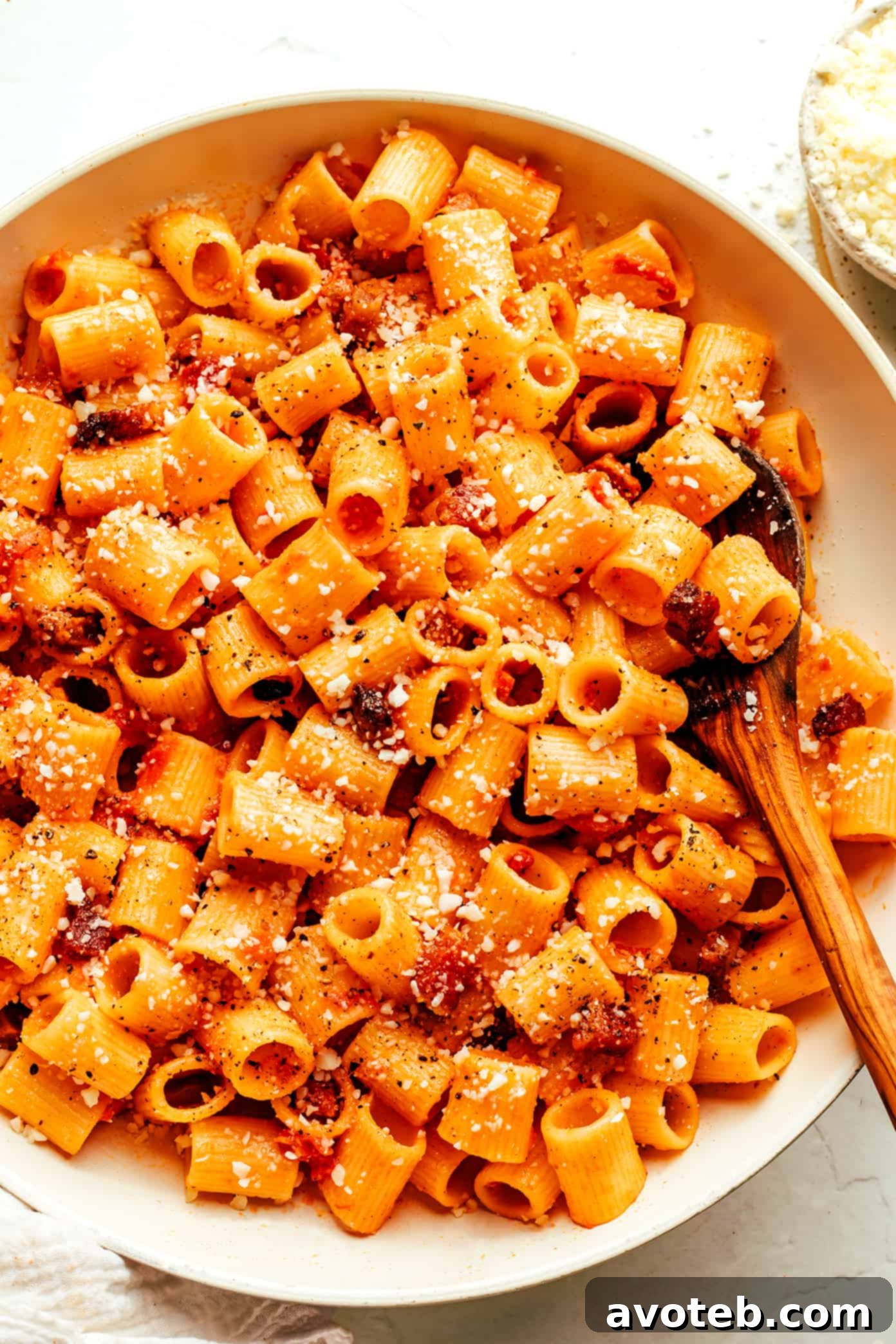
Pasta All’Amatriciana: A Timeless Roman Classic
Discover the authentic taste of Italy with this easy-to-follow Pasta all’Amatriciana recipe, featuring just 6 traditional ingredients for rich, savory perfection.
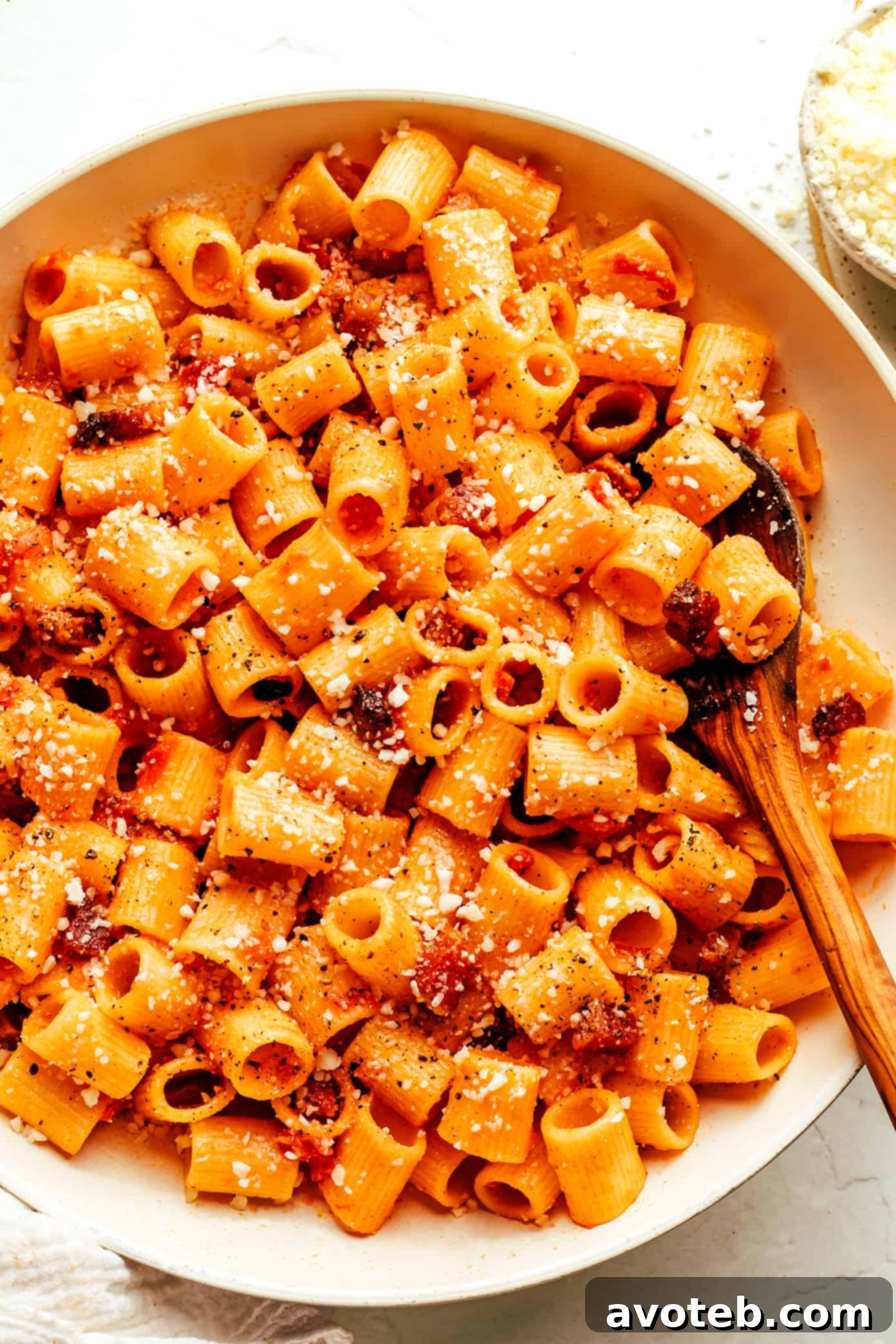
During a memorable month spent in Rome, I embarked on a culinary quest to savor each of the four iconic Roman pasta dishes. It’s truly no exaggeration to say that these four staples—Cacio e Pepe, Gricia, Carbonara, and Amatriciana—rank among my favorite recipes in the world. They were, in fact, a significant reason for my eagerness to return to the Eternal City!
While each of these beloved pastas holds a special place in my heart, it was Pasta all’Amatriciana that truly captivated me on this trip. Perhaps it was the timing, coinciding with the peak of Italian tomato season, lending an unparalleled freshness to the sauce. As the only one of the four classic Roman pastas featuring a rich red sauce, there’s an undeniable magic that unfolds when sweet, ripe tomatoes meet the other celebrated ingredients of Roman cuisine. Guanciale arrives with its intensely savory, cured pork flavor, while Pecorino Romano contributes its signature grassy, earthy notes. A splash of dry white wine deglazes the pan, adding depth and complexity, and a pinch of hot pepper flakes introduces a subtle, yet invigorating, kick of heat. Perfectly seasoned with sea salt and black pepper, and then lovingly tossed with al dente pasta, this dish transforms into something truly extraordinary. It’s no wonder Amatriciana is celebrated as Rome’s most famous red sauce; it’s robust, rich, hearty, and utterly divine.
In Italy, Amatriciana is always served with pasta that is cooked just barely al dente – firm to the bite, with a slight resistance. This traditional cooking method not only ensures the perfect texture but also offers the added benefit of a lower glycemic index, making the pasta easier to digest. During my Roman journey, the versions I enjoyed were consistently prepared with either bucatini or rigatoni, accompanied by guanciale cut into varying sizes. My personal favorites, however, were those that generously incorporated hot chili, whose heat was never overpowering but consistently brought the vibrant sauce to life.
The excellent news for home cooks everywhere is that this classic Pasta all’Amatriciana is remarkably quick and straightforward to prepare. I would even venture to say it’s less demanding in terms of technique than its Roman counterparts, Cacio e Pepe (which can sometimes lead to sticky cheese) or Carbonara (where eggs can scramble if not handled carefully). I highly recommend serving Amatriciana with a crisp green salad and perhaps some roasted vegetables, as traditional Roman pastas famously omit greens. For a truly authentic experience, pair this exquisite dish with a robust, full-bodied Italian red wine.
Grazie mille to Italy for bestowing upon the world these heavenly pasta creations. Now, let’s embark on the delightful journey of making authentic Amatriciana!
Mastering Pasta all’Amatriciana: A Quick Guide
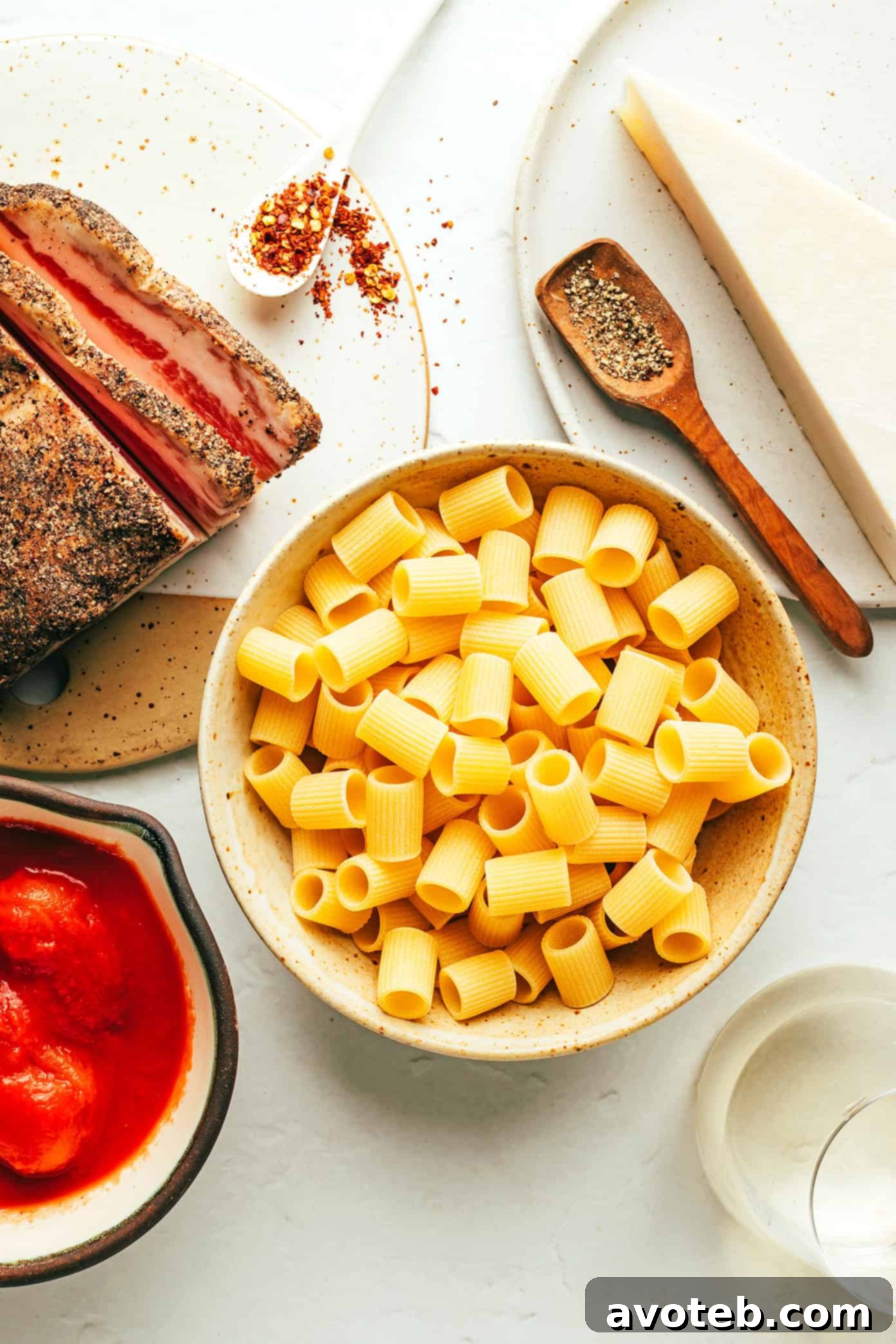
Essential Ingredients for Authentic Pasta all’Amatriciana
Crafting a truly authentic Pasta all’Amatriciana requires focusing on a few high-quality, traditional ingredients. Here’s what you’ll need:
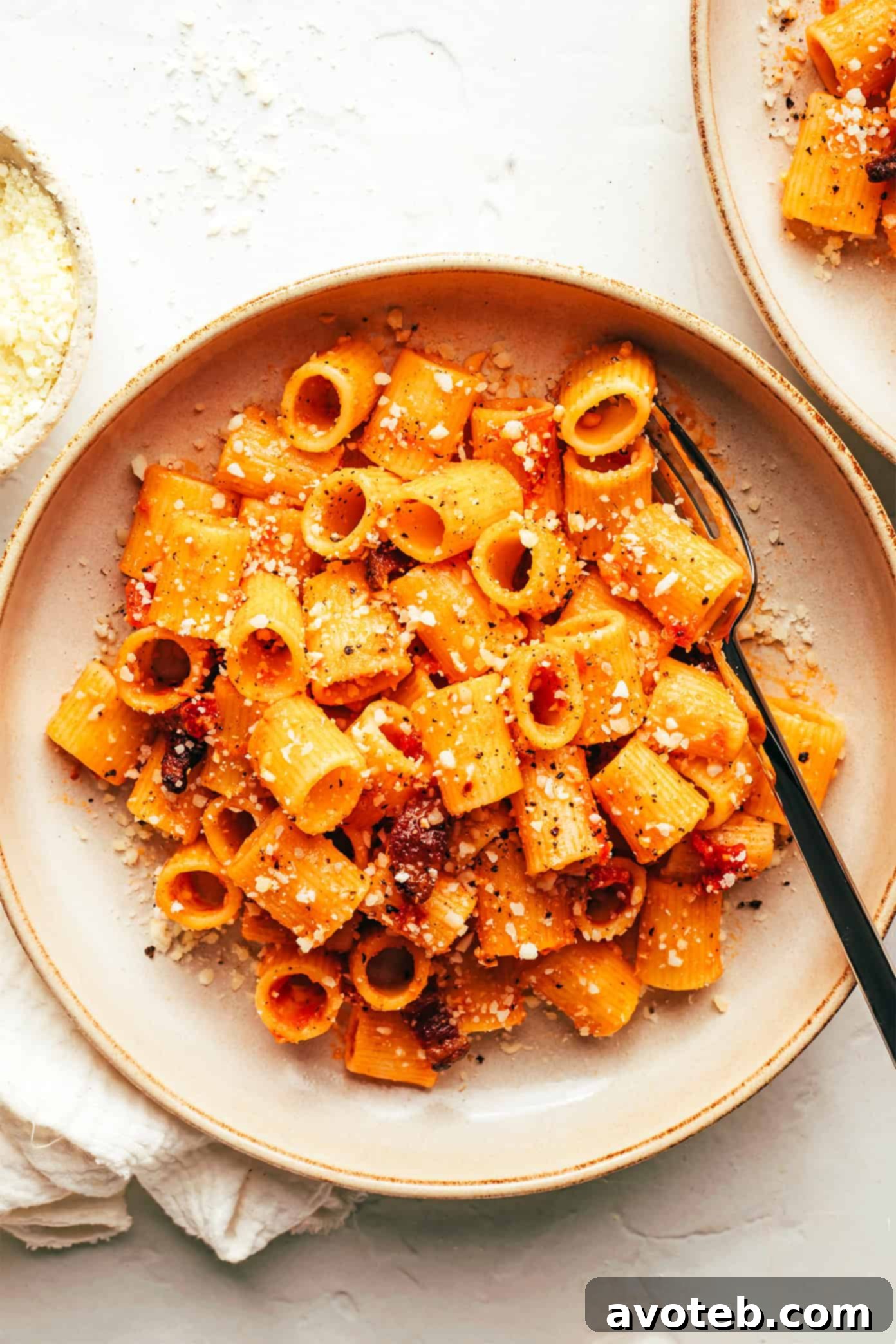
- Pasta: For sugo all’Amatriciana, traditional choices include thick spaghetti, bucatini, or rigatoni. I personally find that mezzi rigatoni (as pictured here) perfectly cradles the rich sauce. However, the beauty of this dish lies in its versatility; it will be equally delicious with almost any pasta shape you prefer, so feel free to use what you have on hand.
- Guanciale: As the official Amatrice website emphatically states, “either you use guanciale, meaning the part of the pig’s jaw and cheek, or it’s not really Spaghetti all’Amatriciana.” This might sound like a bold declaration, but its incomparable delicate and sweet, intensely savory pork flavor is truly the star. Guanciale is the quintessential ingredient in Amatriciana, Gricia, and Carbonara. Its rich, salty notes pair exceptionally well with the tomato base in Amatriciana, creating a depth of flavor that is truly unique. The signature thick, crisp-chewy texture it develops when rendered is incredibly satisfying. While it’s worth seeking out at a local Italian market, thick-cut bacon or pancetta can serve as a non-traditional substitute if guanciale is unavailable.
- Dry White Wine: A generous splash of dry white wine is traditionally used to deglaze the pan, unlocking deeply browned bits and adding a layer of sophisticated flavor to the sauce. If you prefer not to cook with alcohol, an equal amount of water can be used as a simple, effective alternative without compromising the fundamental taste.
- Tomatoes: The traditional Amatriciana recipe calls for either fresh or canned whole San Marzano tomatoes. I favor canned San Marzanos for their consistent quality and year-round availability. These renowned tomatoes, specifically from the San Marzano region of Italy, are celebrated for their sweet flavor and low acidity, making them ideal for this rich red sauce. If genuine San Marzano tomatoes are difficult to find, any good-quality canned whole tomatoes will still yield a delicious result, though the characteristic sweetness of San Marzanos is highly recommended.
- Crushed Red Pepper Flakes: The authentic recipe traditionally incorporates a single dried peperoncino (hot red chili pepper). For convenience, or if whole dried peppers aren’t a pantry staple, 1/4 teaspoon (or more, to taste) of crushed red chili flakes provides that essential subtle heat that brightens the entire dish.
- Pecorino Romano: While the official recipe specifies Pecorino Amatriciano—an aged sheep’s cheese native to the Amatrice region and slightly milder than its Roman counterpart—Pecorino Romano is an excellent and more widely available substitute. Its distinctive grassy, tangy, and salty flavor profile is crucial for the authentic taste of Amatriciana.
- Fine Sea Salt and Freshly-Ground Black Pepper: These fundamental seasonings are indispensable for balancing and enhancing all the robust flavors in the sauce, bringing everything together harmoniously.
Expert Tips for Crafting the Perfect Amatriciana
While the full instructions are detailed in the recipe below, here are some essential tips to ensure your Pasta all’Amatriciana turns out perfectly every time:
- Read Through the Recipe First: This recipe, while not overly complicated, involves a sequence of steps that unfold rather quickly once cooking begins. Taking a few moments to read the entire recipe thoroughly before you start will help you anticipate each stage and ensure a smooth, enjoyable cooking process.
- Finely-Grate Your Cheese by Hand: Always opt to grate your Pecorino Romano fresh, just before you begin cooking, rather than using pre-grated cheese. Pre-grated varieties often contain anti-caking agents that can prevent the cheese from melting smoothly and forming that desirable glossy sauce. A microplane or a fine grater will yield the best results.
- Use an Appropriately Sized Sauté Pan: When it comes to combining the pasta with the sauce, you’ll need ample space to toss everything together efficiently. A large sauté pan or a generously sized stockpot is crucial to ensure the pasta is evenly coated and the sauce emulsifies beautifully.
- Keep Your Tools Handy for Pasta Transfer: To seamlessly transfer the pasta from the boiling water to the sauce, having the right tools ready makes all the difference. A spider strainer is ideal for scooping, or if you’re using long noodles, a good pair of tongs works perfectly. If these aren’t available, make sure to scoop out several cups of the starchy pasta water into a heatproof cup before draining the pasta in a colander and immediately transferring it to your sauté pan. Having extra pasta water on hand is always a good idea for adjusting sauce consistency.
- The Art of Rendering Guanciale: The key to Amatriciana’s signature flavor is properly rendered guanciale. Cook it slowly over medium-low heat. This gentle approach allows the fat to slowly render out, making the guanciale beautifully crispy without burning, and infusing the pan with its rich, savory essence. Don’t rush this step!
- Emulsification with Pasta Water: The starchy pasta water is your secret weapon. It helps to create a silky, glossy sauce that clings perfectly to the pasta. Gradually add it in small amounts as you toss the pasta with the sauce to achieve the ideal consistency.
Amatriciana FAQ: Unraveling the Roman Favorite
How do you pronounce Amatriciana? It is correctly pronounced “ah-mah-tree-TCHAH-nah.”
What is the history of Amatriciana? The precise origins and evolution of Amatriciana, much like its Roman pasta cousins, are often debated among culinary historians. The most widely accepted belief traces Amatriciana’s roots back to pasta alla gricia (sometimes referred to as Amatriciana bianca, or white Amatriciana), a dish prepared without tomatoes. Tomatoes were then introduced to the recipe, potentially as early as the 18th century¹ or, by some accounts, as late as the post-World War II era², transforming it into the beloved tomato-based sauce we enjoy today. This iconic sauce is thought to have been brought from Amatrice to Rome by shepherds who ventured to the capital and its surrounding countryside to sell their dairy products and meats³. Over time, it gained immense popularity in Rome, becoming one of the four classic Roman pastas, despite its technical origins outside the city limits.
So where is Amatrice? Amatrice is a charming small town nestled in northern Lazio, a few hours’ drive northeast of Rome. It’s the birthplace of this celebrated pasta dish.
Does the sauce include olive oil? The traditional Amatriciana recipe suggests a tablespoon of olive oil for sautéing the guanciale. However, I often find this unnecessary. Guanciale itself renders a generous amount of fat, which is more than sufficient to brown the meat and flavor the sauce. Feel free to include it if you prefer, but it’s not strictly essential.
Can I add garlic and onion to the sauce? While some cooks occasionally add garlic and onion for extra flavor, these ingredients are strongly discouraged in the town of Amatrice itself. For instance, in 2015, one of Italy’s most renowned chefs, Carlo Cracco, faced public criticism after revealing on national television that his Amatriciana included sautéed garlic. For an authentic flavor profile, and in my personal opinion, the sauce is wonderfully flavorful without them!
What can I use instead of guanciale? As highlighted earlier, guanciale is a crucial ingredient that imparts Amatriciana with its distinctive and special flavor. However, if guanciale is genuinely unavailable in your local stores, good quality pancetta or thick-cut bacon can be used as a serviceable, albeit non-traditional, substitute. Be aware that the flavor profile will differ slightly.
What can I use instead of Pecorino Romano? Pecorino Romano, a sharp sheep’s cheese, is integral to the traditional Roman pasta dishes and, in my view, tastes best in Amatriciana. If Pecorino Romano is hard to find, freshly-grated Parmesan (Parmigiano Reggiano) can be used, and it still yields a delicious result, though with a slightly milder, nuttier flavor.
Can I store and reheat Amatriciana? Amatriciana is best enjoyed fresh, immediately after preparation, when the pasta is perfectly al dente and the sauce is glossy and well-emulsified. However, leftovers can be stored in an airtight container in the refrigerator for up to 2-3 days. To reheat, gently warm it in a skillet over low heat, adding a splash of water or broth to loosen the sauce if needed. The pasta might lose some of its al dente texture upon reheating, but the flavors will still be delightful.
What are good serving suggestions? Beyond a simple green salad, Amatriciana pairs wonderfully with crusty Italian bread to sop up any leftover sauce. For drinks, a full-bodied Italian red wine like a Montepulciano d’Abruzzo or a Chianti Classico complements the richness of the dish beautifully. For a lighter touch, sparkling water with a slice of lemon can also be refreshing.
Explore the Four Pillars of Roman Pastas
Eager to delve deeper into the rich culinary heritage of Rome? These traditional recipes for the four classic Roman pastas are sure to impress:
- Cacio e Pepe
- Carbonara
- Gricia
- Amatriciana
Pasta All’Amatriciana
Author: Ali
Prep Time: 10 mins
Cook Time: 25 mins
Total Time: 35 mins
Yield: 4 to 6 servings 1x
Description
This classic Pasta all’Amatriciana recipe is easy to make with 6 traditional ingredients and full of the best rich and savory flavors.
Ingredients
Scale
- 1 pound (~500 grams) uncooked pasta (I used mezzi rigatoni)
- 4 1/2 ounces (125 grams) guanciale
- 1/4 cup (50 mL) dry white wine
- 1 (28-ounce or 794 grams) can San Marzano whole tomatoes, drained
- 1/4 teaspoon crushed red pepper flakes
- 3 1/2 ounces (100 grams) Pecorino Romano
- fine sea salt and freshly-ground black pepper
Instructions
- Prepare the pasta water. Fill a large stockpot about half full of water (roughly 3 quarts), add 2 tablespoons fine sea salt, and bring the water to a boil.
- Cut the guanciale. Slice the guanciale into ¼-inch-thick slices. Then cut each slice into roughly ½ x 1-inch pieces. (It can help to freeze the guanciale for 10 minutes beforehand to make it easier to cut.)
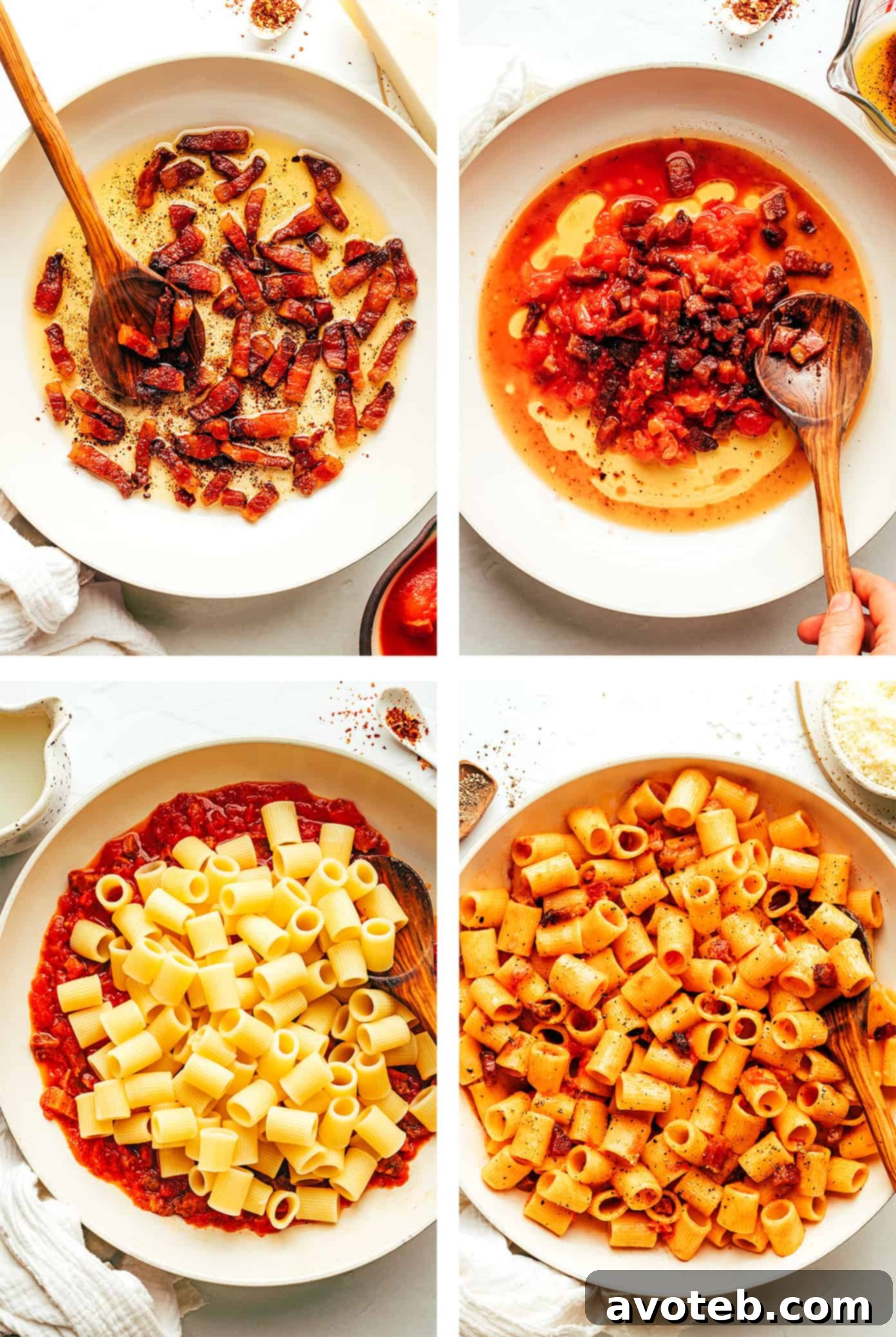
- Cook the guanciale. Heat a large sauté pan over medium-low heat. Add the guanciale to the pan and cook, stirring and flipping occasionally, until the guanciale is golden brown and crispy and the fat has rendered, about 10 minutes. (Keep a close eye on the guanciale so that it does not burn.) Using a slotted spoon, transfer the guanciale to a separate plate. Pour the remaining fat into a heatproof measuring cup. Measure out ¼ cup of the fat to save, then discard the rest.
- Simmer the sauce. Carefully add the wine to the saucepan and use a wooden spoon to scrape up any browned bits stuck left on the bottom of the pan while the wine simmers. Use your hands to roughly crush the tomatoes into small pieces, then add them to the saucepan. Add the crushed red pepper flakes, cooked guanciale, the reserved guanciale fat and stir to combine. Let the sauce continue to simmer on medium-low while the pasta cooks, stirring it occasionally and adding in a ¼ cup of the starchy pasta water if the sauce starts to seem too dry.
- Boil the pasta. Once the pasta water reaches a rapid boil, add the pasta. Cook, stirring occasionally, until the pasta is about 2 minutes shy of al dente. (The center of the pasta should still have just a slight crunch.)
- Emulsify the sauce. Use a spider strainer or tongs to immediately transfer the pasta to the sauté pan with the tomato sauce. (Be sure to save all of the remaining starchy pasta water in the stockpot.) Gently toss the pasta continuously in the sauce for 2-3 minutes until the pasta is al dente, adding in an extra ¼ cup of the remaining starchy pasta water as needed anytime the sauce seems too dry.
- Finish the pasta. Turn off the heat. Gradually add in the cheese and toss gently until the cheese has melted and the sauce is glossy, adding in an extra few tablespoons of the starchy pasta water when needed to thin out the sauce.
- Serve. Serve immediately, garnished with an extra sprinkle of cheese and twist of black pepper.
Equipment
San Marzano Tomatoes
Buy Now →
Spider Strainer
Buy Now →
Fine Grater
Buy Now →
Notes
Source: This recipe is a thoughtful adaptation of the official Amatriciana recipe from the city of Amatrice. All ingredients and their quantities remain consistent, with the sole modification of omitting the tablespoon of olive oil originally suggested for browning the guanciale, which I find to be largely unnecessary due to the guanciale’s ample fat content. The instructions have also been slightly updated for clarity and ease of use.