
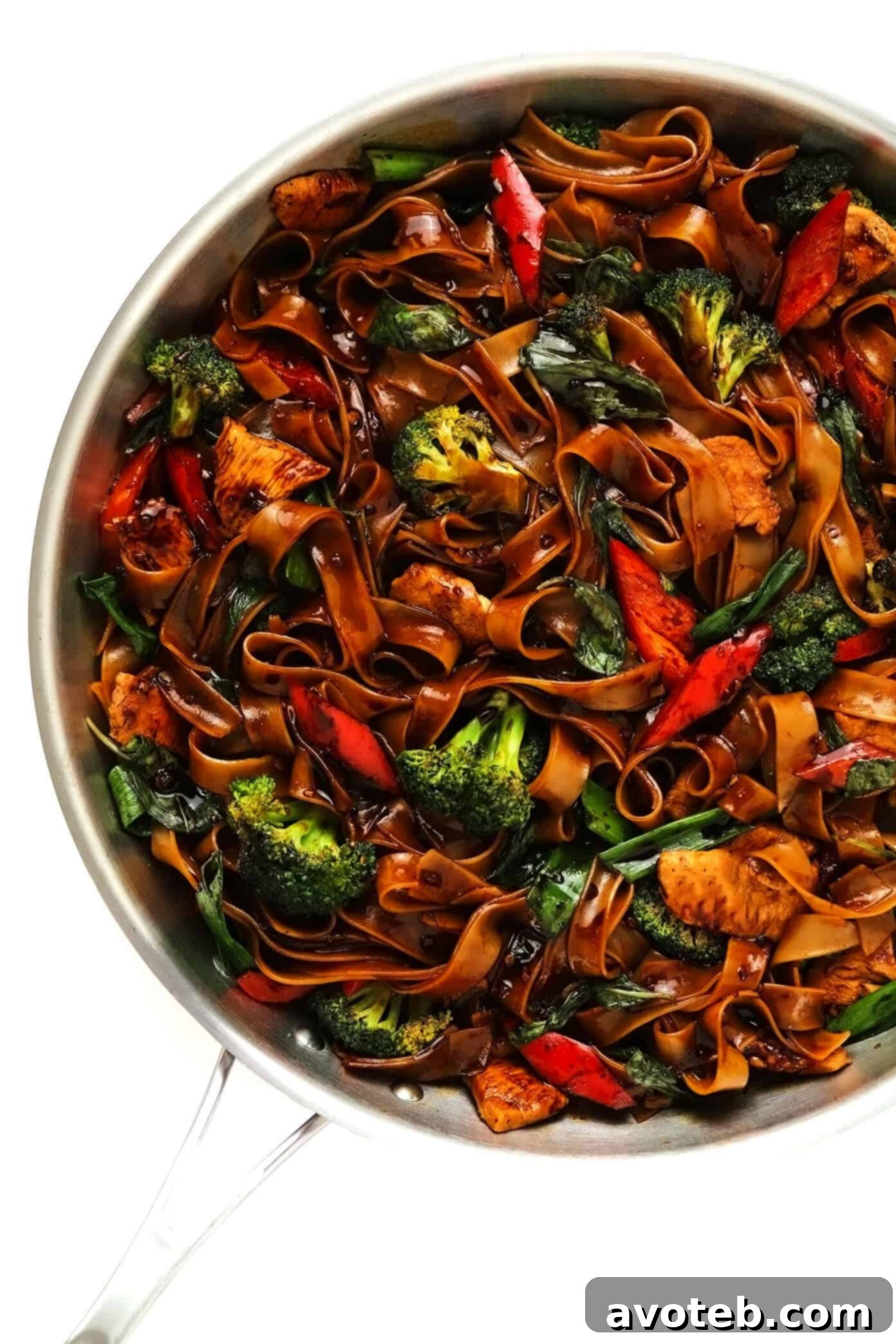
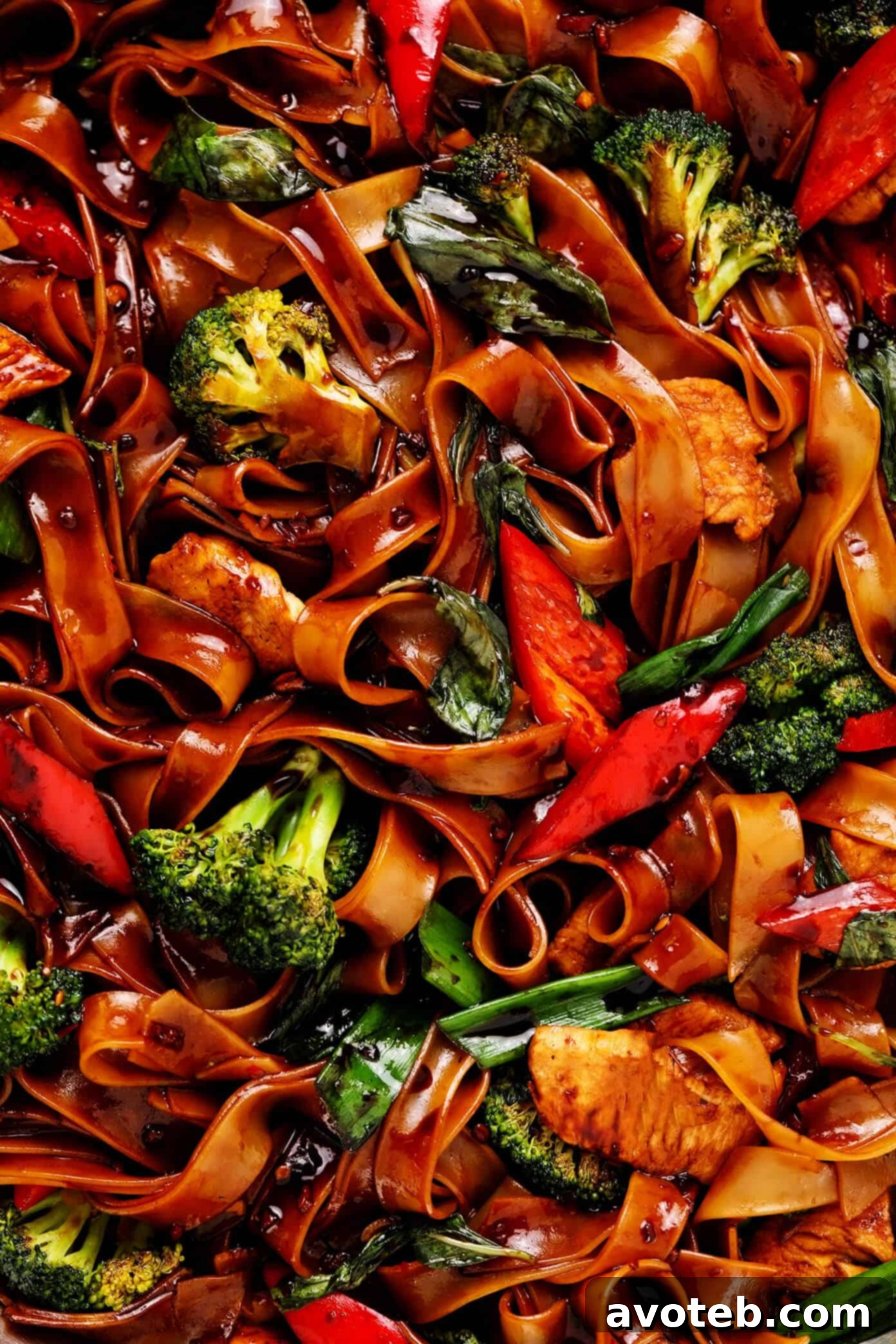
Experience the vibrant flavors of Thailand from your own kitchen with this ultimate guide to making irresistible Thai Drunken Noodles (Pad Kee Mao). This recipe, featuring your choice of protein and fresh vegetables, is bathed in a savory, spicy, and aromatic Thai basil sauce that will transport your taste buds straight to the bustling streets of Bangkok.
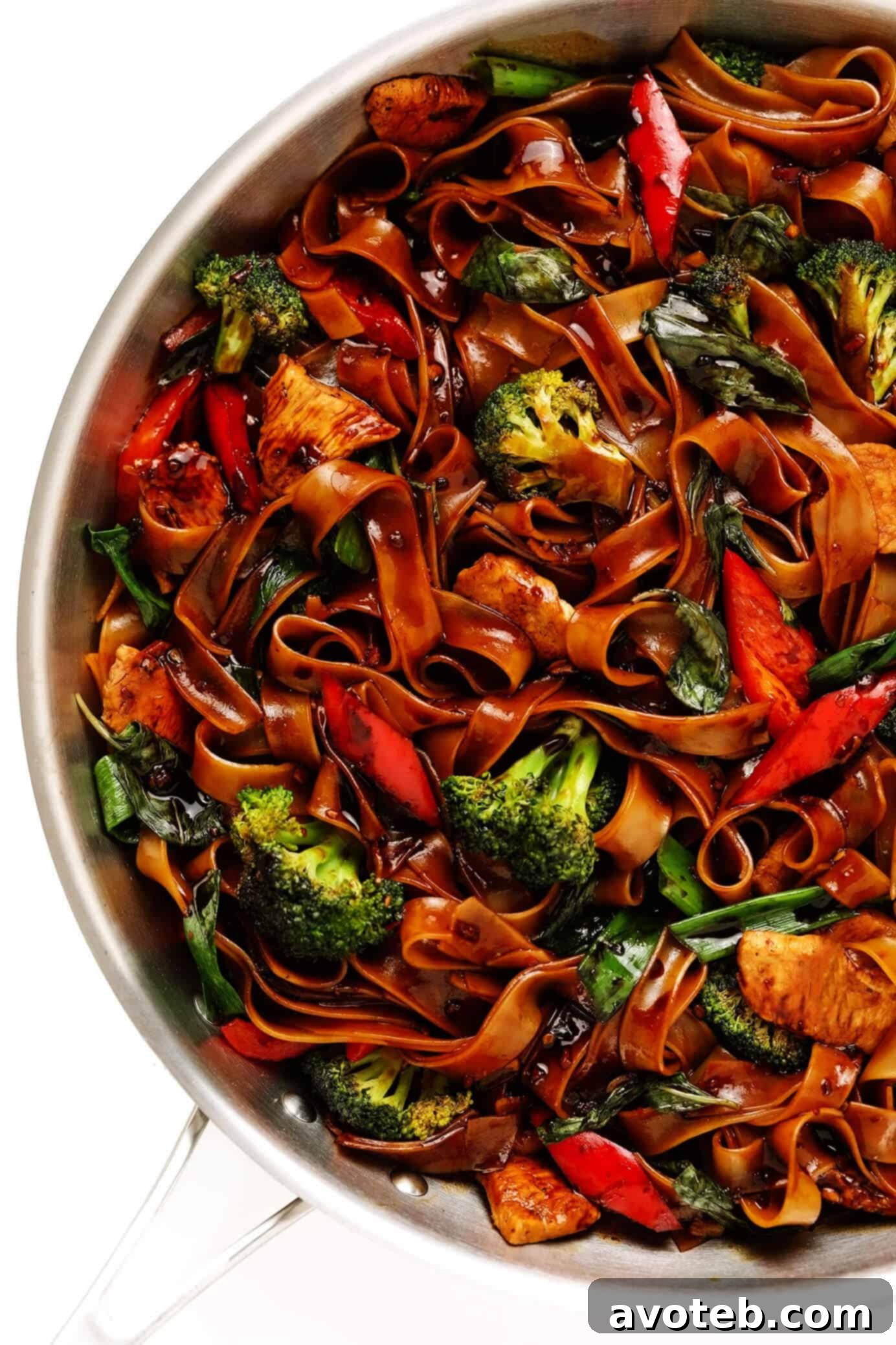
As an avid enthusiast of stir-fried noodles, I can confidently say that Thailand’s famous Pad Kee Mao (ผัดขี้เมา), widely known as Drunken Noodles, holds a special place at the top of my list. There’s an undeniable magic to these noodles – a captivating blend of textures and tastes that keeps me coming back for more, time and time again. They are more than just a meal; they are an experience, a symphony of flavors that truly ignites the senses.
You might wonder about the intriguing name: “Drunken Noodles.” Contrary to popular belief, this dish doesn’t actually contain alcohol. The moniker is widely thought to stem from its intensely savory and spicy profile, which some believe is potent enough to cure a hangover, or perhaps because it’s a dish often enjoyed late at night, after a few drinks. Traditionally, Pad Kee Mao is a hearty stir-fry featuring broad rice noodles, an assortment of fresh vegetables, and your preferred protein (chicken is a popular choice, and what I’ve used here). However, the true soul of this dish, its captivating “drunken” essence, resides in its unique sauce. This isn’t just any sauce; it’s a meticulously crafted blend of savory, subtly sweet, and wonderfully spicy notes. But the transformation truly occurs when this already delicious base is generously tossed with loads of fragrant Thai holy basil, infusing every strand of noodle with an irresistible, anise-like aroma that is simply divine.
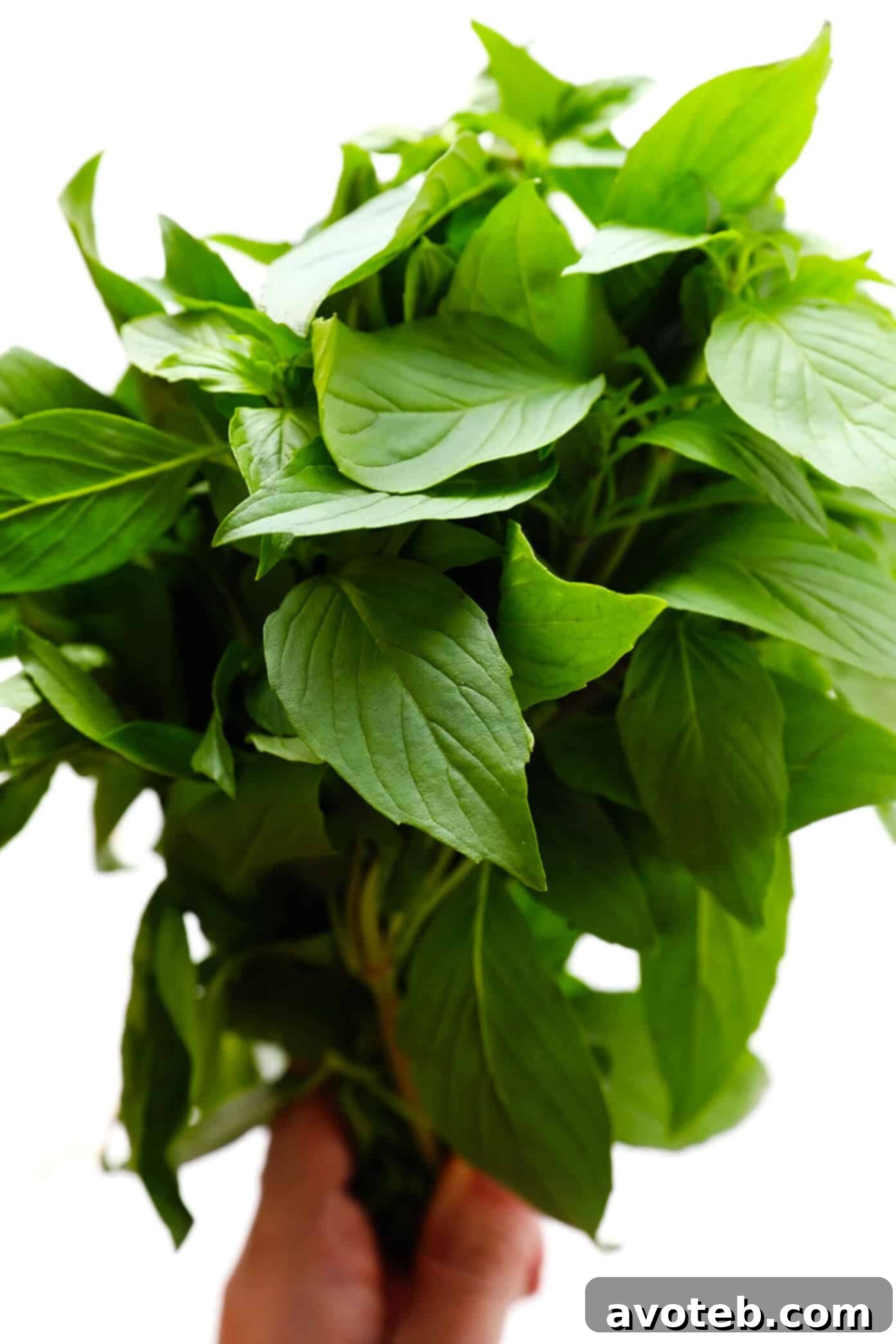
To truly unlock the authentic taste of this Pad Kee Mao recipe, I wholeheartedly urge you to seek out fresh Thai basil from your local Southeast Asian grocery store. This particular herb is distinctly different from its Italian counterpart, boasting a more robust, peppery, and slightly anise-like flavor that provides that elusive je ne sais quoi – that special something that elevates the dish from good to absolutely phenomenal. While I can’t claim this recipe is 100% traditionally authentic, it’s the closest and most delicious recreation of the beloved Thai-American restaurant version that I fell head over heels for years ago. Its taste is, quite frankly, ridiculously good and consistently satisfying.
The excellent news is that preparing this flavor-packed stir-fry at home is surprisingly straightforward, making it an ideal choice for a quick yet impressive weeknight dinner. What’s more, it yields fantastic leftovers, allowing you to savor its incredible taste for days to come. So, gather your ingredients, make that worthwhile trip for some fresh Thai basil, and let’s dive into crafting your very own homemade Pad Kee Mao!
Essential Ingredients for Authentic Pad Kee Mao
Crafting the perfect Pad Kee Mao starts with selecting the right ingredients. Below, you’ll find a detailed breakdown of what you’ll need, along with helpful tips and common alternatives to ensure your stir-fry is nothing short of spectacular. (Specific quantities are listed in the full recipe card further down.)
- Rice Noodles: The foundation of our dish! While any size of flat rice noodles can work, wide, fresh rice noodles (often labeled as “Ho Fun” or “Sen Yai”) are traditionally preferred for their chewy texture and ability to absorb the rich sauce. If fresh noodles aren’t available, dried wide rice noodles are an excellent substitute; just be sure to cook them al dente to prevent them from becoming mushy during stir-frying.
- Protein: I often opt for lean, bite-sized slices of chicken breast for its versatility and quick cooking time. However, Pad Kee Mao is incredibly forgiving, and you can easily substitute with your favorite protein. Thinly sliced beef (like flank steak or sirloin), tender pork loin, succulent shrimp, or even firm tofu cubes (pressed and lightly fried for texture) all make delicious additions. Choose what you love best!
- Fresh Vegetables: A vibrant array of vegetables adds color, crunch, and essential nutrients. My go-to combination includes crisp broccoli florets, sweet red bell pepper, fresh scallions (green onions), and aromatic garlic. For a more traditional touch, Chinese broccoli (gai lan) is often used; if you can find it, remember to separate the tender stems from the leaves, cooking the stems first due to their firmer texture. Other fantastic stir-fry friendly options include snap peas, carrots, baby corn, mushrooms, or even thinly sliced cabbage. Don’t hesitate to customize based on what’s in season or what you have on hand.
- Thai Basil: This is the star ingredient that truly defines Pad Kee Mao. Thai basil has a distinct flavor profile – it’s more robust, peppery, and has a noticeable anise or licorice-like aroma compared to the sweeter, more delicate Italian basil. Its unique flavor is absolutely crucial for the authentic taste of this dish, so I highly recommend making the effort to find it. You’ll typically find it at Asian supermarkets. Be generous with it; the more, the better! If Thai basil is genuinely unavailable, regular Italian basil can be used as a last resort, but be aware the flavor will be different, though still delicious.
- The “Drunken” Stir-fry Sauce: The heart and soul of this recipe, our sauce is a harmonious blend designed to deliver that iconic Pad Kee Mao flavor. It combines low-sodium soy sauce for saltiness and umami, rich oyster sauce (or a vegetarian mushroom-based alternative) for depth, pungent fish sauce for its quintessential Thai savory notes, sweet dark soy sauce for a touch of sweetness and beautiful dark color, and chili garlic sauce for customizable heat. This balance of salty, sweet, sour, and spicy is what makes the dish so utterly addictive.
- Optional Toppings: Elevate your Pad Kee Mao with a sprinkle of fresh toppings just before serving. Fresh lime wedges add a bright, zesty contrast to the rich sauce, while sliced Thai bird chiles offer an extra kick of heat for those who crave it. For an added layer of texture and nutty flavor, consider chopped roasted peanuts or crispy fried garlic.
How to Master Homemade Drunken Noodles (Pad Kee Mao)
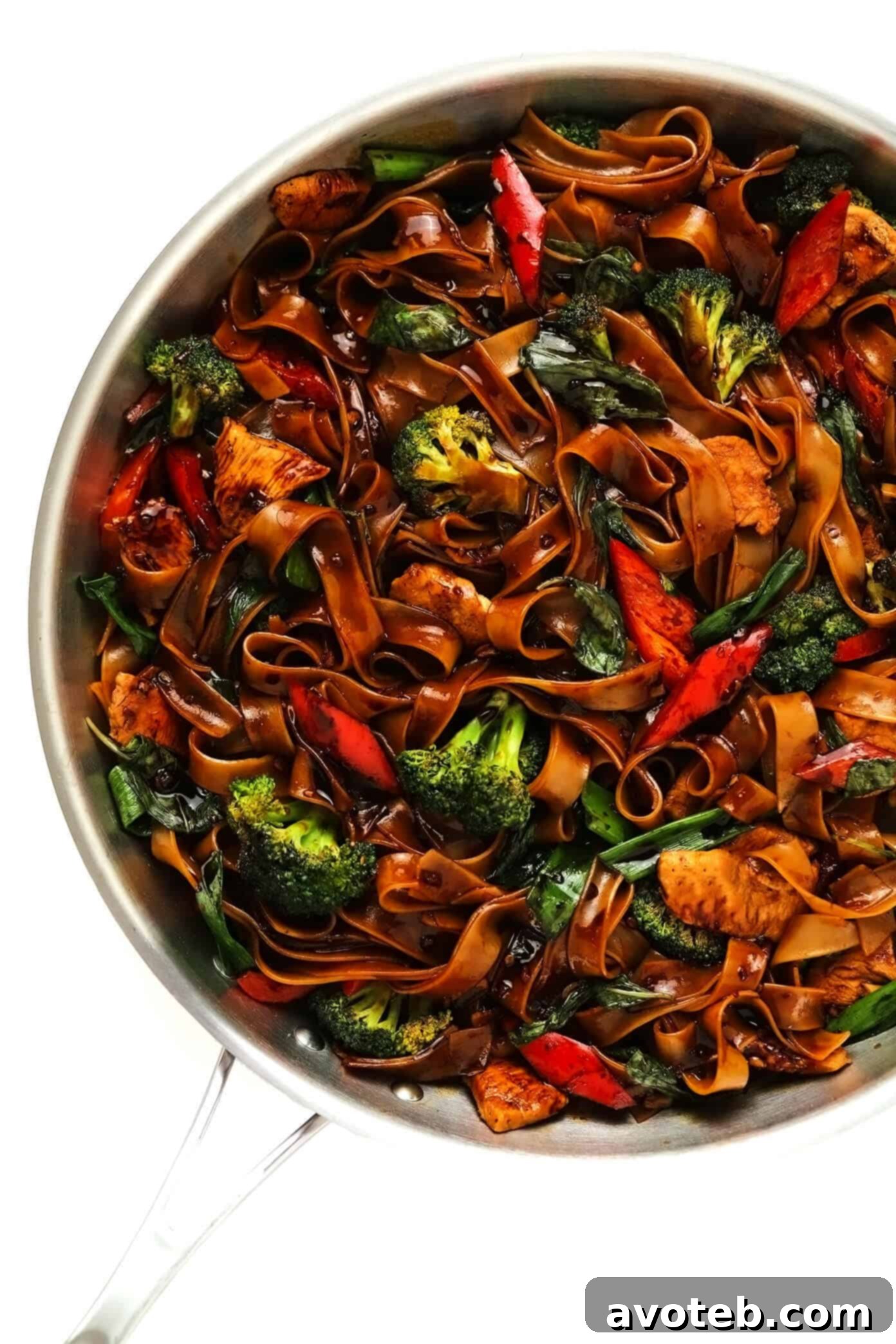
While the rich flavors might suggest a complex preparation, making Thai Drunken Noodles at home is surprisingly simple, especially with a few stir-frying best practices. Here’s a concise overview of the steps to guide you (find full, detailed instructions in the recipe card below):
- Prepare the Irresistible Sauce: The first crucial step is to whisk all the sauce ingredients together in a small bowl or measuring cup until thoroughly combined. This ensures all the flavors meld perfectly and that the sauce is ready to be added to the hot wok at just the right moment, allowing for quick and even distribution. Having your sauce prepped saves precious seconds during the fast-paced stir-frying process.
- Cook and Prepare the Noodles: Follow the package instructions to cook your rice noodles until they are perfectly al dente – meaning they are cooked but still have a slight bite. It’s vital not to overcook them, as they will continue to soften slightly when stir-fried. Immediately drain and rinse the cooked noodles with cold water. This stops the cooking process and removes excess starch, preventing them from clumping together. For extra insurance against sticking, especially if there’s a delay before stir-frying, toss them lightly with a drizzle of neutral oil.
- Sear Your Protein to Perfection: Heat one tablespoon of oil in a large sauté pan or wok over medium-high heat until shimmering. Season your chicken (or chosen protein) with a generous pinch of salt and pepper. Add the seasoned protein to the hot pan, spreading it out in a single layer if possible (cook in batches if necessary to avoid overcrowding, which steams rather than sears). Sauté for 3-4 minutes, stirring only occasionally, until it’s cooked through and beautifully browned. Transfer the cooked protein to a clean plate and set aside.
- Stir-Fry the Vibrant Veggies: Add the remaining tablespoon of oil to the same pan. Begin by adding the white parts of your chopped scallions and the diced red bell pepper. Sauté for about 2 minutes, stirring occasionally, allowing them to soften slightly. Next, introduce the broccoli florets and minced garlic. Continue to sauté for another 2 minutes, or until the vegetables reach your desired level of crisp-tenderness. We want them cooked through but still retaining a pleasant bite.
- Unite All the Flavors: This is where the magic happens! Return the cooked protein to the pan. Immediately add the prepared noodles, the savory “drunken” sauce, a generous amount of fresh Thai basil leaves, and the green parts of the scallions. Toss everything vigorously for 1-2 minutes using tongs or a spatula. Ensure all ingredients are evenly coated with the rich, aromatic sauce, and the Thai basil has just wilted, releasing its potent fragrance. Avoid overcooking, as this can make the noodles mushy and dull the basil’s vibrant flavor.
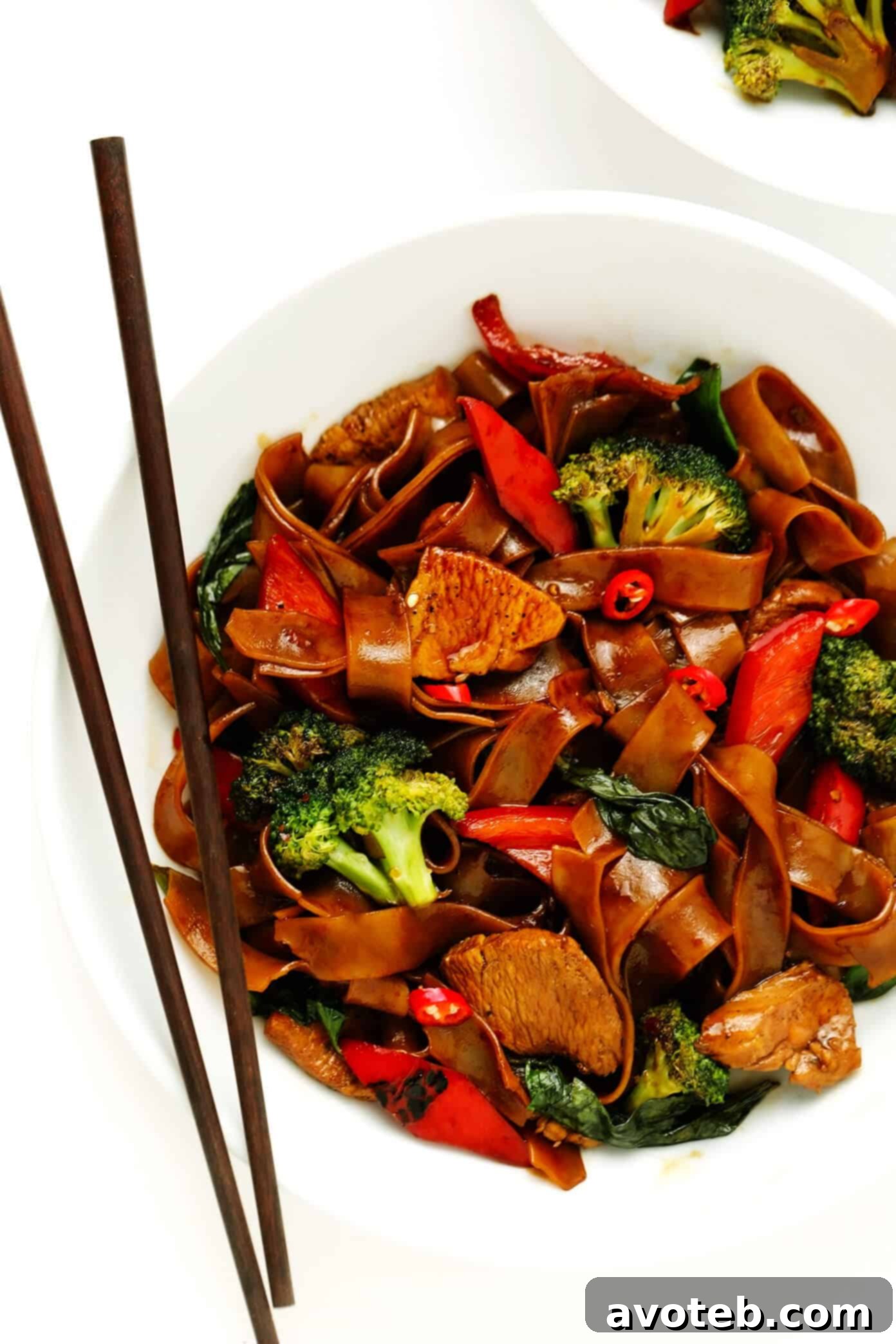
- Serve Hot and Enjoy: Remove the pan from the heat as soon as everything is well combined and heated through. Serve your homemade Pad Kee Mao immediately, while the noodles are wonderfully hot and the aromas are at their peak. Garnish with any of your desired toppings – a squeeze of fresh lime, a sprinkle of fresh chiles, or crunchy peanuts – to add a final flourish of flavor and texture.
Creative Variations to Customize Your Pad Kee Mao
One of the beauties of stir-fry recipes like Pad Kee Mao is their incredible flexibility. Feel empowered to get creative and adapt this recipe to suit your preferences, dietary needs, or whatever ingredients you happen to have on hand. Here are some fantastic variations to inspire you:
- Explore Different Proteins: While chicken is a classic choice, this dish shines with various other proteins.
- Beef: Thinly sliced flank steak or sirloin works wonderfully. Marinate it briefly in a touch of soy sauce and cornstarch for extra tenderness before stir-frying.
- Pork: Lean pork loin or tenderloin, thinly sliced, is another excellent option.
- Shrimp: Add raw, peeled, and deveined shrimp during the last few minutes of vegetable cooking; they cook very quickly until pink and opaque.
- Tofu: For a vegetarian or vegan version, use firm or extra-firm tofu. Press out excess water, cut into cubes, and pan-fry until golden and crispy before adding to the stir-fry.
- Experiment with a Medley of Vegetables: Beyond broccoli and bell peppers, almost any stir-fry-friendly vegetable can be incorporated. Consider adding:
- Thinly sliced carrots or cabbage for added crunch.
- Snow peas or snap peas for a crisp, sweet element.
- Baby corn or water chestnuts for texture.
- Mushrooms (shiitake or cremini) for an earthy flavor.
- Bamboo shoots for an authentic touch. Remember to add firmer vegetables first and softer ones later to ensure even cooking.
- Adjust the Spice Level: Pad Kee Mao is known for its kick, but you can tailor it to your liking.
- For more heat: Increase the amount of chili garlic sauce in the stir-fry sauce. You can also finely slice fresh Thai bird chiles and add them to the sauce, or sprinkle them liberally on top of the finished dish.
- For less heat: Reduce or omit the chili garlic sauce. You can always add a mild chili oil or sriracha at the table for individual preference.
- Make it Gluten-Free: Adapting this recipe for a gluten-free diet is straightforward with a few key substitutions.
- Soy Sauce: Replace traditional soy sauce with gluten-free tamari.
- Oyster Sauce: Use a gluten-free oyster sauce. Many Asian markets now carry these, or you can find vegetarian mushroom-based “oyster” sauces that are often gluten-free (check labels carefully).
- Dark Soy Sauce: If you can’t find a gluten-free dark soy sauce (which can be tricky), you can create a good substitute by combining a bit of extra gluten-free tamari with a drizzle of a dark sweetener like molasses, maple syrup, brown sugar, or honey. The molasses provides the closest flavor and color depth.
Explore More Favorite Noodle Recipes
If you’ve enjoyed the delightful experience of crafting and savoring these Thai Drunken Noodles, you’re likely a fellow noodle enthusiast! Here are a few more of my absolute favorite noodle recipes that I highly recommend you try:
- Sesame Noodles: A quick and easy classic with a rich, nutty sauce.
- Cold Sesame Peanut Noodles: Perfect for warmer days, a refreshing and flavorful dish.
- Japchae (Korean Noodle Stir-Fry): A vibrant and savory dish featuring glass noodles and an array of colorful vegetables.
- Five Spice Tofu with Sesame Noodles: A fragrant and protein-packed meal for a plant-based option.
- Vietnamese Chicken Noodle Bowls: Fresh, light, and bursting with the flavors of Southeast Asia.
Thai Drunken Noodles (Pad Kee Mao)
Prep Time: 30 minutes
Cook Time: 15 minutes
Total Time: 45 minutes
Yield: 4 to 6 servings 1x
Description
My favorite recipe for Thai drunken noodles (pad kee mao), made with your choice of protein and veggies and the most irresistible Thai basil sauce.
Ingredients
Scale
Stir-Fry Ingredients:
- 8 ounces uncooked rice noodles
- 2 tablespoons oil, divided
- 1 pound boneless skinless chicken breasts*, cut into bite-sized pieces
- 3 scallions, chopped with white and dark green parts divided
- 2 cups broccoli florets (or other veggies*)
- 1 red bell pepper, cored and diced
- 4 cloves garlic, minced
- 1 1/2 cups tightly-packed fresh Thai basil leaves
- optional toppings: fresh lime wedges, sliced Thai bird chiles, chopped peanuts, and/or fried garlic
Stir-Fry Sauce:
- 3 tablespoons low-sodium soy sauce
- 2 tablespoons oyster sauce
- 2 tablespoons fish sauce
- 1 tablespoon sweet dark soy sauce*
- 1 tablespoon chili garlic sauce
Instructions
- Prep the sauce: Whisk the sauce ingredients together in a small bowl or measuring cup until combined.
- Prep the noodles: Cook the noodles according to package instructions until they are al dente. Drain and rinse with cool water until the noodles are no longer hot, and set aside until ready to use. (I would also recommend tossing the noodles with a drizzle of oil if it will be a few minutes until you add them to the stir-fry, to prevent them from sticking together.)
- Sauté the chicken: Heat 1 tablespoon oil in a large sauté pan or wok over medium-high heat. Season the chicken with a generous pinch of salt and pepper. Then add the chicken to the oil and sauté for 3-4 minutes, stirring only occasionally, until it is cooked through. Transfer the cooked chicken to a separate (clean) plate, and return the pan to the heat.
- Cook the veggies. Add the remaining 1 tablespoon oil to the pan. Add the white parts of the green onions and the bell pepper to the pan and sauté for 2 minutes, stirring occasionally. Add the broccoli and garlic and sauté for 2 more minutes, stirring occasionally, until the veggies reach your desired level of tenderness.
- Combine everything. Immediately add the cooked noodles, sauce, chicken, Thai basil, and the green parts of the scallions to the pan. Give everything a good toss for 1-2 minutes until all ingredients are evenly coated with the sauce.
- Serve warm. Remove pan from the heat and serve immediately, garnished with any of your desired toppings.
Equipment
Oyster Sauce
Buy Now →
Fish Sauce
Buy Now →
Chili Garlic Sauce
Buy Now →
Notes
Protein alternatives: Feel free to substitute a pound of beef, pork, shrimp or tofu in place of the chicken if you would like, or you can just omit the added protein from this recipe entirely.
Veggie options: Feel free to substitute whatever stir-fry-friendly veggies you prefer in place of the broccoli and bell pepper, if you would like. Chinese broccoli is often traditionally used in this recipe, which should have its stems chopped and sautéed first and then the leafy green parts tossed in near the end.
Dark soy sauce alternative: If you can’t find dark soy sauce, you can sub in a teaspoon of soy sauce plus a teaspoon or two of sweetener (molasses is closest in flavor, but honey, maple syrup or sugar would work) in its place.