
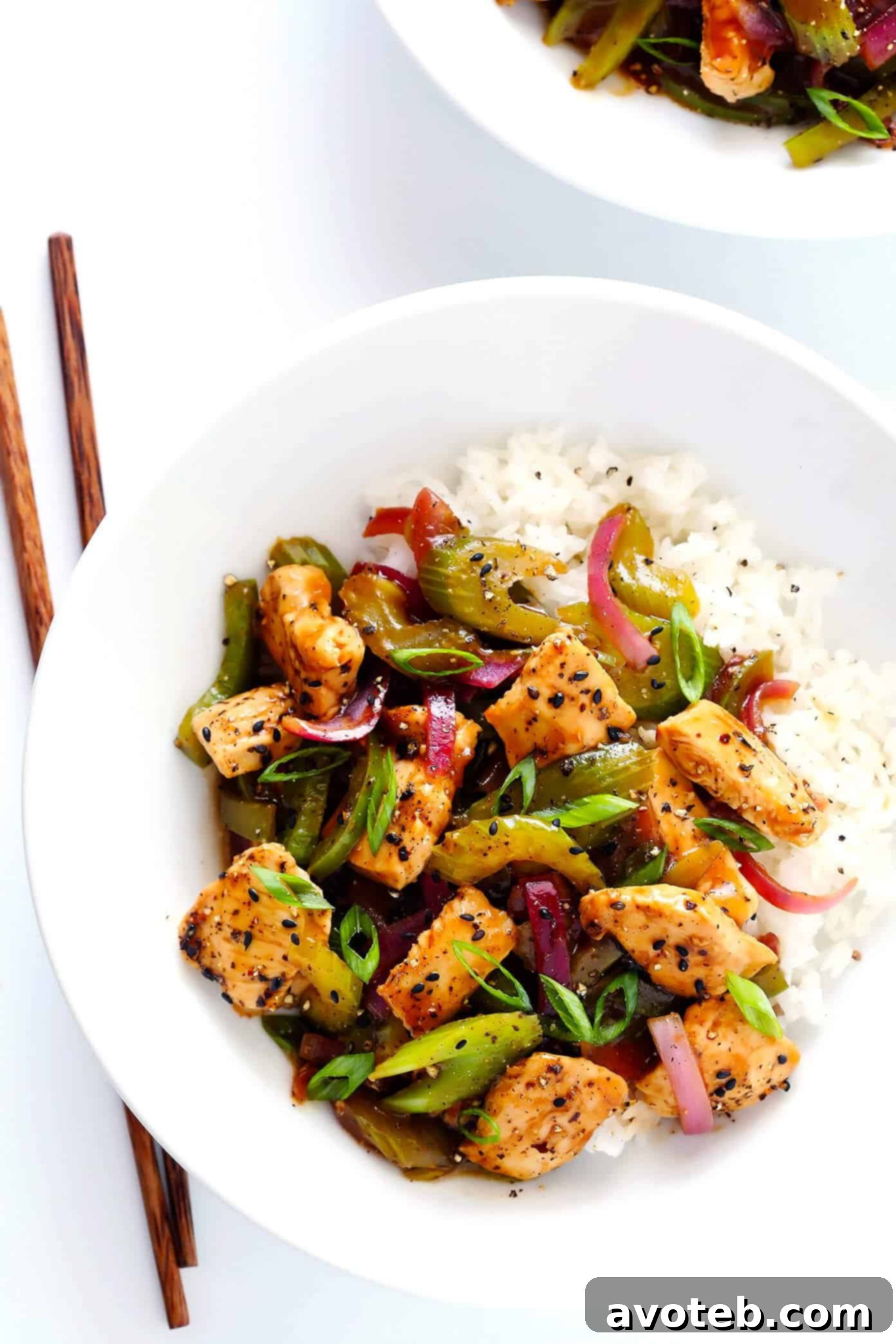
Experience the irresistible taste of restaurant-style Chinese Black Pepper Chicken right in your own kitchen with this quick, easy, and incredibly flavorful recipe. Perfect for weeknights and fully customizable!
Unlock Authentic Flavor: Your Ultimate Guide to Homemade Black Pepper Chicken
There’s something truly special about indulging in your favorite restaurant dishes from the comfort of your home. And when it comes to Chinese cuisine, few dishes capture that perfect balance of savory, spicy, and deeply satisfying flavors quite like Black Pepper Chicken. This recipe promises to bring the vibrant taste of a bustling Chinese eatery straight to your dining table, offering a dish that’s not only delicious but also remarkably simple to prepare.
For many, certain foods evoke powerful memories. For me, Black Pepper Chicken is a cherished flashback to my college days. While I was spoiled growing up with an incredible local Chinese restaurant in Wichita – a weekly Saturday lunch tradition that cemented my love for perfectly balanced stir-fry sauces and comforting egg drop soup – college presented a different culinary landscape. Moving to a small Kansas town, the local (and only) Chinese buffet became a frequent, albeit often underwhelming, haunt. Despite the occasional culinary misstep (it was the place that inspired me to master my own egg drop soup), there was one shining star on that humble buffet line: their Black Pepper Chicken.
It was the undisputed champion of late-night study sessions, the perfect reward after grueling band practices, and an instant mood lifter. That distinct peppery kick, coupled with tender chicken and crisp vegetables, always hit the spot. Fifteen years later, that classic Black Pepper Chicken remains a top-tier comfort food for me, but with a significant upgrade: I now prepare it in my own kitchen, where I have complete control over every single ingredient, ensuring superior quality and flavor.
Why You’ll Fall in Love with This Homemade Black Pepper Chicken
Making Black Pepper Chicken at home isn’t just about recreating a restaurant favorite; it’s about elevating it. Here’s why this recipe deserves a permanent spot in your culinary rotation:
- Unbelievably Quick & Easy: Forget complicated steps or lengthy preparation times. This recipe is designed for efficiency, making it an ideal choice for busy weeknights. You can have a gourmet meal on the table faster than ordering takeout!
- Restaurant-Quality Taste: We’re not just making a black pepper chicken; we’re crafting a dish that rivals your favorite Chinese restaurant. The secret lies in fresh ingredients and a perfectly balanced sauce that coats every piece with rich, peppery goodness.
- Highly Customizable: This recipe is a fantastic canvas for creativity. Whether you want to add more vegetables, swap out the protein, or adjust the spice level, it’s incredibly versatile to suit your preferences and what you have on hand.
- Healthier & Fresher: When you cook at home, you dictate the ingredients. Use lean chicken, fresh veggies, and control the sodium and oil, resulting in a fresher, often healthier, alternative to typical takeout.
- Ultimate Comfort Food: There’s a reason why Black Pepper Chicken has earned its comfort food status. The warming spices, tender textures, and deeply savory sauce create a dish that truly nourishes the soul, whether you’re recovering from a tough day or simply craving something delicious.
Crafting the Perfect Black Pepper Sauce: The Heart of the Dish
The magic of Black Pepper Chicken truly lies in its signature sauce. It’s a harmonious blend of savory, slightly sweet, and, of course, intensely peppery flavors. Don’t underestimate the power of freshly cracked black pepper here – it makes all the difference! Unlike pre-ground pepper, freshly cracked pepper releases a more potent, aromatic spice that beautifully permeates the entire dish. Combined with low-sodium soy sauce for umami, a touch of oyster sauce for depth, rice wine vinegar for a subtle tang, and cornstarch for perfect thickening, this sauce is the cornerstone of an authentic taste. A hint of ground ginger adds another layer of warmth, rounding out the flavor profile beautifully.
Essential Ingredients for Success
While the beauty of this dish is its versatility, a few core ingredients are key to achieving that restaurant-quality flavor:
- Chicken: Boneless, skinless chicken breasts or thighs work best. Cut them into bite-sized pieces for even cooking and easy eating. Thighs offer a slightly richer flavor and tend to stay juicier.
- Vegetables: Celery, bell pepper (any color), and red onion are the classic trio that provides a wonderful crunch and fresh flavor contrast to the rich sauce. Don’t hesitate to add others like broccoli, snap peas, carrots, or mushrooms.
- Garlic: Freshly minced garlic is non-negotiable for that aromatic base.
- Peanut Oil: Or any neutral, high-smoke-point oil like canola or vegetable oil. Divided use ensures optimal searing and stir-frying without burning.
- The Sauce Components: As mentioned, a blend of low-sodium soy sauce, cornstarch, oyster sauce, rice wine vinegar, freshly cracked black pepper, and ground ginger creates the irresistible flavor.
Tips for Achieving Stir-Fry Perfection
Stir-frying is a quick cooking method, and a few techniques can ensure your Black Pepper Chicken turns out perfectly every time:
- High Heat is Key: A hot wok or large sauté pan is crucial for achieving that characteristic stir-fry char and keeping the ingredients from steaming. Ensure your oil is shimmering before adding ingredients.
- Don’t Overcrowd the Pan: Cook the chicken in a single layer to allow it to sear properly. If your pan is too full, the temperature will drop, and your chicken will steam instead of brown. You might need to cook the chicken in batches if using a smaller pan.
- Prep Everything Ahead: Stir-frying moves fast! Have all your ingredients chopped, measured, and the sauce whisked together before you even turn on the heat. This is often called “mise en place” and is vital for success in Asian cooking.
- Crisp-Tender Vegetables: Sauté the vegetables until they are tender-crisp, retaining a slight bite. This adds wonderful texture to the dish.
- Thicken the Sauce: Once the sauce is added, cook for just a minute or two until it thickens and clings to the chicken and vegetables. This creates that glossy, appealing finish.
Serving Suggestions & Customization Ideas
This Black Pepper Chicken is fantastic on its own, but it truly shines when paired with simple sides. Steamed white or brown rice is the classic accompaniment, soaking up every last drop of that savory sauce. For a healthier twist, consider quinoa or cauliflower rice. If you prefer noodles, stir-fried noodles or lo mein would also be excellent choices.
Want to get creative? Here are a few ideas:
- Add More Heat: For those who love an extra kick, stir in a teaspoon or two of garlic chili sauce to the stir-fry sauce.
- Vary the Protein: Shrimp or firm tofu make excellent substitutes for chicken, offering different textures and flavors.
- Boost the Veggies: Incorporate other quick-cooking vegetables like broccoli florets, snow peas, water chestnuts, baby corn, or sliced carrots.
- Garnish Galore: A sprinkle of thinly sliced green onions and a handful of toasted sesame seeds add both flavor and visual appeal.
From nostalgic college memories to a delicious and convenient weeknight meal, this Black Pepper Chicken recipe consistently delivers. It’s guaranteed to satisfy your cravings and impress your family and friends with its authentic flavors and simple preparation. So, go ahead, grab your wok, and get ready to enjoy one of the most comforting and flavorful Chinese dishes you can make at home!
Black Pepper Chicken
Prep Time: 7 minutes
Cook Time: 13 minutes
Total Time: 20 minutes
Yield: 4 –6 servings 1″>1x
Description
Recreate the bold flavors of your favorite Chinese restaurant with this simple and quick Black Pepper Chicken recipe. Featuring tender chicken, crisp vegetables, and a richly seasoned, peppery sauce, it’s a comforting and customizable dish perfect for any day of the week.
Ingredients
Scale
- 2 tablespoons peanut oil (or any mild-flavored, high-smoke-point oil), divided
- 1 pound boneless skinless chicken breasts, cut into bite-sized pieces
- 1 small bell pepper, cored and thinly-sliced
- 1 small red onion, peeled and thinly-sliced
- 2 stalks celery, thinly-sliced on a bias
- 2 cloves garlic, peeled and minced
- 1/4 cup low-sodium soy sauce
- 1 tablespoon cornstarch
- 1 tablespoon oyster sauce
- 1 tablespoon rice wine vinegar
- 2 teaspoons freshly-cracked black pepper (or more to taste for extra spice)
- 1/4 teaspoon ground ginger
- optional toppings: thinly-sliced green onions, toasted sesame seeds
Instructions
- Heat 1 tablespoon of the peanut oil over medium-high heat in a large sauté pan or wok. Add the bite-sized chicken pieces and sauté for 4-5 minutes, stirring occasionally, until the chicken is fully cooked through and no longer pink inside. Using a slotted spoon, transfer the cooked chicken to a clean plate and set it aside.
- Add the remaining 1 tablespoon of oil to the same sauté pan, along with the sliced bell pepper, red onion, celery, and minced garlic. Sauté for an additional 5-6 minutes, stirring occasionally, until the vegetables are tender-crisp.
- Meanwhile, while the vegetables are cooking, whisk together the soy sauce, cornstarch, oyster sauce, rice wine vinegar, freshly-cracked black pepper, and ground ginger in a small bowl until completely smooth and combined.
- Once the vegetables are ready, return the cooked chicken to the pan. Pour the prepared sauce mixture over the chicken and vegetables, and stir well to ensure everything is evenly coated. Continue to cook for 1-2 minutes, or until the sauce has thickened to a glossy consistency. Taste, and adjust seasoning with extra soy sauce or black pepper as desired.
- Remove the pan from the heat and serve immediately. Garnish with your desired toppings, such as thinly-sliced green onions or toasted sesame seeds. Enjoy!
Notes
For those who love an extra layer of spice, feel free to stir in a teaspoon or two of garlic chili sauce into the sauce mixture before adding it to the pan.