
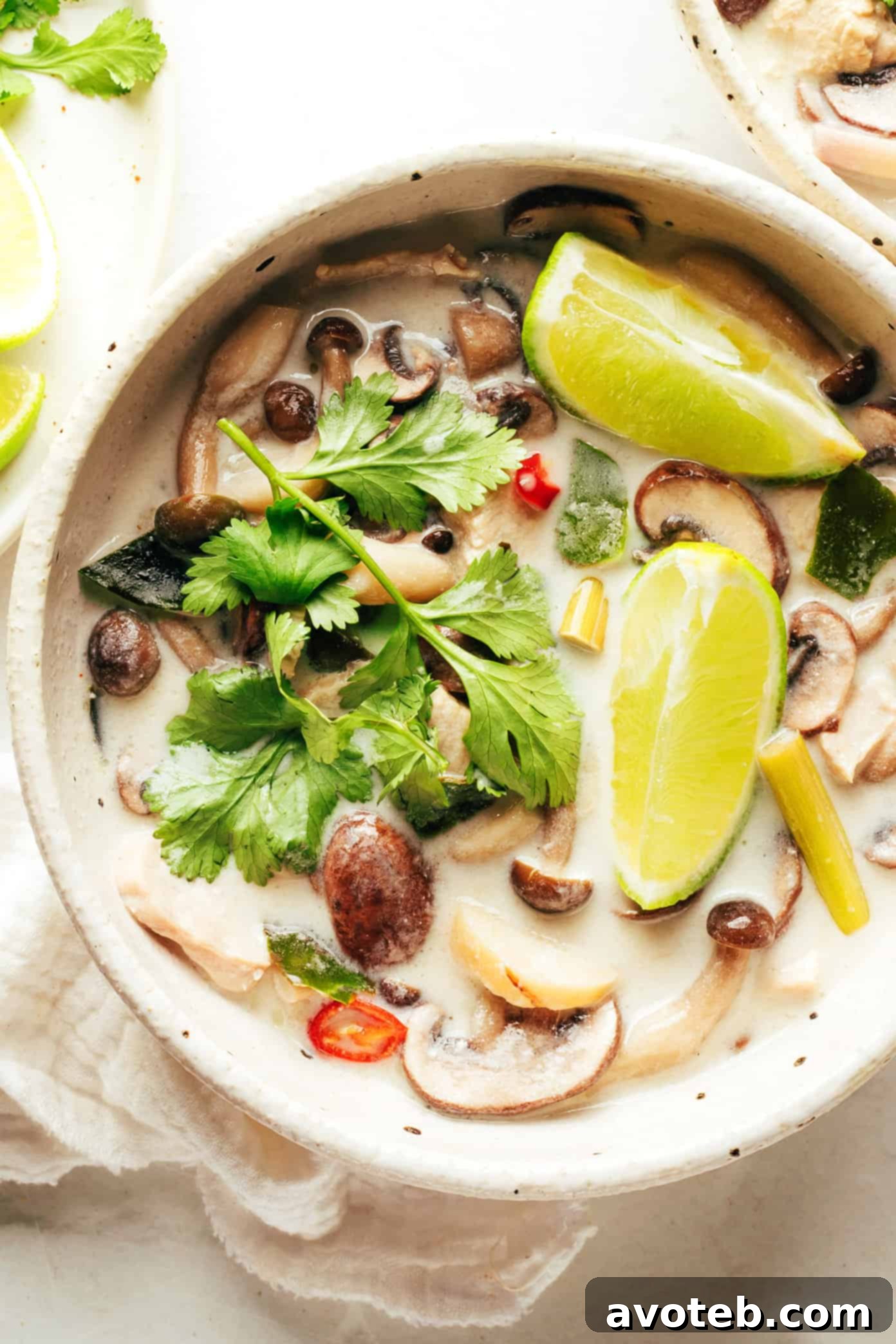
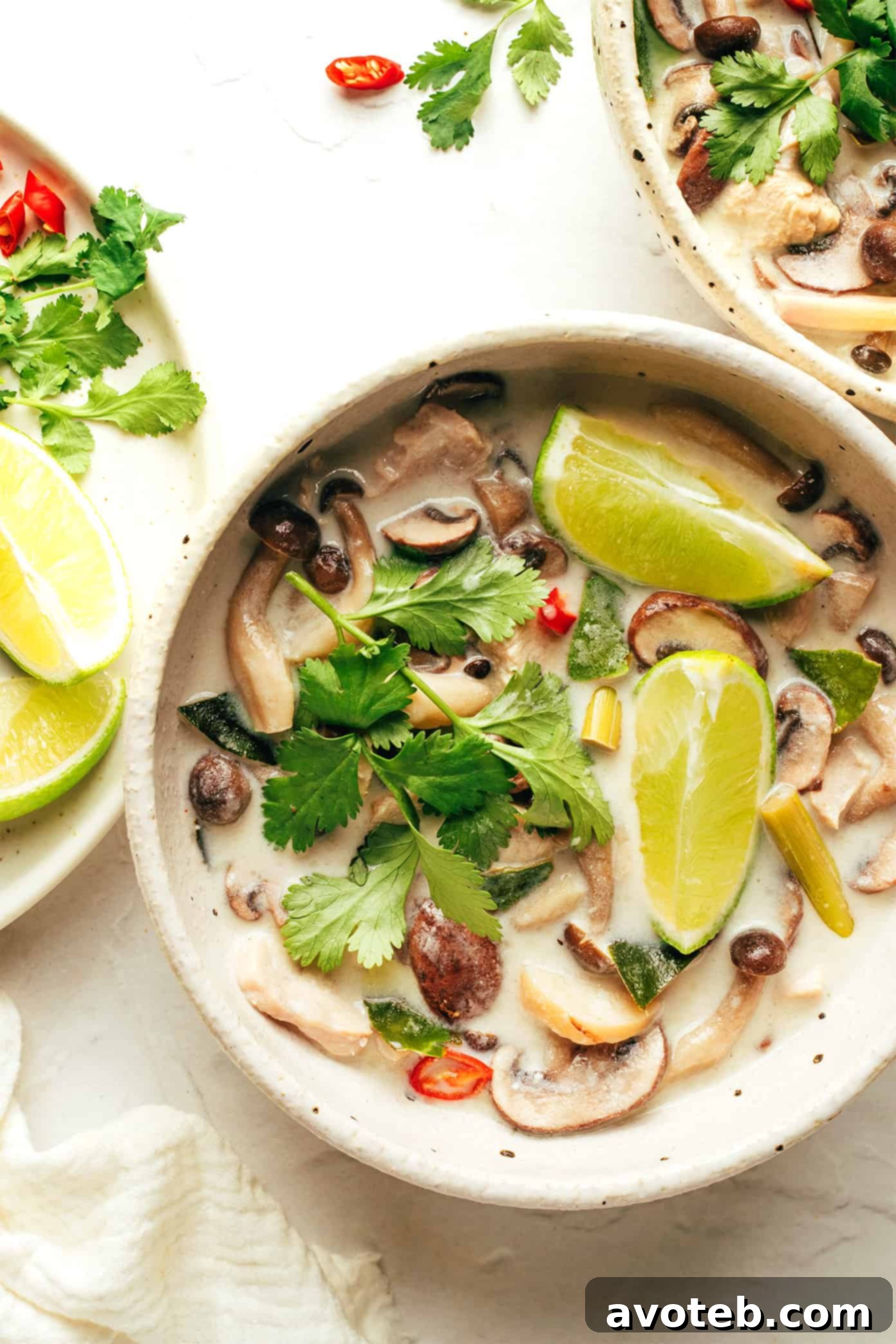
Discover the Authentic Taste of Thai Comfort Food at Home

There’s an unparalleled joy in that first spoonful of creamy, tangy, and deeply aromatic Tom Kha Gai. This classic Thai coconut chicken soup isn’t just a dish; it’s an experience that awakens the senses and wraps you in a blanket of comfort.
Originating from Thailand, Tom Kha Gai, meaning “galangal chicken soup,” is celebrated for its harmonious blend of flavors. It perfectly balances the richness of coconut milk with the vibrant notes of lemongrass, galangal, and kaffir lime leaves, all rounded off with a subtle, warming kick of chili. It’s a versatile soup, hearty enough to chase away winter chills yet refreshing enough to be enjoyed on a warm summer evening, making it a year-round favorite.
For many, including my husband, Tom Kha Gai holds a special place, making frequent appearances in our kitchen whenever we crave something bright, light, and utterly satisfying. Despite its gourmet appeal, preparing this restaurant-quality soup at home is surprisingly straightforward once you’ve gathered the essential Thai ingredients. It simmers quickly on the stovetop, transforming simple components into a luxurious, special treat that tastes far more complex than the effort it requires.
If the thought of recreating this beloved Thai classic in your own kitchen has ever intimidated you, now is the perfect time to dive in. Our guide will walk you through every step, ensuring your homemade Tom Kha Gai is nothing short of spectacular, bringing the authentic taste of Thailand right to your dining table.
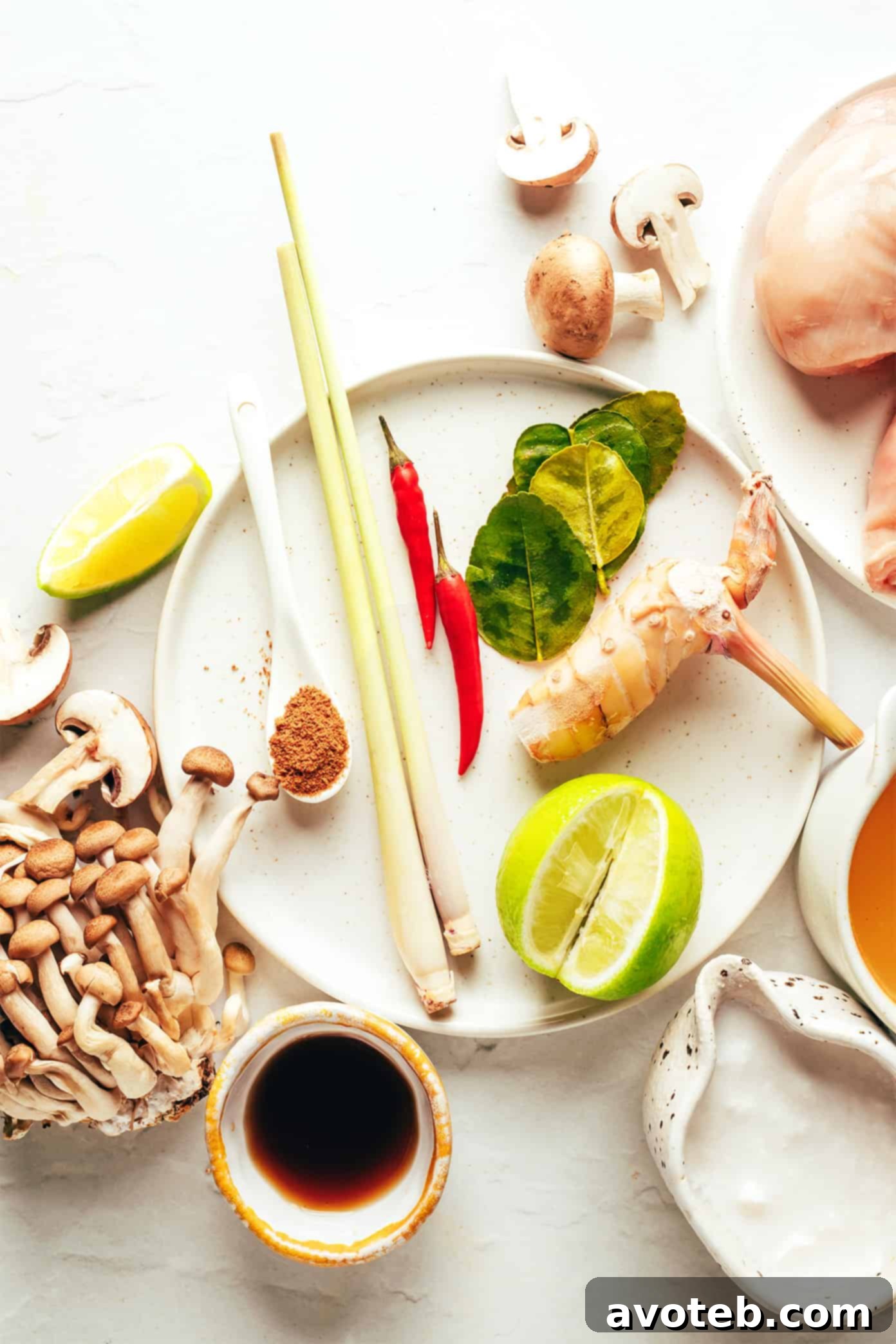
Essential Ingredients for Authentic Tom Kha Gai
Crafting a truly authentic Tom Kha Gai hinges on a few key ingredients that impart its signature complex flavor profile. If you’re venturing into Thai cooking for the first time, here’s a detailed look at the fundamental components:
- Lemongrass: This aromatic stalk is indispensable, lending a bright, citrusy, and slightly floral aroma to the soup. To release its potent oils, the tender inner stalks should be gently bruised or smashed with the back of a knife before simmering. If fresh lemongrass is hard to find, a good quality refrigerated lemongrass paste (approximately 2 tablespoons per recipe) can serve as a convenient alternative, though fresh is always preferred for maximum impact.
- Galangal: Often mistaken for ginger, galangal is its distinct cousin, offering a sharper, more citrusy, and slightly piney flavor that is central to Tom Kha Gai. Look for fresh galangal in Asian markets; it typically has a paler, smoother skin than ginger. While fresh ginger can be used as a substitute in a pinch, be aware that the flavor will be milder and less authentic.
- Kaffir Lime Leaves: These distinctively shaped leaves infuse the broth with an incredibly deep, aromatic lime flavor that cannot be replicated by lime juice alone. They are a cornerstone of Thai aromatics. If fresh or frozen kaffir lime leaves are unavailable, a small amount of lime zest and juice can be used as a last resort, but we highly recommend seeking out the leaves for an unparalleled depth of flavor.
- Full-Fat Coconut Milk: The luscious, creamy base of Tom Kha Gai comes from high-quality full-fat coconut milk. Its richness provides a beautiful contrast to the tangy and spicy elements. Opt for full-fat varieties for the creamiest texture and most satisfying mouthfeel. Lite coconut milk will result in a thinner soup.
- Fish Sauce: A foundational ingredient in Thai cuisine, fish sauce adds a crucial salty, savory, and umami depth that elevates all the other flavors. Don’t be deterred by its pungent aroma; it transforms into a vital seasoning agent when cooked, balancing the soup perfectly.
- Coconut Sugar: To achieve the characteristic sweet and sour balance of Tom Kha Gai, a touch of sweetness is essential. Coconut sugar, with its caramel-like notes, is traditionally used and complements the other flavors beautifully, harmonizing the savory and tangy elements. Brown sugar or palm sugar can also be used.
- Thai Chili Paste (Nam Prik Pao): This optional but highly recommended ingredient adds a wonderful smoky-sweet heat and a layer of complexity to the soup. It’s a roasted chili paste often containing shrimp paste, and it contributes a nuanced depth beyond simple heat. Adjust the amount to your preferred spice level.
- Fresh Lime Juice: Added right at the end of cooking, fresh lime juice provides a burst of bright, tangy acidity that livens up the entire soup. It’s crucial to add it off the heat to preserve its fresh, vibrant flavor and prevent any bitterness.
- Mushrooms + Chicken: Classic additions that transform Tom Kha Gai into a hearty and satisfying meal. Chicken breast or thighs are typically shredded after cooking, and common mushroom varieties include oyster, shiitake, or white button mushrooms, which absorb the rich broth wonderfully.
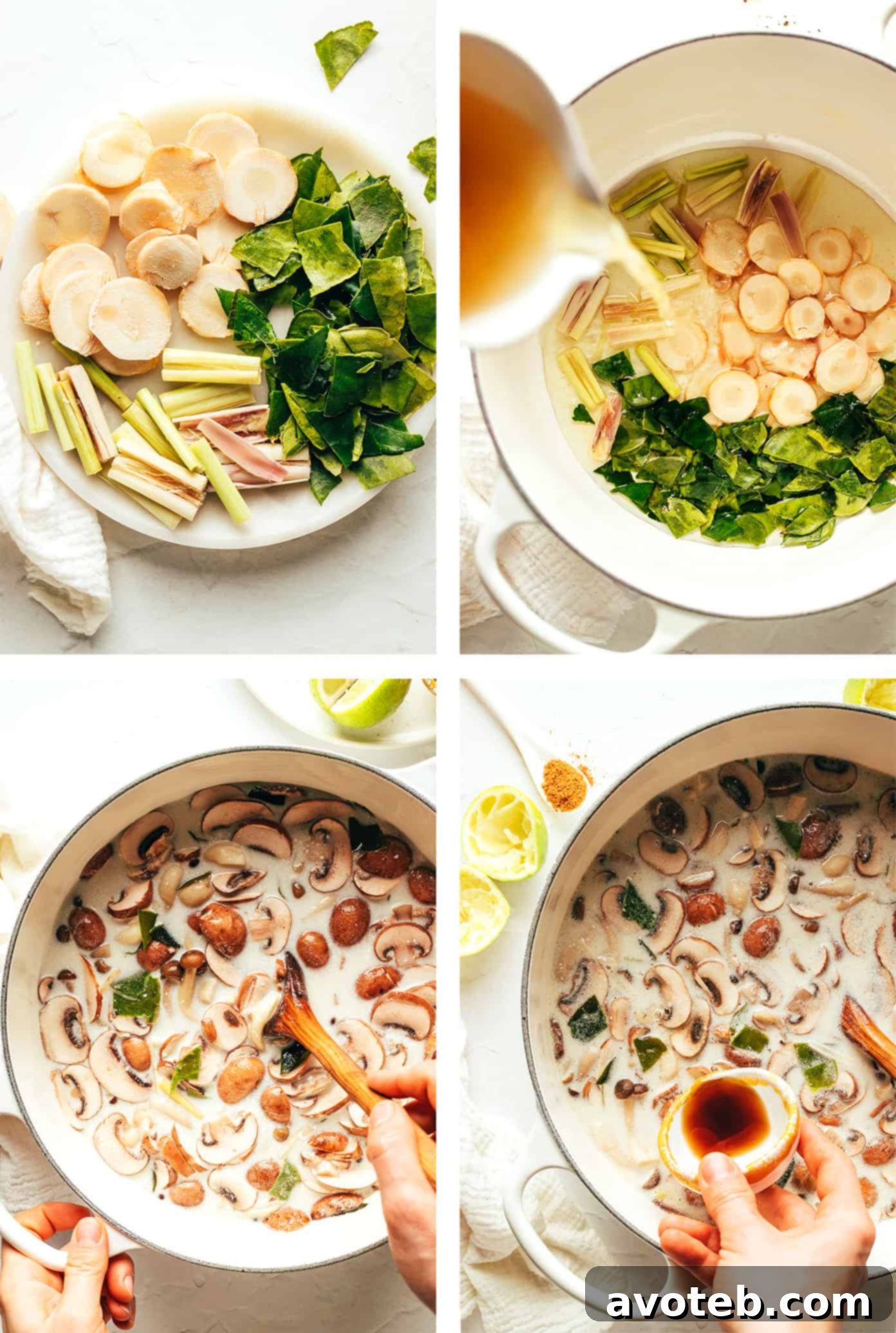
Expert Tips for a Perfect Tom Kha Gai
Achieving a perfectly balanced, creamy, and flavorful Tom Kha Gai consistently requires a few insider tips. Follow these suggestions to ensure your homemade soup is as authentic and delicious as any restaurant version:
- Smash the Lemongrass Effectively: This step is more crucial than it seems. Using the flat side of a chef’s knife or a meat mallet to bruise the lemongrass stalks before simmering helps rupture the fibers, releasing all their essential oils and intensely citrusy aroma into the broth. Don’t just slice; smash them!
- Simmer Gently, Never Boil: Once the coconut milk is added to the soup, it’s vital to keep the heat at a low, gentle simmer. Boiling coconut milk can cause it to curdle or separate, resulting in an unappealing, oily texture. Maintain a gentle heat to keep the soup smooth and creamy.
- Prioritize Galangal and Kaffir Lime Leaves: These two aromatics are the soul of Tom Kha Gai. Their unique citrusy, floral, and slightly peppery notes are what give the soup its distinctive and authentic Thai flavor profile. While substitutes exist, making the trip to an Asian market to find fresh or frozen galangal and kaffir lime leaves is truly worth the effort for the unparalleled depth they add.
- Master the Flavor Balance: Thai cuisine is all about balancing sweet, sour, salty, and spicy. Before serving, taste your soup and adjust as needed. Add more fish sauce for increased saltiness and umami, a splash more lime juice for brightness and tang, a pinch of coconut sugar for sweetness, or extra chili paste for more heat. Don’t be afraid to experiment to find your perfect balance.
- Incorporate Fresh Lime Juice Last: Always stir in the fresh lime juice right at the very end, after removing the soup from the heat. Adding it earlier or cooking it for too long can cause the lime juice to become bitter and diminish its vibrant, fresh citrus flavor.
- Don’t Skimp on the Toppings: Garnishes are not merely decorative; they add a crucial burst of freshness, texture, and flavor that truly makes the soup “pop.” Fresh cilantro, thinly sliced green onions, fresh red chiles (for extra heat and color), and extra lime wedges are all excellent choices. They provide a vital contrast to the rich, creamy broth.
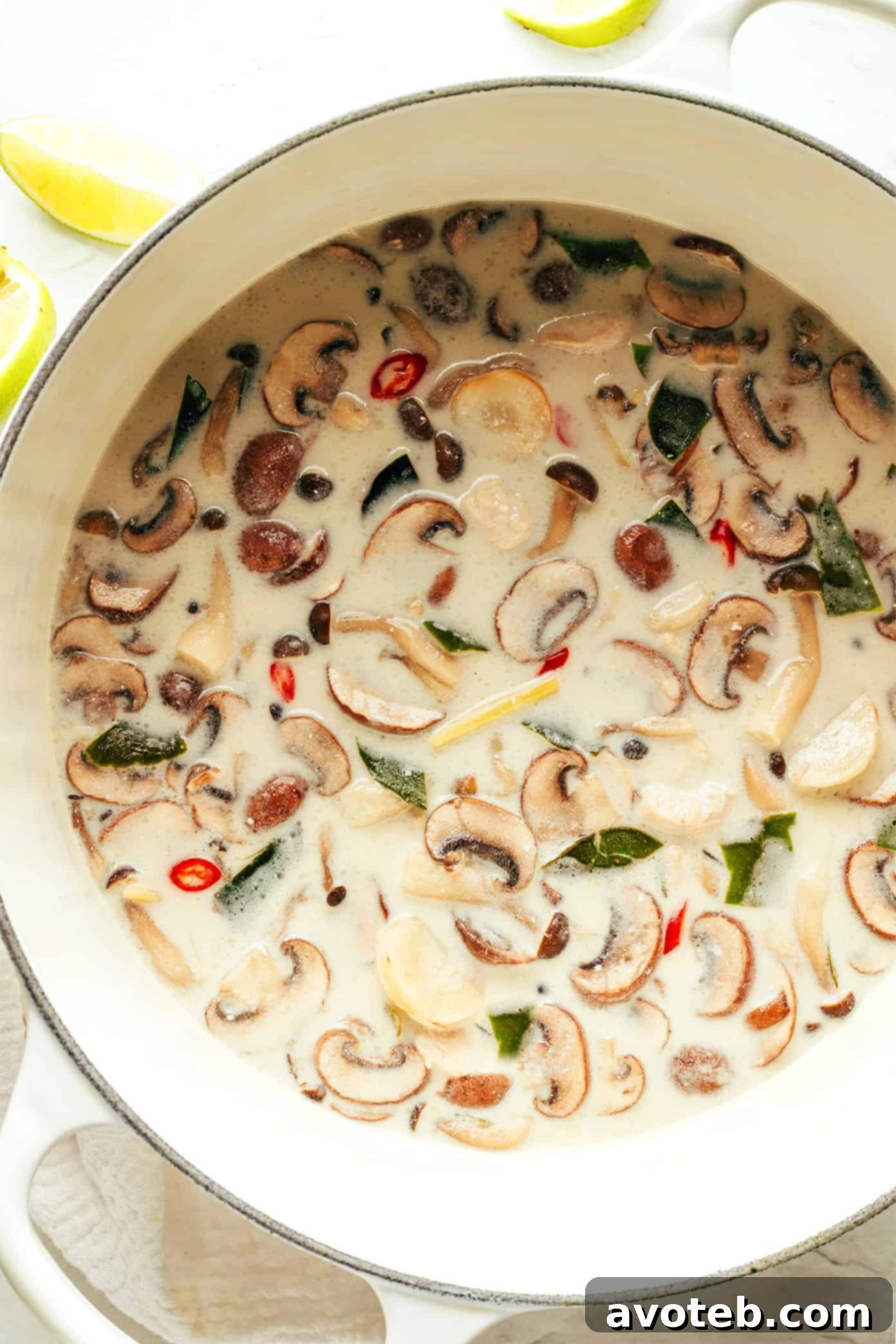
Delicious Variations to Customize Your Tom Kha Gai
One of the beauties of Tom Kha Gai is its adaptability. While the classic recipe is perfect, there are many delightful ways to customize this soup to suit your dietary preferences or simply to try something new. Here are some inspiring variations to make this soup uniquely your own:
- Vegetarian or Vegan Tom Kha: Easily transform this soup into a vegetarian or vegan delight. Simply replace the chicken with firm or extra-firm tofu, pressed and cubed, or add extra mushrooms for heartiness. Ensure you use vegetable broth instead of chicken stock, and for vegan versions, swap fish sauce for a high-quality vegetarian fish sauce alternative or a touch of soy sauce with a pinch of seaweed for umami.
- Heartier with Noodles: For a more substantial meal, stir in cooked rice noodles (like vermicelli or flat rice noodles) or glass noodles just before serving. They absorb the flavorful broth beautifully and make the soup even more filling, perfect for a main course.
- Boost Your Veggies: Enhance the nutritional value and visual appeal by adding an array of colorful vegetables. Sliced red bell peppers, tender baby corn, crisp bok choy, sweet snap peas, or fresh spinach leaves are all excellent additions. Add them during the last few minutes of simmering to ensure they remain vibrant and slightly crisp.
- Adjust the Spice Level: Tailor the heat to your preference. For a spicier kick, add more thinly sliced Thai red chiles, a spoonful of chili crisp, or extra nam prik pao. If you prefer a milder soup, reduce the amount of chiles or omit them entirely, and you can add a bit more coconut milk to mellow the overall heat.
- Alternate Proteins: While chicken is traditional, shrimp or cubed fish (like cod or snapper) are fantastic alternatives that cook quickly and soak up the broth wonderfully. For a plant-based option, as mentioned, tofu is excellent, or consider edamame beans for added protein and texture.
- Extra Garnishes for Texture and Flavor: Elevate your soup with additional garnishes. A sprinkle of toasted coconut flakes adds a delightful crunch, fried shallots offer a sweet and savory crispness, and a drizzle of chili oil (for those who love extra heat and aroma) can provide a beautiful finish. Fresh mint leaves can also add a refreshing twist.
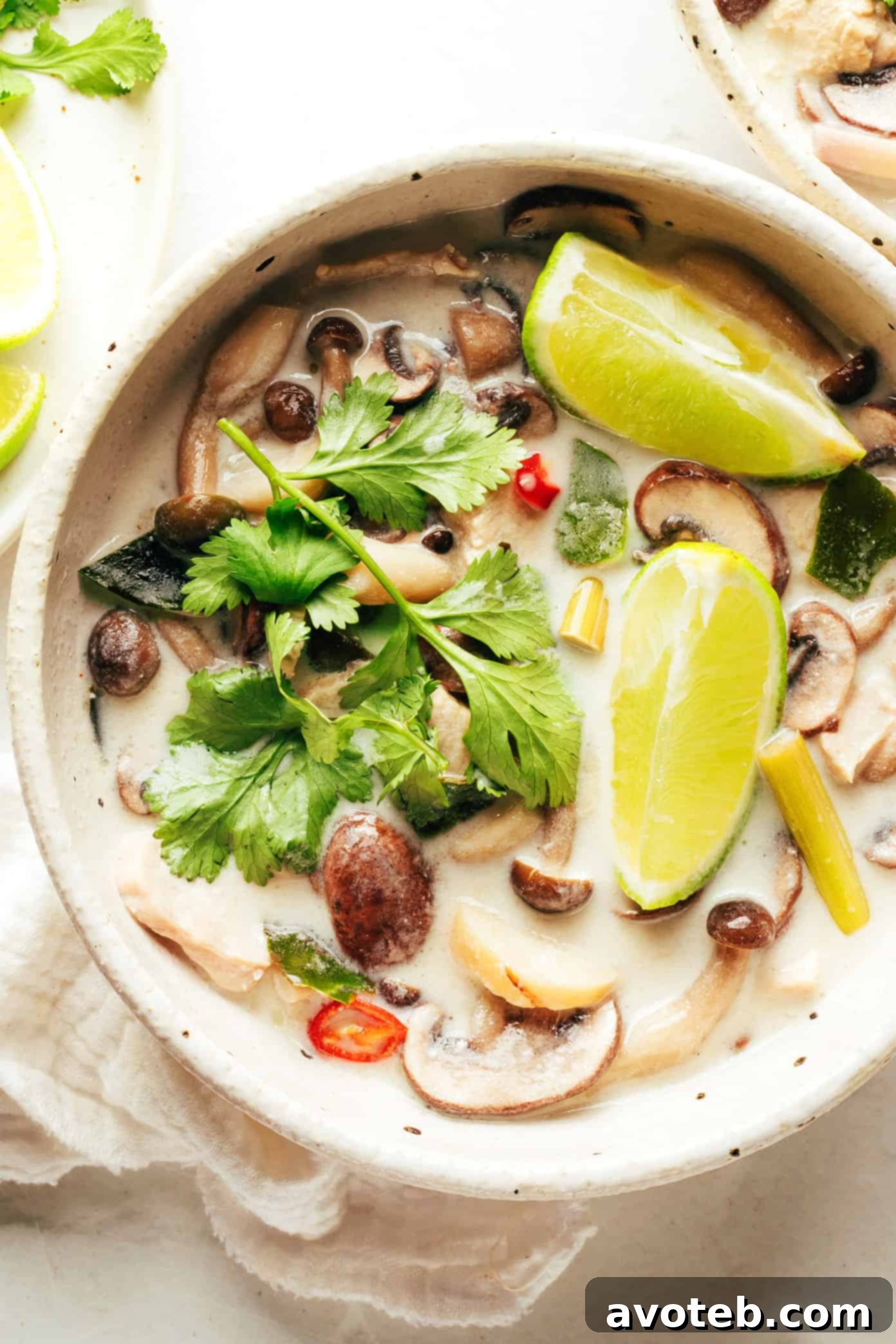
Frequently Asked Questions About Tom Kha Gai
Absolutely! Tom Kha Gai often tastes even better the next day as the flavors have more time to meld and deepen. You can store the soup in an airtight container in the refrigerator for up to 3 days. When reheating, do so gently over low heat, avoiding a rolling boil to prevent the coconut milk from separating or curdling.
Freezing Tom Kha Gai is possible, but it’s important to note that the texture of coconut milk can sometimes change slightly upon thawing, potentially becoming a bit grainy. For the best results, we recommend freezing only the infused broth (without the coconut milk, chicken, or lime juice). When you’re ready to serve, thaw the broth, then add fresh coconut milk, chicken, and lime juice, and simmer gently until warmed through.
While both are rhizomes used in Asian cooking, galangal and ginger have distinct flavor profiles. Galangal (Thai ginger) is more citrusy, peppery, and slightly piney, with a harder, paler flesh. Ginger is milder, spicier, and has a more pungent, earthy aroma. Ginger can be used as a substitute if galangal isn’t available, but it will impart a slightly different, less authentic flavor to your Tom Kha Gai.
These specialty Thai ingredients are increasingly common. You’ll most reliably find fresh or frozen lemongrass and kaffir lime leaves at most Asian grocery stores. Larger international supermarkets or health food stores sometimes stock them in their produce or frozen herb sections. If fresh are unavailable, look for frozen options, as they retain their flavor well.
Tom Kha Gai is a satisfying meal on its own, but it pairs wonderfully with a side of steamed jasmine rice, which is excellent for soaking up the rich broth. For a more elaborate meal, serve it alongside a simple green salad with a lime vinaigrette, or with fresh spring rolls to complement the flavors.
Store any leftover soup in an airtight container in the refrigerator for up to 3 days. Reheat gently on the stovetop over low heat, stirring occasionally, until warmed through. Avoid microwaving on high heat, as this can sometimes cause the coconut milk to separate.
Print
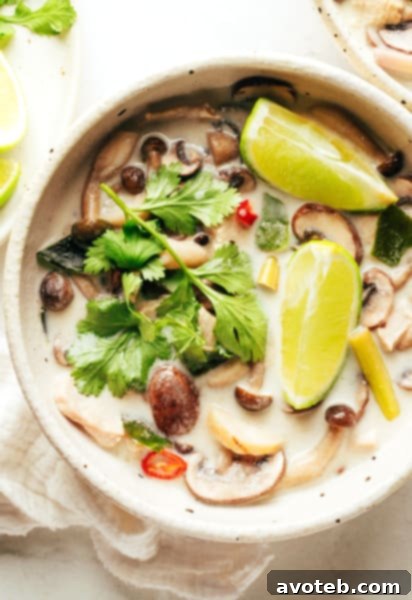
Tom Kha Gai (Thai Coconut Chicken Soup)
- Author: Ali
Prep Time: 10 minutes
Cook Time: 25 minutes
Total Time: 35 minutes
Yield: 4 to 6 servings
Description
Master the art of making Tom Kha Gai, the exquisite Thai Coconut Chicken Soup, with this incredibly delicious and easy-to-follow recipe. This creamy, tangy, and aromatic soup is a true comfort food that transports you straight to Thailand with every spoonful. Perfect for any season, it’s a harmonious blend of traditional Thai flavors, featuring tender chicken, earthy mushrooms, and the distinct aroma of lemongrass, galangal, and kaffir lime leaves, all swimming in a rich coconut milk broth. Get ready to impress your taste buds and your guests with this homemade classic!
Ingredients
- 2 stalks fresh lemongrass, tough outer layers removed
- 2 tablespoons thinly-sliced galangal (or substitute fresh ginger)
- 6 kaffir lime leaves, torn into large pieces
- 6 cups good-quality chicken stock
- 4 green onions, thinly sliced (white and green parts separated)
- 8 ounces white, shiitake, or oyster mushrooms (or a mix), sliced
- 2 cups cooked shredded chicken
- 2 (13.5-ounce) cans full-fat coconut milk
- 2 tablespoons fish sauce
- 1–3 teaspoons coconut sugar (to taste, or use another favorite sweetener)
- 1–2 tablespoons Thai chili paste (nam prik pao), optional
- 2 tablespoons fresh lime juice
- Fine sea salt, to taste
- For Garnish: Fresh cilantro, green onion tops, sliced red chiles, lime wedges
Instructions
- Infuse the broth. Using the back of a knife, lightly smash the lemongrass on a cutting board to release its oils, then cut it into 1-inch pieces. Add the smashed lemongrass, thinly sliced galangal, torn kaffir lime leaves, chicken broth, and the white parts of the green onions to a large stockpot. Bring the mixture to a boil over high heat, then reduce the heat to medium-low and let it simmer gently for 10 minutes, stirring occasionally. This step is crucial for developing the foundational aromatic flavors of the soup.
- Strain the aromatics. Carefully pour the infused broth through a fine-mesh strainer into a clean bowl or back into the same pot (after cleaning). Discard the lemongrass, kaffir lime leaves, and galangal solids, as their purpose is to flavor the broth and they are not typically eaten in the final soup. The result should be a clear, beautifully aromatic broth.
- Build the soup base. Return the clear, aromatic broth to the stockpot. Add the sliced mushrooms, full-fat coconut milk, fish sauce, coconut sugar, and Thai chili paste (if you are using it for a smoky-sweet heat). Stir all the ingredients well to combine them. Bring the soup back to a gentle simmer over medium-high heat and cook for 3–5 minutes, or until the mushrooms have softened and absorbed some of the rich broth. Remember to maintain a gentle simmer to prevent the coconut milk from curdling.
- Add chicken and lime. Stir in the cooked shredded chicken and continue to cook for just 1–2 minutes, allowing the chicken to warm through thoroughly. Remove the pot from the heat. Now, stir in the fresh lime juice. This is a critical step for preserving the bright, tangy essence of the lime. Taste the soup and adjust the seasonings as needed: add more fish sauce for saltiness, lime juice for more sourness and brightness, coconut sugar for sweetness, or extra chili paste for more heat and complexity, until you achieve your perfect flavor balance.
- Serve and garnish. Ladle the warm Tom Kha Gai generously into individual bowls. Garnish liberally with fresh cilantro leaves, the green tops of the sliced green onions, additional sliced red chiles for those who enjoy extra spice and color, and fresh lime wedges on the side for an extra squeeze of citrus. Serve immediately and savor the authentic flavors of this beloved Thai comfort soup.