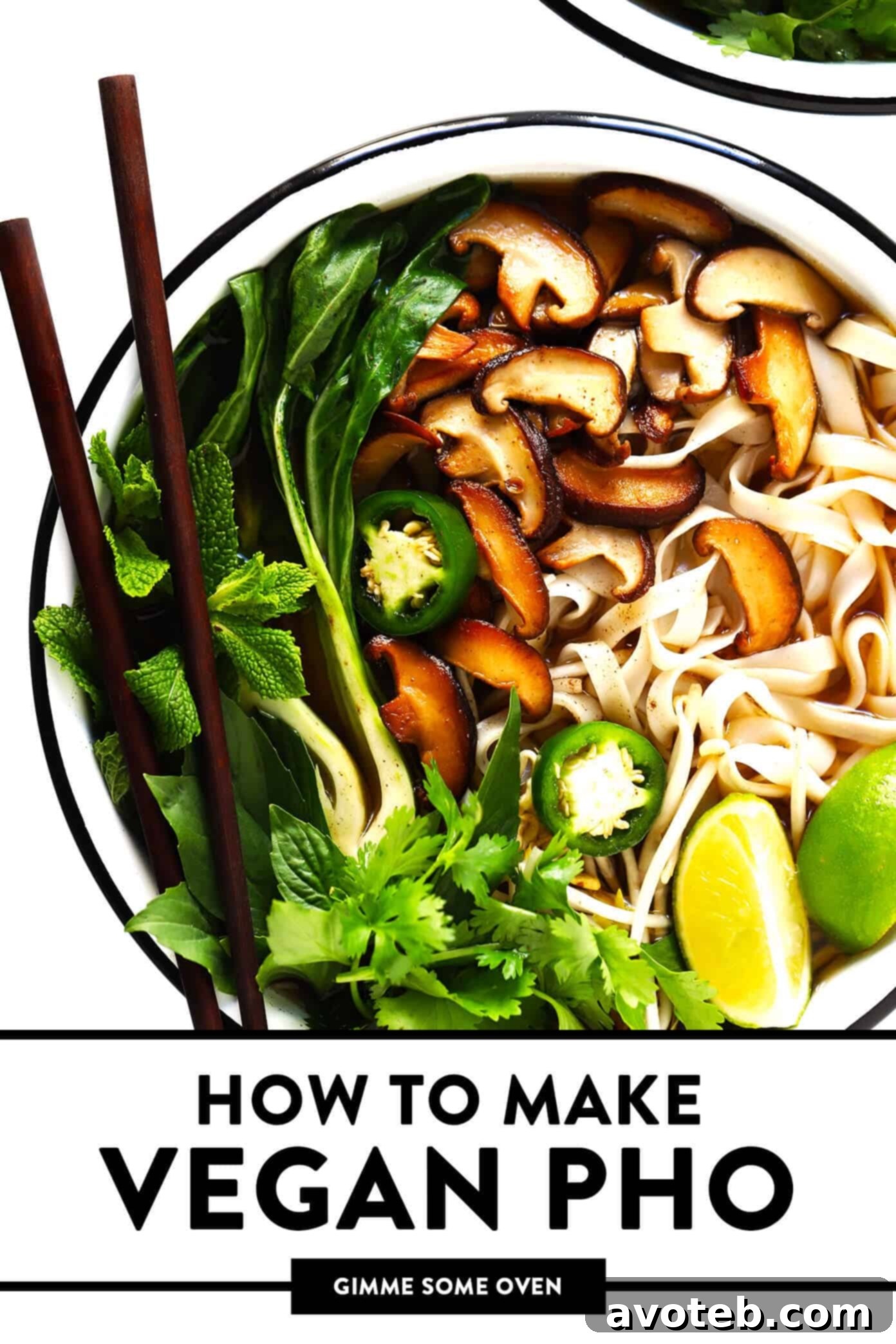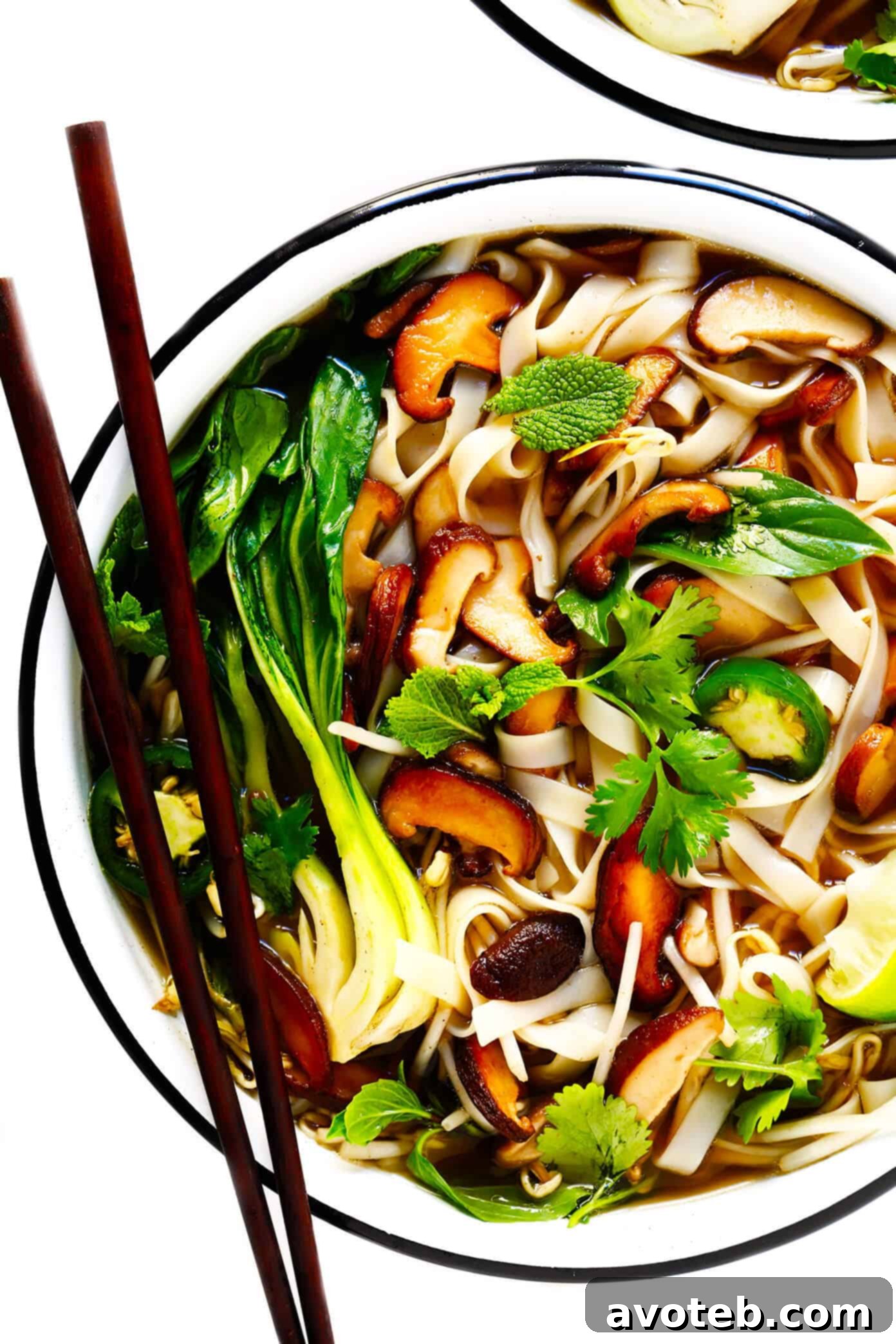
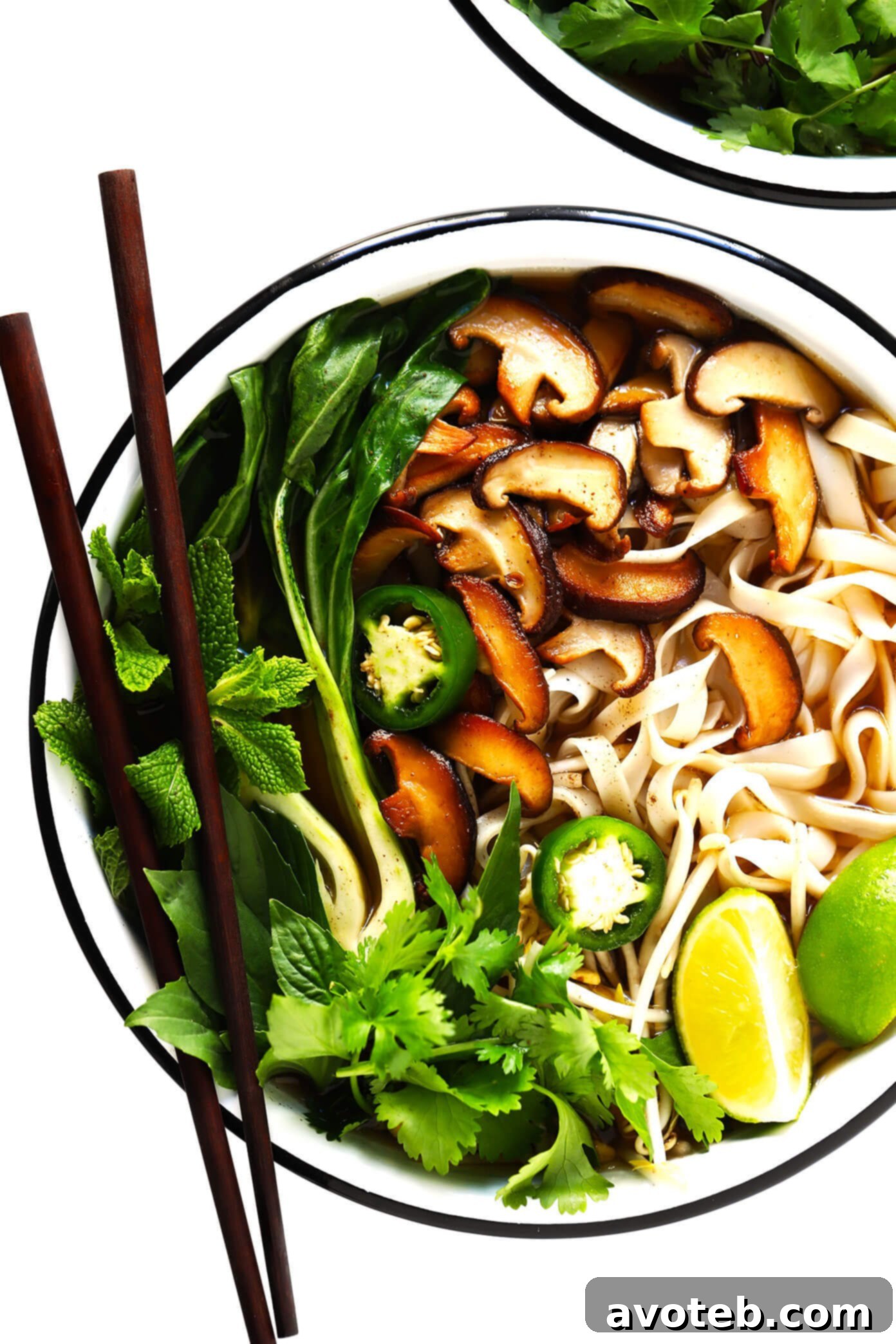
Discover how to make the most delicious, rich, and aromatic vegan pho right in your own kitchen. This easy recipe promises a deeply flavorful broth, tender rice noodles, and a vibrant medley of vegetables, perfect for a comforting and healthy meal.
Experience Authentic Flavors with Our Easy Vegan Pho Recipe
There’s nothing quite like a steaming bowl of pho, the quintessential Vietnamese noodle soup, to warm the soul and tantalize the taste buds. Its complex, aromatic broth, slippery rice noodles, and fresh, crisp toppings create a truly unforgettable culinary experience. For years, my husband, a dedicated vegetarian, and I have embarked on countless quests to Vietnamese restaurants, only to find that genuine vegetarian or vegan broth options for pho remain surprisingly rare. While we deeply appreciate the tradition of beef-based pho, the growing demand for plant-based alternatives highlights a need that many establishments have yet to meet.
This realization spurred us on a delightful culinary adventure to master a truly exceptional vegetarian pho at home. After much experimentation with various techniques and ingredients, we proudly present a recipe that not only captures the profound depth of traditional pho flavors but is also entirely vegan and remarkably simple to prepare. What’s more, it’s so incredibly delicious that it has become a staple in our household.
Initially, as someone who has always cherished classic beef pho, I harbored a healthy skepticism. Could a plant-based broth truly rival the rich, umami-packed essence of its meat-based counterpart? The answer, as we discovered, lies in the heart of pho’s traditional aromatics: the intensely charred onions and ginger, coupled with a symphony of warming spices. When these fundamental flavors are meticulously developed and combined with savory shiitake mushrooms, fresh vegetables, perfectly cooked rice noodles, and an abundance of vibrant herbs and garnishes, this vegan pho transcends expectations. It offers a hearty, deeply satisfying meal that feels light yet incredibly comforting, making it the perfect antidote to chilly evenings or a healthy addition to your weeknight rotation.
Whether you follow a vegan or vegetarian diet, live in a household with diverse dietary preferences, or simply wish to explore more plant-based culinary delights, this vegan pho recipe is an absolute must-try. It’s not just a meal; it’s an experience that we genuinely adore and believe you will too.
The Essence of Vegan Pho: Key Ingredients and Their Role
Crafting a truly spectacular vegan pho hinges on a few essential components, each playing a crucial role in building the dish’s signature flavor and texture. Let’s delve into what you’ll need to create this comforting soup.
1. The Foundation: Aromatic Pho Broth
The broth is undeniably the soul of pho. Our vegan version achieves its remarkable depth through a thoughtful combination of elements:
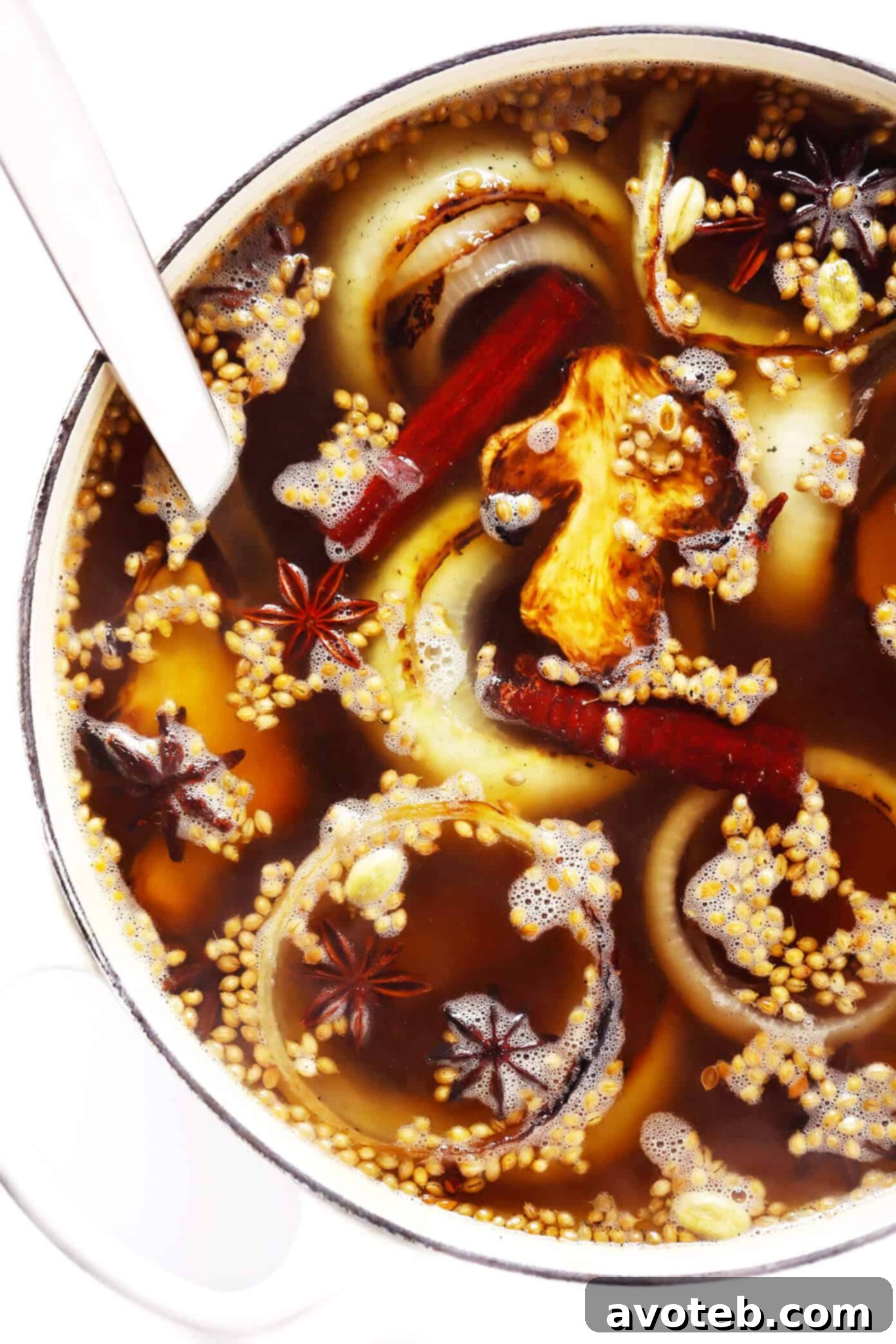
- Charred Onions and Ginger: This step is non-negotiable for authentic pho flavor. Charring these aromatics, either in a dry skillet or under the broiler, imparts a beautiful smoky sweetness and depth that forms the backbone of the broth. It’s a simple technique that yields profound results.
- High-Quality Vegetable Stock: To streamline the process without compromising flavor, we utilize a good quality store-bought vegetable stock. For an even richer, more umami-forward broth, consider using mushroom stock or a blend.
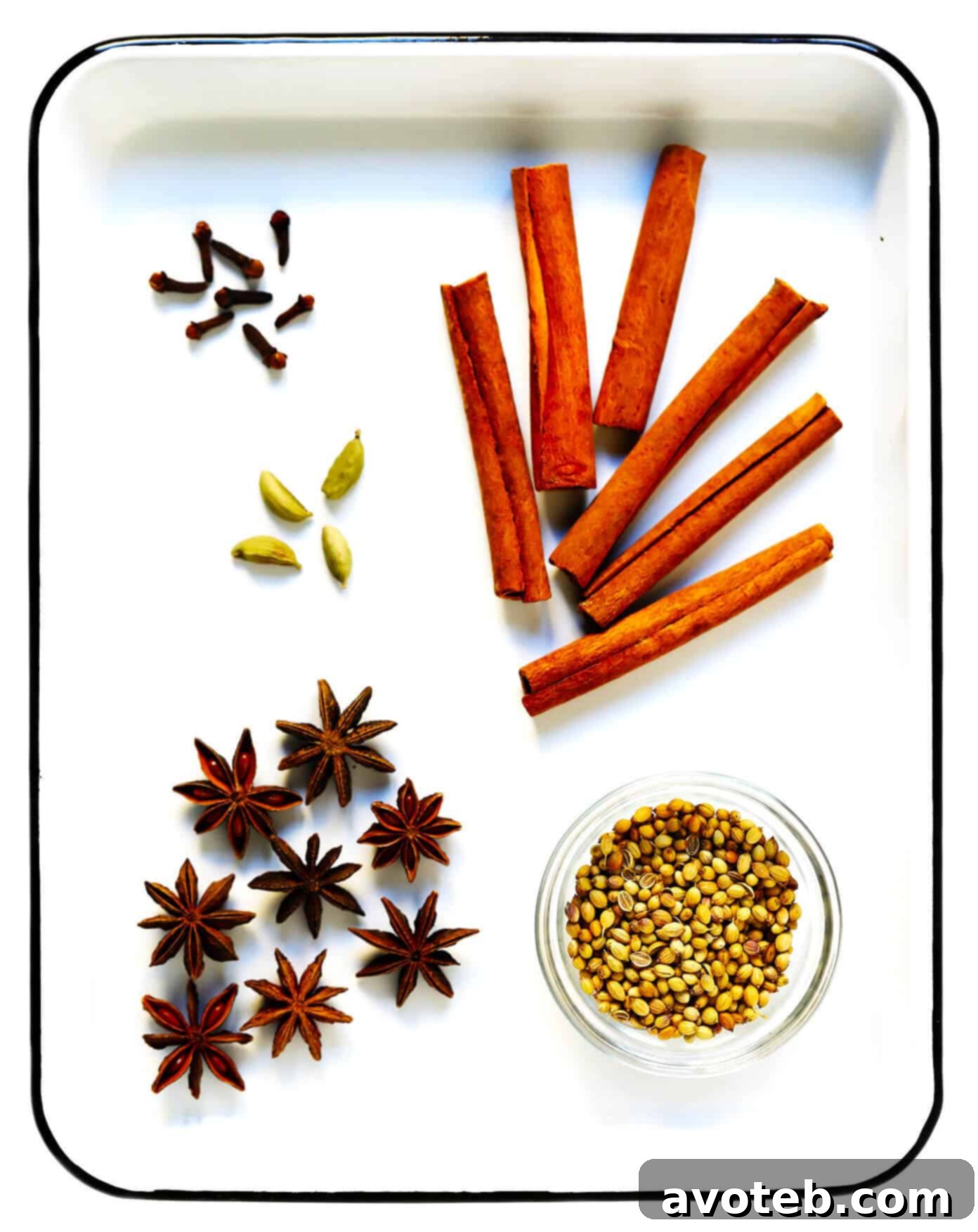
- The Quintessential Pho Spices: The aromatic magic of pho comes from a specific blend of whole spices. You’ll need:
- Star Anise: Provides a distinctive licorice-like aroma.
- Whole Cloves: Adds a warm, pungent note.
- Cinnamon Sticks: Contributes sweet, woody undertones.
- Cardamom Pods: Offers a bright, slightly citrusy, and spicy kick.
- Whole Coriander Seeds: Imparts a nutty, citrusy freshness.
Using whole spices and briefly toasting them before simmering is crucial; it awakens their essential oils and intensifies their flavor. While ground spices can be substituted in a pinch (see variations below), whole spices are highly recommended for the most authentic taste.
- Umami and Balance:
- Soy Sauce (or Gluten-Free Tamari): This provides the savory, umami depth that typically comes from fish sauce in traditional pho, making it a perfect plant-based alternative.
- Rice Vinegar: Adds a subtle tang and brightness, balancing the rich flavors.
- Sweetener (Brown Sugar): A touch of sweetness rounds out the broth, mirroring the traditional use of rock sugar. Any preferred sweetener will work here.
- Sea Salt: Essential for seasoning the broth to perfection.
2. Fresh Vegetables for Texture and Nutrition
While the broth provides the soul, the vegetables add texture, freshness, and nutrients. We often take inspiration from our favorite Vietnamese eateries, incorporating:
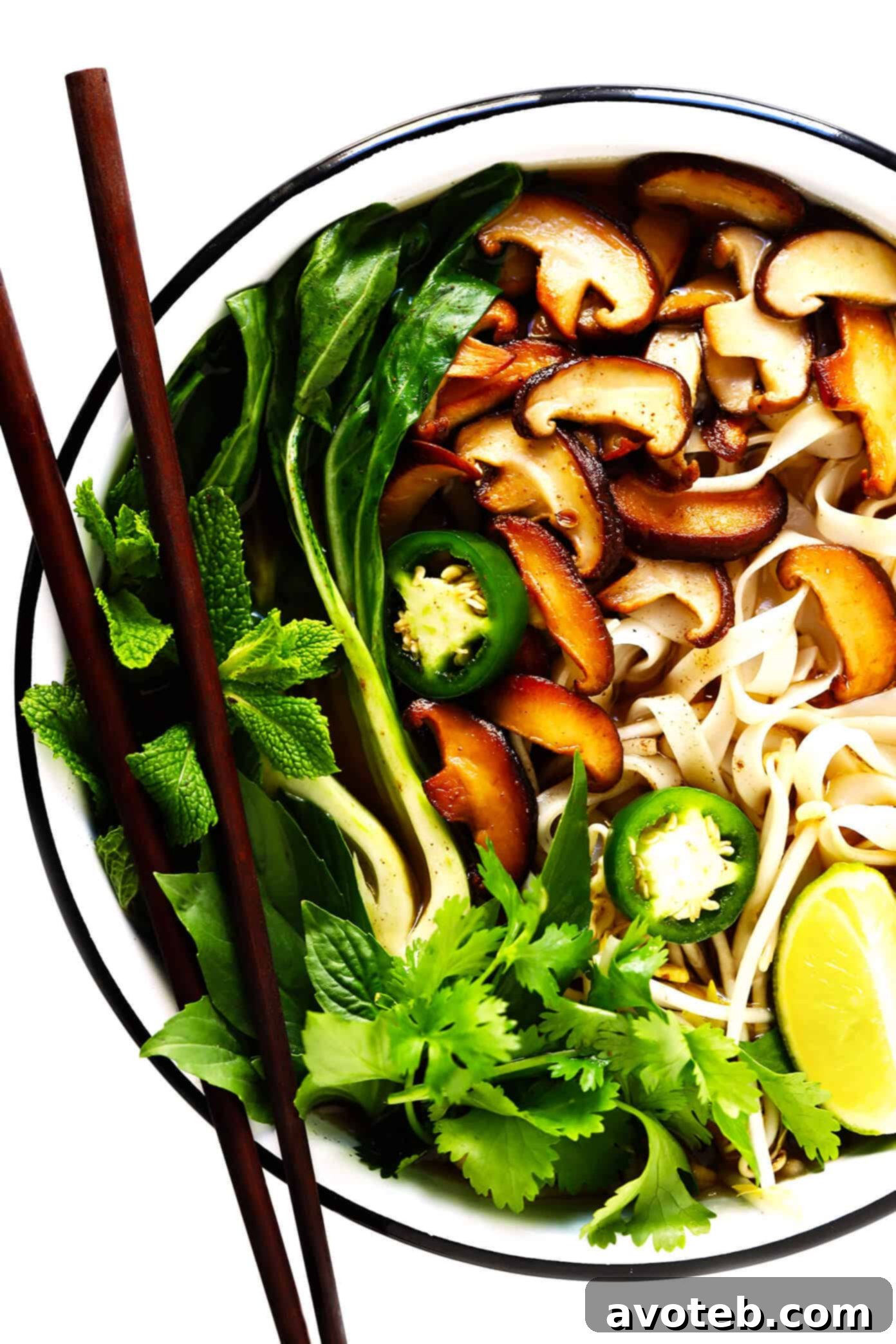
- Baby Bok Choy: Its tender leaves and crisp stems offer a wonderful texture.
- Shiitake Mushrooms: Sliced shiitake mushrooms are fantastic for adding an extra layer of savory umami to the soup.
- Sliced Carrots: Their slight sweetness and vibrant color are a welcome addition.
However, feel free to get creative with other soup-friendly vegetables you have on hand, such as shredded cabbage, bell peppers, broccoli florets, edamame, snow peas, or other varieties of Asian mushrooms like oyster or enoki.
3. The Hearty Base: Thin Rice Noodles
Authentic pho uses thin, flat rice noodles. It’s traditional to cook these noodles separately to prevent them from becoming overcooked and mushy in the broth. They are added to individual serving bowls, with the hot broth and toppings layered over them. Look for these types of thin rice noodles for the best results.
4. The Essential Flourish: Toppings Galore
Do not skip the toppings! They are not merely garnishes but integral components that enhance the flavor, texture, and aroma of pho. We recommend including at least one from each category:
- Fresh Herbs: The more, the merrier! A generous mix of fresh cilantro, vibrant mint, and aromatic Thai basil (or Italian basil if Thai basil is unavailable) provides unparalleled freshness and complexity.
- Bean Sprouts: These add a delightful crunch and crispness. Find them in the produce section of most grocery stores or Asian markets.
- Lime Wedges: A squeeze of fresh lime juice is crucial for brightening the broth and cutting through its richness.
- Chiles (Optional): For those who love a kick, thinly sliced Thai bird chiles, jalapeños, or serrano peppers offer a perfect spicy complement.
- Onions (Optional): Sliced green onions (scallions) or very thinly sliced white onions add a pungent, fresh bite.
- Sauces (Optional): Hoisin sauce and/or sriracha are traditionally served alongside pho, allowing diners to customize their bowl with extra sweetness, savoriness, or heat.
Refer to the detailed recipe card below for precise ingredient quantities and step-by-step instructions.
Step-by-Step Guide: Crafting Your Homemade Vegan Pho
Making homemade vegan pho is a rewarding experience, and the process is simpler than you might imagine. Follow these steps to bring this Vietnamese comfort food to life in your kitchen.
- Prepare the Aromatics: The first crucial step for a rich broth is to char your onion and ginger. Cut the onion in half and the ginger lengthwise. Place them cut-side-up on a baking sheet, brush lightly with oil, and broil for 7-10 minutes until the tops are slightly blackened. Alternatively, you can char them in a dry skillet over high heat. This charring technique unlocks deep, smoky flavors that are essential to authentic pho.
- Toast the Spices: In a large stockpot, gently toast the star anise, whole cloves, cinnamon sticks, cardamom pods, and coriander seeds over medium-high heat for about 3 minutes. Toasting them until fragrant releases their essential oils, intensifying their aroma and flavor for the broth.
- Simmer the Broth: Add the charred onion and ginger, along with your vegetable stock, to the stockpot with the toasted spices. Bring the mixture to a simmer, then reduce the heat to medium-low, cover, and allow it to gently simmer for at least 30 minutes. This extended simmering time allows all the complex flavors to meld and deepen.
- Strain and Season the Broth: Carefully strain the broth, discarding the cooked onions, ginger, and whole spices. These have imparted their essence to the liquid and are no longer needed. Stir in the brown sugar, soy sauce (or tamari), and rice vinegar. Taste the broth and adjust the seasoning with sea salt as needed. Keep the broth simmering gently on medium-low heat, covered, until you are ready to serve.
- Cook the Noodles: While the broth is simmering, prepare your thin rice noodles according to package directions. Cook them al dente to ensure they retain a pleasant chewiness. Drain the noodles thoroughly in a strainer, then rinse them briefly with cold water to halt the cooking process and prevent them from sticking together. For extra insurance against sticking, toss them lightly with a drizzle of a neutral oil, such as sesame oil.
- Prepare the Vegetables: In a separate sauté pan, heat a tablespoon of olive oil (or another neutral-flavored oil) over medium-high heat. Add the thinly sliced shiitake mushrooms and sauté for about 5 minutes, stirring occasionally, until they are cooked through and lightly golden. This step enhances their umami flavor. Five minutes before you plan to serve the soup, stir the sautéed mushrooms, halved baby bok choy, and any other chosen quick-cooking vegetables (like sliced carrots) directly into the hot broth to briefly cook and warm through.
- Assemble Your Pho Bowls: Now comes the most enjoyable part – assembling your beautiful pho! Place a generous handful of cooked rice noodles into each individual serving bowl. Ladle the simmering hot broth, brimming with cooked vegetables and mushrooms, over the noodles.
- Garnish and Serve: Arrange a vibrant array of fresh garnishes generously over each bowl. Encourage everyone to stir the fresh herbs, bean sprouts, lime juice, and optional chiles and sauces into their soup. This interaction allows the garnishes to infuse the hot broth with their unique flavors and aromas, creating a truly personalized and delightful pho experience. Serve immediately and savor every spoonful!
Creative Variations and Expert Tips for Your Vegan Pho
This vegan pho recipe is incredibly versatile, allowing for numerous customizations to suit your taste preferences or available ingredients. Here are some ideas to inspire your culinary creativity:
- Add Plant-Based Protein: Elevate your pho with additional protein. Crispy baked tofu or pan-fried tofu cubes are excellent additions, providing a satisfying texture and protein boost. You could also experiment with tempeh, seitan, or even plant-based “beef” strips for a heartier meal.
- Expand Your Vegetable Selection: Don’t limit yourself to the suggested vegetables. Consider adding vibrant and nutritious options like shredded Napa cabbage, thinly sliced bell peppers (red or yellow for sweetness), tender broccoli florets, sweet edamame, crisp snow peas, or other exotic Asian mushrooms like enoki or oyster mushrooms. For a fun twist, integrate some “zoodles” (zucchini noodles) alongside the rice noodles.
- Boost the Broth’s Flavor Profile:
- Fennel Seeds: If you have them on hand, a teaspoon of whole fennel seeds toasted along with the other spices will add a lovely, subtle anise-like note.
- Miso Paste: For an extra layer of umami depth, stir in 1-2 tablespoons of white miso paste. Dissolve it in a small ladle of hot broth before adding it to the main pot to ensure it disperses evenly. This non-traditional addition truly enhances the richness.
- Time-Saving Shortcuts:
- Mushrooms: To save a step, you can cook the sliced mushrooms directly in the simmering broth for at least 10 minutes before serving. For maximum flavor infusion, allow them to simmer for up to an hour.
- Ground Spices: While whole spices are recommended for superior flavor, if you’re in a pinch, you can substitute with ground equivalents. A rough guide would be: 2.5 teaspoons ground star anise, 1/4 teaspoon ground cloves, 1.5 teaspoons ground cinnamon, a pinch of ground cardamom, and 2 teaspoons ground coriander.
- Alternative Cooking Methods for the Broth:
- Instant Pot Pho: For a faster broth, use your pressure cooker. First, use the “sauté” setting to char the onions and ginger. Add the spices and stock. Close and seal the lid, then cook on manual high pressure for 10 minutes, followed by a quick release. Stir in the remaining broth ingredients as directed in the recipe.
- Crock-Pot Pho (Slow Cooker): For a hands-off approach, combine the onion, ginger (charred beforehand if desired), spices, and stock in a large slow cooker. Cook on high for 3 hours or on low for 6 hours. If some broth evaporates, add an extra cup or so of water. Add the remaining broth ingredients before serving.
Frequently Asked Questions About Vegan Pho
Here are some common questions and helpful tips to ensure your vegan pho experience is a resounding success:
- How do you pronounce “pho”? This is a popular question! The correct Vietnamese pronunciation of “pho” is “fuh” (rhymes with “duh”), not “faux.”
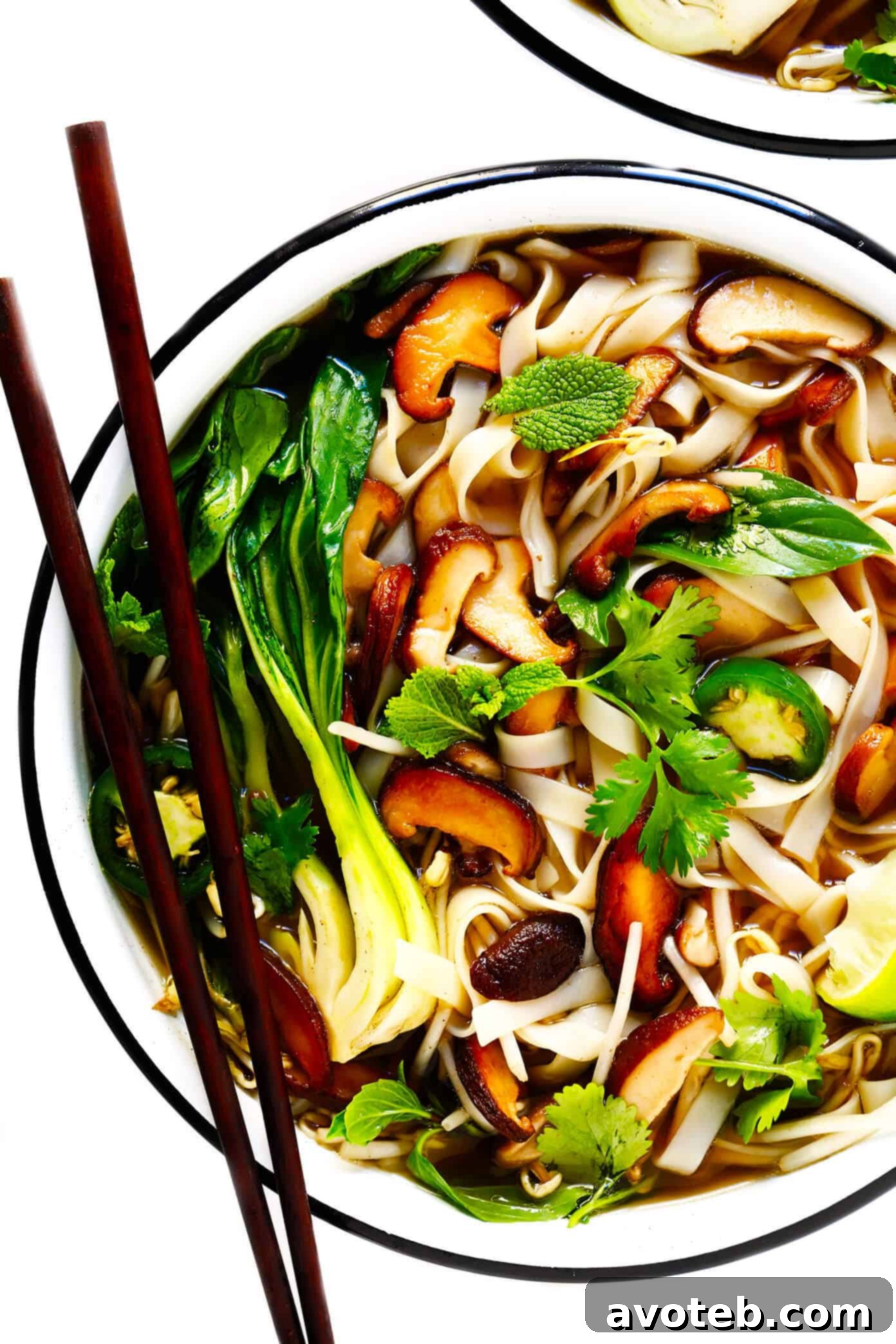
- How is pho traditionally served and eaten? Pho soup is typically served in large bowls, accompanied by chopsticks for the noodles and vegetables, and a soup spoon for the broth. To enjoy it properly, first use your chopsticks to gently stir all the fresh garnishes into the hot broth. This allows their flavors to infuse the soup. Then, alternate between using your chopsticks to pick up noodles and vegetables, and your spoon to sip the flavorful broth. In Vietnam, it’s common and perfectly acceptable to lift your bowl to drink the last drops of broth.
- Is this vegan pho recipe gluten-free? Yes, absolutely! This recipe is naturally gluten-free, provided you use gluten-free tamari instead of traditional soy sauce. All other ingredients are typically gluten-free.
- Can I make components of this recipe ahead of time? This recipe is excellent for meal prep or entertaining a crowd, as many components can be prepared in advance. The broth can be made and refrigerated separately in a sealed container for up to 3-4 days. The noodles can also be cooked, rinsed, and refrigerated in a separate sealed container. When ready to serve, simply reheat the broth, warm the noodles, and assemble with fresh garnishes.
- What are the best storage instructions for leftovers? To maintain the best quality, we recommend storing the cooked broth, vegetables, noodles, and garnishes in separate airtight containers in the refrigerator. This prevents the noodles from soaking up too much broth and becoming mushy. Stored separately, the components will keep well for up to 3 days. When reheating, combine the desired amount of noodles and vegetables with hot broth.
Vegan Pho (Vietnamese Noodle Soup)
Description
This easy vegan pho recipe is made with the most delicious rich broth and your choice of veggies (plus tofu, if you’d like). I highly recommend making a double batch while you’re at it!
Ingredients
PHO BROTH INGREDIENTS:
- 1 large white onion, peeled and halved
- 3-inch piece of fresh ginger, halved lengthwise
- 5 star anise
- 4 whole cloves
- 3 (3-inch) cinnamon sticks
- 2 cardamom pods
- 1 tablespoon whole coriander seeds
- 8 cups good-quality vegetable stock (or mushroom stock*)
- 1 tablespoon brown sugar
- 2 teaspoons low-sodium soy sauce or tamari
- 2 teaspoons rice vinegar
- fine sea salt, to taste
PHO SOUP INGREDIENTS:
- 7 ounces uncooked thin rice noodles
- 1 tablespoon olive oil (or any neutral-flavored oil)
- 8 ounces shiitake mushrooms, thinly sliced
- 2 heads baby bok choy, halved
- optional: 1-2 cups extra veggies (such as sliced carrots, broccoli florets, snow peas, etc.)
- garnishes: fresh herbs (cilantro, mint, and/or Thai basil), bean sprouts, lime wedges, thinly-sliced chiles (Thai bird chiles or jalapeños), thinly-sliced onions (green onions or white onions), sauces (hoisin and/or sriracha)
Instructions
- Char the onions and ginger. Turn the oven broiler to high, and place the baking rack about 8 inches away from the heating elements. Place the onion and ginger cut-side-up on a baking sheet, and brush with a bit of oil. Broil for about 7-10 minutes, until the tops of the onion and ginger are slightly charred. Remove and set aside.
- Prep the noodles. Meanwhile, as your broth is simmering, cook the noodles separately al dente according to the package instructions. Drain in a strainer, then briefly rinse the noodles with cold water to prevent them from continuing to cook. (I also recommend tossing the noodles with a drizzle of oil — such as sesame oil — to prevent them from sticking.)
- Make the broth. Meanwhile, heat the anise, cloves, cinnamon, cardamom and coriander to a large stock pot over medium-high heat for about 3 minutes until fragrant. Add in the charred onion, ginger, stock, and stir to combine. Continue cooking until the broth reaches a simmer. Then reduce heat to medium-low, cover with a lid, and continue to simmer for at least 30 minutes. Strain out (and discard) the onions, ginger and spices. Stir the brown sugar, soy sauce and rice vinegar into the hot broth. Then finally, taste and season the broth with salt as needed. Continue simmering on medium-low, covered, until ready to serve.
- Cook the veggies. Meanwhile, heat the oil in a sauté pan over medium-high heat. Add the sliced mushrooms and sauté for 5 minutes, stirring occasionally, until cooked through and lightly golden. Remove from heat. Then 5 minutes before you are ready to serve the soup, stir the mushrooms, bok choy and veggies into the hot broth so that they can briefly cook.
- Assemble. And now…the fun part! Add a handful of noodles to each individual serving bowl. Ladle the hot broth and veggies into the serving bowls. Top each bowl with lots and lots of garnishes, and finish with a generous squeeze of lime juice.
- Serve immediately. Encouraging everyone to stir the garnishes into the soup so that they can flavor the broth, also adding in additional extra sauces if desired.
Notes
- Alternate mushroom option: If you would like to skip sautéing the mushrooms on the side, you are welcome to cook them directly in the simmering broth itself. They need at least 10 minutes to cook, although the longer they simmer in there, the more delicious your broth will be.
- Alternate charring option: Instead of broiling the onion and ginger in the oven, you can also just cook them cut-side-down in a sauté pan over high heat until charred.
- Double batch: Again, I highly recommend making a double batch of this recipe while you’re at it! To do so, you will need a large stockpot (at least 5 quarts) to handle the quantity of broth.
This post may contain affiliate links which won’t change your price but will share some commission.