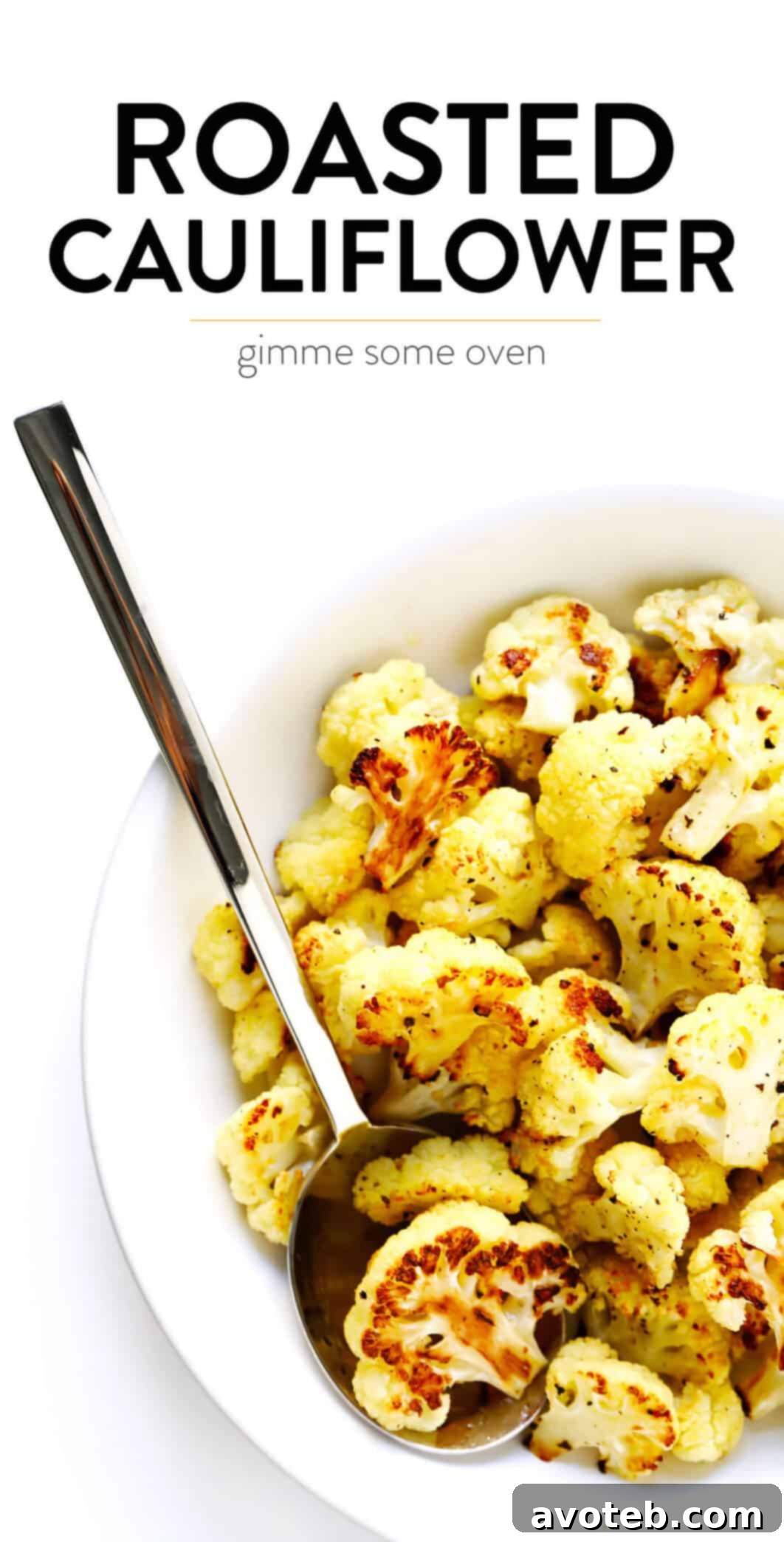
Discover the ultimate guide to creating perfectly roasted cauliflower – a versatile, healthy, and incredibly delicious side dish that will convert even the most skeptical eaters!
The Ultimate Guide to Perfectly Roasted Cauliflower: Easy, Healthy & Delicious
Are you ready to join Team Cauliflower? For many years, I admit, cauliflower wasn’t my go-to vegetable. My experiences were limited to bland raw florets on a veggie platter or lackluster additions to frozen mixes. I simply didn’t understand its true potential. But then, a revelation occurred: roasted cauliflower. This simple cooking method transformed a humble vegetable into something truly extraordinary, and like magic, I became a dedicated fan. Now, I’m genuinely obsessed, and I’m here to share my favorite, incredibly easy roasted cauliflower recipe that promises to convert you too.
Roasting isn’t just a cooking method; it’s a culinary alchemy. When cauliflower florets hit the high heat of the oven, they undergo a miraculous transformation. The edges caramelize into a beautiful golden brown, developing a slightly crisp texture that gives way to a sweet, nutty, and wonderfully tender interior. Each bite is packed with savory goodness, making it an irresistible snack, a perfect healthy side dish, or a versatile addition to countless meals.
Beyond its incredible flavor, roasted cauliflower is a nutritional powerhouse. As a cruciferous vegetable, it’s loaded with fiber, which aids digestion and promotes satiety, making it excellent for weight management. It’s also rich in antioxidants, vitamins C and K, and various minerals that support overall health and well-being. Plus, it’s naturally gluten-free and vegan, making it suitable for a wide range of dietary preferences. This makes it an ideal choice for anyone looking to incorporate more wholesome, delicious vegetables into their diet without compromising on taste.
Before we dive into my go-to recipe, get ready for even more cauliflower inspiration! This amazing vegetable is the star ingredient in a new enchilada recipe coming to the blog very soon. So, once you master this basic roasting technique, you’ll be well-equipped to explore a world of delicious cauliflower-based dishes.
Why Roasted Cauliflower is a Game Changer
There are countless reasons to fall in love with roasted cauliflower:
- Unbeatable Flavor: The roasting process brings out a natural sweetness and nutty depth that raw or steamed cauliflower simply can’t achieve. The caramelized edges are pure bliss!
- Incredibly Easy: With minimal prep and hands-off cooking, it’s one of the simplest healthy side dishes you can make. It requires just a few basic ingredients and a hot oven.
- Highly Customizable: Roasted cauliflower is a blank canvas for flavors. From simple salt and pepper to exotic spice blends, it adapts beautifully to any cuisine or personal preference.
- Nutrient-Dense: Packed with vitamins, minerals, fiber, and antioxidants, it’s a fantastic way to boost your daily vegetable intake. It supports immune health, digestion, and can help reduce inflammation.
- Versatile Use: It’s not just a side! Roasted cauliflower can be added to salads, pasta, tacos, soups, pizzas, and even blended into dips. Its texture and flavor complement a wide array of dishes.
- Diet-Friendly: Naturally gluten-free, dairy-free, and vegan, it’s a perfect option for those with dietary restrictions or specific health goals.
Mastering the Cut: How to Prepare Your Cauliflower
The first step to perfect roasted cauliflower is preparing your head of cauliflower. While it might seem straightforward, a uniform cut is crucial for even cooking. Here’s how to do it:
- Wash and Dry: Begin by thoroughly rinsing the head of cauliflower under cold water. Pat it completely dry with a clean kitchen towel or paper towels. Excess moisture can lead to steaming instead of roasting, preventing those desirable crispy, caramelized edges.
- Remove Outer Leaves: Carefully pull off any large, tough outer green leaves from the base of the cauliflower. You can discard these or, if tender, chop and roast them alongside the florets.
- Core the Cauliflower: Place the cauliflower stem-side up on a cutting board. Using a sharp chef’s knife, cut around the core in a cone shape to remove it. You can also simply slice the head in half and then quarter it, making it easier to access the core.
- Break into Florets: Once the core is removed, you can easily break or cut the cauliflower into individual florets. Aim for pieces that are roughly the same size, about 1 to 1.5 inches in diameter. This ensures they cook evenly. If some florets are much larger than others, they will remain raw while the smaller ones burn.
- Check for Uniformity: Take a moment to visually inspect your florets. If any are significantly larger, cut them down to match the others. Uniformity is key for consistent roasting!
Essential Ingredients for Classic Roasted Cauliflower
Once your cauliflower florets are perfectly prepped, gathering your ingredients is simple. For a perfectly seasoned, classic roasted cauliflower, you’ll need just a few pantry staples:
- Cauliflower Florets: One medium head, prepared as described above. Look for a firm, white head with tightly packed florets and no brown spots.
- Olive Oil: Extra virgin olive oil is my preferred choice for its flavor and high smoke point. However, you can also use other roasting oils like avocado oil, grapeseed oil, or even melted coconut oil. The oil is crucial for achieving that desirable crispiness and helps the seasonings adhere to the florets.
- Sea Salt and Freshly-Cracked Black Pepper: Don’t skimp on these! Proper seasoning is fundamental for bringing out the cauliflower’s best flavor. Sea salt provides a clean, briny taste, while freshly cracked black pepper adds a subtle warmth and aroma.
- Garlic Powder: This is an optional but highly recommended addition. Garlic powder infuses a lovely aromatic flavor without the risk of fresh minced garlic burning at high temperatures. If you prefer fresh garlic, mince a clove finely and mix it in, but be aware it might brown more quickly.
Elevate Your Dish: Optional Extra Seasonings & Flavor Boosts
While the basic recipe is wonderfully flavorful on its own – in fact, it’s how I prepare my roasted cauliflower 90% of the time – it’s also incredibly adaptable. Feel free to experiment with additional seasonings to match your meal or mood. Almost any flavor combination works beautifully with roasted cauliflower. Here are some of my favorite ways to customize:
- Italian Seasoning: A classic blend of herbs like oregano, basil, thyme, and rosemary for a Mediterranean flair.
- Cajun Seasoning: For a bold, spicy kick with paprika, cayenne, garlic, and onion powder.
- Za’atar Seasoning: A Middle Eastern blend of thyme, sumac, and sesame seeds for an earthy, tangy, and nutty profile.
- Taco Seasoning: Transform your cauliflower into a taco filling with chili powder, cumin, and other Tex-Mex spices.
- Everything Bagel Seasoning: For a savory, garlicky, and oniony crunch that’s surprisingly delicious on vegetables.
- Curry Powder: A warm, aromatic blend perfect for Indian-inspired dishes.
- Steak Seasoning: A robust, peppery blend that adds savory depth.
- Caribbean Jerk Seasoning: For a vibrant, spicy, and fragrant Caribbean twist.
Beyond dry seasonings, consider these post-roasting flavor enhancers: A squeeze of fresh lemon juice just before serving brightens all the flavors and adds a refreshing tang. For extra richness, sprinkle some freshly grated Parmesan cheese (or nutritional yeast for a vegan option) over the hot cauliflower immediately after it comes out of the oven. Or, for added crunch and healthy fats, toss the roasted florets with a handful of toasted nuts like almonds, walnuts, or pecans.
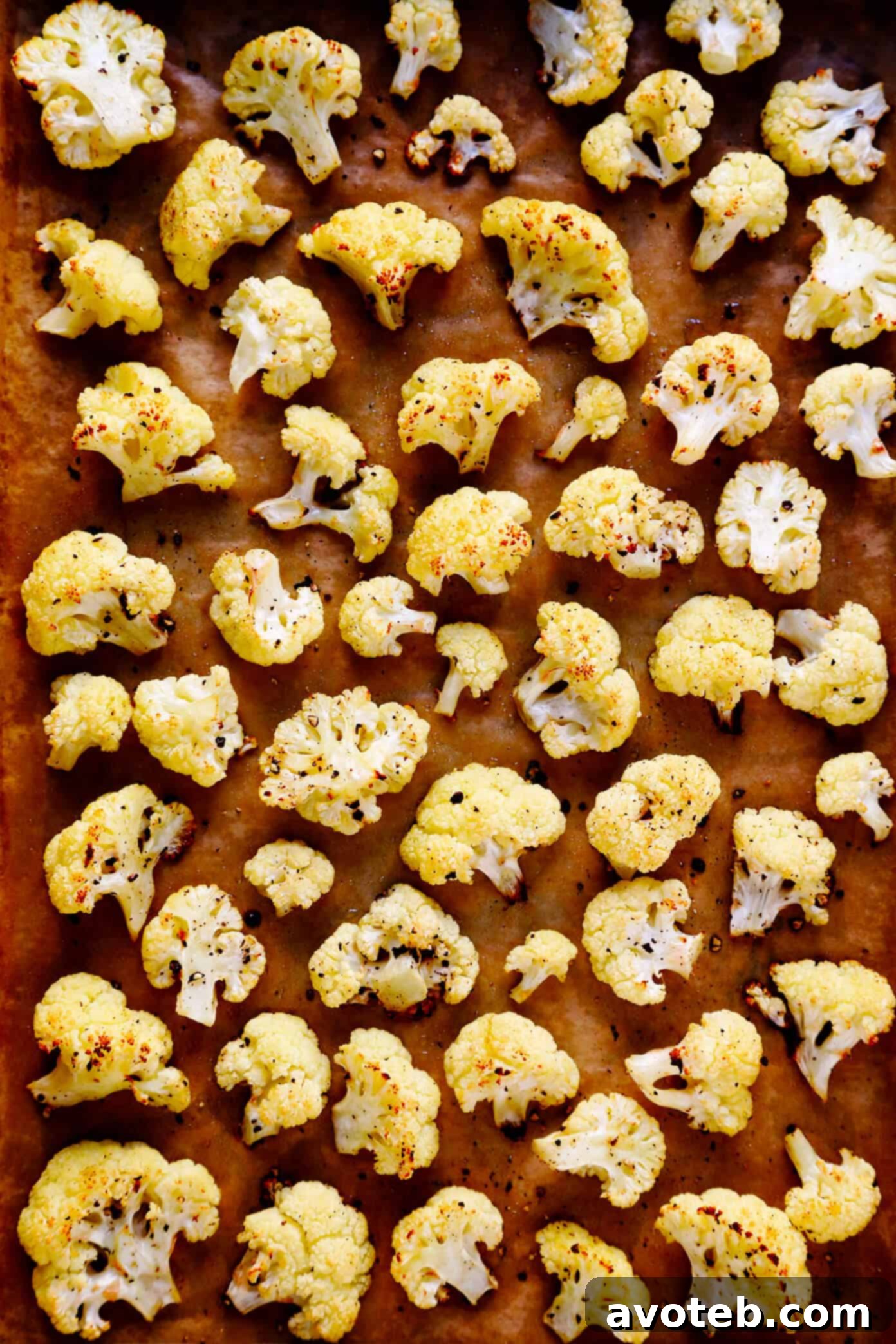
How to Achieve Perfectly Roasted Cauliflower: Step-by-Step Instructions
Achieving perfectly roasted cauliflower is incredibly simple, relying on high heat and a few key techniques. Follow these steps for consistently delicious results:
- Preheat Your Oven and Prepare Your Baking Sheet. Begin by preheating your oven to a hot 400°F (200°C). A high temperature is crucial for encouraging caramelization and crispiness, rather than just steaming the vegetables. While the oven preheats, prepare a large, rimmed baking sheet. You can either lightly grease it with cooking spray or, for easier cleanup, line it with parchment paper or aluminum foil. If using parchment paper, ensure it’s a brand rated for temperatures up to 400°F (200°C), as heat tolerances vary. Always keep a close eye on parchment paper at higher temperatures to prevent it from burning. If you choose foil, you might want to lightly grease it as well to prevent sticking.
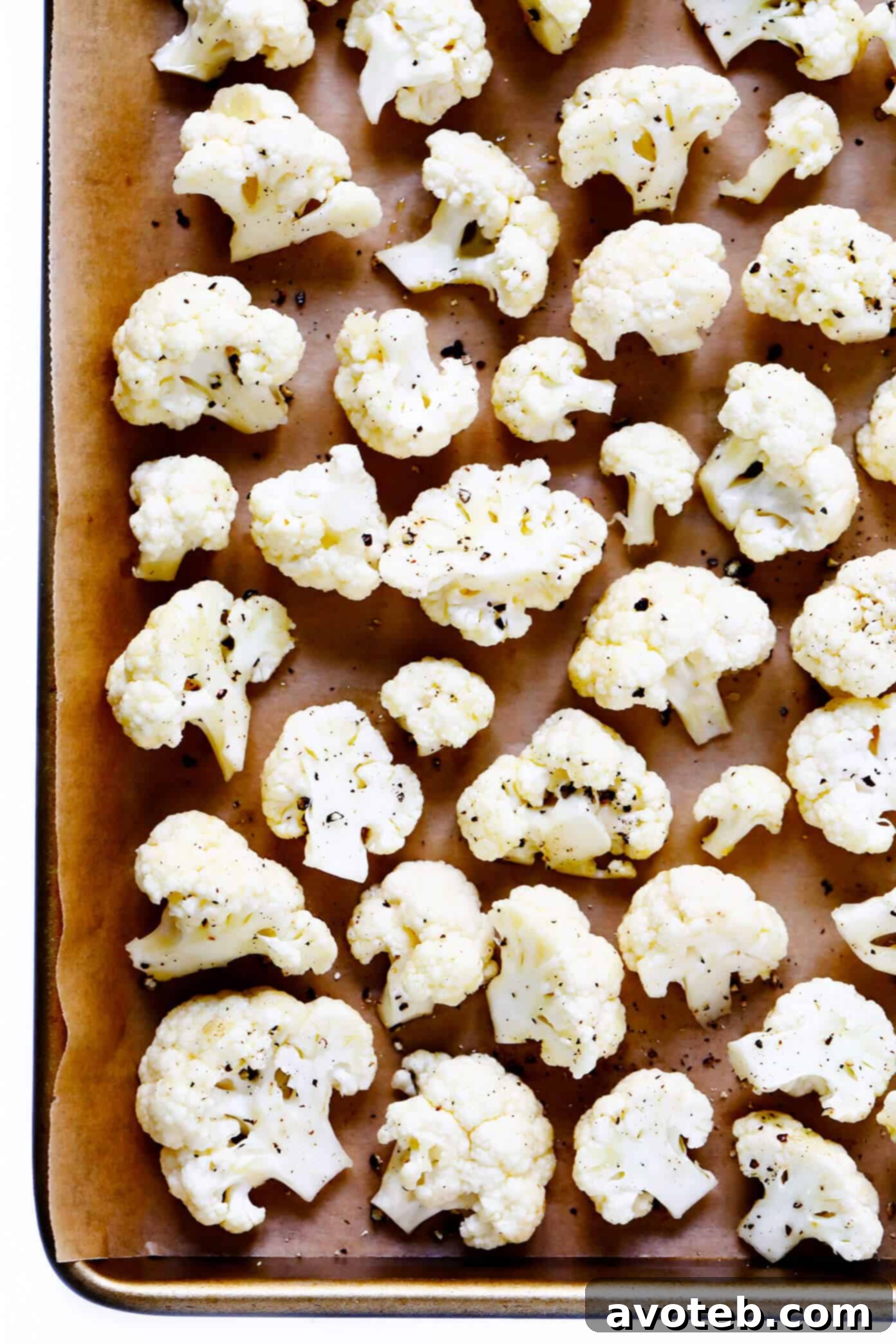
- Toss and Season the Cauliflower. In a large mixing bowl, combine your prepared cauliflower florets, olive oil, sea salt, freshly-cracked black pepper, and garlic powder (if using). Toss everything thoroughly until the florets are evenly coated. Alternatively, to save on dishwashing, you can combine and toss all ingredients directly on the prepared baking sheet. Once coated, spread the cauliflower florets out in a single, even layer on the baking sheet. It’s essential not to overcrowd the pan; overcrowding leads to steaming, not roasting, resulting in soft, rather than crisp, cauliflower. Use two baking sheets if necessary to ensure ample space between florets.
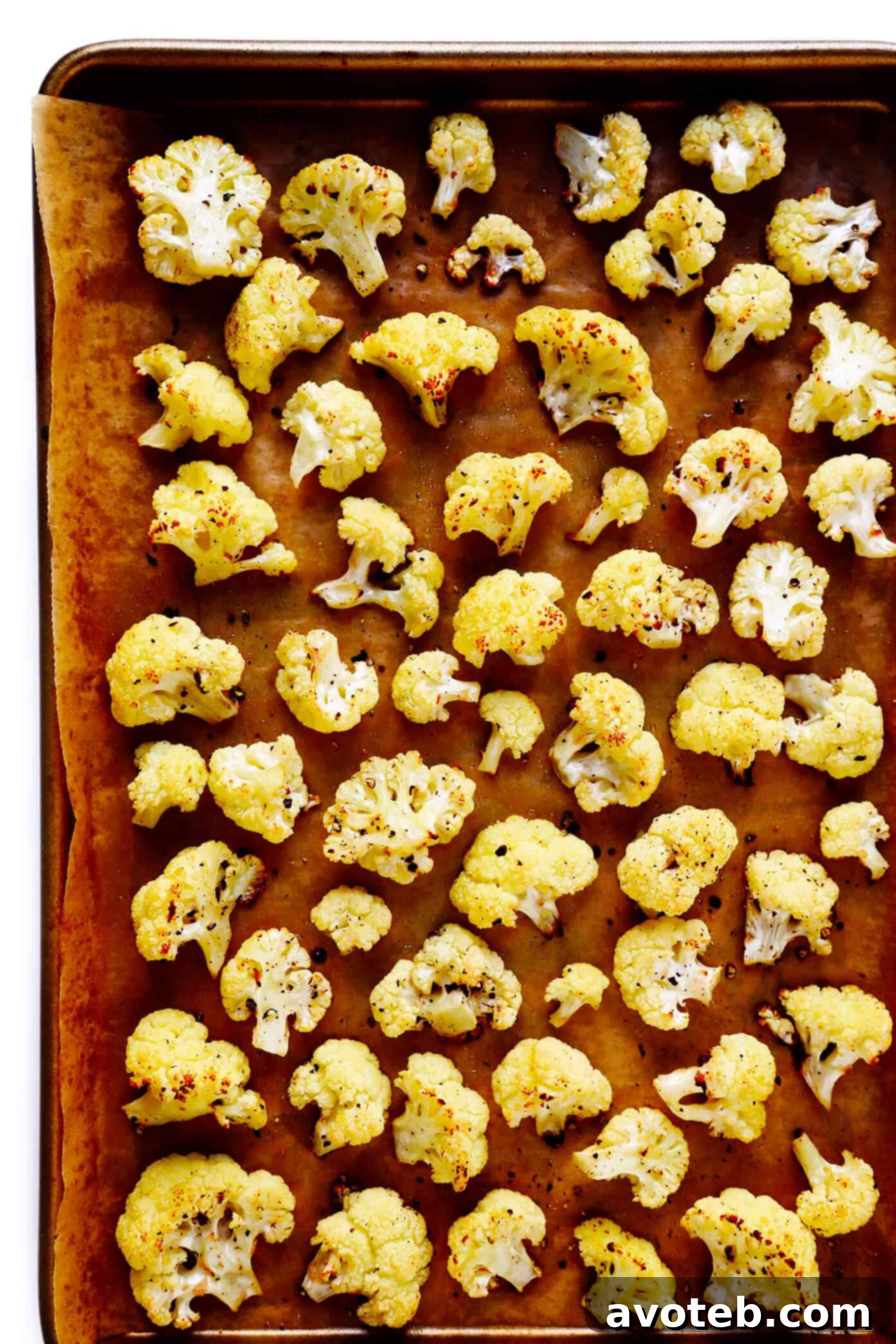
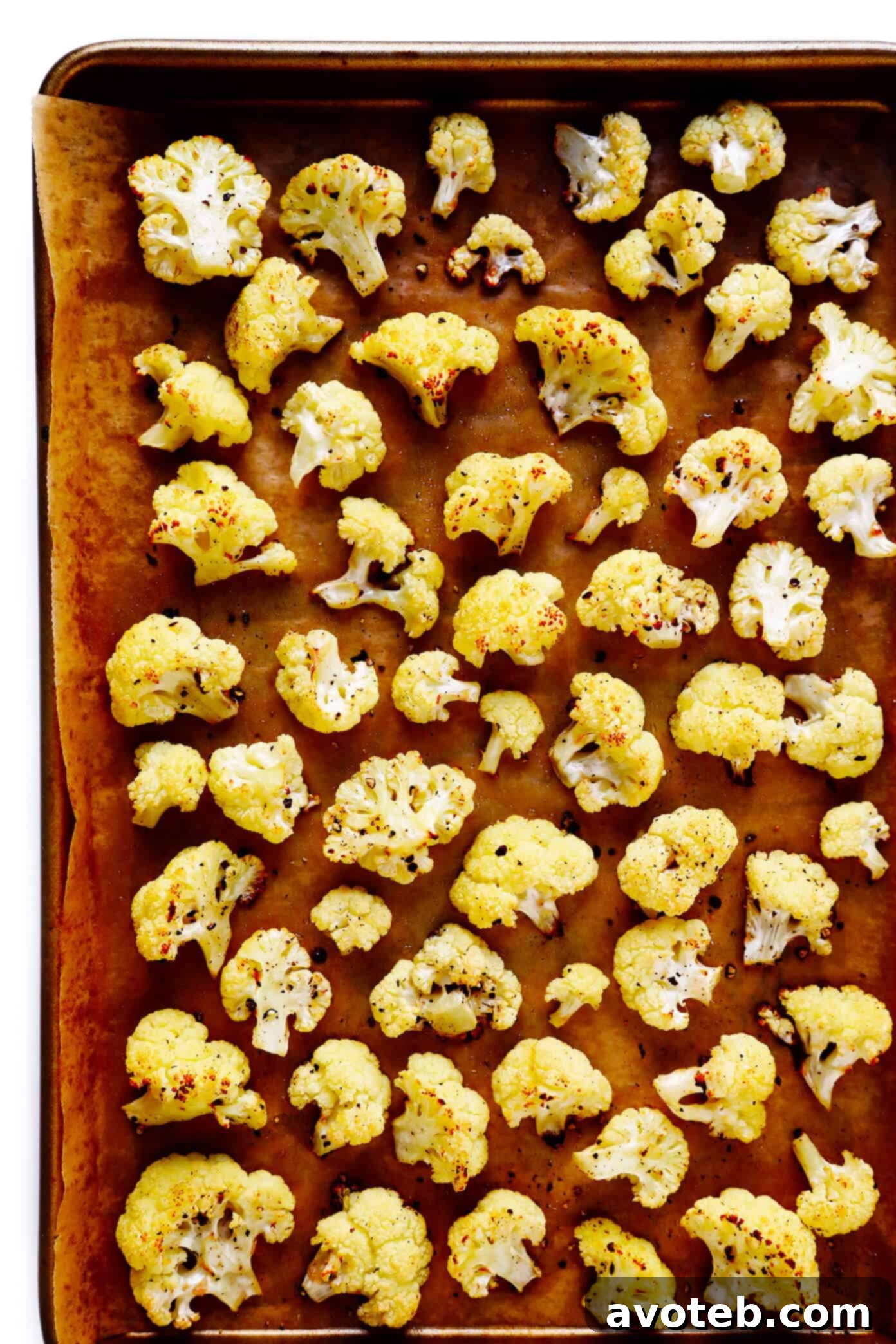
- Roast Until Golden and Tender-Crisp. Place the baking sheet in the preheated oven and roast for 25-30 minutes. Halfway through the cooking time (around 12-15 minutes), give the florets a good stir or flip them to ensure even browning and crisping on all sides. Continue roasting until the cauliflower is tender when pierced with a fork, and the edges are beautifully golden brown and slightly caramelized. The exact timing may vary slightly depending on your oven and the size of your florets.
- Taste, Adjust, and Serve! Once roasted to perfection, remove the baking sheet from the oven. Carefully taste a floret and adjust seasoning with additional salt and pepper if desired. Roasted cauliflower is truly at its best when served immediately, hot and fresh out of the oven, when its texture is most appealing. However, it’s also delicious when cooled and served chilled, making it a great addition to salads or meal prep bowls.
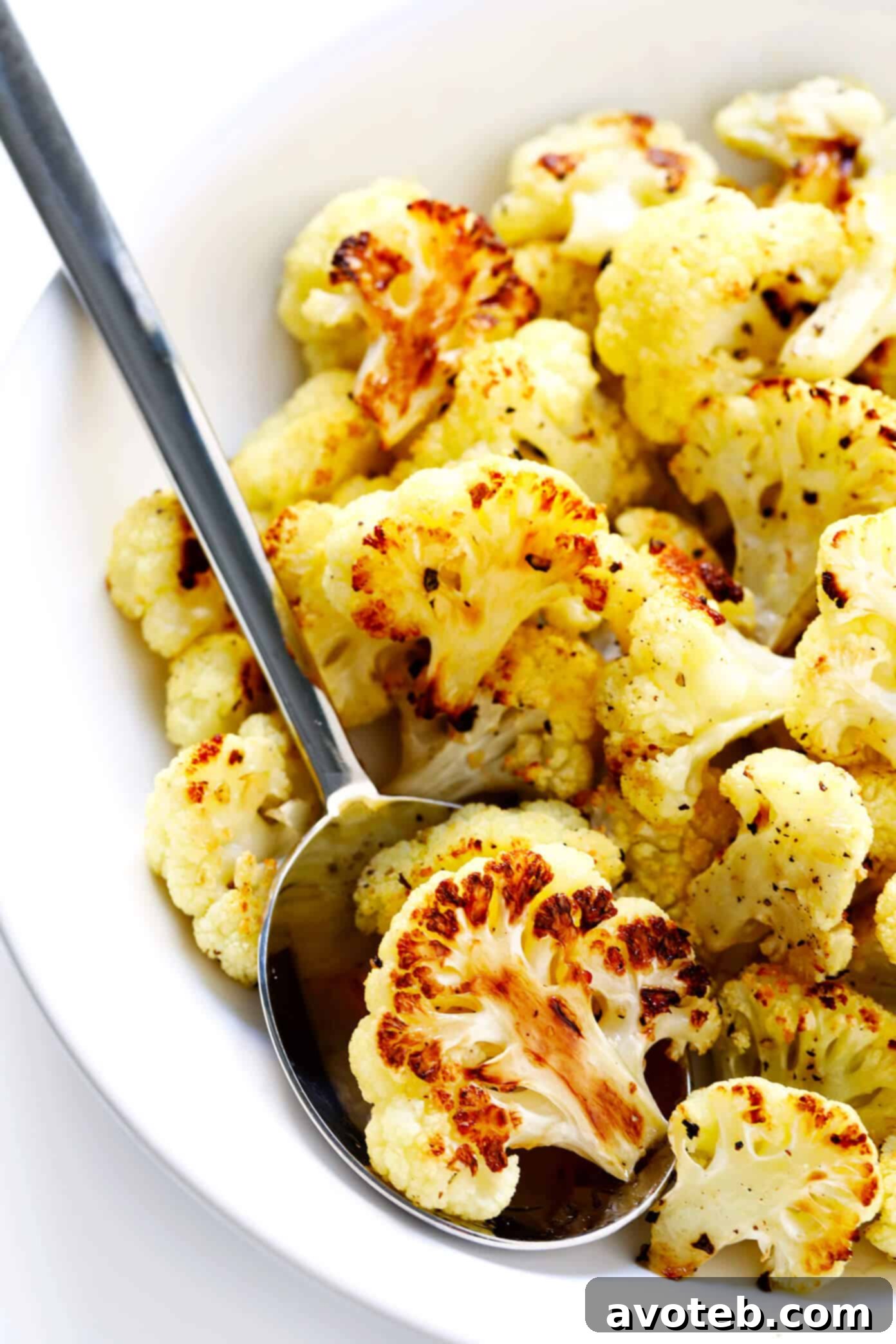
Pro Tips for the Best Roasted Cauliflower
- Don’t Overcrowd the Pan: This is arguably the most important tip! If florets are piled on top of each other, they will steam instead of roast. Use multiple baking sheets if necessary to ensure a single layer with space between florets.
- High Heat is Essential: Roasting at 400°F (200°C) or even 425°F (220°C) encourages quick caramelization and crisp edges. Lower temperatures will yield softer, less flavorful results.
- Dry Cauliflower is Key: After washing, ensure your cauliflower florets are thoroughly dry. Moisture inhibits browning and crispiness.
- Uniform Florets: As mentioned, aim for similarly sized florets for even cooking.
- Flip Halfway: Give the cauliflower a good toss or flip about halfway through the roasting time to ensure all sides get exposed to the direct heat of the baking sheet, promoting even browning.
- Use a Darker Baking Sheet: Darker metal baking sheets tend to conduct heat more efficiently and can help achieve crispier results.
Creative Ways to Enjoy Roasted Cauliflower: Beyond a Side Dish
Roasted cauliflower is incredibly versatile and can be incorporated into almost any meal. Here are some inspiring ideas and popular recipes to get you started:
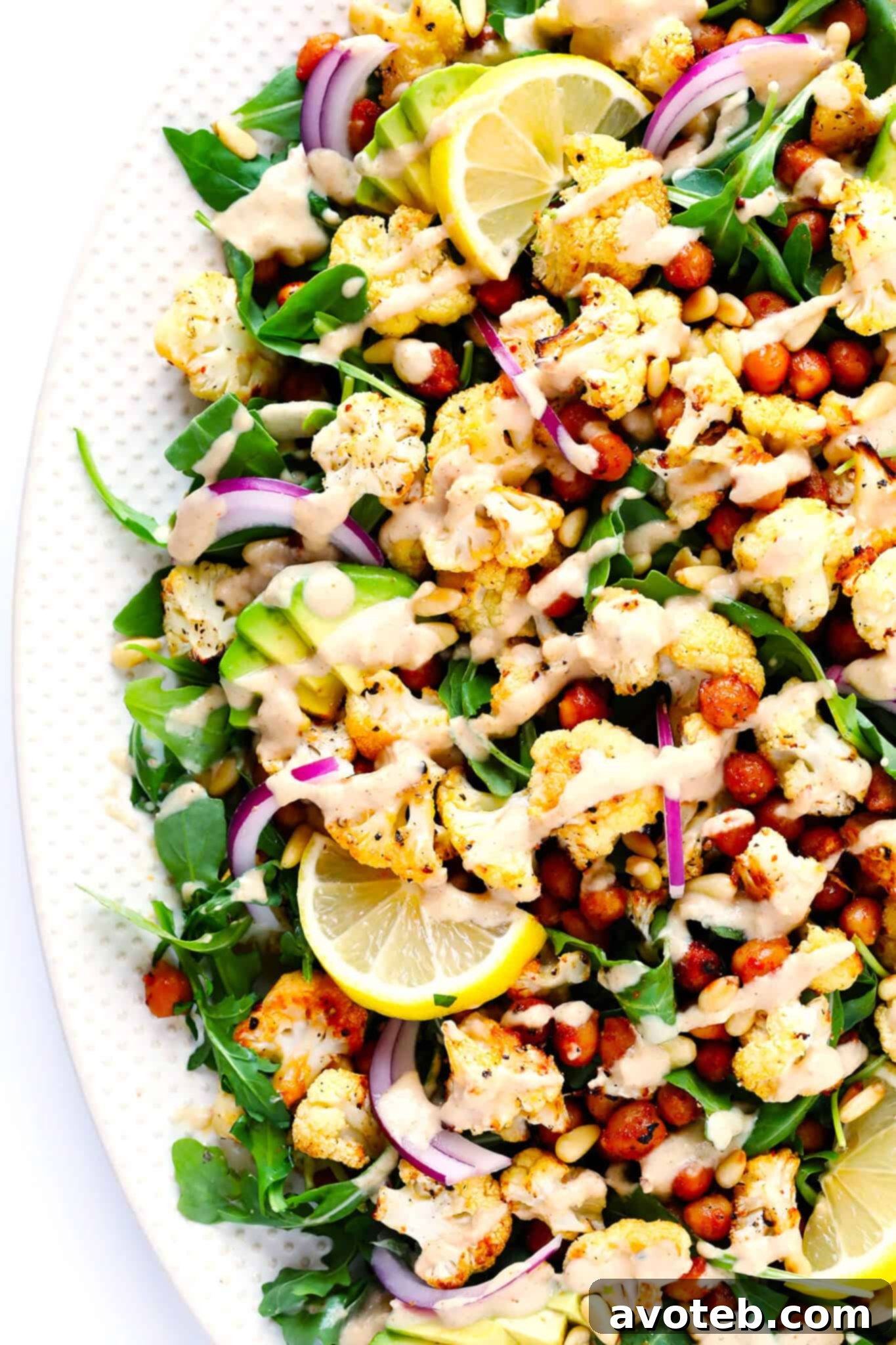
- Salads: Add warm or chilled roasted cauliflower to your favorite green salads, grain bowls, or pasta salads for added texture and flavor.
- Tacos & Wraps: Roasted cauliflower makes an excellent vegetarian filling for tacos, burritos, or wraps. Try our Roasted Cauliflower & Black Bean Tacos.
- Soups & Stews: Blend roasted cauliflower into creamy soups for a velvety texture and added nutrients, or add chunks to hearty stews.
- Pizzas & Flatbreads: Use roasted cauliflower as a delicious topping for homemade pizzas or flatbreads.
- Pasta Dishes: Toss with pasta, your favorite sauce, and other vegetables for a quick and flavorful meal. Our Roasted Cauliflower Orzo Salad is a fantastic option.
- Dips & Spreads: Blend roasted cauliflower with tahini, lemon, and spices for a healthy dip, much like a hummus. Don’t miss our indulgent Buffalo Cauliflower Dip.
- Grain Bowls & Buddha Bowls: A perfect component for nutritious and satisfying bowls alongside grains, greens, and protein.
- Roasts & Casseroles: Combine with other roasted vegetables or as part of a comforting casserole. See our Roasted Cauliflower, Mushroom and Wild Rice “Stuffing”.
- Enchiladas: As a preview, it’s amazing in enchiladas – stay tuned for our upcoming recipe!
Storage and Reheating Tips
If you happen to have any leftover roasted cauliflower (which is rare in my house!), here’s how to store and reheat it:
- Storage: Store cooled roasted cauliflower in an airtight container in the refrigerator for up to 3-4 days.
- Reheating: For the best texture, reheat roasted cauliflower in a single layer on a baking sheet in a 350°F (175°C) oven for about 10-15 minutes, or until warmed through and re-crisped. Avoid the microwave, as it will make the cauliflower soft and mushy.
Frequently Asked Questions About Roasted Cauliflower
Can I use frozen cauliflower for roasting?
While fresh cauliflower is generally preferred for optimal crispiness, you can absolutely roast frozen cauliflower. The key is to not thaw it beforehand. Roast it directly from frozen, and be aware that it might take a bit longer to cook and may not achieve the same level of crispness as fresh cauliflower due to its higher water content. You might also notice more moisture released during cooking.
What temperature is best for roasting cauliflower?
A high temperature is crucial for delicious roasted cauliflower. I recommend roasting at 400°F (200°C). This high heat promotes caramelization (the Maillard reaction) and gives the cauliflower those desirable crispy, golden-brown edges.
How long does it take to roast cauliflower?
Typically, a medium head of cauliflower cut into 1-1.5 inch florets will take about 25-30 minutes to roast at 400°F (200°C). This can vary slightly based on your oven, the size of your florets, and how crowded your baking sheet is. You’ll know it’s done when it’s tender when pierced with a fork and has beautiful golden-brown, caramelized edges.
Is roasted cauliflower healthy?
Yes, roasted cauliflower is incredibly healthy! It’s a low-calorie, nutrient-dense vegetable packed with fiber, vitamin C, vitamin K, and various antioxidants. Roasting simply enhances its flavor, and as long as you use a moderate amount of healthy oil and seasonings, it remains a fantastic addition to a balanced diet. It’s naturally gluten-free and vegan too!
Can I make roasted cauliflower spicy?
Absolutely! To add a spicy kick, you can sprinkle a pinch of red pepper flakes, cayenne pepper, or a spicy seasoning blend (like Cajun or chili powder) along with your other seasonings before roasting. You can also drizzle with a touch of hot sauce after it comes out of the oven.
Print Recipe

Roasted Cauliflower
Prep Time: 10 minutes
Cook Time: 25 minutes
Total Time: 35 minutes
Yield: 4 servings
Description
My go-to roasted cauliflower recipe! It’s super easy to make and totally customizable with your favorite seasonings.
Ingredients
Scale
- 1 medium head of cauliflower, cut into florets
- 2 tablespoons olive oil
- 1 teaspoon fine sea salt
- 1/2 teaspoon freshly-cracked black pepper
- 1/4 teaspoon garlic powder
Instructions
- Heat oven to 400°F (200°C). Line a rimmed baking sheet with parchment paper* or grease with cooking spray.
- Spread the cauliflower out evenly on the baking sheet. Then drizzle with the olive oil, and sprinkle evenly with the salt, pepper, and garlic powder. Toss gently to evenly coat the cauliflower.
- Bake for 25-30 minutes, until soft and lightly golden. For even browning, toss or flip the florets halfway through the cooking time.
- Serve immediately, preferably hot and fresh out of the oven.
Notes
*If using parchment paper, be sure to use a brand that is safe for baking up to 400°F (200°C). And as always, keep a close eye on the parchment paper when baking at high heat to be sure that it does not burn. For best results, ensure cauliflower florets are dry before tossing with oil and seasonings.