
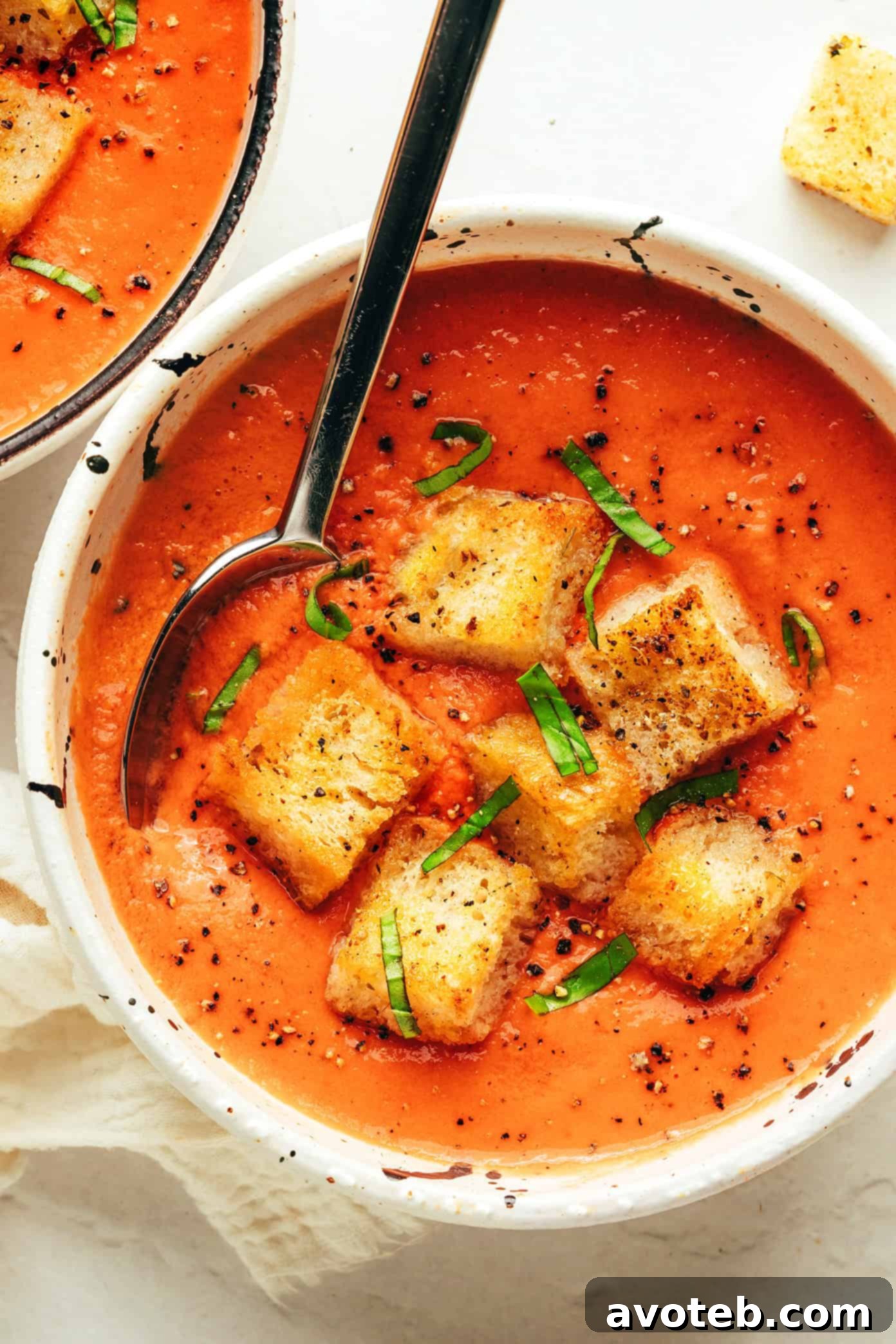
Discover the ultimate guide to crafting the best authentic, mouthwatering, and fresh tomato gazpacho recipe — straight from Spain and ready in just 15 minutes!
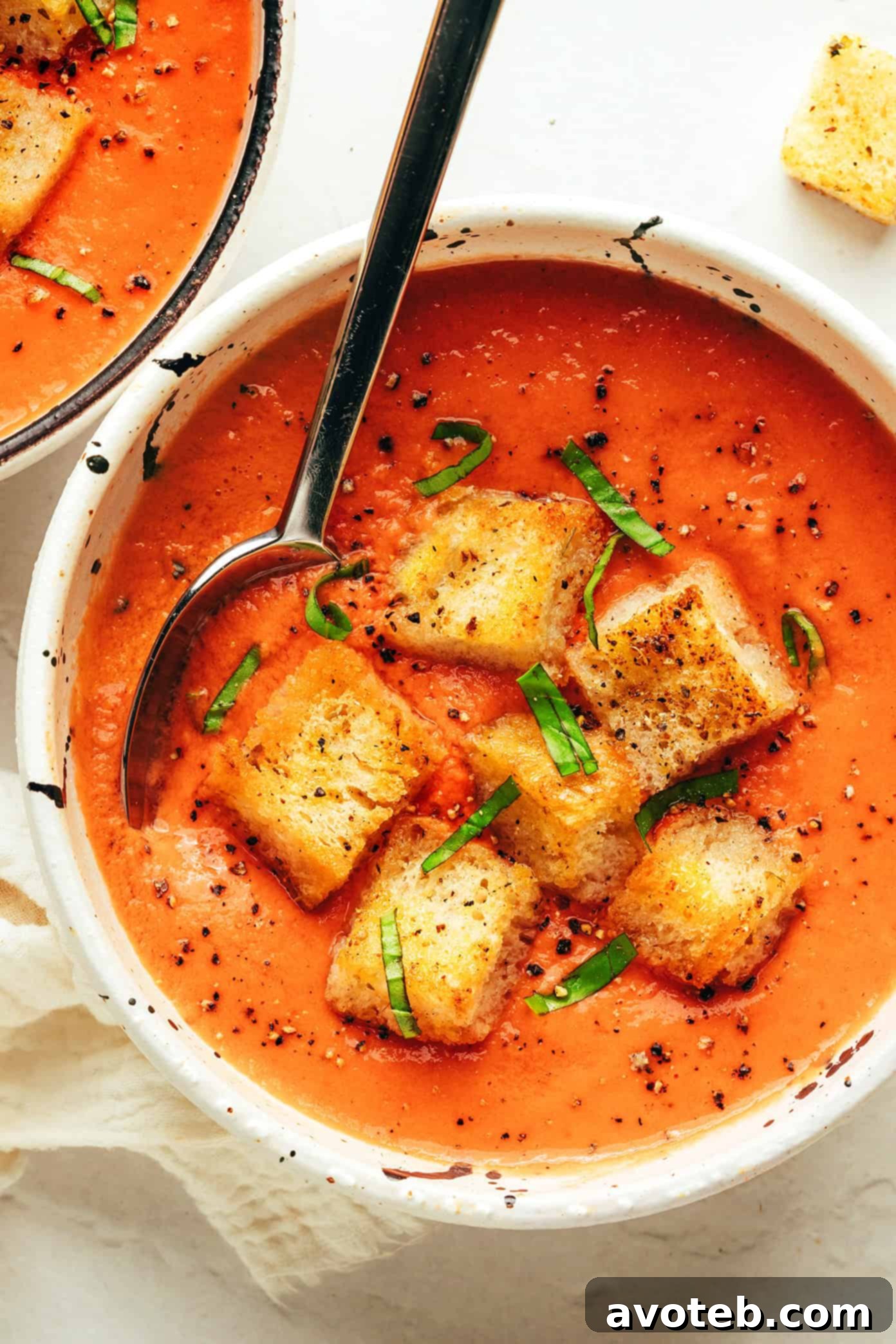
As the warm embrace of summer returns, so does the abundance of ripe, juicy tomatoes – signalling the perfect time to indulge in one of Spain’s most iconic culinary delights: gazpacho. This refreshing, chilled Spanish tomato soup isn’t just a dish; it’s a celebration of seasonal produce, a testament to simple flavours, and an indispensable antidote to the scorching summer heat.
My fascination with gazpacho began years ago, but it truly deepened after my move to Barcelona. Living here has transformed my appreciation for this vibrant soup, turning it into a summer obsession. This adoration intensified during our visits to Andalucía, the historic heartland of gazpacho. In this southern region of Spain, gazpacho isn’t merely an option; it’s ubiquitous. You’ll find it everywhere: from quaint roadside cafes and bustling tapas bars to gourmet restaurants and every local supermercado. Even in Barcelona, my local grocery store boasts an impressive selection of pre-bottled gazpachos, offering no fewer than seven varieties, ready for a quick, refreshing grab-and-go meal. It’s clear why gazpacho holds such a special place in Spanish cuisine—it’s the perfect light, healthy, and incredibly refreshing dish to combat the oppressive summer temperatures. When crafted with the season’s finest, perfectly ripe ingredients, its flavour is simply unparalleled.
While the essence of gazpacho remains consistent across Spain, you’ll discover subtle regional variations, each adding its unique touch. Beyond tradition, modern chefs frequently experiment with non-traditional ingredients, pushing the boundaries of this classic soup. However, for most, the Andalusian-style tomato gazpacho is the quintessential version that comes to mind—a smooth, vibrant blend of fresh vegetables that embodies the spirit of Spanish summer. If you’re yearning for a taste of this authentic Spanish experience, whether in a bowl or, as is delightfully common here, served in a glass with a straw, I’m thrilled to share my absolute favourite recipe. It’s not only quick and straightforward, taking just about 15 minutes to prepare, but I genuinely believe it is lo mejor — truly the best!
Mastering the BEST Gazpacho: A 1-Minute Video Guide
Essential Spanish Gazpacho Ingredients for an Authentic Taste
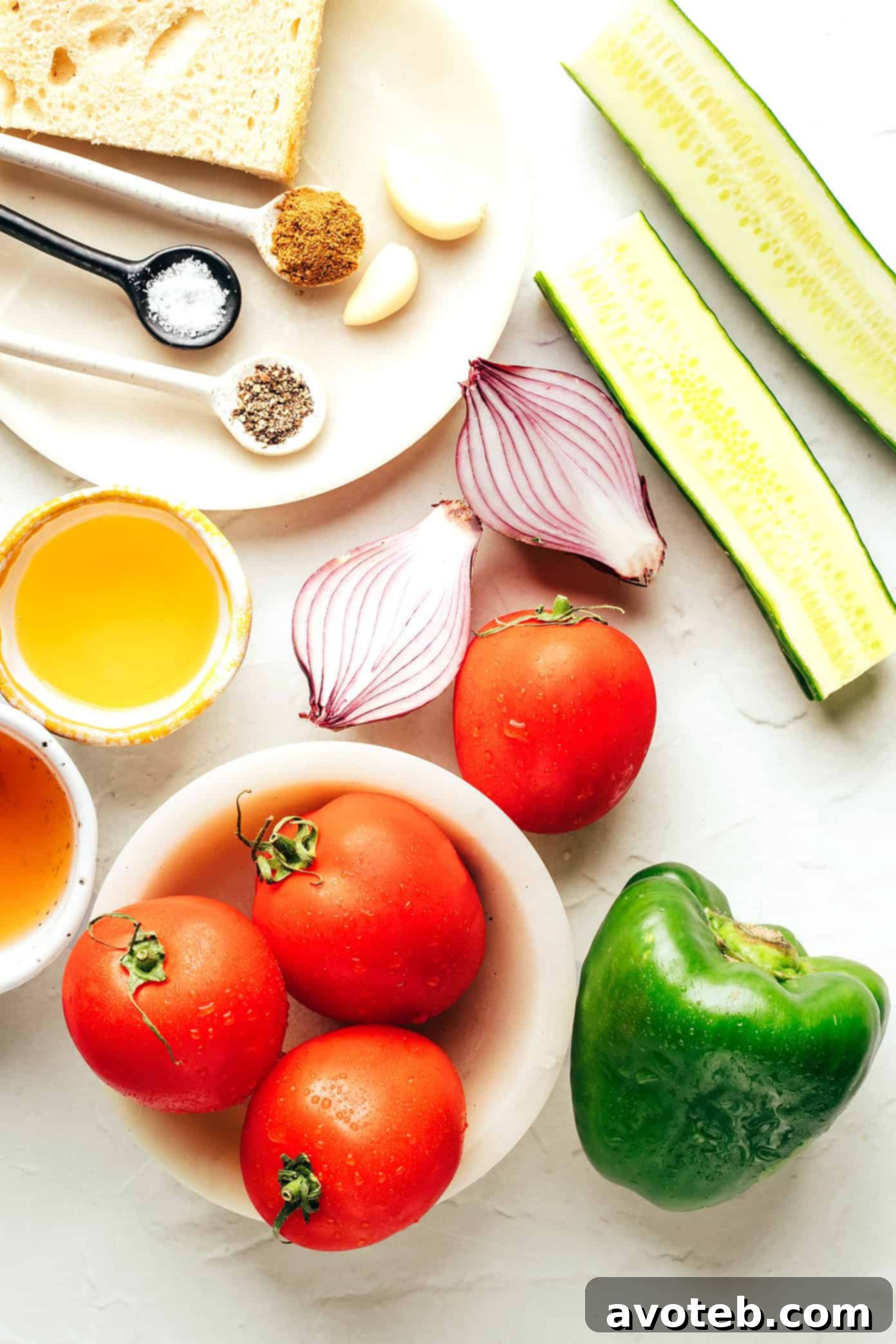
Gazpacho stands out as the ultimate summer soup, primarily because all its core ingredients reach their peak freshness and flavour during this vibrant season. What’s more, preparing it requires absolutely no cooking, meaning you won’t need to turn on your stove or oven and heat up your kitchen. The process is remarkably simple: a bit of quick chopping on a cutting board, and then your blender or food processor takes over to transform these fresh components into a silky, refreshing soup. To create this truly authentic homemade gazpacho, here are the key ingredients you’ll need, along with some insights and tips:
- Ripe Tomatoes: The undisputed star of gazpacho. In Spain, Roma tomatoes or what we commonly refer to as “branch tomatoes” (medium-sized, round, soft-skinned tomatoes still on the vine) are the traditional choice. Their balanced sweetness and acidity are crucial. However, the most important factor is ripeness. Any variety of juicy, ripe, fresh tomatoes will yield fantastic results. There’s no need to peel your tomatoes, as the skins contribute to the vibrant colour and nutrients, but I strongly recommend coring them to remove the tough white flesh and seeds, which can sometimes impart a slightly bitter taste.
- Crisp Cucumber: Cucumbers add a refreshing, cooling element to the gazpacho, balancing the richness of the tomatoes. In Spain, small, thin-skinned Persian or Kirby cucumbers are frequently used, typically peeled and seeded for a smoother texture. For convenience, I often opt for half of an English cucumber, which typically doesn’t require seeding due to its smaller, softer seeds. Either choice works beautifully; just ensure it’s fresh and firm.
- Vibrant Green Bell Pepper: Many of my Spanish friends are ardent believers that a green bell pepper is non-negotiable for achieving the truly authentic flavour profile of Spanish gazpacho. It contributes a distinctive earthy, slightly bitter note that defines the classic taste. While I generally agree, I’ve found that other colours of bell peppers can be used if green isn’t available, offering a slightly sweeter or milder flavour. But for tradition, stick with green!
- Crustless White Bread: This might surprise some, but leftover white bread is the secret to gazpacho’s signature creamy texture and helps to subtly thicken the soup while rounding out the overall flavours. Our Spanish friends taught us the crucial step of discarding the crusts for the most optimal, velvety smooth result. To ensure the bread blends seamlessly into the soup, you have two effective methods:
- You can blend most of your gazpacho ingredients first, then gently poke a slice of bread into the center of the soup and allow it to soften for about 10 minutes before blending it thoroughly into the mixture. Alternatively…
- A quicker method involves running the slice of bread directly under the faucet, soaking it completely with water. Then, squeeze out the excess water entirely with your hands before adding the bread to the other soup ingredients and pureeing. This ensures it’s soft enough to break down easily.
- Pungent Red Onion: Just half of a small red onion, peeled, adds a gentle piquancy and depth of flavour that enhances the other ingredients without overpowering them. Red onions are preferred for their milder, slightly sweeter profile compared to yellow onions when eaten raw.
- Aromatic Garlic: Garlic is indispensable for its bold, aromatic foundation. I typically use two small cloves, or one large clove, depending on their size and my preference for a more pronounced garlic flavour.
- Quality Olive Oil: Traditional gazpacho recipes are often quite generous with olive oil. However, modern Spanish interpretations frequently reduce the quantity to make the soup a bit healthier without sacrificing flavour. This recipe strikes a perfect balance, using just 3 tablespoons of high-quality extra virgin olive oil. It’s crucial for emulsifying the soup and contributing to its luscious mouthfeel and rich flavour.
- Authentic Sherry Vinegar: Andalucía, the birthplace of gazpacho, is also renowned for its sherry production. Consequently, sherry vinegar (vinagre de Jerez) is the authentic choice for gazpacho in Spain. Its unique, complex, and slightly nutty flavour profile is irreplaceable for true authenticity. If sherry vinegar isn’t available in your local grocery store, a good quality red wine vinegar can serve as a suitable substitute, though it will impart a slightly different character.
- Earthy Ground Cumin: A delightful secret ingredient passed down from friends in Andalucía, ground cumin adds a subtle, earthy, and warm note to the gazpacho. Its inclusion is popular in southern Spain, reflecting the region’s historical ties and proximity to Morocco and North African culinary influences. This spice elevates the soup beyond a simple tomato flavour.
- Sea Salt and Freshly Ground Black Pepper: These are the fundamental seasonings that bring all the flavours into harmony, enhancing the natural sweetness of the tomatoes and balancing the acidity. Taste and adjust to perfection.
Simple Steps to Crafting Perfect Homemade Gazpacho
Making authentic homemade gazpacho soup is surprisingly simple, primarily involving two key stages: blending and chilling. Here’s a detailed breakdown of the process to ensure you achieve a wonderfully smooth and flavourful result:
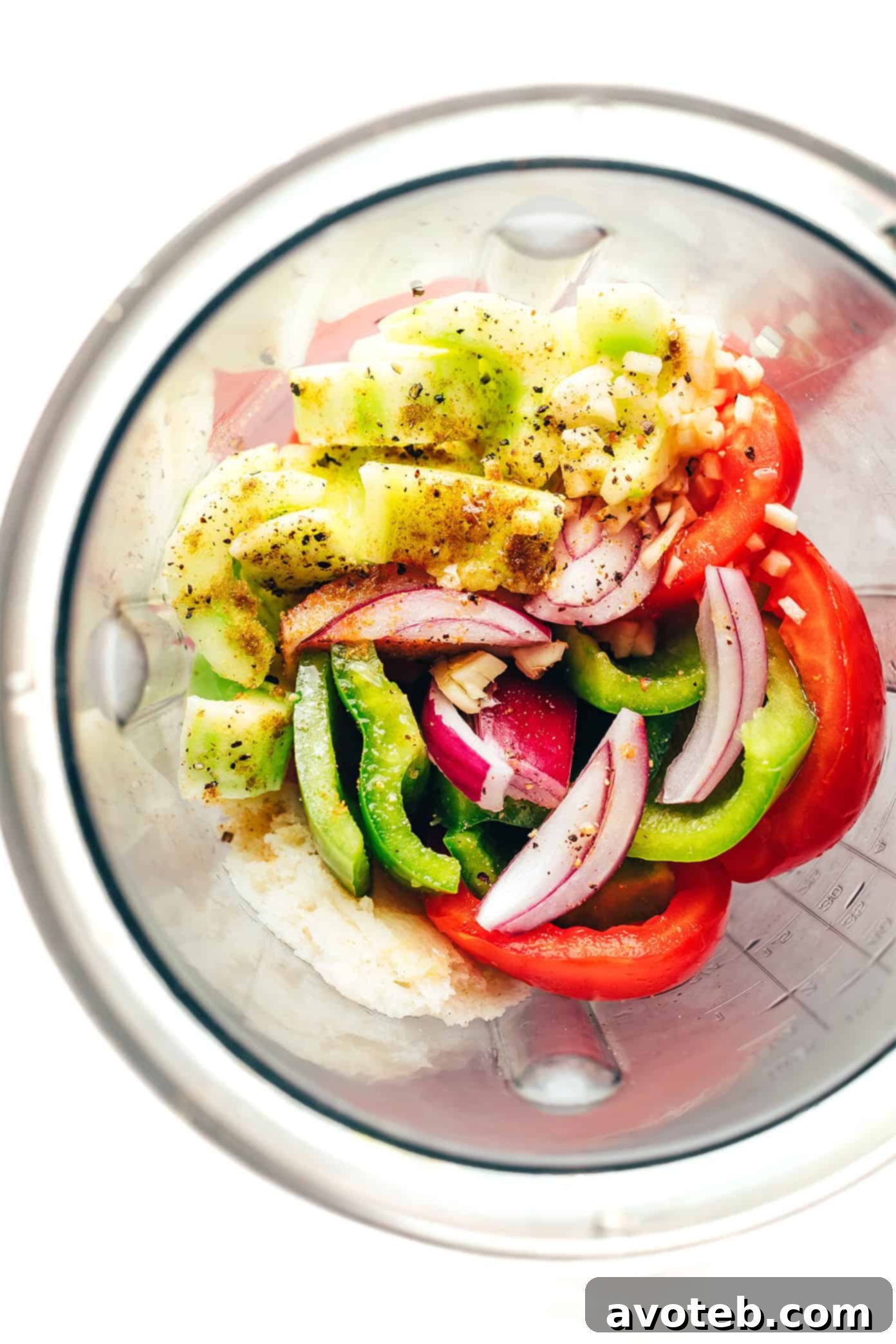
- Puree All Ingredients to Perfection: Begin by gathering all your prepared gazpacho ingredients, including the cored tomatoes, peeled cucumber, bell pepper, red onion, garlic, olive oil, sherry vinegar, cumin, salt, pepper, and the soaked, crustless white bread. Place them all into a powerful blender or a food processor. Start blending on a low setting, gradually increasing the speed to high. Puree for at least 1 minute, or until the mixture reaches your desired consistency. For a truly authentic Andalusian gazpacho, aim for a super-smooth, almost velvety texture, ensuring no chunky bits remain. If you prefer an exceptionally silky soup, you can optionally pass the blended gazpacho through a fine-mesh sieve after this step, pressing down on the solids to extract all the liquid, though this is not strictly necessary for this recipe.
- Thoroughly Chill for Optimal Flavour: Once your gazpacho has reached the desired consistency, transfer the pureed soup into a sealed container. This could be a large pitcher with a lid, an airtight food storage container, or even a glass bottle. Place the container in the refrigerator and allow the gazpacho to chill for a minimum of 4 hours. Ideally, chilling it for 6 hours or even overnight will allow the flavours to meld beautifully and intensify, resulting in a much more complex and harmonious taste. Gazpacho is designed to be served ice-cold, so don’t rush this crucial chilling step.
- Serve Cold and Garnish Generously: After the gazpacho is thoroughly chilled, give it a final stir. It may thicken slightly in the fridge, which is normal. Pour the soup into individual bowls, mugs, or glasses, depending on your preferred serving style. Now comes the fun part: garnishing! Gazpacho, with its simple base, truly shines with the addition of fresh, vibrant toppings. Offer a selection of your favourite garnishes (see the next section for ideas) to allow each person to customize their bowl. Enjoy this refreshing, healthy, and flavourful taste of Spain!
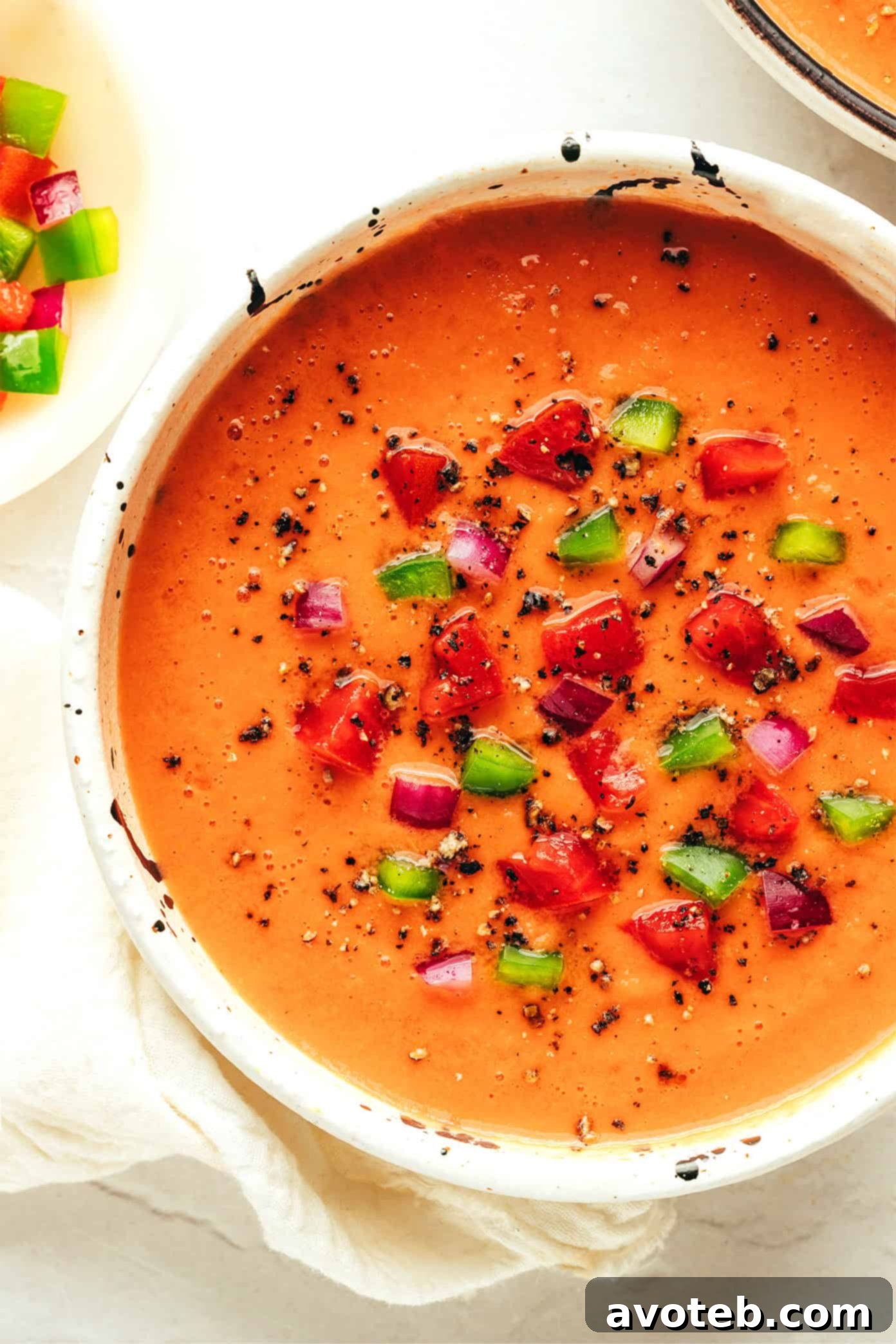
Elevating Your Gazpacho: Essential Soup Toppings
While gazpacho itself is a symphony of fresh flavours, its inherently simple, pureed nature makes toppings an absolute must in my culinary philosophy! Garnishes not only add visual appeal but also introduce delightful textural contrasts and bursts of complementary flavours that elevate the entire experience. I love offering a variety, allowing everyone to customize their bowl (or glass!) to their personal preference. Here are some of my favourite additions to gazpacho:
- Crispy Homemade Croutons: There’s nothing quite like the crunch of freshly made croutons. They’re incredibly easy to whip up with any leftover bread you have on hand, toasted to golden perfection with a touch of olive oil and garlic. They add a satisfying texture and absorb some of the gazpacho’s vibrant liquid.
- Fragrant Fresh Herbs: A sprinkle of fresh herbs can brighten the gazpacho beautifully. Basil offers a sweet, peppery note, while thyme or oregano contribute an earthy Mediterranean aroma. Rosemary adds a woody fragrance, and chives provide a delicate oniony kick. Any combination of these, finely chopped, works wonderfully.
- Freshly-Cracked Black Pepper: Always a non-negotiable for me! A generous grind of fresh black pepper just before serving adds a sharp, aromatic spice that beautifully complements the sweet and tangy tomato base. It awakens the palate.
- Aromatic Olive Oil Drizzle: An extra swirl of good quality extra virgin olive oil over the top is not only traditional in Spain but also enhances the gazpacho’s smooth texture and adds a final touch of its characteristic fruity and peppery flavour. It’s a simple yet profound addition.
- Rich Cream or Sour Cream: If you desire a creamier, slightly richer soup, a delicate drizzle of cream or a dollop of sour cream (or even Greek yogurt for a lighter option) can be a delightful addition. It mellows the acidity and adds a luxurious mouthfeel.
- Traditional Spanish Ham and Chopped Hard-Boiled Eggs: While these toppings are more traditionally associated with salmorejo (a thicker, creamier Andalusian cold tomato soup, closely related to gazpacho), they are also surprisingly popular with gazpacho in the south of Spain. Finely diced cured Spanish ham (jamón serrano) adds a salty, umami depth, while chopped hard-boiled eggs contribute a creamy texture and protein.
Alternatively, and perhaps most commonly, many simply sprinkle a few spoonfuls of the leftover chopped gazpacho vegetables—such as finely diced tomato, green pepper, red onion, or cucumber—on top. This offers a lovely textural contrast and reinforces the fresh, raw essence of the soup. Ultimately, choose whatever sounds most appealing to you!
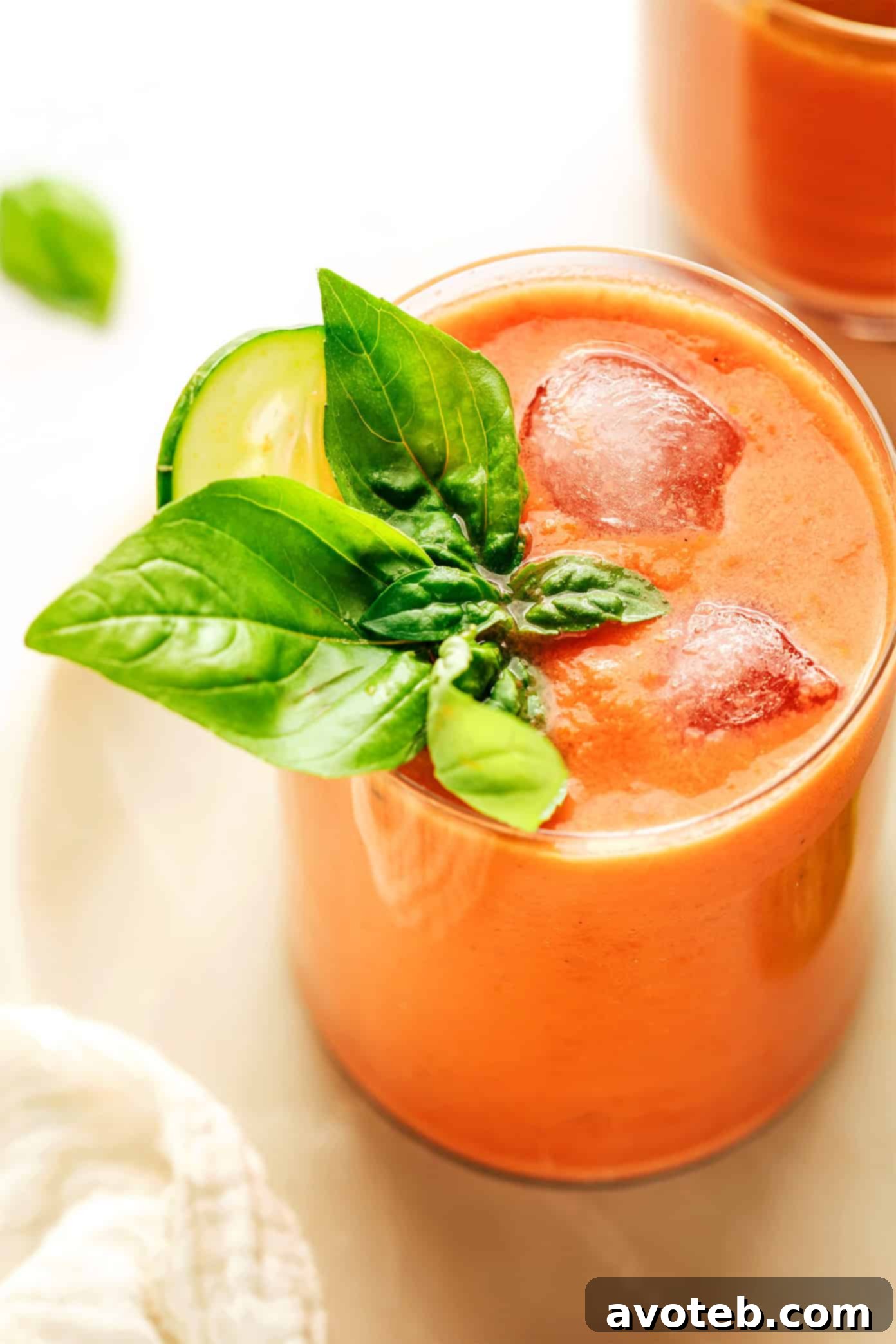
Serving Gazpacho: Tradition, Refreshment, and Presentation Tips
The beauty of gazpacho lies not only in its exquisite flavour but also in its versatility and ease of serving. You have a couple of delightful options for presenting this iconic Spanish soup, each offering a slightly different experience. You can serve gazpacho elegantly in a classic soup bowl or a cozy mug, beautifully garnished with your preferred toppings, making it a perfect starter or a light main course. However, for a truly authentic and incredibly refreshing Spanish experience, especially on a sweltering day, many establishments in Spain opt for a simpler, yet ingenious method: serving gazpacho over ice in tall glasses, accompanied by a straw. This “drinkable” gazpacho is a personal favourite of mine, as it perfectly embodies the soup’s role as a hydrating and invigorating summer beverage (as seen in the photos below).
Regardless of your chosen serving vessel, the single most critical aspect to remember when serving gazpacho is that it must be thoroughly chilled. This is non-negotiable for achieving the refreshing burst of flavour and cooling sensation that defines a truly great gazpacho. Warm gazpacho simply misses the mark. Therefore, it’s essential to plan ahead: blend the recipe a good few hours before you intend to serve it. This foresight ensures it has ample time to cool down completely in the refrigerator, allowing all the vibrant flavours to meld and mature, resulting in a perfectly balanced and invigorating soup ready to be savoured at your meal. A well-chilled gazpacho is more than just cold; it’s a testament to the care and patience that brings out its full, refreshing potential.

Exploring Gazpacho Variations: Beyond the Traditional
While the recipe provided below offers a faithful rendition of authentic tomato gazpacho, one of the most exciting aspects of this Spanish classic is its adaptability. There are countless creative ways to customize your gazpacho, allowing you to tailor it to your palate or experiment with different seasonal produce. Here are a few popular variations you might consider trying:
- Infuse with Fruit: Adding fruit to red gazpacho is a surprisingly common and delightful practice in Spain. Watermelon gazpacho, with its incredible sweetness and hydrating qualities, is a particular favourite. Cantaloupe and strawberries are also popular additions, lending a unique sweetness and vibrant hue to the soup. These fruits introduce a refreshing twist, making the gazpacho even more invigorating on a hot day.
- Incorporate More Veggies: Beyond the core ingredients, a variety of other vegetables can be seamlessly blended into gazpacho. Roasted beets can add a beautiful deep colour and earthy sweetness. Zucchini offers a subtle creaminess and mild flavour, while corn can introduce a touch of sweetness and textural interest. Feel free to experiment with what’s fresh and in season.
- Boost with Extra Herbs: If you’re an herb enthusiast, don’t hesitate to incorporate more fresh herbs into your gazpacho blend. Basil pairs wonderfully with tomatoes, enhancing their sweetness. Rosemary or thyme can add a more robust, earthy undertone, while chives provide a delicate oniony freshness. These additions can transform the aromatic profile of your soup.
- Add a Spicy Kick: It’s worth noting that adding spice is definitely not a common tradition in Spanish cuisine, as the country generally prefers its food without heat. However, if you, like me, occasionally crave an extra kick, a few slices of jalapeño or serrano pepper blended into the gazpacho can introduce a fantastic subtle heat that perfectly complements the cool, refreshing base. This is a modern twist that chili lovers will appreciate.
- Discover Salmorejo: While not a variation of gazpacho but a distinct cousin, *salmorejo* is another essential cold tomato soup from Córdoba, Andalucía. It’s thicker and creamier than gazpacho, typically containing more bread and olive oil, and traditionally garnished with finely chopped hard-boiled eggs and jamón serrano. If you love gazpacho, *salmorejo* is definitely worth exploring for its richer, more substantial texture.

Authentic Spanish Gazpacho Recipe
Author: Ali
Prep Time: 15 minutes
Cook Time: 0 mins
Total Time: 15 minutes (plus chilling)
Yield: 4 –6 servings 1x
Description
This is my cherished recipe for crafting the most authentic, vibrantly fresh, and utterly delicious Spanish gazpacho, bringing the essence of summer to your table.
Ingredients
Scale
- 2 pounds ripe Roma tomatoes, halved and cored*
- 1 small (1/2 lb) cucumber, peeled and seeded*
- 1 medium green bell pepper, cored
- 1/2 small red onion, peeled
- 2 small garlic cloves (or 1 large clove), peeled
- 3 tablespoons extra virgin olive oil
- 2 tablespoons sherry vinegar
- 1 teaspoon fine sea salt
- 1/2 teaspoon freshly-cracked black pepper
- 1/2 teaspoon ground cumin
- 1 thick slice of crustless white bread, soaked*
- optional garnishes: homemade croutons, chopped fresh herbs (basil, chives), a drizzle of olive oil, or finely diced leftover gazpacho vegetables (tomato, cucumber, bell pepper, onion)
Instructions
- Puree to Smoothness. Combine all your prepared ingredients—cored tomatoes, peeled and seeded cucumber, cored bell pepper, peeled red onion, garlic cloves, olive oil, sherry vinegar, sea salt, black pepper, ground cumin, and the soaked, crustless white bread—together in a high-speed blender or powerful food processor. Puree on high for 1 minute, or until the gazpacho reaches a perfectly smooth, velvety consistency. For an extra-fine texture, you can pass the soup through a fine-mesh sieve, though it is often unnecessary with a good blender.
- Season to Taste. Taste the freshly blended gazpacho and adjust the seasoning as needed. You may wish to add a little extra sea salt, freshly cracked black pepper, or a pinch more cumin to achieve your desired flavour balance.
- Chill Thoroughly. Pour the gazpacho into a sealed container and refrigerate for a minimum of 3 to 4 hours. For the absolute best flavour and a truly refreshing experience, chilling it overnight is highly recommended. The colder it is, the more vibrant and satisfying the gazpacho will taste.
- Serve Cold. Once thoroughly chilled, give the gazpacho a quick stir and serve it immediately. Ladle into bowls, mugs, or glasses, and garnish generously with your desired toppings for an authentic and delightful Spanish summer treat.
Equipment
Ground Cumin
Buy Now →
Sherry Vinegar
Buy Now →
Vitamix Blender
Buy Now →
Notes
Tomatoes: To properly core your tomatoes, simply use a spoon or a small knife to scoop out and discard the tough white core and any seeds. This ensures a smoother, less bitter gazpacho.
Cucumber: For convenience and to avoid seeding, you can easily use half of an English cucumber instead of Persian or Kirby varieties. English cucumbers typically have softer, smaller seeds that don’t require removal.
Bread: We find that a slice of baguette works perfectly for this recipe. To soak the bread, simply hold it under a running tap for a few seconds until it’s completely saturated with water. Then, firmly squeeze out all the excess water with your hands before adding the bread to your blender or food processor with the other ingredients.
Storage instructions: Leftover gazpacho can be stored in an airtight food storage container and kept in the refrigerator for up to 3 days. For longer preservation, it can be frozen for up to 3 months. Thaw in the refrigerator before serving, and give it a good stir.