
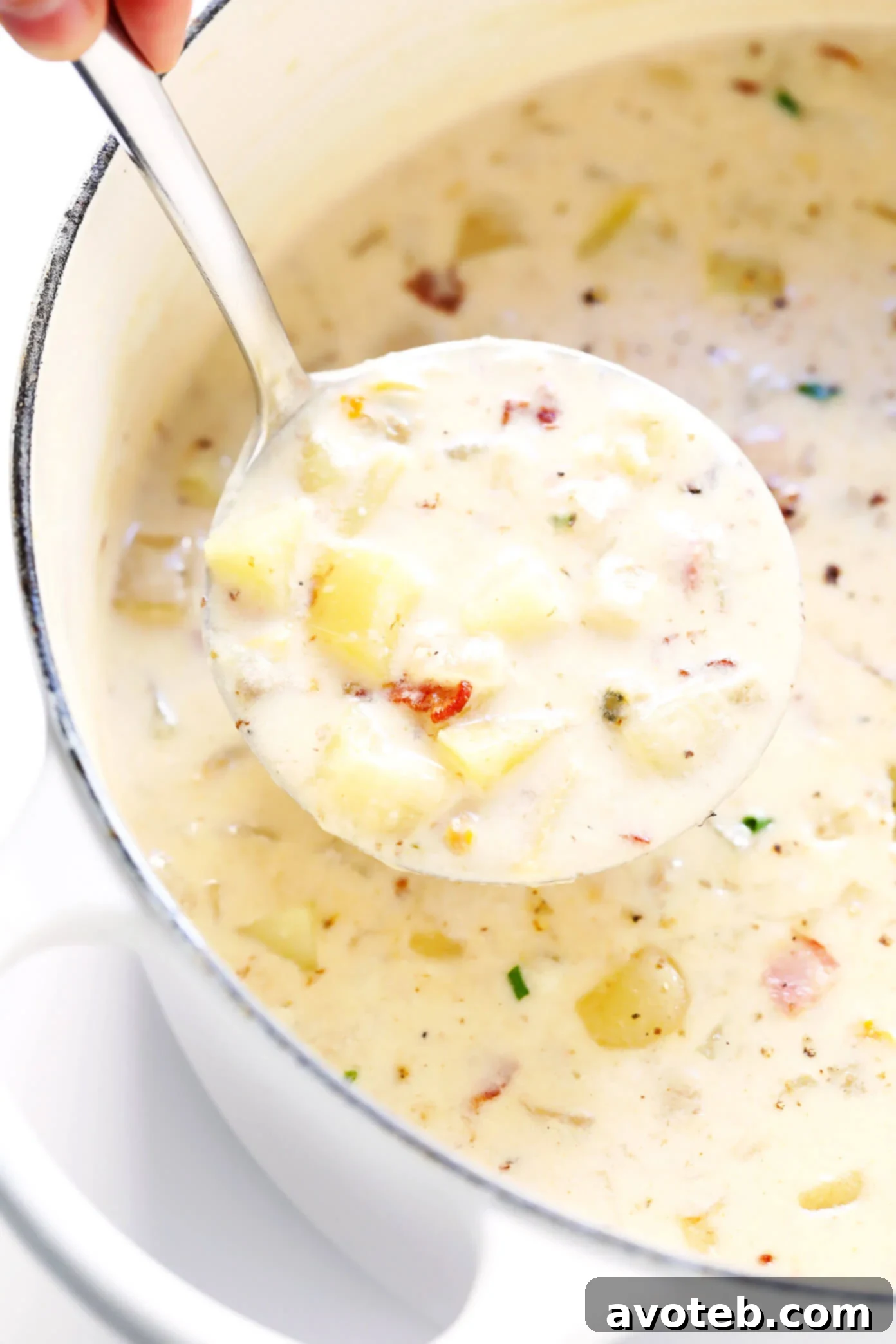
Experience the timeless comfort of a classic New England Clam Chowder, thoughtfully reimagined to be a little lighter without sacrificing any of its beloved creamy, hearty, and utterly delicious character. This recipe brings the iconic flavors of the coast right to your kitchen, making it perfect for any occasion.
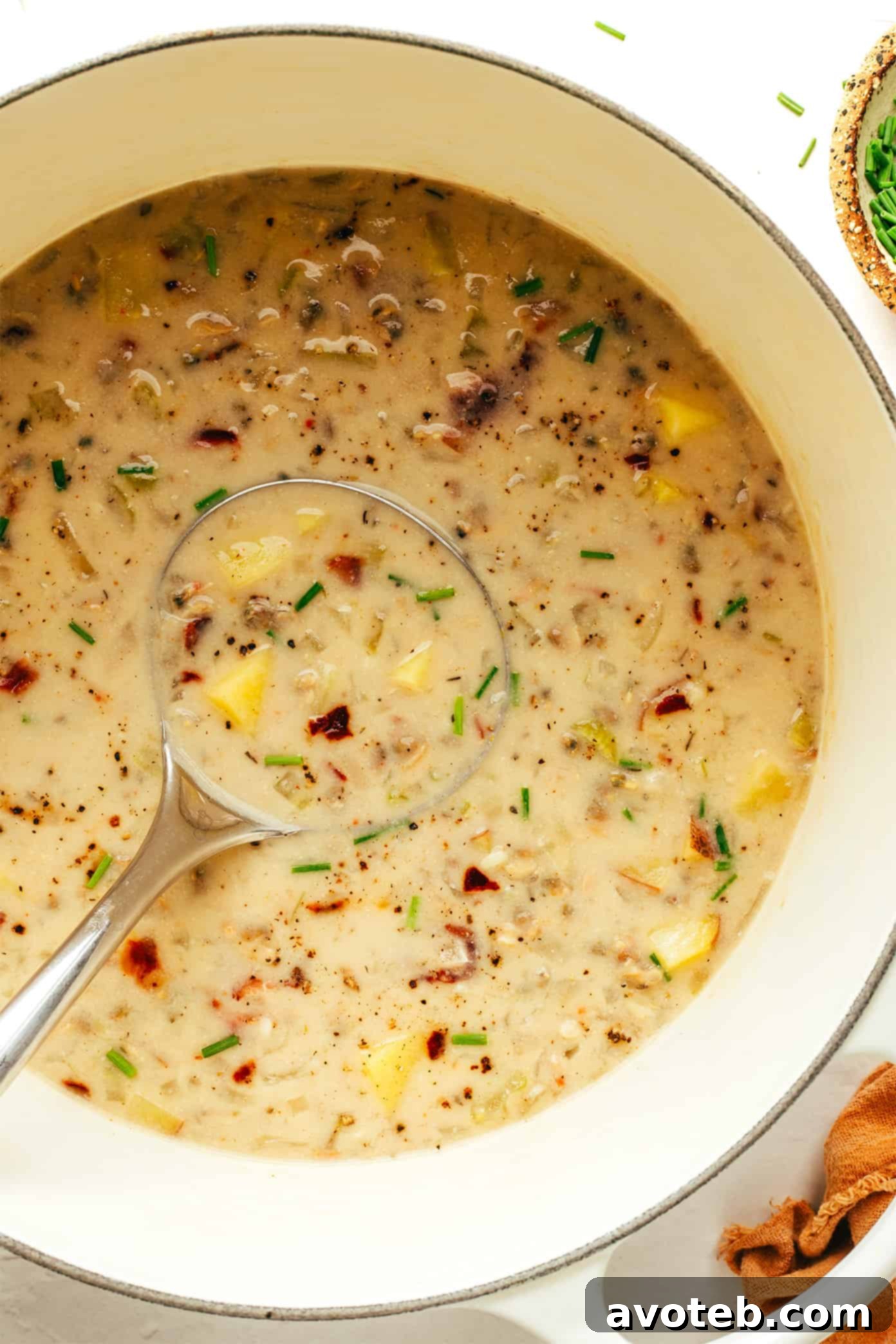
Discover the Secret to Our Lightened New England Clam Chowder
Craving the rich, comforting taste of authentic New England Clam Chowder but looking for a recipe that feels a touch lighter? You’ve come to the right place! Our recipe strikes the perfect balance, delivering all the classic flavors and creamy texture you adore with just a few clever adjustments. This isn’t just a meal; it’s a bowl of coastal tradition, designed to warm your soul.
To help you visualize each step, we’ve prepared a concise 1-minute video guide. Watch how effortlessly this delicious chowder comes together in your kitchen.
A Culinary Journey: The History and Allure of New England Clam Chowder
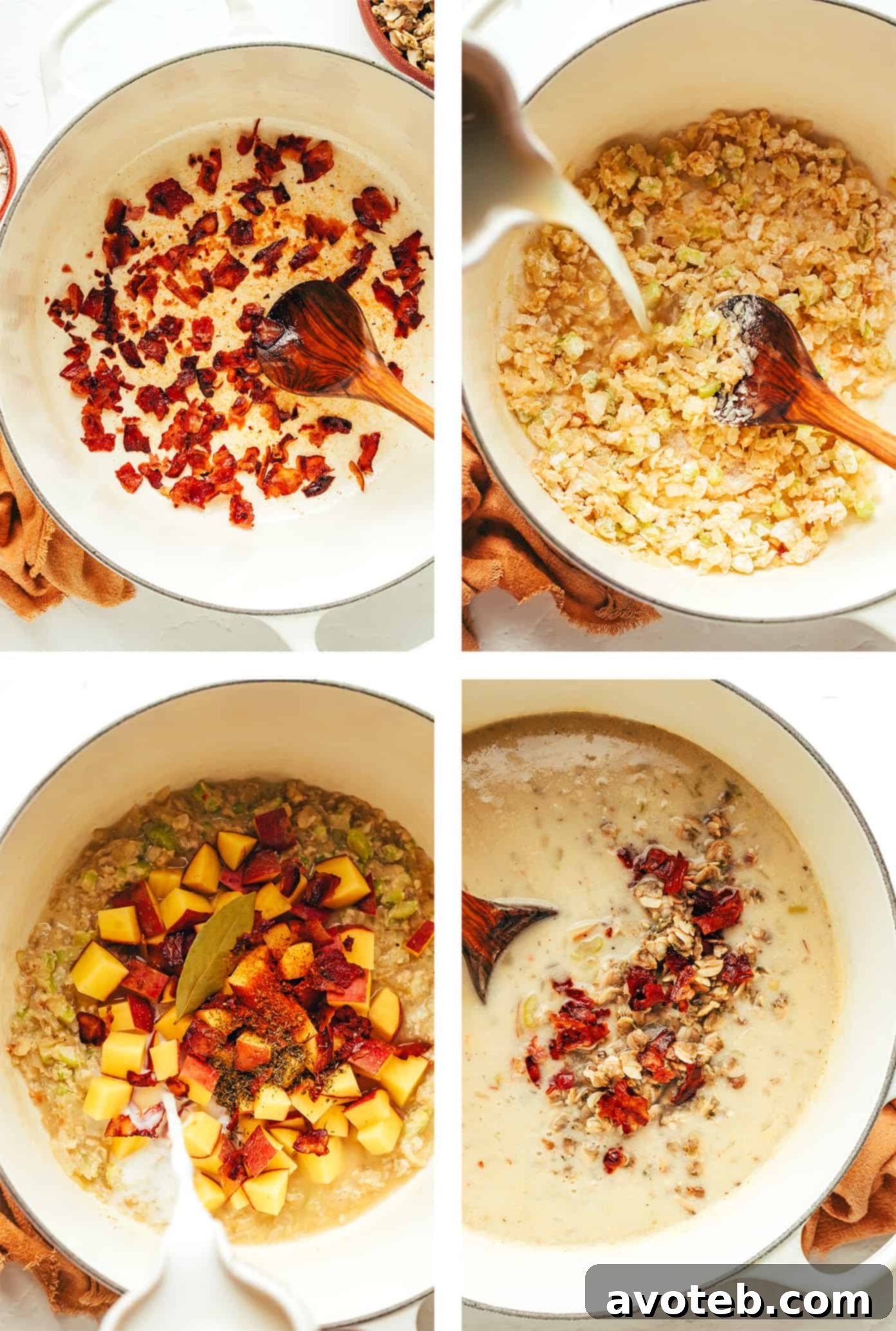
New England Clam Chowder is more than just a soup; it’s a staple of American culinary heritage, deeply rooted in the coastal traditions of the northeastern United States. Originating in the 18th century, this hearty seafood stew quickly became a beloved dish, cherished by fishermen and families alike for its warming properties and satisfying flavors. Traditionally made with clams, potatoes, onions, and milk or cream, it embodies the resourcefulness of early American settlers who utilized fresh local ingredients.
Over the centuries, countless variations have emerged, but the core essence of New England Clam Chowder remains – a thick, creamy, and incredibly flavorful broth brimming with tender clams and soft potatoes. Our recipe pays homage to this rich history while introducing contemporary tweaks to make it accessible and enjoyable for today’s health-conscious diners. It’s a dish that evokes memories of seaside towns, crisp ocean air, and cozy gatherings, making it a perfect comfort food for any season.
Crafting Your Perfect Bowl: Understanding the Ingredients for New England Clam Chowder
The magic of an exceptional New England Clam Chowder lies in the quality and balance of its ingredients. Here’s a detailed look at what you’ll need and why each component is crucial for achieving that perfect creamy, savory bowl:
- Bacon: We start with traditional bacon, which renders a beautiful fat that forms the flavorful base for our chowder. The crispy bacon bits are then reserved for a delightful garnish. If you prefer a lighter, leaner option, turkey bacon works wonderfully, though you might need to add a touch of olive oil or butter to sauté your vegetables.
- Veggies (Onion, Celery, Garlic): These aromatic vegetables are the trinity of flavor for our broth. Finely diced onion and celery provide a subtle sweetness and texture, while minced garlic adds a pungent depth that is essential to any great soup. Sautéing them in bacon fat (or an alternative) unlocks their full flavor profile.
- Flour: All-purpose flour is used to create a simple roux, which is key to thickening the chowder to that luxurious, creamy consistency. It also helps to bind the flavors together. For those looking to skip flour or opt for a gluten-free version, mashing or pureeing some of the cooked potatoes directly into the soup offers an excellent alternative thickener, adding creaminess and body naturally.
- Clam Juice: Don’t underestimate the power of bottled clam juice! This ingredient is a secret weapon for amplifying the clam-y flavor throughout the broth, ensuring every spoonful tastes authentically oceanic. It provides a robust foundation, making up for using canned clams.
- Milk: For a lighter chowder, we traditionally opt for 2% cow’s milk, which delivers creaminess without excessive richness. However, you can use any plain milk (whole milk for a richer chowder, or even a good quality unsweetened, unflavored non-dairy milk like oat milk for a dairy-free option) to achieve a similar consistency.
- Potatoes (Yukon Gold or Red Potatoes): The choice of potato is vital for texture. Yukon Gold potatoes are wonderfully creamy and hold their shape well, while red potatoes offer a slightly firmer texture that resists becoming mushy. Dicing them uniformly ensures even cooking and tender bites throughout the chowder.
- Seasonings (Bay Leaf, Old Bay Seasoning, Dried Thyme, Salt, and Pepper): These spices orchestrate the chowder’s distinctive taste. A bay leaf infuses a subtle herbal note, while Old Bay seasoning provides that classic, slightly spicy, savory blend synonymous with seafood dishes. Dried thyme adds an earthy warmth. And, of course, a generous hand with sea salt and freshly cracked black pepper balances and elevates all the flavors.
- Clams (Canned Minced Clams): For convenience and consistent results, canned minced clams (undrained, so you keep their flavorful juices!) are our go-to. They are tender and integrate seamlessly into the chowder, providing that essential clam texture and taste.
Beyond the core ingredients, don’t forget the toppings! I love enhancing my bowl with a sprinkle of fresh chives or vibrant green onions, a dash of my favorite hot sauce for a gentle kick, or a handful of crispy oyster crackers. And for the ultimate New England experience, serving your chowder with a warm, crusty slice of bread or in a hollowed-out bread bowl is an absolute must – perfect for soaking up every last drop of that creamy goodness.
Mastering the Art of Homemade Clam Chowder: A Step-by-Step Guide
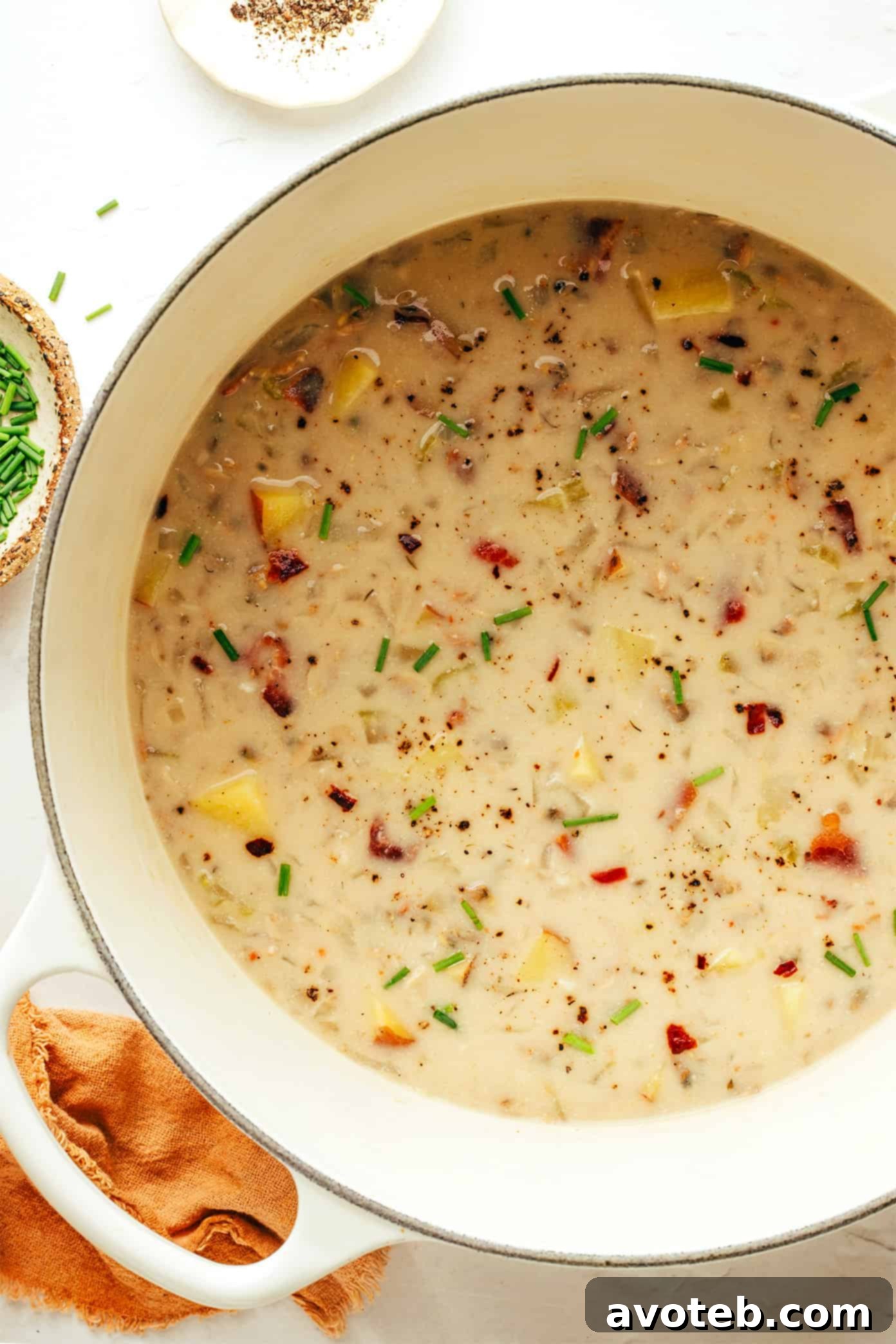
Crafting this healthy and delectable clam chowder is a straightforward process that yields incredibly rewarding results. Follow these steps for a perfect bowl every time:
- Prepare and Cook the Bacon: Begin by dicing your bacon into small, even pieces. Heat a large, sturdy stockpot over medium-high heat. Add the diced bacon and cook it until it’s wonderfully crispy and most of its fat has rendered. This usually takes about 5-7 minutes. Once cooked, use a slotted spoon to transfer the crispy bacon bits to a plate lined with paper towels, allowing them to drain. Crucially, reserve about 2 tablespoons of the rich bacon grease in the pot – this forms the flavor foundation for our chowder. Discard any excess grease, or if you skipped bacon, add 2 tablespoons of butter or olive oil.
- Sauté the Aromatics: Reduce the heat to medium. Add your diced onion to the reserved bacon grease (or butter/oil) and sauté for about 5 minutes, stirring occasionally, until it becomes translucent and softened. Next, add the diced celery and minced garlic to the pot. Continue to sauté for another minute, stirring frequently, until the garlic is fragrant but not browned, and the celery has slightly softened. This step builds a deep aromatic base for the soup.
- Build the Flavor Base (with or without flour): If you’re using flour to thicken, sprinkle 3 tablespoons of all-purpose flour over the sautéed vegetables. Stir continuously for about 1-2 minutes to cook out the raw flour taste and create a roux. This will thicken your soup beautifully. If you’re going gluten-free or prefer not to use flour, skip this step entirely; you’ll thicken the soup later by mashing potatoes. Now, pour in the entire bottle of clam juice and stir well, scraping up any browned bits from the bottom of the pot. Gradually add the milk, followed by the diced potatoes, bay leaf, Old Bay seasoning, and dried thyme. Stir everything until it’s well combined.
- Simmer to Perfection: Increase the heat slightly to bring the mixture to a gentle simmer, but be careful not to let it boil vigorously, as this can cause the milk to curdle. Once simmering, reduce the heat to medium-low, cover the pot, and let the soup cook for about 10-15 minutes, or until the potatoes are fork-tender. It’s essential to stir the soup every few minutes during this phase to prevent the potatoes or flour from sticking and burning at the bottom of the pot.
- Finish with Clams and Season: Once the potatoes are perfectly tender, remove and discard the bay leaf. Carefully stir in the two cans of minced clams, including their juices – this adds another layer of authentic clam flavor and richness. Add about half of your crispy bacon bits to the soup at this stage, reserving the rest for garnish. Give the chowder a good stir, then taste and adjust the seasoning with sea salt and freshly cracked black pepper as needed. This is your chance to fine-tune the flavor profile to your preference.
- Serve and Savor: Ladle the warm clam chowder into bowls. Garnish each serving with the remaining crispy bacon bits and any other desired toppings, such as fresh chopped chives, green onions, or a dash of hot sauce. Serve immediately with crusty bread or oyster crackers, and enjoy this comforting, homemade delight! Leftovers can be stored in an airtight container in the refrigerator for up to 3 days.
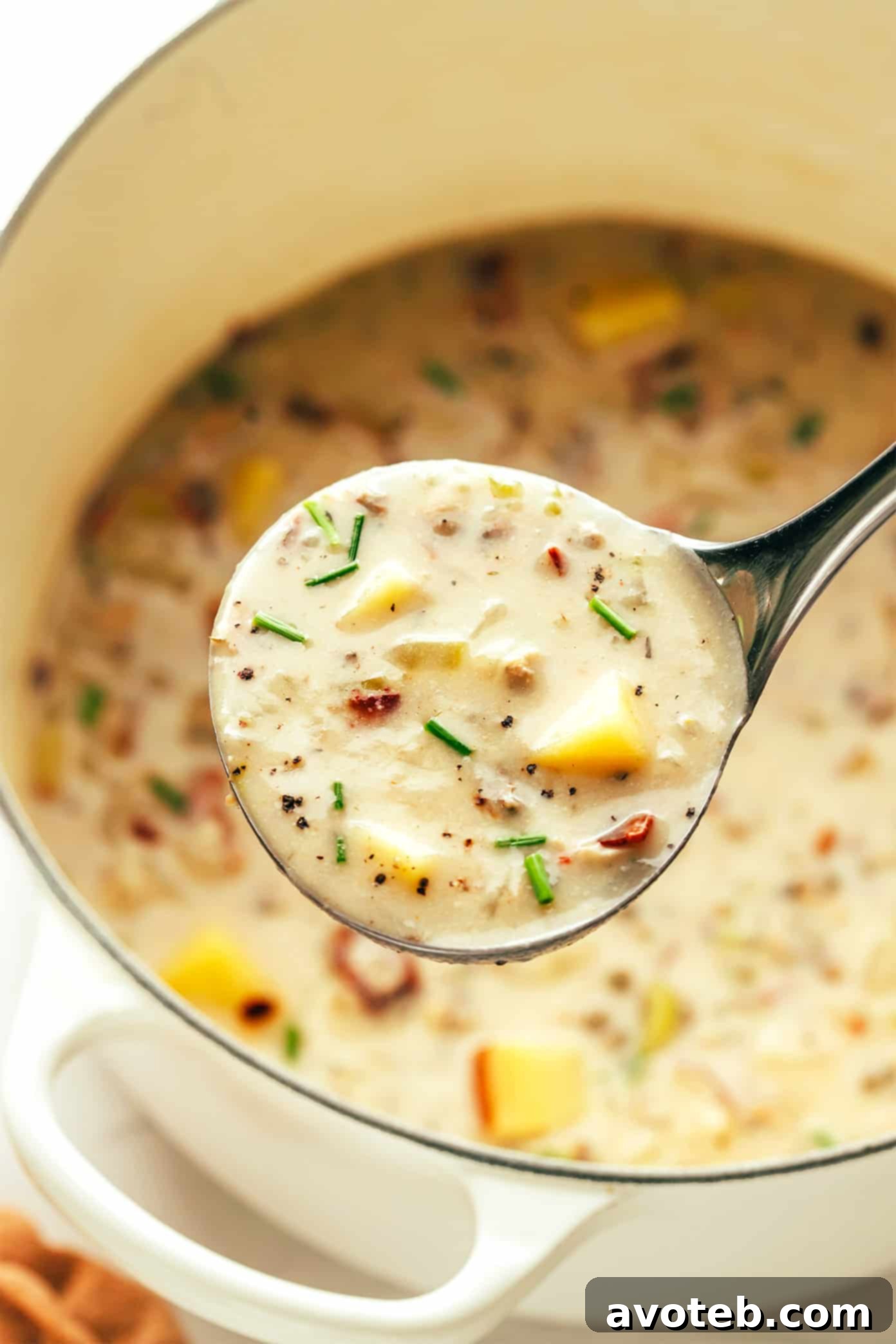
Customizing Your Chowder: Delicious Variations and Dietary Tweaks
One of the best things about homemade clam chowder is its versatility! Feel free to adapt this recipe to suit your dietary needs or flavor preferences. Here are some fantastic ways to customize your creamy chowder:
- Omit the Bacon for a Pescatarian Delight: If you’re keeping this recipe pescetarian or simply prefer to skip the bacon, you absolutely can! Instead of bacon grease, you’ll need to add about 2-3 tablespoons of unsalted butter or a neutral oil (like olive oil or avocado oil) to sauté your vegetables. To ensure you don’t miss out on a layer of savory depth, I highly recommend increasing the Old Bay seasoning slightly or adding a pinch of smoked paprika for a smoky, umami flavor.
- Go Gluten-Free with Ease: Making this chowder gluten-free is incredibly simple. Just omit the all-purpose flour entirely. To achieve the desired thick, creamy texture, you have a couple of options: either mash about half of the cooked potatoes directly into the soup with a fork or potato masher, or carefully blend a portion of the soup (about 1-2 cups) using an immersion blender until smooth, then return it to the pot. Both methods use the potatoes’ natural starches to thicken the chowder beautifully.
- Spice It Up: For those who love a bit of heat, transforming this into a spicy clam chowder is a fantastic idea. You can add a dash or two of your favorite hot sauce directly into the pot during the final seasoning step, or offer it as a table-side garnish. A pinch of red pepper flakes added with the other seasonings will also infuse a subtle warmth throughout the soup.
- Explore Different Seasoning Profiles: If Old Bay seasoning isn’t readily available in your local grocery store, or if you’re keen to experiment with different flavor profiles, there are great alternatives. Cajun or Creole seasoning can be used as a direct substitute, lending a bolder, spicier, and more complex taste. For a milder, more herb-focused chowder, Italian seasoning provides a lovely blend of oregano, basil, and thyme. Remember to taste and adjust the quantity to your liking.
- Add More Seafood or Veggies: Elevate your chowder by adding extra seafood like small shrimp, scallops, or even chunks of white fish (like cod or haddock) during the last few minutes of simmering. For added texture and nutrients, consider stirring in a cup of fresh or frozen corn kernels along with the clams.
- Dairy-Free Options: While this recipe uses cow’s milk, you can easily adapt it to be dairy-free. Simply substitute regular milk with an unsweetened, unflavored dairy-free milk alternative such as oat milk, cashew milk, or even full-fat canned coconut milk for extra richness (though coconut milk will impart a subtle flavor). Ensure your butter substitute is also dairy-free if you’re omitting bacon.
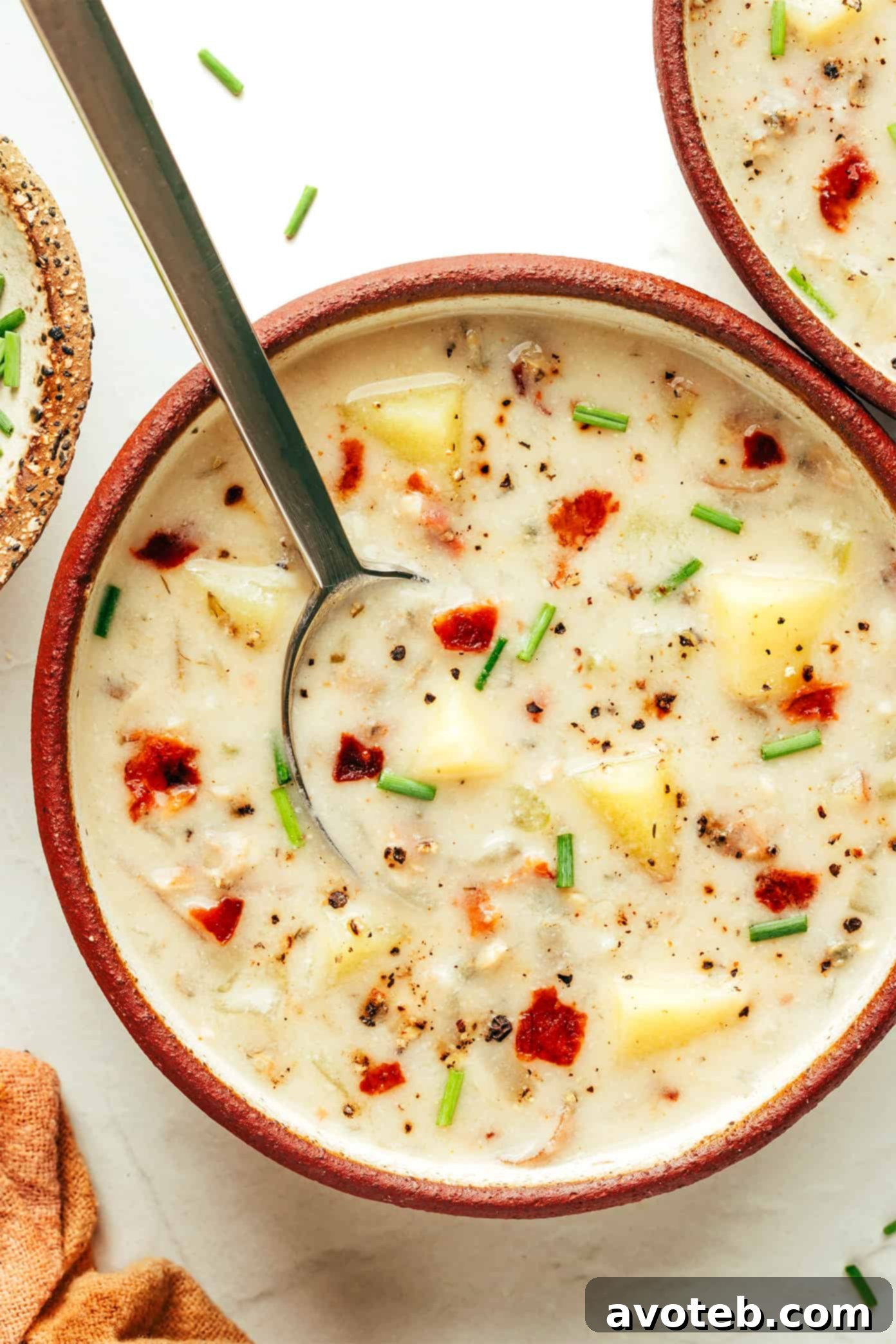
Storage, Freezing, and Reheating Tips for Clam Chowder
Enjoying your homemade New England Clam Chowder doesn’t have to be a one-time event! With proper storage, you can savor its deliciousness for days, or even weeks. Here’s how:
Storing Leftovers
Allow the clam chowder to cool completely at room temperature for no more than two hours. Once cooled, transfer it to an airtight container. It can be safely stored in the refrigerator for up to 3 days. This ensures its freshness and prevents bacterial growth.
Freezing Clam Chowder
While many cream-based soups can sometimes separate or become grainy when frozen and thawed, clam chowder with a flour-based roux generally freezes surprisingly well. If you plan to freeze your chowder, it’s best to freeze it before adding the fresh clams, as they can sometimes become a bit rubbery after freezing. If freezing the finished chowder:
- Cool Completely: Ensure the chowder is entirely cool before freezing.
- Airtight Containers: Transfer to freezer-safe containers or heavy-duty freezer bags, leaving about an inch of headspace to allow for expansion.
- Freeze Flat (for bags): If using freezer bags, lay them flat for quicker freezing and easier storage.
- Duration: It can be stored in the freezer for up to 2-3 months.
Reheating Frozen Chowder
When you’re ready to enjoy your frozen chowder:
- Thaw: For best results, thaw the chowder overnight in the refrigerator.
- Reheat on Stovetop: Gently reheat the thawed chowder in a saucepan over medium-low heat, stirring frequently. Avoid high heat, as this can cause the milk to curdle or the chowder to stick to the bottom of the pan.
- Adjust Consistency: If the chowder has thickened too much during reheating, you can thin it out with a splash of milk, clam juice, or even a bit of water until it reaches your desired consistency.
- Add Freshness: If you froze the chowder without clams, add them during the last few minutes of reheating. Garnish with fresh toppings and bacon bits to restore its vibrant flavors.
Frequently Asked Questions About Clam Chowder
- Can I use fresh clams instead of canned?
- Absolutely! Using fresh clams will elevate the flavor even further. You’ll need about 2-3 pounds of fresh clams (like littlenecks or cherrystones). Steam them open in a pot with a little water or white wine, then remove the meat and chop it. Filter the steaming liquid and use it in place of or in addition to bottled clam juice for an intense clam flavor. Add the chopped fresh clams at the very end of cooking, just before serving, to keep them tender.
- What’s the best type of potato for clam chowder?
- Yukon Gold or red potatoes are generally preferred for clam chowder. Yukon Golds offer a buttery texture and hold their shape well, contributing to the chowder’s creaminess. Red potatoes also maintain their structure and add a slight firmness. Avoid starchy potatoes like Russets, as they can break down too much and make the chowder gummy.
- How do I prevent the milk from curdling in my chowder?
- Several tips can help: 1) Avoid bringing the chowder to a rolling boil once milk is added; simmer gently over low heat. 2) Stir frequently to prevent the bottom from scorching and ensure even heating. 3) Use full-fat or 2% milk, as skim milk is more prone to curdling. 4) If using very cold milk, temper it by slowly whisking in some of the hot soup base before adding it to the main pot.
- Can I make this clam chowder ahead of time?
- Yes, clam chowder often tastes even better the next day as the flavors have more time to meld. Follow the storage instructions above. When reheating, do so gently over low heat, adding a splash of milk or clam juice if it’s too thick.
More Creamy Soup Recipes To Enjoy
If you’re a fan of rich, comforting soups, then you’ll love exploring these other creamy delights. Perfect for chilly evenings or a satisfying meal, these recipes are sure to become new favorites:
- Three Potato Soup: A wonderfully simple yet incredibly flavorful soup that celebrates the humble potato in three delicious ways.
- Lemony Orzo Chickpea Soup: A vibrant and surprisingly creamy soup, packed with pasta, chickpeas, and a bright lemon zest.
- Creamy White Chicken Chili: A comforting classic, this chili is rich, savory, and full of tender chicken and beans in a luscious creamy broth.
- Cozy Autumn Wild Rice Soup: Perfect for fall, this hearty soup features earthy wild rice, tender vegetables, and a creamy broth.
- Zuppa Toscana (Olive Garden Copycat): Recreate the famous Olive Garden favorite at home with this rich, spicy, and incredibly satisfying soup.
Print Recipe Card
Lighter New England Clam Chowder
Author: Ali
Prep Time: 15 minutes
Cook Time: 30 minutes
Total Time: 45 minutes
Yield: 6 –8 servings 1x
Description
This delicious New England Clam Chowder recipe is lightened up a bit with a few simple tweaks, yet still just as creamy, hearty and delicious as ever!
Ingredients
Scale
- 4 slices bacon, diced
- 1 medium onion, diced
- 1 stalk celery, ends trimmed and diced
- 2 cloves garlic, minced
- 3 tablespoons all-purpose flour
- 1 (8 ounce) bottle clam juice
- 4 cups plain milk (I use 2% milk)
- 1 1/2 pounds Yukon gold or red potatoes, diced
- 1 bay leaf
- 1 teaspoon Old Bay seasoning
- 1/2 teaspoon dried thyme
- 2 (7-ounce) cans minced clams (not drained, keep the juice)
- sea salt and freshly-cracked black pepper
- optional garnish: chopped fresh chives or green onions, dash of hot sauce
Instructions
- Heat a large stockpot over medium-high heat. Add diced bacon and cook until crispy, stirring occasionally. Transfer the bacon to a separate plate using a slotted spoon, reserving about 2 tablespoons of bacon grease in the stockpot. (Discard any extra grease, or you can substitute butter in place of the 2 tablespoons of bacon grease.)
- Add onion and sauté for 5 minutes, stirring occasionally. Add celery and garlic, and sauté for an additional minute, stirring occasionally. Add flour* and stir until combined. Sauté for an additional minute to cook the flour, stirring occasionally. Add in the clam juice and stir until combined. Add in the milk, potatoes, bay leaf, Old Bay, thyme, half of the bacon bits and stir until combined. Continue cooking until the mixture reaches a simmer, stirring occasionally.
- Reduce heat to medium-low, cover, and simmer for about 10-15 minutes or until the potatoes are soft, stirring every few minutes so that the bottom does not burn.
- Once the potatoes have softened, stir in the clams and half of the cooked bacon. Remove the bay leaf. Taste the soup, and then season with salt and pepper as needed.
- Serve warm, garnished with the remaining bacon bits and any other desired toppings. Or store in a sealed container and refrigerate for up to 3 days.
Notes
*Feel free to omit the flour and 1 tablespoon of the bacon grease if you would like to lighten this soup up a bit. And instead, to thicken the soup, simply mash or puree some of the potatoes before adding in the clams.