
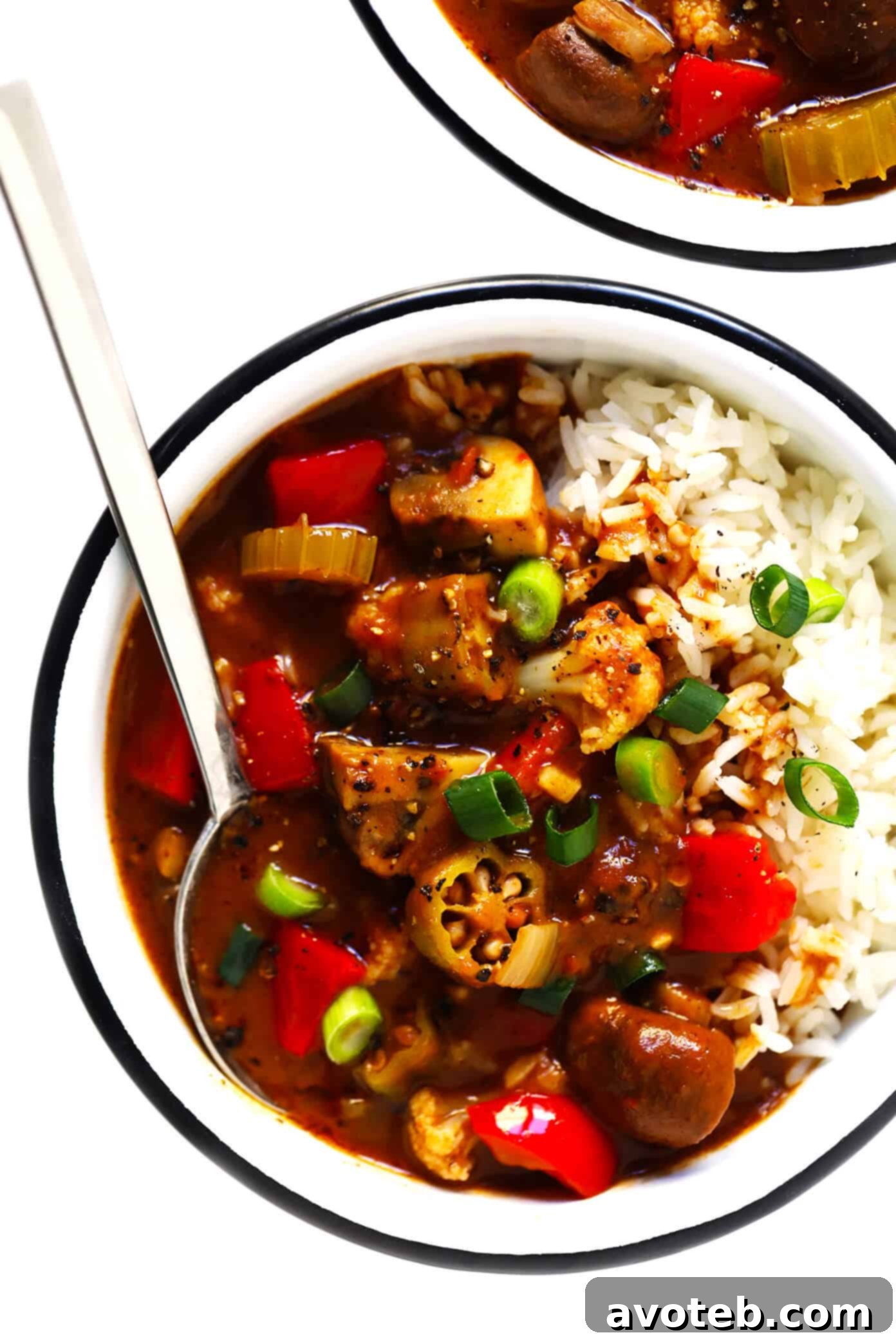
This Vegetarian Gumbo recipe is easy to make, loaded up with tons of savory veggies, and tastes SO rich and delicious. It’s the perfect plant-based rendition of a classic Creole favorite.
As the vibrant energy of Mardi Gras season approaches, it brings with it an irresistible craving for one of the most iconic and beloved dishes of Creole and Cajun cuisine: Gumbo. While I often gravitate towards quick and easy weeknight soups, this time of year calls for a delightful exception. There’s a special joy in dedicating quality time to the stove, patiently stirring a roux until it transforms into that perfectly dark, rich, and nutty foundation that defines an exceptional pot of gumbo. True gumbo is a labor of love, and every moment spent crafting it is undeniably worth it. There are no shortcuts to achieving its authentic depth of flavor, and honestly, you wouldn’t want them!
For years, my Mardi Gras tradition revolved around a cherished classic gumbo recipe, brimming with zesty Andouille sausage and tender chicken. However, with a vegetarian husband now in the house, I decided this year was the perfect opportunity to venture into the realm of plant-based cooking. My goal was to create a vegetarian gumbo that could stand proudly alongside its traditional counterpart, swapping out the meat for an abundance of flavorful vegetables. I admit, there was a slight apprehension that without the smoky kick of Andouille, some of the gumbo’s inherent magic might be lost. Yet, to our immense and delicious surprise, the plant-based version proved to be absolutely fantastic!
Ultimately, the true star of any gumbo is its famous Creole-seasoned broth, anchored by that signature dark roux. When this robust base is combined with a generous medley of hearty vegetables, elevated with just the right amount of cayenne pepper to suit your palate, and served over fluffy rice or wholesome quinoa with a sprinkle of crisp green onions, you discover a dish that is truly extraordinary. This vegetarian gumbo recipe is an undeniable winner, delivering all the complex flavors and comforting warmth you expect. While it does require a bit of extra time for chopping (or you can opt for pre-chopped frozen veggies for convenience) and a dedicated 20 minutes for perfecting the roux, the cooking process itself is straightforward. Don’t be intimidated by the roux; I’ll guide you through each step. This recipe is also incredibly versatile, allowing you to customize it with whatever vegetables you have on hand, and it can easily be adapted to be completely vegan. Before you know it, a fragrant, rich pot of vegetarian gumbo will be simmering on your stove, ready to delight for Mardi Gras or any special occasion.
Let’s dive in and create some incredible gumbo!
Crafting the Perfect Vegetarian Gumbo: Essential Ingredients
To embark on this culinary journey and create a truly memorable vegetarian gumbo, gather the following high-quality ingredients. Each plays a crucial role in building the layers of flavor that make this dish so special:
- Butter and Flour (for the Roux): The roux is the soul of gumbo, and I particularly love the rich flavor that butter imparts. For those seeking a vegan option, any neutral-flavored oil (such as vegetable, canola, or grapeseed) can be substituted for butter without compromising the roux’s thickening power.
- “The Holy Trinity”: A cornerstone of Cajun and Creole cooking, this aromatic trio consists of finely diced bell peppers (red, green, or a mix for color), crisp celery stalks, and sweet, pungent onions. These vegetables build a foundational layer of flavor that is indispensable for gumbo.
- Okra: Whether fresh or frozen, okra is a traditional gumbo ingredient that acts as a natural thickener and contributes a unique, earthy flavor. While some prefer to omit it, I highly recommend including it for an authentic experience.
- Garlic: A generous amount of minced garlic is essential for its pungent aroma and depth of flavor, complementing the Holy Trinity beautifully.
- Vegetable Stock: This serves as the liquid base for our flavorful broth, providing a savory foundation for the vegetables and spices. Opt for a high-quality vegetable stock for the best results.
- Extra Hearty Veggies: To make this gumbo truly satisfying and nutrient-rich, I’ve included an abundance of cauliflower florets and diced mushrooms (baby bella or button varieties work wonderfully). Feel free to customize this with your favorite vegetables, such as zucchini, corn, sweet potatoes, or even spinach.
- Diced Tomatoes: Fire-roasted diced tomatoes are a fantastic choice for their smoky depth, which adds another dimension of flavor. However, regular canned diced tomatoes will also work perfectly well.
- Authentic Seasoning Blend: The spice profile is key. You’ll need Creole or Cajun seasoning (note that Creole seasoning tends to be milder with more herbs, while Cajun is spicier and earthier), dried thyme, cayenne pepper (for heat), a bay leaf, and fine sea salt and freshly-cracked black pepper to taste. Always feel empowered to adjust these seasonings to your preference. If you’re sensitive to spice, begin with half the suggested amount of Cajun/Creole seasoning and cayenne, then add more as desired.
- Fresh Green Onions: Thinly sliced green onions are not just a garnish; they add a fresh, crisp, and vibrant finish to a hot bowl of gumbo, cutting through the richness beautifully.
Mastering the Roux: The Soul of Your Gumbo
Before we delve into the full gumbo preparation, let’s dedicate some serious attention to the most critical and flavorful first step: mastering the roux. This is where the magic truly begins.
A roux (pronounced “roo”) is a fundamental thickening agent in many cuisines, simply a cooked mixture of flour and fat. For Cajun and Creole cooking, particularly gumbo, the roux is cooked until it reaches a deep, dark, chocolatey brown hue. This extended cooking process, though requiring patience and constant stirring, is absolutely worth every minute. A dark roux isn’t just a thickener; it imparts an incredible, deep, nutty, and toasted flavor to the soup, along with a velvety, luxurious texture that is characteristic of authentic gumbo.
Making a dark roux is not inherently difficult, but it demands your undivided attention. Multitasking is the enemy of a perfect roux, as it can burn quickly if neglected. Therefore, ensure all your vegetables are chopped, and all other ingredients are prepped and laid out before you even begin. Then, you are ready to create your magnificent roux:
- Melt the Fat (Butter or Oil): In a large, heavy-bottomed pot or Dutch oven (which distributes heat evenly), melt the butter over medium-high heat. If using oil for a vegan version, heat it until shimmering.
- Incorporate the Flour: Once the fat is melted and hot, gradually add the all-purpose flour. Using a sturdy wooden spoon or a spatula with a flat edge (which helps scrape the bottom of the pan effectively), stir the mixture constantly until it forms a smooth paste.
- Patiently Cook and Darken the Roux: Continue cooking the roux, stirring continuously and scraping the bottom of the pot to prevent sticking and burning. The roux will progressively darken through several stages: it will start as a pale “blonde” roux, then evolve to the color of peanut butter, then a copper penny, and finally, our desired endpoint – a rich milk-chocolate shade. This entire process can take anywhere from 15 to 25 minutes, depending on your heat and pot. The key is steady, consistent stirring.
- Immediately Add the Aromatics: The moment your roux reaches the desired dark hue, swiftly add the chopped “Holy Trinity” vegetables (bell peppers, celery, and onions), okra, and minced garlic. The cool vegetables will stop the roux from continuing to cook and burn, effectively locking in its perfect flavor and color. Proceed to the next steps for completing your gumbo.
And now, a few crucial tips to ensure your roux is a resounding success:
- The Right Utensil: A wooden spoon, especially one with a flat edge, or a heat-resistant silicone spatula, is ideal for making a roux. Its design allows you to effectively scrape the bottom and corners of the pot, preventing flour from sticking and burning.
- The Art of “Constant Stirring”: This isn’t just a suggestion; it’s a command. In the initial, lighter stages of the roux, stirring every 15-30 seconds might suffice. However, as the roux darkens and the flour particles toast, they become more prone to burning. In the later stages, you should be stirring almost constantly, slowly but surely, to ensure even cooking and prevent scorching.
- Trust Your Senses: Your eyes and nose are your best guides. If you notice any signs of the roux cooking too rapidly, or detect even a faint hint of a burnt smell, immediately reduce the heat. Sometimes, towards the end of the cooking process, turning the heat down to medium can help slow things down and give you more control.
- If It Burns, Start Over: This is a non-negotiable rule. If your roux accidentally burns, even slightly, it will impart a bitter, acrid taste to your entire gumbo. Unfortunately, there’s no salvaging it. It’s best to discard it, clean your pot, and begin anew. Following the tips above should help prevent this scenario.
Assembling Your Delicious Vegetarian Gumbo: Step-by-Step
With your magnificent roux prepared, the rest of the gumbo-making process flows smoothly. Here’s the complete guide to bringing your flavorful gumbo to life:
- Prepare Your Dark Roux: As detailed in the previous section, dedicate your attention to creating a perfectly dark, milk-chocolate colored roux. This is the foundation of your gumbo’s flavor.
- Sauté the Aromatics: The instant your roux reaches its desired hue, immediately stir in the “Holy Trinity” (bell peppers, celery, onion), along with the okra and minced garlic. Continue to cook, stirring occasionally (every 10-15 seconds), for about 5 minutes, or until these vegetables have softened and their aromas have melded beautifully with the roux.
- Gradually Incorporate the Stock: Begin adding the vegetable stock, about 1 cup at a time. Stir continuously after each addition, ensuring the broth combines smoothly with the roux, preventing any lumps. Continue until all the stock is incorporated and you have a smooth, rich liquid base.
- Add Remaining Ingredients: Stir in the rest of your chosen vegetables (cauliflower, mushrooms, etc.), the fire-roasted diced tomatoes, the Creole or Cajun seasoning, dried thyme, cayenne, and the bay leaf. Mix everything together until well combined.
- Simmer to Perfection: Bring the soup to a gentle simmer. Once simmering, reduce the heat slightly to maintain a steady, low simmer. Continue cooking for another 5-10 minutes, or until all the vegetables reach your desired level of tenderness. The longer it simmers, the more the flavors will deepen and meld.
- Taste and Adjust Seasoning: Carefully taste the gumbo. This is your moment to adjust the flavors to perfection. Add more salt and freshly-cracked black pepper as needed. If you desire more heat or a stronger Creole flavor, stir in additional Cajun seasoning and/or cayenne pepper, a little at a time, until it’s just right for your palate.
- Serve Warm and Garnish: Ladle the steaming gumbo generously over a bed of fluffy white rice, wholesome quinoa, or even noodles, if preferred. Finish each bowl with a generous sprinkle of thinly-sliced fresh green onions. Serve immediately and savor every rich, comforting bite!
Creative Variations to Personalize Your Gumbo
This vegetarian gumbo recipe is wonderfully adaptable, allowing you to customize it based on your preferences or what you have on hand. Here are a few ideas to inspire your culinary creativity:
- Make it Fully Vegan: As mentioned, achieving a vegan gumbo is simple. Just substitute butter with any mild-flavored plant-based oil (like canola, vegetable, or grapeseed oil) for the roux. Ensure your vegetable stock is also vegan-certified.
- Experiment with Diverse Vegetables: Don’t limit yourself to the suggested veggies! This gumbo welcomes almost any addition. Consider adding diced sweet potatoes, zucchini, corn kernels, green beans, or even a handful of leafy greens like collards or spinach (add these towards the end of simmering).
- Introduce Plant-Based Protein: For an even heartier meal, you can incorporate vegetarian protein sources. Cooked black beans or kidney beans can be stirred in during the last few minutes of simmering. Alternatively, sautéed tempeh or smoked tofu, diced into small pieces, can add a satisfying texture and absorb the gumbo’s rich flavors.
- Add Seafood (for Pescatarians): If you enjoy seafood, this gumbo makes an excellent base for a pescatarian version. Swap the vegetable stock for a seafood stock and add shrimp, crawfish, or your favorite shellfish during the last 5 minutes of simmering, cooking just until they are opaque and tender.
- Omit the Okra (if Preferred): While traditional and recommended for its unique flavor and thickening properties, if okra is not to your taste, you can certainly leave it out. The roux will still provide ample thickening for a hearty gumbo.
Storing and Enjoying Leftover Gumbo
One of the best qualities of gumbo is that it often tastes even better the next day as the flavors continue to meld and deepen. It’s also an excellent candidate for meal prep! To store your delicious vegetarian gumbo, transfer it into a sealed, airtight container (or multiple containers for individual portions). Then, you have a couple of convenient options:
- Refrigerator Storage: Your gumbo will keep beautifully in the refrigerator for up to 3 days. Simply reheat gently on the stovetop or in the microwave until warmed through.
- Freezer Storage: For longer preservation, gumbo freezes exceptionally well. Store it in the freezer for up to 3 months. When ready to enjoy, thaw overnight in the refrigerator and then reheat thoroughly. The texture of some vegetables (like cauliflower) might soften slightly after freezing, but the flavor will remain robust.
Delightful Side Dish Pairings for Gumbo
A hearty bowl of gumbo is often a meal in itself, but a few complementary side dishes can elevate the dining experience and balance the rich flavors. Here are some recommendations:
- A Crisp Green Salad: A light, refreshing green salad, perhaps with a tangy vinaigrette, offers a wonderful contrast to the richness of the gumbo. My Everyday Salad would be a perfect choice.
- Sweet Corn on the Cob: There’s a cherished tradition of serving gumbo with sweet corn on the cob. Its natural sweetness and vibrant crunch provide a lovely counterpoint to the savory, spicy stew.
- Crusty Bread for Dipping: Whether it’s classic cornbread, a crusty French baguette, or any other robust loaf, bread is essential for soaking up every last drop of that incredible gumbo broth.
Enjoy this flavorful and comforting vegetarian gumbo, everyone!
Print

Vegetarian Gumbo
Prep Time: 20 minutes
Cook Time: 40 minutes
Total Time: 60 minutes
Yield: 8 -10 servings 1x
Description
This Vegetarian Gumbo recipe is easy to make, loaded up with tons of savory veggies, and tastes SO rich and delicious. I highly recommend prepping all of your ingredients before you begin to cook the gumbo, especially before starting the roux, so you can give it your full and undivided attention. This ensures the best flavor and texture!
Ingredients
Scale
- 1/2 cup butter (or a neutral oil for vegan)
- 2/3 cup all-purpose flour
- 2 medium red bell peppers, cored and diced
- 2 celery stalks, diced
- 1 small white onion, peeled and diced
- 1 cup fresh or frozen chopped okra
- 5 cloves garlic, minced
- 3 cups vegetable stock
- 1 small head of cauliflower, cored and chopped into florets
- 1 pound (16 ounces) baby bella or button mushrooms, diced
- 1 (14 ounce) can fire-roasted tomatoes (or regular diced tomatoes)
- 2 teaspoons Creole or Cajun seasoning
- 1/2 teaspoon dried thyme
- 1/2 teaspoon cayenne, or more/less to taste
- 1 bay leaf
- fine sea salt and freshly-cracked black pepper, to taste
- optional topping: thinly-sliced green onions
Instructions
- Prepare the Roux: In a large heavy-bottomed pot (such as a Dutch oven), heat the butter (or oil) over medium-high heat until completely melted. Whisk in the flour until it forms a smooth paste. Continue to cook this mixture, stirring constantly with a wooden spoon or flat-edged spatula, for approximately 15-25 minutes, or until the roux achieves a rich, dark amber-brown color, resembling milk chocolate. Maintain a very close watch on the roux at all times, reducing the heat if it appears to be cooking too rapidly or if you detect even a faint hint of a burnt smell. Consistent stirring is crucial to prevent burning and ensure even browning.
- Sauté the Aromatics: The moment your roux reaches its desired dark shade, immediately add the diced bell peppers, celery, onion, chopped okra, and minced garlic to the pot. Stir vigorously until all the vegetables are well combined with the roux. Continue to cook, stirring frequently (every 10-15 seconds), for about 5 minutes, allowing the vegetables to soften and their flavors to begin merging with the deep notes of the roux.
- Build the Broth: Gradually pour in the vegetable stock, about 1 cup at a time, stirring constantly after each addition until the broth is completely smooth and free of any lumps. Once all the stock is incorporated, stir in the cauliflower florets, diced mushrooms, canned fire-roasted tomatoes, Creole or Cajun seasoning, dried thyme, cayenne, and the bay leaf. Mix everything thoroughly until well combined. Continue cooking until the soup reaches a gentle simmer.
- Simmer and Tenderize: Once simmering, reduce the heat to medium-low to maintain a gentle bubble. Allow the gumbo to continue simmering for another 5-10 minutes, or until all the vegetables are tender to your liking. The longer it simmers, the more developed and robust the flavors will become.
- Final Seasoning and Serving: Taste the gumbo carefully and adjust the seasoning as needed. Add fine sea salt, freshly-cracked black pepper, and extra Cajun seasoning or cayenne if you desire more heat or a stronger flavor profile. Serve the rich, hot gumbo generously over a bed of steamed rice, quinoa, or your preferred grain. Garnish each serving with a generous sprinkle of thinly-sliced fresh green onions for a vibrant finish. Alternatively, transfer any leftovers to a sealed container and refrigerate for up to 3 days, or freeze for up to 3 months for future enjoyment.
Notes
*For an even richer and creamier broth, consider stirring in an extra tablespoon or two of butter (or vegan butter) into the gumbo just before serving. This adds a luxurious finish that is absolutely delicious!
This post contains affiliate links.