
Quick and Flavorful Gochujang Lettuce Wraps: Your New Favorite Korean-Inspired Meal
Discover how to create an irresistibly delicious and healthy meal in just 20 minutes with these easy Gochujang Lettuce Wraps. Featuring a vibrant, 4-ingredient sesame Gochujang sauce and your choice of protein and fresh veggies, this recipe is perfect for any day of the week.
Unlock the Magic of Gochujang in Your Kitchen
Fellow food enthusiasts, have you had the pleasure of cooking with gochujang yet? If the answer is no, prepare to embark on a culinary adventure! This past year, the bold, spicy, savory, and subtly sweet Korean chile paste has become an absolute staple in my kitchen. Its unique flavor profile is a game-changer, transforming everyday meals into something extraordinary.
We regularly incorporate Gochujang into our cooking routines. It’s fantastic for whipping up quick Korean stir-fries, adding a kick to soups, elevating salad dressings, and enriching marinades. It’s also the secret ingredient in Barclay’s beloved spicy Korean noodles (a recipe I promise to share soon!). But most often, I find myself reaching for it to craft a super-simple Gochujang sauce specifically for lettuce wraps.
The beauty of this 4-ingredient Gochujang sauce lies in its simplicity and speed. It takes mere minutes to whisk together Gochujang paste, soy sauce, maple syrup, and toasted sesame oil. When this incredible sauce coats your chosen protein (be it beef, chicken, pork, shrimp, or tofu) and a medley of crunchy vegetables, you’re just under 30 minutes away from a batch of the most satisfying Korean lettuce wraps. They’re an ideal light meal or appetizer for any season, particularly refreshing in springtime. Plus, it’s an excellent recipe for utilizing leftover proteins or vegetables you might have in your fridge. Trust me on this: once you experience the delectable taste of this sesame Gochujang sauce, you’ll be tempted to put it on everything.
So, do yourself a favor: add a tub of Gochujang to your next grocery list, and let’s get ready to make some unforgettable lettuce wraps!
Understanding Gochujang: The Heart of Korean Flavor
Before we dive into the recipe, let’s take a moment to truly appreciate what gochujang paste actually is. Often hailed as the “spicy miso of Korean cooking,” gochujang is a fundamental fermented red chile paste in Korean cuisine. It typically comes in a thick, concentrated form, usually found in a tub or bottle. What sets it apart is its profoundly complex flavor profile, boasting a delightful balance of spiciness, savoriness, sweetness, and umami that can instantly enliven any dish.
During my recent visit to Korea, Gochujang was a ubiquitous presence, served alongside almost every meal. It’s the signature flavor behind many traditional Korean dishes, including the world-famous bibimbap. The fermentation process, which involves glutinous rice, fermented soybeans, and chili powder, contributes to its deep, nuanced taste, making it much more than just a spicy condiment. This unique fermentation also adds beneficial probiotics, making Gochujang not just delicious but also a healthy addition to your diet.
A word of caution: Gochujang does pack a significant punch, so if you’re sensitive to spicy food, start with a smaller amount and adjust to your preference. It’s worth noting that heat levels and specific ingredients can vary between brands. Don’t hesitate to do a little taste-testing to find the brand that best suits your palate. Thankfully, Gochujang is becoming increasingly available in the Asian sections of mainstream grocery stores across the United States. If you can’t find it locally, a visit to an Asian grocery store is highly recommended, or you can easily order it online. For a delicious option free of corn syrup, I personally recommend this brand of gochujang.
Crafting Your Korean Lettuce Wraps: Essential Ingredients
The beauty of this recipe lies in its adaptability, particularly when it comes to the filling. While the Gochujang sauce is the star, the rest of the ingredients are incredibly flexible, allowing you to customize your wraps to perfection. Here’s what you’ll need to assemble these delightful Korean lettuce wraps:
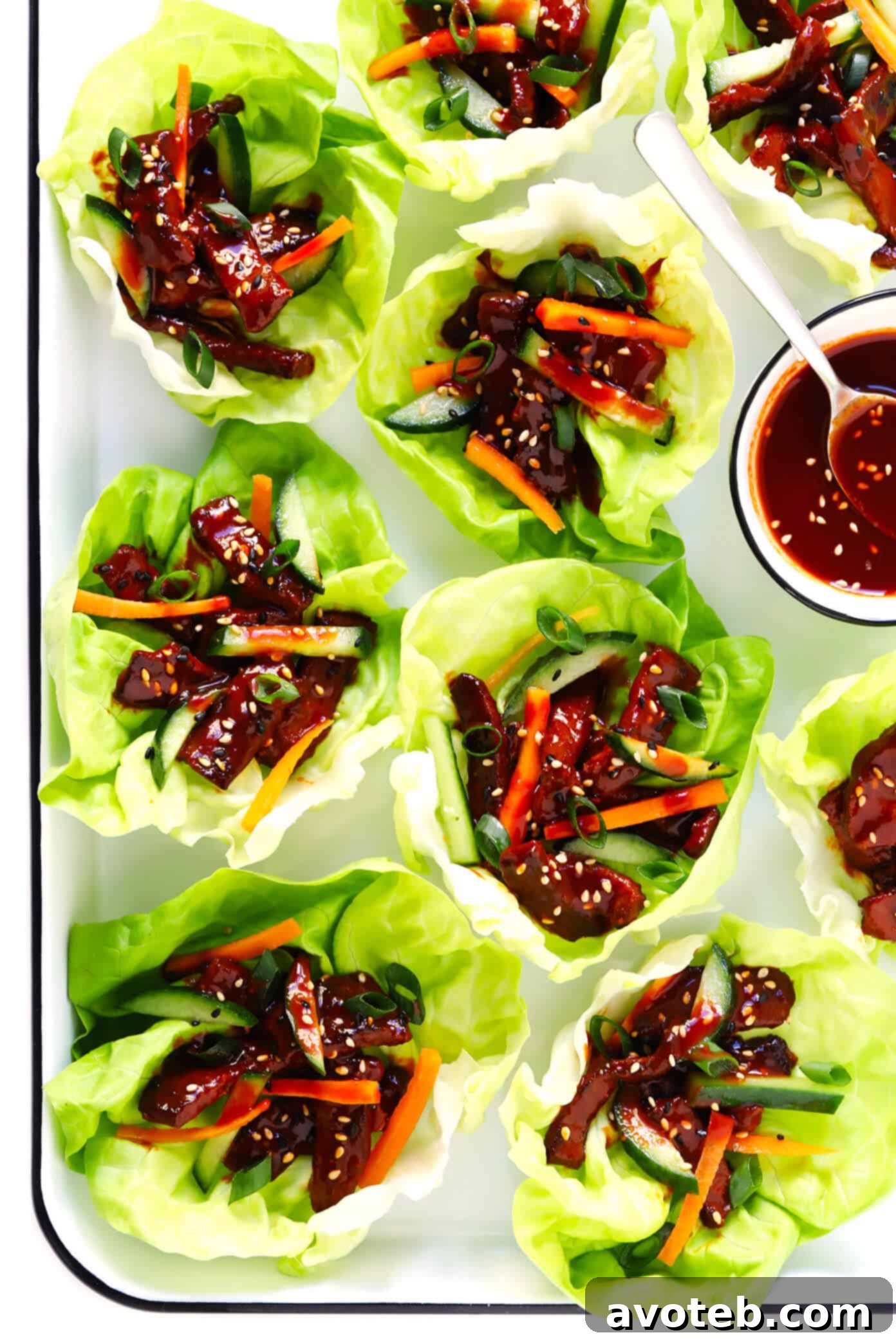
- Protein Powerhouse: For the photos accompanying this recipe, I opted for thinly-sliced steak, quickly stir-fried with a touch of garlic. However, the possibilities are endless. Ground beef, sliced or ground chicken, sliced pork chops or ground pork, succulent shrimp, or even firm tofu would all be equally delicious. The key is to cut your protein into bite-sized pieces for easy wrapping.
- Crisp Veggies: I kept things delightfully simple with thinly-sliced carrots and refreshing cucumber, offering a wonderful crunch and vibrant color. But feel free to explore other lettuce-wrap-friendly vegetables such as crisp radishes, crunchy bean sprouts, colorful bell peppers, or creamy avocado slices for added texture and flavor.
- Perfect Lettuce Cups: Butter (also known as bibb) lettuce leaves are my top choice for their soft texture and natural cup shape, making them ideal for holding the flavorful filling. Romaine lettuce offers a firmer crunch, while iceberg lettuce provides classic crispiness. Cabbage leaves or even endive can also serve as fantastic, sturdy alternatives.
- The Signature Sauce: Our incredible 4-ingredient Gochujang sauce is truly the star. It’s a simple blend of gochujang paste for its spicy-sweet depth, low-sodium soy sauce for umami, maple syrup (or honey or brown sugar) to balance the heat with sweetness, and a touch of toasted sesame oil for its distinct nutty aroma.
- Flavorful Garnishes: Toasted sesame seeds and thinly-sliced green onions add a final flourish of flavor and visual appeal to my wraps. But don’t shy away from experimenting with other garnishes that excite your palate, such as a sprinkle of fresh cilantro, a dash of red pepper flakes, or even some crushed peanuts for extra crunch.
Step-by-Step Guide: How to Make Gochujang Lettuce Wraps
Creating these delicious Korean Gochujang Lettuce Wraps is surprisingly simple. Follow these straightforward steps for a meal that’s both impressive and quick to prepare:
- Prepare Your Vegetables: Begin by washing and preparing your chosen vegetables. Shred, slice, or dice them into your preferred shapes and sizes. Uniformity can help with even distribution in the wraps. Set aside.
- Whisk Up the Gochujang Sauce: In a small bowl, combine the Gochujang paste, soy sauce, maple syrup (or your preferred sweetener), and toasted sesame oil. Whisk vigorously until all ingredients are thoroughly combined and the sauce is smooth. Taste the sauce and adjust the sweetness or spice level as desired, adding a little more maple syrup for sweetness or extra gochujang for more heat.
- Cook Your Protein: Season your chosen protein generously with sea salt and freshly-cracked black pepper. Heat one to two tablespoons of oil in a large sauté pan or wok over high heat. Once the pan is hot, add the protein along with thinly sliced or minced garlic. Stir-fry for 4-5 minutes, or until the protein is beautifully browned and cooked through. Cooking times will vary depending on the protein type. Remove the pan from the heat and immediately toss the cooked protein with half of the prepared Gochujang sauce, ensuring it is evenly coated.
- Assemble Your Lettuce Wraps: Arrange your clean lettuce leaves on a serving platter. Take a generous spoonful of the saucy protein and place it into the center of each lettuce cup. Top with a scattering of your prepared vegetables, such as cucumber and carrots. Drizzle a small amount of the remaining Gochujang sauce over the filling for an extra burst of flavor.
- Garnish and Serve: Finally, sprinkle your desired garnishes, like toasted sesame seeds and thinly-sliced green onions, over the assembled wraps. Serve your Quick Gochujang Lettuce Wraps immediately while they are still warm, allowing everyone to customize their own delicious bites!
Exciting Variations for Your Gochujang Lettuce Wraps
One of the best aspects of this Gochujang Lettuce Wraps recipe is its incredible versatility. Feel free to get creative and tailor them to your unique taste preferences or dietary needs. Here are a few ideas to inspire you:
- Amp Up the Spice: If you’re a fan of extra heat, don’t hesitate to add a little more Gochujang paste to your sauce. For an even more intense kick, stir in a pinch of crushed red pepper flakes.
- Tone Down the Heat: If you find the sauce a bit too fiery for your liking, it’s easy to temper the spice. Simply whisk in more of the other sauce ingredients, especially additional maple syrup or honey, to enhance the sweetness and balance the heat. A lesser-known trick is to stir in a tablespoon of ketchup; its vinegar and sugar content can surprisingly help to mellow and round out the flavors.
- Boost Heartiness with Grains: For a more substantial meal, consider adding a scoop of cooked rice (brown, white, or even sticky rice) or other grains like quinoa to your lettuce wraps. This adds a delightful chewiness and makes them even more filling.
- Introduce a Nutty Crunch: While not strictly traditional in Korean cuisine, I absolutely adore sprinkling some chopped roasted peanuts or cashews on top of my lettuce wraps. They provide a fantastic textural contrast and a pleasant nutty flavor.
- Add a Fruity Twist: For a refreshing, sweeter, and tangier spin, incorporate some finely chopped fruit. Diced apple, pear, or even seedless grapes can offer a wonderful counterpoint to the savory and spicy flavors of the Gochujang sauce.
- Experiment with Herbs: Fresh herbs like cilantro or mint can add another layer of freshness and aroma.
Explore More Korean Culinary Delights
If these Gochujang Lettuce Wraps have piqued your interest in Korean cuisine, there’s a whole world of delicious dishes waiting to be discovered! Here are a couple of my other favorite Korean recipes that you might enjoy:
- Japchae (Korean Noodle Stir-Fry): A colorful and flavorful dish featuring sweet potato starch noodles and a variety of vegetables and often meat.
- Korean Steak Kabobs: Marinated steak and vibrant vegetables threaded onto skewers and grilled to perfection.
Dive into these recipes to further explore the rich and diverse flavors of Korea!
Quick Gochujang Lettuce Wraps
- Prep Time: 10 minutes
- Cook Time: 10 minutes
- Total Time: 20 minutes
- Yield: 8 – 10 servings
Description
This quick Gochujang Lettuce Wraps recipe is easy to make in about 20 minutes with the most delicious 4-ingredient gochujang sauce, plus your choice of protein and veggies.
Ingredients
Lettuce Wraps Ingredients:
- 1 pound steak (or chicken, pork, shrimp or tofu*), sliced into bite-sized pieces
- sea salt and freshly-cracked black pepper
- 1 tablespoon oil
- 4 cloves garlic, thinly sliced or minced
- 8 – 10 butter lettuce leaves
- 1 cup thinly sliced English cucumber
- 1 cup shredded carrots
- optional garnishes: thinly-sliced green onions and toasted sesame seeds
Easy Gochujang Sauce Ingredients:
- 3 tablespoons gochujang paste
- 2 tablespoons low-sodium soy sauce
- 1 tablespoon maple syrup
- 1/2 teaspoon toasted sesame oil
Instructions
- Make the sauce. Whisk together all sauce ingredients in a small bowl until combined. Taste and add any extra maple syrup (to sweeten) or gochujang (for spice) if you would like.
- Cook the protein. Season the steak (or your preferred protein) with a few generous pinches of salt and pepper. Heat oil in a large sauté pan or wok over high heat. Add the steak and garlic and sauté for 4-5 minutes, stirring occasionally, until the steak is browned and tender. Remove pan from heat and stir in half of the gochujang sauce until it has evenly coated the steak.
- Assemble the lettuce wraps. Portion a spoonful of the saucy steak into each lettuce cup, topped with a few cucumbers and carrots, an extra small drizzle of the remaining sauce, and your desired garnishes.
- Serve warm. And enjoy!
Notes
Protein: Feel free to stir-fry 1 pound (more or less) of any of the following proteins. Cooking time will vary a bit according to whichever protein you choose, but just stir-fry until it is cooked through.
- Beef: Either steak (such as a flank steak or sirloin) or ground beef
- Chicken: Either boneless skinless chicken breasts or ground chicken
- Pork: Either boneless pork chops or ground pork
- Shrimp: Peeled and deveined
- Tofu: Extra-firm tofu
This post contains Amazon affiliate links.