
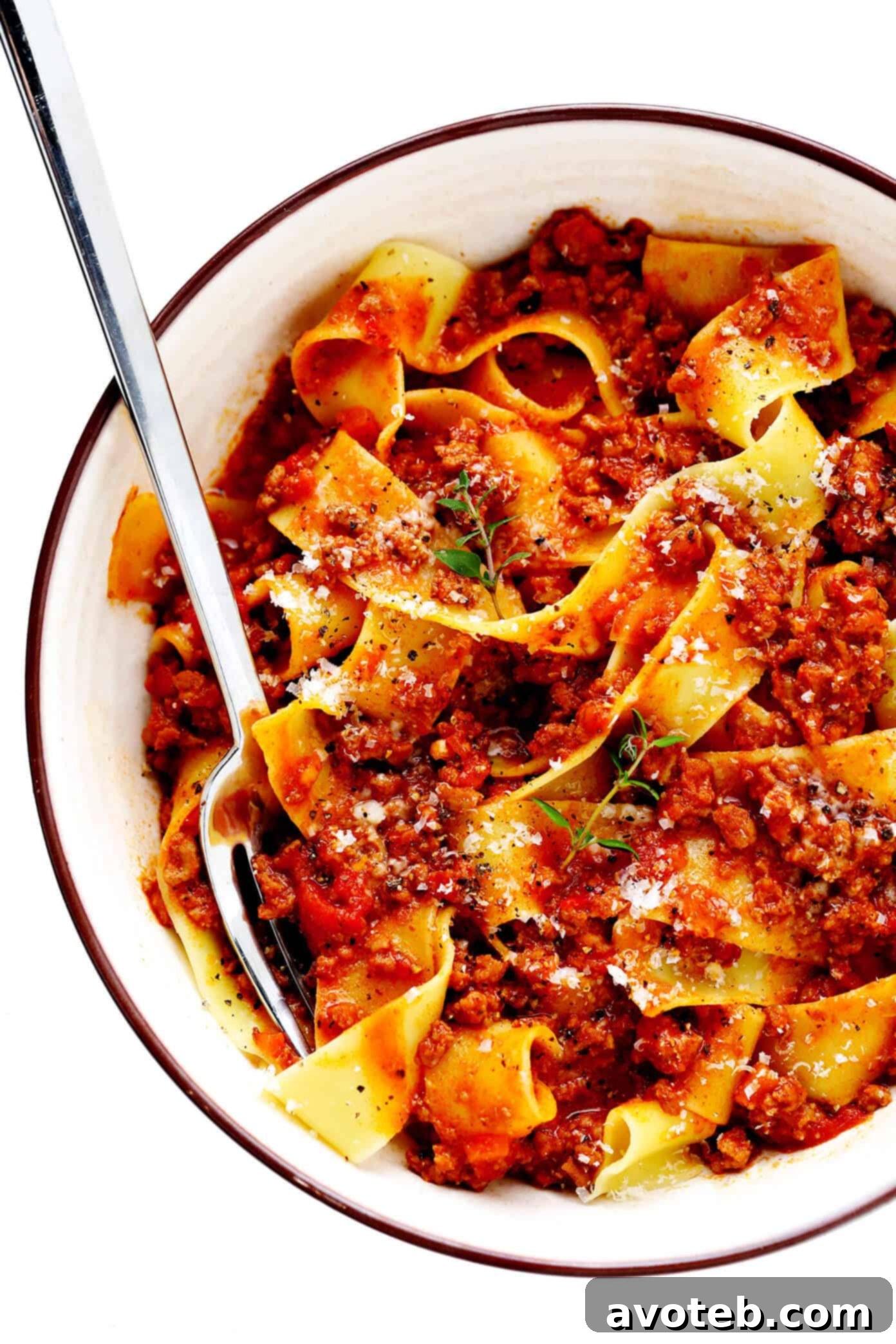
Experience the unparalleled richness of my all-time favorite Bolognese sauce. This deeply satisfying recipe features a slow-simmered, robust tomato base, a savory blend of tender meats and aromatic vegetables, all infused with the coziest garlicky herb seasonings. Perfectly paired with your favorite pasta, fluffy gnocchi, or even roasted eggplant, it promises a truly memorable meal.
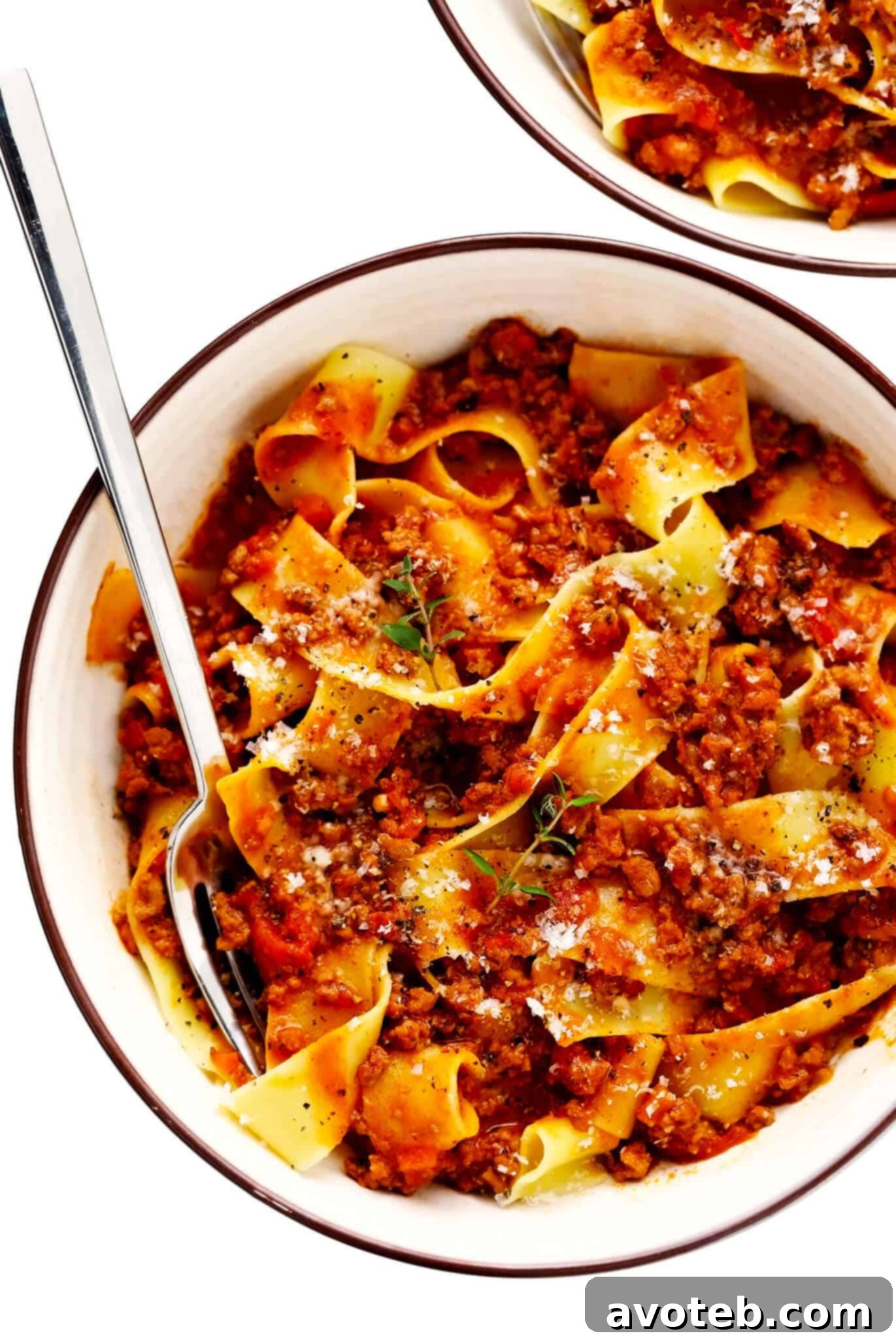
After sharing beloved recipes for classic marinara, spicy arrabbiata, creamy carbonara, cheesy cacio e pepe, and garlicky aglio e olio, it’s time to introduce another essential to our collection of classic Italian pasta sauces: my ultimate Bolognese recipe. This isn’t just any meat sauce; it’s a labor of love that transforms simple ingredients into an extraordinary culinary experience.
Over the years, my culinary journey has taken me through countless variations of Bolognese. From savoring authentic ragù alla bolognese during a trip to Bologna, Italy, to studying the masterful recipes of culinary legends like Marcella Hazan, Lidia Bastianich, and Massimo Bottura, I’ve developed a profound appreciation for this hearty Italian classic. I’ve experimented with non-traditional shortcuts, diverse seasonings, and various cooking methods, even sampling popular jarred versions from local markets. It’s clear that this rich meat sauce has captured the hearts of food lovers worldwide, whether in its traditional form or adapted interpretations.
The requests for a robust Bolognese recipe on Gimme Some Oven have been countless, confirming that many of you share this passion! While the certified traditional Bolognese recipe remains the authentic benchmark, my personal preference has evolved towards a more modern rendition. This recipe embraces a rich, slow-simmered tomato base – a departure from the traditional version, which surprisingly features minimal tomato. It incorporates an extra-flavorful variety of meats, including savory Italian sausage alongside traditional beef and pancetta. It also leans into my favorite Italian seasonings: abundant garlic, a medley of herbs, and a subtle yet crucial hint of anchovies, which, trust me, you won’t taste as “fishy,” but rather as a profound depth of flavor. Crucially, this recipe respects the time needed for the sauce to simmer and develop its unforgettable complexity – a process that simply cannot be rushed for truly exceptional results.
Crafting this Bolognese isn’t complicated, but it does demand a bit of extra love and, most importantly, time. I promise you, the reward is utterly worth it. So, dim the lights, put on some inspiring music, perhaps pour yourself a glass of wine, gather these carefully selected ingredients, and settle in for a few hours of creating the coziest, most richly-flavored, and undeniably delicious Bolognese sauce you’ll ever taste. Prepare for a culinary treat that will become a cherished favorite!
The Heart of Bolognese: Understanding the Sauce
This recipe provides a modern twist on an ancient classic, delivering a deep, complex flavor profile that will impress even the most discerning palates. It’s a sauce that transcends mere ingredients, becoming a celebration of patience and passion in the kitchen.
Bolognese Sauce | Frequently Asked Questions
Delving into the world of Bolognese often brings up questions about its origins, pronunciation, and preparation. Here, we address some common queries to help you appreciate this incredible sauce even more.
What is the correct “Bolognese” pronunciation?
In Italian, “Bolognese” is elegantly pronounced boh-loh-nyeh-zeh, with a soft “nyeh” sound similar to the “ny” in “canyon.” However, in English-speaking countries, it is often simplified to boh-loh-nyez for ease of pronunciation.
What exactly is Bolognese sauce?
The term “Bolognese” broadly refers to anything connected with Bologna, Italy. In the culinary context, it almost exclusively denotes Bologna’s celebrated meat sauce, locally known as “ragù.” A key distinction for travelers to Bologna is that restaurant menus will list “ragù,” not “Bolognese sauce.”
Traditionally, in Bologna, this ragù is slow-simmered with a select few foundational ingredients: beef, pancetta, an Italian soffritto (a finely diced mix of carrots, celery, and onion), a touch of tomato paste, milk, wine, and simple salt and pepper. The official ragù alla bolognese recipe, codified in 1982 by the Accademia Italiana della Cucina, notably omits garlic and most other herbs and seasonings. Many around the world are also surprised to learn it contains very little tomato compared to common adaptations.
Yet, as with many beloved classics, global culinary traditions have embraced and adapted Bolognese. Over the last century, it has been reinvented in countless ways. Outside of Italy, it’s frequently recognized as a rich, tomato-based meat sauce, often seasoned with garlic and a variety of herbs. Different meat combinations are used (or plant-based alternatives for vegan versions), and cooking times are sometimes shortened. While these modern interpretations may not adhere to strict “authentic” Bolognese standards, they are undoubtedly capable of being exceptionally delicious. This particular recipe offers a prime example of such a delectable modern take.
What pasta shape is traditionally used with Bolognese?
While “spaghetti Bolognese” is incredibly popular, especially in the United States, it’s not the traditional pairing in Italy. The rich, thick ragù of Bologna is far more commonly served with wide, flat pasta shapes like tagliatelle or pappardelle, which are ideal for capturing and holding the substantial sauce. Rigatoni, with its ridged surface, is another excellent traditional choice. This versatile sauce also forms the heart of other classic dishes, such as lasagna Bolognese or gnocchi Bolognese. However, the beauty of cooking is in personal preference, so feel free to pair this sauce with any pasta shape you adore – it will always be delicious.
Does Bolognese sauce truly require hours to cook?
Both my culinary experience and the guidelines from the Italian Academy emphatically say yes. While a quick 30-minute simmer will still yield a tasty sauce, extending the cooking time to at least two hours, or even longer, is absolutely crucial for achieving that characteristic rich depth of flavor and perfectly tender meat that defines an exceptional Bolognese. This slow cooking allows the flavors to meld and intensify, transforming individual ingredients into a harmonious, complex whole. It’s an investment of time that pays off immensely in the final taste.
Crafting Your Bolognese: A Deep Dive into Ingredients
The magic of this Bolognese lies in the quality and careful preparation of its ingredients. Before you begin, here are some important notes and potential substitutions for each component:
- Pancetta: The cornerstone of rich Italian flavor, pancetta, adds an incredible depth and a delightful savory base when rendered. If genuine Italian pancetta is unavailable, diced bacon can be a suitable substitute, though it will impart a slightly smokier flavor. Ensure it’s diced finely to blend seamlessly into the sauce.
- Soffritto (Veggies): The aromatic trinity of onion, carrot, and celery forms the traditional Italian soffritto, providing a sweet, earthy foundation. For the smoothest sauce, I recommend dicing these vegetables very finely. This ensures they practically melt into the sauce, contributing flavor without noticeable texture, unless you prefer larger, more rustic pieces.
- Garlic: While not strictly traditional in all authentic Bolognese recipes, I find that a few cloves of minced or pressed garlic elevate the sauce with a warm, aromatic character that’s utterly irresistible. It perfectly complements the rich meat and tomato base.
- Anchovies: This is my “secret ingredient” and truly takes this Bolognese over the top. Please don’t be deterred! Anchovies dissolve completely as they cook, imparting a profound umami richness without any “fishy” taste whatsoever. They amplify the savory notes of the meat, adding an indescribable depth that will have everyone wondering what your secret is. You can use anchovy fillets, finely chopped, or anchovy paste. As an alternative, a few teaspoons of fish sauce can achieve a similar umami boost. If you absolutely must, you can omit them, but I strongly encourage you to try them at least once!
- Extra Seasonings: Beyond the core ingredients, I love to add a touch of crushed red pepper flakes for a hint of warmth, a fragrant bay leaf, and fresh sprigs of thyme and/or rosemary. These herbs infuse the sauce with an aromatic complexity that develops beautifully during the long simmer. And of course, generous amounts of fine sea salt and freshly-ground black pepper are essential for balancing and enhancing all the flavors.
- Meat: While classic Bolognese often relies solely on ground beef and pancetta, I find that a 50/50 blend of ground beef and ground Italian sausage (mild, sweet, or hot, depending on your preference) creates a more complex and flavorful sauce. The sausage adds an extra layer of seasoned richness. Alternatively, you can opt for 2 pounds of ground beef, or a mix of ground beef and plain ground pork.
- Wine: The choice between dry white wine and red wine in Bolognese is a subject of passionate debate among Italian chefs! My stance is that both yield delicious results. White wine tends to offer a lighter, brighter complexity, while red wine contributes a deeper, more robust flavor. Feel free to use whichever you prefer or have on hand.
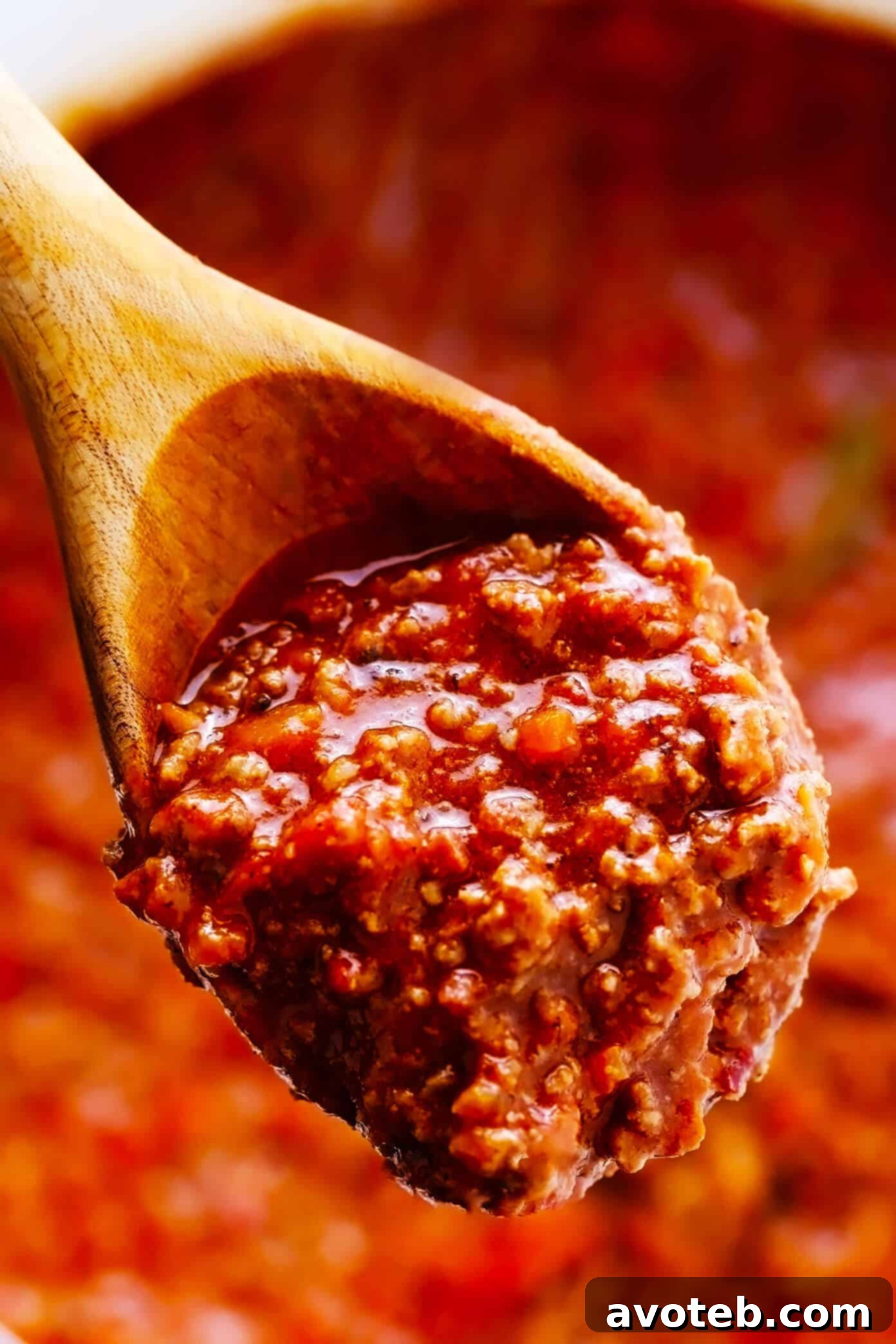
- Tomatoes: For an exceptionally vibrant and authentic taste, I highly recommend investing in a large can of San Marzano whole tomatoes, imported from Italy if possible. These tomatoes are renowned for their sweet, balanced flavor and low acidity. Crush them by hand before adding them to the sauce with their juices – a tip I learned from Chef Lidia – or simply break them up in the pan with a wooden spoon as they cook. Additionally, a 6-ounce can or tube of concentrated tomato paste is crucial for deepening the tomato flavor and adding body.
- Milk: Whole milk is traditionally included in Bolognese to tenderize the meat and add a touch of creamy richness. This recipe uses whole milk, but for an even more luxurious, velvety sauce, I highly recommend substituting 1/2 cup or more of heavy cream or half-and-half.
- Parmesan: No Bolognese experience is complete without a generous dusting of freshly-grated Parmesan cheese. Its salty, nutty, aged flavor provides the perfect sharp counterpoint to the rich sauce, bringing the entire dish into perfect harmony. Always grate it fresh for the best flavor and texture.
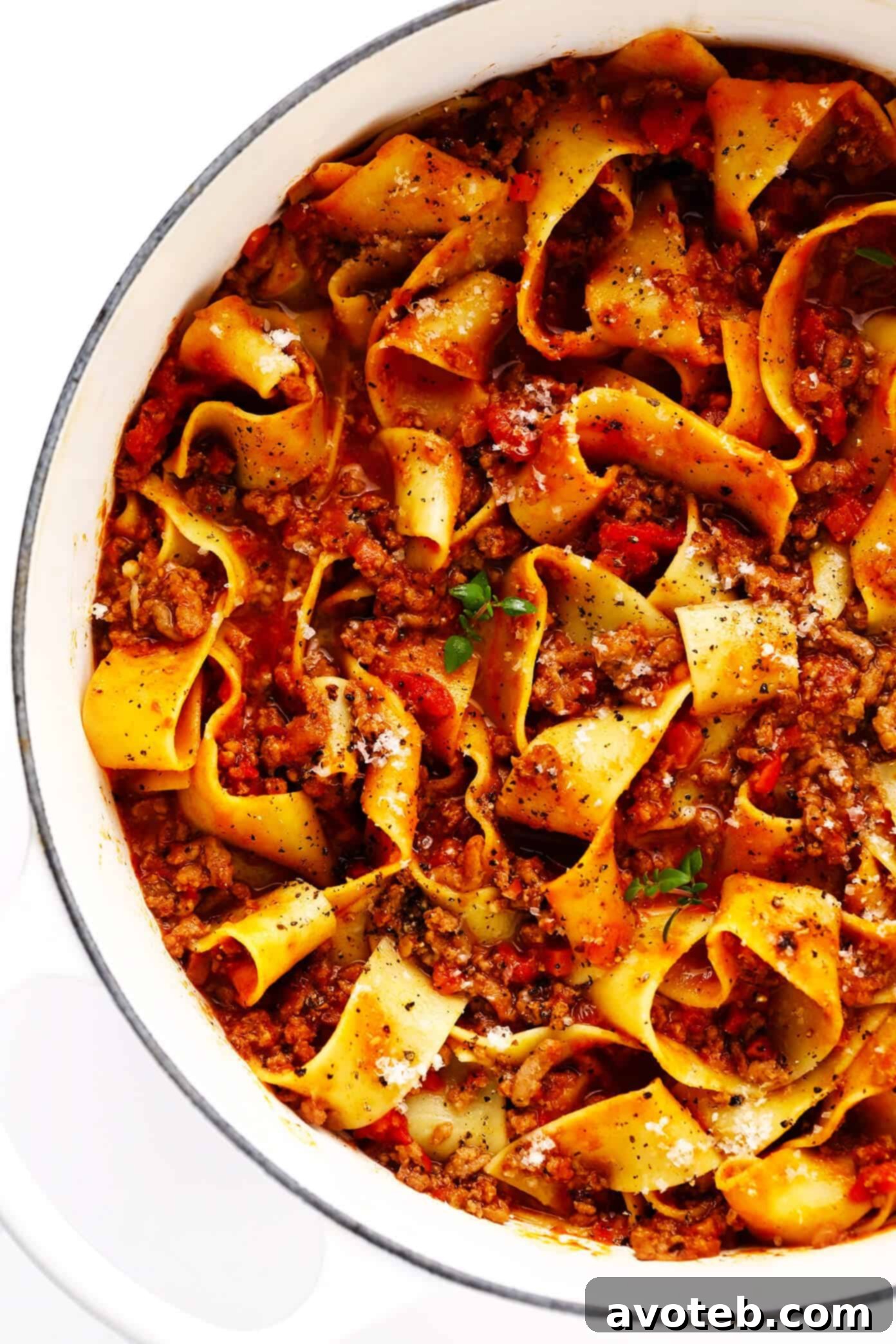
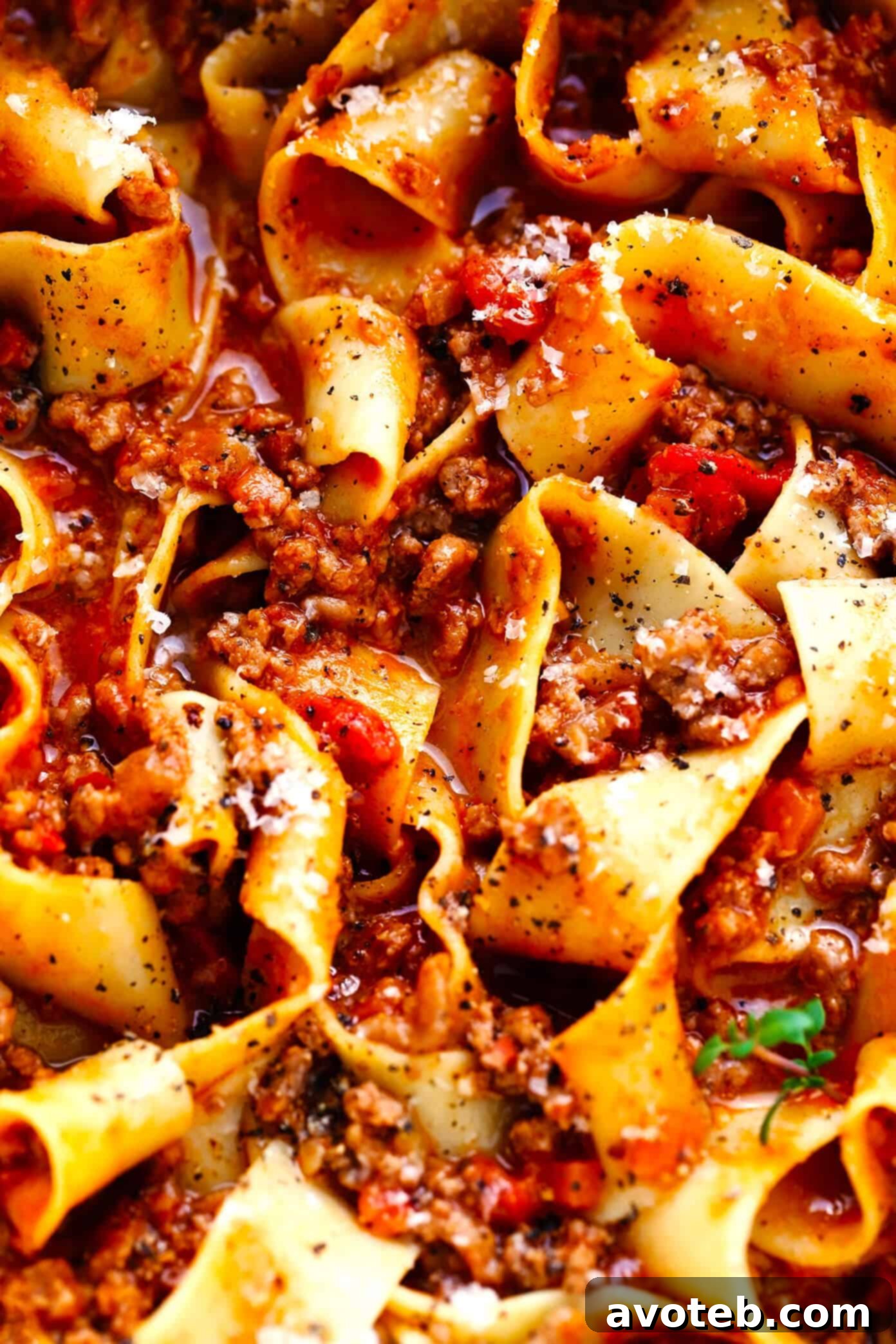
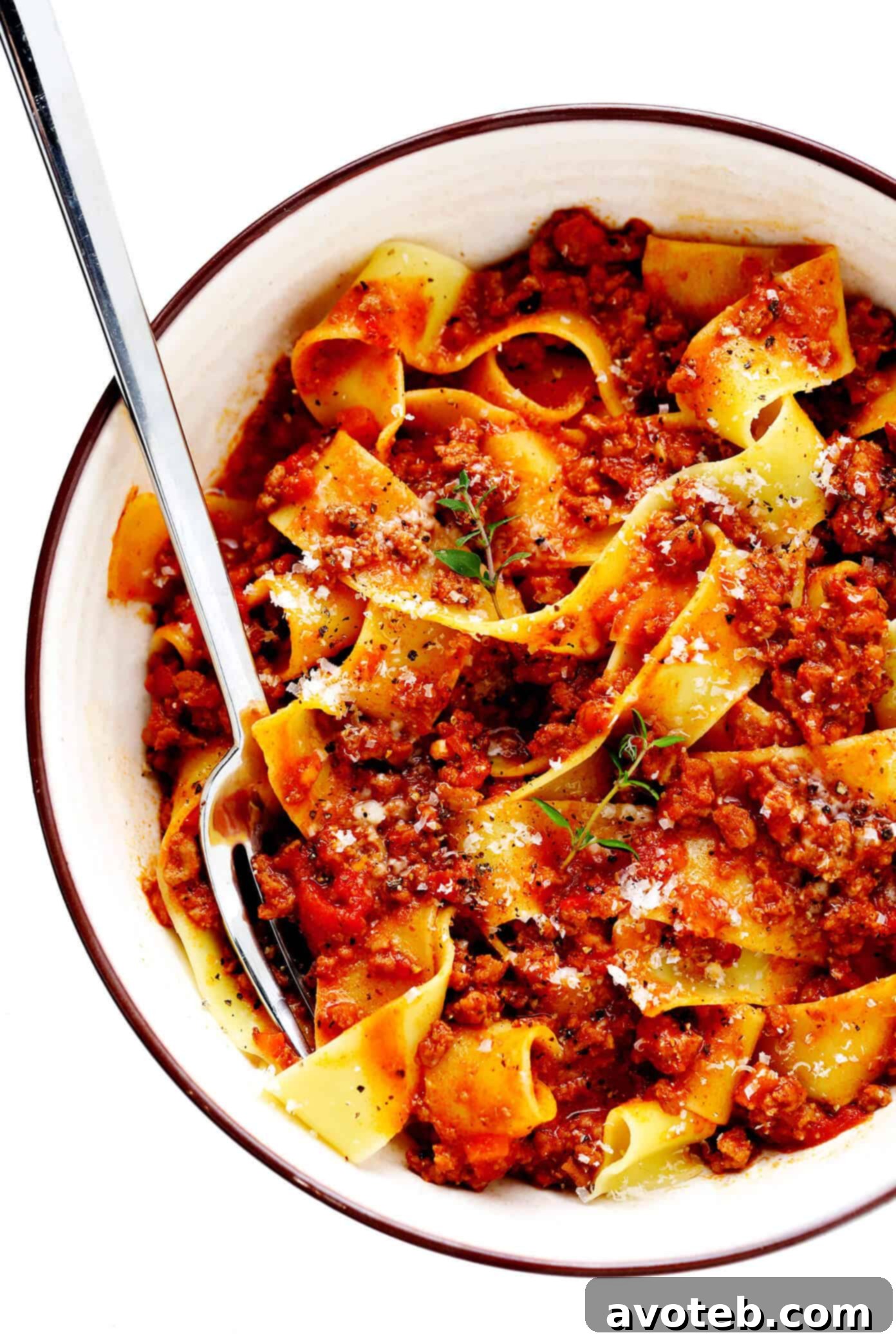
The Bolognese sauce photographed here is beautifully served with pappardelle pasta, its wide, flat ribbons perfectly suited for catching every morsel of the rich sauce. However, this versatile recipe is equally magnificent with spaghetti, rigatoni, tagliatelle, or any other pasta shape you fancy. It also forms a fantastic base for gnocchi Bolognese, roasted eggplant Bolognese, or a hearty lasagna.
Possible Bolognese Recipe Variations:
The beauty of a recipe like Bolognese is its adaptability. Feel free to experiment and customize it to your taste, creating your own signature version. Here are some ideas:
- Amplify the Herbs: Fresh basil, sage, or oregano would be absolutely delightful, either simmered into the sauce for deeper flavor or sprinkled on top as a fresh garnish just before serving.
- Add More Heat: For those who love a bit of spice, don’t hesitate to increase the amount of crushed red pepper flakes. You could also add a pinch of cayenne pepper or a finely minced fresh chili for a more pronounced kick.
- Gluten-Free Adaptation: This Bolognese sauce is naturally gluten-free. To make a completely gluten-free meal, simply serve it with your favorite brand of gluten-free pasta or gnocchi. It pairs wonderfully with many gluten-free options.
- Luxurious Creaminess: As mentioned, for an incredibly rich and velvety texture, swap out some or all of the whole milk for heavy cream or half-and-half. Start with 1/2 cup and add more to achieve your desired level of creaminess.
- Embrace Homemade Pasta: To truly elevate this dish to an artisanal level, consider making a batch of homemade pasta. The fresh, tender texture of homemade tagliatelle or pappardelle creates an unbeatable pairing with this rich Bolognese.
- Vegetarian or Vegan Option: For a meat-free version, substitute the meats with a combination of finely chopped mushrooms (cremini work well), lentils, and plant-based crumbles. Ensure to achieve a good brown on the mushrooms for umami.
- Slow Cooker or Pressure Cooker: While I advocate for stovetop simmering, this sauce can be adapted for a slow cooker (cook on low for 6-8 hours) or pressure cooker (cook for 45-60 minutes after searing meats and deglazing) for convenience, though flavor depth may vary slightly.
More Classic Pasta Recipes:
If you love classic Italian pasta dishes as much as we do, explore these other fantastic recipes from our collection:
- Homemade Pasta
- Pasta Marinara
- Pasta Arrabbiata
- Pasta Aglio e Olio
- Pasta Carbonara
- Cacio e Pepe
- The BEST Lasagna
Bolognese Sauce
- Author: Ali
- Prep Time: 30 mins
- Cook Time: 2 hours
- Total Time: 2 hours 30 mins
- Yield: 8 to 10 servings
Description
My all-time favorite Bolognese sauce recipe is slow-simmered with a rich tomato base, a delicious blend of beef and pork, and the coziest blend of garlicky seasonings. This recipe makes enough sauce to be paired with approximately 1 pound of uncooked pasta (see notes below).
Ingredients
- 4 ounces diced pancetta (or diced bacon)
- 1 medium white or yellow onion, finely diced
- 1 large carrot, finely diced
- 1 large rib celery, finely diced
- 3 cloves garlic, minced
- 2 anchovy filets, roughly chopped*
- 1 teaspoon crushed red pepper flakes
- 1 pound ground beef
- 1 pound ground mild Italian sausage*
- 1 cup dry red or white wine
- 1 (28-ounce) can San Marzano whole tomatoes, hand-crushed*
- 1 (6-ounce) can tomato paste
- a few sprigs of fresh thyme and/or rosemary
- 1 large bay leaf
- 1 cup whole milk*
- fine sea salt and freshly-ground black pepper
- freshly-grated Parmesan cheese, for serving
Instructions
- Cook the pancetta (or bacon). Add the pancetta to a large stockpot and cook over medium-high heat, stirring occasionally, until lightly crispy. There should be about 1 to 2 tablespoons of rendered grease in the stockpot. If not, add a drizzle of olive oil to supplement.
- Sauté the veggies. Add the finely diced onion, carrot, and celery to the stockpot. Stir to combine and sauté for about 7 to 8 minutes, stirring occasionally, until the vegetables have softened. Incorporate the minced garlic, roughly chopped anchovy filets, and crushed red pepper flakes, stirring well. Sauté for another 2 minutes, or until fragrant.
- Brown the meat. Add the ground beef and Italian sausage to the stockpot, breaking it up with a wooden spoon and tossing to combine with the sautéed vegetables. Cook until the meat is thoroughly browned, allowing it to get a little crispy on the bottom by flipping only occasionally. This browning step is crucial for developing deep flavor.
- Deglaze the pan. Pour in the wine and use your wooden spoon to vigorously scrape up any browned bits (fond) that are stuck to the bottom or sides of the pan. These bits are packed with flavor and will enrich the sauce.
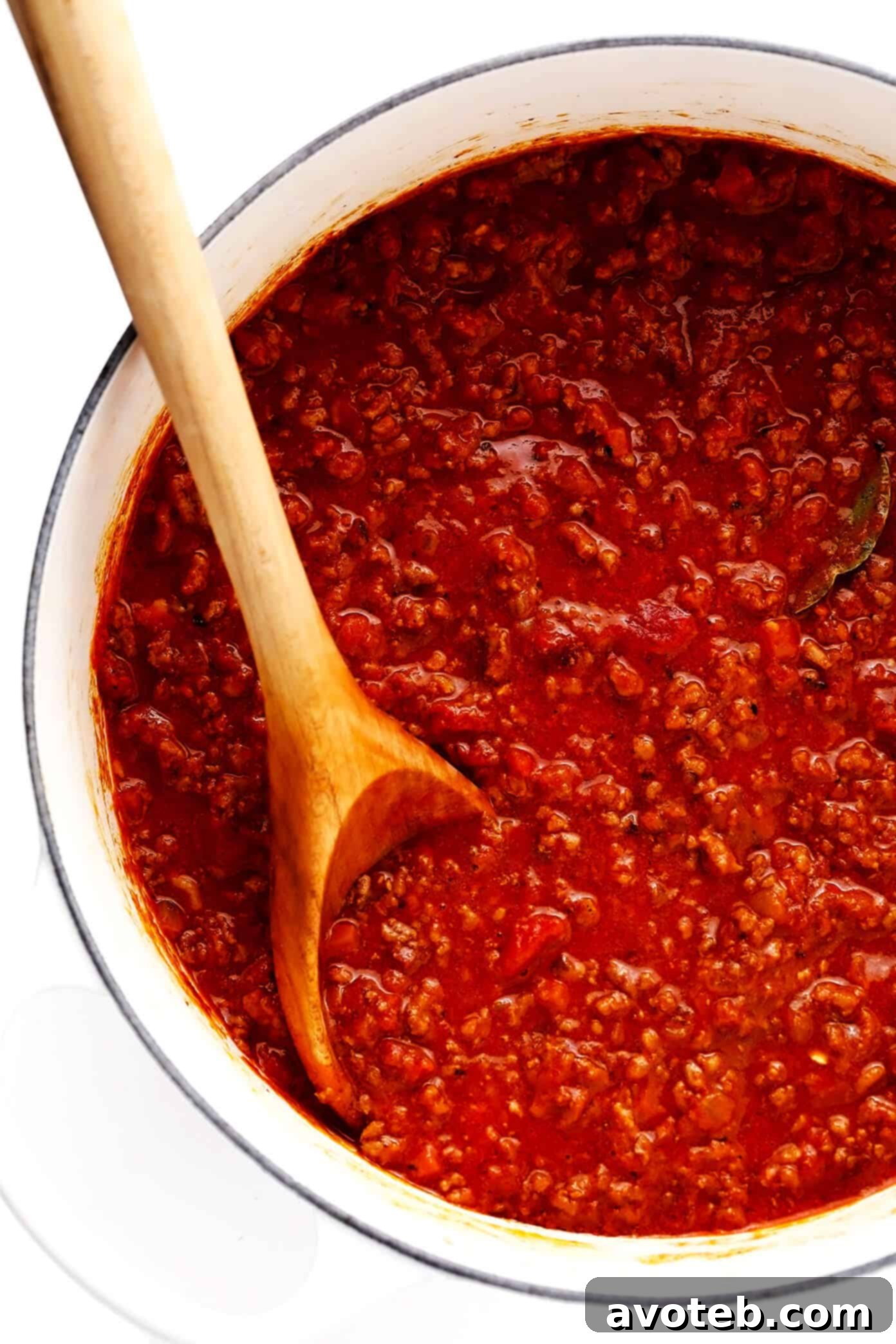
- Simmer. Add the hand-crushed San Marzano tomatoes, tomato paste, fresh thyme sprigs, and bay leaf. Stir everything thoroughly to combine. Continue cooking until the sauce just barely reaches a gentle simmer. Then, reduce the heat to low, cover the stockpot with a lid, and let it simmer for anywhere from 30 minutes to 3 hours. For truly optimum flavor and tender meat, I highly recommend a minimum 2-hour simmer, and preferably longer. Remember to check on the sauce and stir it every 30 minutes or so to prevent it from sticking to the bottom.
- Season. Carefully remove and discard the thyme/rosemary sprigs and the bay leaf. Stir in the whole milk until fully combined. Taste the sauce and season generously with additional fine sea salt and freshly-ground black pepper as needed. (I typically add at least a few teaspoons of salt and several generous cracks of black pepper.) If the sauce appears too thick, you can thin it out by adding a bit of water (starchy pasta water works best, if available).
- Serve. Serve the Bolognese warm with your chosen accompaniment—pasta, gnocchi, roasted eggplant, or any other delicious pairing (refer to notes below). Finish with a generous sprinkling of freshly-grated Parmesan cheese. Enjoy this comforting and flavorful dish!
Equipment
San Marzano Tomatoes
Buy Now →
Anchovy Fillets
Buy Now →
Crushed Red Pepper Flakes
Buy Now →
Notes
Anchovies: For this recipe, you can use two anchovy filets (from tins of anchovies packed in oil), roughly chopped, or 1 teaspoon of anchovy paste. Do not worry about a “fishy” taste; the anchovies will dissolve into the sauce as it cooks, acting as a powerful umami enhancer that beautifully brings out the rich flavors of the meat. If you don’t have anchovies, 2 teaspoons of fish sauce can be used as a substitute for a similar effect. If you prefer, this ingredient can be omitted entirely, and your sauce will still be delicious.
Sausage: I highly recommend incorporating Italian sausage into this recipe for the extra depth of flavor it provides. You can choose mild, sweet, or hot Italian sausage based on your preference. Alternatively, you may use plain ground pork instead of sausage. For a more traditional approach, you can skip the pork entirely and use 2 pounds of ground beef.
Tomatoes: For the best flavor, I strongly advise purchasing a can of authentic San Marzano whole tomatoes imported from Italy. These tomatoes offer superior sweetness and acidity balance. Before adding them to the sauce, pour them into a separate bowl and use your hands to crush them into smaller pieces, ensuring they break down beautifully into the sauce. If San Marzano tomatoes are unavailable, opt for another brand of high-quality whole peeled tomatoes.
Milk vs. Cream: While Bolognese is traditionally made with whole milk, if you desire an even richer and more luxurious sauce, consider adding 1/2 cup (or more, to taste) of heavy cream or half-and-half in place of the milk. This will create an incredibly velvety texture.
Pasta or Gnocchi Pairing: This Bolognese sauce is incredibly versatile. When pairing with pasta or gnocchi, I recommend boiling approximately 1 pound of uncooked pasta in a large pot of generously salted water until it is just one minute shy of al dente. Then, using tongs, transfer the pasta or gnocchi directly into the simmering Bolognese sauce. Add a ladle-full of the starchy pasta water if the sauce needs thinning. Toss continuously until the pasta reaches its perfect al dente texture, allowing it to absorb the flavors of the sauce.
Storage Instructions: Leftover Bolognese sauce can be cooled to room temperature, then stored in an airtight food storage container in the refrigerator for up to 4 days. For longer storage, it freezes exceptionally well for up to 4 months. Thaw in the refrigerator overnight and reheat gently on the stovetop.