
This comprehensive feature is proudly presented in partnership with Haagen-Dazs and their inspiring “Moment for Me” initiative, celebrating life’s precious and meaningful experiences.
Years ago, shortly after my arrival in Kansas City, I immersed myself in the vibrant atmosphere of First Fridays, the city’s renowned monthly art crawl in the Crossroads district. Friends and I navigated through various galleries, absorbing the creative energy of the community. It was during one of these strolls that a friend stopped abruptly, insisting on an essential detour to a particular establishment: Christopher Elbow’s.
Christopher who? I remember thinking, my curiosity piqued. The moment I stepped through the doors, however, any lingering questions vanished. This was an art form unlike any I had encountered—a breathtaking display of creativity that compelled you to pause, to savor the intoxicatingly sweet aroma that enveloped the space. It was the art of chocolate, crafted with unparalleled skill and passion.
Christopher Elbow is not just a chocolatier; he is the chocolatier of Kansas City, a sentiment echoed by virtually everyone in town. His iconic chocolate boutique and the enchanting chocolate factory are celebrated landmarks within the Crossroads. Yet, his influence has expanded far beyond, with his exquisite chocolates and confections now gracing the shelves of discerning coffee shops and specialty grocers across the city. As if that wasn’t enough to satisfy the local sweet tooth, a few years prior, he unveiled Glace Artisan Ice Cream, a venture dedicated to crafting exceptional frozen delights. Conveniently located just blocks from my former residence (and, perhaps dangerously, a mere block from my weekend workout spot), Glace quickly became a beloved haunt. A second location later opened near my workplace, leading me to playfully speculate they were established purely for my indulgence.
This past holiday season, Christopher Elbow generated significant buzz—and a literal splash—through his innovative collaboration with Kansas City’s beloved Boulevard Brewing Company. Together, they created a limited-edition chocolate ale that sparked a frenzy of demand. Orders soared, and securing a bottle became a shared quest among everyone I knew. One fortunate friend managed to obtain a bottle, generously sharing sips with a group of about fifteen of us one evening. It was, as the legendary Anchorman might say, “kind of a big deal.”
Beyond these notable ventures, Elbow Chocolates and Glace are synonymous with Christopher’s distinctive creative flair, meticulous attention to design, and the unparalleled quality of his melt-in-your-mouth chocolates and ingredients. But what locals truly appreciate is that the man behind this renowned name is just as impressive. Christopher Elbow, a Kansas City native, honed his skills as a chef globally before making the conscious decision to return, invest, and enrich his hometown’s culinary landscape. Encountering him while selecting a rosemary caramel chocolate or sampling goat cheese and wildflower honey ice cream reveals a genuinely down-to-earth and kind individual, always eager to delve into passionate discussions about cacao beans, ice cream, or even tequila.
Despite his widespread reputation, our paths had never crossed, and I had only known of him through friends. However, a few weeks ago, an exciting package arrived: my monthly surprise box from Haagen-Dazs, as part of my participation in their Moments for Me campaign—an initiative dedicated to celebrating life’s meaningful occasions. My gaze immediately landed on a familiar white box adorned with the distinctive “E” logo. Opening an accompanying letter, I discovered the thrilling news: I was going to meet Christopher Elbow! Even better, they had arranged for me to visit his shop, conduct an exclusive interview, and embark on a guided tour of the chocolate factory. For a Kansas City food enthusiast, it was an absolute dream come true.
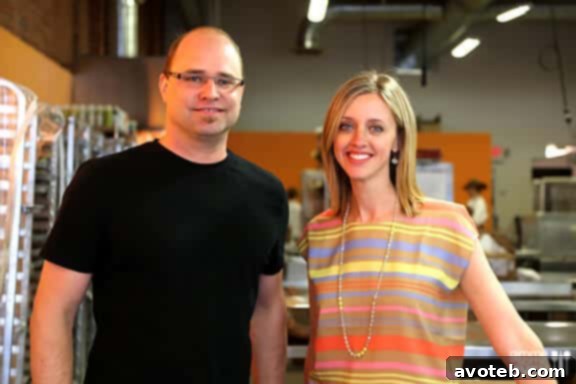
Thus, on a crisp Wednesday morning, armed with my laptop, I made the short ten-block journey from my home to the Elbow Chocolates shop. There, I was warmly greeted at the door by Christopher (Chris) himself. He graciously sat down for our interview before leading me on an exhilarating journey through what musicians might call the “back of the house”—the bustling chocolate factory. It was an experience that truly made my day.
What follows are highlights from my insightful conversation with Chris, complemented by a separate post featuring captivating photos from my tour of Elbow Chocolates. I must confess, I am by no means a professional journalist or interviewer! I even neglected to bring a tape recorder, so I furiously typed at a million miles an hour as we discussed all things chocolate. Despite my amateur approach, it was a truly engaging and enlightening conversation, and I sincerely hope you enjoy it.
Whether you reside in Kansas City or are states or countries away, I urge you to treat yourself to the extraordinary experience of ordering some of his exceptional chocolates online. Discover the magic for yourself.
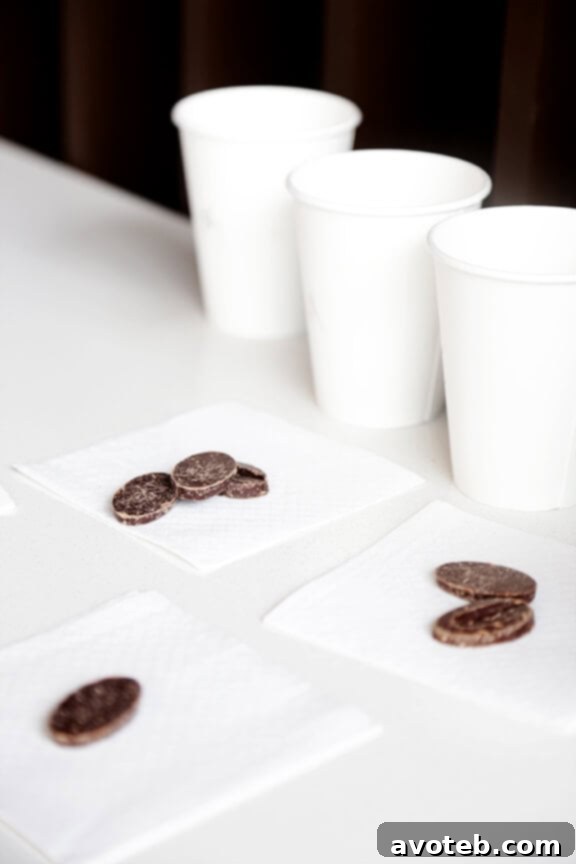
For a more comprehensive understanding of Christopher’s impressive career and background, I highly recommend exploring his official bio here.
An Exclusive Interview with Christopher Elbow
Where did your remarkable journey into chocolate making truly begin?
My entry into chocolate making was somewhat serendipitous, I must admit. I first witnessed the art of chocolate creation while living in Las Vegas. The pastry chef I worked with at the time would craft beautiful chocolates, but he never actually taught us the process. So, the opportunity to truly delve into it didn’t present itself until I became the pastry chef at Kansas City’s esteemed The American restaurant. There, we served small, exquisite chocolates as a delightful post-dessert treat. I took it upon myself to learn the craft, teaching myself the intricacies of chocolate work. Soon, customers began requesting to purchase more, and we started selling them directly. The demand grew incredibly, incredibly fast—almost too quickly—and it was at that point I realized it was time to pursue something entirely different, to make chocolate my singular focus.
As a former chef, do you ever find yourself missing the dynamic, fast-paced world of restaurants?
(Laughs.) Honestly, I don’t miss the restaurant world at all. While I certainly don’t miss the intense hours and relentless pressure that come with it, it’s not to say that I don’t work long hours here at Elbow Chocolates. We work exceptionally hard, especially during peak seasons. However, outside of the demanding holiday rush, I’m not working nights and weekends, which is a significant lifestyle improvement. So, no, I genuinely don’t miss the restaurant environment. In fact, stepping away from professional cooking has allowed me to rediscover my passion for home cooking, engaging with it again purely as a hobby and for personal enjoyment.
Speaking of “cooking,” the question everyone always asks: How do you continuously innovate and develop such unique new flavors?
It’s predominantly a process of extensive trial and error. My mind is perpetually engaged in contemplating new flavor combinations. Whether I’m dining at a restaurant, exploring a new city, or even visiting a different country, it feels almost like a perpetual “curse”—my thoughts instinctively pivot towards how these flavors could translate into a chocolate or ice cream creation. It’s an ongoing, subconscious endeavor. We then bring these conceptual flavors into the kitchen, experiment with various iterations, and meticulously assess if they truly work and achieve the desired balance.
We’re also constantly reading food magazines and culinary publications to unearth fresh ideas and inspirations. More than anything, travel plays an absolutely crucial role. Experiencing new cultures, tasting local ingredients, and observing global culinary trends are vital for staying at the forefront of innovation.
A core tenet of our mission and vision is to vehemently avoid complacency. It’s incredibly challenging, and logistically speaking, a nightmare, to refresh our flavor portfolio twice a year. However, this rigorous schedule forces us to remain relentlessly innovative. I firmly believe that if we didn’t impose this discipline, it would be far too easy to fall into a routine, simply repeating the same offerings year after year.
How extensive is your testing process for a new flavor before it makes it to market?
Occasionally, we strike gold on the very first attempt—a perfect flavor combination that resonates immediately. More frequently, however, it requires several weeks of dedicated trials and adjustments. We consciously avoid anything we perceive as truly outlandish or bizarre. Our philosophy is rooted in creating exceptional quality, not novelty for its own sake. We don’t develop flavors merely to chase trends or for shock value. If a flavor concept sounds overly experimental, or if it’s not something I personally crave and genuinely want to eat and taste (and then repeatedly eat and taste again), then it simply doesn’t make it into our collection.
Take the bacon trend, for instance. We’ve certainly experimented with it. And while it might be fun or intriguing for a single try, it doesn’t strike us as a viable or sustainable business model for a product you want people to repeatedly enjoy and purchase.
On the business side, would you say your development process is primarily artistically driven or market-driven? Or has the market evolved to now readily support your artistic culinary ventures?
We attentively listen to our customers, and generally, they are very supportive of our creative direction. We maintain a core collection of 10-12 signature flavors, and then we introduce seasonal variations by switching out other flavors twice a year. It’s true, if we discontinue certain beloved flavors, we sometimes receive passionate feedback—even anger! However, this rotational setup grants us the creative freedom to continually experiment with new flavors, fostering an engaging dialogue with our clientele. If a customer’s long-time favorite is temporarily unavailable, we can enthusiastically encourage them to explore and try a new, exciting option. Most often, they discover a new favorite in the process.
One specific area where we’ve consistently worked to educate our customers is on the immense value of fresh chocolate. Our artisan chocolates have a relatively short shelf life, typically 2-3 weeks, which was a significant conceptual leap for customers accustomed to mass-produced boxes that sit in drugstores for 6-12 months. We strive to help shift this mindset, encouraging them not to purchase one massive box, but rather to buy smaller quantities more frequently. People are increasingly understanding and appreciating this dedication to freshness, recognizing the superior quality it delivers.
Would you be willing to share some of your “flops” or flavor ideas that didn’t quite work out?
Honestly, it’s often some of the seemingly simpler concepts that have proven to be the most challenging to execute successfully. Chocolate itself possesses such a dominant and bold flavor profile that it can easily overwhelm or “railroad” new, more delicate flavor ideas. For example, every holiday season, I make an effort to incorporate cranberry, but its flavor is simply too light to truly shine through when paired with chocolate. We’ve attempted it in various forms—as a ganache, a caramel, even as a distinct fruit layer—all in an effort to amplify its presence. Yet, in my experience, the chocolate consistently dominates and eclipses the cranberry.
We prioritize achieving a perfect balance in our flavors—a skill I believe we excel at. So, if one flavor component overpowers another, we deem the product unsuccessful. Ice cream, however, is an entirely different canvas. Almost anything goes with ice cream; it serves as a remarkably neutral flavor vehicle, making it considerably easier to develop those unique and harmonious combinations. Nevertheless, even with ice cream, we consciously avoid pursuing overly wild or gimmicky ideas. If I can’t vividly visualize and anticipate how a flavor will taste in my mind, it’s likely not something we should pursue. I trust my palate sufficiently to discern what will truly work.
Who is behind the artistic designs of your chocolates?
The majority of our production staff actively contributes to the design process, fostering a collaborative and creative environment. Additionally, my wife, who is a talented designer at Hallmark Cards, often lends her valuable artistic input and expertise.
The flavor always takes precedence; it is the starting point. Our aim is for the design to intuitively evoke the flavor profile, serving as a visual representation of what lies within the chocolate approximately 90% of the time. For instance, if we are developing a lemon-flavored chocolate, we would naturally gravitate towards a yellow color palette to communicate that taste experience visually.
While I certainly contribute to some of the designs, we genuinely strive to involve the entire staff. It’s incredibly rewarding for them to participate in the genesis of new flavors and recipes. Given that our summer months tend to be a bit slower, this period typically becomes our primary window for extensive research and development (R&D).
Many of my friends’ questions revolved around the crucial topic of fair-trade chocolate. What are your perspectives on this, and how does it influence your operations at Elbow Chocolates?
It’s undeniably a profoundly important and integral aspect of the global chocolate culture. And looking ahead, I anticipate its significance will only continue to grow exponentially.
We feel highly confident in our direct bean supplier, Velrano, a company that has been operating with integrity since the 1940s. They were pioneers in the industry, among the very first distributors to establish direct working relationships with farmers and plantations. They undertook this not solely from a humanitarian standpoint, but also because it directly led to obtaining a superior product. It’s a true win-win scenario: we receive exceptional beans, and the farmers earn a much better, more sustainable living.
I had the privilege of visiting one of the plantations in Madagascar and meeting with our buyer. Throughout his extensive career, this individual has witnessed terrible practices within the chocolate trade—rampant child labor, forms of slavery, and other severe ethical abuses. I can state unequivocally that we do not source beans from any farms that mistreat their workers. Is our chocolate officially “certified” fair-trade? No. Our buyer has explained that the bureaucratic hurdles and extensive processes farmers must navigate to obtain such certifications often prove to be disproportionately burdensome and not ultimately worth their effort.
Nevertheless, the issue of ethical sourcing remains paramount to us, and public awareness regarding it is steadily increasing. When you typically encounter an article discussing fair trade, it usually pertains to beans purchased on the volatile commodities market. For the vast majority of large-scale bean farmers, the price of their product is dictated by fluctuating demand, market forces, and the actions of speculators. In this complex dynamic, it’s primarily the speculators who profit, while farmers often have little choice but to sell at dictated prices. This market is heavily driven by mass consumer demand, influencing everything from large-scale candy bar production to the cookie aisle.
What prevailing trends are you observing in the chocolate world right now?
Overall, there’s an undeniable, strong trend towards dark chocolate. American palates are increasingly developing a sophisticated appreciation for high-quality dark chocolate. This isn’t to diminish milk chocolate, which certainly serves its purpose and has its place, but dark chocolate’s popularity is unequivocally on the rise. We initially launched a 70% cacao bar, and now we offer an 80% bar, both of which are incredibly well-received by our customers.
We’re also seeing significant shifts in flavor profiles, particularly with the incorporation of more unusual and adventurous ingredients. This constitutes a huge trend within nouveau American chocolate. In stark contrast to the more traditional French, Swiss, or Belgian chocolate consumers, Americans are actively seeking out bolder, more intense, and unconventional flavors. They are truly pushing the boundaries of what is expected in chocolate.
Another profound trend is the rise of bean-to-bar chocolate making. Essentially, this involves smaller-scale producers, like myself, who meticulously source the finest beans available and work directly with farmers. In Missouri, we are fortunate to have two of the nation’s top bean-to-bar chocolate makers—Askinose and Patric. Their unwavering focus and meticulous attention to every detail are what truly differentiate their product: utilizing superior beans, employing refined roasting methods, precise conching techniques, higher quality sugar, and exceptional vanilla. These elements collectively make an immense difference in the final chocolate product.
Is bean-to-bar chocolate making something you would ever consider pursuing at Elbow Chocolates?
While the concept is certainly appealing, it’s currently a bit unfeasible for us to venture into making our own chocolate from the bean. We would genuinely love to, but it would necessitate an entirely separate facility and a substantial investment in specialized equipment. Our current focus is on perfecting our finished chocolate products.
Alright, so…the Boulevard Chocolate Ale. Will this highly anticipated collaboration be happening again?
(Laughs.) Well, Boulevard wanted to take a year-long hiatus to thoroughly evaluate their options. Due to the overwhelming demand and the logistical challenges it presented, they were naturally cautious about embarking on another round immediately. So, we mutually decided to step back for a year, allow the intense demand to subside somewhat, and then revisit the possibility. I certainly hope they decide to bring it back. I was personally very pleased with the final product we created together.
What did the development process for that unique chocolate ale actually entail?
It involved, quite enjoyably, a lot of beer drinking at 10 in the morning! The entire process was incredibly casual and collaborative—Boulevard is such a fantastic, cool company to work with. It began simply with the question, “Hey, do you think this could work? Would you be willing to help us with the flavor ingredients?” We went through approximately 24 different batches, testing small quantities repeatedly, to truly understand how to effectively pair chocolate flavor with both traditional and non-traditional brewing methods, especially given that chocolate is fat-soluble. My initial thought was that if we truly wanted to capture an authentic chocolate flavor, we should start directly with the crushed cacao bean rather than pre-made chocolate. Once the bean is processed into chocolate, the range of choices and nuances you can achieve becomes significantly narrower.
Okay, so when do you specifically say “cacao” and when do you use “cocoa”?
“Cacao” (pronounced ka-kow) is the term you use when referring to the raw bean itself, before it undergoes significant processing. “Cocoa,” on the other hand, is the appropriate term when you’re talking about cocoa powder, which is a processed product of the cacao bean.
For someone who doesn’t converse about chocolate with great intelligence, how do you simplify and break down its complexities?
I typically categorize chocolate into a few distinct flavor profiles to make it more accessible. There’s the “red fruity” profile, which includes notes of berries, currant, blackberry, and raspberry. Then we have the “yellow fruity” profile, encompassing flavors like banana, tropical fruits, passion fruit, often with a more tart or sour undertone. Beyond that, there are “nutty” profiles, “earthy” profiles (sometimes described as subtly “dirty”), and finally, what we simply call “chocolate-y.” At the end of the day, there’s an unmistakable, fundamental flavor to chocolate that is, well, just inherently chocolate-y.
The presence and type of vanilla also play a significant role. Our supplier, Velrona, uses very little vanilla in their chocolate. Historically, vanilla was often utilized as a means to mask the flavors of inferior or bad cacao beans, and its presence has persisted in chocolate production ever since. However, increasingly, bean-to-bar producers are either using significantly less vanilla or omitting it entirely. You can discern a noticeable difference in the flavor profile when chocolate is made with a generous amount of vanilla compared to very little or none.
How would you characterize the chocolate you specifically use for Elbow Chocolates?
Throughout the history of Elbow Chocolates, I’ve actually switched our primary chocolate source many times. However, about four years ago, we dedicated ourselves to developing our very own proprietary blend. The primary reason for my previous constant switching was a persistent balance issue: many of the chocolate’s inherent fruity or nutty profiles didn’t harmoniously integrate with the diverse range of flavors we aimed to infuse into our chocolates. So, I set a clear goal: to find a “bullseye” flavor profile that would flawlessly complement 95% or more of the various ingredients and flavor combinations we wanted to use.
Our unique chocolate blend is derived from five different origins. It incorporates a small amount of cacao from Madagascar and Ghana, but the primary bulk of the blend comes from Venezuela. This results in a distinctly “chocolate-y” centered flavor profile, possessing a sufficiently high acid content that allows it to mix exceptionally well with a wide array of other ingredients, creating balanced and complex flavor experiences.
What is the percentage of cacao in your custom blend?
Our signature blend features 63% cacao. Generally speaking, a higher percentage often suggests a stronger, more intense chocolate flavor. However, this can be somewhat misleading.
The cacao bean itself is composed of different elements: cocoa butter, which is very mild and creamy, and cocoa fiber, which provides the stronger, more bitter chocolate notes. So, you could theoretically have two chocolates, both labeled 70% cacao, yet their internal makeup could be entirely different. One might contain a higher proportion of cocoa butter and less cocoa fiber, while the other might have the opposite composition. The remaining percentage in dark chocolate is typically sugar.
In milk chocolate, the remainder of the percentage is milk solids, which significantly pushes down the actual cocoa content. Mass-market milk chocolates typically hover around 30-28% cocoa content, and a considerable portion of that is often cocoa butter. This is precisely why milk chocolate generally tastes less intense and more mellow compared to dark chocolate.
So, you’ve mastered chocolate and ice cream… is there anything else on the horizon for Elbow Chocolates?
I certainly have a few other concepts and ideas that I would love to explore, but at present, I simply don’t have the time. I am a staunch advocate for focusing intently on one thing and executing it exceptionally well. This philosophy is precisely why we made the strategic decision to separate the ice cream production from the chocolate shop, establishing dedicated, distinct production facilities and separate, specialized staffs for each.
I observe too many businesses attempting to do too many different things simultaneously. I affectionately refer to this as the “Applebee’s syndrome” (with no disrespect intended towards them). They feature an expansive menu with a multitude of different offerings, yet struggle to execute any single item truly exceptionally. The prevailing trend now, particularly in culinary hubs like New York and San Francisco, is to identify what you do superlatively well and then focus intensely on that. Develop a solid, carefully curated menu that isn’t overly extensive. It’s a return to the more European style, where you have a dedicated cheese maker, a specialized bread baker, and so forth, each mastering their craft. That’s the model we aspire to embody here in Kansas City.
What are your overarching thoughts on the Kansas City food scene today?
The Kansas City food scene is absolutely thriving; it’s as dynamic and vibrant as it has ever been. I am an enormous proponent of Kansas City and I champion it everywhere I go.
I spend a considerable amount of time in San Francisco, and whenever I’m at our shop there, a customer inevitably gives me a quizzical look and asks, “Why Kansas City?” But I genuinely adore this city, and I firmly believe we are heading in a tremendously positive direction, particularly with the exciting developments unfolding in the Crossroads district. I do think we still have a significant journey ahead. The foundation is robust for far more to happen, but at this very moment, it still feels like a blossoming, yet relatively small, scene.
I also deeply love Kansas City because my family and friends are here. When I was first embarking on this business venture, I pondered whether this would truly be the right city. However, from a financial perspective—considering the cost-effective real estate to the comparatively lower cost of doing business—I truly didn’t have much of a choice, as I had very limited capital. Moving to New York or San Francisco simply wasn’t an option. Right from the outset, Kansas City proved to be an exceptional city to launch a business. The public embraced us with incredible enthusiasm, the local media offered tremendous support, and we have genuinely appreciated every bit of that community backing.
Do you envision expanding Elbow Chocolates to other cities beyond Kansas City and San Francisco in the future?
I honestly don’t know for certain. I would absolutely love to have a shop in New York, but perhaps for what might be considered the “wrong” reasons—primarily, I’d relish having an excuse to simply maintain a presence out there! However, from a purely financial standpoint, it doesn’t currently make sense. Furthermore, we still contend with ongoing challenges related to our production levels and consistently keeping up with existing demand. Even after ten years in business, we continue to struggle during peak holiday seasons to produce enough product to meet the overwhelming demand. Therefore, adding another city would likely introduce a massive logistical challenge that we’re not quite ready to undertake.
Any final thoughts you’d like to share about your journey and business?
So far, this business has been an incredibly fun and rewarding journey. I often tell people that we were truly in the right place at the right time. In many ways, I probably did more to inadvertently sabotage the business than to actually help it along the way. I’m not a traditional businessman by nature, so the mere testament that we are still thriving after ten years is pretty remarkable. I believe it speaks volumes about the quality and integrity of what we do, and it also profoundly reflects on the incredible support of this city that has helped us make it all happen.
Disclaimer: This “Moment For Me” experience and interview were thoughtfully coordinated and facilitated by Haagen-Dazs. I wish to clarify that I received no monetary compensation for this post, and all opinions expressed herein are entirely and unequivocally my own. Immense gratitude once again to Christopher Elbow for his incredible generosity and candor!