
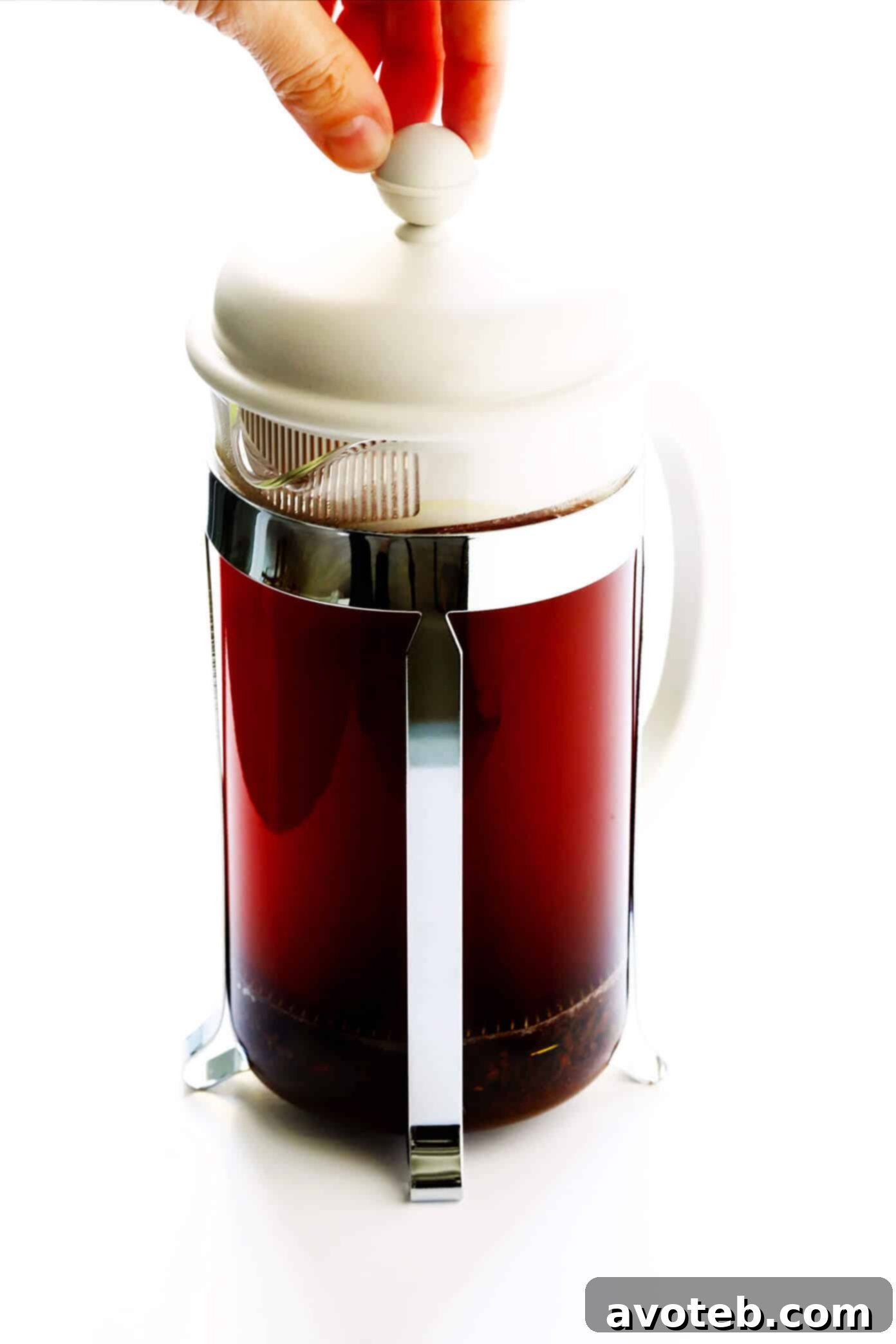
Mastering the Art of French Press Coffee: A Comprehensive Guide to Your Perfect Brew
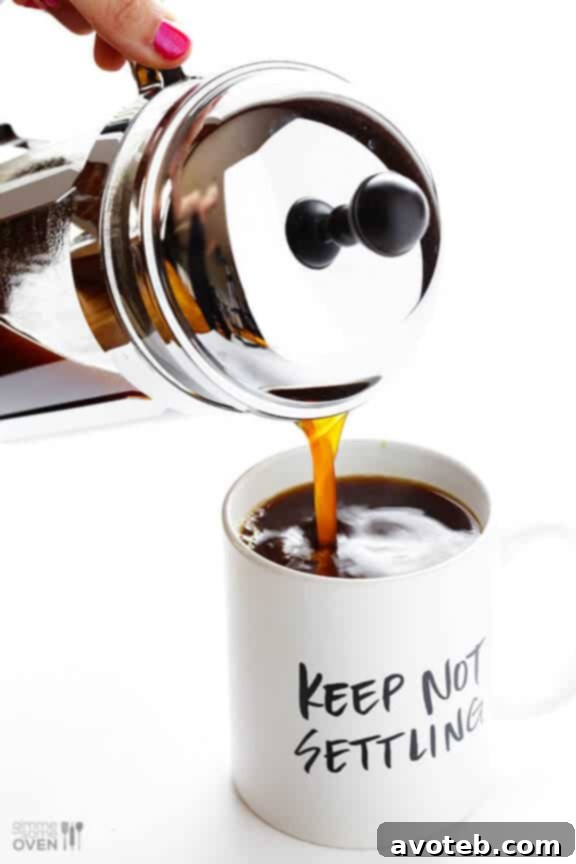
For many coffee enthusiasts, the journey into home brewing often begins with a simple yet profound method: the French press. It was certainly where my own coffee adventure started, and to this day, it remains a beloved technique I turn to weekly, especially when seeking a rich, full-bodied cup with minimal fuss. This comprehensive guide will walk you through everything you need to know to brew exceptional French press coffee, transforming your morning routine into a delightful ritual.
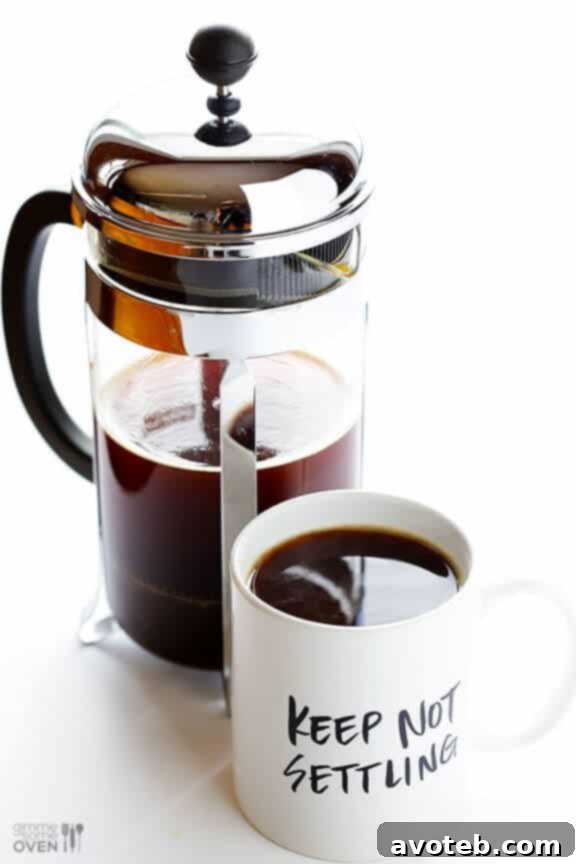
My trusty Bodum French press, shown above, has been a steadfast companion for over a decade. It has diligently crafted thousands of cups of coffee, evolving from good to truly stellar as I refined my technique and learned crucial tips and tricks. Whether you’re a seasoned brewer looking to elevate your game or a complete novice eager to dive into the world of coffee, the French press offers an accessible and rewarding experience. Let’s embark on this brewing journey together!
Why Choose French Press Coffee? Unlocking Richness and Flavor
The French press stands out as a unique brewing method for several compelling reasons. Unlike drip coffee makers or pour-over methods that rely on paper filters, the French press uses a mesh filter. This allows the coffee’s natural oils and fine sediments to pass into your cup, resulting in a brew that is remarkably full-bodied, rich, and intensely aromatic. It’s a truly immersive experience, delivering a complex flavor profile that many coffee lovers cherish, often described as having more “texture” due to the presence of micro-fines.
Beyond its exceptional taste, the French press is celebrated for its simplicity, affordability, and portability. It requires minimal equipment, is relatively easy to clean, and offers unparalleled control over the brewing process. This allows for extensive experimentation with grind size, water temperature, and steep time, giving you the power to customize your coffee precisely to your palate. If you crave a robust, flavorful cup that truly highlights the inherent character of your chosen beans, the French press is undoubtedly an ideal method for your home brewing repertoire.
Essential Equipment for French Press Excellence
Before we dive into the brewing steps, let’s ensure you have the right tools for the job. You don’t need an elaborate setup, but a few key items will significantly enhance your French press experience and contribute to a consistently delicious brew:
- French Press Coffee Maker: Naturally, the star of the show! French presses come in various sizes and materials (glass, stainless steel, ceramic). A classic glass Bodum is an excellent starting point, known for its timeless design and reliable performance.
- High-Quality Coffee Grinder: This is arguably the most crucial piece of equipment. A burr grinder (manual or electric) is highly recommended as it produces a consistent, uniform grind size, which is essential for even extraction and avoiding a muddy cup.
- Kettle: A standard stovetop or electric kettle for boiling water is sufficient, but a gooseneck kettle offers more precise pouring control, which can be particularly beneficial during the “blooming” phase.
- Digital Kitchen Scale (Optional but Highly Recommended): For ultimate consistency and repeatability, a digital kitchen scale allows you to accurately measure your coffee beans and water by weight, leading to more precise and delicious results every time.
- Timer: Essential for precise brewing times, ensuring optimal extraction without over- or under-brewing. A simple phone timer works perfectly.
- Long Spoon or Stirring Utensil: For gently stirring the coffee grounds during various stages of the brewing process. Avoid using metal spoons in glass presses to prevent chipping.
- Thermal Carafe (Optional): If you’re brewing a larger batch and won’t drink it all immediately, a pre-heated thermal carafe will keep your coffee hot without it continuing to over-extract from remaining in the French press with the spent grounds.
Step 1: Selecting and Grinding Your Coffee Beans
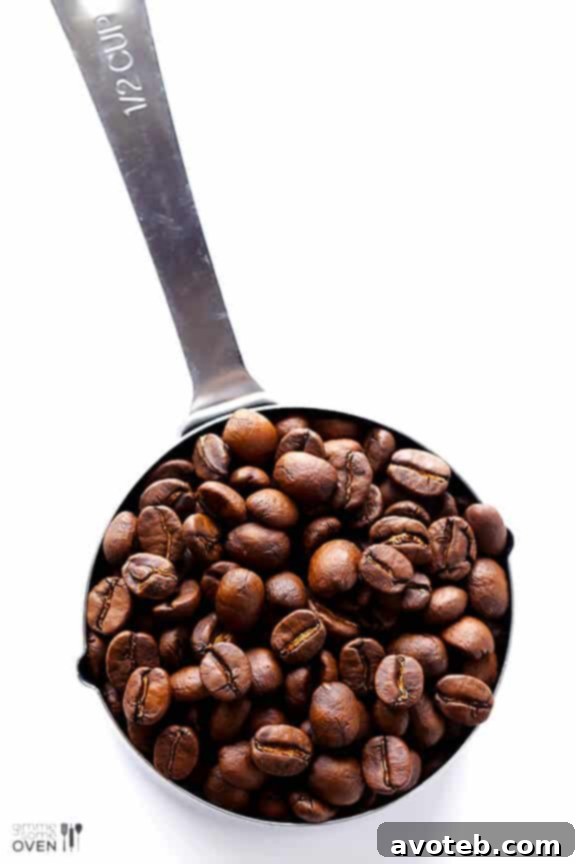
The foundation of any great cup of coffee, regardless of the brewing method, starts with exceptional beans. Prioritize quality: purchase freshly roasted, whole bean coffee. The difference between fresh, quality beans and pre-ground, stale coffee is truly transformative. Freshly roasted beans retain their aromatic oils and complex flavors much longer. Once you have your beans, the next critical step is grinding them immediately before brewing.
The Importance of a Coarse Grind
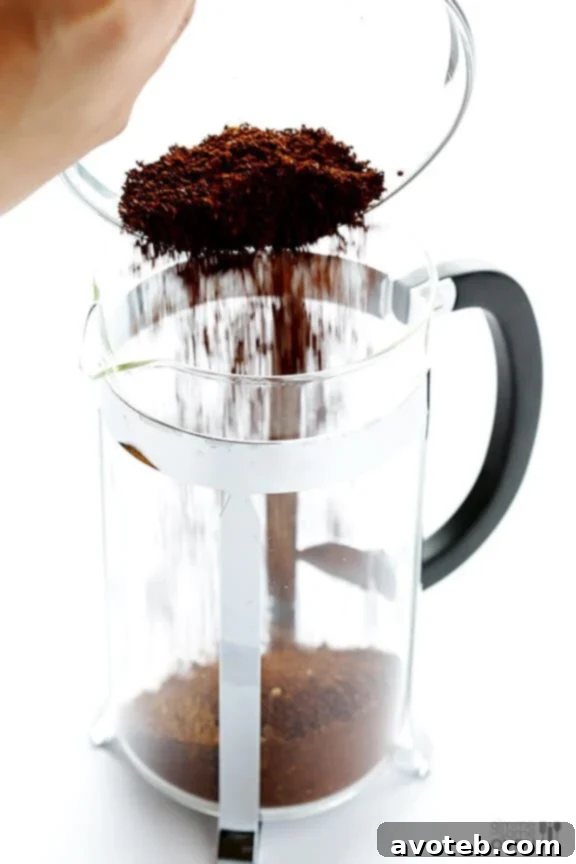
For French press coffee, a coarse, even grind is paramount. Think of the consistency of sea salt, coarse breadcrumbs, or roughly ground pepper. If your grind is too fine (like espresso or drip coffee), two problems arise: over-extraction and excessive sediment. A fine grind will lead to a bitter, overly strong, and muddy cup because the increased surface area allows water to extract too much too quickly. It will also easily pass through the mesh filter, leaving you with an unpleasantly gritty beverage.
To achieve this ideal consistency, ideally use a burr grinder. Burr grinders crush coffee beans between abrasive surfaces, producing consistently sized particles. Blade grinders, on the other hand, chop the beans unevenly, creating a mix of fine dust and large chunks. This inconsistency leads to uneven extraction, where some particles are over-extracted and others under-extracted, resulting in a less balanced and often bitter flavor profile. While a blade grinder can work in a pinch if it’s all you have, a quality burr grinder is a worthy investment for any serious home brewer looking for optimal French press results.
Step 2: Perfecting Your Coffee-to-Water Ratio
The coffee-to-water ratio is a significant factor in determining the strength and flavor of your brew, and it’s ultimately a matter of personal preference. However, a good starting point is crucial for achieving balance. Most experts recommend a ratio of 1:15 to 1:17 (coffee to water by weight) for drip coffee. For French press, a slightly stronger ratio, often around 1:12 to 1:15, can yield a richer, more robust cup that stands up beautifully to the full immersion method.
Using a digital scale for precise measurements of both coffee and water is highly recommended for consistent results. If you don’t have a scale, volumetric measurements (like tablespoons or cups) can work, but be aware they are less accurate due to variations in bean density and grind size. A common starting ratio I find works wonderfully is 52 grams of whole coffee beans for 4 standard measuring cups (approximately 946 ml or 32 fluid ounces) of water. This creates about 4 servings of coffee, assuming a standard serving size of 8 fluid ounces.
To help you gauge amounts for different French press sizes, using the 1:18 ratio (52g coffee for 946ml water) as a guideline:
- 8-Cup French Press: (Holds approx. 4 standard measuring cups of water / 32 fl oz) = 52 grams (about 1/2 cup) whole beans
- 4-Cup French Press: (Holds approx. 2 standard measuring cups of water / 16 fl oz) = 26 grams (about 1/4 cup) whole beans
- 2-Cup French Press: (Holds approx. 1 standard measuring cup of water / 8 fl oz) = 13 grams (about 2 tablespoons) whole beans
- 1-Cup French Press: (Holds approx. 1/2 standard measuring cup of water / 4 fl oz) = 7 grams (about 1 tablespoon) whole beans
Note on “Cups”: French press manufacturers often label their presses in “cups,” but these typically refer to smaller 4-ounce (120ml) servings, not standard 8-ounce (240ml) measuring cups. An “8-cup” French press usually holds about 32 fluid ounces (4 standard measuring cups) of water, yielding eight 4-ounce servings or four 8-ounce servings. Our guide uses standard 8-ounce servings for clarity, making a direct correlation between actual water volume and desired coffee strength.
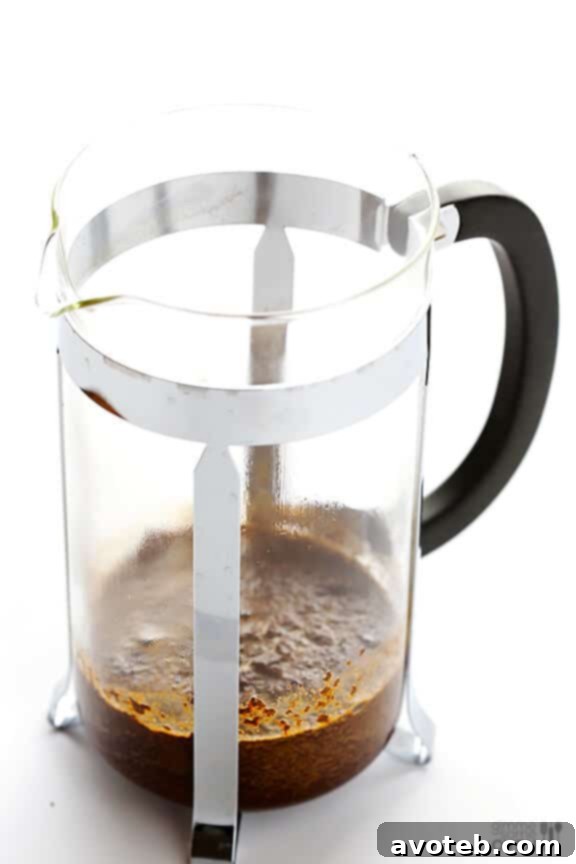
Step 3: Heating the Water to the Ideal Temperature
Water quality and temperature play a significant role in extracting the best flavors from your coffee. Always use filtered water if possible, as tap water can contain impurities, minerals, and chlorine that can negatively affect the taste of your final brew. Bring your filtered water to a full rolling boil in your kettle. Once it reaches a boil, immediately remove it from the heat and let it cool for about 30 to 60 seconds.
The ideal brewing temperature for French press coffee is between 195°F and 205°F (90°C to 96°C). Pouring water that is still at a rolling boil directly onto your precious coffee grounds can “scorch” them, leading to a burnt, overly bitter, or harsh taste. Allowing the water to cool slightly ensures optimal extraction without damaging the delicate flavors and aromatic compounds of the beans. While a thermometer can give you precise readings, the 30-60 second wait after boiling is a reliable and easy-to-remember rule of thumb for achieving this perfect temperature range.
Step 4: The Bloom – A Crucial First Step for Flavor
Once your water is at the optimal temperature, add your freshly ground, coarse coffee to the bottom of your French press carafe. This is where the magic of the “bloom” comes in, a critical step for unlocking the full flavor potential of your coffee. Pour just enough hot water (roughly twice the weight of your coffee grounds, or simply enough to wet all the grounds) over the grounds to fully saturate them. You’ll immediately notice the grounds start to expand, swell, and release carbon dioxide bubbles – this visible effervescence is the bloom, a vital process in preparing the coffee for optimal extraction.
The blooming process, typically lasting 30 seconds to 1 minute, allows the gases (primarily carbon dioxide) trapped within the freshly roasted coffee grounds to escape. If these gases remain during the main brewing phase, they can impede proper water saturation and lead to uneven extraction, resulting in a less flavorful or even sour cup. Gently stir the grounds with a spoon for about 3-5 seconds after the initial pour to ensure all are evenly saturated. Take a moment to appreciate the rich aroma released during this aromatic dance – it’s a beautiful precursor to your perfect brew!
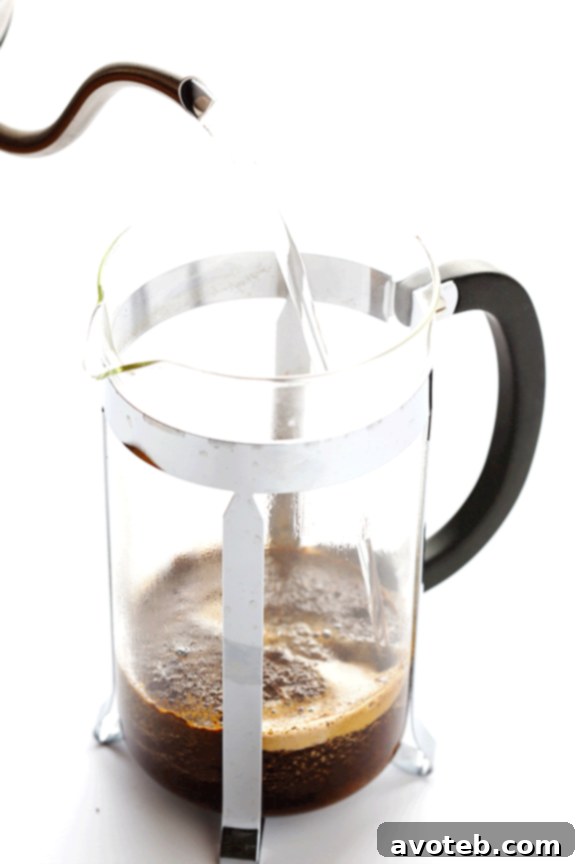
Step 5: Full Immersion and Brewing Time
After the crucial blooming phase, immediately pour the remaining hot water into the French press carafe, ensuring all the coffee grounds are fully submerged. Give the mixture one quick, gentle stir to fully integrate the grounds with the water and ensure even contact. Then, place the lid on top, with the plunger resting just above the water line (do not press it down yet). The mesh filter of the plunger will help keep the coffee grounds submerged for optimal immersion.
Now, let your coffee brew. The ideal brewing time for French press is typically 4 minutes. This full immersion method allows for maximum flavor extraction, creating that signature rich, robust, and full-bodied cup that French press enthusiasts adore. While some baristas experiment with slightly longer brew times (5-6 minutes) for an even stronger cup, 4 minutes is an excellent starting point that balances strength and flavor without veering into unpleasant bitterness or over-extraction.
Optional Variations: Some enthusiasts prefer to let the coffee bloom uncovered to allow more gases to escape freely. Others recommend “skimming” any floating grounds off the top after brewing is complete but before plunging, which can result in a slightly cleaner cup. While these techniques can subtly refine the brew, the core 4-minute covered brew remains highly effective and widely practiced. Feel free to experiment as you become more comfortable and curious about perfecting your unique brewing style.
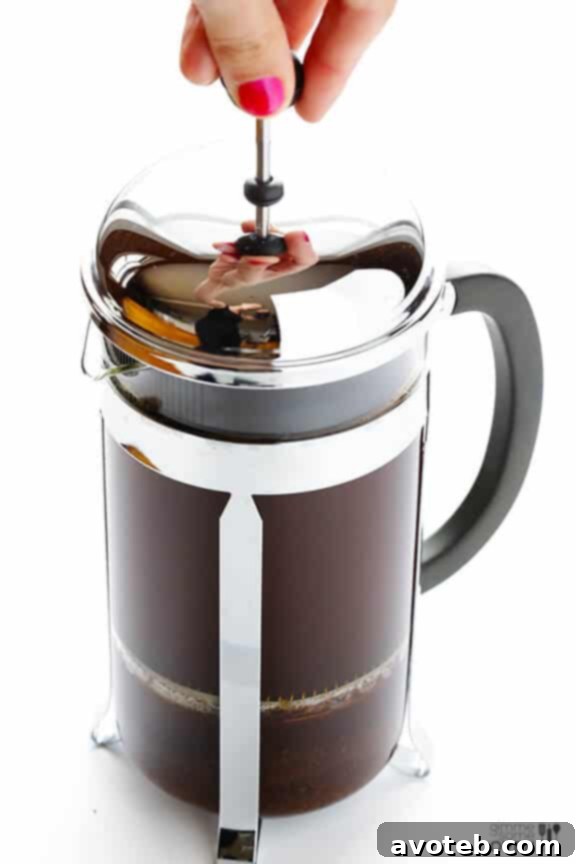
Step 6: The Gentle Plunge
Once the 4-minute brewing time is complete, it’s time for the signature French press action: the plunge. Place your hand on the top knob of the plunger and gently, slowly, and steadily push it downwards. The key word here is “gently.” Avoid forcing the plunger down quickly or with excessive pressure, as this can agitate the grounds excessively, push fine particles through the filter, and result in a cloudy, gritty, or even over-extracted and bitter cup.
A slow, controlled plunge, taking approximately 20-30 seconds to reach the bottom, will ensure the spent grounds are effectively separated from the liquid without disturbing them too much. This gentle approach results in a cleaner, clearer brew with minimal sediment, allowing the full flavors to shine through without unwanted gritty textures. Push until the plunger firmly reaches the bottom of the carafe, sealing the grounds away.
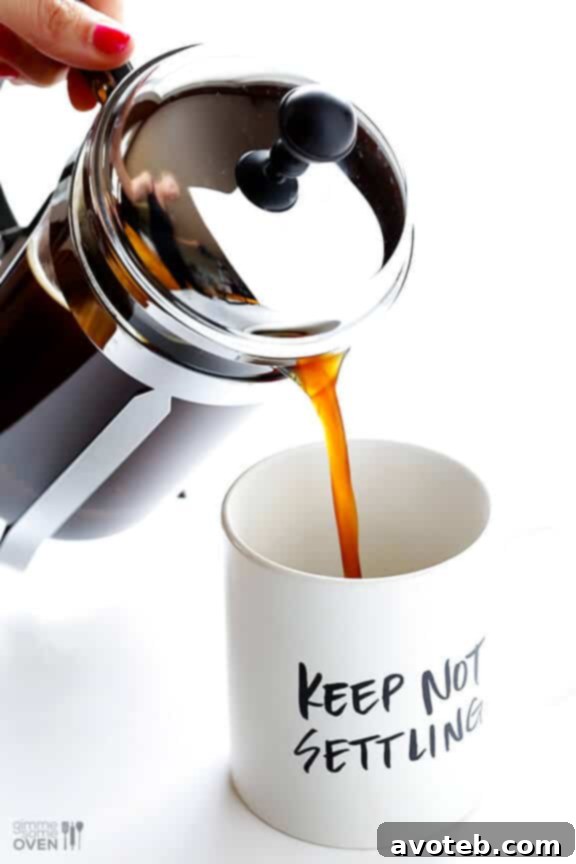
Step 7: Serve Immediately and Savor
The moment the plunger reaches the bottom, your delicious French press coffee is ready! It is crucial to immediately pour all the brewed coffee into your serving mug(s) or, if you’re not drinking the entire batch at once, into a separate pre-heated thermal carafe. This immediate transfer is vital because if the coffee remains in the French press with the spent grounds, it will continue to extract. This ongoing extraction will lead to an increasingly strong, bitter, and unpleasant flavor profile, diminishing the quality of your hard-earned brew.
Transferring your coffee immediately ensures your coffee stays at its peak flavor profile, preserving the balance and richness you worked to achieve. Savor the rich aroma and full-bodied taste of your freshly brewed coffee. French press is particularly delicious black, as its unique texture and robust flavors allow the nuances of the beans to truly shine through. However, feel free to personalize your cup with milk, cream, or sweetener to your liking. Enjoy the rewarding experience of a perfectly crafted cup!
Troubleshooting Your French Press Coffee
Even with the best instructions, brewing coffee can sometimes require a bit of fine-tuning to perfectly match your preferences. Here’s how to troubleshoot common issues you might encounter with your French press brew:
Coffee is Too Strong or Too Weak?
- Too Strong: If your coffee tastes overwhelmingly intense or syrupy, try reducing the amount of coffee beans slightly in your next brew, or decrease the brewing time by 30-60 seconds. A slightly coarser grind can also help by reducing the rate of extraction.
- Too Weak: Conversely, if your coffee lacks punch, tastes watery, or is too mild, increase your coffee-to-water ratio by adding a bit more coffee beans, or extend the brewing time by another minute. Ensure your grind isn’t too coarse, as very large particles can lead to under-extraction.
Coffee is Too Bitter?
Bitterness is often a common complaint with French press coffee, largely due to its full immersion method and the potential for over-extraction. Here are several factors to consider and adjust:
- Grind Size: The most common culprit. A grind that is too fine will over-extract quickly, releasing an excess of bitter compounds. Always ensure your grind is consistently coarse, like sea salt.
- Water Temperature: Water that is too hot (still boiling) can scorch the beans, imparting a burnt, harsh, and bitter taste. Always let your boiled water cool for 30-60 seconds to reach the optimal brewing temperature of 195-205°F (90-96°C).
- Brewing Time: Over-extraction from brewing for too long can lead to bitterness. Stick closely to the 4-minute guideline or slightly reduce it (e.g., to 3:30) if bitterness persists.
- Bean Quality and Roast: Some darker roasted beans inherently have more bitter notes. Experiment with different roasts (medium roasts often offer a more balanced flavor profile with less bitterness) and always check the freshness of your beans. Stale coffee can also produce off-flavors and increased bitterness.
- Plunge Speed: Pushing the plunger down too fast can agitate the grounds and force more bitter compounds and fine particles into your cup. Remember to plunge gently and slowly.
If French press consistently yields a level of bitterness that simply isn’t to your liking, despite adjustments, consider trying other brewing methods like cold brew (which uses cold water, virtually eliminating bitterness by avoiding the high temperatures that extract bitter compounds) or pour-over coffee (where hot water passes through the grounds more quickly, resulting in a cleaner, less bitter cup).
Coffee is Too Muddled or Muddy?
If your French press coffee has an unpleasantly gritty texture or appears cloudy and opaque, it’s likely due to either an inconsistent or too-fine grind, or a too-aggressive plunge. Double-check your grinder setting for coarseness and uniformity; aim for particles the size of coarse sea salt. When plunging, ensure it’s a slow, steady push over 20-30 seconds to allow the filter to effectively separate the grounds without forcing fine particles through.
Cleaning and Maintenance of Your French Press
To ensure your French press lasts for years and consistently delivers great coffee, proper cleaning and maintenance are essential. After each use, it’s important to promptly discard the coffee grounds. Avoid pouring them down the kitchen drain, as they can accumulate and cause severe clogs in pipes – instead, compost them or dispose of them in the trash. Rinse the press thoroughly with warm water, then disassemble the plunger and filter screen.
Wash all parts with mild dish soap and a soft sponge, paying particularly close attention to the mesh filter to remove any trapped coffee oils or fine grounds. Coffee oils can become rancid over time, imparting unpleasant, stale flavors to future brews if not properly cleaned. Rinse all components completely to remove any soap residue and allow them to air dry thoroughly before reassembling. Regular, thorough cleaning is key to the longevity of your French press and the ongoing quality of your coffee.
French Press Coffee Recipe Summary

French Press Coffee
Average: 5 from 13 reviews
- Prep Time: 2 minutes
- Brew Time: 4 minutes
- Total Time: Approximately 12 minutes (includes water heating, blooming, and brewing)
- Yield: 4 servings (8 fl oz / 240ml each)
Learn to brew perfect, full-bodied French Press Coffee with this easy step-by-step recipe and tutorial!
Ingredients
- 4 cups (approx. 946 ml or 32 fl oz) filtered water
- 52 grams (about 1/2 cup) good-quality whole coffee beans, freshly ground to a coarse consistency
Instructions
- Begin by heating your filtered water in a kettle until it reaches a full rolling boil. While the water is heating, measure out your whole coffee beans and grind them to a coarse consistency, similar to sea salt or coarse breadcrumbs. Add the freshly ground coffee to the bottom of your clean French press carafe.
- Once the water has boiled, remove it from the heat and allow it to rest for approximately 45 seconds. This cooling period ensures the water reaches the ideal brewing temperature (195-205°F / 90-96°C) to prevent scorching the beans.
- Pour just enough hot water over the coffee grounds in the French press to fully saturate them (roughly twice the weight of the coffee). This initiates the “bloom.” Gently stir the grounds for 3-5 seconds to ensure even saturation. Allow the grounds to bloom for exactly 1 minute, observing the release of gases.
- After the bloom, pour the remaining hot water into the French press, ensuring all grounds are submerged. Give the mixture one final gentle stir to ensure uniform dispersion. Place the lid on top, with the plunger resting just above the water level (do not press it down yet), and let the coffee brew for an additional 3 minutes. (This brings the total brewing time, including the bloom, to 4 minutes.)
- Once the 4 minutes are up, gently and slowly press the plunger down until it firmly reaches the bottom. Aim for a controlled, steady plunge over about 20-30 seconds to effectively separate the grounds without agitation.
- Immediately pour all the brewed coffee into your serving mugs or a pre-heated thermal carafe to prevent any further extraction and maintain optimal flavor. Enjoy your perfect, full-bodied cup of French press coffee!
Notes
Remember that coffee grounds are not suitable for garbage disposals as they can accumulate and cause clogs in your plumbing. Always dispose of them responsibly in the trash or a compost pile.
Recommended Supplies:
- French Press: Bodum Chambord Coffee Press
- Mug: The Everygirl
- Kettle: Hario V60 Buono Vida Drip Kettle, 1.2L
- Bar Spoon: World Market
- Coffee (for Kansas City residents): Oddly Correct, via Quay Coffee
Coffee cheers to you, and happy brewing!