
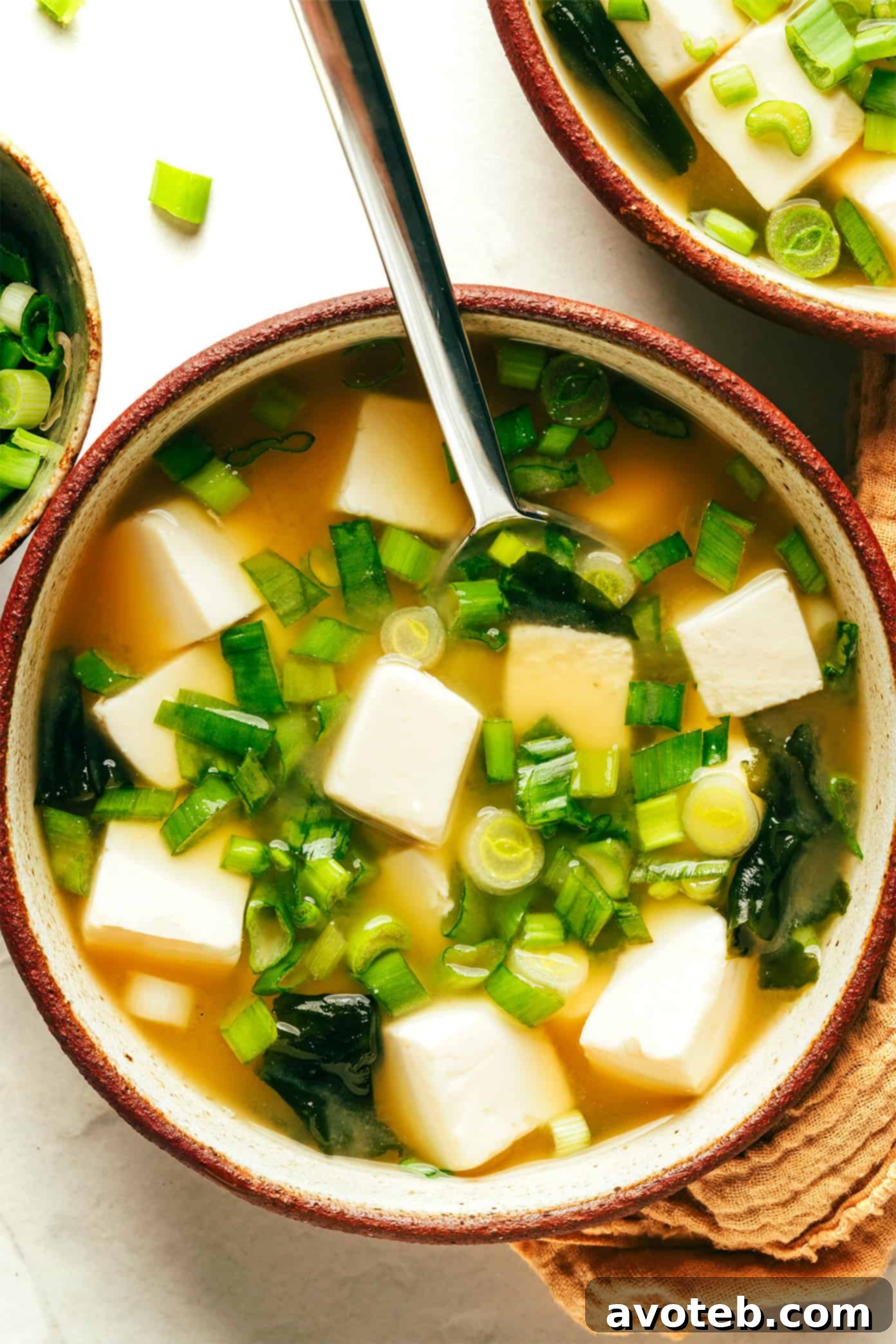
This traditional miso soup recipe is quick and easy to make with just 7 simple ingredients in under 20 minutes, offering a taste of authentic Japanese comfort right in your own kitchen.
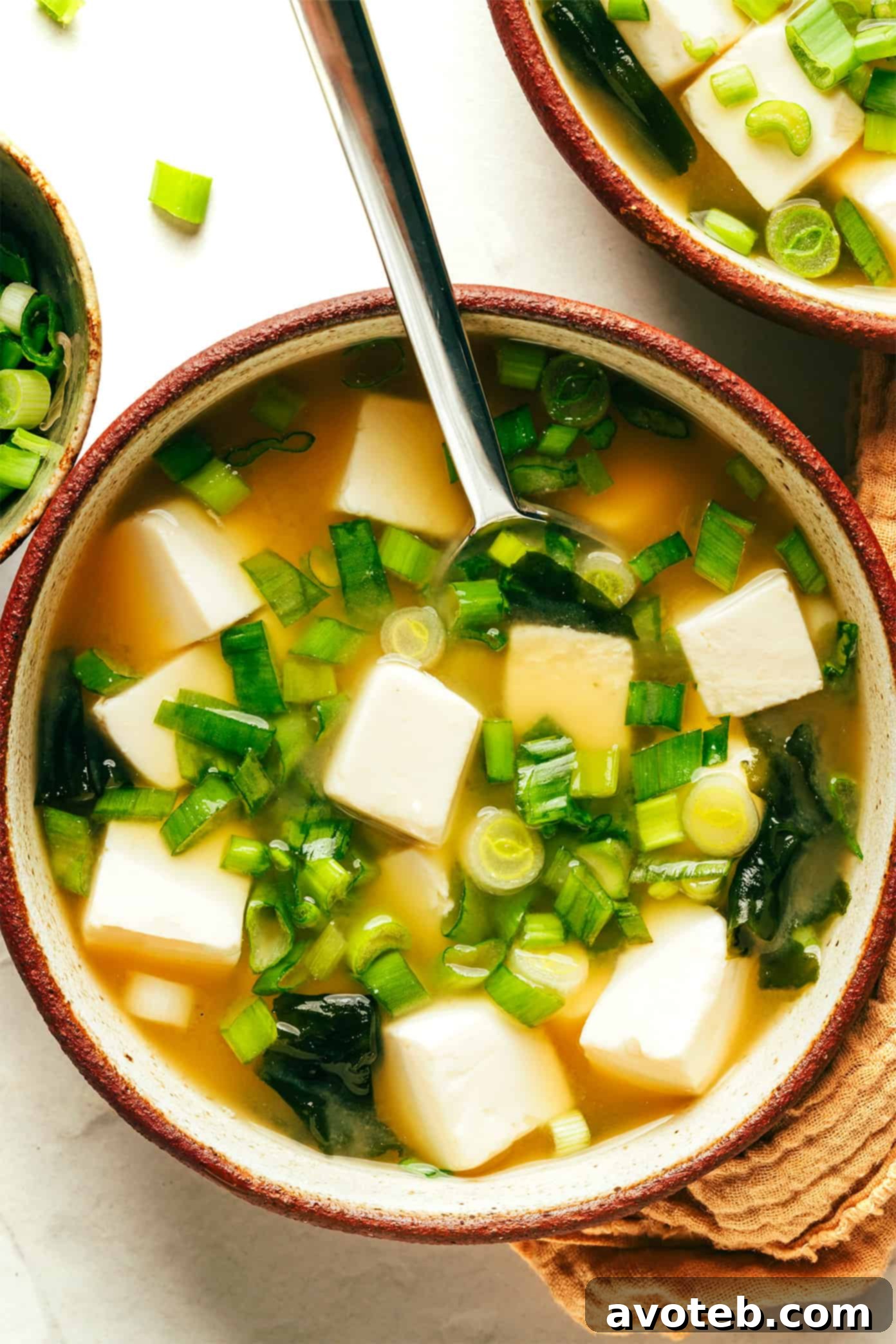
Restaurant-Quality Miso Soup at Home: A Culinary Journey

Embarking on the journey of making homemade miso soup for the first time is a truly rewarding experience. Prepare to be amazed by how incredibly simple, yet profoundly delicious, this Japanese staple can be. It’s a dish that embodies warmth, comfort, and deep umami flavors, perfect for any occasion.
This heartwarming Japanese classic comes together effortlessly in less than 30 minutes, utilizing just a handful of accessible ingredients. Each spoonful delivers a rich, soothing, and deeply satisfying taste. The secret lies in mastering the dashi broth – the very heart and soul of any exceptional miso soup. Once you understand the nuances of creating dashi from humble pantry staples, you’ll unlock a world of flavor that will elevate your culinary skills.
Whether you choose to serve it as an elegant starter to a larger meal, a light and nourishing lunch on its own, or as a beloved side dish alongside your favorite rice bowls or a homemade sushi feast (our personal family favorite!), this recipe is destined to become a cherished go-to in your repertoire. It’s a dish we adore, and we’re confident you will too!
Miso Soup Recipe: A Quick Visual Guide
For a concise visual walkthrough of the miso soup preparation, here’s a short video that captures the essence of this traditional Japanese dish.

What Is Miso Soup? Understanding This Japanese Staple
Miso soup (味噌汁, miso shiru) is far more than just a soup; it’s a cornerstone of Japanese culinary tradition, cherished for its comforting warmth and remarkable simplicity. At its core, miso soup is built upon a foundation of dashi, a delicate yet profoundly savory broth that serves as the backbone of countless Japanese dishes. Dashi is traditionally infused with the subtle oceanic notes of kombu (dried kelp) and the rich, smoky depth of bonito flakes (dried, shaved fish flakes), imparting the soup with its characteristic umami flavor – a fifth basic taste sensation described as savory and rich.
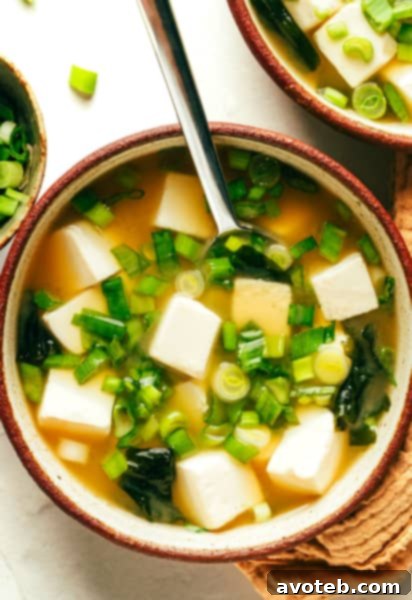
Once the dashi base is prepared, it is expertly combined with miso paste, a fermented soybean paste that introduces an irresistible complexity of salty, savory, and subtly sweet flavors. Miso paste is also a powerhouse of beneficial probiotics, adding a healthy dimension to this delicious soup. Most authentic versions of miso soup further enrich this flavorful broth with small, tender cubes of silken tofu, rehydrated wakame seaweed for a touch of minerality and texture, and finely sliced scallions, which provide a fresh, pungent accent.
Miso soup is a ubiquitous presence in Japanese dining. You’ll frequently find it served as an essential accompaniment to rice or sushi in Japanese restaurants, enhancing the overall dining experience. However, its true essence lies in its role as a beloved staple in home kitchens across Japan. Preparing it from scratch reveals the layers of its appeal, showcasing why this seemingly simple dish holds such a profound place in Japanese culture.
Essential Miso Soup Ingredients: Crafting Authenticity
To create a truly authentic and delicious miso soup at home, you need only a handful of fundamental ingredients. Each component plays a vital role in building the soup’s distinctive flavor profile:
- Water: The pristine base for your dashi broth. Always begin with cold water when soaking kombu to ensure a slow, optimal extraction of its delicate flavors.
- Kombu: These dried kelp sheets are indispensable for infusing the dashi with a subtle, clean ocean flavor and a profound umami depth. It’s the first step to a rich broth.
- Bonito flakes (Katsuobushi): Thinly shaved, dried, and smoked skipjack tuna flakes that dramatically deepen the savory notes of the dashi, contributing a smoky, complex umami. For a vegan alternative, kombu can be paired with dried shiitake mushrooms.
- Soft Silken Tofu: Characterized by its delicate, custard-like texture, silken tofu is traditionally used. It provides a wonderful textural contrast to the warm, light broth and absorbs flavors beautifully.
- Wakame Seaweed: A mild, rehydrated sea vegetable that expands significantly when added to hot liquid. It contributes a slight chewiness, a touch of minerality, and essential nutrients to the soup.
- White Miso Paste (Shiro Miso): The undisputed star of the soup. This fermented soybean paste is typically smooth, mild, and possesses a slightly sweet, nuanced flavor. It introduces the signature savory depth and probiotic benefits.
- Scallions (Green Onions): Freshly sliced, vibrant green onions are added at the very end. They lend a crisp texture, bright color, and a gentle, aromatic onion flavor that beautifully complements the rich broth.

Expert Tips for Miso Soup Perfection Every Time
Achieving the perfect miso soup is simpler than you might think, especially with a few key techniques. Here are some invaluable tips to ensure your homemade miso soup is consistently delicious and authentic:
- Never Boil Miso Paste: This is perhaps the most crucial rule. Miso paste contains delicate flavors and beneficial live probiotics that are destroyed by high heat. Always add miso paste to a soup that is gently warm, just below a simmer, and never allow it to reach a rolling boil once the miso has been added.
- Start Kombu in Cold Water: When preparing your dashi, always begin by soaking the kombu in cold water. This gradual infusion helps the kombu slowly release its glutamic acid, which is the source of its umami, preventing the broth from becoming slimy or overly bitter.
- Avoid Pressing Bonito Flakes: After the bonito flakes have steeped in the hot water, strain the dashi by allowing the liquid to drain naturally through a fine-mesh sieve or cheesecloth. Resist the urge to press on the flakes, as this can extract undesirable bitter flavors into your otherwise pristine broth.
- Dissolve Miso with a Strainer or Ladle: To ensure your miso paste dissolves smoothly and evenly into the broth without forming clumps, scoop it into a small fine-mesh strainer or a ladle. Lower it into the hot broth and use chopsticks or a fork to whisk the paste until it fully disperses.
- Adjust Miso Flavor to Your Liking: White miso (shiro miso) is known for its mild, slightly sweet, and approachable flavor. If you prefer a more pronounced umami and a deeper, saltier profile, consider experimenting with a touch of red miso (aka miso) or a blend of different miso types. Always taste and adjust gradually.
- Soak Wakame Just Before Adding: Dried wakame seaweed rehydrates remarkably quickly, usually within 3 to 5 minutes. It will continue to expand in the hot broth, so add it close to serving time to maintain its ideal texture. Over-soaking or adding too early can lead to overly soft, mushy seaweed.
- Serve Miso Soup Immediately: Miso soup is best enjoyed fresh and hot. The delicate balance of flavors and textures can diminish if the soup sits for too long. Tofu can become overly soft, and the wakame may lose its pleasant bite. For optimal taste and experience, serve it straight from the stove.
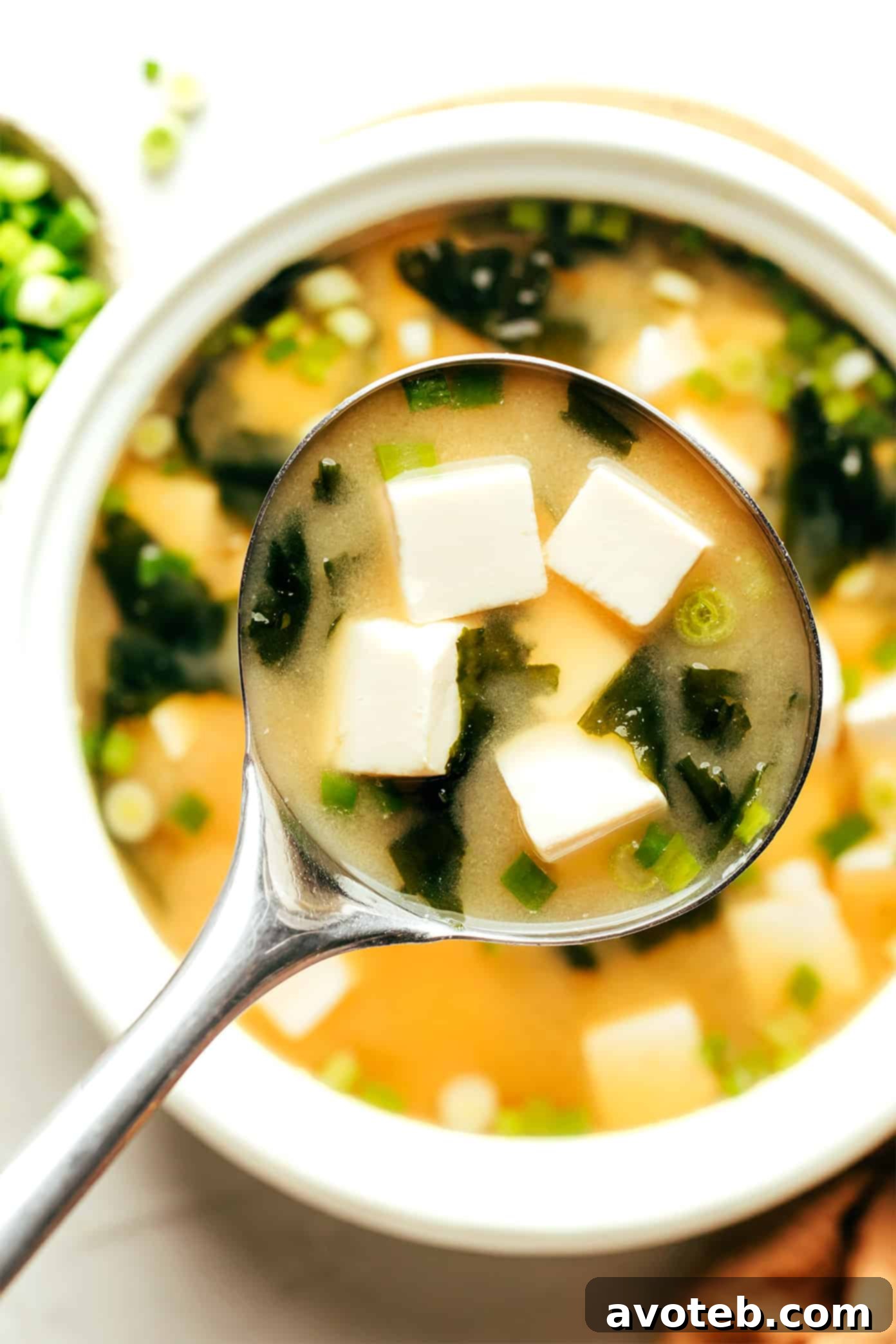
Creative Miso Soup Variations to Explore
Once you’ve mastered the foundational miso soup recipe, the possibilities for customization are endless! Miso soup is incredibly versatile, allowing you to easily adapt it to your preferences or whatever ingredients you have on hand. Here are some delightful variations to inspire your culinary creativity:
- Add Mushrooms for Earthy Depth: Incorporate sliced shiitake, enoki, or even cremini mushrooms. They release rich, earthy flavors and add a wonderful textural element, making the soup more robust and satisfying.
- Stir in Fresh Greens: Boost the nutritional content and freshness by adding leafy greens like spinach, thinly sliced bok choy, napa cabbage, or even kale. Stir them in during the last few minutes of cooking until just wilted.
- Experiment with Different Miso Types: While white miso offers a mild sweetness, red miso (aka miso) provides a deeper, saltier, and more fermented flavor profile with pronounced umami. You can use red miso entirely or mix it with white miso for a complex, balanced taste. Yellow miso (shinshu miso) offers a good middle ground.
- Make it a Heartier Meal with Noodles: Transform your miso soup into a more substantial dish by adding cooked udon, soba, or thin rice noodles. Cook the noodles separately and add them to individual bowls just before serving to prevent them from becoming mushy.
- Include Additional Protein: For a more filling meal, consider adding cooked shrimp, delicate poached eggs, or shredded chicken. Tofu alone is a great source of plant-based protein, but these additions can cater to different dietary needs and preferences.
- Elevate with Flavorful Toppings: Garnish your miso soup with a sprinkle of toasted sesame seeds, a drizzle of spicy chili oil for a kick, or a fragrant touch of toasted sesame oil for an extra layer of nutty aroma and flavor.
- Craft a Vegan Miso Soup: Easily adapt this recipe for a plant-based diet by creating a vegan dashi. Simply substitute the bonito flakes with dried shiitake mushrooms alongside the kombu. This combination yields a wonderfully rich and savory umami broth without any animal products.
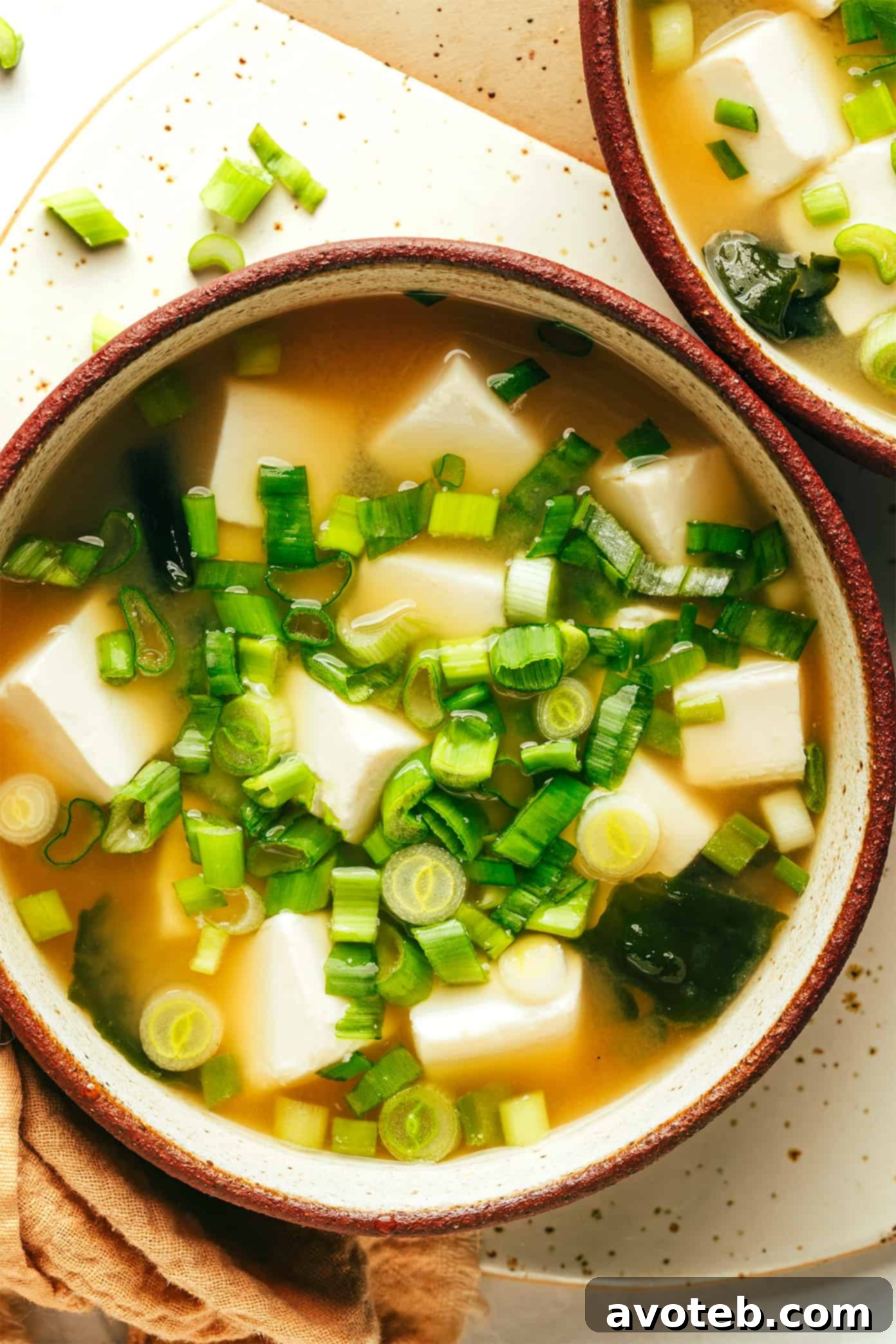
Frequently Asked Questions About Miso Soup
Can I use dashi powder instead of making dashi from scratch?
Absolutely! Instant dashi powder is a fantastic shortcut for busy days and still delivers excellent flavor. Just follow the package instructions to prepare your dashi, then continue with the recipe from the step where you add the tofu and subsequent ingredients.
What’s the difference between red and white miso paste?
The primary difference lies in their fermentation time and resulting flavor. White miso (shiro miso) is fermented for a shorter period, giving it a milder, sweeter, and sometimes fruity flavor. Red miso (aka miso), on the other hand, is aged for a longer duration, resulting in a stronger, saltier, and more robust umami flavor. There’s also yellow miso (shinshu miso) which sits in between, offering a balanced profile.
Is miso soup gluten-free?
Miso soup can be gluten-free, but it’s essential to check the label on your miso paste. While many miso pastes are made purely from soybeans and rice koji, some varieties may contain barley or wheat as part of the fermentation process. Look specifically for a “gluten-free” certification or clear labeling on the package if you require a strict gluten-free diet.
Can I freeze miso soup?
For the best quality, miso soup is definitely best enjoyed fresh. However, if you need to store it, you can freeze just the dashi base (without the tofu, wakame, or miso paste). Once thawed, reheat the dashi gently and then proceed to add fresh tofu, rehydrated wakame, and dissolve the miso paste for the optimal texture and flavor experience.
What’s the best type of tofu for miso soup?
Soft silken tofu is traditionally preferred for its delicate, custard-like texture that melts in your mouth and contrasts beautifully with the broth. However, firm silken tofu or even medium-firm tofu can be used if you prefer a slightly chewier texture, just be sure to cut them into small, bite-sized cubes.
How should I serve miso soup?
Miso soup is incredibly versatile. It’s most commonly served as a warm starter or side dish with Japanese meals, such as sushi, tempura, or teriyaki. It also makes a light and nourishing breakfast or lunch on its own, especially during colder months. Don’t hesitate to pair it with steamed rice and a simple grilled fish or vegetable dish.
More Favorite Soup Recipes to Savor
If you enjoyed this warming bowl of miso soup, be sure to explore these other delightful soup recipes:
- Egg Drop Soup
- Hot and Sour Soup
- Easy Thai Curry Hot Pot
- Tom Kha Gai (Thai Coconut Chicken Soup)
- Egg Roll Soup
Print Recipe
Traditional Miso Soup
5 from 2 reviews
-
Prep Time:
5 minutes -
Cook Time:
15 minutes -
Total Time:
20 minutes -
Yield:
3 – 4 servings
Description
Discover how to easily make authentic and delicious traditional miso soup with this straightforward 7-ingredient recipe. This guide will walk you through creating a flavorful dashi broth and combining it with the classic components for a comforting bowl of Japanese goodness.
Ingredients
- 6 cups cold water
- 1 (approximately 6 x 6 inches, 15 grams) sheet of dried kombu
- 1 1/2 packed cups (30 grams) dried bonito flakes
- 12 ounces soft silken tofu, cut into ½-inch cubes
- 4 scallions, thinly sliced
- 2 tablespoons dried wakame seaweed
- 1/3 cup white miso paste
Instructions
- Soak the kombu. In a large saucepan, combine the cold water and the sheet of kombu. Allow the kombu to soak for at least 30 minutes. This slow soaking process is crucial for gently infusing the water with the kombu’s subtle umami flavor and preventing any bitterness.
- Prepare the dashi broth. After soaking, place the pot over medium-low heat. Watch carefully and remove the kombu with tongs just as small bubbles begin to form around the edges of the pot – do not let the water come to a full boil at this stage. Increase the heat slightly until the water just barely reaches a simmer, then immediately turn off the heat. Add the dried bonito flakes to the hot water. Let the bonito flakes steep for 2 minutes for a lighter, more delicate broth, or up to 5 minutes for a richer, more profound umami flavor.
- Strain the dashi broth. Prepare a fine-mesh strainer by lining it with a paper towel or cheesecloth and place it over a heat-safe bowl. Carefully and slowly pour the dashi broth through the prepared strainer, allowing the liquid to drain naturally. It is important to avoid pressing down on the bonito flakes, as doing so can release bitter compounds into your otherwise clean broth. Return the clear dashi broth to the saucepan.
- Warm the tofu and scallions. Add the cubed soft silken tofu and half of the thinly sliced scallions to the dashi broth in the saucepan. Gently warm the soup over medium heat until it is just below a simmer. Again, ensure the soup does not boil, as this can cause the delicate tofu to break apart and become crumbly.
- Add the wakame. Stir in the dried wakame seaweed. The wakame will quickly rehydrate and expand in the warm liquid. Once added, turn off the heat immediately to prevent overcooking the seaweed and to prepare for adding the miso.
- Dissolve the miso. Scoop the white miso paste into a small fine-mesh strainer or a ladle. Lower the strainer/ladle partially into the hot broth. Use chopsticks or a fork to whisk the miso paste thoroughly until it is completely dissolved into the broth, ensuring no clumps remain. This method helps to temper the miso and blend it seamlessly.
- Adjust and serve. Taste the miso soup and, if necessary, adjust the seasoning. You might wish to add a touch more miso paste for increased umami or a pinch of salt if you prefer. Briefly warm the soup once more, just until it is almost simmering (but do not let it boil), then remove it from the heat.
- Final garnish and enjoyment. Ladle the hot miso soup into individual serving bowls. Garnish each bowl generously with the remaining fresh scallions. Serve immediately while the soup is warm and comforting, and savor the authentic flavors.
Recommended Equipment and Ingredients
To ensure you have everything you need for the best miso soup experience, here are some key items:
Kombu
Buy Now →
Bonito Flakes
Buy Now →
Wakame
Buy Now →
White Miso
Buy Now →