
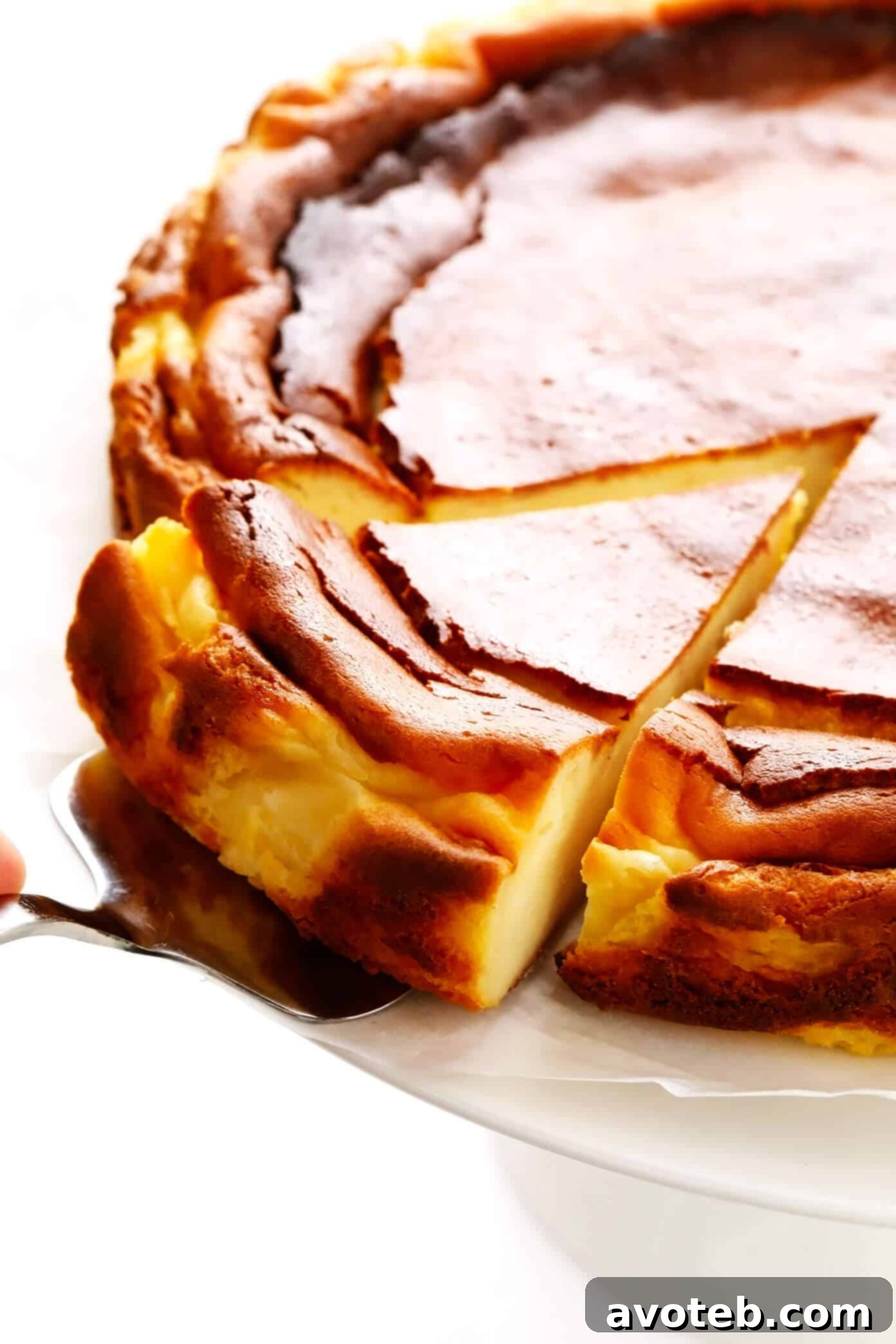
This “Burnt” Basque Cheesecake recipe, known throughout Spain as ‘tarta de queso’, offers an unparalleled blend of lightness, creamy texture, and rich caramelized flavor. It’s incredibly easy to make, nearly foolproof, and promises a truly delicious dessert experience.
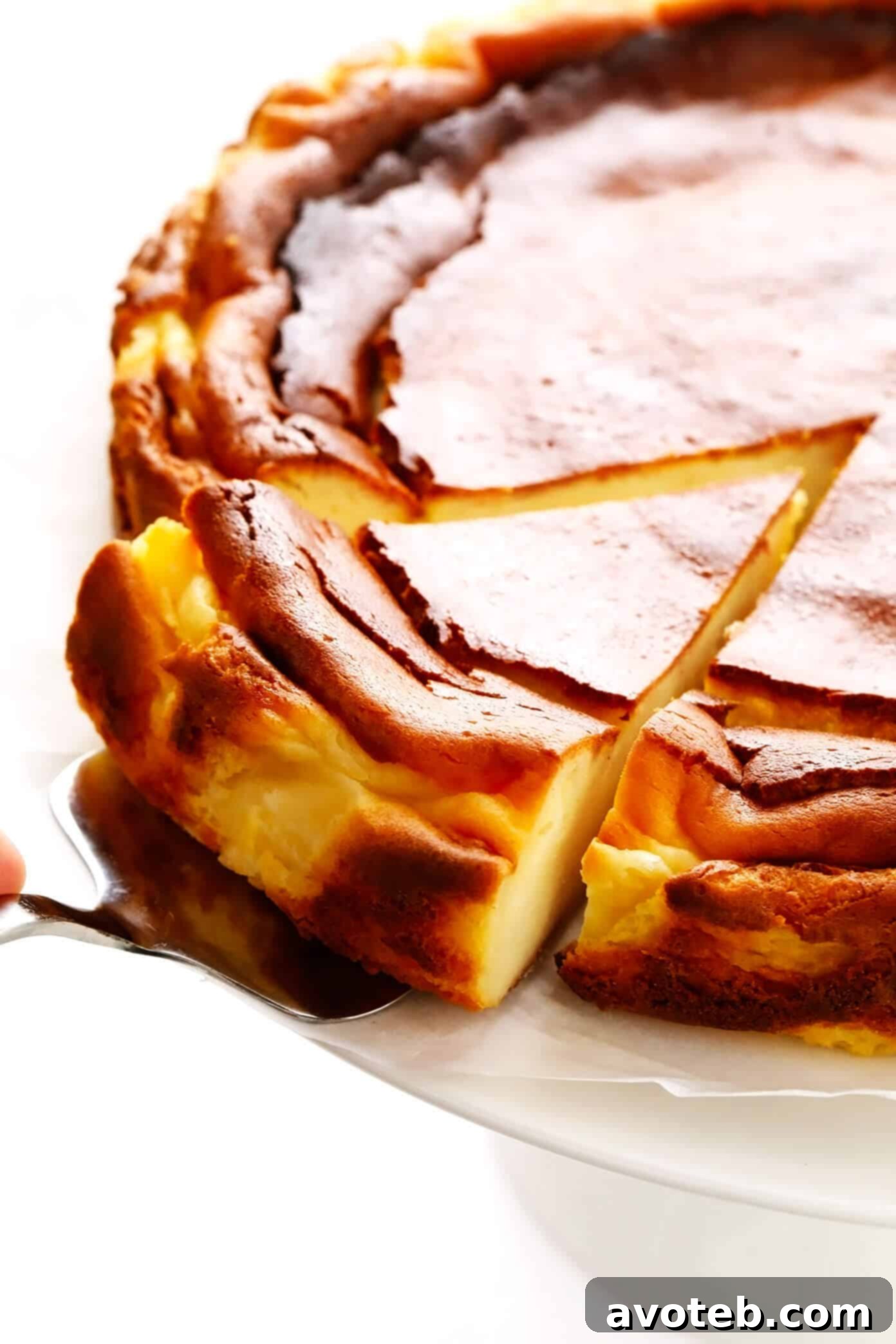
The “burnt” Basque cheesecake has taken the culinary world by storm, becoming a global phenomenon and a trending dessert sensation. Yet, long before it graced menus and social feeds worldwide, this distinctively rustic cheesecake was a cherished local favorite in Spain for many decades. Its recent surge in popularity highlights a growing appreciation for its unique charm and effortless elegance, standing in delicious contrast to its more structured counterparts.
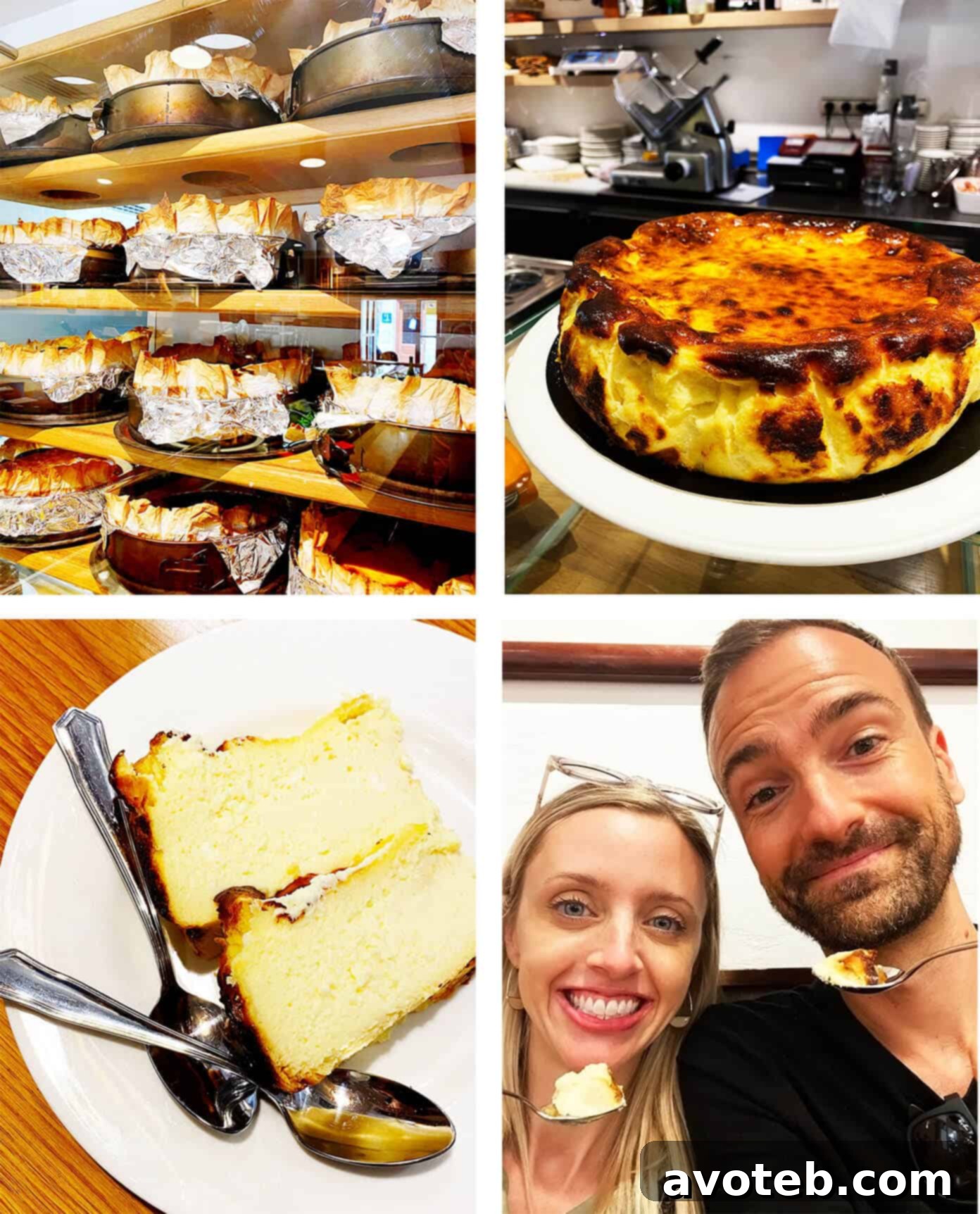
Our journey to discover the true essence of Basque cheesecake led us to its origin during a memorable weekend escape to San Sebastián last year. This city, celebrated as a gastronomic capital, beckoned with an enticing array of culinary delights – from savory *pintxos* and succulent *txuletas* to exquisite anchovies, artisanal cheeses, and fine wines. Amidst these temptations, one recommendation consistently stood out for the iconic Basque country cheesecake: a visit to La Viña was absolutely essential.
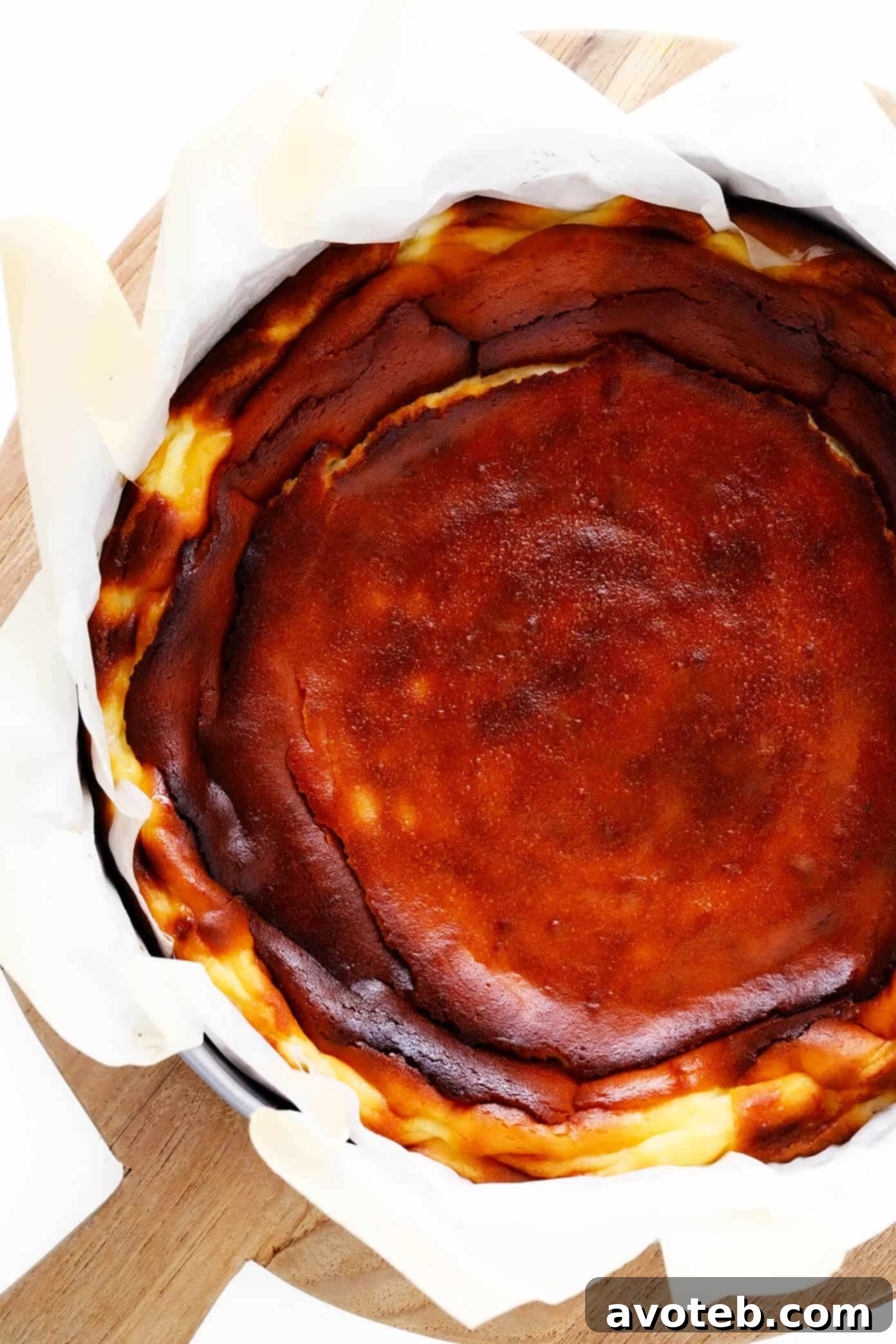
La Viña, a charming and unassuming local restaurant, holds the esteemed credit for inventing the Basque cheesecake in the 1990s. Chef-owner Santiago Rivera embarked on a quest to introduce a new dessert to his menu, ultimately revolutionizing the cheesecake landscape. Unlike the dense, firm, and flawlessly smooth American-style cheesecakes that often boast a cookie crust and are meticulously baked to avoid cracks, Chef Rivera boldly redefined the classic. He masterfully adjusted proportions and techniques to create a cheesecake that is remarkably airy yet creamy, baked without a crust in a simple parchment paper sling. Its edges ripple with natural cracks, and its famously “burnt” (more accurately, deeply caramelized) exterior is a hallmark of its irresistible appeal. This deliberate imperfection, far from being a flaw, is a testament to its rustic beauty and rich flavor profile.
This stunning Basque cheesecake, also known as *tarta de queso*, fearlessly defies conventional baking rules and offers an outrageously delicious experience. What makes it even more appealing for home bakers is its incredible simplicity, often described as foolproof, requiring only a handful of basic ingredients. Chef Rivera graciously shared his original *tarta de queso* recipe years ago, calling for just cream cheese, eggs, sugar, flour, and heavy cream. However, he also encourages home cooks to personalize the recipe. “If you want salt, add salt; if you want vanilla, add vanilla; some people add lemon zest,” he advises. To truly embrace the authentic La Viña experience, consider serving your cheesecake with a small glass of Spanish sherry, a traditional pairing that elevates the dessert.
Among our friends in Spain, this cheesecake is a resounding favorite, leading to many delightful tasting sessions and experimental baking at home for various gatherings. We’ve enjoyed refining our own slightly-tweaked version of Chef Rivera’s *tarta de queso* recipe. In our home, we particularly love adding a touch of vanilla and a pinch of sea salt to enhance the flavor. But as Chef Rivera himself suggests, the beauty lies in experimentation. Feel empowered to customize this recipe to your liking; the rules are truly meant to be broken here, which is a wonderfully refreshing approach, especially in the often perfection-driven world of cheesecake baking. This philosophy makes the process enjoyable and the results uniquely yours.
Now, let’s dive into making some authentic “burnt” Basque cheesecake!
Essential Ingredients for “Burnt” Basque Cheesecake
Before we delve into the full recipe, let’s discuss the key ingredients for crafting this exquisite Basque cheesecake. I’ve slightly adjusted Chef Rivera’s original recipe to perfectly fit an 8- or 9-inch springform pan, which is a common size in most home kitchens. Should you possess a 10-inch springform pan, it will also work beautifully, though it may require a slightly shorter baking time and will result in a thinner cheesecake, still equally delicious.
- Cream cheese: It’s always amusing how this ingredient is simply referred to as “Philadelphia” here in Spain, a testament to the brand’s ubiquity. For the best flavor and a wonderfully rich, creamy texture, I wholeheartedly recommend using full-fat cream cheese. Ensure it’s at room temperature to prevent lumps and facilitate smooth mixing.
- Granulated Sugar: Following Chef Rivera’s straightforward approach, we use basic white granulated sugar as the primary sweetener. This choice allows the cream cheese and caramelized notes to truly shine, contributing to both texture and the desired “burnt” effect.
- Eggs: Basque cheesecake is renowned for its slightly custardy, “eggy” texture, a characteristic many adore. To achieve a balance that is less overtly eggy yet still rich, I’ve reduced the number of large eggs in this recipe to five. It’s crucial for eggs to be at room temperature to integrate seamlessly into the batter, ensuring a uniform and silky consistency.
- Vanilla extract: While optional in the purest traditional sense, a good quality vanilla extract adds a layer of warm, aromatic depth that beautifully complements the creamy tang of the cheesecake. It’s a small addition that makes a significant difference in enhancing the overall flavor profile.
- Heavy Cream: This is a non-negotiable for achieving the signature luscious, airy-yet-creamy texture of a true Basque cheesecake. Do not substitute with half-and-half or whole milk; heavy whipping cream (with a high fat content) is essential. For those in Spain, look for *nata de montar* (whipping cream), specifically avoiding *nata de cocinar* (cooking cream) as they have different fat percentages and will yield different results. Ensure it’s also at room temperature.
- Sea Salt: A pinch of fine sea salt in the batter is vital for balancing the sweetness and enhancing all the other flavors. Salt acts as a flavor amplifier, making the cheesecake taste even more vibrant. For serving, sprinkling a few flakes of flaky sea salt on individual slices adds a delightful textural contrast and a sophisticated touch. If using iodized table salt, remember to halve the amount, as it is much saltier by volume.
- All-Purpose Flour: Finally, a small amount of all-purpose flour is included. This not only helps bind the ingredients but, more importantly, aids the cheesecake in achieving its impressive rise in the oven and contributes to its unique, almost soufflé-like interior structure before settling into its creamy state.
Expert Tips for a Flawless “Burnt” Basque Cheesecake
Achieving the perfect “burnt” Basque cheesecake, with its characteristic creamy interior and beautifully caramelized exterior, involves a few key techniques. Over time, I’ve gathered invaluable tips that ensure success and make the baking process truly enjoyable. Embrace the rustic nature of this dessert; perfection is not the goal, but deliciousness certainly is!
- Ensure Room Temperature Ingredients: This seemingly small detail is paramount for a smooth, homogenous batter and an evenly baked cheesecake. Cold cream cheese, eggs, and heavy cream will result in a lumpy mixture and can affect the final texture. Plan ahead by taking them out of the refrigerator at least an hour or two before baking. If you’re short on time, quick methods exist online to gently warm ingredients (like placing eggs in warm water or briefly warming cream cheese).
- Utilize the Correct Pan: Basque cheesecake batter impressively puffs up during baking, often rising significantly above the pan’s rim before settling. Therefore, using a springform pan with tall sides is absolutely essential to prevent overflow. I highly recommend a 9-inch springform pan for this recipe. While an 8-inch pan will yield a thicker cheesecake requiring a longer baking time, and a 10-inch pan a thinner one needing less time, ensure your chosen pan has sufficient height. Avoid using a standard 1-inch tall round cake pan, as the batter will spill.
- Always Sift the Flour: For an exceptionally smooth and lump-free cheesecake batter, sifting the all-purpose flour directly into the mixture is a game-changer. A fine-mesh strainer works perfectly for this, ensuring the flour disperses evenly without clumping, contributing to a silky texture.
- Avoid Overmixing the Batter: Cheesecake batter, especially one aiming for an airy-yet-creamy texture, is sensitive to overmixing. Whipping the ingredients for too long or at too high a speed can incorporate excessive air, which might lead to a dry texture or cracks. The goal is to mix each ingredient just until it is fully incorporated, then move on quickly. This gentle approach ensures the desired creamy consistency.
- No Water Bath Required: One of the most liberating aspects of baking a Basque cheesecake is the absence of a water bath, a common requirement for traditional cheesecakes to prevent cracking. This recipe celebrates its rustic nature, with the cake intentionally rising, falling, and creating beautiful ridges and natural cracks. To be safe, simply place your springform pan on a large baking sheet. This catches any potential overflow as the cheesecake vigorously rises, keeping your oven clean.
- Monitor the Caramelization of the Top: Oven temperatures can vary, leading to different browning rates. Keep a watchful eye on your cheesecake during the final 15-20 minutes of baking to achieve your preferred level of deep golden-brown caramelization. If it begins to darken too quickly, gently lay a piece of aluminum foil over the top. Conversely, if the center is set but the top isn’t dark enough, a very brief stint under the broiler (just a minute or two, watching *constantly*) can achieve that signature “burnt” finish. Broiling works incredibly fast, so vigilance is key!
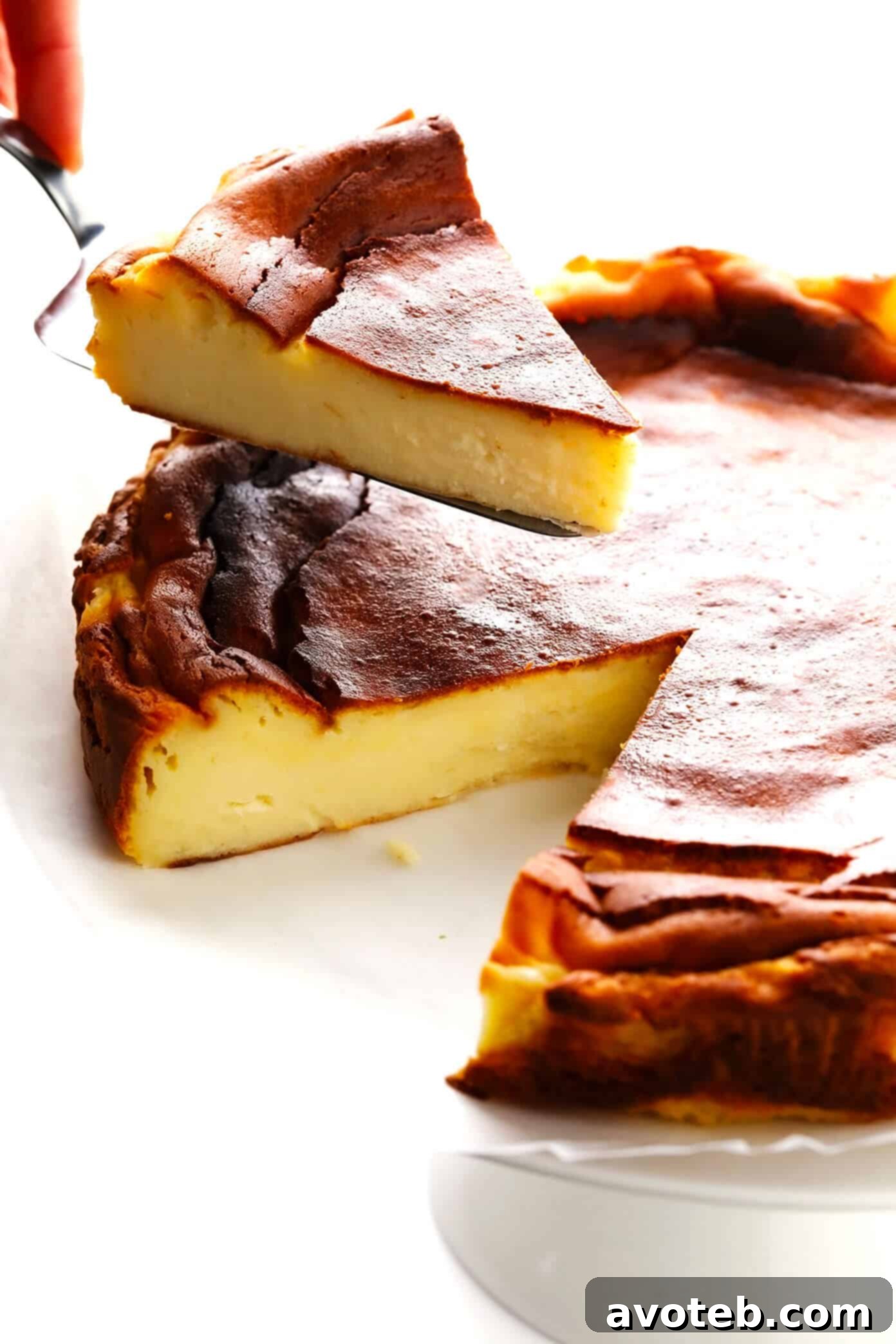
- Customize Your Desired Consistency: Most authentic Basque cheesecakes enjoyed in Spain possess a slightly soft, almost custardy, and creamy center. This means the cheesecake should still be notably jiggly in the middle when you remove it from the oven. However, personal preference reigns supreme! If you prefer a firmer, more set cheesecake, extend the baking time. For an even softer, gooier center, reduce the baking time slightly. Experiment to find your perfect texture.
- *No Te Preocupes* (Don’t Worry!) About Perfection: The true spirit of a Basque cheesecake lies in its rustic, imperfect beauty. Embrace the uneven appearance of the parchment paper, the cracks along the edges, and the natural rise and fall of the cake. These characteristics are part of its charm. Focus on the delightful flavor and creamy texture; the aesthetics are secondary and inherently beautiful in their ruggedness!
Creative Variations for Your Basque Cheesecake
As highlighted earlier, the beauty of this Basque cheesecake recipe lies in its adaptability. Chef Rivera himself champions experimentation, inviting you to tailor the ingredient amounts to achieve a cheesecake that’s perfectly aligned with your preferences—whether you desire it creamier, sweeter, more eggy, or cheesier. Beyond these basic adjustments, here are some delightful variations to explore, allowing you to truly make this recipe your own:
- Make it Gluten-Free: Adapting this recipe for dietary needs is simple. Just swap the all-purpose flour for a 1-to-1 gluten-free flour blend. The outcome will be just as delicious, maintaining the signature texture and flavor without compromise. This ensures everyone can enjoy a slice of this magnificent dessert.
- Infuse with Citrus Zest: For a vibrant and refreshing twist, consider adding the finely grated zest of one lemon or orange to the cheesecake batter. The aromatic oils in the zest will infuse the cheesecake with a subtle brightness that beautifully complements the rich, creamy base, offering a lovely counterpoint to the caramelized notes.
- Introduce a Hint of Bourbon: For an indulgent, sophisticated flavor profile, try incorporating bourbon. This variation involves swapping 3 tablespoons of the heavy cream for 3 tablespoons of good quality whiskey or bourbon. The rich, woody notes of the bourbon add a fantastic depth and warmth to the cheesecake, creating a truly unique and memorable dessert experience that we can personally vouch for.
- Adjust Baking Time for Texture Preference: The ideal texture of Basque cheesecake is often described as slightly soft and creamy in the center. However, your preference is key. For an even softer, more gooey cheesecake, reduce the baking time by 5-10 minutes. If you prefer a firmer, more fully cooked consistency, extend the baking time by 5-10 minutes. Always remember that if the top isn’t as caramelized as you’d like, a very brief (and carefully monitored!) broil can achieve that signature “burnt” effect. Conversely, if it browns too quickly, a sheet of foil can protect it.
- Experiment with Toppings: While traditional Basque cheesecake is often served unadorned, its versatile flavor makes it an excellent canvas for various toppings. A vibrant fruit sauce (such as berry compote), a decadent caramel sauce, or a rich chocolate ganache would all make delicious additions, enhancing the dessert for special occasions or simply to satisfy a craving for extra sweetness.
More Indulgent Cheesecake Recipes to Explore
If you’ve enjoyed the delightful simplicity and rich flavor of the Basque cheesecake, and are keen to expand your cheesecake repertoire, you’re in for a treat! Cheesecakes offer a vast world of flavors and textures, from classic creamy delights to inventive, modern twists. Here are some of my all-time favorite cheesecake recipes that I highly recommend you try next. Each offers a unique and satisfying experience, perfect for any dessert lover looking to bake something truly special and delicious!
- Samoa Cheesecake
- Strawberry Nutella Cheesecake
- Lighter Blueberry Cheesecake
- Chocolate Almond Cheesecake
Basque Cheesecake (Tarta de Queso)
Author: Ali
Prep Time: 15 mins
Cook Time: 60 mins
Total Time: 1 hour 15 mins
Yield: 12 servings 1x
Description
This “Burnt” Basque Cheesecake (Tarta de Queso) is renowned for its incredibly light, smooth, and creamy texture, topped with a distinctively caramelized exterior. It’s a remarkably easy-to-make dessert that is virtually foolproof, making it a perfect choice for any baker. Enjoy this Spanish classic!
Ingredients
Scale
- 2 pounds (907g) full-fat cream cheese, at room temperature
- 1 1/3 cups (266g) white granulated sugar
- 5 large eggs, at room temperature
- 1 1/4 cups (300ml) heavy cream, at room temperature (Nata de montar if in Spain)
- 2 teaspoons vanilla extract (optional, but recommended)
- 1 teaspoon fine sea salt* (plus optional flaky sea salt for topping)
- 1/4 cup (30g) all-purpose flour, sifted
Instructions
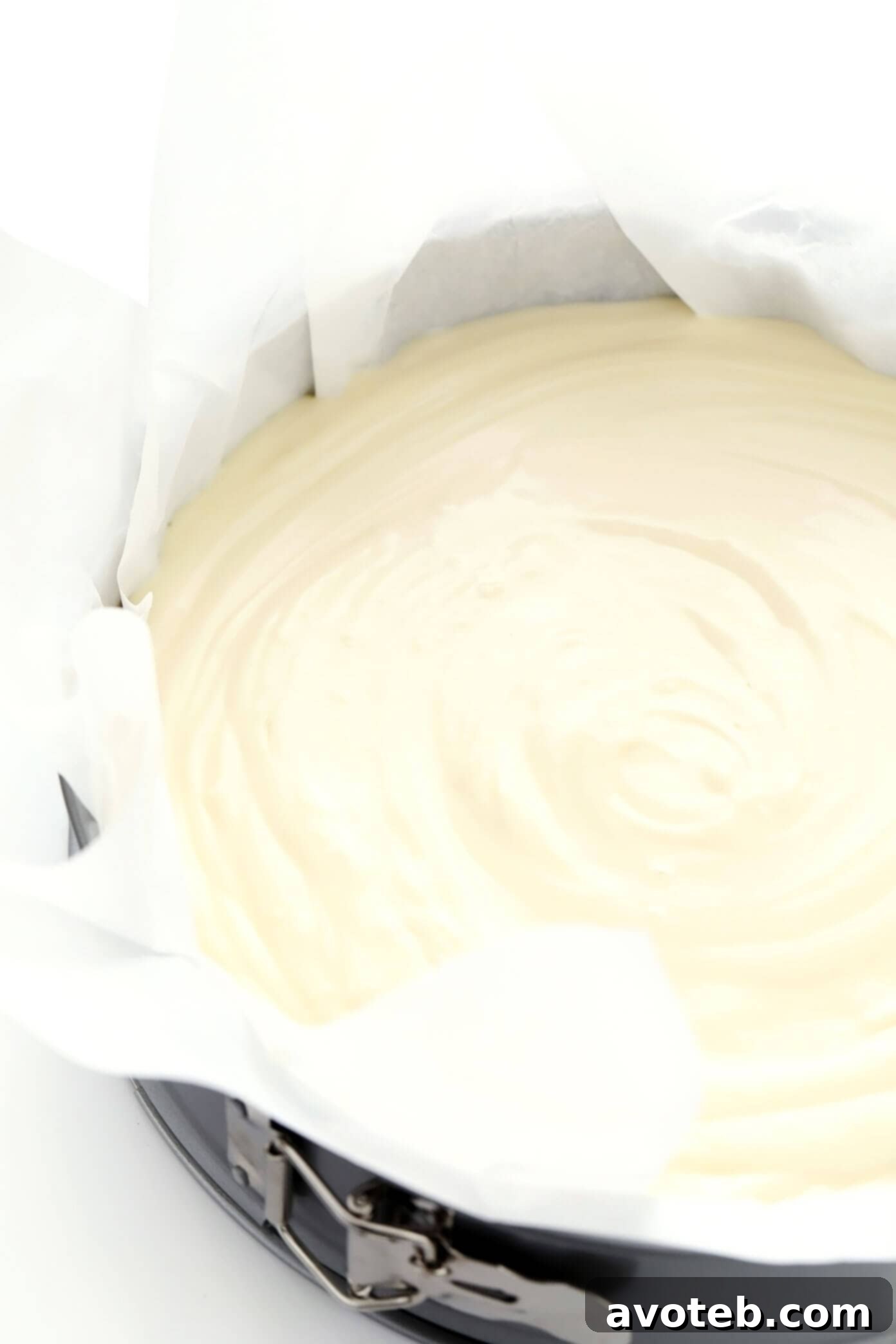
- Prepare Oven and Pan: Preheat your oven to 400°F (200°C). Line a 9-inch springform pan by crisscrossing two large sheets of parchment paper. Pleat and press the parchment paper into the bottom edges of the pan, ensuring it extends several inches above the sides (do not fold down the excess). This creates the characteristic rustic look and prevents overflow. Place the prepared pan on a large baking sheet for easy handling and to catch any potential drips, then set aside.
- Mix the Batter: In a large mixing bowl, combine the room temperature cream cheese and granulated sugar. Using a handheld or stand mixer, beat on medium speed for about 2 minutes until the mixture is exceptionally smooth and free of any lumps. Scrape down the sides of the bowl frequently to ensure even mixing. Add the eggs one at a time, beating on medium-low speed just until each egg is fully incorporated before adding the next. Overmixing eggs can incorporate too much air. Next, add the heavy cream, vanilla extract (if using), and salt, mixing on low speed until everything is evenly combined. Finally, sprinkle the sifted all-purpose flour evenly over the batter (a fine-mesh strainer helps prevent lumps) and mix on low speed until just combined, again scraping down the sides of the bowl.
- Bake the Cheesecake: Carefully pour the smooth batter into your parchment-lined springform pan. Transfer to the preheated oven and bake for 50 to 60 minutes. The cheesecake is ready when its top has risen significantly, developed a deep golden-brown (almost burnt) caramelized color, and the center still has a noticeable jiggle when gently shaken. Keep a close eye on the browning; if the top darkens too quickly or appears to be burning, loosely cover the cheesecake with a piece of aluminum foil for the remainder of the baking time.
- Cool Completely: Once baked to your desired consistency and color, carefully remove the cheesecake from the oven and transfer it to a wire baking rack. Allow it to cool completely to room temperature. This cooling process is crucial for the cheesecake to set properly. If desired, you can cover and refrigerate the cooled cheesecake for up to 3 days, which can enhance its texture even further.
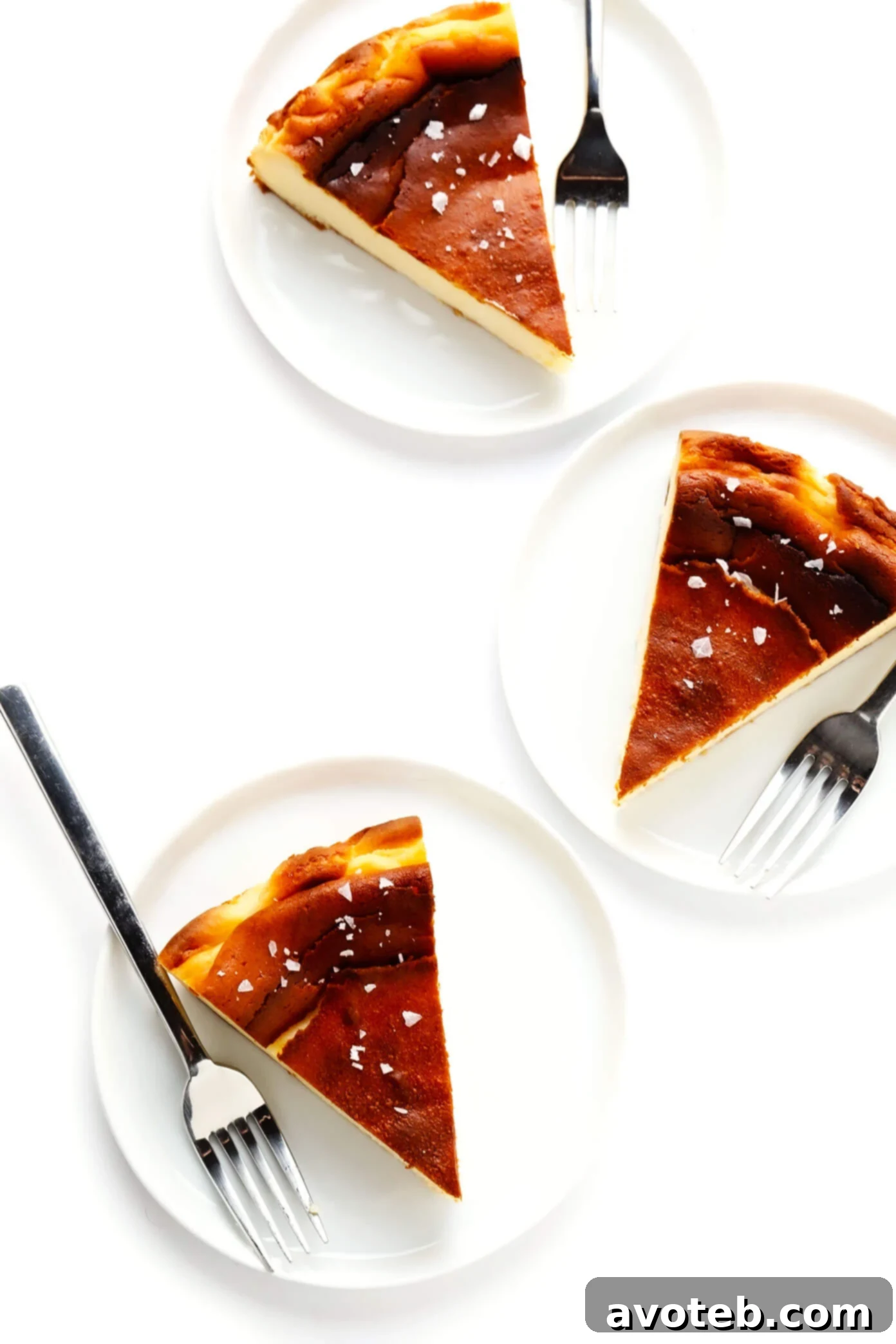
- Serve and Enjoy: When the cheesecake has cooled completely and is no longer warm, unlatch the springform pan and gently peel back the parchment paper from the sides. Use a sharp knife to cut your desired size of slices. For an extra touch of flavor and texture, sprinkle a pinch of flaky sea salt over each slice before serving. Enjoy this uniquely creamy, caramelized, and utterly delicious Basque cheesecake!
Equipment
9-Inch Springform Pan
Buy Now →
Parchment Paper
Buy Now →
Vanilla Extract
Buy Now →
Notes
*Salt Adjustment: If you choose to use iodized table salt instead of fine sea salt, please reduce the amount by half, as it has a stronger saltiness by volume.
Pan Flexibility: This recipe is adaptable to different springform pan sizes. For an 8-inch pan, expect a thicker cheesecake which will require a slightly longer baking time. If using a 10-inch pan, the cheesecake will be thinner and will therefore need less baking time. Always adjust baking duration based on your pan size and desired cheesecake consistency.
Recipe Origins: This recipe has been thoughtfully adapted with minor personal tweaks from the celebrated original at La Viña Restaurant and further informed by a popular adaptation published in Bon Appetit.