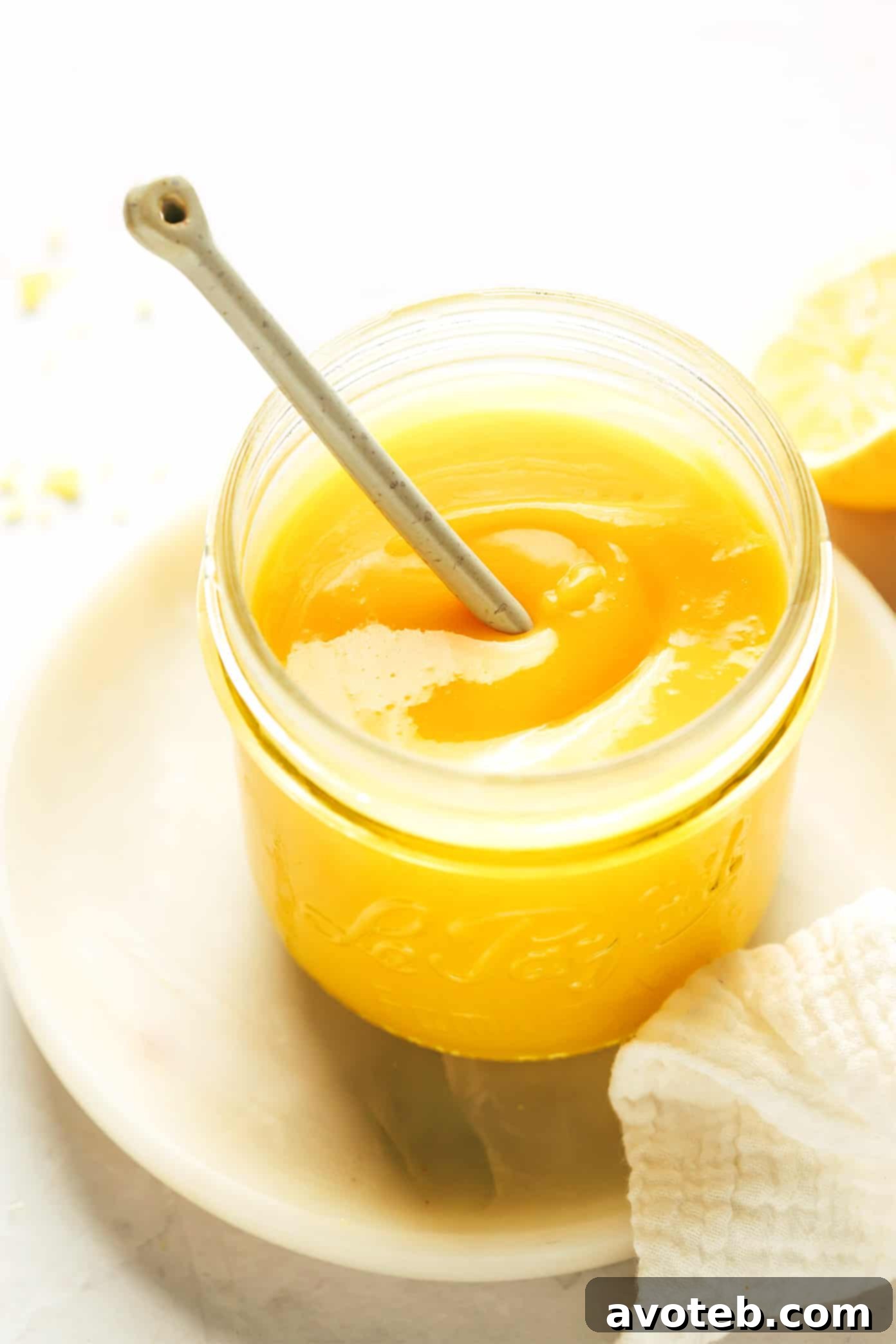
Discover the unparalleled delight of homemade lemon curd, a vibrant and velvety spread that’s surprisingly simple to prepare with just 5 essential ingredients in approximately 15 minutes.
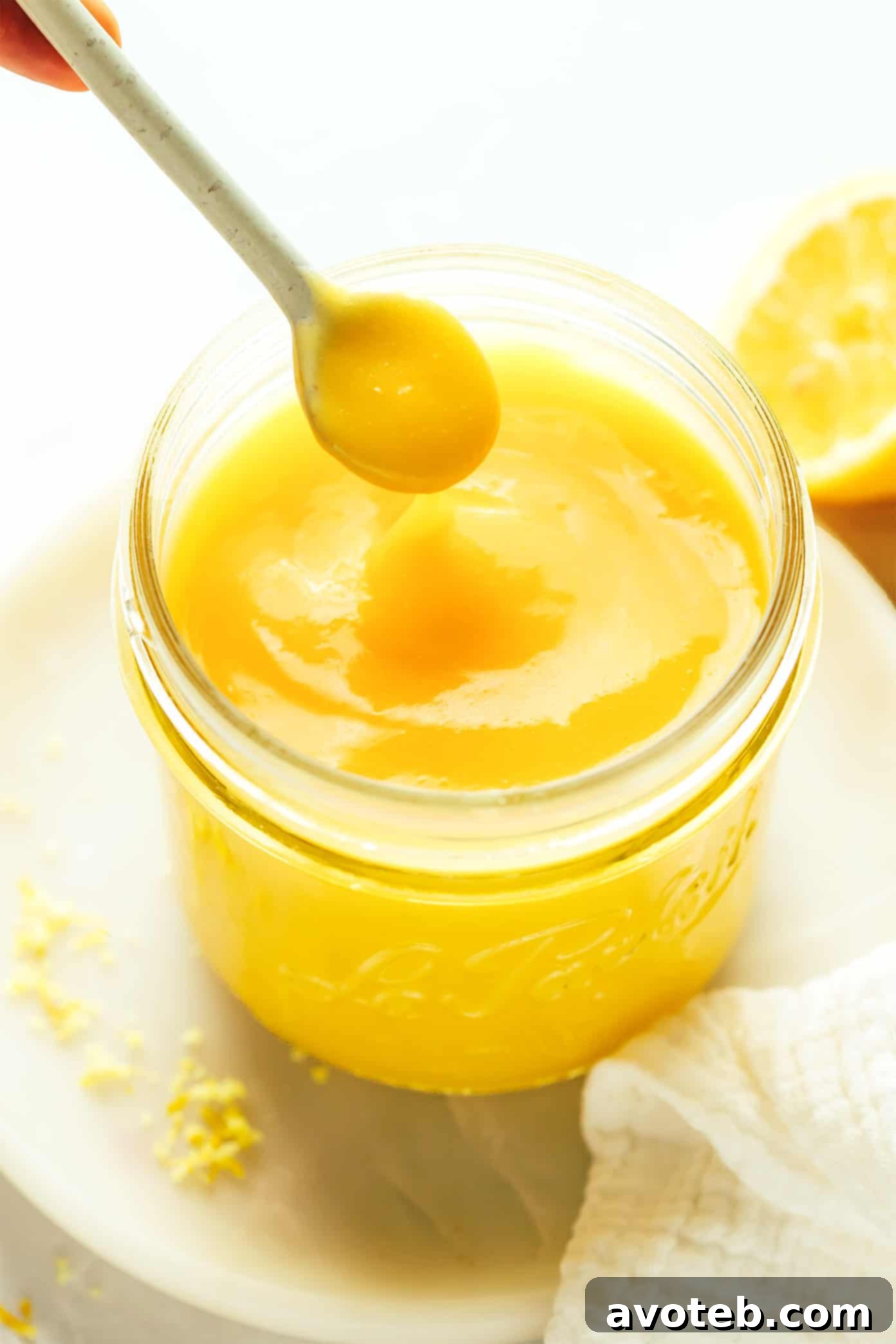
While I often appreciate the convenience of store-bought shortcuts in the kitchen, there are certain culinary creations where the homemade version simply triumphs, making the extra effort entirely worthwhile. Lemon curd is undeniably one of those exceptional delights. Its bright, intensely zingy flavor, coupled with an exquisitely smooth, creamy texture, is something no mass-produced jar can truly replicate. The secret lies in the freshness of the ingredients, particularly the vibrant zest and juice from real lemons, which infuse every spoonful with an irresistible burst of sunshine.
Beyond its superior taste, homemade lemon curd is remarkably easy to craft right in your own kitchen. You’ll be amazed at how quickly this luxurious spread comes together on the stovetop, transforming humble ingredients into a gourmet treat. With just five basic components – fresh lemons, eggs, sugar, salt, and butter – and approximately 15 minutes of active preparation time, you can have a jar of this velvety, tart-sweet concoction ready to elevate countless dishes. It’s a culinary journey that promises immense satisfaction, from the captivating aroma filling your home to the first glorious taste.
The versatility of homemade lemon curd is truly astounding. Imagine starting your day by spreading its rich, tangy goodness over warm bagels, fluffy biscuits, delicate croissants, or a slice of golden toast. Transform your brunch by drizzling it over freshly made pancakes, waffles, or a tower of light scones. Lemon curd also shines as an exquisite filling for elegant desserts: think layered cakes, delicate cookies, airy cream puffs, classic crêpes, delicate macarons, or crisp meringues. For a simpler pleasure, swirl it into your morning yogurt or a scoop of vanilla ice cream. It makes a show-stopping topping for a decadent cheesecake or a cloud-like pavlova. Feeling generous? Package a small jar of your homemade creation as a thoughtful gift. The delicious possibilities are genuinely endless, ensuring this delightful spread will become a cherished staple in your repertoire.
So, gather your brightest lemons and prepare to embark on a delightful culinary adventure. Let’s create a batch of homemade lemon curd that will brighten any meal and bring a touch of gourmet elegance to your table.
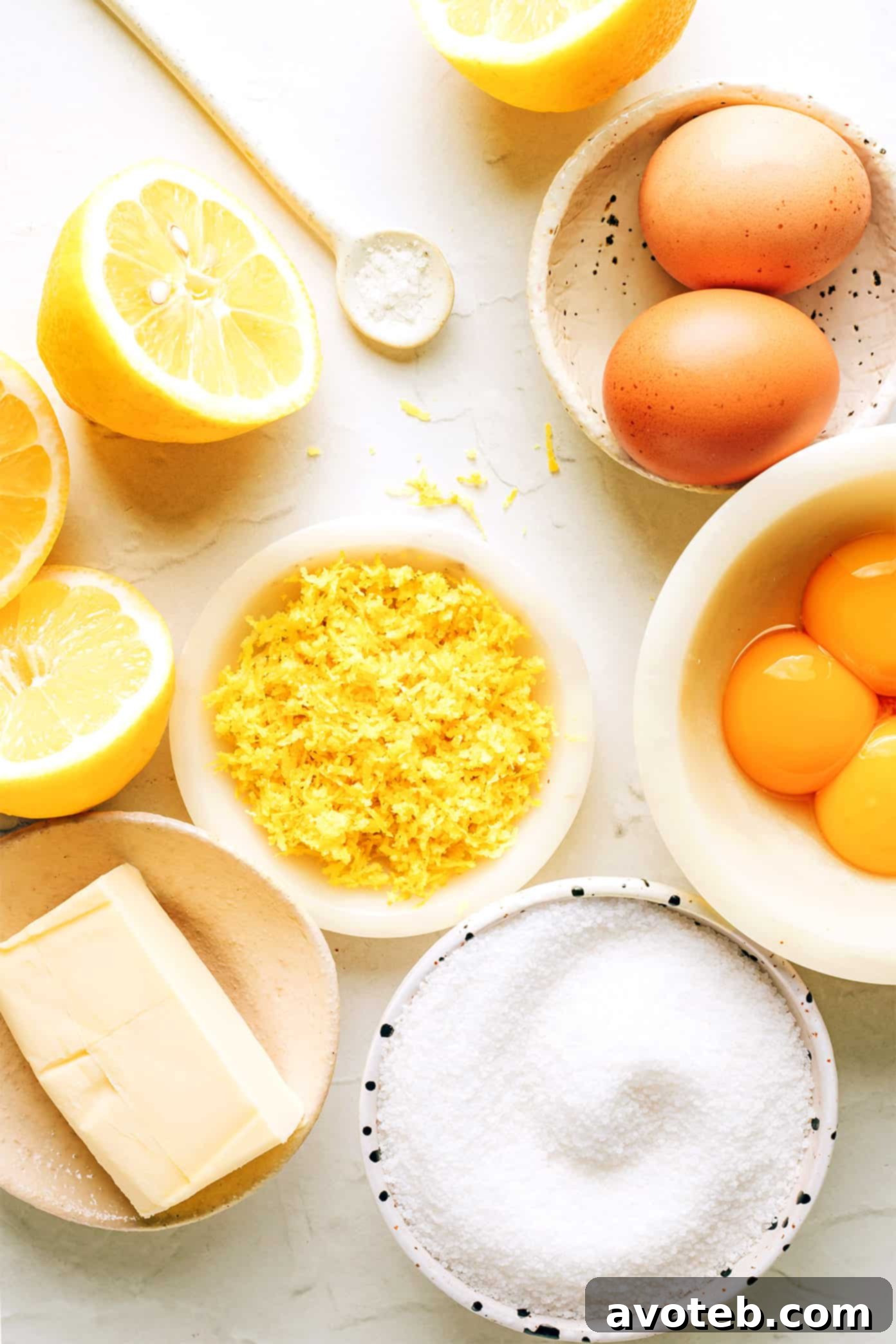
Essential Ingredients for the Best Homemade Lemon Curd
Crafting the perfect lemon curd relies on a few key ingredients, each playing a vital role in achieving its signature flavor and luxurious texture. Here’s a closer look at what you’ll need and why:
- Lemons: The star of our show! It is absolutely crucial to use fresh lemons for this recipe. We’ll be utilizing both the aromatic zest and the tangy juice to infuse the curd with that unmistakable bright, vibrant lemon flavor. Opting for organic lemons is often recommended, especially since you’ll be grating a significant amount of zest, minimizing exposure to pesticides. However, any good quality, fresh lemons will yield a fantastic result. Avoid bottled lemon juice; its flat flavor simply cannot compare to freshly squeezed.
- Sugar: Granulated sugar, whether cane sugar or conventional white sugar, provides the essential sweetness that balances the intense tartness of the lemons. Beyond taste, sugar also contributes to the curd’s smooth texture and helps prevent the eggs from scrambling prematurely by slowly denaturing their proteins as the mixture heats.
- Eggs: Eggs are the primary thickening agent for lemon curd, giving it its characteristic richness and creamy consistency. This recipe calls for a specific combination of 2 whole eggs and 4 additional egg yolks. The whole eggs provide structure and emulsification, while the extra yolks contribute significantly to the curd’s luxurious, velvety mouthfeel and rich golden color. This balance ensures a thick yet spreadable curd.
- Butter: Unsalted cold butter, cut into small pieces, is stirred into the lemon curd after it’s removed from the heat. This step is critical for several reasons: it adds incredible richness and a silky, smooth finish, contributing to the curd’s melt-in-your-mouth quality. Using cold butter helps it emulsify properly into the warm mixture, creating that wonderfully velvety texture without separating.
- Salt: A pinch of fine sea salt might seem like a small detail, but it’s a powerful flavor enhancer. Salt doesn’t just make the curd taste salty; it brightens and sharpens the tart lemon notes while simultaneously deepening the sweetness, ensuring all the flavors are perfectly harmonized and truly shine.
Mastering Homemade Lemon Curd: Essential Tips for Success
While the full, detailed instructions are provided in the recipe card below, keeping these expert tips in mind will ensure your lemon curd turns out perfectly creamy, smooth, and bursting with flavor every time:
- Always Use Fresh Lemon Zest and Juice. This cannot be overstated. The incredible, bright, and authentic flavor of homemade lemon curd comes directly from fresh lemons. Bottled lemon juice contains preservatives and lacks the vibrant essential oils found in fresh zest, resulting in a significantly inferior taste. Invest in quality tools like a Microplane zester for effortlessly fine zest and a reliable citrus juicer to extract every last drop of precious juice. The difference is truly night and day.
- Cook Low and Slow with Constant Whisking. Patience is a virtue when making lemon curd. The key to preventing scrambled eggs – the most common pitfall – is to cook the lemon, egg, and sugar mixture gently over medium-low heat. Whisk continuously and diligently. This slow, steady cooking allows the eggs to gradually thicken the mixture without coagulating into lumps. If, despite your best efforts, a few small egg bits do appear, don’t despair! A fine-mesh strainer will easily remove them later, leaving you with a silky-smooth curd.
- Consider Non-Metallic Equipment for Purity. Although often debated, some chefs suggest that acidic ingredients like lemon juice can react with certain metals, potentially imparting a faint metallic taste to the curd. While many home cooks successfully use stainless steel saucepans and whisks without issue (as I often do myself!), if you want to be extra cautious, opt for a non-reactive saucepan (like enameled cast iron or glass) or a double boiler setup. Using a silicone whisk can also offer peace of mind.
- Utilize a Double Boiler for Gentle Heat. If your stovetop tends to heat unevenly or runs particularly hot, a double boiler is your best friend. This method creates a gentle, indirect heat that significantly reduces the risk of overheating the eggs and causing them to scramble. Simply set a heat-proof bowl over a saucepan of simmering water, ensuring the bowl does not touch the water, and cook your curd mixture in the bowl.
- Ensure Proper Chilling and Covering. As lemon curd cools, a natural “skin” or film can form on its surface. While harmless to eat, it can detract from the desired smooth, luxurious texture. To prevent this, once you’ve transferred the warm curd to a heat-safe jar or bowl, immediately press a piece of lightly-oiled parchment paper or plastic wrap directly onto the surface, ensuring there are no air pockets. This barrier will keep the curd wonderfully smooth as it chills. Remove the wrap only when the curd is completely cool and ready to serve.
- Strain for Ultimate Smoothness (Optional but Recommended). Even with careful whisking, tiny bits of cooked egg can sometimes remain. For a truly professional, silky-smooth lemon curd, pass the cooked mixture through a fine-mesh strainer before adding the butter and chilling. This quick step ensures an impeccably smooth finish.
Creative Recipe Variations for Your Lemon Curd
While the classic lemon curd is undeniably perfect, its fundamental recipe serves as a fantastic canvas for culinary creativity. Here are a few exciting variations to explore, allowing you to customize your curd to suit any taste or occasion:
- Explore Other Citrus Fruits: Don’t limit yourself to just lemons! This recipe can be adapted to create a vibrant curd from almost any citrus fruit. Experiment with zesty lime curd, subtly bitter grapefruit curd, aromatic Meyer lemon curd (a sweeter lemon variety), or various orange curds (such as navel, blood orange, mandarins, or tangerines). You can even venture beyond citrus! While proportions might require slight adjustments due to varying acidity and pectin levels, delicious curds can be made from fresh blackberries, blueberries, cranberries, kiwi, mango, passion fruit, raspberries, strawberries, or even a delightful mix of fruits.
- Infuse with Aromatic Mix-ins: Elevate your curd with delightful extracts or spices. Stir in a hint of fresh ginger (grated or finely chopped), a splash of vanilla extract for warmth, a few drops of almond extract for a nutty depth, or a pinch of spices like cinnamon, cardamom, or even a touch of black pepper for an unexpected kick. These additions can transform the curd into a sophisticated accompaniment for specific desserts.
- Add Fresh Herbs for a Gourmet Twist: For a truly unique and refreshing flavor profile, incorporate fresh herbs into your curd. Gently muddle or finely chop delicate herbs like mint, basil, rosemary, or thyme and stir them into the warm curd after it’s cooked, allowing their essences to infuse as it cools. Herbal curds pair wonderfully with fruit tarts, light cakes, or even savory dishes.

Delightful Ways to Enjoy Homemade Lemon Curd
Once you’ve whipped up a batch of this glorious homemade lemon curd, you’ll find an almost endless array of delicious applications. Don’t hesitate to get creative and let its vibrant flavor inspire your culinary imagination! Here are some fantastic ideas to get you started:
- A Luxurious Spread: Elevate your breakfast or brunch with a generous dollop of lemon curd on bagels, warm biscuits, artisanal bread, delicate crepes, flaky croissants, classic English muffins, fluffy pancakes, tender scones, crisp toast, or golden waffles. It adds a gourmet touch to everyday staples.
- Exquisite Dessert Filling: Transform ordinary desserts into extraordinary creations. Use lemon curd as a vibrant, tangy filling for elegant layer cakes, delicate cookies (especially thumbprint cookies!), airy cream puffs, classic crêpes, sophisticated macarons, light meringues, or a traditional trifle.
- Dazzling Topping: Spoon lemon curd over a creamy cheesecake for an instant burst of flavor, or use it to adorn a cloud-like pavlova, adding a beautiful contrast of texture and taste.
- Refreshing Fruit Companion: Gently toss lemon curd with a fresh fruit salad to add a unique, zesty glaze that enhances the natural sweetness of the fruits.
- Gourmet Dip: Serve a small bowl of lemon curd alongside your next charcuterie board for a surprising sweet and tangy dip that pairs wonderfully with cheeses and crackers.
- Sweet Swirl-in: Stir generous spoonfuls of lemon curd into plain yogurt for a flavorful breakfast or snack, or swirl it into homemade or store-bought vanilla ice cream for a delightful lemon ripple effect.
- Beyond the Obvious: Consider using it as a glaze for muffins or quick breads, whisking it into whipped cream for a lemon Chantilly, or even mixing it into frosting for a lemon buttercream. The possibilities truly are limitless!
Frequently Asked Questions About Lemon Curd
Curious about the specifics of lemon curd? Here are answers to some of the most common questions:
Why is it called lemon curd? The term “curd” traditionally refers to the process of thickening milk with an acid, causing it to coagulate. In the context of lemon curd, it’s the lemon juice that interacts with the egg proteins, causing them to thicken and set, creating a smooth, custard-like texture. While modern lemon curd isn’t technically a dairy curd, the name has historical roots in this thickening process.
Can you freeze lemon curd? Absolutely! Lemon curd freezes beautifully, allowing you to prepare it in advance or store leftovers for later enjoyment. Transfer the completely cooled lemon curd to an airtight, freezer-safe container, leaving a little headspace. It can be frozen for up to 3 months. To serve, simply thaw the frozen lemon curd in the refrigerator overnight. Its luscious texture will be perfectly preserved.
Do you really need to strain lemon curd? Straining lemon curd is an optional step, but one highly recommended for achieving the silkiest, most professional texture. If you notice that your curd isn’t perfectly smooth after cooking, or if any small bits of egg have scrambled despite careful whisking, passing the mixture through a fine-mesh strainer will remove any imperfections. Many experienced cooks, including myself, sometimes skip this step if the curd looks flawlessly smooth from the start, but it’s a quick and easy way to guarantee perfection.
Why did my lemon curd split or become grainy? A split or grainy lemon curd is usually a sign that the emulsion broke, or the eggs overcooked. The most common reasons include: 1) The butter was not cold enough or was added too quickly, preventing it from properly emulsifying into the warm mixture. 2) The eggs were cooked too rapidly or at too high a temperature, causing them to scramble or overcook, which prevents them from acting as a smooth binding agent for the curd. Remember to cook low and slow, whisk constantly, and add cold butter for the best results.
How thick is lemon curd supposed to be? The ideal thickness for lemon curd can vary slightly based on personal preference and how much butter is incorporated, but it should always be soft, smooth, and easily spreadable. When cooking, you’ll know it’s ready when the mixture is thick enough to coat the back of a wooden spoon and leaves a clear path when you run your finger across it. This typically occurs when the curd reaches an internal temperature of around 170°F (77°C). Keep in mind that lemon curd will continue to thicken considerably as it cools in the refrigerator, so don’t be alarmed if it seems a little thinner than expected when hot.
Classic Homemade Lemon Curd Recipe
Author: Ali
Prep Time: 5 minutes
Cook Time: 10 minutes
Total Time: 15 minutes
Yield: About 2 cups 1x
Ingredients
Scale
- 1 cup granulated sugar (cane sugar or white granulated sugar)
- 3/4 cup freshly-squeezed lemon juice + 2 tablespoons lemon zest
- 1/4 teaspoon fine sea salt
- 2 large whole eggs + 4 large egg yolks
- 6 tablespoons unsalted cold butter, cut into small pieces
Instructions
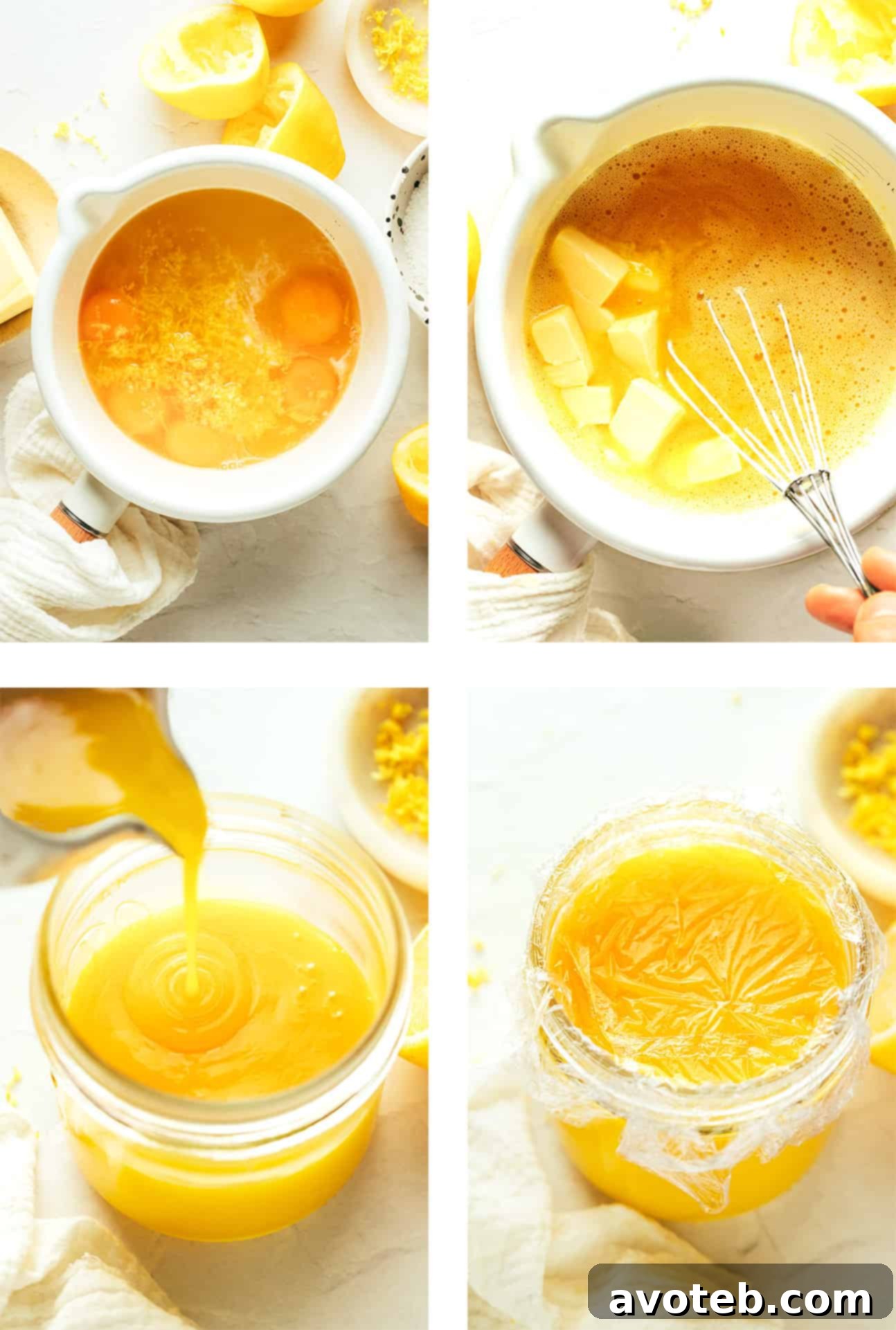
- Combine and Cook. In a small, heavy-bottomed saucepan or a double boiler, whisk together all ingredients except the butter until thoroughly combined and smooth. Place the saucepan over medium-low heat (or the double boiler over simmering water). Whisk constantly and gently, ensuring the mixture heats evenly, until it reaches 170°F (77°C). At this temperature, the curd will visibly thicken enough to coat the back of a wooden spoon. Do not rush this process to prevent the eggs from scrambling.
- Incorporate Butter. Immediately remove the pan from the heat. Add the cold, cubed butter into the hot lemon curd mixture. Whisk continuously until the butter has completely melted and is fully incorporated, resulting in a smooth and glossy curd.
- Strain (Optional for Smoothness). For an exceptionally silky-smooth curd, carefully pour the warm mixture through a fine-mesh strainer set over a clean heat-safe bowl or jar. This step removes any tiny bits of cooked egg or lemon zest, ensuring a pristine texture.
- Chill Properly. Transfer the strained (or unstrained) lemon curd into a clean, heat-safe jar or bowl. To prevent a film from forming on the surface as it cools, press a piece of lightly-oiled parchment paper or plastic wrap directly onto the surface of the curd, making sure it touches the entire top. Refrigerate for at least 1 hour, or until thoroughly chilled and set.
- Serve and Store. Once chilled, your homemade lemon curd is ready to be enjoyed! Leftover lemon curd should be stored in a sealed container in the refrigerator and will keep well for up to 1 week.
Equipment
Microplane Zester
Buy Now →
Citrus Juicer
Buy Now →
1-Quart Jar
Buy Now →