
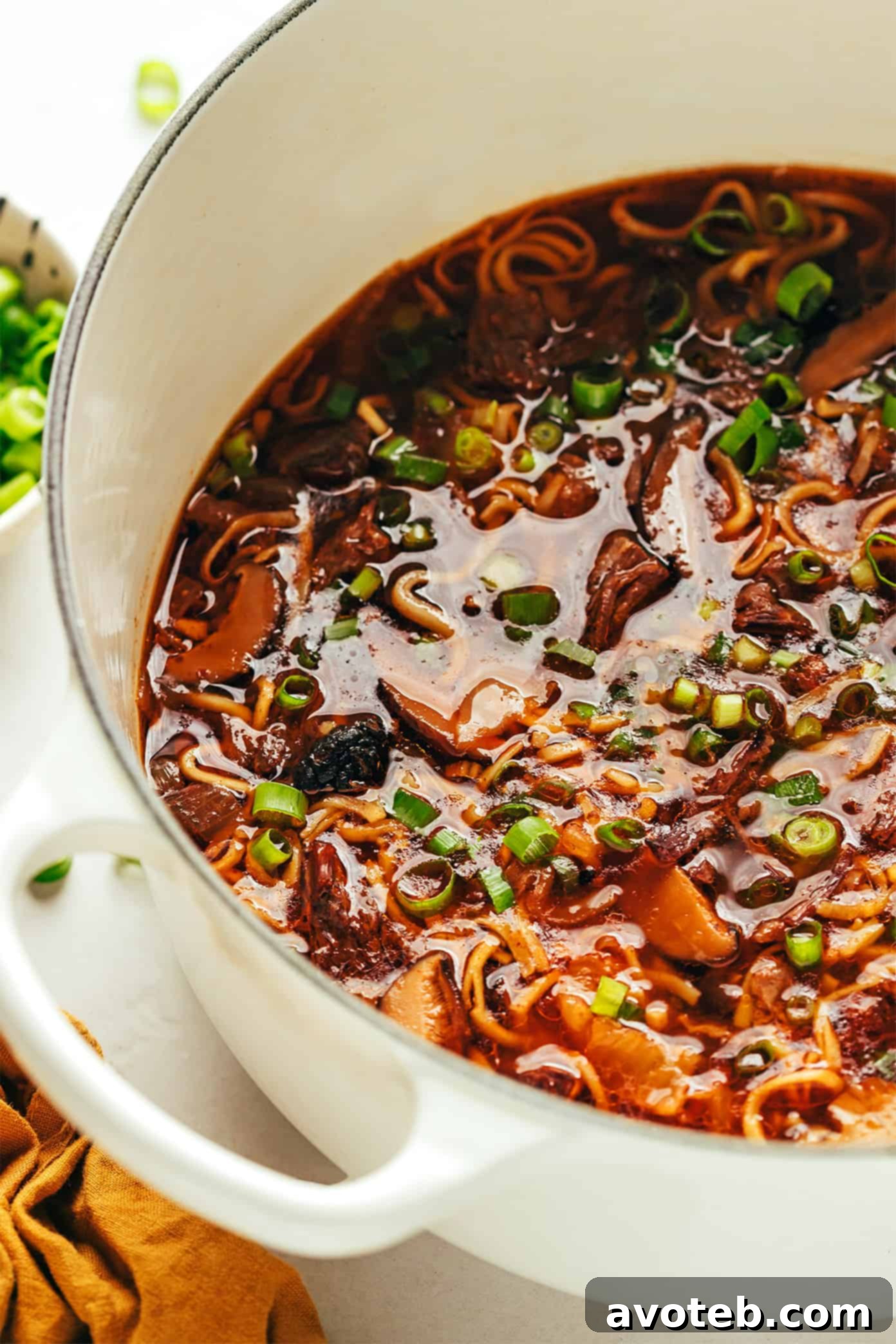
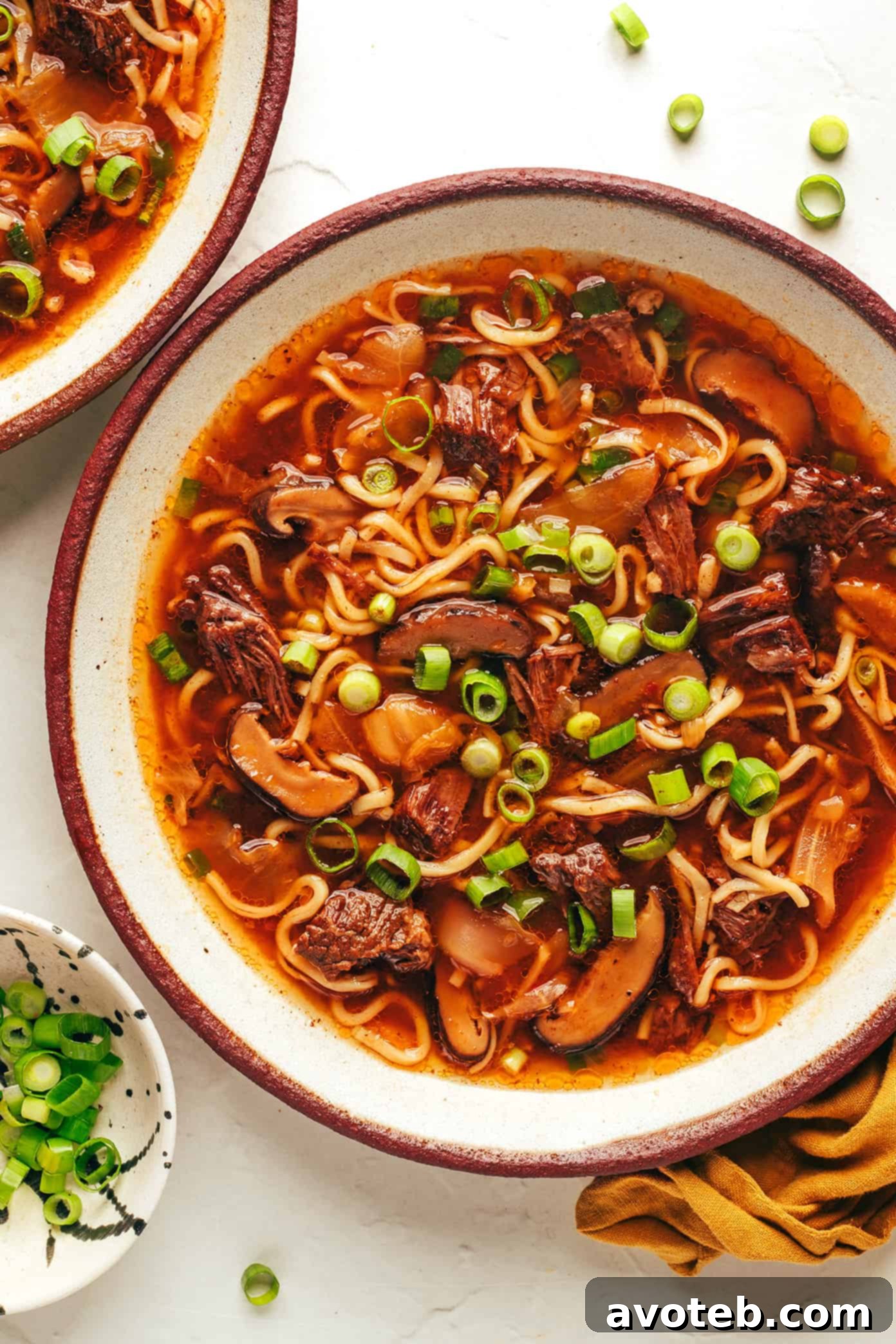
Experience the ultimate comfort in a bowl with this Kimchi Beef Noodle Soup! Featuring succulent beef, your choice of noodles, vibrant veggies, and a rich, deeply seasoned sesame kimchi broth, this recipe offers versatile cooking options including Stovetop, Instant Pot, and Crock-Pot methods.
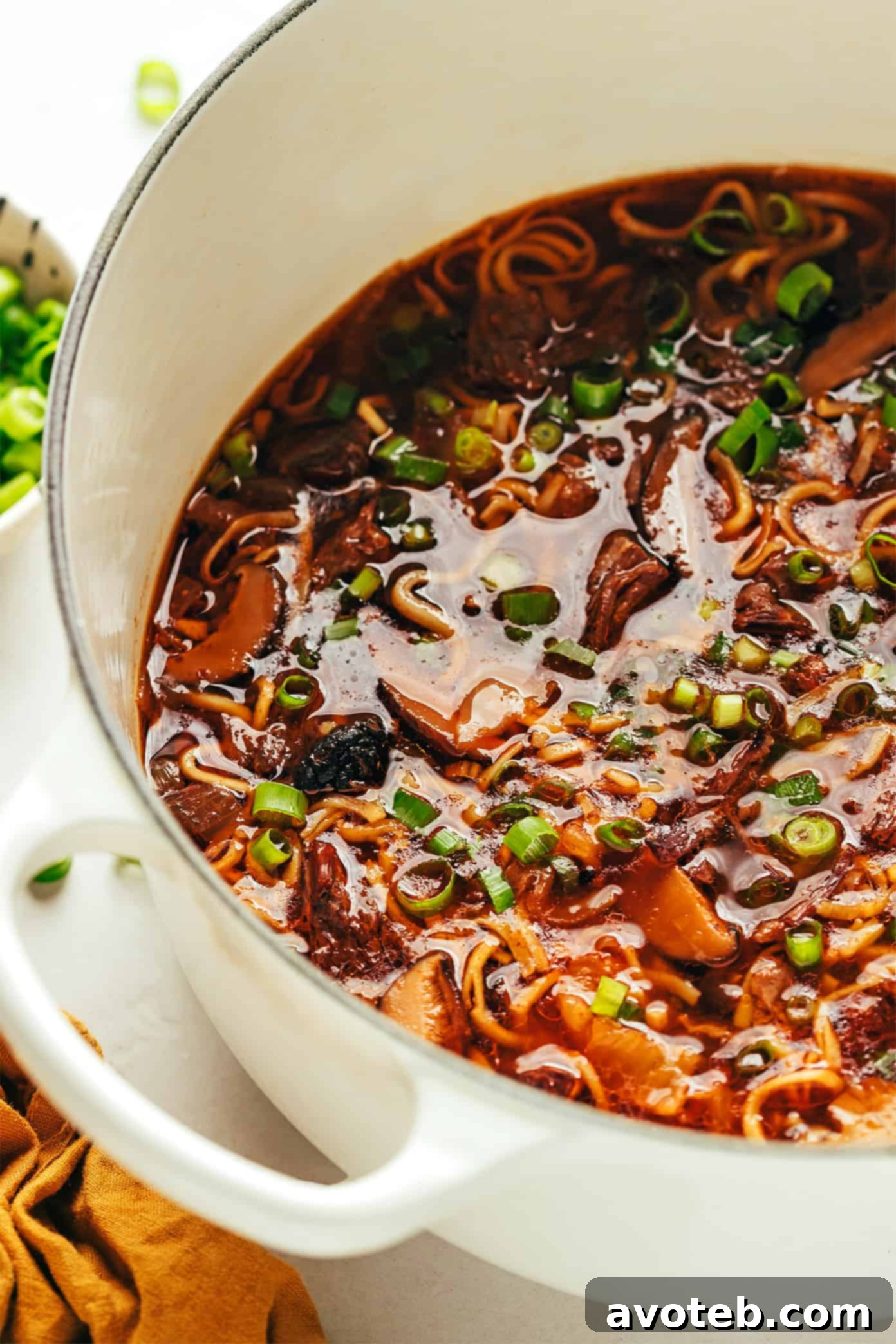
Discovering the Comfort of Kimchi Beef Noodle Soup
There’s a unique magic to a truly comforting bowl of soup, especially on a chilly day. For me, that magic was often found during my time in Barcelona, where a cherished Korean restaurant was just a block from my apartment. On those frosty winter evenings, after a day spent exploring the city and running errands, returning home meant seeking warmth and solace in their incredible kimchi-infused soups. Whether it was the spicy kick of a soondubu jjigae, the hearty depth of yukgaejang, or the familiar comfort of their various Korean ramens, the common thread was always their richly-flavored kimchi broths. Those soups didn’t just warm me; they sparked genuine joy and became a beloved part of my winter routine.
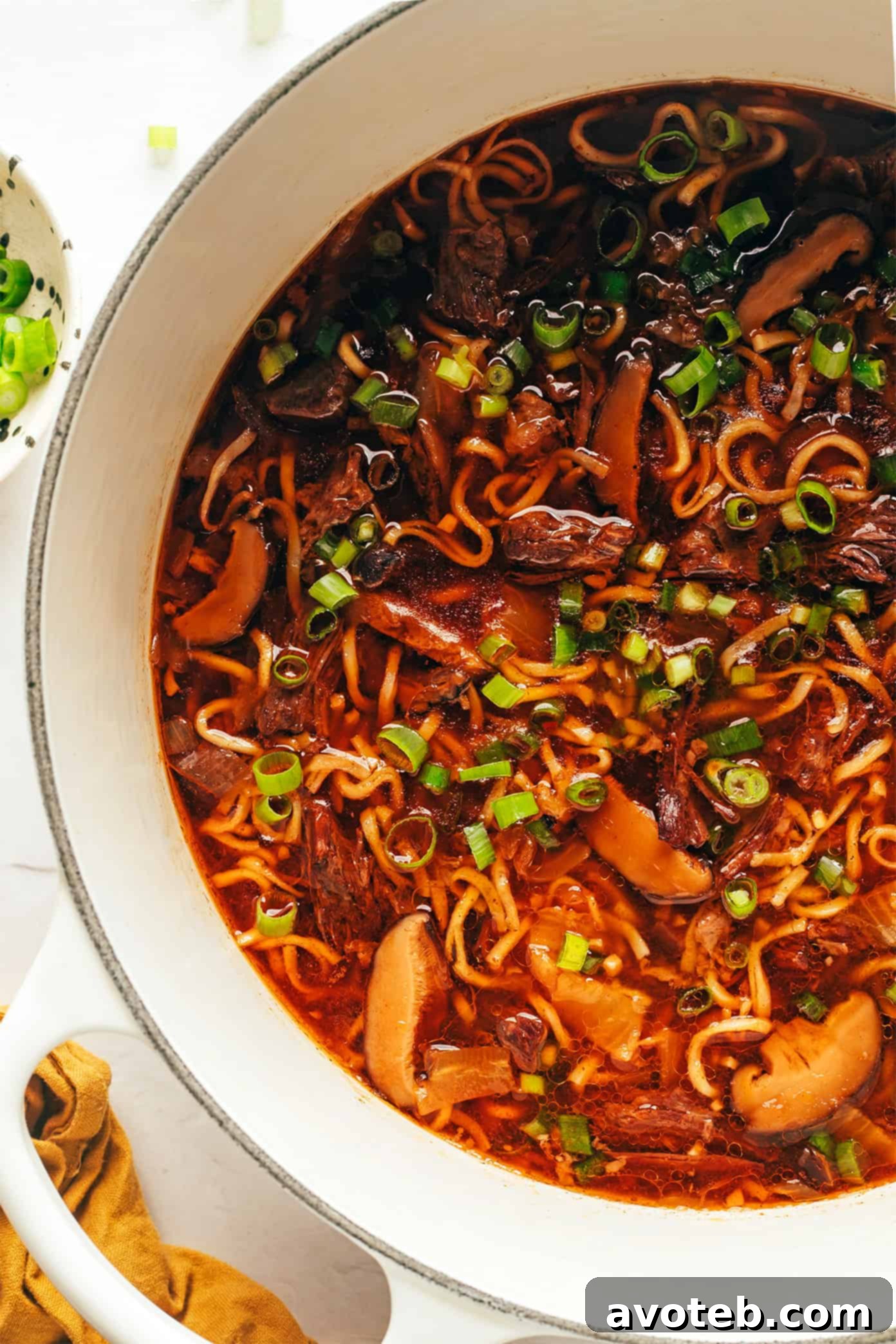
Now, back in the States, I’ve found myself longing for those distinctive flavors and the warmth they brought. This yearning inspired a series of culinary experiments in my own kitchen, culminating in this delightful Kimchi Beef Noodle Soup recipe. While it’s loosely inspired by the Korean soups I adored and not intended as an authentic traditional recipe—for those, I highly recommend exploring the works of talented Korean food bloggers—it captures the essence of what makes those dishes so incredibly appealing. This is my personal take on a deeply cozy and exceptionally flavorful soup, perfect for cold weather. It’s loaded with a generous amount of fresh kimchi, aromatic spices, pungent garlic, bright ginger, and nutty sesame oil. When slow-cooked, the beef becomes exquisitely fall-apart tender, mingling with earthy mushrooms, the inherent goodness of the kimchi vegetables, and your favorite noodles. This soup has quickly cemented its place as one of my new go-to comfort foods, offering a wonderfully savory and slightly spicy experience that satisfies both body and soul.
One of the best aspects of this recipe is its adaptability. I’ve thoughtfully included instructions for three popular cooking methods: the Instant Pot for speed, the Crock-Pot for a hands-off approach, and the classic stovetop for those who prefer traditional simmering. Each method yields fantastic results, ensuring you can enjoy this soup regardless of your kitchen setup or schedule. Beyond the cooking method, feel free to personalize your bowl. Incorporate any additional vegetables or types of noodles you love. Or, if you prefer, swap the noodles for rice for a heartier, grain-based meal. And for an extra layer of richness and protein, adding a perfectly cooked egg on top is always a fantastic idea. So, gather your ingredients, choose your preferred cooking method, and let’s create a big, heartwarming pot of this incredible soup together!
Essential Ingredients for Your Kimchi Beef Noodle Soup
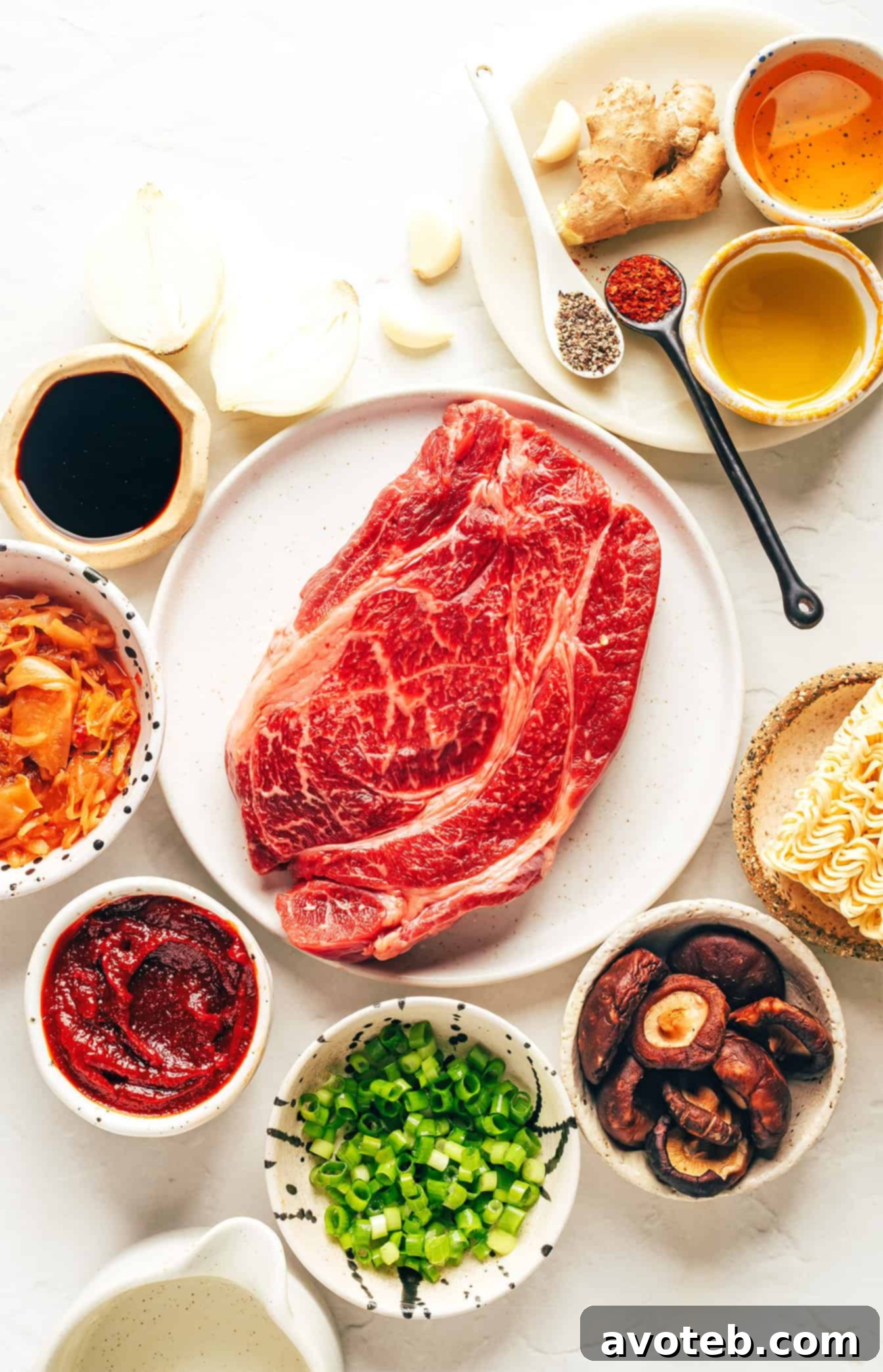
Crafting this flavorful Kimchi Beef Noodle Soup starts with selecting the right ingredients. Each component plays a vital role in building the soup’s complex and comforting profile. Here’s a closer look at what you’ll need and why each element is key:
- Beef: For this recipe, I highly recommend using beef chuck roast. This cut is exceptionally well-suited for slow cooking, as its marbling and connective tissues break down beautifully over time, resulting in incredibly tender, melt-in-your-mouth beef that’s effortless to shred. If chuck roast isn’t available, other slow-cooking-friendly cuts like bottom round, top round, or short ribs would also work wonderfully, offering similar rich flavor and texture when cooked properly. Ensure your beef is cut into manageable 2-inch cubes for even cooking and easier serving.
- Veggies: To complement the richness of the beef and kimchi, this soup features a foundational mix of onion and mushrooms. A small white onion provides a sweet, aromatic base when sautéed, deepening the overall flavor. For mushrooms, shiitake or baby bellas (cremini) are excellent choices, or a combination of both. Shiitakes lend a distinct umami earthiness, while baby bellas offer a meaty texture and robust flavor. These mushrooms absorb the broth’s flavors beautifully, adding another layer of complexity.
- Kimchi: The star of the show! We’ll use a generous amount—about 2 cups (16 ounces) of cabbage kimchi. Kimchi is much more than just a spicy pickle; it’s a fermented superfood that brings a symphony of flavors to the broth: umami depth, a delightful tanginess, a pleasant spiciness, and savory notes that are utterly unique. Its probiotic qualities also add a healthy boost to your meal. The longer the kimchi has fermented, the deeper and more complex its flavor will be in the soup.
- Seasonings: Beyond the kimchi, a carefully selected blend of seasonings elevates the broth to new heights.
- Gochujang: This is a savory, sweet, and spicy fermented Korean chili paste that provides a fundamental depth of flavor and a rich red hue to the soup.
- Gochugaru: Korean chili flakes, offering a bright, clean heat and a beautiful color without the overwhelming spice of some other chili powders.
- Fresh Ginger: Adds a warm, pungent, and slightly sweet aroma that balances the savory elements.
- Fresh Garlic: An essential aromatic, contributing a robust, savory foundation to the broth.
- Low-Sodium Soy Sauce: Enhances the umami and overall savory profile, providing a crucial salty balance.
- Toasted Sesame Oil: Stirred in at the end, this oil delivers a wonderfully nutty aroma and flavor, adding a layer of traditional Korean taste.
If you’re sensitive to heat, I recommend starting with slightly less gochujang and gochugaru than specified, then gradually adding more to your personal taste preference.
- Noodles: The beauty of this soup lies in its versatility, especially when it comes to noodles. While I often opt for ramen noodles (typically two standard packages, discarding the seasoning packets), feel free to use your favorite variety. This soup pairs wonderfully with rice noodles for a lighter texture, chewy udon noodles, classic egg noodles, or any other noodle that catches your fancy. The key is to add them towards the end of the cooking process to prevent them from becoming too soft and soaking up excessive broth.
- Green Onions: A final touch of freshness, a generous sprinkling of thinly-sliced green onions provides a mild oniony bite and a vibrant pop of color, making each bowl more appealing and flavorful.
Flexible Cooking: Three Ways to Prepare This Soup
One of the many appealing features of this Kimchi Beef Noodle Soup is its adaptability to various cooking methods. Depending on your schedule, kitchen equipment, or personal preference, you have three excellent options to bring this comforting dish to life. Each method is detailed below, allowing you to choose the perfect approach for your culinary adventure:
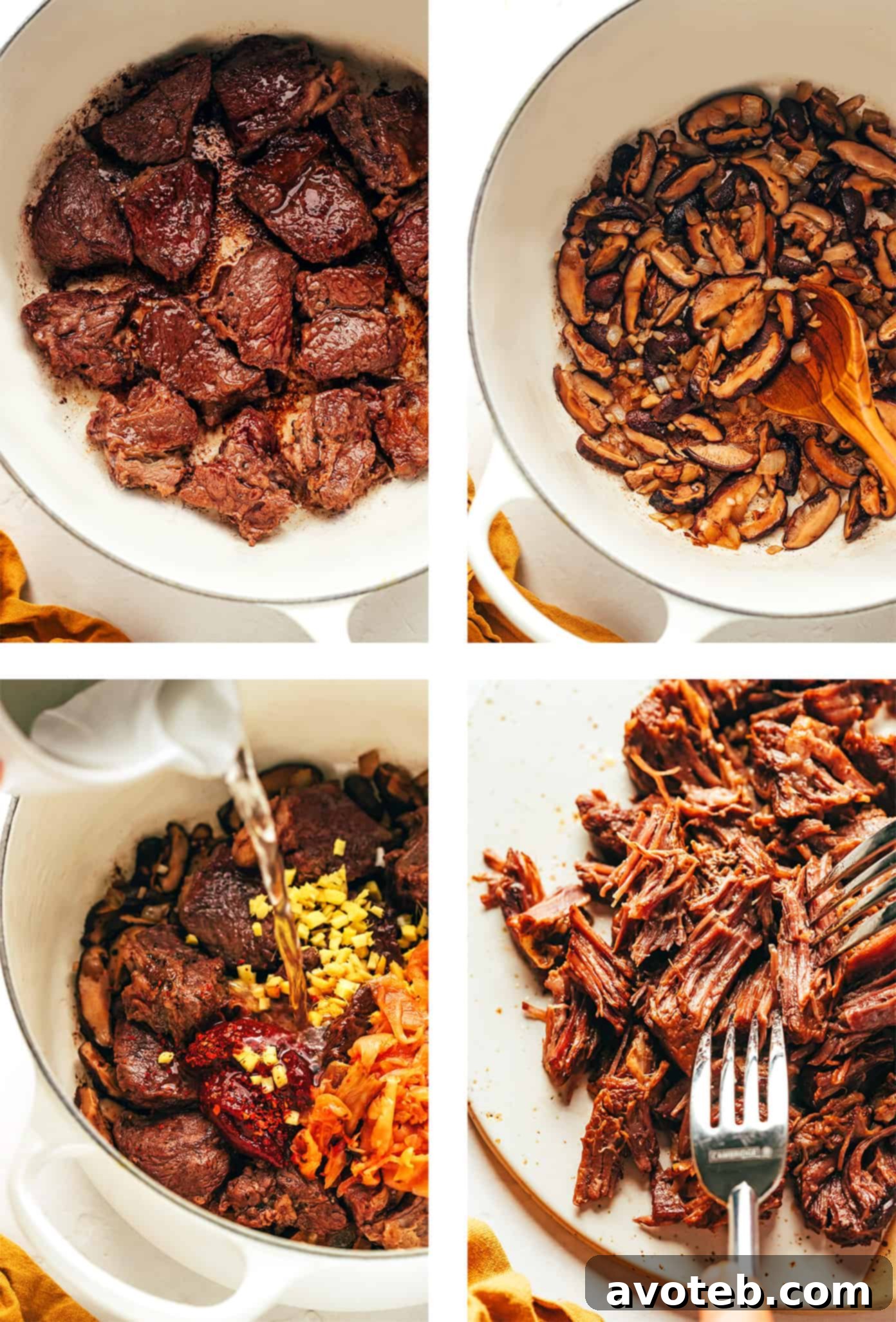
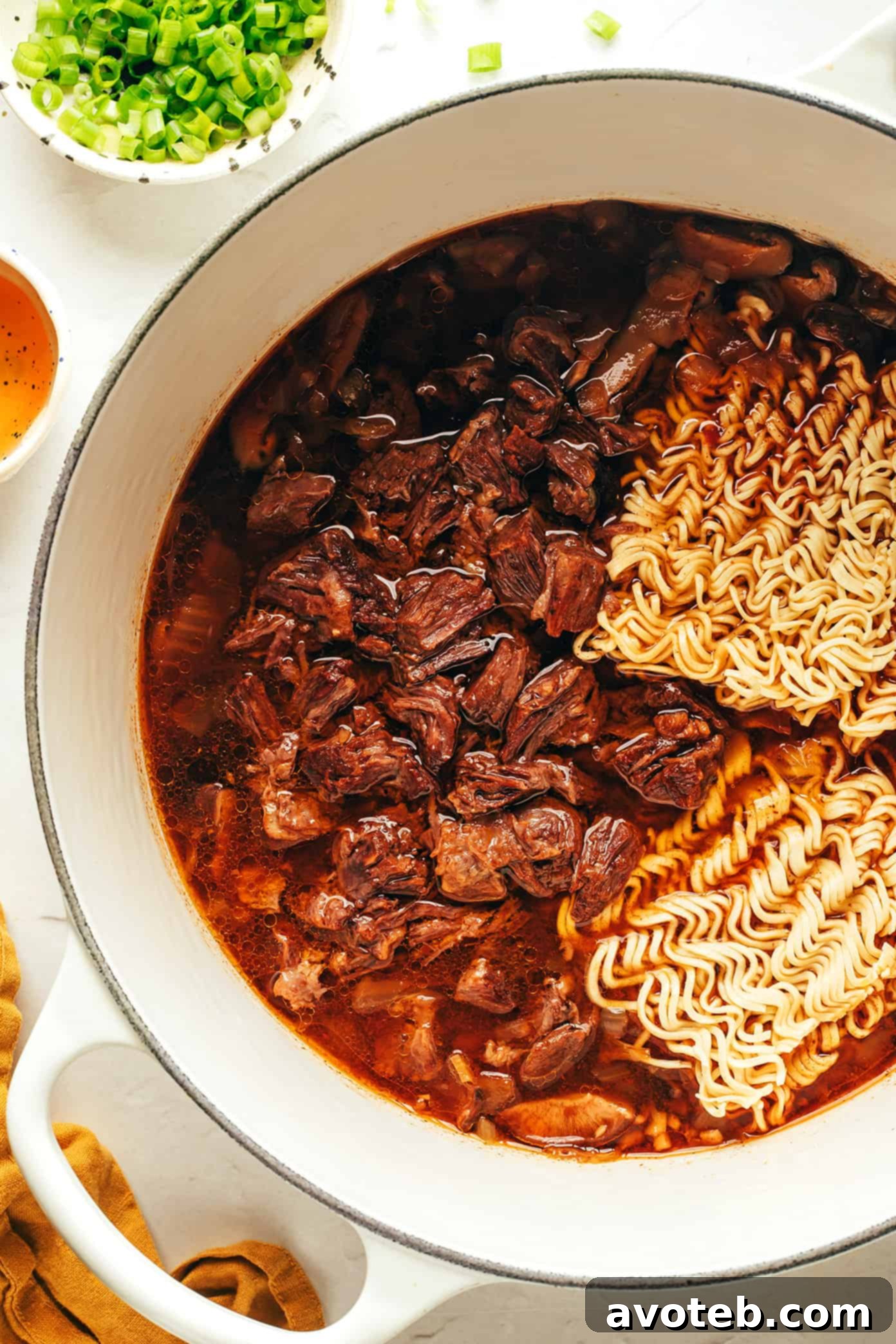
- Stovetop Method: This traditional approach allows for precise control over simmering and flavor development. You’ll begin by searing the beef to lock in its juices and build a rich foundation, then combine all ingredients in a large Dutch oven or stockpot to simmer gently until the beef is incredibly tender. This method typically takes around 1 hour and 30 minutes, making it ideal for a weekend meal or when you have a bit more time to enjoy the cooking process.
- Crock-Pot (Slow Cooker) Method: For maximum convenience and a truly hands-off experience, the Crock-Pot is an excellent choice. This method involves combining the ingredients (minus the noodles) in your slow cooker and allowing it to work its magic over several hours. The low, slow cooking ensures the beef becomes fall-apart tender without constant supervision, making it perfect for busy weekdays or when you want dinner ready upon your return home. Expect a cooking time of approximately 4 to 8 hours, depending on your setting.
- Instant Pot (Pressure Cooker) Method: If speed is a priority without sacrificing flavor, the Instant Pot is your go-to. Pressure cooking significantly reduces the cooking time required to tenderize the beef and meld the flavors. You’ll combine all ingredients (again, excluding the noodles) in the Instant Pot and let it quickly transform them into a deeply flavorful soup. This method can have your soup ready in about 1 hour and 15 minutes, from start to finish, making it a fantastic option for a quick weeknight dinner.
Regardless of the method you choose, the outcome is a deliciously warming and satisfying Kimchi Beef Noodle Soup. Detailed instructions for each method, including specific steps for adding the noodles at the perfect time, are provided in the recipe card notes below.
Creative Recipe Variations to Customize Your Soup
This Kimchi Beef Noodle Soup recipe is wonderfully versatile, offering a canvas for your culinary creativity. Feel free to experiment with these variations to tailor the soup to your taste preferences, dietary needs, or whatever ingredients you have on hand. Don’t be afraid to make it your own!
- Explore Different Vegetables: While onion and mushrooms provide a fantastic base, this soup welcomes an array of other soup-friendly vegetables. Consider adding baby bok choy for a delicate crunch and fresh greens, thinly sliced bell peppers for a touch of sweetness and color, shredded cabbage for extra texture, carrots for natural sweetness, leeks for a milder onion flavor, spinach for a quick nutrient boost, or zucchini for a lighter addition. Simply add these vegetables during the last 10-15 minutes of simmering (or earlier for tougher vegetables like carrots) to ensure they cook to your desired tenderness without becoming mushy.
- Swap Noodles for Rice: For a hearty and gluten-free alternative (ensure all other ingredients are GF certified), substitute the noodles with cooked white or brown rice. The rice will soak up the flavorful broth beautifully, creating a more substantial and comforting meal. Add the cooked rice directly to individual bowls before serving to prevent it from becoming overly soft or absorbing too much liquid from the main pot.
- Enhance with an Egg: Adding an egg is a classic way to enrich a noodle soup. You have several delicious options:
- Soft-boiled egg: A perfectly jammy soft-boiled egg, sliced in half, adds a rich, creamy yolk that mingles with the broth.
- Fried egg: A crispy-edged fried egg offers a different texture and flavor profile.
- Poached egg: A delicate poached egg provides a silky, tender addition.
- Egg ribbons: For a technique similar to egg drop soup, whisk a couple of eggs and slowly drizzle them into the simmering soup while stirring. This creates delicate, wispy egg ribbons that add body and a subtle eggy flavor throughout the broth.
Any of these options elevate the protein content and overall indulgence of your soup.
- Make it Vegetarian or Vegan: Easily transform this beef noodle soup into a satisfying vegetarian or vegan dish by substituting the beef. Firm or extra-firm tofu, pressed and then pan-fried or baked until golden, is an excellent protein alternative, absorbing the rich flavors of the broth. Alternatively, you can simply load up on extra vegetables like shiitake mushrooms, carrots, spinach, or bok choy for a lighter yet still incredibly flavorful plant-based version. Ensure your gochujang is vegan-friendly (some contain fish products).
- Achieve a Gluten-Free Meal: With a few simple substitutions, this soup can be made entirely gluten-free. The primary components to watch are the noodles and gochujang. Opt for your favorite type of gluten-free noodles, such as rice noodles, buckwheat noodles (soba), or certified gluten-free ramen. Additionally, ensure you use a certified gluten-free brand of gochujang, as some brands may contain wheat. Always double-check ingredient labels for all packaged items to confirm they meet your dietary requirements.
These variations demonstrate how adaptable this Kimchi Beef Noodle Soup recipe truly is, inviting you to experiment and discover your perfect bowl. Don’t hesitate to get creative and make it uniquely yours!
More Comforting Soup Recipes to Warm Your Soul
If you’re anything like me, a cozy bowl of soup is a perpetual favorite, especially during the cooler months. If you enjoyed the rich flavors and comforting warmth of this Kimchi Beef Noodle Soup, you’re likely to love these other delicious and easy-to-make soup recipes. They are perfect for expanding your repertoire of go-to comfort foods, offering a variety of tastes and textures that are sure to satisfy:
- Egg Drop Soup: A classic, light, and silky soup with delicate egg ribbons, perfect as an appetizer or a light meal.
- Egg Roll Soup: All the irresistible flavors of your favorite egg roll, transformed into a convenient and comforting soup.
- Potsticker Soup: Quick to make and bursting with savory flavors, this soup features tender potstickers simmering in a flavorful broth.
- Hot and Sour Soup: A tantalizing balance of spicy, tangy, and savory notes, this soup is a true palate pleaser.
- Thai Chicken Noodle Soup: A fragrant and vibrant soup with exotic Thai-inspired flavors, tender chicken, and comforting noodles.
Each of these recipes offers a unique culinary journey, promising warmth, flavor, and satisfaction in every spoonful. Happy cooking!
Print Recipe
Kimchi Beef Noodle Soup
Author: Ali
Prep Time: 30 mins
Cook Time: 1 hour
Total Time: 1 hour 30 mins
Yield: 6 to 8 servings 1x
Description
This heartwarming Kimchi Beef Noodle Soup combines tender, slow-cooked beef with a deeply flavorful broth, fresh vegetables, and your choice of noodles. It’s a perfect meal for chilly days, offering a delicious balance of savory, tangy, and spicy notes. Discover how to make this comforting dish using stovetop, Crock-Pot, or Instant Pot methods below.
Ingredients
Scale
- 1 1/2 pounds beef chuck roast, trimmed of excess fat and cut into 2-inch cubes
- fine sea salt and freshly-ground black pepper, to taste
- 3 tablespoons olive oil, divided
- 1 small white onion, peeled and diced
- 8 ounces fresh shiitake or baby bella (cremini) mushrooms, sliced, or a mix of both
- 3 large cloves garlic, minced
- 4 cups water or beef broth for richer flavor
- 2 cups (approx. 16 ounces) fermented cabbage kimchi, roughly chopped, plus a bit of its juice
- 1 tablespoon gochujang (Korean chili paste)
- 1 tablespoon gochugaru (Korean chili flakes), adjust to preferred spice level
- 1 tablespoon freshly minced ginger
- 1 tablespoon low-sodium soy sauce
- 1 tablespoon toasted sesame oil, added at the end
- 5 to 6 ounces uncooked ramen noodles (discard seasoning packets), or your preferred type of noodles
- thinly-sliced green onions, for generous topping and garnish
Instructions
- Prepare and Sear the Beef. Begin by thoroughly patting the beef chuck roast cubes dry with paper towels. This crucial step helps achieve a good sear. Season generously with fine sea salt and freshly-ground black pepper on all sides. Heat 1 tablespoon of olive oil in a large Dutch oven or stockpot over medium-high heat until shimmering. Carefully add half of the seasoned beef, ensuring not to overcrowd the pan. Cook undisturbed for 1-2 minutes until a deep brown crust forms on the bottom side and the beef easily releases from the pan. Flip the beef cubes and continue searing until browned on all sides. Transfer the beautifully seared beef to a clean plate and set aside. Repeat this process with the remaining beef and another 1 tablespoon of olive oil, then add the second batch to the plate.
- Sauté Aromatics and Mushrooms. Add the remaining 1 tablespoon of olive oil to the same stockpot. Add the diced white onion and stir, scraping up any browned bits from the bottom of the pot (this adds immense flavor). Sauté for approximately 3 minutes, stirring occasionally, until the onion begins to soften and become translucent. Next, add the sliced mushrooms and minced garlic. Continue to sauté for another 5 minutes, stirring occasionally, until the mushrooms have softened, released their moisture, and developed a lovely golden-brown color. The fragrant garlic will infuse the oil and vegetables, building the base of your broth.
- Simmer to Tender Perfection. Return the seared beef to the stockpot. Pour in the water (or beef broth for extra richness), add the chopped kimchi (including any flavorful juices), gochujang, gochugaru, minced fresh ginger, and low-sodium soy sauce. Stir all the ingredients thoroughly to combine them, ensuring the gochujang and gochugaru are fully dissolved into the liquid. Bring the soup to a gentle simmer over medium-high heat. Once simmering, reduce the heat to medium-low, or whatever temperature maintains a consistent, low simmer. Cover the pot and let it cook for 30 to 40 minutes, or longer if needed, until the beef is incredibly tender and can be easily shredded with a fork. The longer it simmers, the more the flavors will meld and deepen.
- Finish with Noodles and Shredded Beef. Once the beef is tender, carefully transfer it from the soup to a cutting board using a slotted spoon. Stir the toasted sesame oil and the uncooked ramen noodles (or your chosen noodles) directly into the hot, simmering broth. While the noodles cook, use two forks to shred the tender beef into bite-sized pieces. Once shredded, stir the beef back into the soup. Continue cooking, stirring occasionally, until the ramen noodles are cooked al dente according to package directions, typically just a few minutes.
- Serve and Enjoy. Ladle generous portions of the hot Kimchi Beef Noodle Soup into bowls. Garnish each serving with a liberal sprinkling of thinly-sliced fresh green onions. For an extra touch, consider adding a soft-boiled or fried egg, or a drizzle of extra sesame oil. Serve immediately and savor the rich, comforting flavors of this homemade delight!
Equipment Essentials
Having the right tools can make all the difference in your cooking experience. These are some recommended items that will help you prepare this Kimchi Beef Noodle Soup with ease and efficiency:
Gochugaru (Korean Chili Flakes)
Buy Now →
Gochujang (Korean Chili Paste)
Buy Now →
Toasted Sesame Oil
Buy Now →
Additionally, a sturdy Dutch oven or a large stockpot will be essential for the stovetop method, while an Instant Pot or a large Crock-Pot will be needed for their respective cooking methods.
Helpful Notes for the Perfect Soup
Noodles: It’s important to remember that most noodles, especially ramen, will continue to absorb liquid and soften the longer they sit in hot soup. To prevent them from becoming mushy and soaking up too much delicious broth, I highly recommend adding the noodles *just* before you plan to serve the soup. If you anticipate leftovers, consider cooking noodles separately and adding them to individual bowls as needed.
Crock-Pot (Slow Cooker) Instructions: For a convenient, hands-off approach, combine all of the ingredients for the soup (with the crucial exception of the noodles) in your large slow cooker. Give everything a good stir to ensure it’s well combined. Cover the slow cooker with its lid and cook on the HIGH setting for 3-4 hours, or on the LOW setting for 6-8 hours. The beef is ready when it is incredibly tender and shreds effortlessly with a fork. Once the beef is cooked, proceed with Steps 4-5 as listed in the stovetop instructions above to add the noodles and finish your soup.
Instant Pot (Pressure Cooker) Instructions: When time is of the essence, the Instant Pot delivers tender beef and rich broth quickly. Begin by combining all of the soup ingredients (again, except the noodles) directly in your pressure cooker. Stir well to mix all components. Secure the lid and set the Instant Pot to pressure cook on HIGH for 30 minutes. After the cooking cycle is complete, allow a 10-minute natural pressure release before performing a quick release of any remaining pressure. Once the pressure is fully released, open the lid and continue with Steps 4-5 as detailed in the stovetop instructions above, adding the noodles and final garnishes.
Spice Level Adjustment: The amount of gochujang and gochugaru listed provides a moderate spice level. If you prefer a milder soup, start with half the recommended amount of both and add more to taste after the soup has simmered. For those who love extra heat, feel free to increase the quantities or add a dash of your favorite hot sauce at the table.
Storage & Leftovers: Leftover soup can be stored in an airtight container in the refrigerator for up to 3-4 days. As mentioned, if you have noodles already in the soup, they will continue to soften and absorb liquid. For best results with leftovers, consider storing the broth and beef separately from any cooked noodles. Reheat gently on the stovetop or in the microwave.