
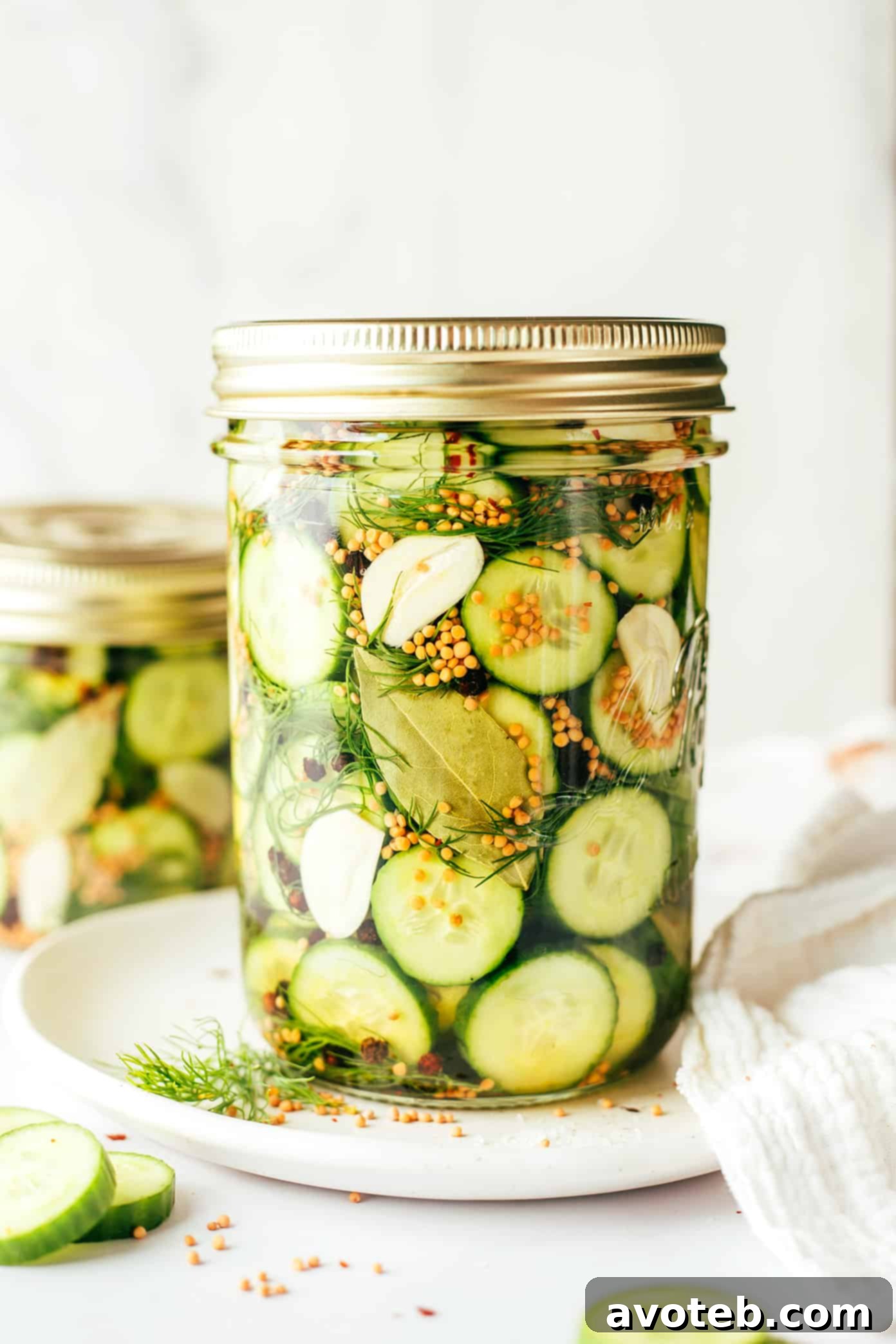
Discover the ultimate guide to crafting the most delicious, crisp, and fresh homemade pickles right in your refrigerator! This incredibly easy recipe takes only 5 minutes to prepare and is fully customizable to your taste preferences.
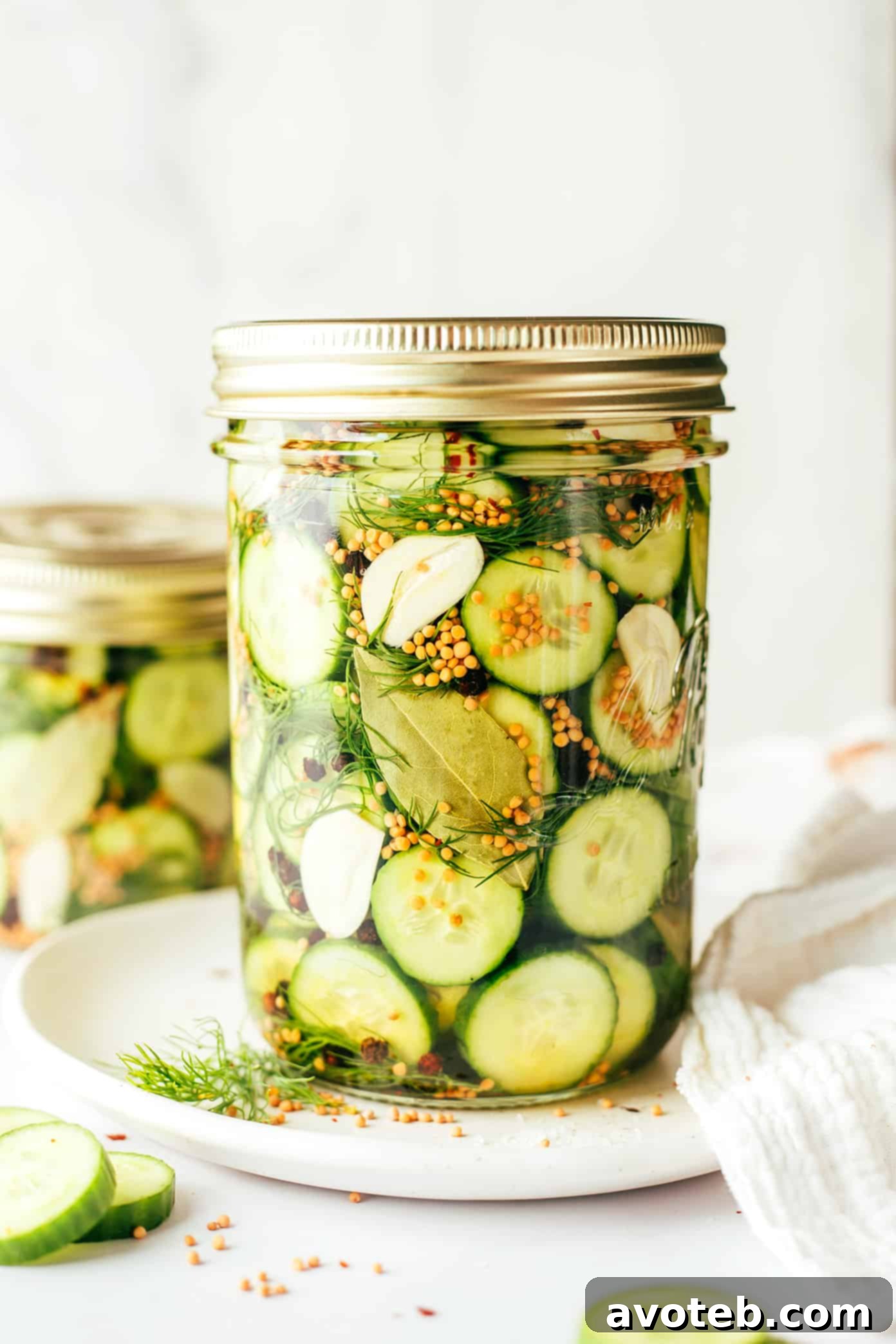
Are you yearning for that satisfying crunch and tangy burst of flavor that only a perfectly pickled cucumber can deliver? Look no further! This summer, our kitchen has been a hub of pickle perfection, especially with an abundance of fresh, ripe cucumbers. While countless pickle recipes exist, this particular method for refrigerator pickles has become our unwavering favorite. It consistently yields results that rival even the most famous fresh pickle brands, like Grillo’s, boasting an unmatched crispness and a vibrant medley of garlicky, dill, and bay leaf flavors. These pickles achieve a delicate balance of salty and vinegary notes, ensuring they are utterly delicious without being overpowering.
Beyond their incredible taste, the sheer simplicity of this recipe is what makes it truly remarkable. Requiring a mere 5 minutes of active preparation time, your homemade pickles will be ready to enjoy after just a few hours of chilling. However, if you can muster the patience to let them steep overnight, their flavor will deepen and intensify beautifully. As an added bonus, this recipe is naturally gluten-free and vegan, making it suitable for a wide range of dietary needs. While these versatile pickles are fantastic additions to burgers, sandwiches, salads, and even cocktails, we often find ourselves simply snacking on them plain. There’s truly nothing quite like the refreshing, crisp snap of a homemade cucumber pickle!
So, gather your freshest ingredients, clear a spot in your refrigerator, and let’s embark on the delightful journey of making a batch of the best homemade pickles you’ll ever taste.
Mastering Refrigerator Pickles: A Quick Visual Guide
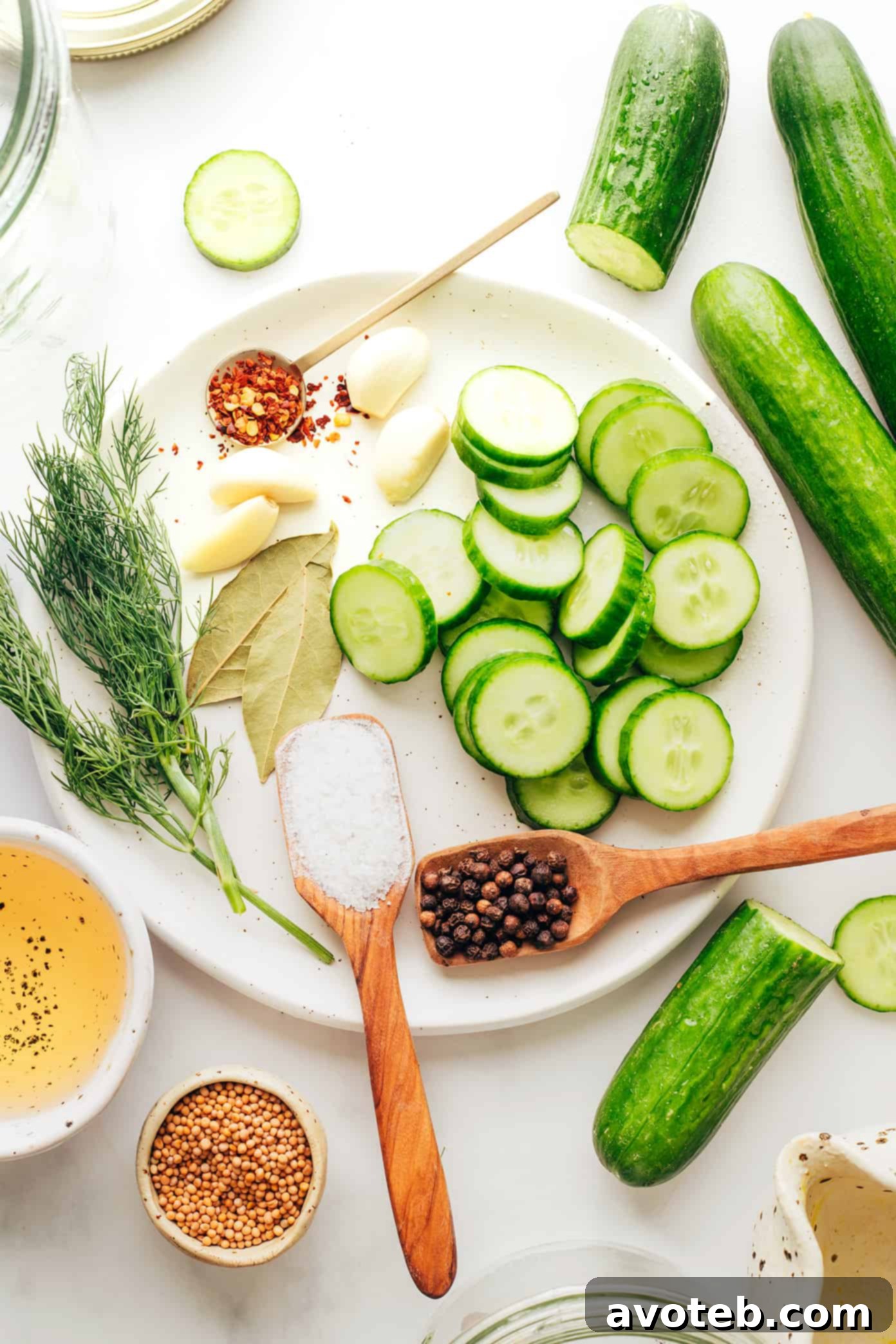
Essential Ingredients for Exceptional Homemade Pickles
Crafting the perfect batch of refrigerator pickles begins with selecting high-quality ingredients. While the full recipe with precise measurements is provided below, here’s a closer look at each component and why it’s vital for achieving that desirable homemade pickle flavor and texture:
- Cucumbers: The foundation of any great pickle! We highly recommend using mini Persian cucumbers for their exceptionally crisp texture, thin skin, and minimal seeds, all of which contribute to an ideal pickling experience. English cucumbers are another excellent choice, offering a similar crunch and mild flavor. Avoid large, seedy slicing cucumbers, as they tend to become soft and less desirable when pickled.
- Fresh Dill: Dill is the quintessential herb for pickles, imparting that signature tangy and aromatic flavor. Don’t be shy with the dill – we love to pack generous amounts into our jars. However, feel free to adjust the quantity based on your personal preference for a stronger or more subtle dill presence. Fresh dill is paramount here; dried dill simply won’t yield the same vibrant taste.
- Fresh Garlic: Garlic infuses the pickles with a delightful savory depth. The amount you add is entirely up to your taste; some prefer a subtle hint, while others enjoy a bold garlicky punch. For optimal flavor permeation throughout the cucumbers, we suggest thinly slicing the garlic cloves. This maximizes their surface area, allowing their essence to quickly meld with the brine.
- Seasonings: Our go-to seasoning blend for these refrigerator pickles includes bay leaves for an earthy, aromatic background, mustard seeds for a classic tangy kick, black peppercorns for a gentle spice, and fine sea salt for perfect preservation and flavor. A touch of crushed red pepper flakes adds an optional but welcome subtle heat. If you’re aiming for a flavor profile closer to Grillo’s famous fresh pickles, you might consider omitting the mustard seeds and crushed red pepper flakes for a purer garlic-dill essence.
- Vinegar: The vinegar is key to the pickles’ characteristic tang and acts as the preserving agent. We find that rice vinegar or distilled white vinegar work best, as they both offer a clean, mellow acidity that allows the other flavors to shine without overpowering them. While apple cider vinegar can be used, its sweeter and fruitier notes might alter the traditional pickle flavor slightly, which may or may not be to your preference.
- Water: Use filtered water if your tap water has a strong mineral content or chlorine taste, as this can affect the final flavor of your pickles.
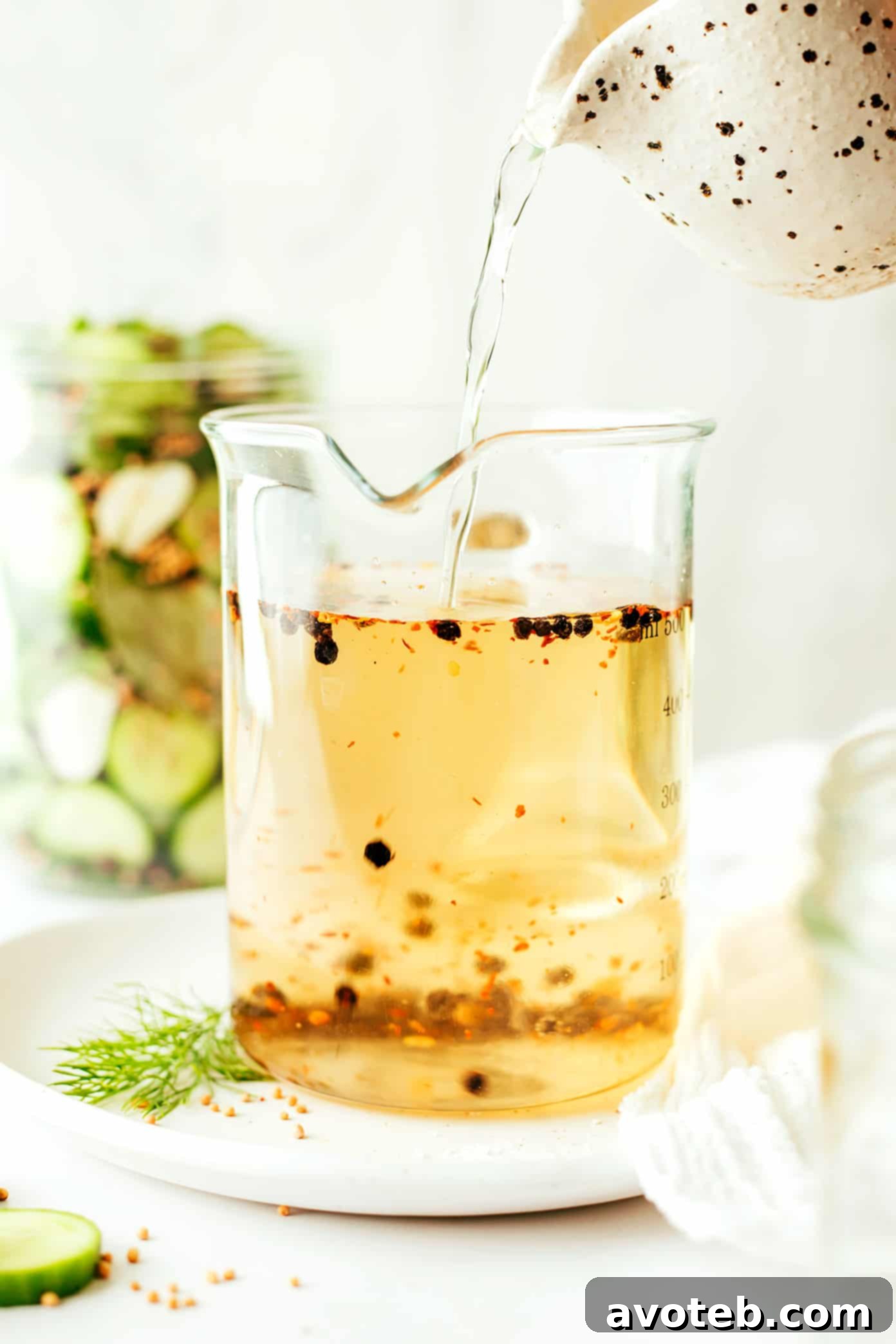
Crafting Your Perfect Batch: Step-by-Step Pickling
Making these homemade refrigerator pickles is surprisingly straightforward. Follow these simple steps for perfectly crisp and flavorful results:
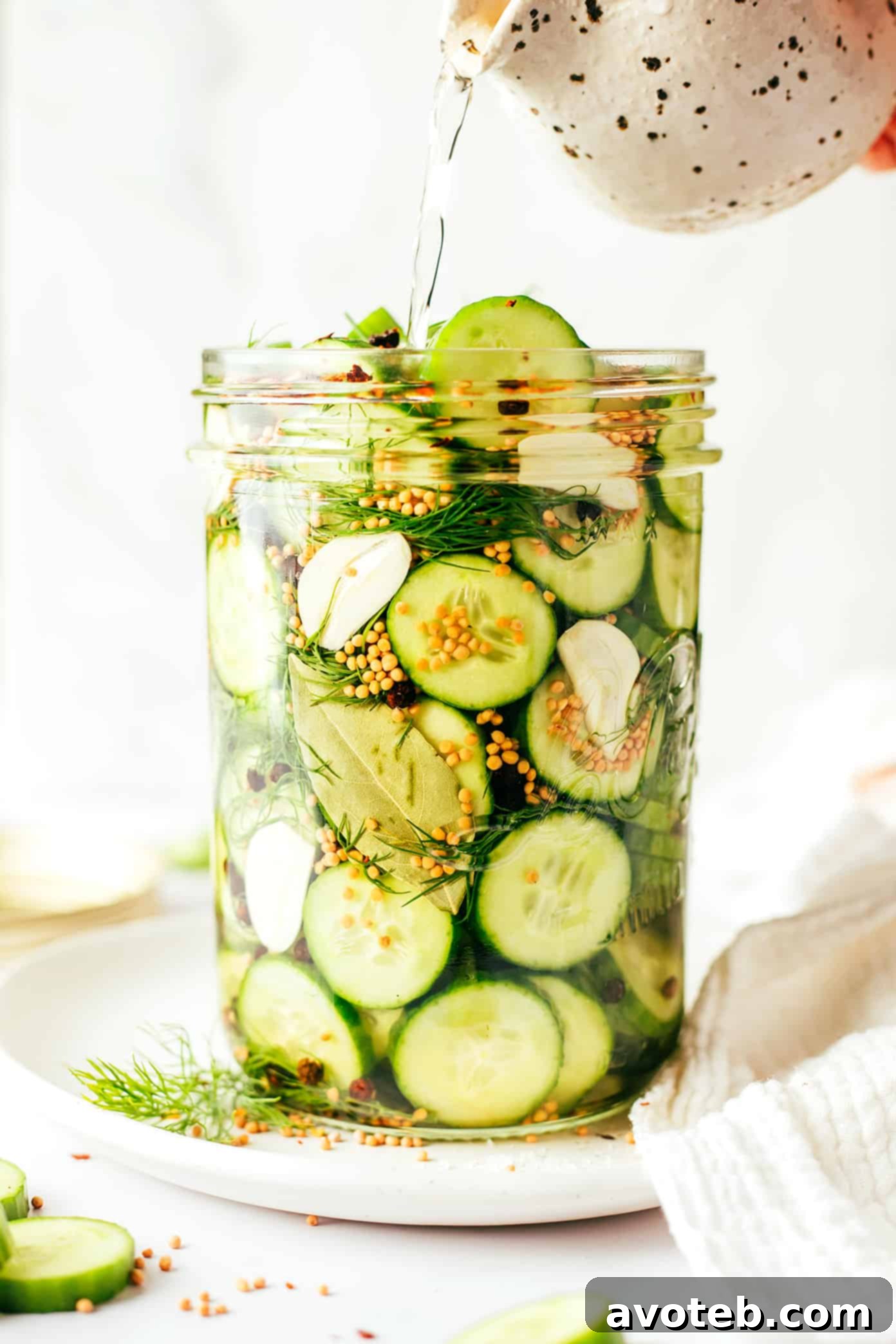
- Layer the Ingredients with Care. Begin by adding the larger ingredients to your clean pickling jar. Carefully layer the sliced cucumbers, fresh dill, thinly sliced garlic, and bay leaf. It’s often easier to distribute these components evenly before introducing the liquid brine. Try to tuck sprigs of dill and slices of garlic throughout the cucumbers to ensure an even infusion of flavor. Packing them snugly, but not overly tight, will help prevent them from floating once the brine is added.
- Prepare the Flavorful Brine. Unlike traditional canning, this refrigerator pickle recipe doesn’t require heating the brine unless you plan to add a sweetener (see variations below). In a separate measuring jar or bowl, combine the water, your chosen vinegar, fine sea salt, black peppercorns, and crushed red pepper flakes (if using). Whisk vigorously until the salt is completely dissolved. Ensuring the salt is fully incorporated now will guarantee a balanced flavor profile throughout your pickles.
- Combine and Submerge. Carefully pour the prepared brine over the layered cucumber mixture in the jar. Once the brine is added, secure the lid tightly and give the jar a good, gentle shake. This helps to distribute the seasonings and ensure all ingredients are thoroughly coated. A crucial step for successful pickling is to ensure all the cucumbers are fully submerged in the brine. This prevents air exposure, which can lead to spoilage and a lack of crispness. If necessary, use a smaller glass jar or a designated pickle weight to keep the cucumbers below the brine line.
- Refrigerate for Optimal Flavor. Place your sealed jar of pickles in the refrigerator. While they will be lightly brined and enjoyable after just a few hours (perfect for a quick craving!), we highly recommend refrigerating them for at least 24 hours. The longer they sit, the more the flavors will meld and deepen, resulting in a superior pickle experience. Over time, the cucumbers will absorb more of the brine, becoming perfectly crisp and tangy.
Inspiring Variations for Your Homemade Pickles
One of the joys of making refrigerator pickles is the endless opportunity for customization. This recipe serves as a fantastic base, but don’t hesitate to experiment and make it uniquely yours. Here are several exciting ways to customize your homemade pickle recipe:
- Explore Different Fresh Herbs: Beyond dill, a world of fresh herbs awaits! Consider adding sprigs of fresh basil for a Mediterranean twist, chives for a delicate oniony note, refreshing mint, earthy oregano, aromatic rosemary, licorice-like tarragon, or savory thyme. Each herb will impart its unique character to your pickles, offering new culinary dimensions.
- Experiment with Diverse Spices: Elevate your pickle game with different whole or crushed spices. Try adding celery seeds for a classic deli-style flavor, coriander seeds for a citrusy, floral aroma, fennel seeds for a subtle anise kick, or a few whole cloves for a warm, spicy undertone. A mix of these can create a complex and inviting flavor profile.
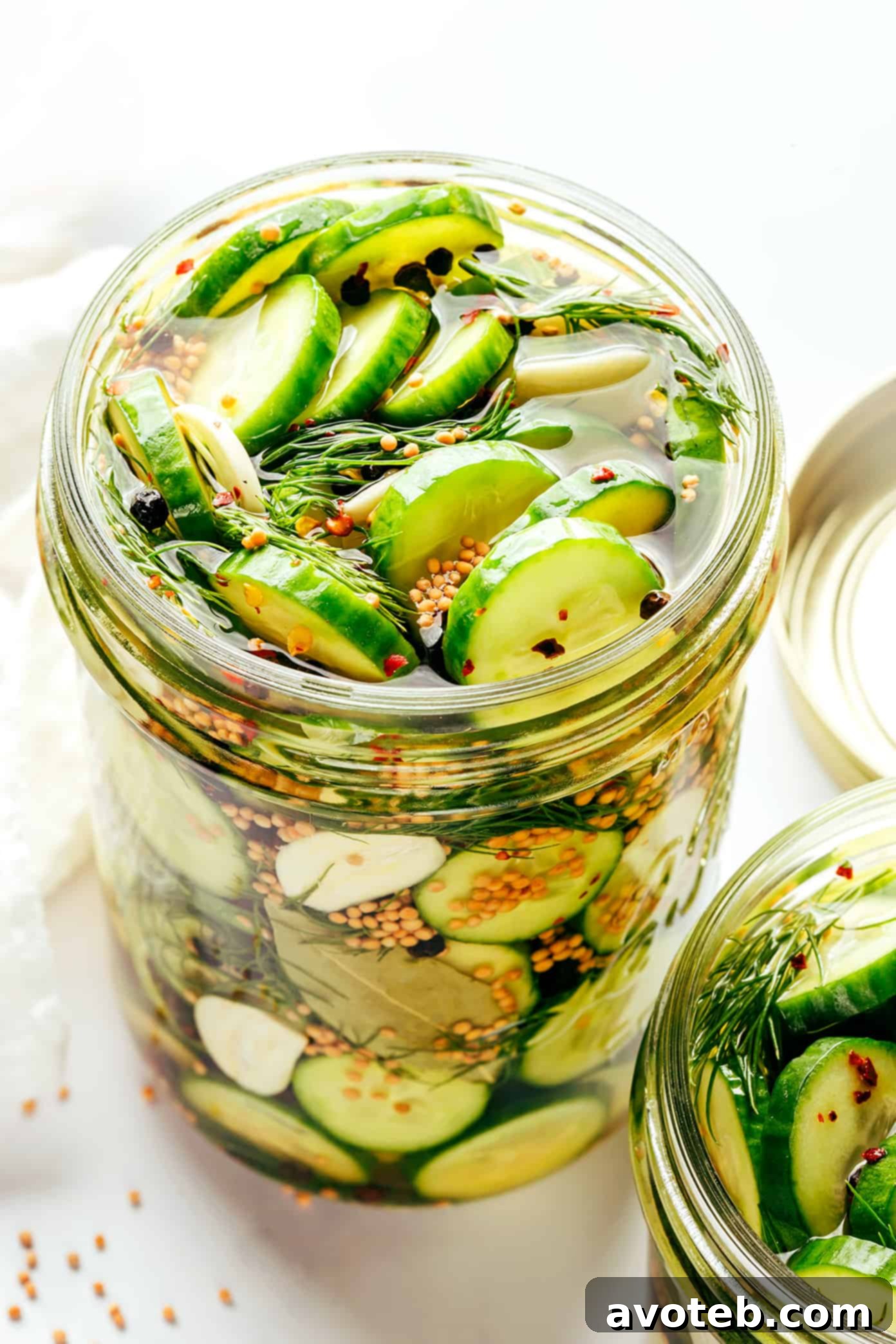
- Opt for Pickle Spears: If you prefer longer, more substantial pickles for sandwiches or snacking, simply slice your cucumbers lengthwise into spears instead of coins. This alteration in shape won’t affect the flavor but offers a different textural experience and presentation.
- Create Sweet Pickles: For those who enjoy a hint of sweetness to balance the tang, it’s easy to transform this recipe. Heat 2/3 cup of the water until it’s very hot, then stir in 1 to 3 tablespoons of your preferred sweetener (such as honey, maple syrup, or granulated sugar) until it fully dissolves. Once dissolved, stir in the remaining 2/3 cup of cold water to bring the brine back to room temperature before adding it to your pickle jar as directed.
- Whip Up Bread and Butter Pickles: Combine the sweetness of the sweet pickle variation with the savory depth of thinly sliced onions. Follow the steps for making sweet pickles, and then add about a quarter of a small sweet onion, very thinly sliced, to your jar along with the cucumbers and other seasonings. The onions will soften and mingle with the sweet and sour brine, creating the beloved bread and butter flavor.
- Ignite Your Palate with Spicy Pickles: If you crave a fiery kick, swap out or supplement the crushed red pepper flakes with sliced fresh chili peppers. Jalapeños offer a moderate heat, serranos provide a brighter, more intense spice, and Thai bird chiles deliver serious heat for the adventurous palate. Adjust the quantity to achieve your desired level of spiciness.
Frequently Asked Questions About Homemade Refrigerator Pickles
Here are answers to some of the most common questions about making and storing refrigerator pickles, ensuring you can enjoy your homemade creations safely and deliciously.
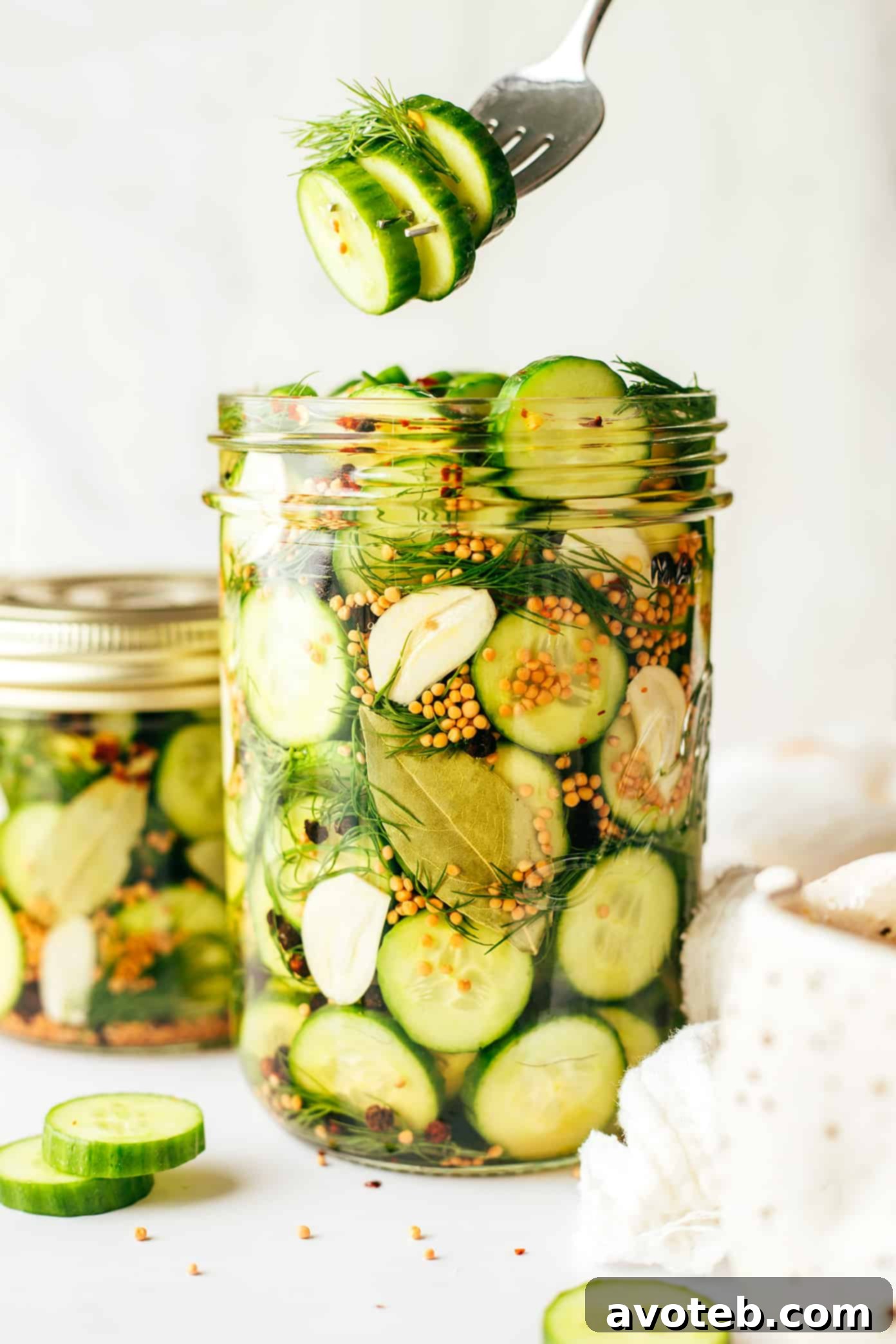
Can I “can” this recipe for long-term storage? No, this specific recipe is designed for refrigerator pickling and is not suitable for traditional hot water bath canning. Refrigerator pickles are characterized by their quick preparation and lack of extensive processing, meaning they are not shelf-stable at room temperature. Canning requires precise pH levels and processing times to prevent the growth of harmful bacteria, which this simple recipe does not account for. Attempting to can these pickles could pose food safety risks.
Is it safe to re-use the pickle brine for another batch? For optimal food safety and flavor, we strongly recommend creating a fresh batch of brine for each new batch of pickles. Over time, the brine absorbs flavors and some organic compounds from the cucumbers and spices. Reusing it can lead to inconsistent flavors and potentially compromise the safety of your next batch, as bacteria can accumulate in used brine. Starting with fresh brine ensures the best taste and reduces any health risks.
What is the best way to store refrigerator pickles? Always store your homemade refrigerator pickles in a clean, airtight jar within a cool refrigerator. Proper refrigeration is crucial for maintaining their crispness and extending their shelf life. Ensure the lid is securely sealed to prevent air exposure and contamination.
How long do these homemade pickles typically last in the refrigerator? For optimal food safety and flavor, we recommend consuming these refrigerator pickles within 1 week. However, in our experience, with proper storage and handling, they can often last for up to 2-3 weeks in the refrigerator. To maximize their longevity, always use a clean fork or spoon when removing pickles from the jar, avoiding “double-dipping” or introducing any potential bacteria. Always trust your best judgment; if the pickles show any signs of spoilage (such as an off odor, slimy texture, or mold), it’s best to discard them.
Print Recipe
Easy Homemade Pickles
- Prep Time: 5 minutes
- Cook Time: 0 mins
- Total Time: 5 minutes
- Yield: 1 jar (approximately 1 quart/liter)
Description
This incredibly easy homemade pickles recipe takes just about 5 minutes to prep and yields perfectly crisp, tangy, and absolutely delicious pickles that you’ll adore!
Ingredients
- 12 ounces Persian cucumbers,* sliced into coins or spears
- 5 to 6 large sprigs fresh dill, roughly chopped
- 4 small cloves garlic, thinly sliced
- 1 bay leaf
- 1 1/3 cups water
- 2/3 cup rice vinegar (or distilled white vinegar)
- 1 tablespoon fine sea salt*
- 2 teaspoons black peppercorns
- 1 teaspoon mustard seeds (optional)
- 1/8 teaspoon crushed red pepper flakes
Instructions
- Layer the pickles. Add the cucumbers, fresh dill, thinly sliced garlic, and bay leaf to a large (about 1 quart or 1 liter) jar. Layer the dill and garlic between the cucumber slices or spears to ensure even flavor distribution.
- Mix the brine. In a measuring jar or bowl, briefly whisk together the water, vinegar, fine sea salt, black peppercorns, mustard seeds (if using), and crushed red pepper flakes until the salt is fully dissolved.
- Combine. Pour the prepared brine over the cucumber mixture in the jar. Secure the lid tightly and give the jar a good shake to combine all ingredients. If needed, gently press down on the cucumbers so that they are more or less fully submerged in the brine, preventing air exposure.
- Refrigerate. Place the sealed jar in the refrigerator. For the best flavor, allow the pickles to refrigerate for ideally at least 1 day before eating. However, they will be lightly brined and ready to enjoy after just a few hours if you need a quick snack. Pickles can be stored in a sealed jar in the refrigerator for 1 week for optimum freshness and safety.
Equipment
1-Liter Jar
Buy Now →
1-Quart Jar
Buy Now →
Glass Measuring Cups
Buy Now →
Notes
Cucumbers: For this recipe, you can also use approximately 12 ounces of English cucumber (about 1 large English cucumber), sliced into coins or spears, as an excellent alternative to Persian cucumbers. Both varieties offer a great crisp texture for pickling.
Salt: It is highly recommended to use fine sea salt for this recipe. Unlike iodized table salt, fine sea salt dissolves easily and doesn’t contain additives that can sometimes lead to discolored or cloudy brine and off-flavors in your pickles. If you only have iodized table salt available, please note that you will need to use approximately half the amount, as it is denser and saltier by volume.
Storage Time: While we recommend consuming these refrigerator pickles within 1 week for optimum food safety and peak freshness, we often find ours remain delicious for up to 2-3 weeks when stored correctly in the refrigerator. Always ensure you use a clean fork or spoon each time you remove pickles from the jar to avoid introducing bacteria, which helps extend their shelf life. Always use your best judgment regarding freshness.
Recipe Edit: This recipe was updated in July 2022 to enhance its flavor and crispness. The original recipe featured one (12-ounce) English cucumber, used less vinegar (3 tablespoons), slightly more salt (1.5 tablespoons), and did not include mustard seeds. The current version provides a more robust and balanced flavor profile.