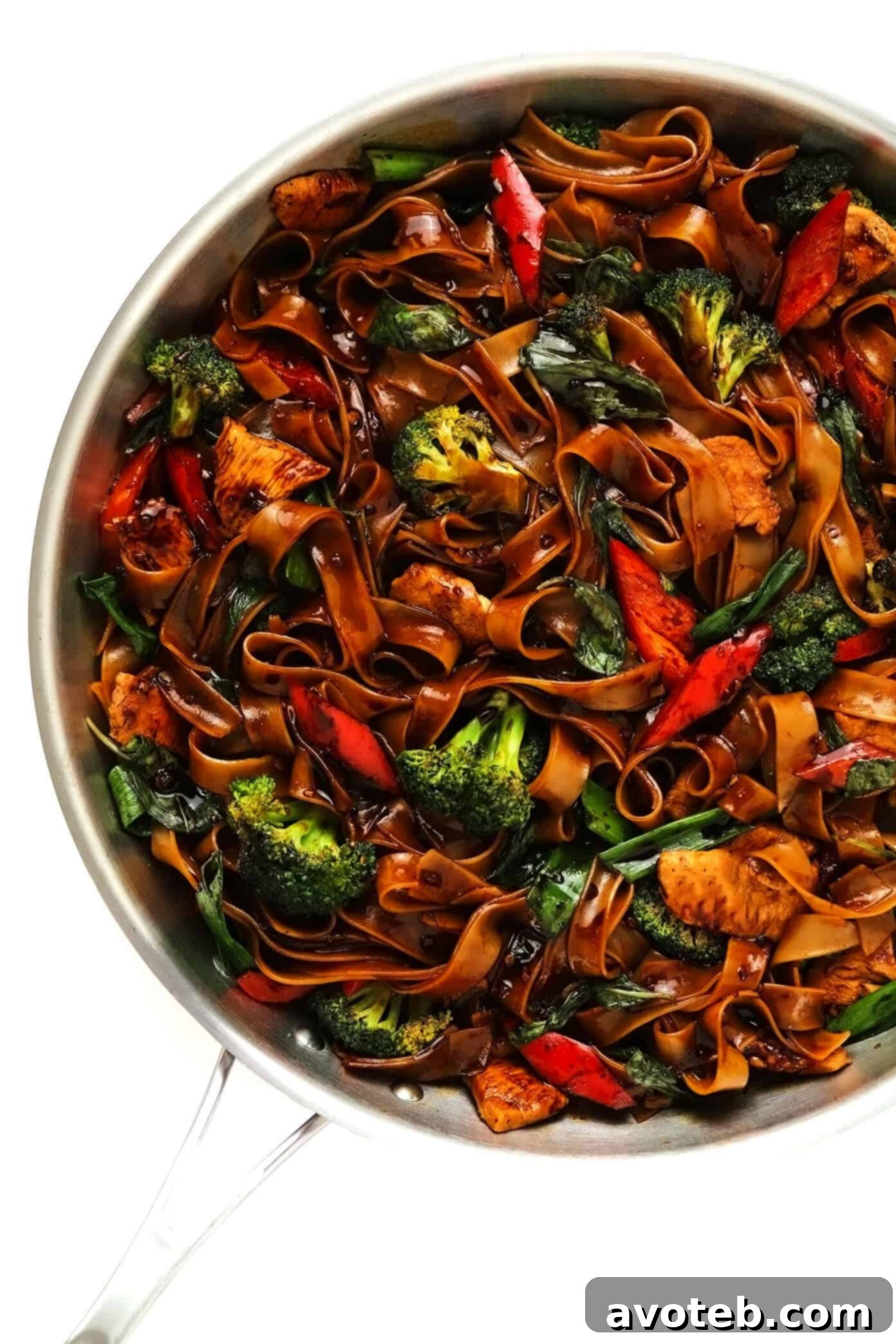
Experience the vibrant flavors of Thailand from your own kitchen with this ultimate guide to making irresistible Thai Drunken Noodles (Pad Kee Mao). This recipe, featuring your choice of protein and fresh vegetables, is bathed in a savory, spicy, and aromatic Thai basil sauce that will transport your taste buds straight to the bustling streets of Bangkok.
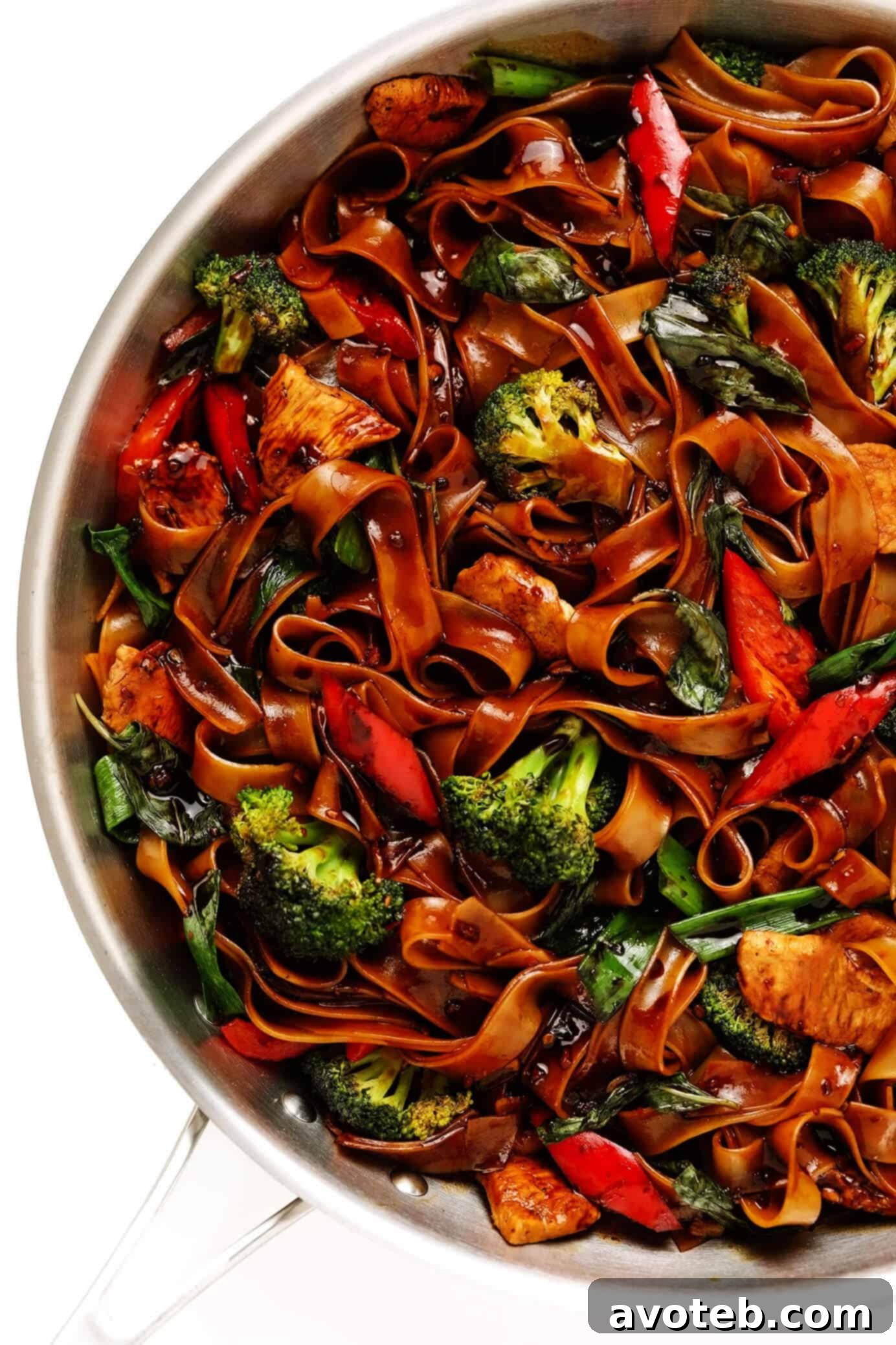
As an avid enthusiast of stir-fried noodles, I can confidently say that Thailand’s famous Pad Kee Mao (ผัดขี้เมา), widely known as Drunken Noodles, holds a special place at the top of my list. There’s an undeniable magic to these noodles – a captivating blend of textures and tastes that keeps me coming back for more, time and time again. They are more than just a meal; they are an experience, a symphony of flavors that truly ignites the senses.
You might wonder about the intriguing name: “Drunken Noodles.” Contrary to popular belief, this dish doesn’t actually contain alcohol. The moniker is widely thought to stem from its intensely savory and spicy profile, which some believe is potent enough to cure a hangover, or perhaps because it’s a dish often enjoyed late at night, after a few drinks. Traditionally, Pad Kee Mao is a hearty stir-fry featuring broad rice noodles, an assortment of fresh vegetables, and your preferred protein (chicken is a popular choice, and what I’ve used here). However, the true soul of this dish, its captivating “drunken” essence, resides in its unique sauce. This isn’t just any sauce; it’s a meticulously crafted blend of savory, subtly sweet, and wonderfully spicy notes. But the transformation truly occurs when this already delicious base is generously tossed with loads of fragrant Thai holy basil, infusing every strand of noodle with an irresistible, anise-like aroma that is simply divine.
To truly unlock the authentic taste of this Pad Kee Mao recipe, I wholeheartedly urge you to seek out fresh Thai basil from your local Southeast Asian grocery store. This particular herb is distinctly different from its Italian counterpart, boasting a more robust, peppery, and slightly anise-like flavor that provides that elusive je ne sais quoi – that special something that elevates the dish from good to absolutely phenomenal. While I can’t claim this recipe is 100% traditionally authentic, it’s the closest and most delicious recreation of the beloved Thai-American restaurant version that I fell head over heels for years ago. Its taste is, quite frankly, ridiculously good and consistently satisfying.
The excellent news is that preparing this flavor-packed stir-fry at home is surprisingly straightforward, making it an ideal choice for a quick yet impressive weeknight dinner. What’s more, it yields fantastic leftovers, allowing you to savor its incredible taste for days to come. So, gather your ingredients, make that worthwhile trip for some fresh Thai basil, and let’s dive into crafting your very own homemade Pad Kee Mao!