
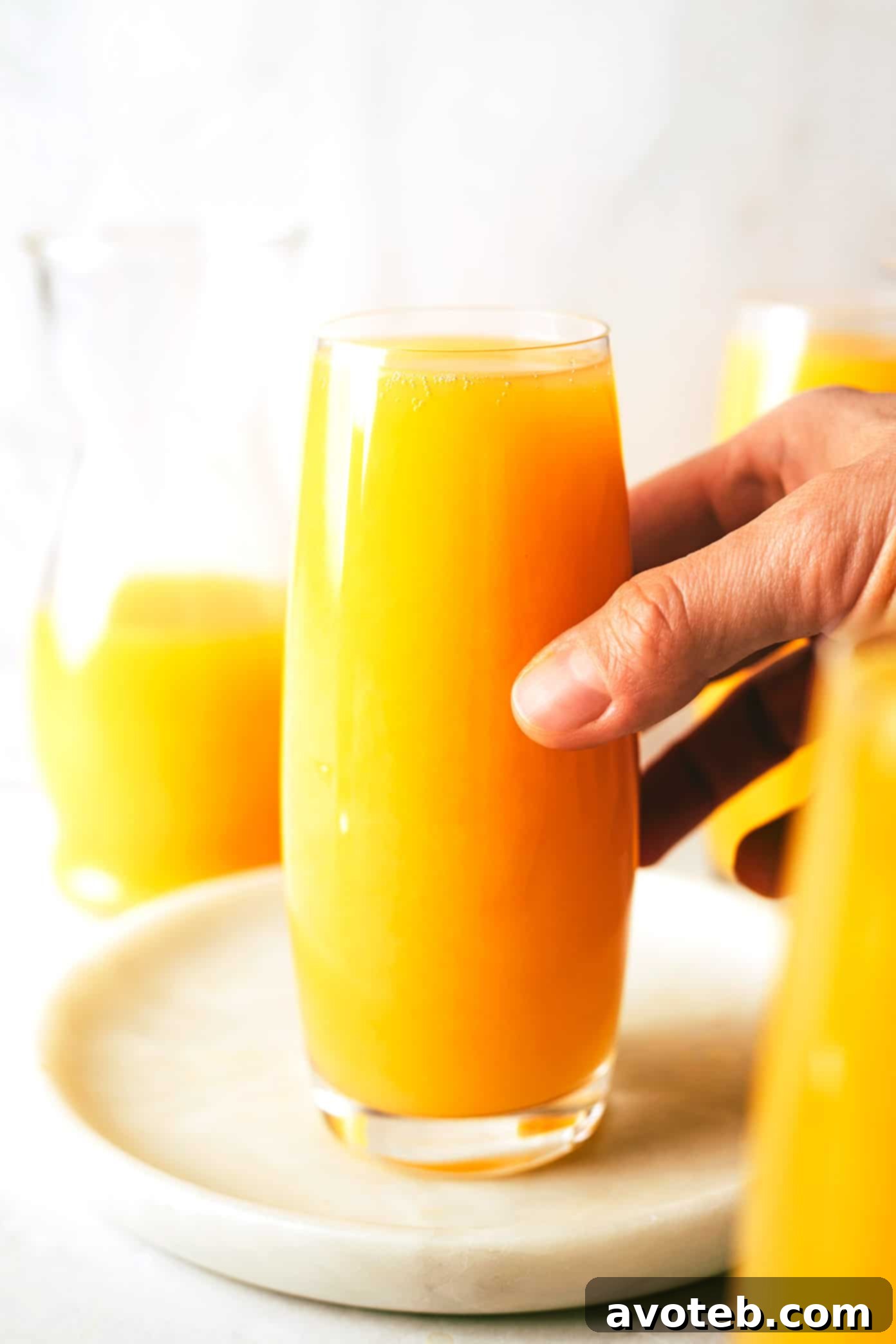
Discover the art of crafting the perfect mimosa with this comprehensive guide. Learn the classic recipe, explore exciting customization options, including a delicious non-alcoholic version, and master the technique for preparing a large pitcher to effortlessly serve a crowd.
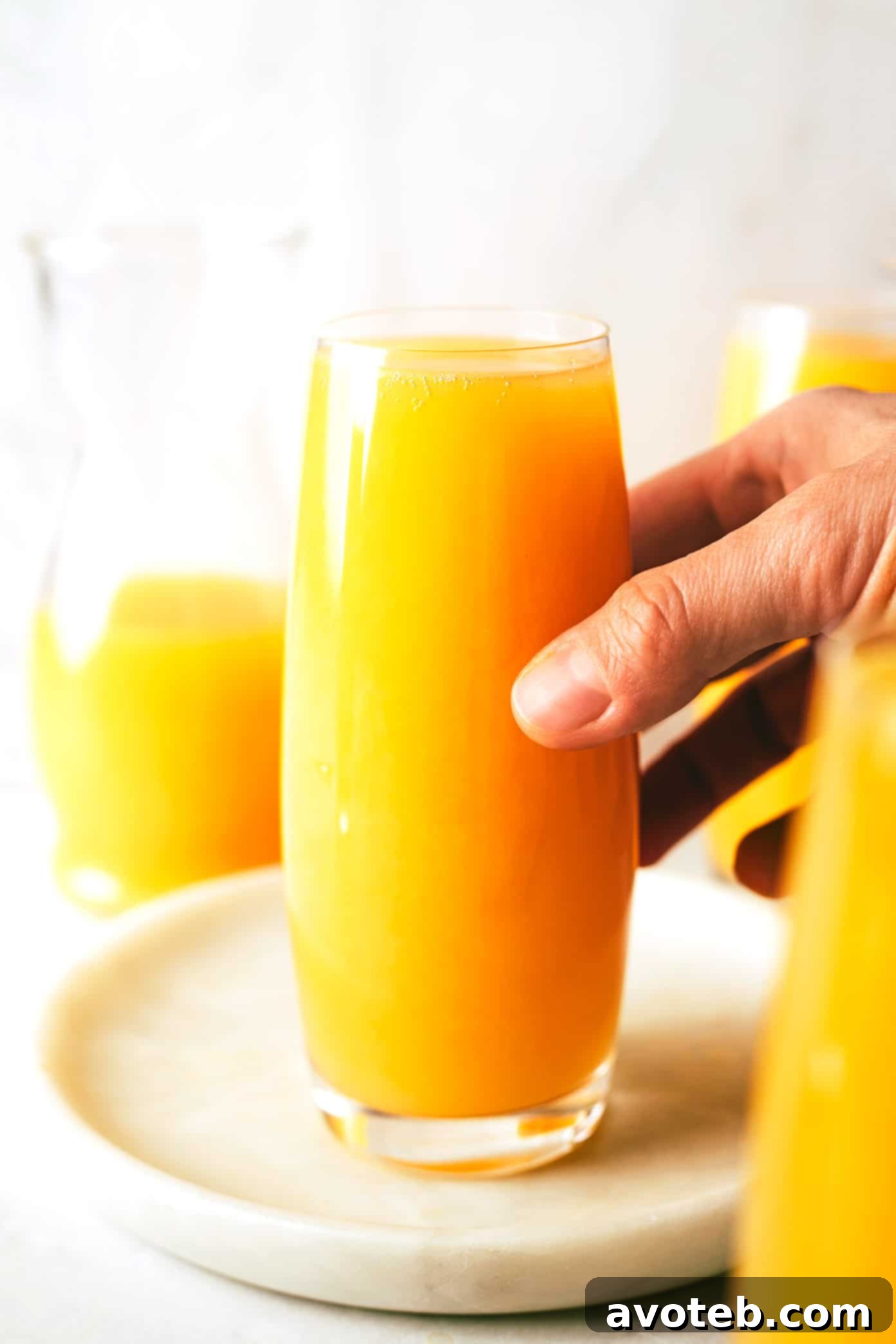
The Ultimate Guide to Crafting the Perfect Classic Mimosa
As the undisputed champion of brunch cocktails, the mimosa holds a special place in the hearts of many. Its effervescent charm and delightful simplicity make it the go-to drink for celebrations, lazy weekend mornings, and any occasion that calls for a touch of sparkle. While you might have encountered various creative twists on this beloved beverage—from vibrant Mimosa Sangrias to exotic Tropical Mimosa Smoothies—there’s an undeniable elegance in mastering the original, 2-ingredient classic mimosa recipe.
My personal journey with mimosas has taken a delicious turn since relocating to Spain, the very heartland of Cava production. Here, a high-quality bottle of sparkling wine can be found for a fraction of the cost, making the indulgence of a perfectly crafted mimosa an everyday luxury rather than an occasional treat. Spain’s appreciation for Cava, and by extension, mimosas, has only deepened my love for this versatile drink. Regardless of where you are in the world, the simple pleasure of a bubbly, refreshing mimosa is a universal delight.
This guide is dedicated to equipping you with all the knowledge you need to create the best mimosas possible. We’ll cover everything from selecting the right ingredients and glassware to mastering the pour and even preparing a large batch for entertaining. Get ready to uncork some bubbly and elevate your brunch game!
Why the Mimosa Reigns Supreme as the Ultimate Brunch Cocktail
The mimosa isn’t just a drink; it’s an experience. Its appeal lies in its effortless blend of sophistication and accessibility. Comprising just two main ingredients, it’s remarkably easy to prepare, yet it always manages to feel special. The bright, citrusy notes of orange juice perfectly complement the crisp, effervescent qualities of sparkling wine, creating a balanced flavor that’s both invigorating and celebratory. It’s light enough to enjoy in the morning, yet elegant enough for any festive gathering. The mimosa effortlessly transforms an ordinary meal into a memorable occasion, making it an indispensable part of any successful brunch spread.
Essential Ingredients for Your Classic Mimosa Recipe
Crafting a classic mimosa requires only two core components, but the quality of these ingredients significantly impacts the final taste. Choosing wisely ensures a truly exceptional drink.
1. The Sparkling Wine: Your Foundation of Fizz
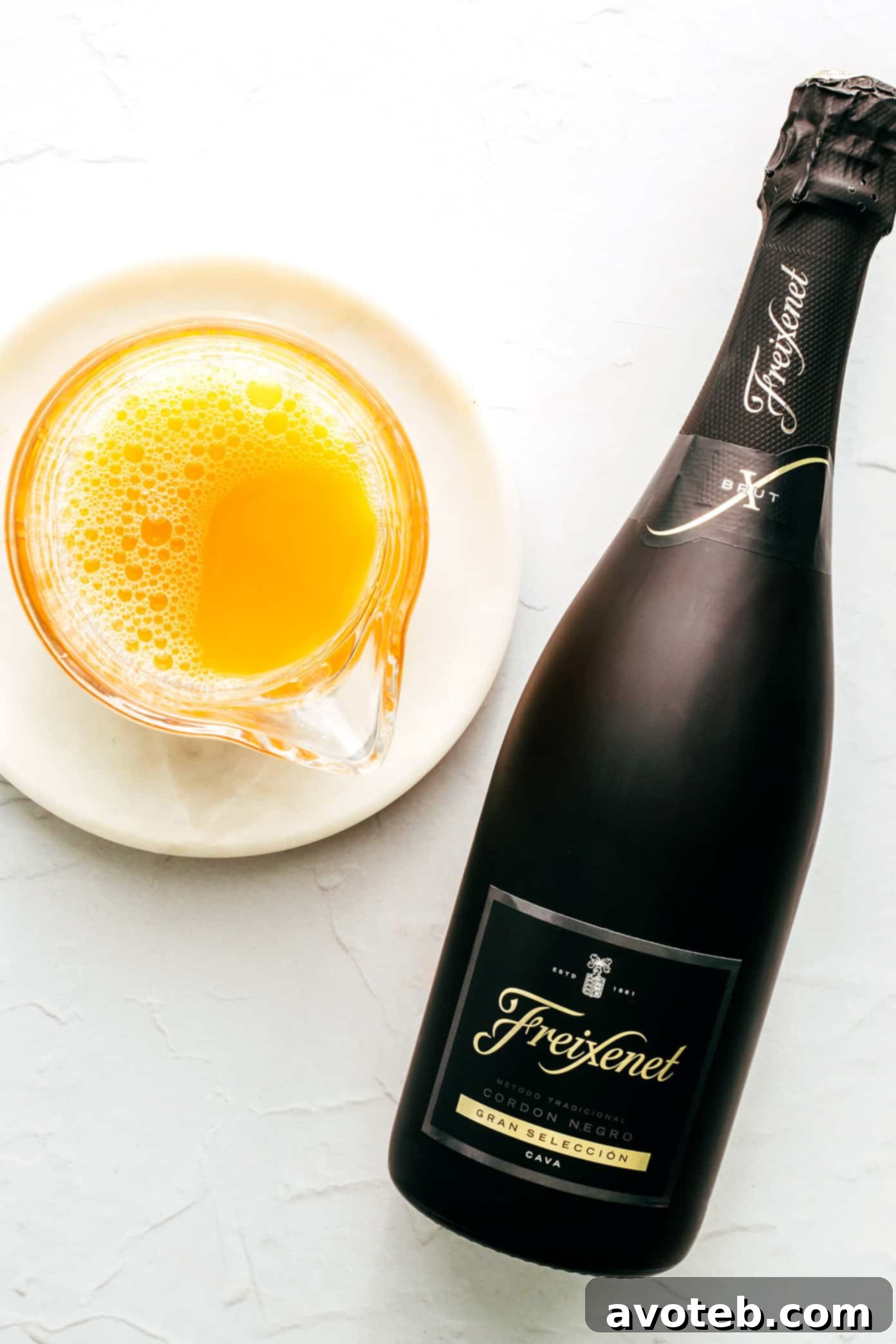
When selecting sparkling wine for mimosas, the key is to opt for a dry or semi-dry variety. This choice is crucial for balancing the inherent sweetness of the orange juice, preventing the cocktail from becoming overly syrupy. While Champagne is the traditional and most luxurious choice, its cost often outweighs its contribution in a mixed drink. For mimosas, where the wine is combined with a strong fruit juice, there’s no need to splurge on an expensive bottle. More affordable yet excellent alternatives include:
- Cava (Spain): My personal favorite, Cava offers fantastic value and a consistently dry, crisp profile that pairs beautifully with orange juice. It’s often produced using the traditional method, similar to Champagne, resulting in fine bubbles and complex flavors.
- Prosecco (Italy): Hailing from Italy, Prosecco is another popular and budget-friendly option. It tends to be fruitier and slightly less dry than Cava, with larger, lighter bubbles, making it a lively choice for mimosas. Look for “Brut” or “Extra Dry” varieties.
- American Sparkling Wine: Many Californian and other domestic sparkling wines offer quality and affordability. Again, seek out “Brut” options for the best balance.
Avoid “Demi-Sec” or “Doux” sparkling wines, as these are significantly sweeter and will overwhelm the mimosa’s delicate balance. The goal is to let the wine’s dryness cut through the orange juice’s sweetness for a perfectly refreshing sip. Ensure your sparkling wine is thoroughly chilled before serving for optimal enjoyment.
2. The Orange Juice: Brightness and Zest
The orange juice is just as vital as the sparkling wine. For the best flavor, freshly-squeezed 100% orange juice is unparalleled. It offers a brighter, more vibrant taste that truly elevates the mimosa. However, high-quality, store-bought 100% orange juice is a perfectly acceptable and convenient alternative. Regardless of your source, consider these tips:
- Pulp-Free is Preferred: For a silky-smooth texture and to avoid any interaction with the bubbles, opt for pulp-free orange juice. While a little pulp won’t ruin your drink, its absence ensures a more refined experience.
- No Added Sugars: Stick to 100% orange juice without any added sweeteners. The natural sweetness of the fruit is all you need, especially when balanced with dry sparkling wine.
- Chill Thoroughly: Just like your sparkling wine, your orange juice should be well-chilled. This ensures your mimosas are served refreshingly cold without the need for ice, which can dilute the drink.
Elevating Your Mimosa: Creative Variations and Delightful Add-ins
While the classic two-ingredient mimosa is perfection on its own, a few thoughtful additions can transform your drink and cater to diverse palates. These variations offer subtle enhancements without straying too far from the mimosa’s essence.
- St. Germain (Elderflower Liqueur): A splash of elderflower liqueur adds a subtle, fragrant sweetness and a delicate floral note that beautifully complements both the orange and the wine. It’s a sophisticated touch that consistently earns rave reviews from guests.
- Grenadine: For a visually stunning “sunrise” effect and a hint of extra sweetness, a small dash of grenadine (pomegranate syrup) settled at the bottom of the glass works wonders. It creates a beautiful gradient as it rises through the orange juice.
- Orange Liqueur (Cointreau or Grand Marnier): If you wish to deepen the orange flavor and add a bit more alcoholic punch, a touch of Cointreau or Grand Marnier is an excellent choice. These triple sec varieties amplify the citrus essence without introducing new flavors.
- Rose Water or Orange Blossom Water: For a non-alcoholic way to introduce exquisite aromatics, a tiny drop of rose water or orange blossom water can infuse your mimosa with a luxurious floral perfume. Use sparingly, as these are potent.
- Fresh Herbs: A sprig of fresh rosemary, thyme, sage, or even lavender can add an unexpected layer of herbal complexity and a beautiful aromatic garnish. Gently muddle or bruise the herbs slightly to release their oils.
Of course, you can always venture into different “mimosa-inspired” cocktails by swapping out orange juice for other fruit juices like cranberry, grapefruit, pineapple, or pomegranate. You could also experiment with other spirits like tequila or gin. However, for the purpose of this guide, we’ll stick to the core orange juice and sparkling wine combination, focusing on enhancing its classic appeal.
Choosing the Right Glassware for Your Mimosa
The vessel for your mimosa isn’t merely a serving suggestion; it plays a role in the drinking experience. Mimosas, like all sparkling wine cocktails, are traditionally served in champagne flutes. This specific glassware isn’t just for aesthetics; its narrow, tall shape is designed to:
- Preserve Carbonation: The limited surface area at the top helps to trap and preserve the precious bubbles, keeping your mimosa fizzy for longer.
- Enhance Aromatics: The tapered rim helps concentrate the delicate aromas of both the wine and the orange juice, directing them towards your nose with each sip.
- Maintain Temperature: The stem allows you to hold the glass without warming the contents with your hand, keeping the drink perfectly chilled.
You can choose between classic stemmed flutes for a timeless look or modern stemless flutes for a contemporary feel and added stability. If champagne flutes aren’t available, glasses with a narrow opening, such as white wine glasses, are suitable alternatives as they still help to preserve some of the bubbles. For larger gatherings, especially outdoors, recyclable plastic champagne flutes offer a convenient and safe option.
To truly impress your guests and ensure optimal chill, place your chosen glasses in the freezer for about 10 minutes before serving. This small step makes a significant difference in the overall enjoyment of your mimosa. Once your glasses are ready and ingredients are chilled, it’s time to mix!
How to Master the Art of Making Mimosas
The beauty of the mimosa lies in its simplicity, but a few techniques can ensure a perfect pour every time.
For a Single Serving: The Elegant Pour
Once your glasses and ingredients are perfectly chilled and ready, it’s time to assemble your mimosa:
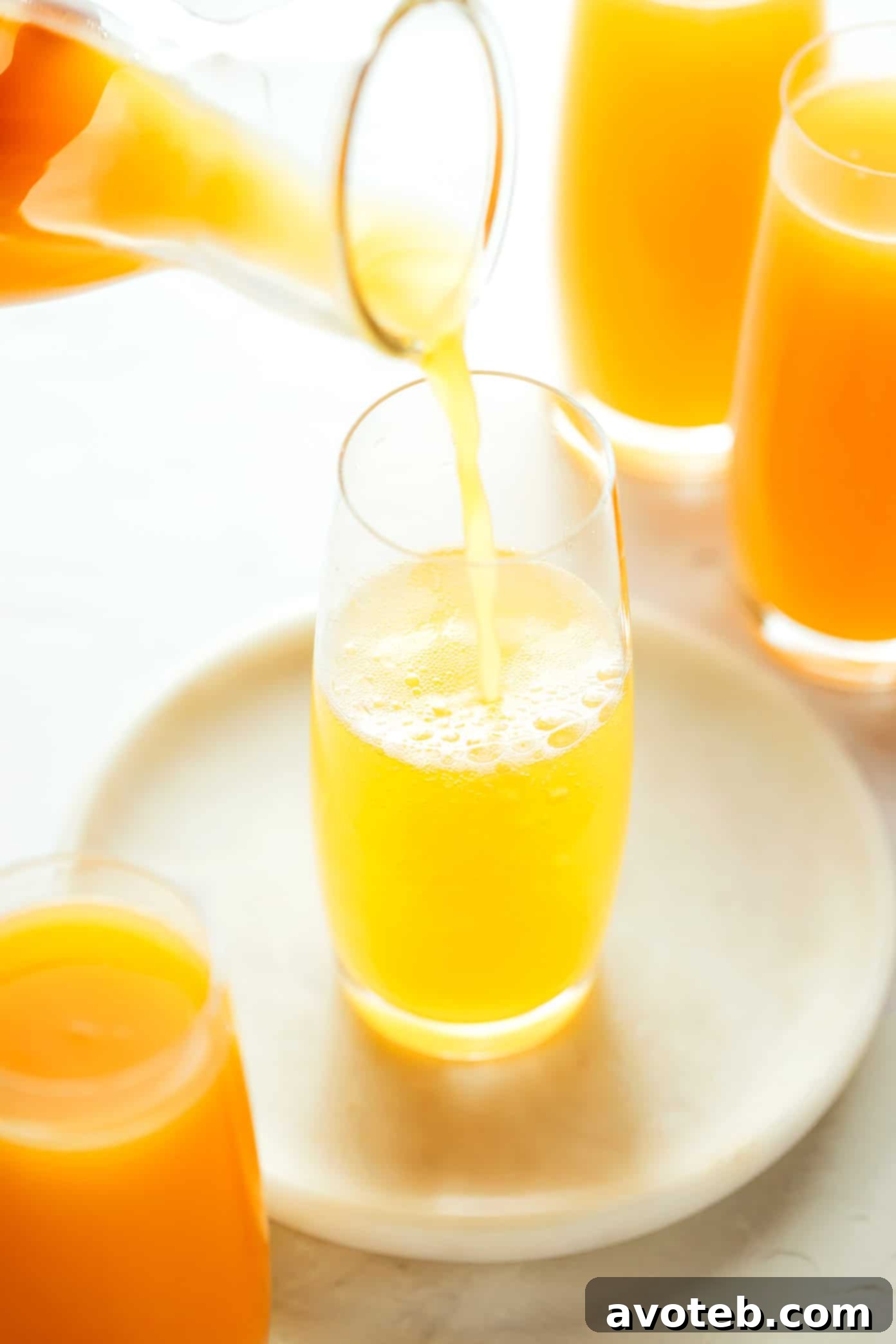
- The Sparkling Wine First: Gently tilt your champagne flute at an angle. Slowly pour your desired amount of sparkling wine into the glass, aiming to fill it approximately two-thirds full. Pouring at an angle and slowly helps to minimize foam and preserve the effervescence. This method also helps to prevent overflow when adding the juice.
- Top with Orange Juice: Carefully top the sparkling wine with your chilled orange juice until the glass is full. The natural mixing action of the liquids is usually sufficient, so avoid stirring, which can cause the bubbles to dissipate prematurely.
- Garnish and Serve: If desired, a small orange slice or a fresh berry makes a lovely garnish. Serve your mimosa immediately to enjoy its peak fizziness and temperature.
How to Make a Mimosa Pitcher for a Crowd: Effortless Entertaining
When hosting a larger brunch, preparing mimosas by the pitcher can be a fantastic time-saver. While this method may result in a slight loss of carbonation compared to individual pours, the convenience often outweighs this minor compromise.
- Combine in a Pitcher: Choose a large, elegant glass pitcher. Slowly pour the chilled sparkling wine into the pitcher, again, gently to preserve as many bubbles as possible.
- Add Orange Juice: Follow with your desired amount of chilled orange juice. A common recommendation is 1 ½ to 2 cups of orange juice per 750ml bottle of sparkling wine, but you can adjust this to your preference.
- Chill Briefly: Do not stir. Place the pitcher in the refrigerator for no more than 10 minutes before serving. This keeps it cold without over-diluting.
- Pour and Serve: When ready, pour the pre-mixed mimosas into chilled champagne flutes. Garnish if you wish, and serve immediately.
Achieving the Perfect Mimosa Ratio: It’s All About Preference
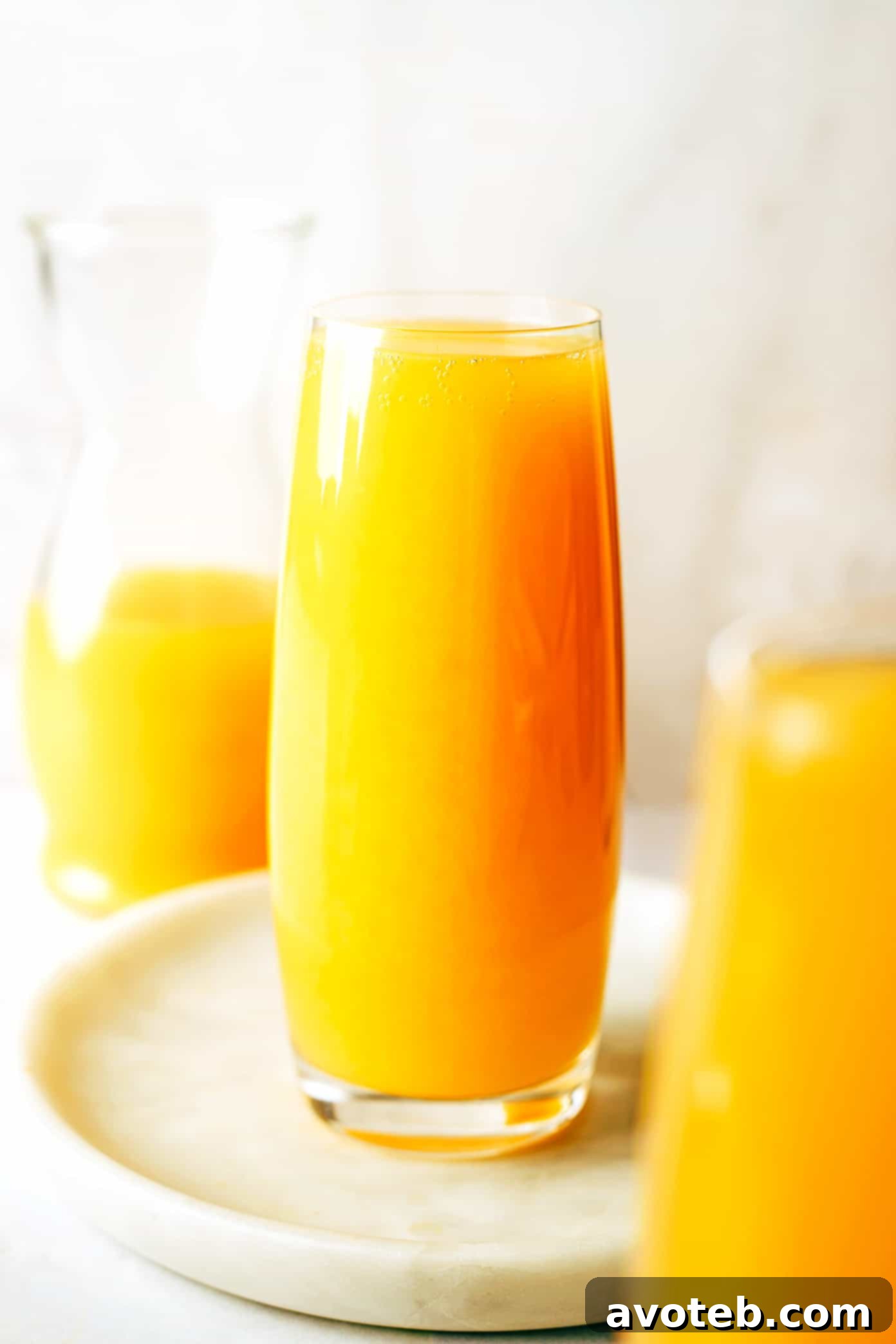
The sparkling wine to orange juice ratio is one of the most debated aspects of the mimosa, and ultimately, there’s no single “correct” answer—it truly depends on your taste. The classic ratio historically calls for equal parts, or 1 part sparkling wine to 1 part orange juice. This delivers a sweeter, more juice-forward drink. However, many mimosa enthusiasts, myself included, prefer a ratio of 2 parts sparkling wine to 1 part orange juice. This results in a less sweet, more wine-dominant mimosa that allows the crispness of the bubbly to shine through. The beauty of pouring individual servings is the freedom to customize each drink to the specific preferences of you and your guests. Don’t hesitate to experiment to find your ideal balance!
Mimosa Frequently Asked Questions (FAQ)
Why is it recommended to add the sparkling wine first?
Adding sparkling wine first helps to preserve more of its carbonation, especially if poured slowly and gently. More importantly, it helps prevent the sticky overflow that can occur when pouring bubbly on top of juice. The bubbles are much easier to control when the orange juice is added to the sparkling wine.
Do I need to stir the mimosa once mixed?
No, definitely not! The natural effervescence of the sparkling wine will gently mix the two ingredients on its own. Stirring will cause the delicate bubbles to escape much faster, resulting in a flat mimosa.
Should I add ice to my mimosa?
There’s no need for ice. Ensure both your sparkling wine and orange juice are thoroughly chilled before mixing. This way, your mimosa will be perfectly cold without any dilution from melting ice, preserving its vibrant flavor and fizz.
Can I prepare mimosas in advance?
For the best quality, mimosas should ideally be mixed and served immediately. However, if you’re preparing a pitcher for a crowd, you can mix the sparkling wine and orange juice up to 10 minutes in advance and keep it chilled in the refrigerator. Any longer, and you’ll start to lose a significant amount of the bubbles.
What are the best occasions for serving mimosas?
Mimosas are quintessential brunch cocktails, perfect for weekend gatherings, holidays like Easter or Mother’s Day, bridal showers, baby showers, or any celebration that calls for a light, festive drink. Their versatility makes them suitable for a wide range of daytime events.
Can I make a non-alcoholic mimosa?
Absolutely! A non-alcoholic mimosa is a fantastic option for guests who prefer to abstain from alcohol. Simply substitute the dry sparkling wine with non-alcoholic sparkling grape juice (white or rosé), sparkling cider, or even sparkling water, and combine with orange juice. This allows everyone to enjoy the festive feel of a mimosa.
How To Make Mimosas
- Prep Time: 1 minutes
- Total Time: 1 minutes
- Yield: 6 –8 servings 1x
Description
Learn how to make mimosas with this classic mimosa recipe. Plus, see tips above for how to customize your drinks with various add-ins, if desired.
Ingredients
Scale
- 1 (750 mL) bottle dry sparkling wine, chilled
- 1 ½ to 3 cups 100% orange juice, chilled*
- optional garnish: orange slices
Instructions
- For A Single Serving: Slowly pour the sparkling wine into a champagne flute until it is about 2/3 full. Top with orange juice until the glass is full. (Do not stir.) Serve immediately, garnished with an orange slice if you would like.
- For A Pitcher: Slowly pour the sparkling wine into a large pitcher. Top with your desired amount of orange juice (I recommend 1 ½ cups). Do not stir. Refrigerate for up to 10 minutes. Pour into champagne flutes and serve.