
Master the Art: How To Cut Bell Peppers Like A Pro

Transform your cooking experience by mastering the simple yet essential skill of properly cutting a bell pepper! ♡ This comprehensive guide will walk you through easy techniques to slice, dice, julienne, or prepare bell peppers for stuffing, ensuring perfectly even cuts every time. Say goodbye to wasted bits and scattered seeds; with these methods, you’ll maximize efficiency, boost safety in the kitchen, and enhance the visual appeal of all your dishes.
Whether you’re meal prepping for a busy week, adding a vibrant splash of color to your dinner, or creating a flavorful base for a new recipe, knowing how to expertly cut bell peppers makes the entire cooking process quicker and far more enjoyable. This foundational kitchen skill is invaluable for home cooks of all levels, promising consistent results and reducing prep time significantly.
Bell peppers are truly one of the most versatile and beloved vegetables in the culinary world. They shine brightly whether eaten raw in salads and dips, roasted to bring out their natural sweetness, grilled for a smoky flavor, or sautéed as part of a delicious stir-fry or fajita filling. Beyond their incredible taste and vibrant appearance, bell peppers are a nutritional powerhouse. They are packed with essential vitamins, including an exceptionally high content of Vitamin C (often more than an orange!), along with Vitamin A, B6, E, and K. They also provide crucial minerals like potassium and manganese, and a generous amount of dietary fiber, promoting digestive health. Rich in powerful antioxidants such such as capsanthin, quercetin, and lutein, bell peppers actively support your immune system and contribute to overall well-being, making every meal fresh, healthy, and incredibly flavorful.
For those who prefer a visual learning experience, don’t forget to scroll all the way down to the recipe box where you’ll find a step-by-step video demonstration of all the cutting techniques!
How To Choose The Best Bell Peppers
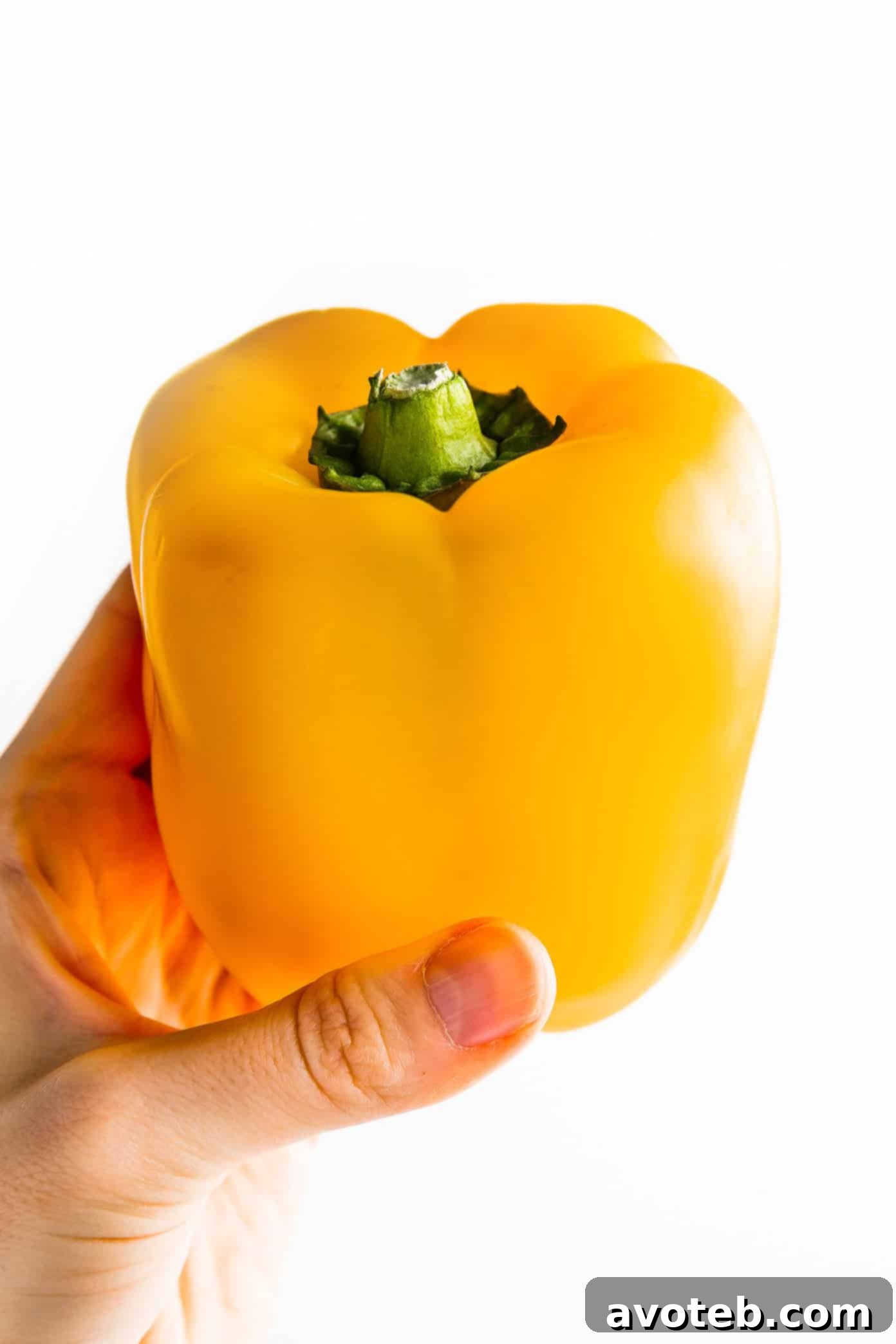
Selecting the highest quality bell peppers is the first step to ensuring delicious meals. When you’re at the grocery store or farmer’s market, make sure to look for specific characteristics that indicate freshness and optimal flavor. A prime bell pepper should always feel firm and heavy for its size; this density signals that it’s full of moisture and juiciness, rather than being dried out or hollow. Run your fingers over the skin – it should be smooth, taut, and possess a vibrant, glossy sheen. Avoid any peppers with soft spots, wrinkles, or noticeable blemishes, as these are signs of spoilage or bruising, which can affect both taste and texture.
The color of the bell pepper should be rich and uniform, whether you’re opting for the bright reds, sunny yellows, bold oranges, or classic greens. A fresh-looking green stem is another key indicator of recent harvest and good handling. While bell peppers are naturally in season during the warmer months of summer and early fall (typically from July through September), when they are at their sweetest, most flavorful, and most affordable, modern agricultural practices mean they are readily available year-round. Thanks to advanced greenhouse production, you can usually find excellent quality bell peppers in most grocery stores throughout the entire year, ensuring your favorite recipes can always feature this versatile ingredient.
Fun Fact 🫑 Flavorful Transformations
Did you know that red, yellow, and orange bell peppers are simply more mature, fully ripened versions of the green ones? This maturation process is what makes them taste significantly sweeter and milder compared to their green counterparts, which tend to have a slightly more bitter and earthy flavor profile. The longer they stay on the vine, the more natural sugars develop, transforming their color and enhancing their culinary appeal!
Bell Pepper Storage Tips: Keeping Them Fresh Longer
Proper storage is essential to extend the life of your bell peppers, whether whole or pre-cut. For uncut bell peppers, the best place to store them is in the crisper drawer of your refrigerator, where they can maintain their freshness for up to 1-2 weeks. This humid environment helps prevent them from drying out and wrinkling.
Once you’ve taken the time to cut your bell peppers, you can still enjoy them for several days. Store cut bell peppers in an airtight container in the fridge for 3–5 days. A helpful trick is to line the container with a paper towel; this will absorb any excess moisture that the peppers release, preventing them from becoming soggy and extending their crispness. This small step makes a big difference in maintaining their texture and flavor for future use in salads, stir-fries, or as a quick snack.
If you’re looking for an even longer-term storage solution, bell peppers freeze beautifully, especially for use in cooked dishes. To freeze bell peppers effectively, first wash and cut them into your desired shapes (slices, dices). Then, spread the cut peppers in a single layer on a baking sheet and freeze until they are completely solid. This “flash freezing” step prevents them from clumping together, allowing you to easily grab only what you need later. Once frozen solid, transfer them to a freezer-safe bag or container, removing as much air as possible to prevent freezer burn. They will stay fresh for up to 3 months in the freezer. There’s no need to blanch them first, making this a quick and convenient method! Keep in mind that frozen peppers will have a softer texture once thawed, making them ideal for adding directly to cooked dishes like soups, stews, chili, casseroles, or fajitas, rather than using them raw in salads where a crisp texture is preferred.
Frequently Asked Questions About Bell Peppers
Absolutely! Pre-cutting bell peppers is a fantastic way to streamline your meal prep for the week. Once cut, they keep exceptionally well in the fridge for up to 5 days. Just remember to store them in an airtight container lined with a paper towel. The paper towel absorbs excess moisture, which helps prevent them from becoming slimy and maintains their crisp texture.
For most bell pepper cutting tasks, a sharp 8-inch chef’s knife is your best friend. Its sturdy blade and pointed tip allow for precise cuts and easy maneuvering around the pepper’s curves. A smaller paring knife can also be useful for removing any stubborn pith or seeds. The key is to always use a sharp knife; a dull knife can slip and cause injury, or it can crush the pepper, making it difficult to achieve clean, even cuts.
Yes, definitely! Freezing bell peppers is an excellent way to preserve them for future use, especially in cooked dishes. The best method is to wash and cut them into your desired shapes, then spread them out in a single layer on a baking sheet to freeze individually. Once solid, transfer them to a freezer-safe bag or container, removing as much air as possible. They can be stored for up to 3 months. While their texture will soften slightly after thawing, they are perfect for adding directly to soups, stews, fajitas, and casseroles without needing to thaw first.
Yes, it’s always important to wash bell peppers thoroughly under cool running water before cutting. Even if you plan to discard the skin, bacteria and pesticides from the surface can transfer to the edible parts when you slice through. Gently rub the pepper while rinsing to remove any dirt or debris, then pat it dry with a clean cloth or paper towel to ensure a secure grip during cutting.
While bell pepper seeds are not harmful or toxic, they generally have a slightly bitter taste and an unpleasant texture. For culinary purposes, it’s common practice to remove the seeds along with the white pith inside the pepper. The pith, or internal membrane, is also usually removed as it can be quite bitter. By cleaning out the core and pith, you ensure the sweetest and most pleasant flavor from your bell pepper.
The most significant difference between bell peppers and most other peppers (like jalapeños, serranos, or poblanos) is their complete lack of capsaicin, the compound responsible for a pepper’s heat. Bell peppers are cultivated to be sweet and mild, making them a popular choice for adding flavor, color, and crunch without any spice. Other peppers contain varying levels of capsaicin, giving them their characteristic heat.
Delightful Recipes Featuring Bell Peppers
Bell peppers are not just a garnish; they are a star ingredient that can elevate countless dishes with their vibrant color, crisp texture, and sweet-peppery flavor. Here are a few Gimme Some Oven favorites, along with other popular culinary uses, that truly highlight the versatility of bell peppers:
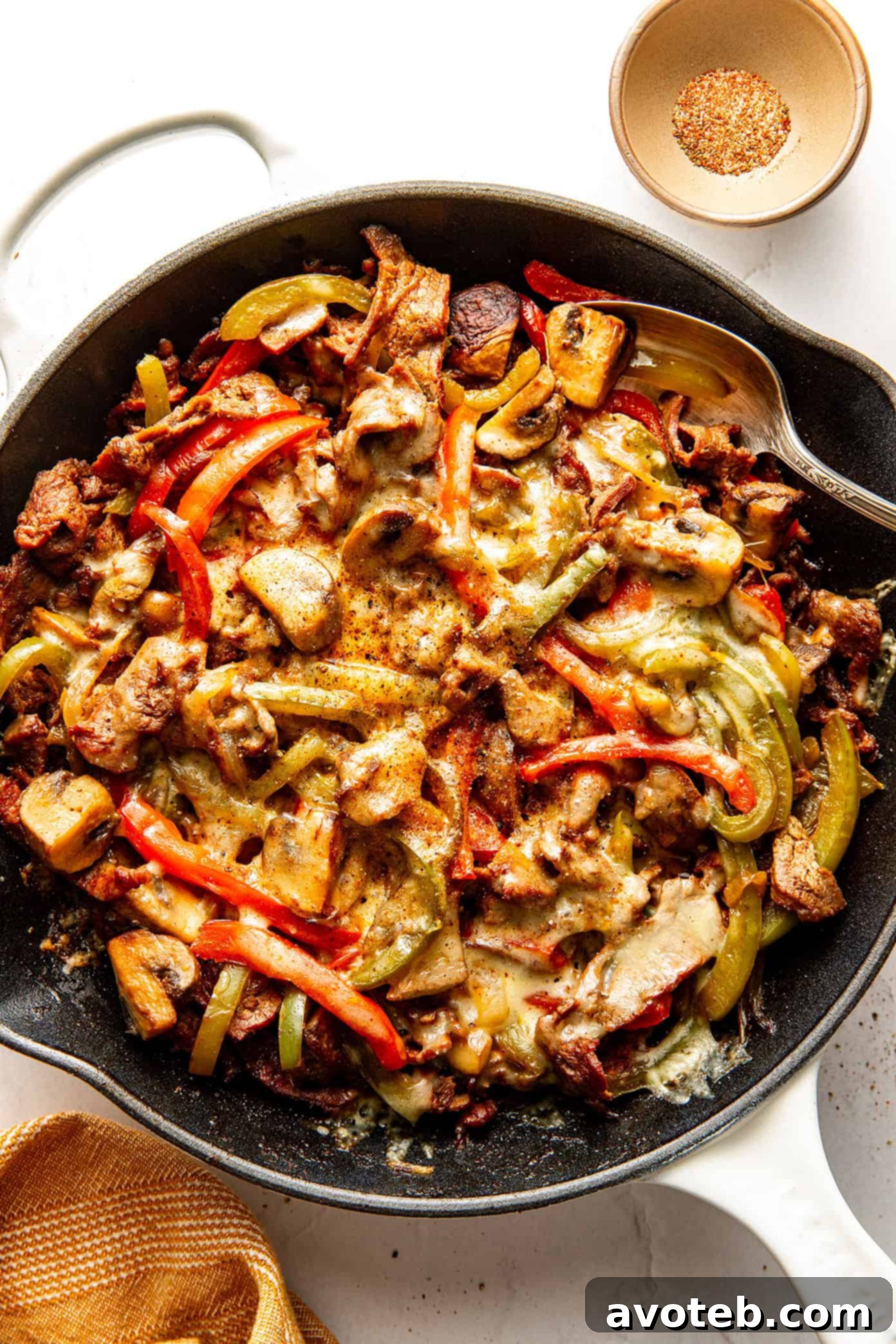
- Zesty Philly Cheesesteak Skillet (shown above): In this quick one-pan meal, thinly sliced bell peppers add a delightful crunch, a touch of sweetness, and essential nutrients that perfectly complement the savory steak and melty cheese. Their vibrant colors also make the dish visually appealing.
- Authentic Greek Salad: Crisp, fresh bell peppers (often green) are a foundational ingredient in Greek salads, providing a refreshing counterpoint to the salty feta and olives, and adding a juicy bite that enhances the overall texture and Mediterranean flavors.
- Jambalaya: As part of the “holy trinity” of Cajun and Creole cooking (alongside onion and celery), bell peppers are crucial for building the deep, aromatic flavor base of Jambalaya. They soften beautifully during cooking, infusing the rice and meats with their distinctive taste.
- Shakshuka: Diced bell peppers simmered in a rich tomato sauce create a wonderfully flavorful and slightly sweet bed for poached eggs in this popular Middle Eastern and North African dish. Their robust texture holds up well to the long, slow cooking process.
- Stir-fries: Sliced bell peppers are a staple in stir-fries, offering bright color, a satisfying crunch, and a burst of fresh flavor that complements various meats and noodles. They cook quickly while retaining their slightly firm texture.
- Fajitas: Along with onions, strips of bell peppers are essential for sizzling fajitas. They caramelize beautifully, adding a smoky sweetness and tender-crisp texture that pairs perfectly with grilled chicken or steak.
- Roasted Vegetable Medleys: Bell peppers, when roasted, become incredibly sweet and tender. They’re excellent alongside other vegetables like zucchini, onions, and cherry tomatoes, creating a simple yet profound side dish.
- Homemade Salsas and Dips: Finely diced bell peppers add a refreshing crunch, vibrant color, and mild sweetness to fresh salsas, guacamole, and other cold dips.
- Stuffed Peppers: A classic comfort food, bell peppers are hollowed out and filled with savory mixtures of rice, ground meat, beans, and spices, then baked until tender and bursting with flavor.
How To Cut A Bell Pepper
Prep Time: 2 minutes
Cook Time: 0 mins
Total Time: 2 minutes
Yield: 1 bell pepper 1x
Description
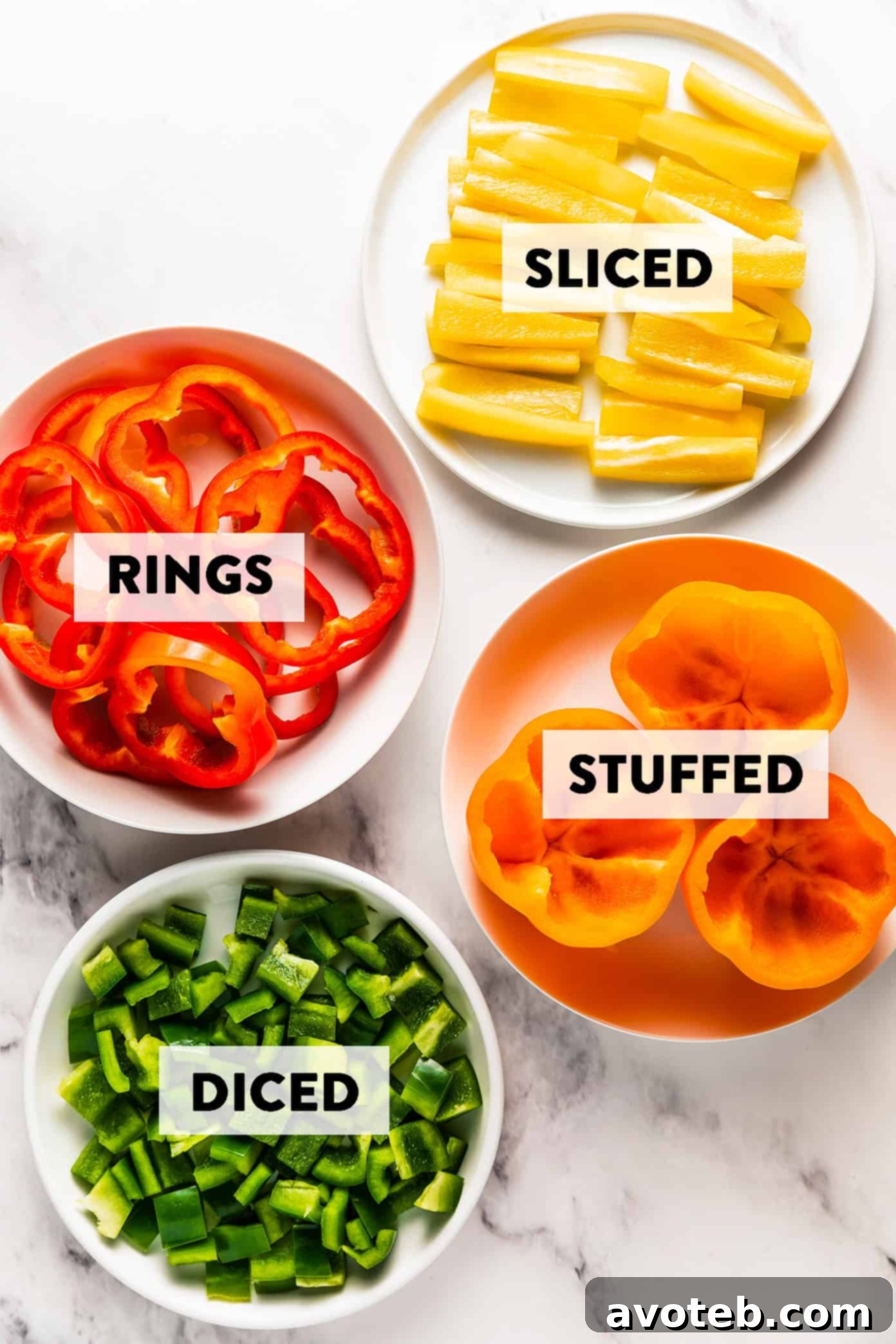
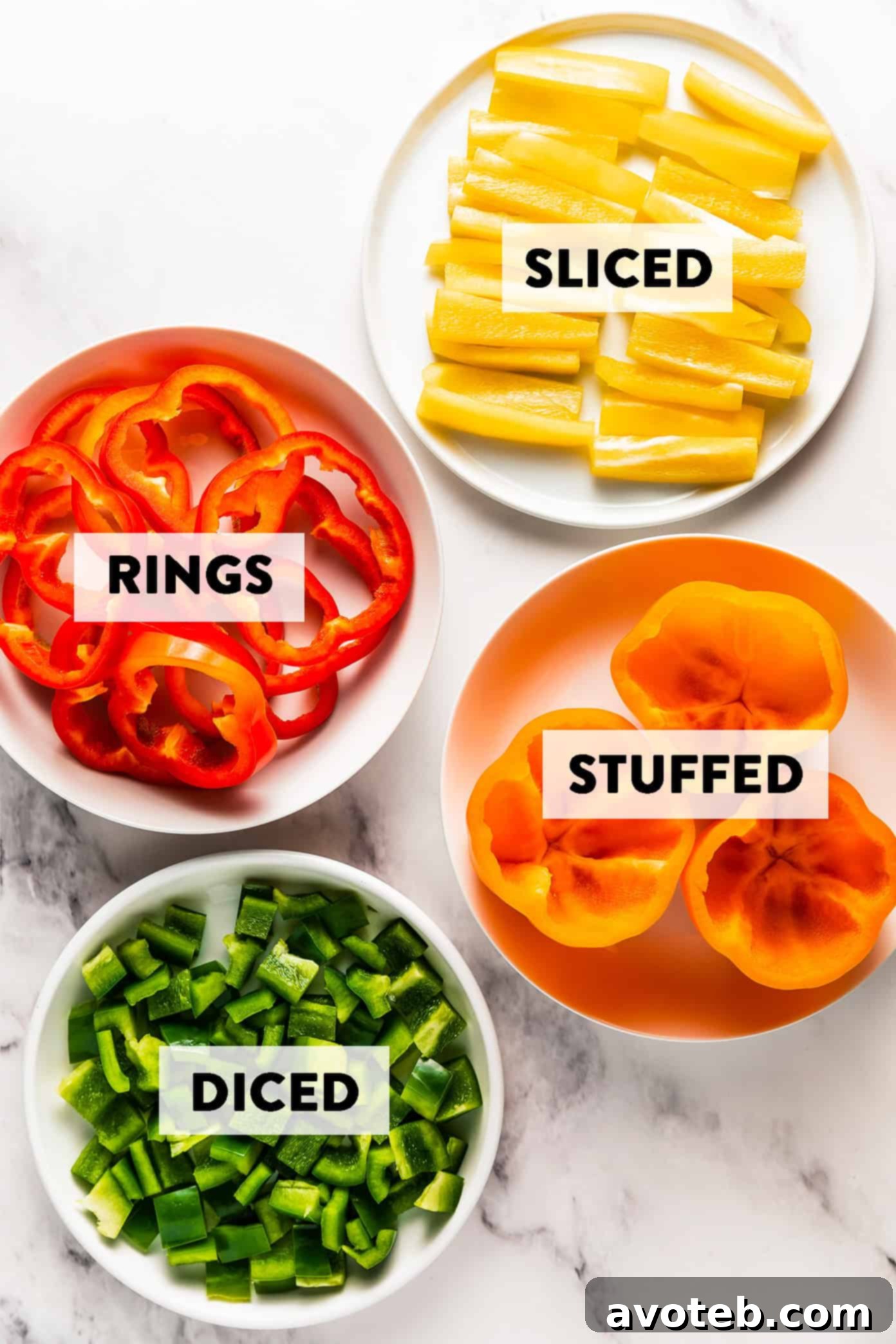
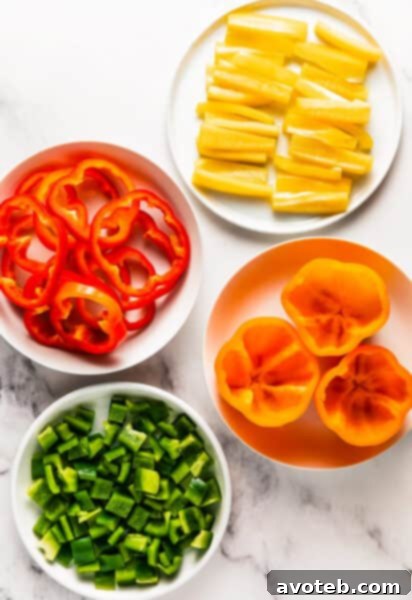
Unlock the full potential of your bell peppers! This guide teaches you how to cut a bell pepper in four distinct ways — perfect slices, uniform dices, elegant rings, and ready-to-fill hollows for stuffing. Each method is designed for efficiency, minimal waste, and maximum culinary appeal. See the detailed recipe video below for a step-by-step visual demonstration that will make you a bell pepper cutting expert!
Ingredients
Scale
- 1 bell pepper (any color, chosen for firmness and freshness)
Instructions
Before you begin: Always ensure your bell pepper is thoroughly washed and dried. Use a stable cutting board to prevent slipping and a sharp knife for safety and efficiency. A sharp knife requires less force, reducing the risk of accidents.
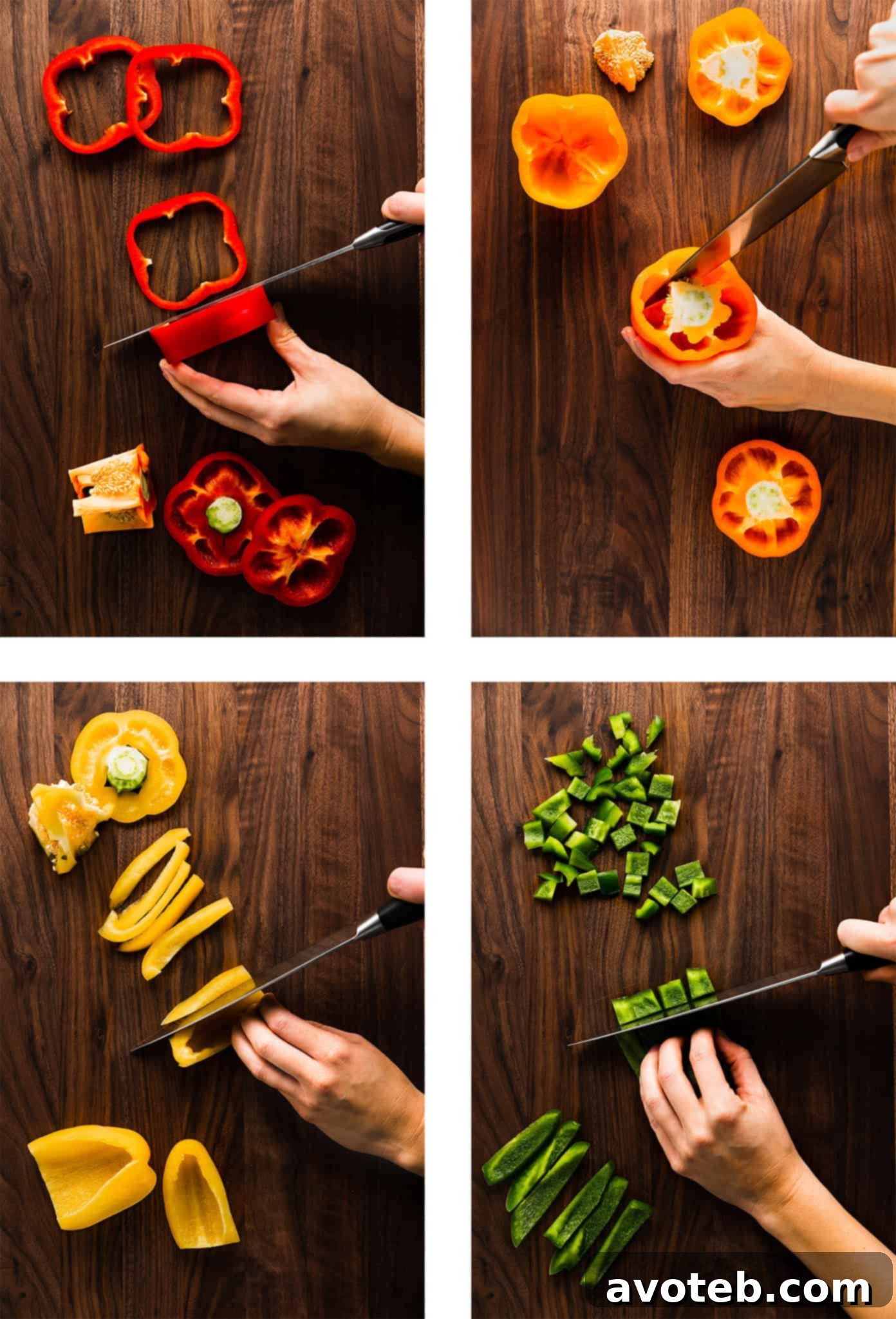
How To Cut Slices: This method yields elegant strips perfect for stir-fries, fajitas, or fresh salads.
- Lay the bell pepper on its side on a stable cutting board. With a sharp chef’s knife, carefully slice off the stem end, aiming to cut just enough to remove the stem without sacrificing too much edible flesh.
- Stand the pepper upright on the cutting board. Imagine the pepper divided into 4-5 “panels.” Carefully cut down along the inside walls of the pepper, curving your knife slightly to follow the natural shape, removing the core and all the seeds in large, clean pieces. Discard the core, seeds, and any white pith.
- Take each bell pepper section and lay it skin-side down on your cutting board. This provides a stable, non-slip surface.
- Using your sharp knife, slice lengthwise into strips of your desired thickness. For stir-fries and fajitas, aim for about ¼ to ½ inch thick. For salads, thinner slices might be preferred.
How To Cut Dice: Achieve perfectly uniform cubes, ideal for salsas, soups, egg scrambles, or grain bowls where even cooking and consistent texture are desired.
- Begin by preparing the bell pepper into flat sections, just as you would for slices. Lay the bell pepper on its side and slice off the stem end.
- Stand it upright and carefully cut down along the inside walls to remove the core, seeds, and white pith, creating flat, manageable pieces.
- Lay each section skin-side down. First, cut the section into thin, even strips (julienne) – aim for the thickness you want your dice to be. For example, if you want ¼-inch dice, cut ¼-inch wide strips.
- Gather the strips together, then turn them crosswise and dice into small, even cubes. For the most consistent dice, ensure your strips are of equal width before cutting crosswise.
How To Cut Rings: These beautiful rings are fantastic for burgers, sandwiches, pizzas, or roasting, offering a visually appealing and satisfying bite.
- Lay the bell pepper on its side on the cutting board. Slice off both the stem end and the bottom end, creating two flat surfaces.
- Carefully reach inside the pepper with your fingers or a small paring knife and gently pull out the core and any loose seeds. You can also use a spoon to scrape out any remaining seeds or pith.
- With the pepper now hollowed out, stand it upright on one of its flat ends. Simply cut the pepper crosswise into rings as thick or thin as you’d like. Thicker rings are great for roasting or grilling, while thinner rings work well in sandwiches.
How To Prepare for Stuffing: This method creates a perfect, sturdy vessel for your favorite stuffed pepper recipes, ensuring easy filling and even baking.
- Stand the bell pepper upright on your cutting board. Using a sharp knife, carefully slice off the stem end of the pepper.
- Gently pull out the core and seeds with your fingers. You can also use a small spoon to scrape out any stubborn seeds or white pith from the inside, creating a clean cavity.
- If needed, slightly trim a very thin slice off the bottom of the pepper. This helps ensure the pepper sits flat and stable on your baking sheet, preventing it from tipping over when filled with grains, beans, or proteins.
Essential Kitchen Equipment
Having the right tools makes all the difference for efficient and safe bell pepper preparation. Here are a few recommended items:
8-Inch Chef’s Knife
A versatile and indispensable tool for most chopping, slicing, and dicing tasks. Its broad blade and sharp edge provide precision and control. Buy Now →
Paring Knife
Excellent for more delicate tasks, such as removing small bits of pith, cleaning out seeds, or performing intricate cuts that a larger chef’s knife might struggle with. Buy Now →
Non-Toxic Cutting Board (Dishwasher Safe!)
A stable, non-slip cutting board is fundamental for safety. Opt for one that is easy to clean and dishwasher safe to maintain hygiene in your kitchen. Buy Now →