
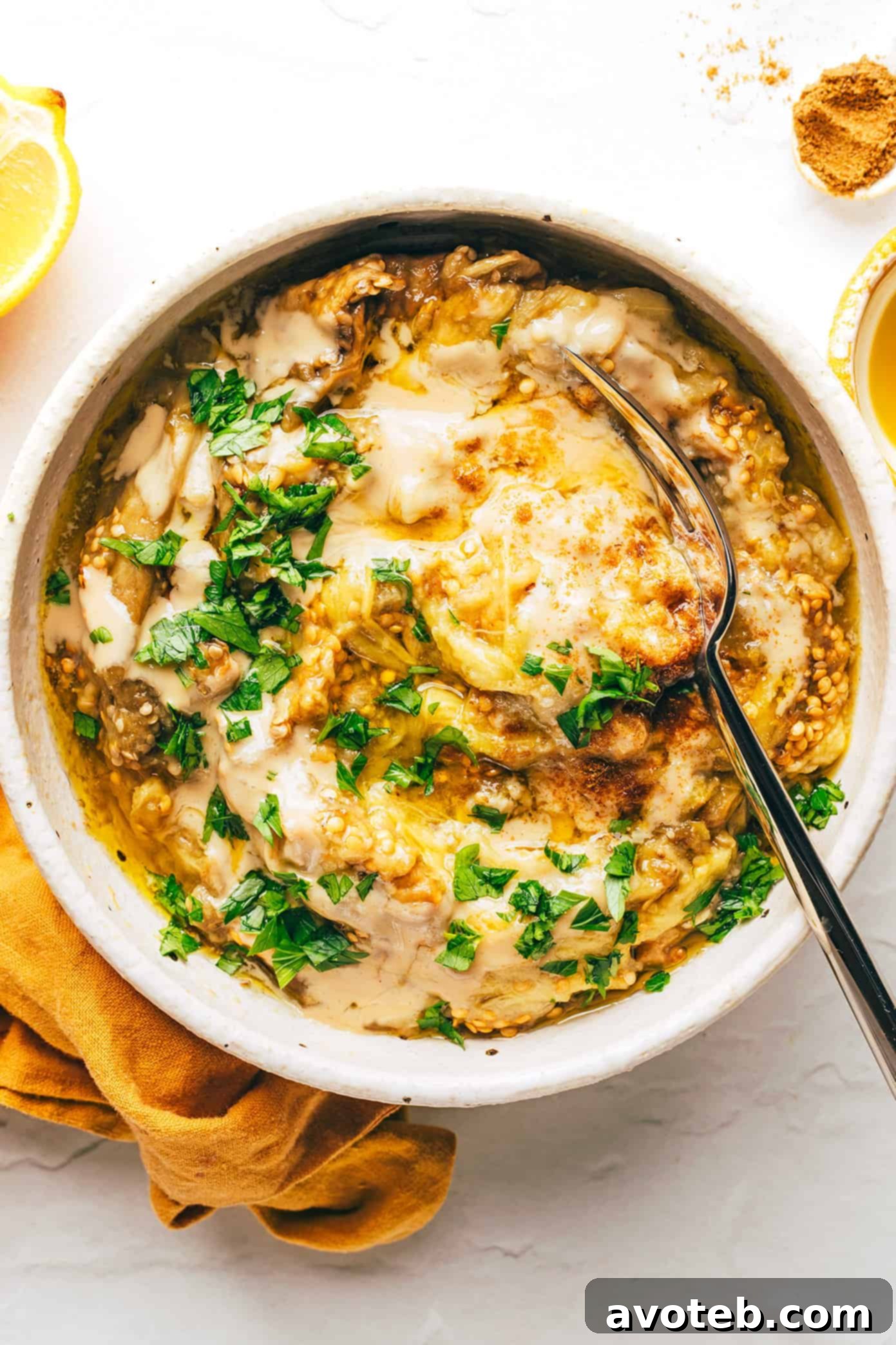
Discover the easiest way to make the best homemade Baba Ganoush, a rich and zesty Mediterranean dip perfect for any occasion.
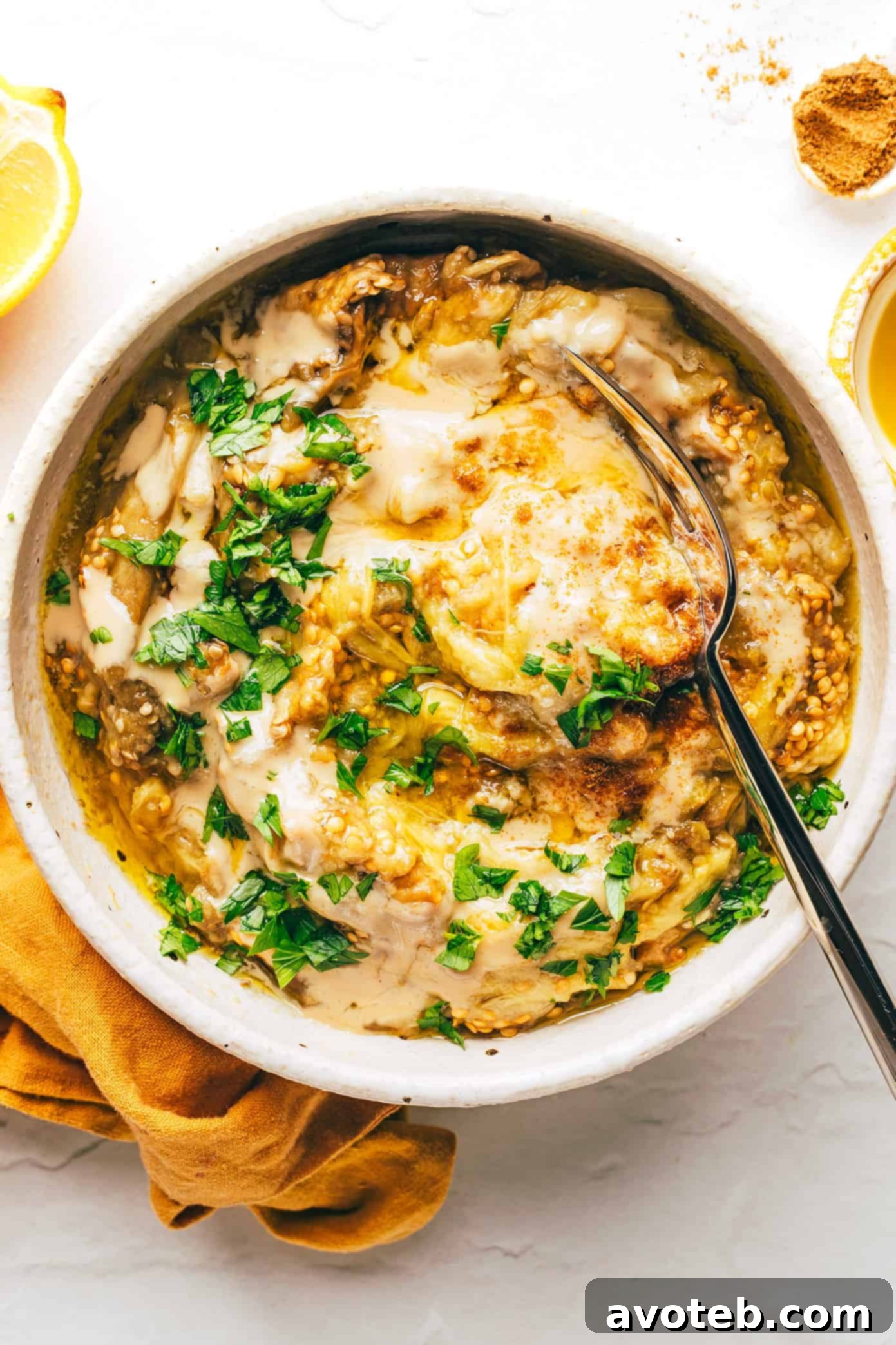
The Ultimate Guide to Homemade Baba Ganoush: A Flavorful Journey
For many years, eggplant and I had a complicated relationship. The idea of its often spongy texture or sometimes bitter undertones kept me at arm’s length. However, everything changed the moment I experienced a truly stellar batch of Baba Ganoush. This creamy, smoky, and irresistibly zesty dip transformed my perception of eggplant entirely. Suddenly, I was not just “on the fence” but enthusiastically jumping in!
My partner, Barclay, and I have become immense fans of this classic Lebanese dip. We find ourselves making it on repeat, especially during peak eggplant season, ensuring we always have a fresh batch ready in the fridge when cravings strike. Its versatility is truly unmatched. While Baba Ganoush shines brightly as a simple dip, served alongside warm pita bread, fluffy na’an, crisp crackers, golden fries, or crunchy veggie sticks, its potential extends far beyond. We frequently use it as a luxurious spread in sandwiches, wraps, and even on gourmet burgers, adding a layer of rich, smoky flavor. Leftovers, a rare occurrence in our household, can be cleverly repurposed into a vibrant salad dressing with a touch more olive oil and seasoning, or stirred into hearty soups and stews for an unexpected depth. Some daring culinary adventures have even seen it spread onto pizzas as a uniquely delicious, eggplant-infused topping. When you have a batch of exquisite Baba Ganoush on hand, the only limit is your imagination!
What Makes This Baba Ganoush Recipe Stand Out?
After countless tastings at various restaurants over the years, I’ve refined my preferences for Baba Ganoush, much like I have for my favorite hummus recipe. My ideal Baba Ganoush is intensely full-flavored, generously imbued with the rich nuttiness of tahini, the bright tang of fresh lemon juice, the aromatic warmth of garlic, and the earthy spice of cumin. There’s a particular magic in a Baba Ganoush made with eggplant that has been beautifully charred on a grill, imparting an irreplaceable smoky depth. Unfortunately, our charming Barcelona flat doesn’t permit a grill or a gas stove. But fear not! This recipe provides comprehensive options for achieving that perfect smoky flavor, whether you’re grilling outdoors or roasting your eggplant to perfection in the oven.
This recipe is also incredibly adaptable. Consider it a flexible framework, inviting you to tinker with the ingredient amounts to suit your personal taste. Prefer it extra garlicky? Go for it! Crave more lemony brightness? Add an extra squeeze. Love the creamy richness of tahini? Don’t hold back. Whether you desire a saltier, creamier, or chunkier texture, feel free to adjust and create your ultimate Baba Ganoush. With eggplant season at its peak, there’s no better time to gather some fresh produce from your local farmer’s market and whip up a batch of this Middle Eastern delight!
Watch: How to Make Baba Ganoush (1-Minute Video Guide)
This short video offers a quick visual guide to preparing our easy and flavorful Baba Ganoush, demonstrating key steps for a perfect dip every time.
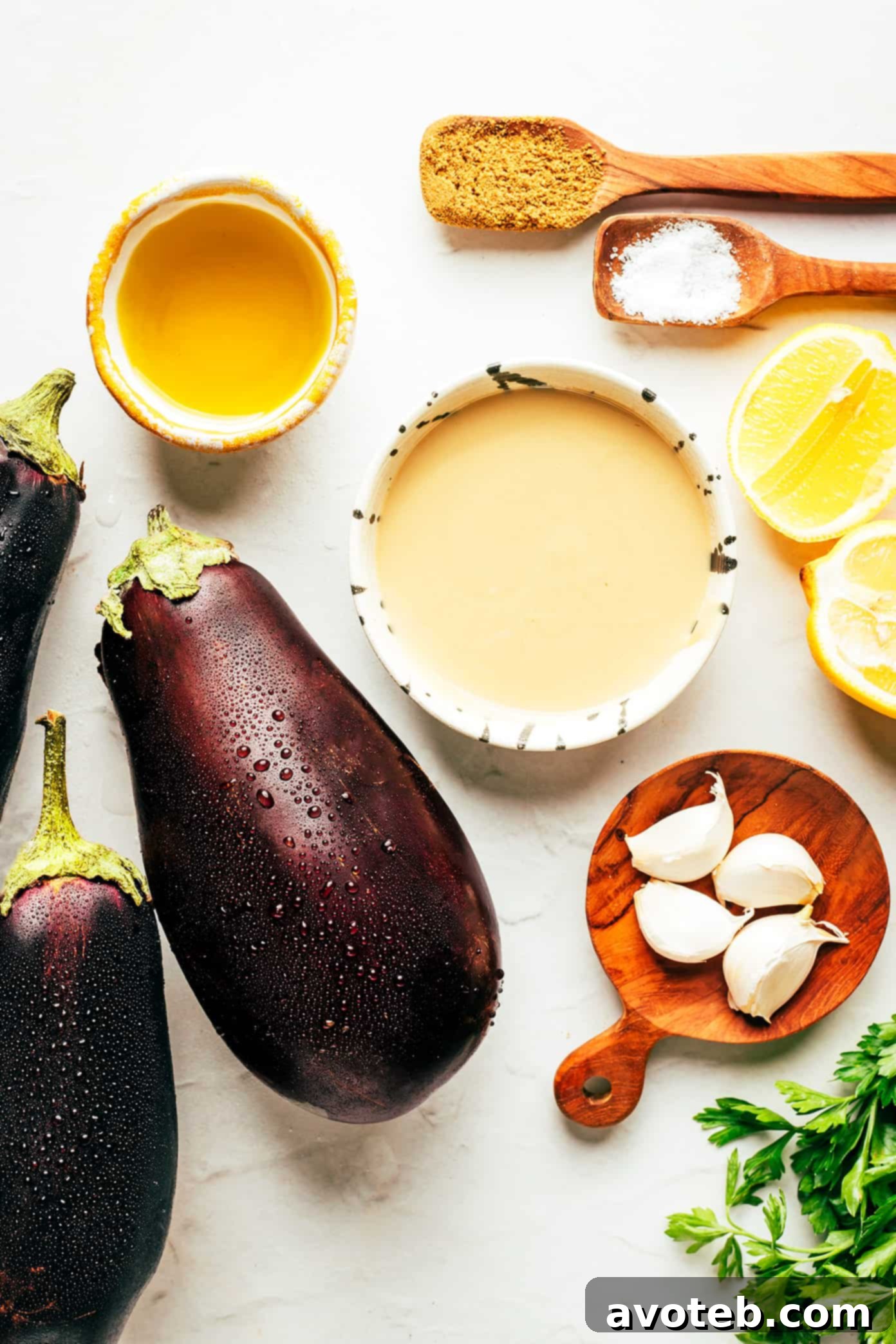
Essential Ingredients for Your Baba Ganoush
Crafting exceptional Baba Ganoush starts with a handful of fresh, high-quality ingredients. Before we dive into the detailed instructions, let’s explore the stars of this easy-to-make recipe:
- Eggplants: The foundation of our dip! You can opt for either Italian or American (globe) eggplants. For the best results, I highly recommend selecting smaller eggplants. They tend to be less bitter, contain fewer seeds, and cook more quickly and evenly, ensuring a smoother, more palatable final product.
- Garlic: Roasted garlic is a game-changer in Baba Ganoush, offering a sweet, mellow, and deeply aromatic flavor that contrasts beautifully with the other ingredients. This recipe calls for 4 large cloves of garlic, which will be roasted alongside the eggplant. If your garlic cloves are on the smaller side, feel free to add a few more, keeping in mind they will require slightly less roasting time.
- Olive Oil: A cornerstone of Mediterranean cuisine, good quality olive oil plays a dual role here. A portion is used to brush the eggplant and garlic before roasting, aiding in caramelization and flavor development. The remaining oil is stirred into the finished dip, lending richness and a silky texture. Don’t hesitate to finish your Baba Ganoush with an extra drizzle of high-quality extra virgin olive oil before serving for an added touch of luxury and flavor.
- Tahini: This rich, creamy sesame paste is non-negotiable for authentic Baba Ganoush, contributing a distinct nutty depth and an unparalleled creaminess. Its unique flavor profile is essential to the dish’s character. Adjust the amount to your preference – more tahini will yield a richer, denser dip.
- Lemon Juice: Freshly squeezed lemon juice is crucial for balancing the richness of the tahini and the smokiness of the eggplant. It brightens the entire dip, adding a vibrant zest that makes every spoonful sing. Always opt for fresh lemon juice over bottled for the best flavor.
- Fine Sea Salt: Essential for seasoning and enhancing all the other flavors. For an intriguing twist and an extra layer of smoky flavor, consider using smoked fine sea salt. This subtle change can elevate the entire dish.
- Seasonings: Ground cumin is stirred directly into the dip, providing an earthy warmth that is characteristic of Middle Eastern flavors. Just before serving, a sprinkle of vibrant ground sumac adds a beautiful visual appeal and a delicate tangy note, complementing the other spices perfectly.
- Chopped Fresh Parsley: This fresh herb is traditionally mixed into the Baba Ganoush, contributing a herbaceous brightness and a lovely green hue. It also makes for an excellent garnish, adding a pop of color and freshness when sprinkled on top just before serving.
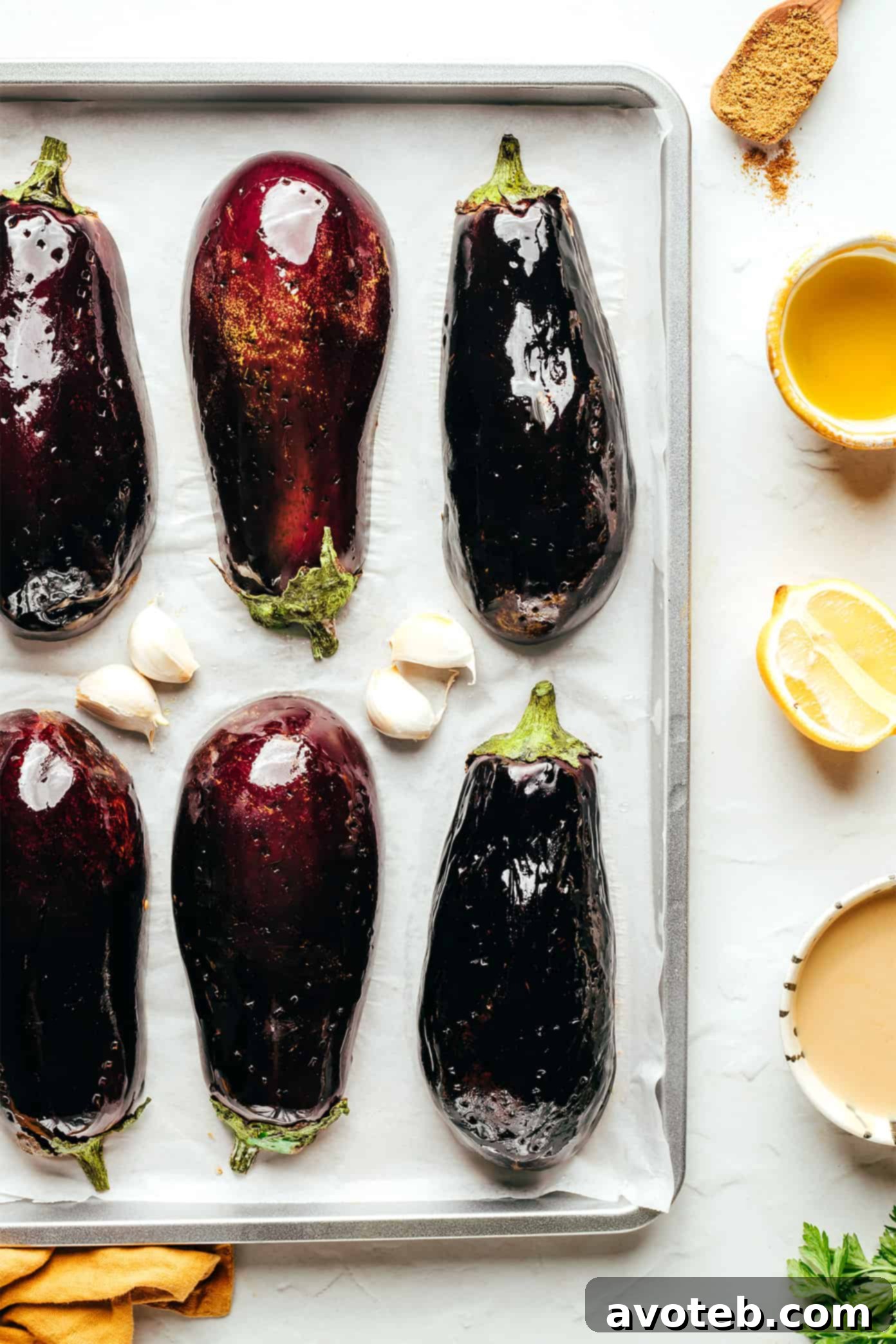
Step-by-Step Guide: How to Make Perfect Baba Ganoush
Creating this delicious dip is simpler than you might think. Follow these basic steps to prepare your own batch of homemade Baba Ganoush. (Detailed instructions with specific measurements are provided in the full recipe card below.)
- Roast the Eggplant and Garlic: This is arguably the most critical step for developing flavor. Preheat your oven to 450°F (230°C). Prepare a large baking sheet with parchment paper. Slice your eggplants lengthwise and gently poke the purple skins a few times with a fork. This helps steam escape and prevents the eggplant from bursting. Brush the exposed white flesh of the eggplants and the unpeeled garlic cloves with 1 tablespoon of olive oil. Place the eggplants flesh-side-down on the baking sheet alongside the garlic. Roast for about 20 minutes. At this point, carefully remove the garlic cloves (they cook faster) and set them aside to cool. Return the eggplants to the oven and continue roasting for another 25-35 minutes, or until they are completely collapsed, and the flesh is incredibly soft and tender. The exact cooking time will vary based on the size of your eggplants. Once roasted, transfer the baking sheet to a wire cooling rack and let the eggplants rest, flesh-side-down, for at least 20 minutes. This crucial resting period allows the eggplant to continue steaming within its skin, making the flesh even softer and easier to scoop out.
- Strain the Eggplant for Optimal Flavor and Texture: After the eggplant has cooled sufficiently, use a spoon to carefully scoop out all the soft, cooked flesh. Transfer this flesh to a large, fine-mesh strainer. Using the back of the spoon, gently press out any excess water or bitter juices over the sink. This step is vital for achieving a rich, concentrated flavor and preventing a watery dip. Once strained, transfer the eggplant flesh to a large mixing bowl.
- Combine and Mash Your Ingredients: Peel the now-cooled roasted garlic cloves and add them to the bowl with the strained eggplant. Using a fork, begin to mash the eggplant and garlic together. Continue mashing until you achieve your desired consistency – typically a smooth yet slightly chunky texture. Now, incorporate the remaining 2 tablespoons of olive oil, tahini, fresh lemon juice, fine sea salt, ground cumin, and a tablespoon or two of chopped fresh parsley. Stir all these ingredients together thoroughly until well combined, ensuring all flavors are evenly distributed.
- Taste and Adjust Seasoning: This is where you make the Baba Ganoush truly yours. Taste the dip and adjust the seasoning as needed. You might find it needs a pinch more salt, an extra squeeze of lemon for brightness, a dash more cumin for warmth, or additional fresh parsley for herbaceous notes. Don’t be shy about customizing it to your palate!
- Serve and Enjoy: Transfer your freshly made Baba Ganoush to a serving bowl. For a beautiful presentation and an extra layer of flavor, drizzle with a bit more olive oil, sprinkle with additional chopped parsley, and finish with a pinch of vibrant ground sumac. Serve immediately with your favorite dippers, or refrigerate in an airtight container for up to 3-4 days. The flavors often deepen and meld beautifully after a few hours in the fridge.
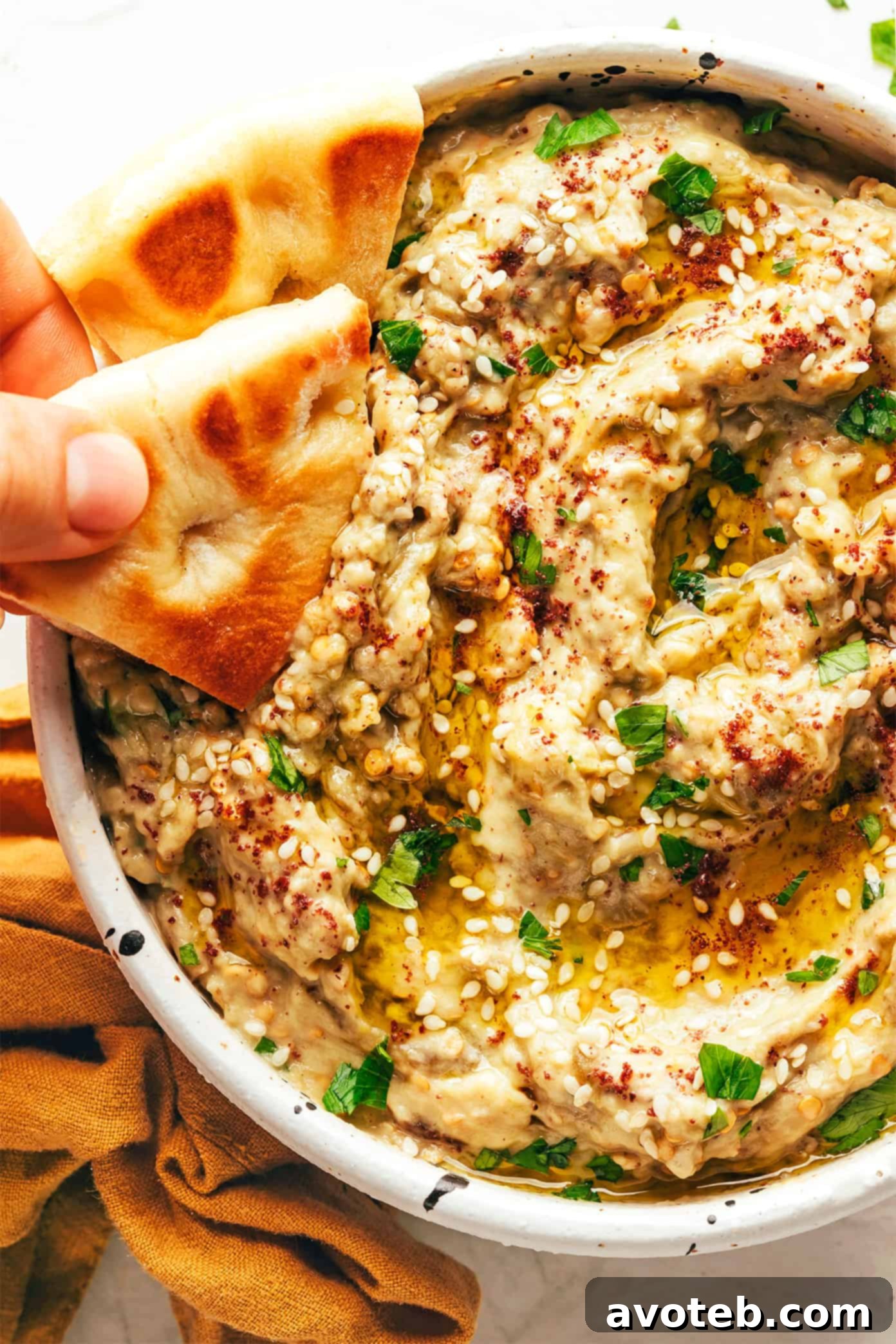
Baba Ganoush: Creative Variations and Customization Tips
One of the joys of making Baba Ganoush at home is the freedom to customize it to your personal preference. Everyone has their own idea of what makes the “best” Baba Ganoush, so feel empowered to experiment and make this recipe truly your own. Here are some fantastic variations and tips to consider:
- Embrace the Grill for Smoky Perfection: If you have access to a grill, I wholeheartedly recommend grilling your eggplant instead of roasting it. The direct flame imparts an unparalleled smoky depth that elevates the entire dish. Full instructions for grilling are provided in the notes section of the recipe below. The charred exterior and smoky essence are truly transformative.
- Achieve a Silky Smooth Texture: If you prefer a completely smooth dip over a slightly chunky one, simply transfer the mashed eggplant and garlic mixture to a food processor or blender. Pulse briefly until it reaches your desired silky consistency. Be careful not to over-process, as this can make the dip gluey.
- Boost the Smoky Flavor (No Grill? No Problem!): If grilling isn’t an option but you still crave that irresistible smoky note, there are several clever ways to achieve it. Swap regular sea salt for smoked salt, which adds a subtle, natural smoky essence. A pinch of smoked paprika stirred into the dip can also contribute a lovely depth. For an even more intense smoky kick, a tiny drizzle of liquid smoke (use sparingly, as a little goes a long way!) can work wonders. All three methods are delicious and effective!
- Add a Spicy Kick: For those who appreciate a bit of heat, stir in a pinch of cayenne pepper or a tiny amount of finely minced fresh chili to the dip. Start with a small amount and add more to taste, ensuring it complements rather than overwhelms the other flavors.
- Incorporate Fresh Mint: Beyond parsley, adding some finely chopped fresh mint can introduce an incredibly refreshing and aromatic dimension to your Baba Ganoush. Mint pairs beautifully with the other Mediterranean flavors, adding a vibrant twist. Try it alongside or in place of some of the parsley for an elevated herbaceous note.
- Top with Toasted Pine Nuts: For an added layer of texture and a rich, nutty flavor, sprinkle toasted pine nuts over your Baba Ganoush just before serving. Lightly toast them in a dry pan until golden and fragrant. They add a delightful crunch and an elegant finish.
- Garlic Lover’s Dream: Don’t shy away from adding an extra clove or two of roasted garlic if you adore its mellow, sweet intensity.
- More Lemon, Please: If you like your dips bright and tangy, an additional squeeze of fresh lemon juice will do the trick.
- Extra Creaminess: Increase the amount of tahini for an even richer and creamier Baba Ganoush.
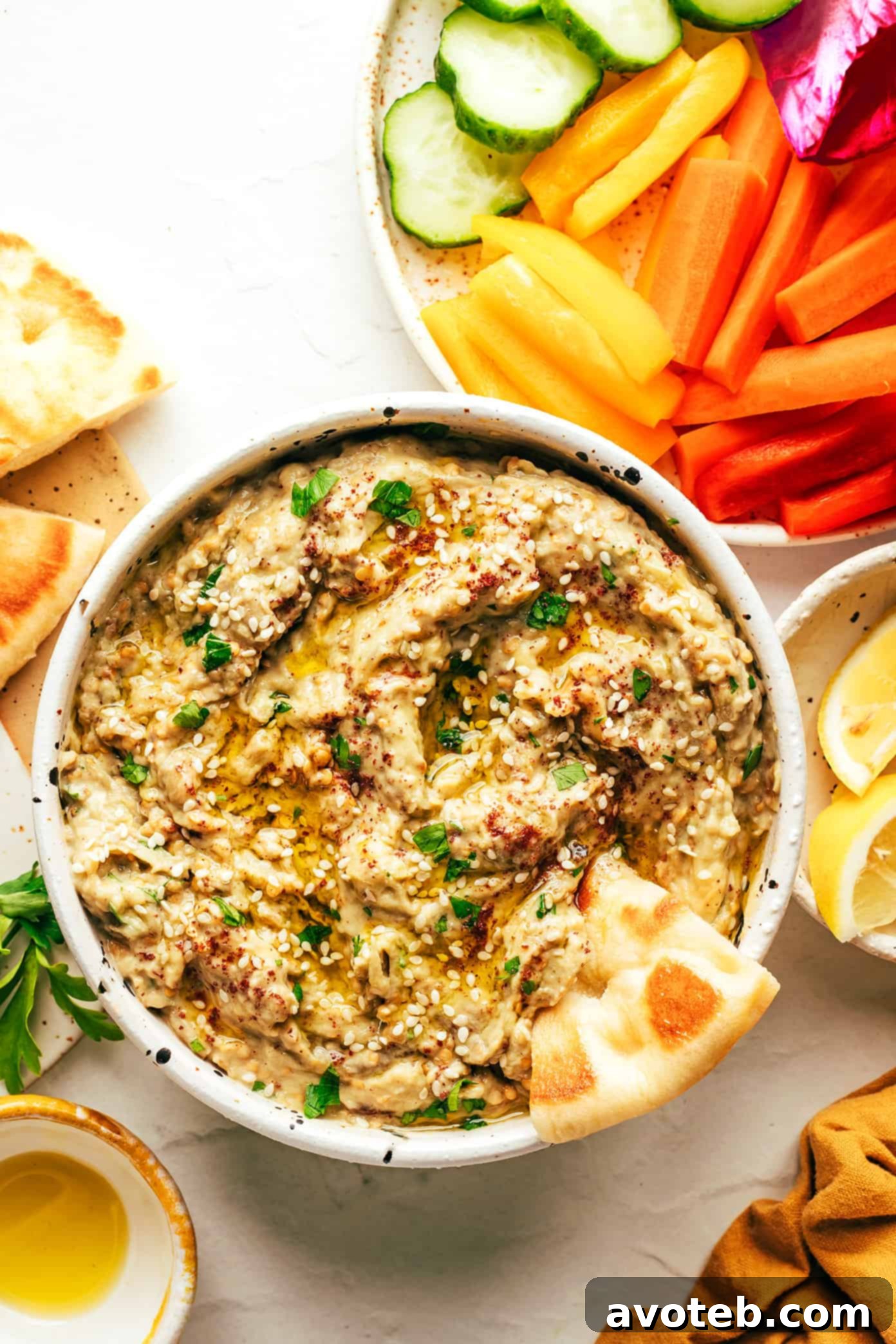
Frequently Asked Questions About Baba Ganoush
Here are answers to some common questions about this beloved Middle Eastern dip:
- How do you pronounce Baba Ganoush? It is pronounced bah-bah ga-NOOSH. Mastering the pronunciation adds to the enjoyment of this authentic dish!
- Are there different ways to spell this dish? Absolutely! You might encounter it spelled as babaganoush (one word), baba ghanoush, or even baba ghanouj. These variations reflect different transliterations from Arabic.
- What does Baba Ganoush mean? The name translates from Arabic to roughly mean “spoiled daddy” or “pampered daddy.” The charming etymology hints at a dish so delicious it would spoil even the most discerning palate.
- Where did Baba Ganoush originate? This culinary gem is said to have originated in Lebanon, a country celebrated for its rich and vibrant cuisine. However, its popularity has spread widely, with various countries across the Middle East and parts of Europe now featuring their own unique interpretations of the recipe.
- Can Baba Ganoush be frozen? While technically possible, freezing Baba Ganoush is generally not recommended. The delicate texture of the dip tends to change significantly after being frozen and then thawed, often becoming watery or grainy, which detracts from its desired creamy consistency. It’s best enjoyed fresh or refrigerated for a few days.
- What are the health benefits of Baba Ganoush? Baba Ganoush is packed with nutrients! Eggplant is a good source of fiber, vitamins B1 and B6, and potassium. Tahini provides healthy fats, protein, and minerals like calcium and magnesium. Olive oil is known for its heart-healthy monounsaturated fats and antioxidants. It’s a fantastic vegan and gluten-free option.
- How long does homemade Baba Ganoush last in the fridge? When stored in an airtight container, homemade Baba Ganoush will stay fresh in the refrigerator for 3 to 4 days. The flavors often deepen beautifully after a day, making it a great make-ahead option.
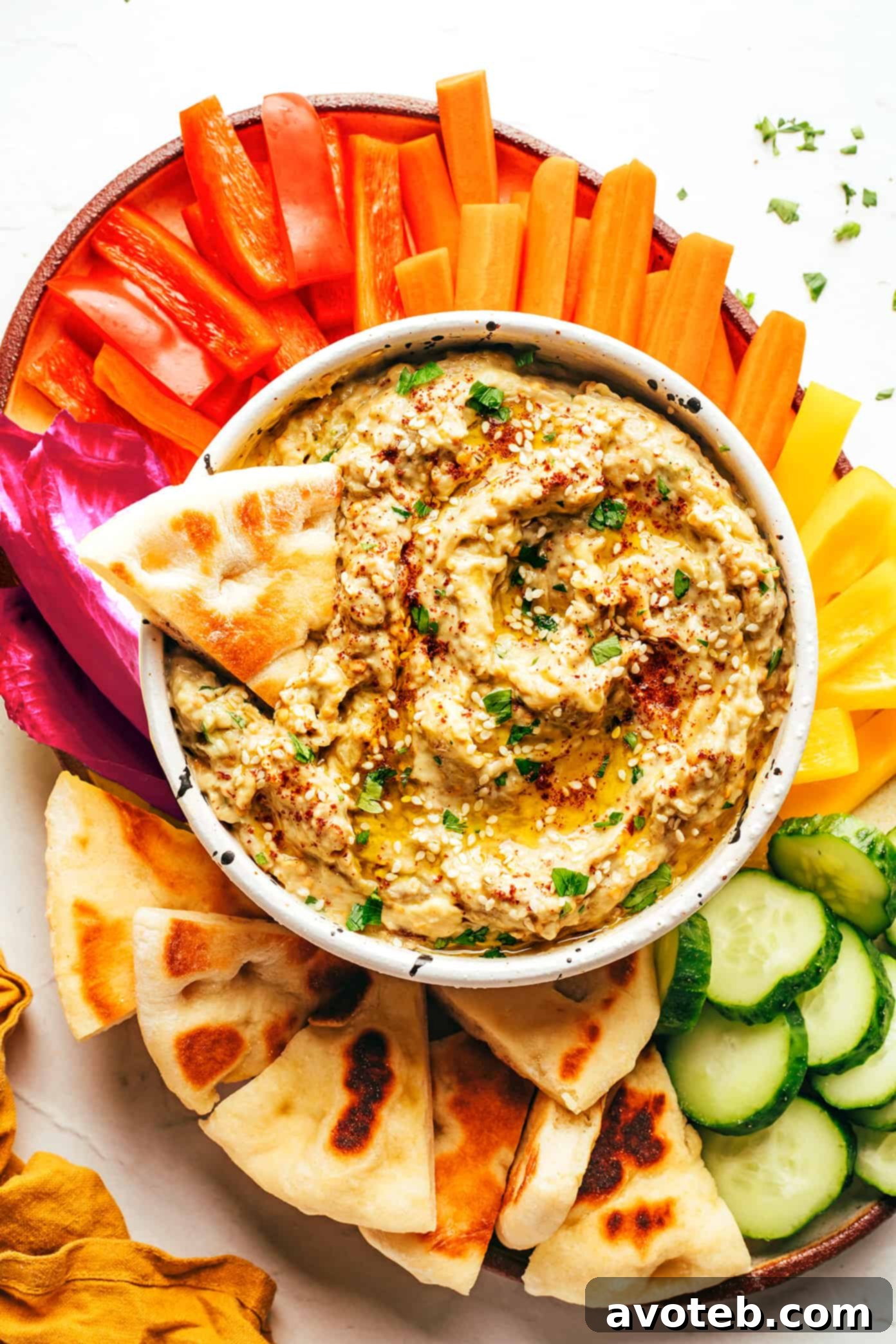
Explore More Delicious Dip Recipes
If you’ve fallen in love with the creamy, flavorful world of Baba Ganoush, you’re in for a treat! Dips are incredibly versatile, perfect for entertaining, snacking, or adding a burst of flavor to any meal. Here are some of our other favorite dip recipes you might enjoy exploring:
- Classic Hummus: The ultimate creamy chickpea dip, a staple in Mediterranean cuisine.
- Perfect Guacamole: Fresh, vibrant, and always a crowd-pleaser with its rich avocado goodness.
- The Best Restaurant-Style Salsa: A fresh and zesty salsa that tastes like it came straight from your favorite Mexican restaurant.
- Skinny Buffalo Chicken Dip: A lighter take on a game-day classic, without sacrificing any of the spicy, cheesy flavor.
- Spicy Greek Feta Dip (Tirokafteri): A bold and tangy dip with a delightful kick, perfect for feta lovers.
- Slow Cooker Spinach Artichoke Dip: Creamy, cheesy, and effortlessly delicious, ideal for gatherings.
No matter the occasion, a delicious dip can elevate your culinary experience. We encourage you to try these recipes and expand your repertoire of delightful spreads!
Baba Ganoush Recipe
Rating: 5 out of 5 stars from 7 reviews
Author: Ali
- Prep Time: 35 mins
- Cook Time: 45 mins
- Total Time: 1 hour 20 mins
- Yield: 6 to 8 servings
Print Recipe
Description
This easy Baba Ganoush recipe is perfect for dipping or spreading, packed with rich and zesty flavors. See notes below for possible ingredient modifications and variations.
Ingredients
- 2 to 2.5 pounds Italian eggplants (about 3 small eggplants)
- 3 tablespoons olive oil, divided (plus extra for drizzling)
- 4 large cloves garlic, unpeeled
- 1/3 cup tahini
- 3 tablespoons lemon juice
- 1/2 teaspoon fine sea salt
- 1/4 teaspoon ground cumin
- 2 to 4 tablespoons chopped fresh parsley
- optional: ground sumac, for sprinkling
Instructions
- Roast the eggplant and garlic. Heat oven to 450°F (230°C) and line a large baking sheet with parchment paper. Slice the eggplants in half lengthwise and poke the purple skins with a fork a few times. Brush the exposed white flesh of the eggplants and the unpeeled garlic cloves with 1 tablespoon of the olive oil. Place the eggplants flesh-side-down on the baking sheet along with the unpeeled garlic cloves. Roast everything together for 20 minutes. Then, carefully remove the garlic cloves and set them aside to cool. Return the sheet of eggplants to the oven and continue roasting for 25-35 more minutes, until the eggplants have collapsed and the flesh is completely soft and tender. (Cooking time will depend on the size of your eggplants and garlic cloves.) Transfer the baking sheet to a wire cooling rack and let the eggplants rest flesh-side-down, undisturbed, for about 20 minutes so that the eggplant flesh can continue to steam inside of its skins.
- Strain the eggplant. Once the eggplant has cooled a bit, use a spoon to scoop out the soft flesh and transfer it to a large fine-mesh strainer. Use the spoon to gently press and strain out the excess water over the sink, then transfer the flesh to a large mixing bowl.
- Combine the ingredients. Peel the roasted garlic and add it to the mixing bowl. Use a fork to stir and gently mash the eggplant and roasted garlic until they reach a smooth-yet-slightly-chunky consistency. Add in the remaining 2 tablespoons olive oil, tahini, lemon juice, salt, cumin, and a tablespoon or two of chopped fresh parsley, and stir until combined.
- Season. Taste and season with extra salt, if needed. (Feel free to also adjust the amounts of lemon juice, cumin, or parsley, if desired.)
- Serve. Serve immediately, topped with an extra drizzle of olive oil and sprinkled with some extra parsley and a pinch of sumac. Leftovers can be refrigerated in a sealed container for up to 3-4 days.
Equipment
- Tahini
- Ground Sumac
- Ground Cumin
- Large baking sheet
- Parchment paper
- Basting brush
- Fine-mesh strainer
- Large mixing bowl
- Wire cooling rack
- Airtight storage container
Notes
Grill option: For an enhanced smoky flavor, grill your eggplant instead of roasting. Heat the grill to medium-high. Leave eggplants whole and poke them all over with a fork. Drizzle garlic cloves with oil and seal them in a double-wrapped foil packet. Grill eggplant and garlic packet for about 25 minutes, then remove garlic. Continue grilling eggplants for 15-25 minutes longer until collapsed and very soft. Grill time varies by eggplant size. Transfer eggplants to a bowl, cover, and let steam for 20 minutes. Then proceed with the recipe as directed.
Double-checking the garlic: Unpeeled garlic cloves typically take around 20 minutes to fully roast at 450°F, but cooking times can vary. Monitor them closely to prevent burning. Smaller cloves will cook faster.