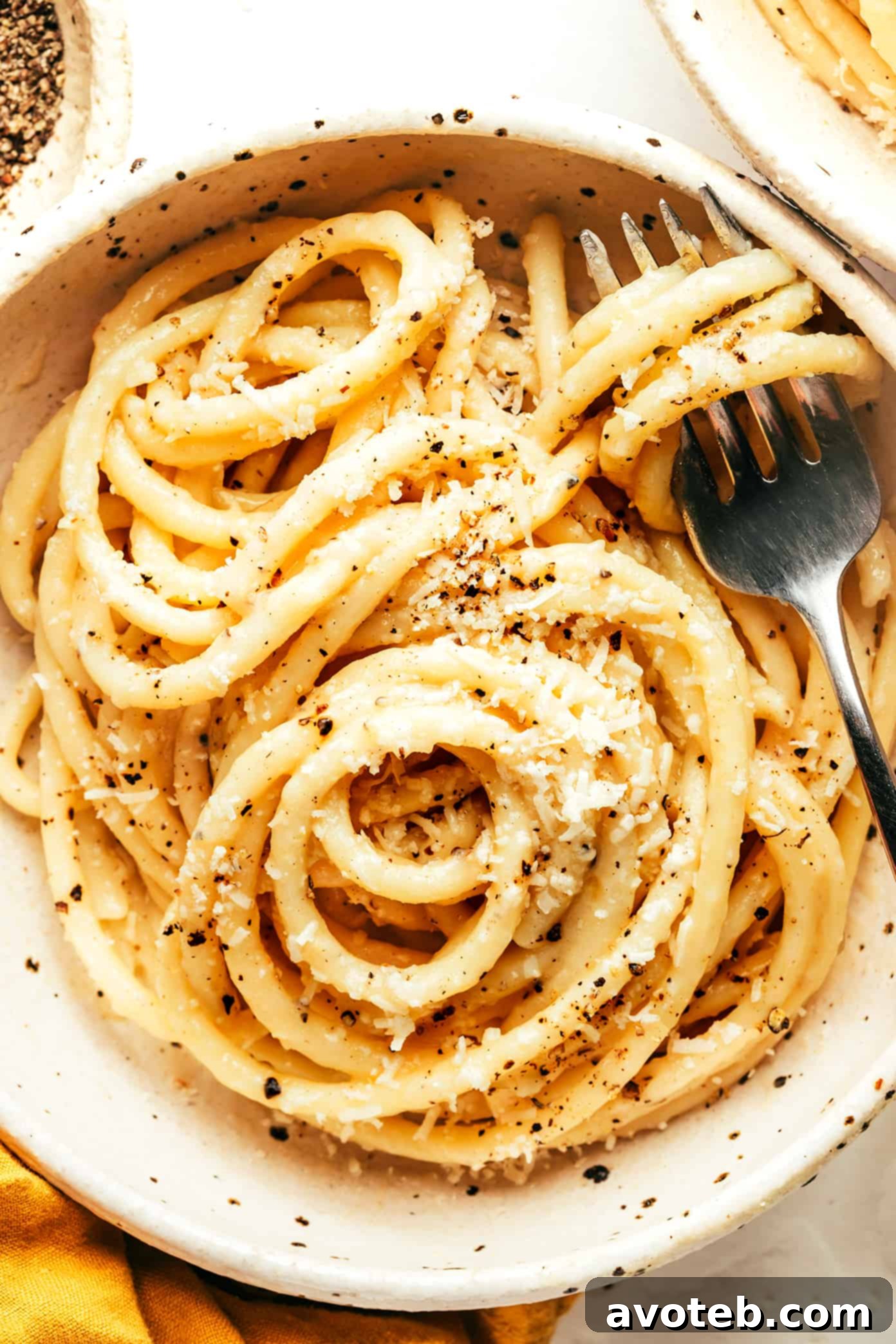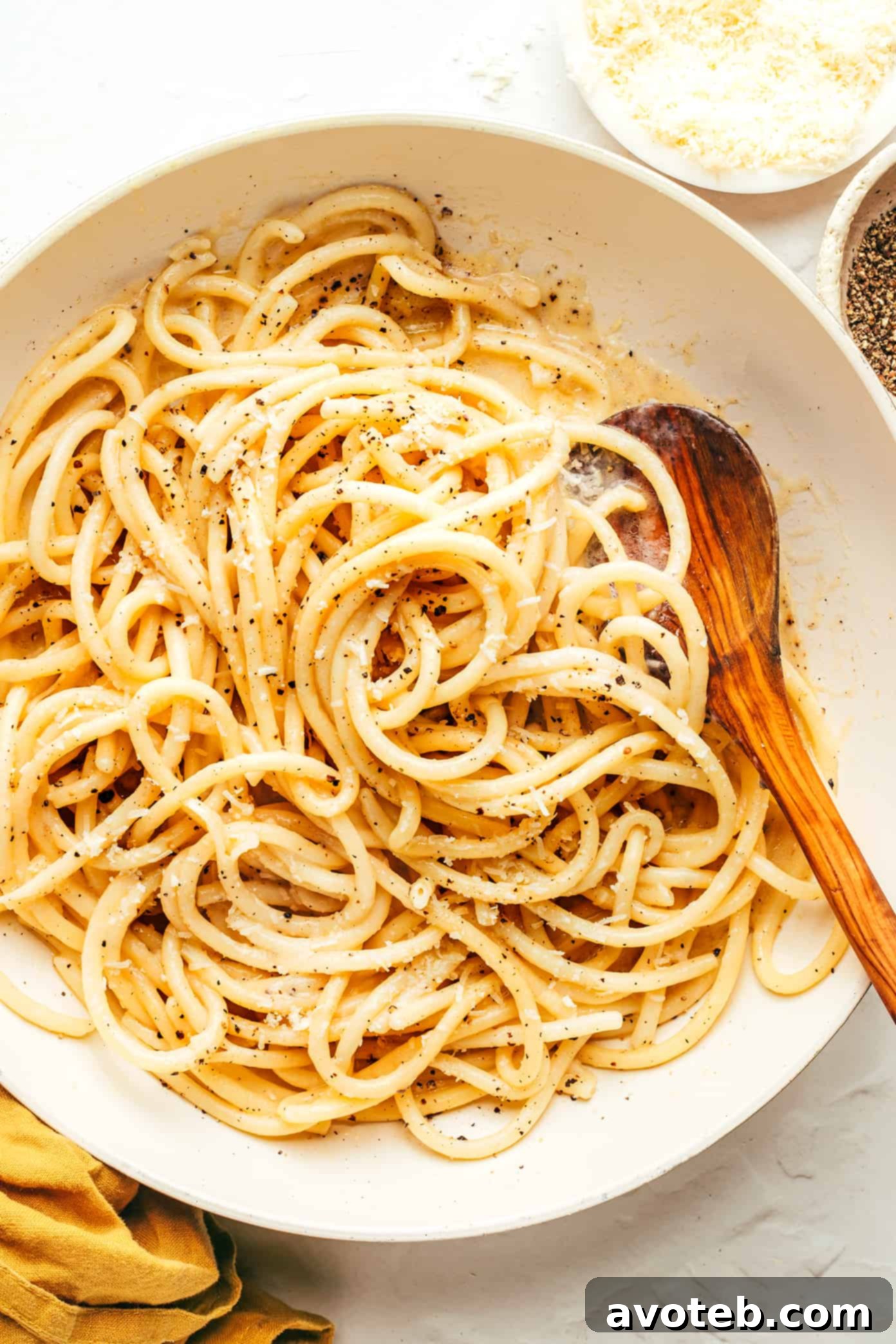
Discover the art of crafting the ultimate Cacio e Pepe: a simple yet sublime Roman pasta dish, ready in just 30 minutes with only four core ingredients.
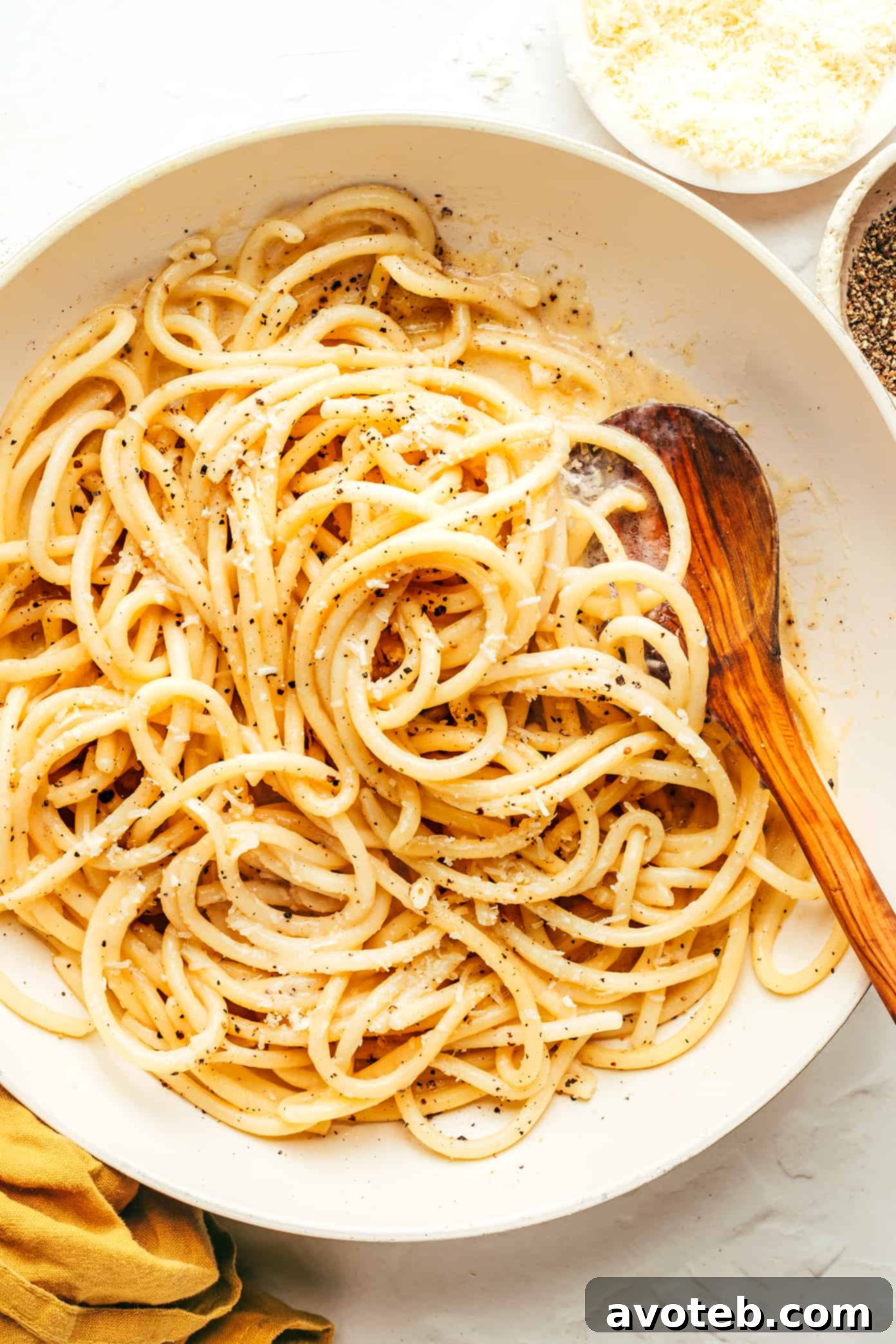
The legendary Anthony Bourdain once lauded Cacio e Pepe, declaring it “could be the greatest thing in the history of the world.” As an ardent admirer of this minimalist masterpiece, I wholeheartedly share his sentiment. There’s a profound simplicity and deeply satisfying flavor in this classic Roman pasta that truly elevates it to an unparalleled culinary experience. It’s more than just a meal; it’s a testament to how humble ingredients, expertly combined, can create something extraordinary.
In our household, Cacio e Pepe isn’t merely a dish; it’s a cherished ritual, a go-to comfort food that graces our table at least a couple of times a month. Its inherent simplicity makes it a lifesaver on busy weeknights, largely because we always ensure the three foundational elements – “cacio” (cheese), “pepe” (black pepper), and high-quality pasta (our preference often leans towards bucatini for its delightful chewiness) – are readily available in our pantry. The preparation itself becomes a collaborative dance: while Barclay skillfully grates a generous mound of Pecorino Romano, I typically whip up a fresh green salad or roast some seasonal vegetables to complement the rich pasta. The moment that perfectly al dente pasta is tossed with its irresistibly glossy, pepper-flecked cheese sauce, we waste absolutely no time. Forks in hand, we dive into steaming bowls of this Roman delight, savoring every single bite. Truly, there are few things more comforting and satisfying than a hot, freshly made bowl of Cacio e Pepe.
However, beneath its seemingly straightforward ingredient list lies a notorious reputation for being quite finicky in terms of technique. This isn’t a dish that tolerates shortcuts or inattention. A slight misstep – whether it’s overheating the cheese, which can lead to a dreaded clumpy, sticky texture, or failing to properly emulsify the starchy pasta water – can transform this potential masterpiece into a culinary tragedy. Having navigated these pitfalls myself over the years, I’ve gathered invaluable insights and refined my approach. This week, as we revisit the timeless repertoire of classic Roman pasta recipes, I’ve meticulously updated this post. Here, you’ll find all the essential tips and troubleshooting advice gleaned from countless batches, ensuring your Cacio e Pepe journey is met with resounding success. We’ve also included a new video demonstration below, providing clear visual guidance through each critical step. And for all non-Italian speakers, a pronunciation guide is now included, allowing us to honor this iconic dish with its rightful name: “KA-choh eh PEH-peh.”
It’s important to acknowledge my slight deviation from strict Roman tradition: I often incorporate a touch of butter into my Cacio e Pepe. While purists might argue this makes it more akin to a Roman-style Alfredo, after numerous experiments and countless bowls of both butter-inclusive and butter-free versions, I’ve found that the butter introduces a subtle, nuanced richness and depth of flavor that I personally adore. This addition is entirely optional, of course, and I’ve made sure to provide instructions for both traditionalists and those who, like me, appreciate that extra hint of indulgence.
Now, let’s embark on this delightful culinary adventure and master the art of Cacio e Pepe together!
Cacio e Pepe Recipe | 1-Minute Video Guide
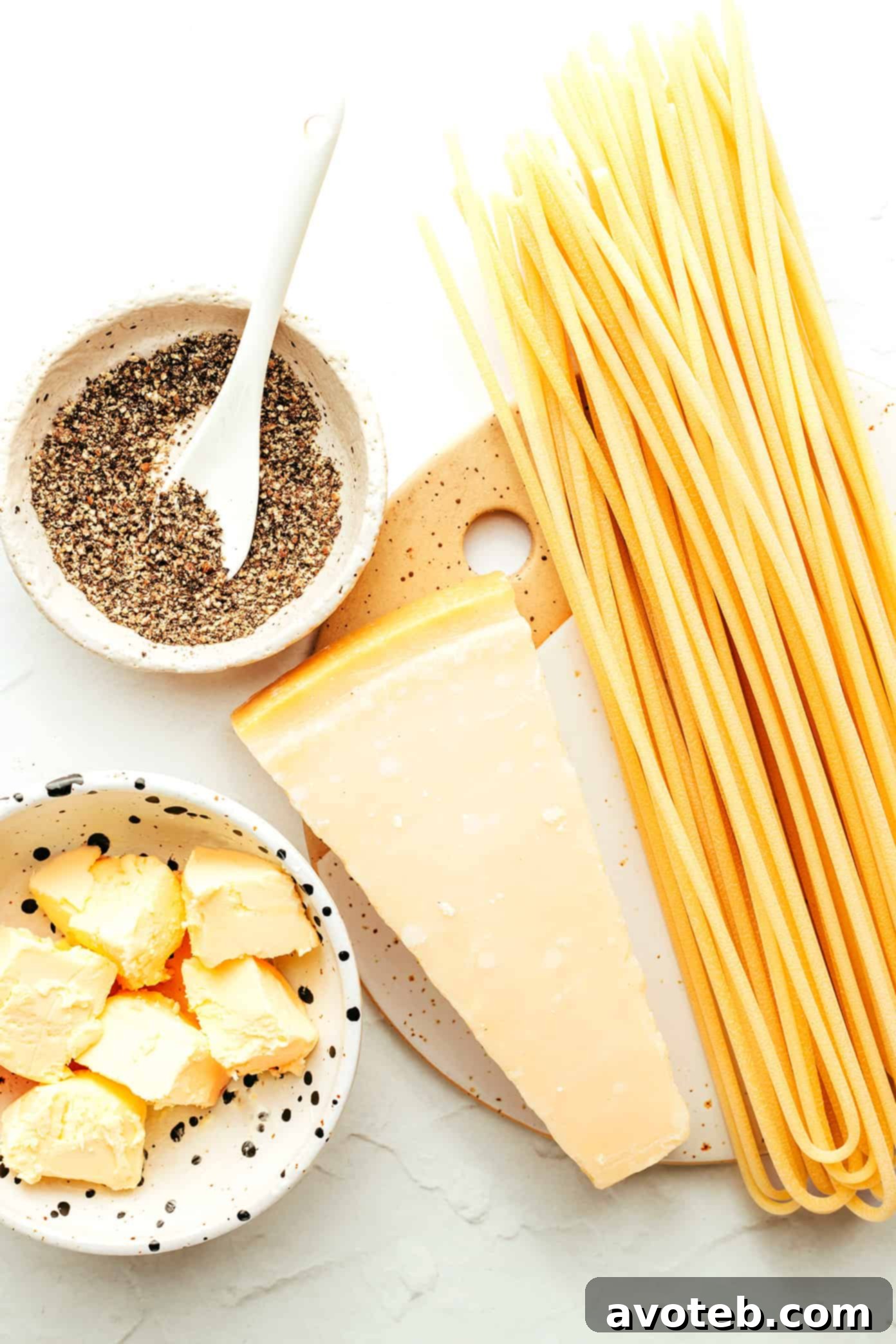
Essential Cacio e Pepe Ingredients for a Perfect Sauce
Crafting exceptional Cacio e Pepe begins with selecting the right ingredients. Despite its minimalist nature, the quality of each component shines through, making discerning choices paramount for a truly authentic and delicious result. Here’s a closer look at the key elements you’ll need for this Roman classic:
- Pasta: While this recipe is adaptable to most pasta shapes, the traditionally preferred choices for Cacio e Pepe are thick spaghetti, bucatini, or tonnarelli. These shapes boast a robust texture and a greater surface area that allows the luxurious cheese and pepper sauce to cling beautifully. For the best possible sauce adherence, I highly recommend opting for bronze-cut pasta. Its slightly rougher, porous surface creates an ideal texture for capturing every drop of the creamy sauce, enhancing the overall mouthfeel of the dish.
- Pecorino Romano: This ancient, aged sheep’s milk cheese is the undisputed heart of any authentic Roman pasta, and Cacio e Pepe is no exception. Its distinct salty, tangy, and deeply earthy flavor is absolutely indispensable, providing the foundational “cacio” of the dish. While pure Pecorino Romano is traditional, I once learned a fantastic tip during a cooking class in Rome: using a 50/50 blend of Pecorino Romano and Parmigiano-Reggiano (Parmesan) can introduce a wonderful complexity. The Parmigiano offers a slightly nuttier, less intensely salty profile that beautifully complements the sharpness of the Pecorino. Either approach yields delicious results, so feel free to experiment to find your preferred balance. Most importantly, always finely grate the cheese by hand just before use; pre-grated cheeses often contain anti-caking agents that hinder proper melting and emulsification.
- Butter: Ah, the controversial inclusion! I am fully aware that butter is not a traditional ingredient in authentic Cacio e Pepe, which typically relies solely on cheese, pepper, and starchy pasta water for its creamy texture. However, after extensive testing and personal enjoyment, I’ve found that a modest amount of butter contributes an incredible silkiness and a subtle, rich depth of flavor that I genuinely appreciate. It helps to create a more stable emulsion and a remarkably luxurious sauce. If you are a purist, or prefer a lighter touch, you are absolutely welcome to omit the butter entirely. In its place, simply use a bit more of the starchy pasta water to achieve the desired consistency and allow the cheese and pepper to truly sing on their own.
- Black Pepper: The “pepe” in Cacio e Pepe is not merely a seasoning; it’s a star ingredient. For optimum flavor and aromatic intensity, it is absolutely crucial to freshly grind your black pepper. Ditch the pre-ground store-bought pepper, which often lacks vibrancy, and reach for your pepper mill. The difference in taste and aroma is profound. I personally lean towards a heavy hand with the “pepe” – the more, the better in my opinion – but I understand that black pepper can be quite potent. Please adjust the quantity to your personal preference. Furthermore, the recipe specifically calls for coarsely-ground black pepper. The larger flecks offer a delightful textural contrast and a burst of flavor. If you only have finely-ground pepper, you will need to use a smaller amount, as its flavor will be more concentrated.
Mastering Cacio e Pepe: Essential Tips & Troubleshooting Guide
While Cacio e Pepe dazzles with its simplicity, achieving that perfect, glossy, emulsified sauce requires attention to detail. This section provides critical tips and troubleshooting advice to ensure your Roman pasta experience is nothing short of spectacular, preventing common pitfalls that can turn a dream dish into a disaster:
- Read Through the Recipe First: This isn’t just good cooking advice; it’s essential for Cacio e Pepe. The magic happens quickly once the pasta starts cooking, requiring a bit of simultaneous action. Taking a few minutes to fully read and understand each step, particularly the timing of adding ingredients and tossing, will significantly boost your confidence and chances of success. It helps you visualize the flow and anticipate the next move.
- Finely-Grate the Cheese by Hand: This is perhaps the most crucial tip for a velvety smooth sauce. Store-bought pre-grated cheeses often contain anti-caking agents like cellulose, which prevent the cheese from melting smoothly and can result in a grainy, clumpy texture. Always invest in a block of Pecorino Romano (or your chosen blend) and grate it yourself just before incorporating it into the dish. A microplane or a fine grater is ideal for achieving the fine consistency needed for quick and even melting.
- Ensure a Generously Sized Sauté Pan: You’ll need ample space to vigorously toss and combine the pasta with the sauce, allowing the ingredients to emulsify properly and prevent sticking. Using a large sauté pan or even a wide, shallow stockpot will provide the necessary room for proper agitation and air exposure, which is key to preventing the cheese from clumping.
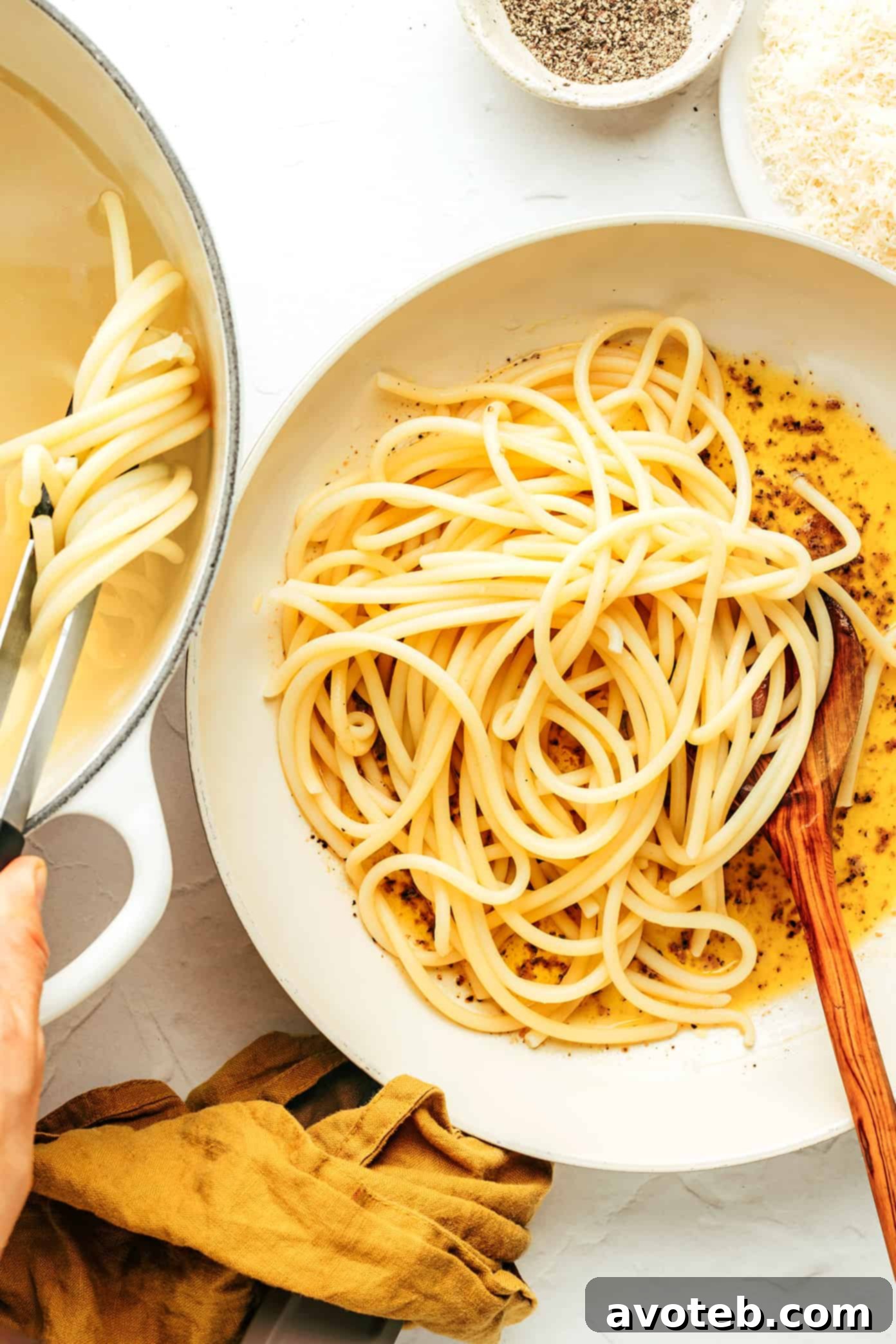
- Have Your Tools Ready (Strainer or Tongs): Efficiency is paramount when transferring the pasta. A spider strainer is excellent for shorter pasta shapes, allowing you to scoop the pasta directly from the boiling water with minimal water transfer. For longer noodles like bucatini, tongs are your best friend, enabling you to swiftly move the pasta. If you don’t have these, always scoop out and reserve several cups of the starchy pasta water in a heatproof cup *before* draining the rest of the pasta. Then, immediately transfer the drained pasta to your sauté pan.
- Don’t Use Too Much Pasta Water for Cooking: For this recipe, the starch in the pasta water is absolutely vital for creating the creamy, emulsified sauce. To achieve a highly concentrated starchy water, fill your stockpot no more than half full, approximately 3 quarts of water for 8 ounces of pasta. This ensures that the water that remains after cooking is rich enough to bind the cheese and pepper into a silky sauce.
- Cook the Pasta to a Perfect Al Dente: In Italy, pasta is always served “al dente,” meaning it’s firm to the bite but still tender. Since the pasta will continue to cook slightly when tossed with the hot sauce, it’s crucial to pull it from the boiling water just shy of fully al dente. Keep a close eye on the cooking time, and taste test frequently during the last few minutes to catch it at precisely the right moment.
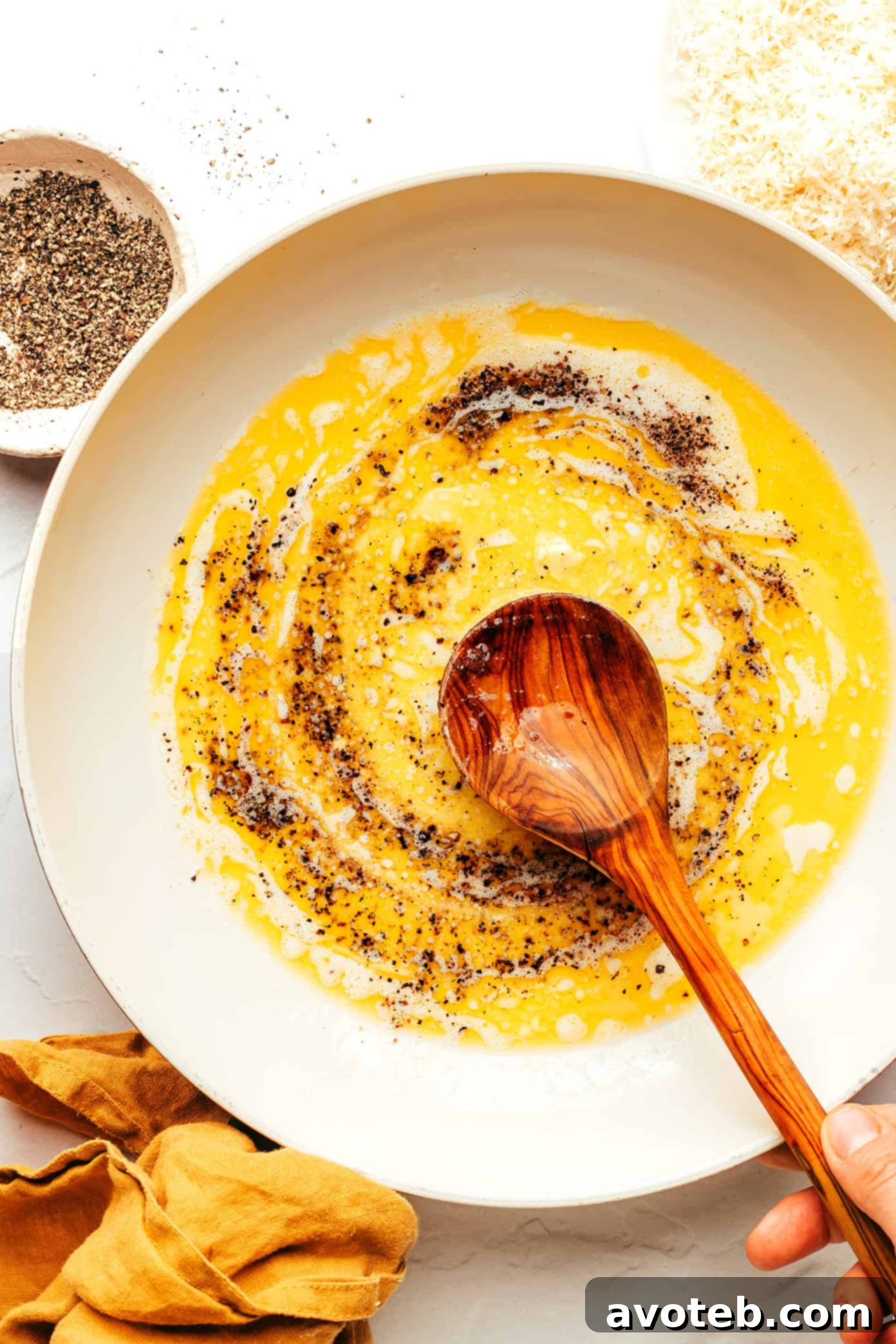
- Crucially, Avoid Overheating the Sauce: This is perhaps the most common culprit behind clumpy or separated Cacio e Pepe sauce – a truly disheartening experience! Cheese, particularly Pecorino Romano, can seize or curdle if exposed to excessive heat. The moment the butter is melted and pepper bloomed, the burner under your sauté pan should be completely turned off. If you have an electric stove, it’s even better to move the pan to a cool burner, as electric elements retain heat for a long time. Once the pasta and a splash of starchy water are in the pan, *continuously* toss the pasta. This constant motion helps distribute the heat evenly, exposes the pasta and cheese to cooler air, and promotes a smooth emulsification without the cheese ever getting too hot to seize.
- Serve Immediately: Cacio e Pepe is a dish that truly shines when served fresh and hot straight from the pan. The beautiful, glossy emulsion of the sauce is at its peak right after preparation. As it cools, the sauce can thicken and become less cohesive. So, gather your family or guests around, plate it up as soon as that dreamy sauce has formed, and savor every exquisite mouthful without delay!
Cacio e Pepe Frequently Asked Questions (FAQ)
Delve deeper into the world of this beloved Roman pasta with answers to some common questions:
How do you pronounce “Cacio e Pepe”? The correct Cacio e Pepe pronunciation in Italian is: “KA-choh eh PEH-peh.” Mastering this simple pronunciation adds to the authentic experience of discussing this iconic dish.
What does “Cacio e Pepe” mean? Literally translated, “Cacio e Pepe” means “cheese and pepper.” This straightforward name perfectly encapsulates the dish’s core ingredients: Pecorino Romano cheese and freshly ground black pepper, which form the heart and soul of its minimalist, yet incredibly flavorful sauce.
Where did Cacio e Pepe originate? The precise origins and evolution of Cacio e Pepe, like many classic Roman pastas, are a subject of fascinating historical debate and often shrouded in a bit of romantic folklore. One popular theory suggests that Cacio e Pepe “first appeared centuries ago among shepherds spending the spring and summer months in the grazing meadows of the Apennine Mountains, which traverse the Italian peninsula. While keeping watch over their flocks, shepherds would tap into personal stores of dried pasta and pepper; cheap, easy to transport and resistant to spoilage, these two ingredients were combined with the cheese (made from milk of the herders’ flocks) to make a delicious, simple dish that kept them warm on cold evenings.” This narrative paints a picture of resourceful simplicity. However, some modern historians propose a less romantic, yet equally compelling, theory. They suggest that the dish likely developed “in the mines and factories that once surrounded the Lazio region encompassing Rome, near where low-income families once lived.”¹ Regardless of its exact genesis, Cacio e Pepe remains a powerful testament to the ingenuity of Italian cuisine in transforming basic staples into culinary gold.
How do I prevent the cheese from clumping or sticking to the pan when making Cacio e Pepe? This is the most frequent challenge faced by aspiring Cacio e Pepe makers, as the dish is notoriously delicate when it comes to the sauce’s emulsification. To prevent this common tragedy, follow these crucial steps diligently:
- Always, always finely grate your cheese by hand from a block of Pecorino Romano. Pre-grated varieties contain anti-caking agents that are death to a smooth sauce.
- Ensure the sauté pan, especially after melting the butter and blooming the pepper, is *completely* removed from direct heat (or a still-hot burner if you have an electric stove) before adding the pasta and cheese.
- Once the pasta, a splash of starchy water, and the cheese are introduced, toss the pasta quickly and continuously. This constant motion helps distribute the heat, allows the cheese to melt gradually, and promotes a perfect emulsion.
- As soon as the cheese fully melts and blends with the pasta water to form that coveted glossy, smooth, and dreamy sauce, serve the pasta immediately. The magic of Cacio e Pepe is fleeting and best enjoyed piping hot, directly from the pan.
Explore The Four Roman Pastas
Cacio e Pepe is just one star in the constellation of classic Roman pasta dishes. If you’ve fallen in love with its elegant simplicity, we highly recommend exploring the other three pillars of Roman pasta tradition. Each offers a unique flavor profile and a glimpse into Italy’s rich culinary heritage. These traditional recipes are guaranteed to delight your palate and expand your appreciation for authentic Italian cooking!
- Cacio e Pepe
- Carbonara
- Gricia
- Amatriciana
Cacio e Pepe
Author: Ali
Prep Time: 10 minutes
Cook Time: 20 minutes
Total Time: 30 minutes
Yield: 2 to 3 servings 1x
Description
This Cacio e Pepe recipe is designed for ease and flavor, allowing you to create a restaurant-quality Roman pasta dish in about 30 minutes with just 4 simple ingredients. The result is a lusciously creamy, pepper-infused sauce perfectly coating al dente pasta. It’s an ideal choice for a quick weeknight meal or an impressive dinner party starter. Feel free to double the recipe to serve a larger crowd or use a full package of pasta.
Ingredients
Scale
- 8 ounces uncooked pasta (I highly recommend bucatini or thick spaghetti for authentic texture)
- 2 tablespoons unsalted butter, diced into 1-tablespoon chunks (optional, for added richness and silkiness)
- 1 teaspoon freshly-ground coarse black pepper (adjust to taste; coarse grind is key for flavor and texture)
- 2 ounces finely-grated Pecorino-Romano cheese (always grate by hand for best results, or use a 50/50 blend with Parmigiano-Reggiano)
Instructions
- Prepare the Pasta Water: Fill a large stockpot about halfway with water (approximately 3 quarts for 8 ounces of pasta) to ensure a concentrated starchy liquid. Bring it to a vigorous rolling boil. Season the water generously with fine sea salt – about 2 tablespoons is a good starting point, making sure the water tastes like the sea.
- Bloom the Pepper & Prepare Butter Base: While the pasta water heats, melt the butter (if using) in a large sauté pan (a nonstick pan is highly recommended for ease of tossing and preventing sticking) over medium heat. Add the freshly ground black pepper and cook it gently for about 30 seconds, allowing the pepper’s oils to release and its flavor to bloom. Immediately turn off the heat after blooming the pepper. If you are using an electric stove, it’s crucial to remove the pan entirely from the hot burner to prevent residual heat from scorching the cheese later.
- Cook the Pasta to Al Dente: Add your chosen pasta shape to the vigorously boiling, salted water. Cook, stirring occasionally to prevent sticking, until the pasta is just barely al dente. It should still have a firm bite, as it will continue cooking in the sauce. This timing is critical for the final texture.
- Emulsify and Toss the Sauce: Working quickly, use tongs* (for long noodles) or a spider strainer (for short pasta) to transfer the barely al dente pasta directly from the stockpot into the sauté pan with the melted butter and bloomed pepper. Add 1/3 cup of the reserved starchy pasta water to the pan. Toss the pasta vigorously to combine, ensuring every strand is lightly coated. Add in half of the finely grated Pecorino Romano cheese and continue to toss rapidly. The goal is constant motion to prevent the cheese from clumping and to promote a smooth emulsion. Add the remaining half of the cheese and persist in tossing the pasta, scraping any cheese from the bottom of the pan. Gradually add a few extra tablespoons of the hot starchy pasta water, if needed, to achieve a perfectly smooth, glossy, and creamy sauce that beautifully coats the pasta. The sauce should be shiny and liquid enough to swirl.
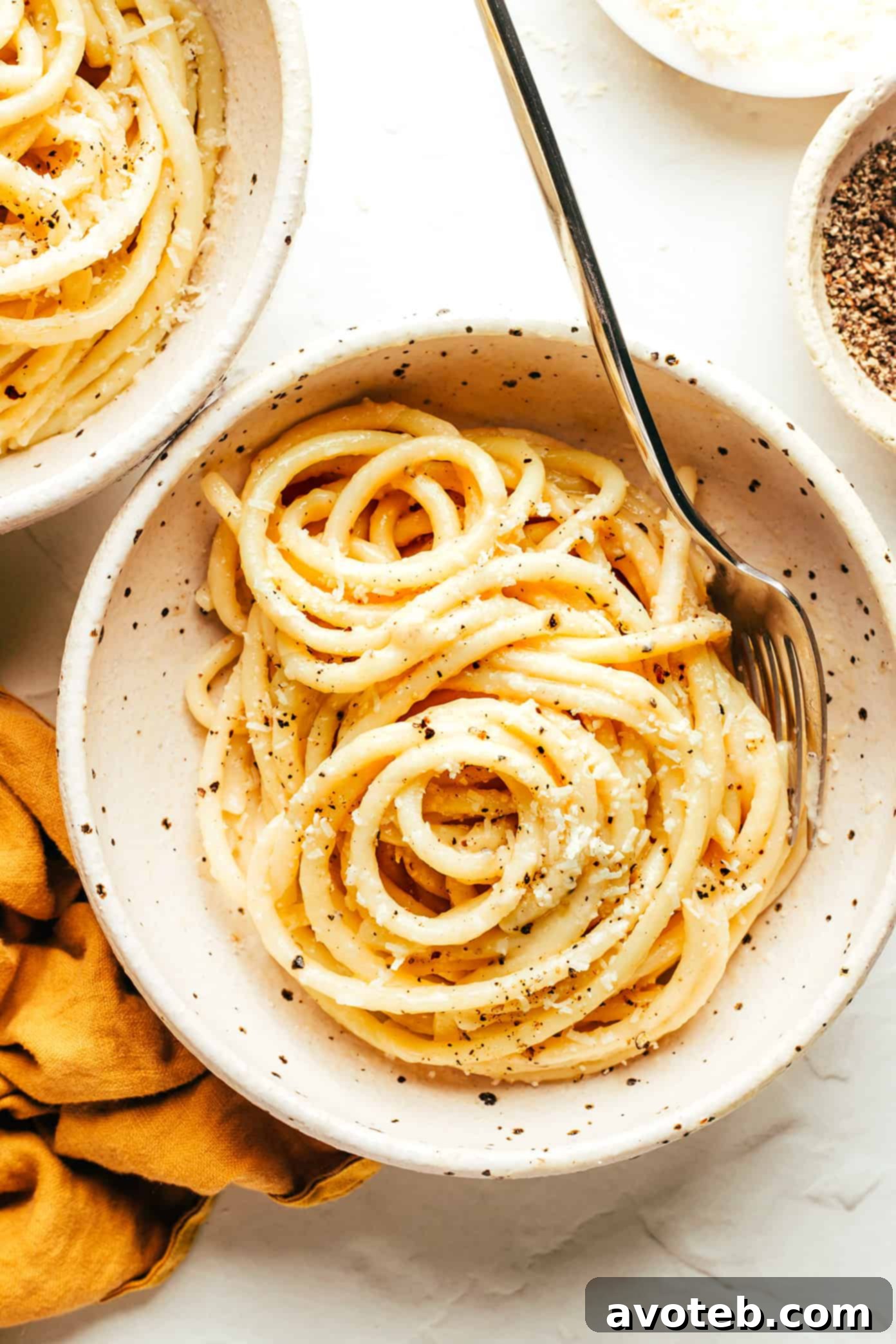
- Serve Immediately: The exquisite emulsion of Cacio e Pepe is best enjoyed moments after it’s created. Dish out the pasta immediately into warm bowls. For an extra flourish, garnish with an additional twist of freshly ground black pepper and/or a sprinkle of extra Pecorino Romano cheese if desired. This pasta is truly at its peak when served piping hot, so savor it right away!
Equipment
Fine Grater
Buy Now →
Bucatini Pasta
Buy Now →
Cooking Tongs
Buy Now →
Notes
Butter Customization: The inclusion of butter is an optional enhancement for this Cacio e Pepe recipe. You are welcome to use a lesser amount if you prefer, or omit it entirely for a strictly traditional approach. If foregoing butter, simply increase the amount of starchy pasta water used to create your desired creamy consistency, ensuring the classic “cacio” and “pepe” flavors remain center stage.
Black Pepper Preferences: I personally enjoy my Cacio e Pepe with a bold, pronounced “pepe” flavor, often adding an extra twist of black pepper as a garnish for intensity. However, black pepper can be quite strong. If you are sensitive to its heat or robust flavor, feel free to reduce the quantity suggested in the recipe to suit your palate. Please also remember that the 1 teaspoon measurement is specifically for coarsely-ground black pepper. If you are using finely-ground pepper, you will need to use less to avoid an overpowering flavor.
Pasta Transfer Alternatives: For optimal control when transferring pasta from boiling water to the sauté pan, tongs are excellent for long pasta shapes. If you are using shorter pasta (such as rigatoni, penne, or orecchiette), a spider strainer will be more efficient. If neither of these tools is available, scoop out and reserve at least a few cups of the starchy pasta water in a heat-safe bowl before draining the remaining pasta in a colander. Then, immediately transfer the drained pasta to your sauté pan to continue the recipe.
Recipe Update Note: This recipe underwent a comprehensive review and update in 2022. Key adjustments include reducing the butter from 3 to 2 tablespoons, and refining the instructions to provide greater clarity and precision, ensuring an even more foolproof path to perfect Cacio e Pepe.