
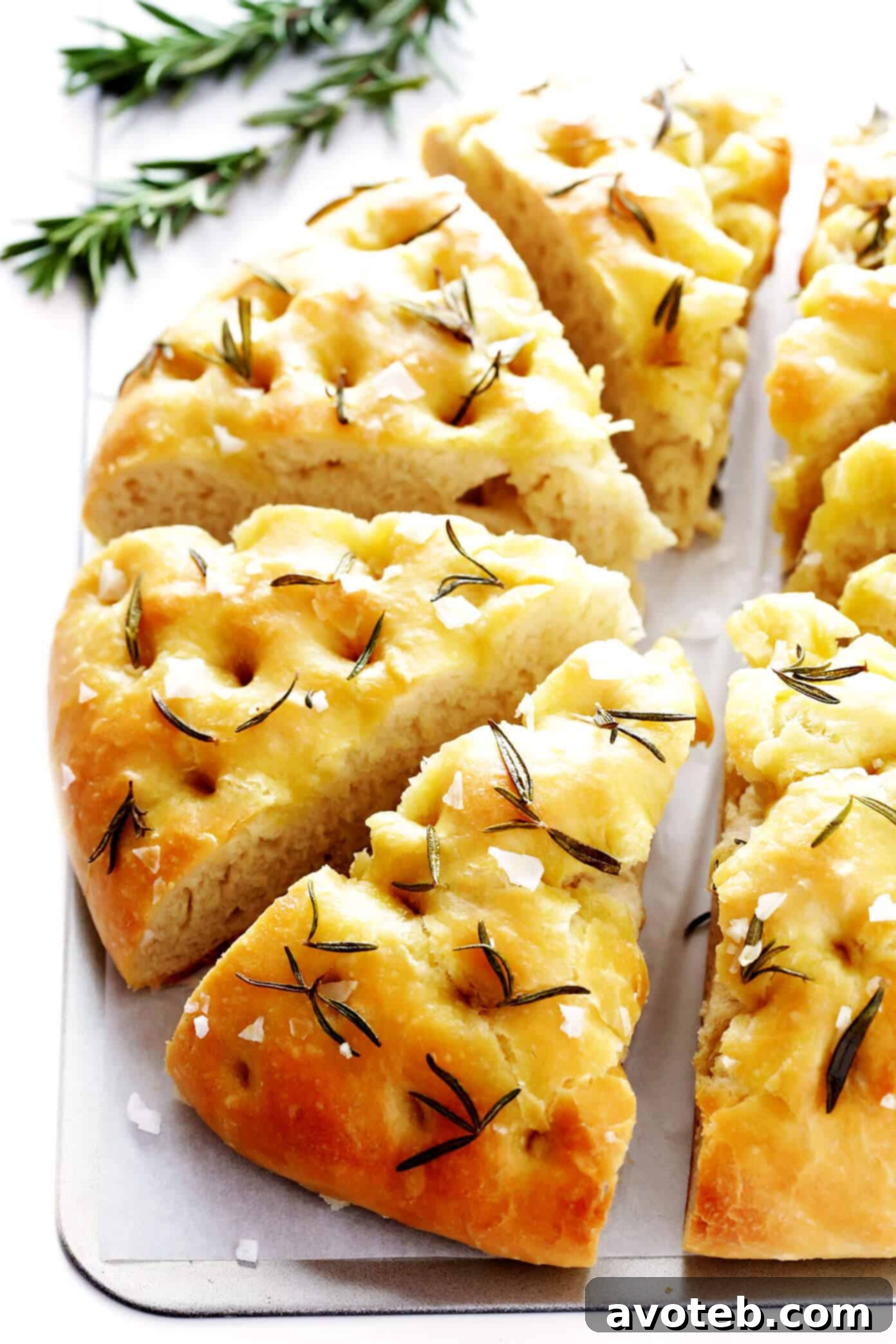
The Ultimate Guide to Easy Rosemary Focaccia Bread: A Homemade Masterpiece
Discover the joy of baking with this incredibly simple Rosemary Focaccia Bread recipe, topped with fragrant fresh rosemary, rich olive oil, and crunchy flaky sea salt. Perfect for beginners and seasoned bakers alike!
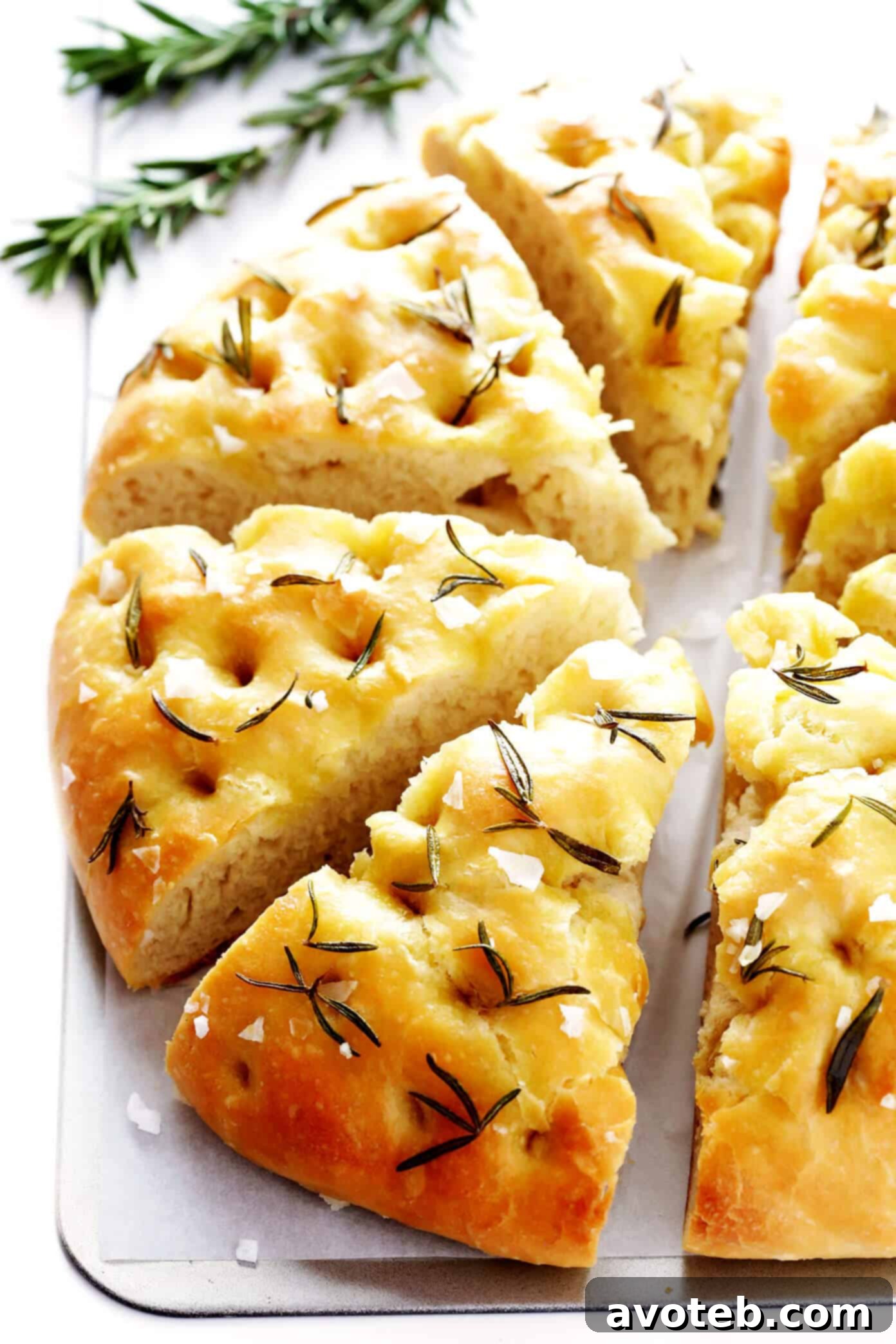
Welcome to your new favorite bread recipe! Focaccia holds a special place in my heart, being one of the first bread recipes I ever mastered years ago. Its enduring popularity in my kitchen is a testament to its delightful simplicity and, more importantly, its utterly irresistible flavor and texture. This isn’t just a recipe; it’s an invitation to experience the pure comfort of homemade bread, crafted with ease and bursting with authentic Italian charm.
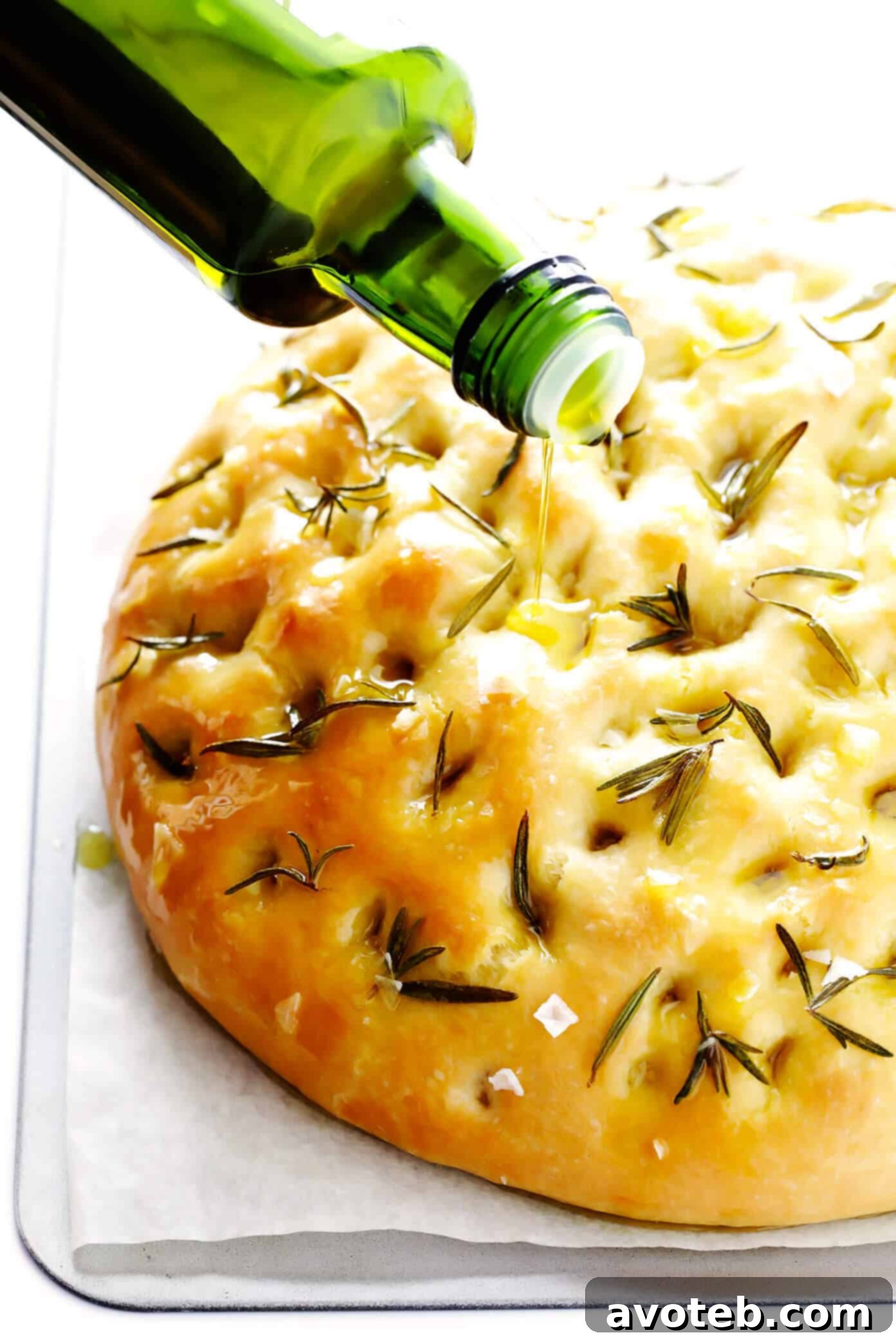
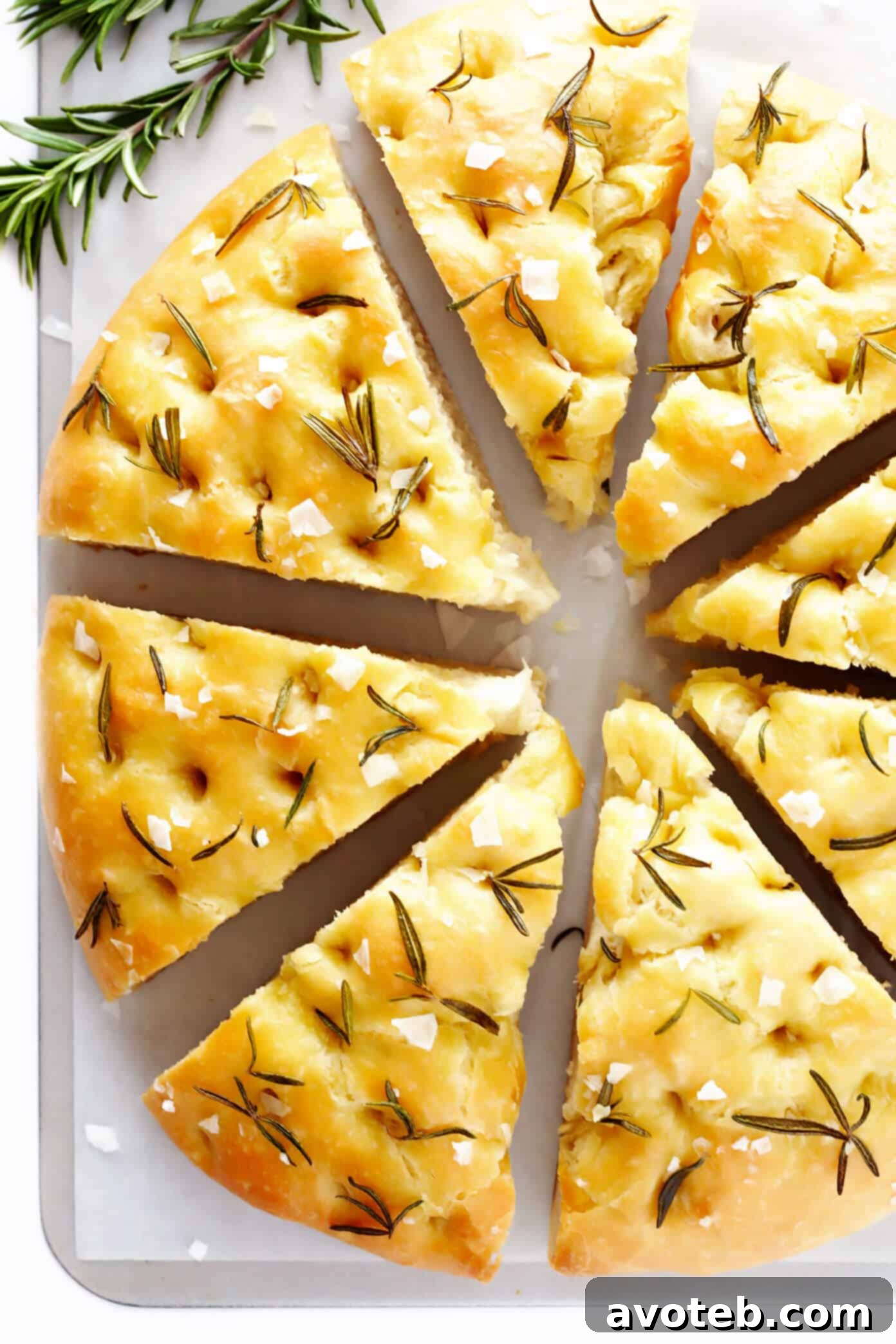
Imagine a bread that’s perfectly soft and fluffy, yet boasts a satisfyingly chewy interior. Our rosemary focaccia is generously adorned with aromatic fresh rosemary and sparkling flaky sea salt, then generously drizzled with high-quality extra virgin olive oil just before serving. This golden oil pools beautifully into the signature dimples poked into the dough, infusing every bite with rich flavor. Whether you prefer to knead by hand or with the help of a stand mixer, this recipe is designed for success. It’s naturally vegan, incredibly versatile in its shaping – from a rustic free-form round to a neatly pressed rectangle – and truly the ultimate in comforting carbohydrate goodness. I guarantee this recipe will become a beloved staple in your home.
For those new to baking with yeast, please don’t let that deter you! This focaccia recipe is an excellent starting point for understanding yeast-leavened doughs. I’ll guide you through each step with clear instructions, addressing common questions, and building your confidence. You’ve got this, and soon, you’ll be enjoying the warm, inviting aroma of freshly baked rosemary focaccia filling your kitchen!
Baking Bliss: The Allure of Rosemary Focaccia
There’s something uniquely captivating about focaccia. This flat oven-baked Italian bread, often compared to pizza dough in texture and appearance, is far more than just a side dish. It’s a sensory experience, from the moment the dough begins to rise, filling your home with the promise of warmth and comfort, to the first bite of its airy, olive oil-infused crumb. The fresh rosemary adds an earthy, piney fragrance that perfectly complements the savory notes of the olive oil and the delicate crunch of sea salt. It’s a bread that feels both rustic and refined, humble yet luxurious. It pairs beautifully with nearly any meal, stands gloriously on its own, and offers a delightful canvas for various toppings. This recipe celebrates that balance, ensuring an easy, enjoyable baking process that yields consistently delicious results.
Watch & Learn: Rosemary Focaccia Bread in Action
This 1-minute video demonstrates the key steps to making perfect rosemary focaccia, from proofing the yeast to achieving those signature dimples.
The Essential Ingredients for Perfect Rosemary Focaccia Bread
Crafting this delightful rosemary focaccia (pronounced “foh-kah-chah”) requires only a handful of fundamental ingredients, each playing a crucial role in achieving its signature texture and flavor. Here’s a closer look at what you’ll need and why:
- Warm Water: This is the lifeblood for our active dry yeast. The ideal temperature is crucial – around 110°F (43°C). Water that’s too cold won’t activate the yeast, while water that’s too hot can kill it. Using a cooking thermometer is highly recommended to ensure perfection.
- Sugar or Honey: A small amount of sugar or honey acts as food for the yeast, helping to activate it and giving it an initial boost. This also contributes a subtle sweetness to the bread, balancing the savory elements.
- Active Dry Yeast: You’ll need one packet (or 2.25 teaspoons) of active dry yeast. This leavening agent is responsible for the bread’s airy, fluffy texture as it produces carbon dioxide during fermentation, causing the dough to rise.
- All-Purpose Flour: Simple, basic all-purpose flour works wonderfully for focaccia, providing the necessary structure and gluten development for that characteristic chewiness.
- Extra Virgin Olive Oil: This is a cornerstone of focaccia. We’ll incorporate some into the dough itself for moisture and flavor, and a generous amount will be drizzled on top before and after baking, creating a rich, golden crust and infusing the bread with its distinctive Mediterranean taste. Always opt for good quality extra virgin olive oil for the best flavor.
- Flaky Sea Salt: Flaky sea salt not only seasons the bread but also provides a delightful textural contrast with its delicate crunch on the crust. A portion goes into the dough, and extra is sprinkled on top before baking. If using fine sea salt, remember to reduce the quantity by half, as it’s more concentrated in flavor.
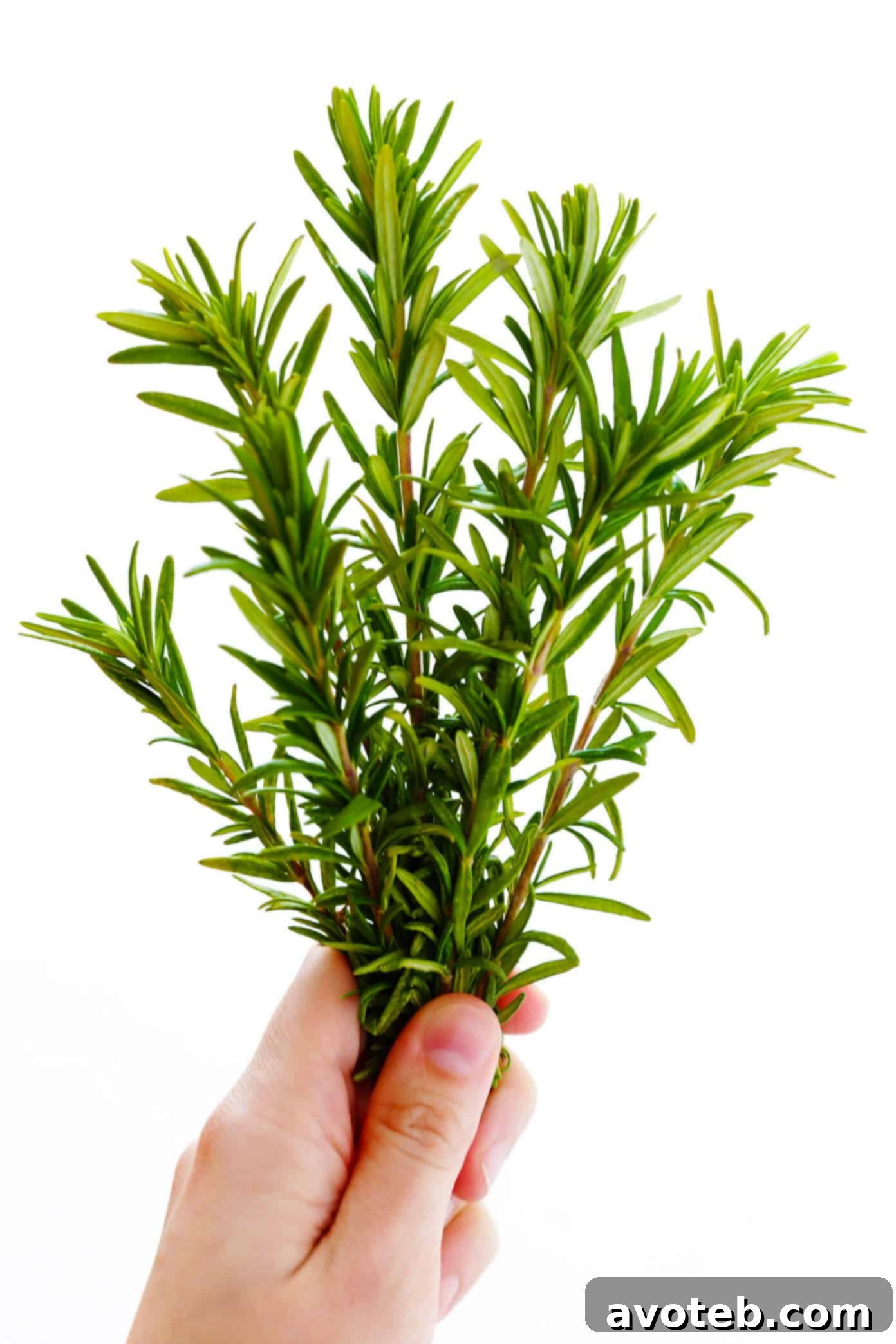
- Fresh Rosemary: The star of this show! Fresh rosemary sprigs, either left whole or finely chopped, are sprinkled over the dough to impart that iconic earthy, aromatic flavor. The fresh needles release their oils during baking, permeating the bread with an irresistible fragrance.
Step-by-Step Guide to Baking Perfect Rosemary Focaccia
Making focaccia is a rewarding process that’s simpler than you might think. Follow these detailed steps to achieve a perfectly golden and flavorful loaf:
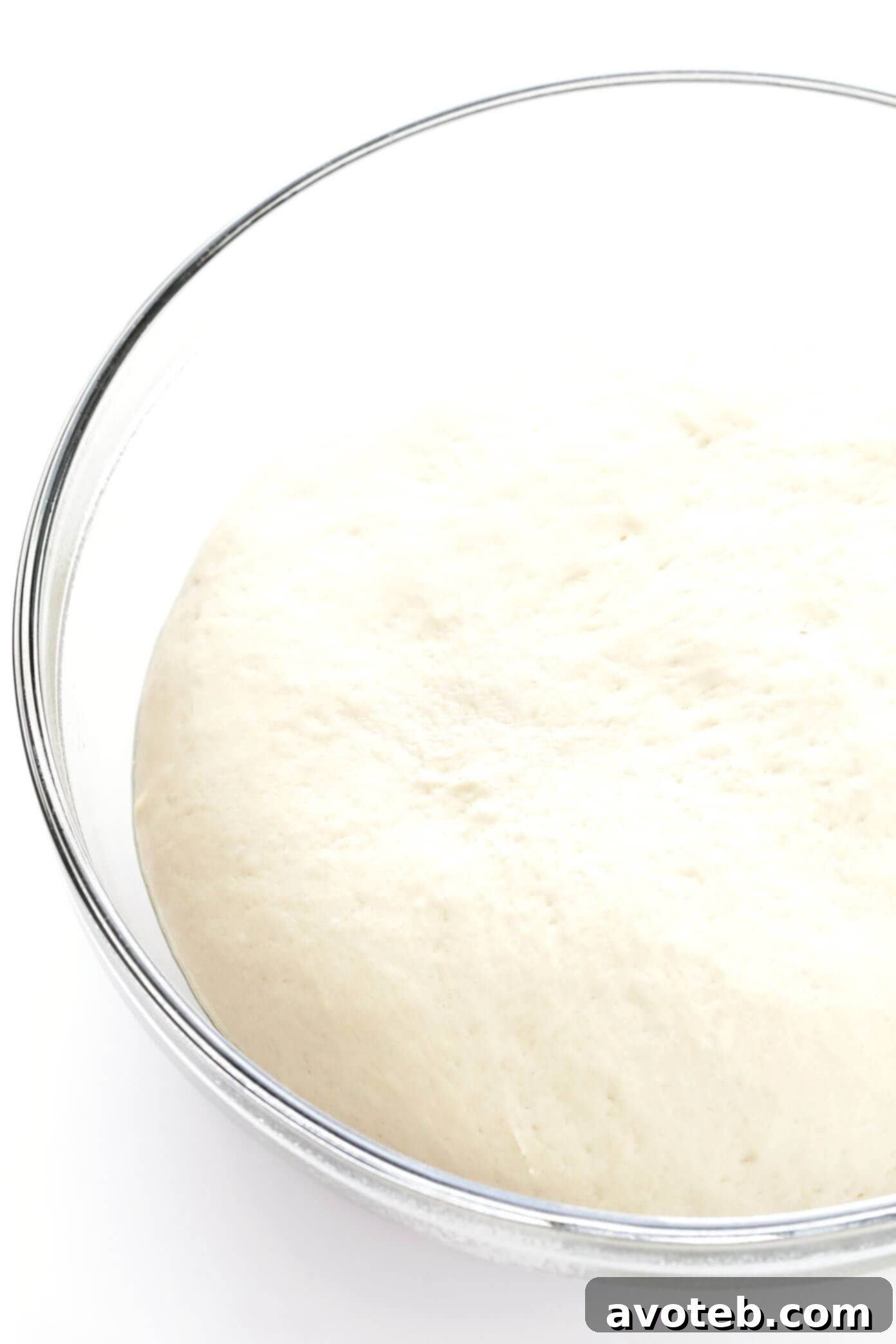
- Proof the Yeast: In a large mixing bowl or the bowl of a stand mixer (fitted with a dough hook), combine the warm water (around 110°F or 43°C is ideal – use a thermometer if unsure) and sugar or honey. Sprinkle the active dry yeast evenly over the surface of the water. Give it a gentle stir to ensure the yeast is hydrated, then let it sit undisturbed for 5-10 minutes. You’ll know the yeast is active and ready when it becomes foamy and frothy on the surface, indicating it’s alive and working!
- Knead the Dough: Gradually add the all-purpose flour, a quarter cup of olive oil, and two teaspoons of flaky sea salt to the yeast mixture. If using a stand mixer, start on low speed until the ingredients come together, then increase to medium-low and knead for about 5 minutes until the dough is smooth and elastic. If kneading by hand (see detailed notes below), mix with a spoon until a shaggy dough forms, then turn it onto a floured surface and knead for 5-7 minutes until smooth and no longer sticky, adding a little extra flour if needed.
- First Dough Rise: Shape the kneaded dough into a neat ball. Lightly grease your mixing bowl (or a clean, separate bowl) with olive oil or cooking spray. Place the dough ball into the greased bowl, turning it once to coat, then cover it snugly with a damp kitchen towel or plastic wrap. Find a warm, draft-free spot (a sunny windowsill or a slightly warm oven that has been turned off works well) and let the dough rise for 45-60 minutes, or until it has visibly doubled in size. This primary rise develops flavor and creates air pockets.
- Second Dough Rise: Gently turn the risen dough out onto a lightly floured surface. Carefully shape it into a large circle or rectangle, aiming for a thickness of about 1/2-inch. You can use your hands or a rolling pin. This step gently redistributes the yeast and allows for further gluten relaxation. Cover the shaped dough again with the damp towel and let it rise for an additional 20 minutes. This second, shorter rise encourages a lighter texture.
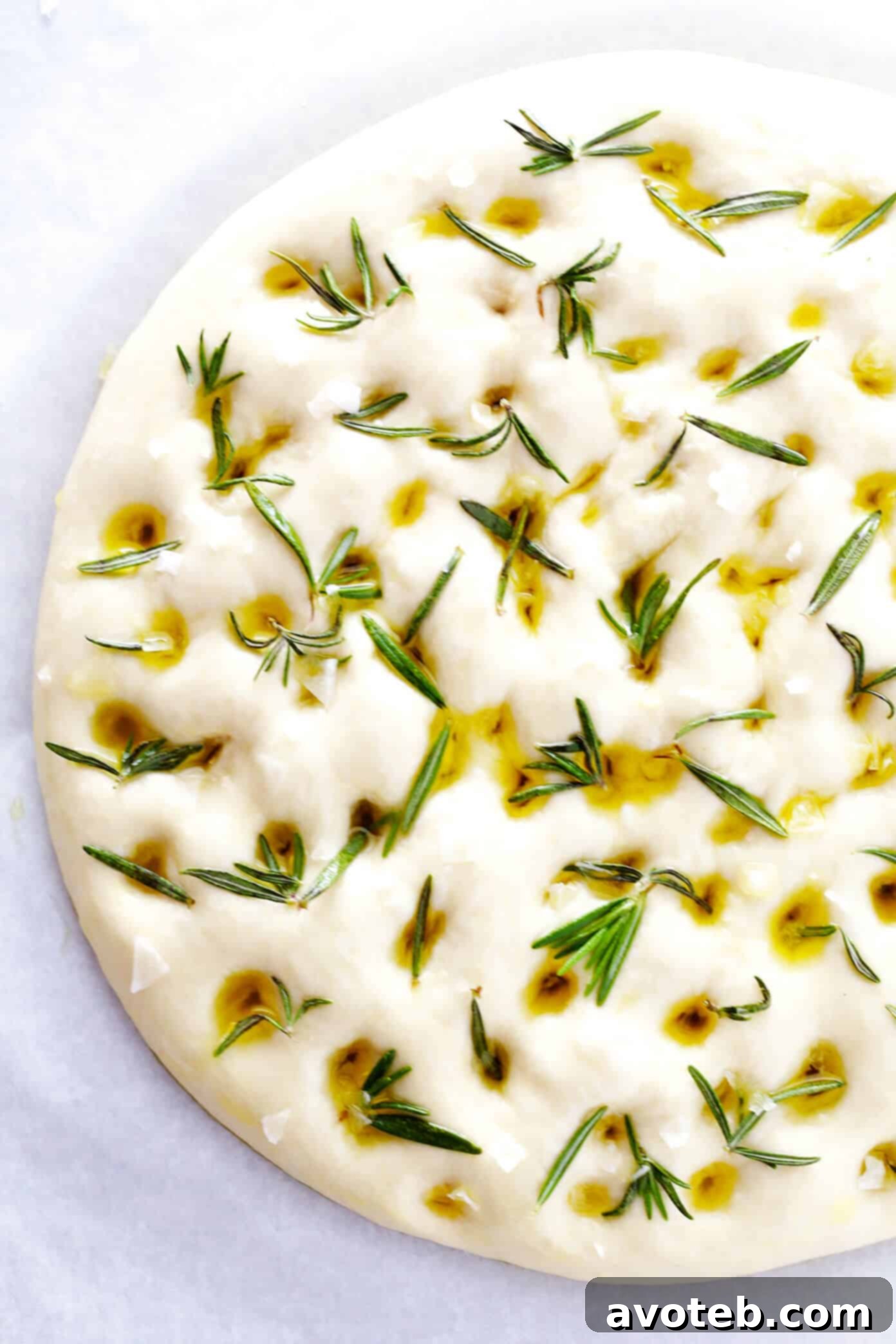
- Prepare for Baking (Dimpling & Topping): While the dough undergoes its second rise, preheat your oven to 400°F (200°C). Transfer the risen dough to a large baking sheet lined with parchment paper, or press it into a 9×13-inch baking dish. This is where the magic happens! Use your fingers to poke deep dents all over the surface of the dough – don’t be shy, poke all the way down until you touch the baking sheet. These dimples are essential for focaccia’s unique texture and serve as reservoirs for the olive oil. Drizzle one to two tablespoons of extra virgin olive oil evenly over the dimpled surface. Finally, liberally sprinkle the fresh rosemary needles and flaky sea salt over the entire dough.
- Bake to Golden Perfection: Carefully transfer the prepared focaccia to your preheated oven. Bake for 20-25 minutes, or until the top is a beautiful golden-brown, the edges are crisp, and the bread is cooked through. The internal temperature should reach about 200-210°F (93-99°C) if you’re using a thermometer.
- Serve Warm: Once baked, remove the focaccia from the oven. For an extra touch of richness and flavor, drizzle with a little more fresh olive oil while it’s still warm. Let it cool slightly before slicing into squares or irregular pieces. Serve warm as a side dish, with your favorite dips, or as a base for sandwiches.
Hand-Kneading Alternative: No Stand Mixer? No Problem!
If you don’t have a stand mixer, you can absolutely make this focaccia by hand. Simply complete step 1 (proofing the yeast) in a large mixing bowl. Gradually stir in the flour, olive oil, and salt with a sturdy spoon until a shaggy, somewhat sticky dough begins to form. Then, turn the dough out onto a lightly floured countertop or cutting board. Knead the dough by hand for about 5-7 minutes, pushing, folding, and turning until it becomes smooth, elastic, and less sticky. Add small amounts of extra flour as needed to prevent excessive sticking. Once smooth, continue with the recipe as directed from step 3.
Customizing Your Focaccia: Exciting Flavor Variations
While rosemary focaccia is a classic for a reason, this recipe is a fantastic canvas for culinary creativity. Feel free to experiment with these delicious variations:
- Garlic Infusion: For a wonderfully aromatic kick, finely mince one or two large cloves of fresh garlic and mix them directly into the dough during the kneading stage. The garlic will infuse the entire loaf with its pungent flavor.
- Parmesan Perfection: Sprinkle a generous layer of freshly grated Parmesan cheese over the dough alongside the rosemary and sea salt before baking. The cheese will melt into a golden, savory crust.
- Herb Garden Delight: In addition to or in place of fresh rosemary, explore other fresh herbs like fragrant thyme, delicate tarragon, or earthy sage. A mix of Italian herbs can also be delightful.
- Dried Herb Convenience: If fresh herbs aren’t available, dried herbs (like dried rosemary or an Italian seasoning blend) can be used. To prevent burning, I recommend kneading them directly into the dough rather than sprinkling them on top.
- Cherry Tomato & Olive Focaccia: Gently press halved cherry tomatoes and pitted Kalamata olives into the dough’s dimples before the final drizzle of olive oil. They burst with flavor during baking.
- Caramelized Onion Focaccia: Sauté thinly sliced onions until deeply caramelized, then spread them over the dough before the final rise and baking. The sweet, savory onions are an incredible complement.
Storage and Freezing Tips for Focaccia
Focaccia is best enjoyed fresh and warm from the oven, but leftovers can be easily stored and even frozen for later enjoyment:
- Storing at Room Temperature: Once completely cooled, focaccia can be stored in an airtight container or wrapped tightly in plastic wrap at room temperature for up to 2-3 days. To refresh, simply warm it in a toaster oven or conventional oven for a few minutes.
- Freezing Focaccia: Focaccia freezes beautifully! Allow the bread to cool completely. Wrap individual slices or the entire loaf tightly in plastic wrap, then an additional layer of aluminum foil. Freeze for up to 2-3 months. To serve, thaw overnight in the refrigerator or at room temperature, then warm in the oven at 350°F (175°C) until heated through and lightly crisp.
Frequently Asked Questions About Focaccia Baking
Here are answers to some common questions that arise when baking focaccia:
- What if my yeast doesn’t foam? If your yeast mixture doesn’t become foamy after 5-10 minutes, it likely means the yeast is old, inactive, or the water temperature was off (too hot or too cold). Discard the mixture, get new yeast, and try again with correctly tempered water.
- Can I use bread flour instead of all-purpose? Yes, you can. Bread flour has a higher protein content, which can result in a chewier focaccia. All-purpose flour yields a slightly softer crumb, which many prefer for focaccia, but bread flour is a good substitute.
- Why is my focaccia dense? A dense focaccia can be due to several factors: inactive yeast, not enough kneading (which develops gluten for structure), not allowing enough time for the dough to rise, or using too much flour, making the dough too stiff.
- How thick should the dough be? For a classic focaccia, aim for about 1/2-inch thick before baking. It will rise considerably in the oven. If you prefer a thinner, crispier focaccia, you can roll it out slightly more.
- What’s the best way to get deep dimples? Don’t be afraid to press firmly! Use your fingertips and push all the way down until you feel the baking sheet beneath the dough. This creates those characteristic depressions that hold the olive oil and contribute to the focaccia’s unique texture.
Beyond Focaccia: More Bread-Baking Adventures
If you’ve enjoyed the rewarding process of baking this rosemary focaccia, you might be ready to dive into more delicious bread recipes. Baking bread is a wonderfully therapeutic and satisfying culinary journey. Here are a few other easy and delightful bread recipes from the blog that you might love:
- Honey Beer Bread
- Healthy Banana Bread
- 1-Hour Soft and Buttery Dinner Rolls
Rosemary Focaccia Bread Recipe Card
Rosemary Focaccia Bread
-
Prep Time: 75 minutes -
Cook Time: 20 minutes -
Total Time: 95 minutes -
Yield: 8-12 servings
Description
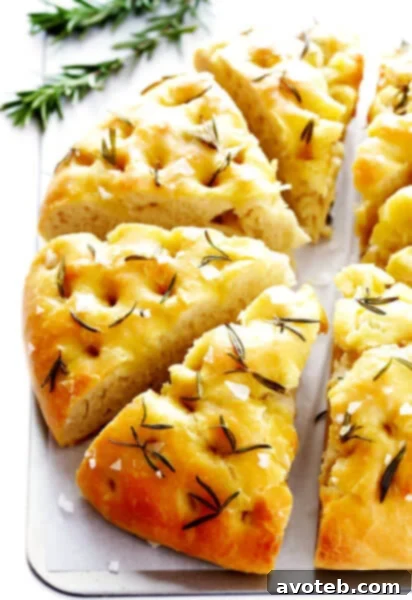
This Rosemary Focaccia Bread recipe is ultra-comforting and delicious, enhanced with fresh rosemary and flaky sea salt. Find optional instructions below for mixing the dough by hand if you don’t have a stand mixer.
Ingredients
- 1 1/3 cup warm water (about 110°F)
- 2 teaspoons sugar or honey
- 1 (0.25 ounce) package active-dry yeast
- 3 1/2 cups all-purpose flour
- 1/4 cup extra virgin olive oil, plus more for drizzling
- 2 teaspoons flaky sea salt, plus extra for sprinkling*
- 2 sprigs fresh rosemary
Instructions
- Proof the yeast. Add warm water (about 110°F) and sugar to the bowl of a stand mixer with the dough attachment, and stir to combine. Sprinkle the yeast on top of the water. Give the yeast a quick stir to mix it in with the water. Then let it sit for 5-10 minutes until the yeast is foamy.
- Knead the dough. (See alternate instructions below to knead by hand.) Set the mixer to low speed, and gradually add flour, olive oil, and salt. Increase speed to medium-low, and continue mixing the dough for 5 minutes. (If the dough is too sticky and isn’t pulling away from the sides of the bowl, add in an extra 1/4 cup flour while it is mixing.)
- First dough rise. Remove dough from the mixing bowl, and use your hands to shape it into a ball. Grease the mixing bowl with olive oil or cooking spray, then place the dough ball back in the bowl and cover it with a damp towel. Place in a warm location and let the dough rise for 45-60 minutes, or until it has nearly doubled in size.
- Second dough rise. Turn the dough onto a floured surface, and roll it out into a large circle or rectangle until the dough is about 1/2-inch thick*. Cover the dough again with the damp towel, and let the dough continue to rise for another 20 minutes.
- Prepare the dough. Preheat oven to 400°F. Transfer the dough to a large parchment-covered baking sheet (or press it into a 9 x 13-inch baking dish). Use your fingers to poke deep dents (seriously, poke all the way down to the baking sheet!) all over the surface of the dough. Drizzle a tablespoon or two of olive oil evenly all over the top of the dough, and sprinkle evenly with the fresh rosemary needles and sea salt.
- Bake. Bake for 20 minutes, or until the dough is slightly golden and cooked through.
- Serve. Remove from the oven, and drizzle with a little more olive oil if desired. Slice, and serve warm.
Notes
Flaky vs. fine sea salt: If you do not have flaky sea salt on hand, you can definitely substitute fine sea salt. Just be sure to use about half the amount (if using fine sea salt) so that the bread is not too salty.
To knead the dough by hand: Complete step 1 in a large mixing bowl. Gradually stir in the flour, olive oil, and salt until a shaggy dough begins to form. Then turn the dough out onto a floured surface and knead by hand for 5 minutes until smooth, adding extra flour if the dough feels too sticky. Continue on with the recipe as directed.
Bread thickness: I like my focaccia to be a bit on the thicker side. But if you prefer yours thinner, just roll it out a little more. It will rise up considerably while baking.
There you have it – a comprehensive guide to baking the most delightful rosemary focaccia bread. This recipe is more than just instructions; it’s an invitation to fill your kitchen with warmth, your home with incredible aromas, and your table with a truly unforgettable bread. Happy baking!