
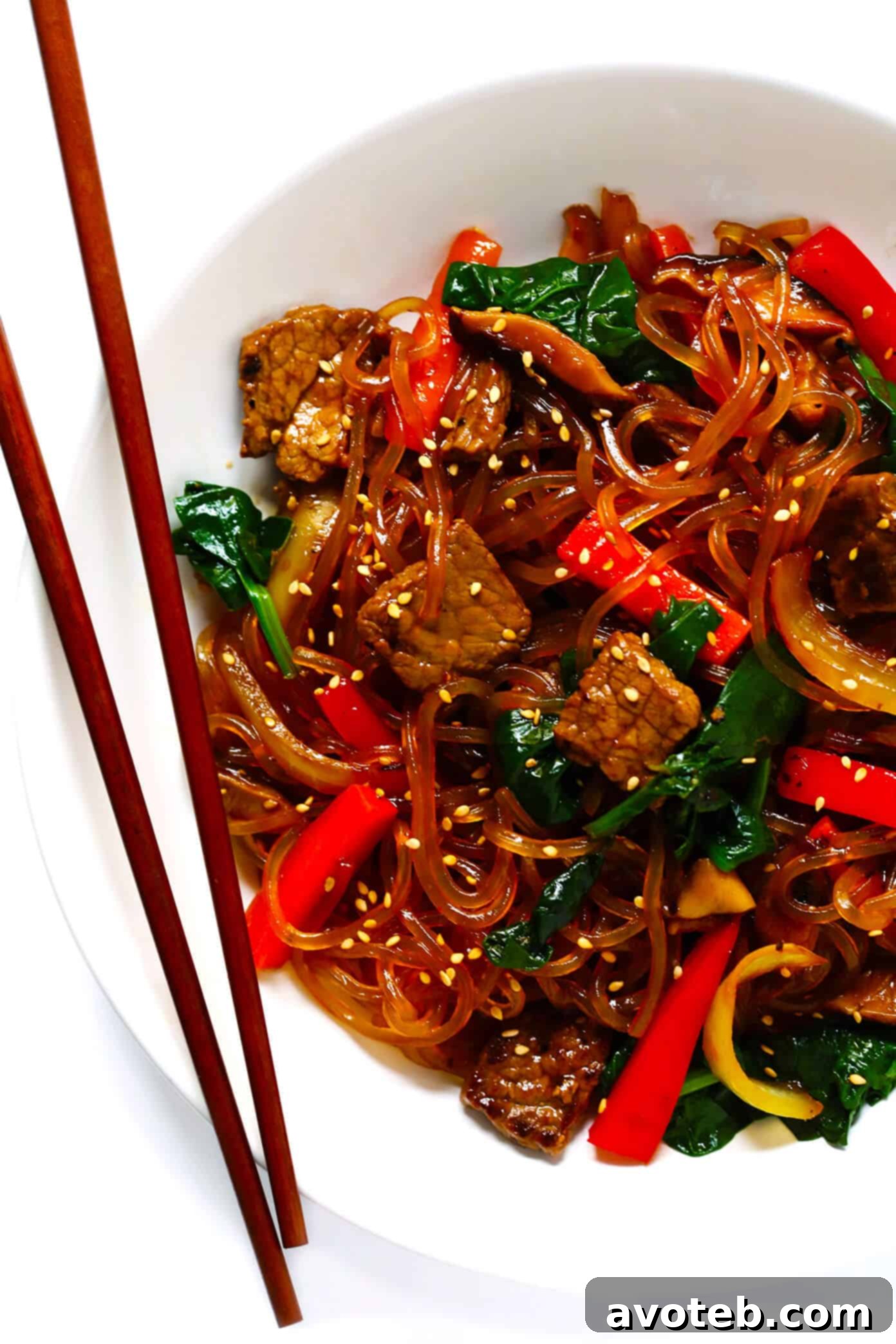
Discover the incredibly flavorful and versatile world of Japchae, a Korean noodle stir-fry that’s quick to prepare, easily customizable, and always a crowd-pleaser! This recipe promises a delicious meal ready in just about 30 minutes.
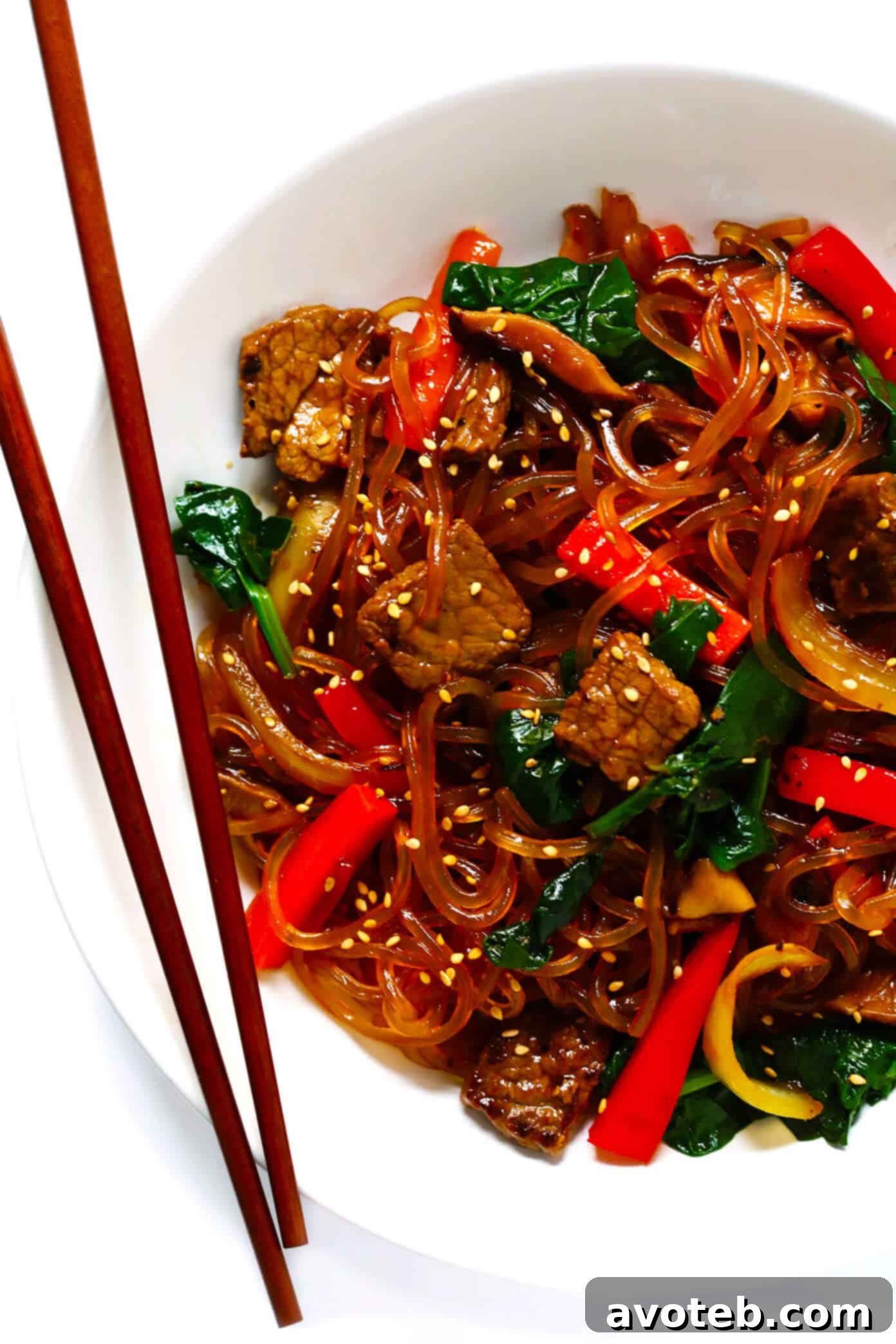
There are some dishes that truly capture your heart, and for my husband and me, Japchae is one of them. This vibrant and savory Korean noodle stir-fry has become a cherished staple in our household, appearing on our dinner table week after week. It’s a dish that not only satisfies our cravings but also brings back wonderful memories of friends and travels.
My journey with Japchae began years ago during a memorable trip to Korea, where dear friends first introduced me to this exquisite dish. The moment I tasted the distinctive chewy sweet potato noodles, I was hooked. It wasn’t long before I introduced my husband, Barclay, to this culinary delight, and he too instantly fell in love. Now, our pantry is perpetually stocked with dangmyeon, the traditional sweet potato starch noodles, ensuring we’re always ready to whip up a batch whenever the craving strikes.
Barclay has truly mastered the art of making Japchae. What started as a simple experiment has evolved into a passion, and he now regularly impresses our friends with his skill. This dish exemplifies why we love to cook: it’s incredibly adaptable, making it perfect for utilizing whatever fresh vegetables and proteins we have on hand. While the photos here feature tender steak, we often enjoy ours with succulent shrimp or protein-packed tofu, showcasing its remarkable versatility. It’s truly a testament to a dish’s appeal when it becomes a regular fixture in a food blogger’s own kitchen!
Japchae stands out not only for its incredible flavor but also for its quick preparation time, typically ready in around 30 minutes. Its balanced flavors and diverse textures make it an ideal choice for busy weeknights or a comforting weekend meal. If you haven’t yet experienced the joy of Japchae, allow this recipe to be your gateway into the wonderful world of Korean cuisine. We’re confident it will become a new favorite in your home, just as it has in ours.
What is Japchae? Unveiling the Korean Glass Noodle Stir-Fry
Japchae (잡채), pronounced “chap-chae,” is a classic and beloved Korean dish celebrated for its delightful combination of glass noodles, colorful vegetables, and often a choice of protein, all tossed in a savory, slightly sweet, and aromatic sauce. Historically, Japchae meant “mixed vegetables” and was prepared without noodles, served as a side dish in royal court cuisine. Over time, the introduction of dangmyeon (sweet potato starch noodles) transformed it into the iconic stir-fry we know and love today.
These unique noodles, made from sweet potato starch, are naturally gluten-free and distinguish Japchae with their signature translucent appearance and incredibly springy, chewy texture. This textural contrast, alongside the tender-crisp vegetables and savory protein, creates a harmonious eating experience that is both satisfying and incredibly delicious. Japchae is often served as a banchan (side dish) at Korean feasts and celebrations, but it’s substantial enough to be enjoyed as a main course, offering a complete and balanced meal.
Essential Japchae Ingredients
Crafting authentic and flavorful Korean Japchae begins with selecting the right components. Here’s a breakdown of the key ingredients that come together to create this remarkable stir-fry:
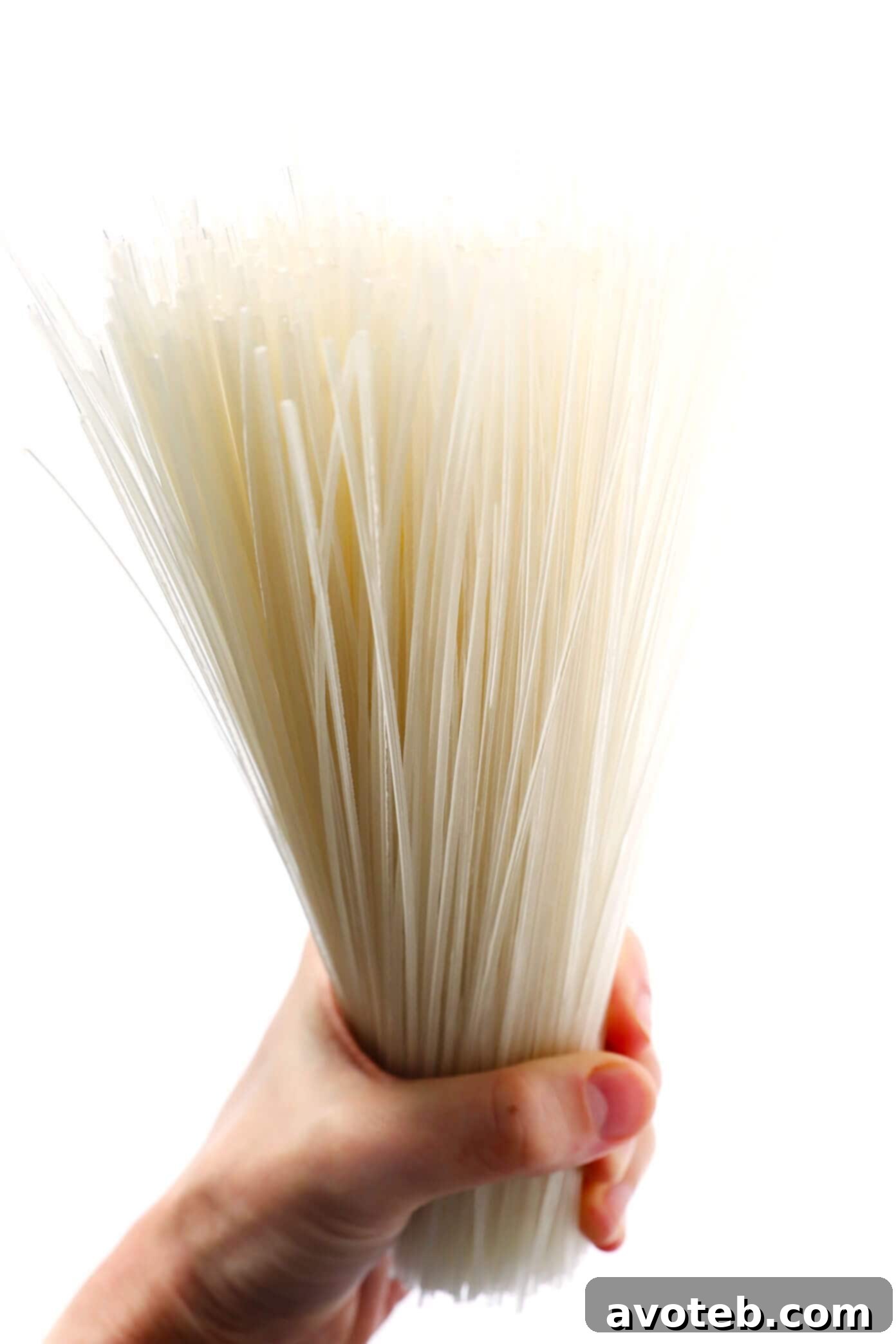
- Dangmyeon Noodles: These are the heart of Japchae. Also known as “glass noodles,” dangmyeon are made from sweet potato starch and water, giving them a slightly sweet taste and a wonderfully satisfying, chewy texture. They are naturally gluten-free and become translucent when cooked. You can typically find them at your local Asian grocery store or readily online. Sweet potato noodles are often sold in very long strands, so it’s a good idea to snip them with kitchen shears after cooking and draining to make them easier to manage and eat.
- Your Choice of Protein: Japchae is incredibly flexible when it comes to protein. The recipe is fantastic with lean sirloin or flank steak, which cooks quickly and adds a rich, savory depth. However, feel free to substitute with other favorites like chicken breast or thighs (sliced thin), shrimp (peeled and deveined), or plant-based options such as tofu or tempeh for a vegetarian or vegan version. Each protein brings its own unique flavor and texture to the dish, allowing for endless customization.
- A Colorful Array of Vegetables: The visual appeal of Japchae comes from its vibrant mix of vegetables. Our go-to combination includes thinly sliced white onion, earthy shiitake mushrooms, crisp red bell pepper, finely julienned carrots, aromatic minced garlic, and tender fresh baby spinach. This medley provides a beautiful balance of flavors and textures. Don’t hesitate to experiment with other stir-fry-friendly vegetables like broccoli florets, asparagus spears, snap peas, green beans, zucchini, or even bok choy to make it your own.
- The Signature Stir-Fry Sauce: The magic of Japchae lies in its perfectly balanced sauce. It’s a simple yet powerful blend of low-sodium soy sauce (or tamari for a gluten-free option), maple syrup for a touch of natural sweetness and gloss, and rich, toasted sesame oil for its unmistakable nutty aroma. This combination creates a savory, umami-rich coating that truly elevates every strand of noodle and every piece of vegetable.
- Flavorful Toppings: To complete your Japchae, a garnish of toasted sesame seeds adds a lovely crunch and intensifies the nutty sesame flavor. We also love to sprinkle thinly sliced green onions on top for a fresh, mild oniony bite and a burst of vibrant green color.
Mastering the Art of Japchae: A Step-by-Step Guide
Creating this delicious Korean noodle stir-fry is simpler than you might think. Follow these steps for a perfectly cooked and incredibly flavorful Japchae:
- Prepare the Dangmyeon Noodles: Bring a large pot of water to a rolling boil. Add the sweet potato starch noodles and cook according to package directions until they are al dente – tender but still retaining their signature chewiness. It’s crucial not to overcook them, as they can become mushy and lose their desirable texture in the stir-fry. Once cooked, transfer the noodles to a strainer and rinse them thoroughly under cold running water until they cool to room temperature. This stops the cooking process and prevents them from sticking. Drain any excess water completely, then drizzle the noodles with a touch of sesame oil and toss to ensure they are lightly coated, which further prevents sticking and adds flavor. Set them aside.
- Marinate the Protein: In a medium bowl, combine your thinly sliced sirloin or flank steak (or your chosen protein like chicken or tofu) with soy sauce and a generous pinch of fine sea salt and freshly cracked black pepper. Toss gently to ensure all pieces are coated. Allow the steak to marinate for at least 5 minutes to absorb the flavors, or up to 30 minutes for a deeper seasoning.
- Whisk the Sauce: In a separate small bowl, whisk together all the sauce ingredients: low-sodium soy sauce, maple syrup, and toasted sesame oil. Stir until well combined. This ensures a uniform flavor distribution later.
- Stir-Fry the Protein: Heat 1 tablespoon of olive oil (or another mild-flavored oil) in a large sauté pan or wok over high heat. Once the oil is shimmering, add the marinated steak. Stir-fry for 4-5 minutes, stirring occasionally, until the steak is cooked through and lightly browned. Transfer the cooked steak to a clean plate and set it aside.
- Sauté the Vegetables: Reduce the heat to medium-high. Add the remaining 1 tablespoon of olive oil to the same pan. Add the thinly sliced white onion and sauté for 3 minutes, stirring occasionally, until it begins to soften and become translucent. Next, add the shiitake mushrooms, red bell pepper, and julienned carrot along with the minced garlic. Continue to sauté for another 4-5 minutes, stirring frequently, until the vegetables reach your preferred level of tenderness. We like ours to retain a slight crispness for texture. Finally, stir in the fresh baby spinach, using tongs to toss it frequently, and cook for just 1-2 minutes until it has wilted.
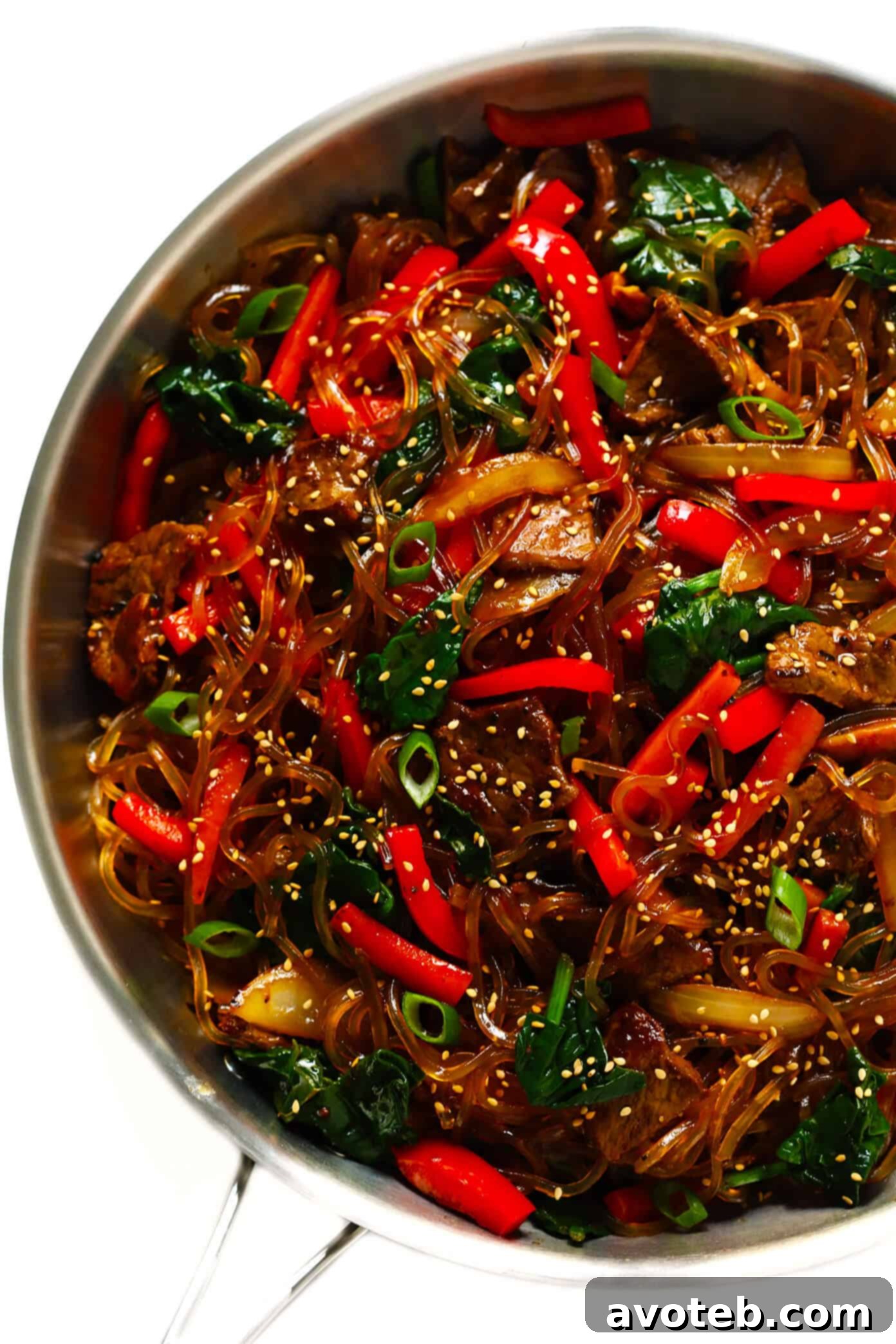
- Combine All Components: Remove the pan from the heat. Add the cooked and prepped noodles, the reserved cooked steak, and the whisked stir-fry sauce to the sautéed vegetables in the pan. Toss everything thoroughly using tongs until all the ingredients are evenly coated with the delicious sauce.
- Taste and Adjust Seasoning: Before serving, taste the Japchae and adjust the seasoning as needed. You might want to add a splash more soy sauce for saltiness, or a tiny bit more maple syrup for sweetness, or extra black pepper to taste.
- Serve Warm and Garnish: Transfer the Japchae to serving bowls. Garnish generously with toasted sesame seeds for an added nutty flavor and pleasant crunch, and sprinkle with thinly sliced green onions for freshness and color. Serve immediately and enjoy this authentic Korean delicacy!
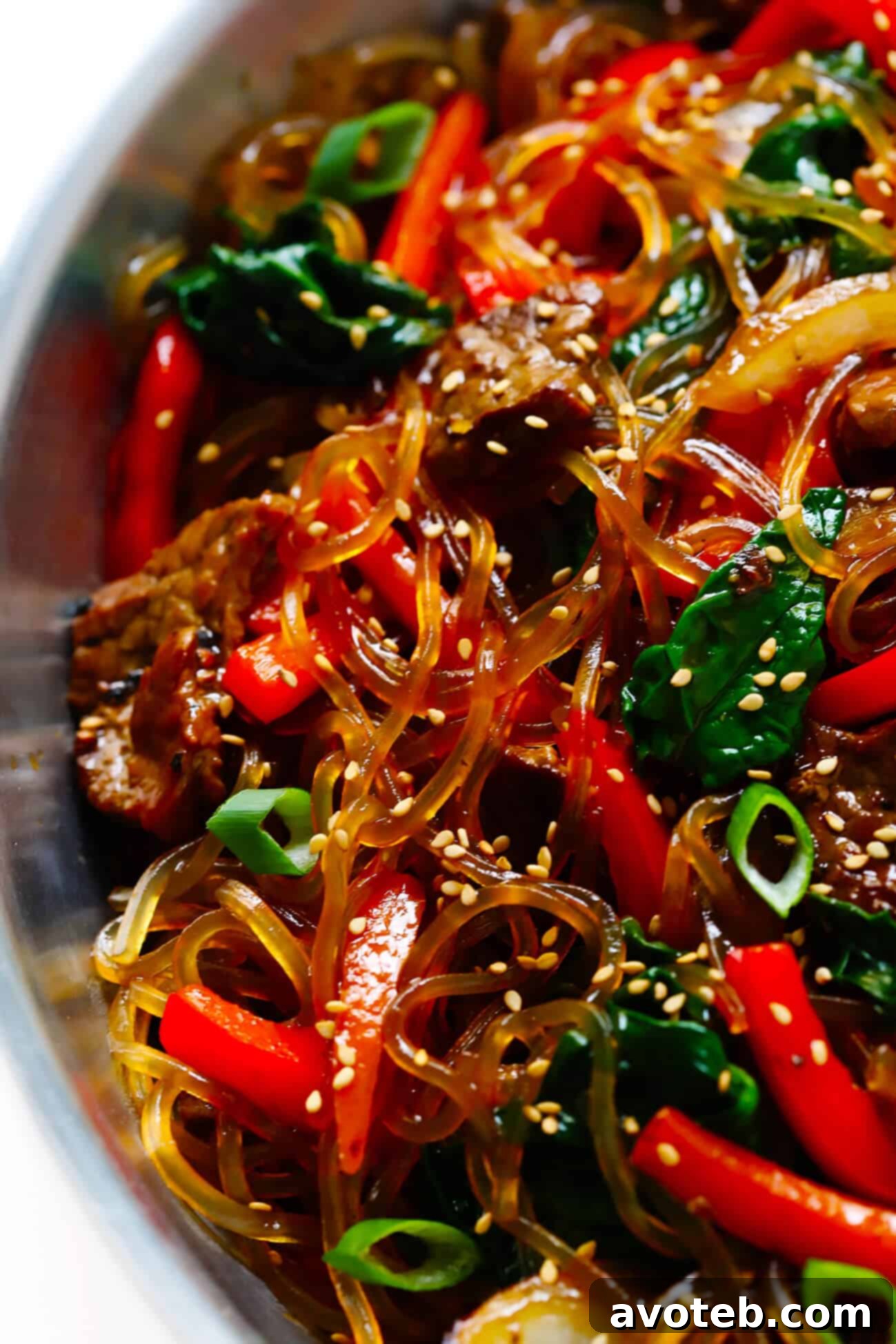
Japchae Variations: Tailor This Recipe to Your Taste
One of the best qualities of Japchae is its incredible adaptability. Don’t hesitate to get creative and customize this recipe to suit your dietary preferences or what you have on hand:
- Making it Gluten-Free: Since dangmyeon (sweet potato noodles) are naturally gluten-free, the main adjustment needed is to substitute low-sodium soy sauce with gluten-free tamari. Always double-check labels on all other ingredients, especially sauces and broths, to ensure they are certified gluten-free.
- Vegetarian or Vegan Adaptations: Easily transform this dish by opting for plant-based proteins. Tofu, pressed and cubed, or tempeh, crumbled or sliced, make excellent meat substitutes. You can also simply omit the protein altogether and bolster the vegetable content with extra mushrooms or a wider variety of greens for a veggie-packed meal.
- Kick Up the Heat with Spice: For those who enjoy a bit of a kick, add some thinly sliced Thai bird chiles, a generous squeeze of sriracha, or a pinch of crushed red chili flakes to the stir-fry or the sauce. Adjust the amount according to your spice preference.
- Explore Different Proteins: While beef is classic, this stir-fry is equally delicious with other proteins. Try thinly sliced chicken breast or thighs, tender pork strips, succulent shrimp, or even scrambled eggs for a different flavor profile. The key is to slice the protein thinly to ensure quick and even cooking.
- Experiment with Various Vegetables: Feel free to swap or add any stir-fry-friendly vegetables you love. Great additions include crunchy broccoli florets, tender asparagus spears, crisp snap peas, vibrant green beans, thinly sliced zucchini, or peppery bok choy. Blanch tougher vegetables briefly before stir-frying to ensure even cooking.
- Alternate Noodle Choices: While dangmyeon are traditional, if you can’t find them or prefer a different noodle, this recipe is flexible. Udon noodles offer a chewier texture, egg noodles provide a classic stir-fry feel, soba noodles add an earthy蕎麦 flavor, and wider rice noodles can also work beautifully. Adjust cooking times according to package directions for your chosen noodle.
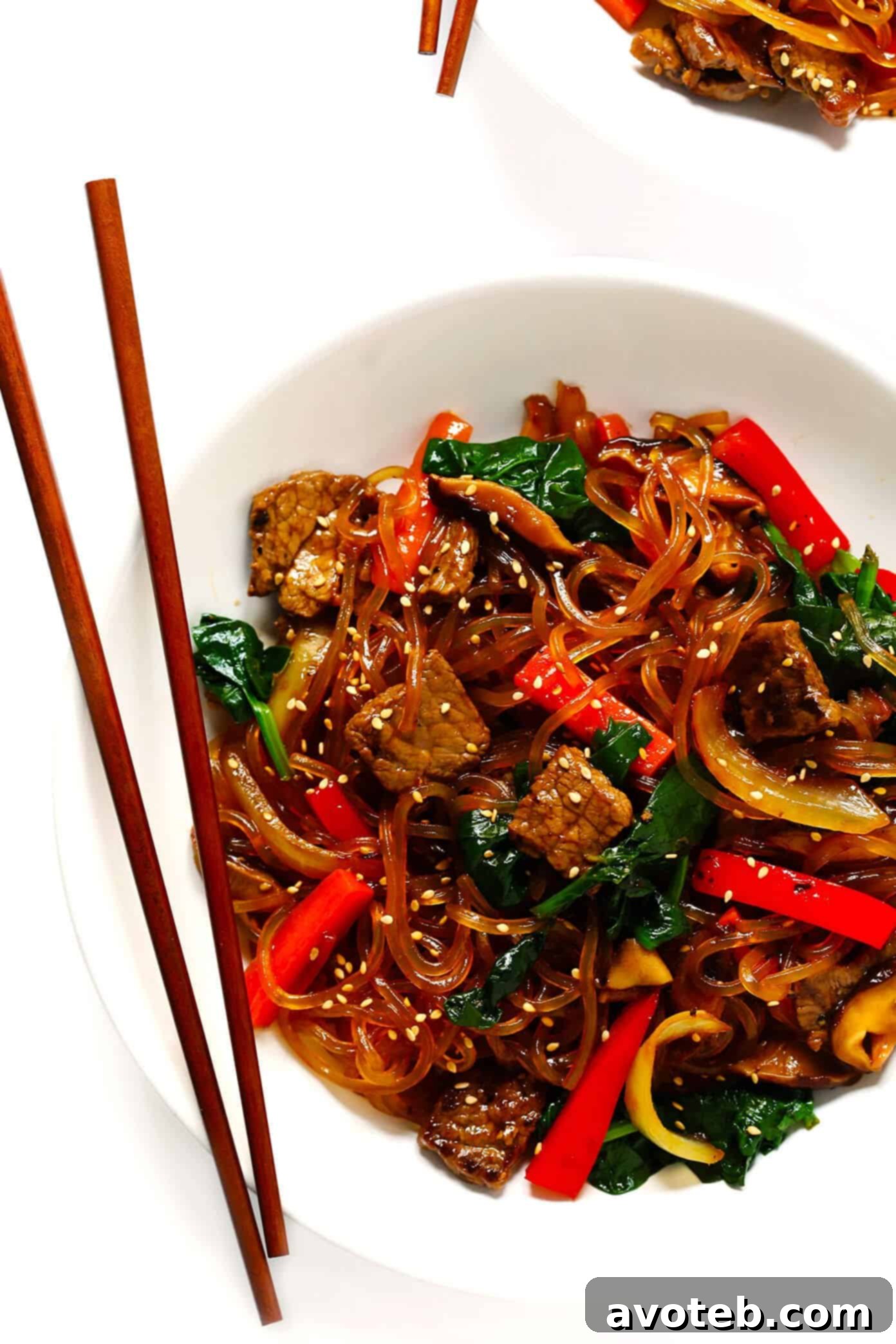
Serving, Storage, and Reheating Tips for Japchae
Once your delectable Japchae is prepared, there are several ways to enjoy it and ensure any leftovers are just as delightful.
Serving Suggestions:
- As a Main Dish: Japchae is hearty enough to be a standalone meal, especially if you’ve included a generous portion of protein and vegetables. Its balanced flavors make it incredibly satisfying.
- As a Side Dish (Banchan): In traditional Korean cuisine, Japchae is often served as a vibrant banchan alongside other main dishes like bulgogi, galbi, or a hearty Korean stew. It adds a wonderful textural and flavor contrast to any Korean spread.
- With Rice: For a more filling meal, serve Japchae alongside a bowl of steamed white or brown rice. The rice can help soak up any extra sauce, creating a comforting and complete plate.
- Garnish Generously: Don’t forget the final touches! A sprinkle of toasted sesame seeds adds a nutty crunch, and fresh green onions provide a refreshing bite and vibrant color.
Storage and Reheating:
- Storing Leftovers: Leftover Japchae can be stored in an airtight container in the refrigerator for up to 3-4 days. It’s a fantastic dish for meal prepping, as the flavors tend to meld even further overnight.
- Reheating: When reheating, the key is to gently warm the noodles without drying them out or making them mushy.
- Stovetop: The best method is to reheat in a non-stick skillet over medium-low heat. Add a tiny splash of water or a drizzle of sesame oil to help revive the noodles and prevent sticking. Stir gently until warmed through.
- Microwave: For a quick reheat, place a portion in a microwave-safe dish. Cover loosely and microwave in 30-second intervals, stirring in between, until heated through. Be cautious not to overcook, as this can make the noodles tough.
- Freezing: While technically possible, freezing Japchae is not recommended as the sweet potato noodles can lose their desirable chewy texture and become somewhat brittle or mushy upon thawing and reheating. It’s best enjoyed fresh or from the refrigerator.
With these tips, you can fully enjoy the convenience and deliciousness of your homemade Japchae, whether for a spontaneous dinner or a planned meal.
Health Benefits of Japchae
Beyond its incredible taste, Japchae offers several nutritional advantages, making it a smart choice for a balanced diet:
- Naturally Gluten-Free Noodles: The use of dangmyeon, or sweet potato starch noodles, makes Japchae an excellent option for those with gluten sensitivities or anyone looking to reduce their gluten intake. Sweet potatoes are also a good source of complex carbohydrates and dietary fiber.
- Rich in Vegetables: Japchae is packed with a colorful array of vegetables, providing essential vitamins, minerals, and antioxidants. From vitamin A in carrots to vitamin K in spinach and various nutrients in mushrooms and bell peppers, it’s a great way to boost your daily vegetable intake.
- Lean Protein Options: Whether you choose lean beef, chicken, shrimp, or plant-based tofu, Japchae can be a good source of protein, which is vital for muscle repair, satiety, and overall body function.
- Balanced Macronutrients: With its combination of complex carbohydrates from noodles, protein from meat/tofu, and fiber from vegetables, Japchae offers a well-rounded meal that can keep you feeling full and energized.
- Healthy Fats: The use of toasted sesame oil not only adds a distinct flavor but also contributes healthy monounsaturated and polyunsaturated fats, which are beneficial for heart health.
By opting for low-sodium soy sauce and controlling the amount of added sugar (maple syrup), you can further enhance the health profile of this already nutritious dish.
Print Recipe
Japchae (Quick Korean Noodle Stir-Fry)
- Prep Time: 15 minutes
- Cook Time: 15 minutes
- Total Time: 30 minutes
- Yield: 4 – 6 servings
Description
This Japchae recipe is easy to make in about 30 minutes, it can be customized with whatever veggies and protein you prefer (beef, chicken, shrimp, tofu, etc), and it’s so flavorful and delicious!
Ingredients
Stir-Fry Ingredients:
- 8 ounces dangmyeon (sweet potato starch noodles)*
- 2 tablespoons olive oil (or any mild-flavored oil), divided
- 1 small white onion, thinly sliced
- 6 shiitake mushrooms, thinly sliced
- 1 red bell pepper, cored and thinly sliced
- 1 carrot, peeled and thinly sliced
- 3 garlic cloves, minced or pressed
- 3 handfuls fresh baby spinach
- Toppings: toasted sesame seeds, thinly-sliced green onions
Sauce Ingredients:
- 1/4 cup low-sodium soy sauce* (or more, to taste)
- 2 tablespoons maple syrup
- 1 tablespoon toasted sesame oil
Steak Ingredients:
- 1 pound sirloin or flank steak, thinly-sliced against the grain into bite-sized pieces
- 1 tablespoon soy sauce
- fine sea salt and freshly-cracked black pepper
Instructions
- Cook the noodles: Cook the sweet potato noodles al dente, according to package directions, in a large stockpot of boiling water. (Be careful not to overcook the noodles, or they will become mushy in the stir-fry.) Transfer the noodles to a strainer, and rinse with cold water until chilled. Strain out any extra water, drizzle the noodles with a drizzle of sesame oil, toss until the noodles are evenly coated, and set aside.
- Marinate the steak. Combine the steak, soy sauce, and a generous pinch of salt and black pepper in a large bowl, and toss to combine. Let the steak marinate for 5 minutes (or up to 30 minutes).
- Prep the sauce. Whisk all of the sauce ingredients together in a small bowl until combined.
- Stir-fry the steak. Heat 1 tablespoon oil in a large sauté pan over high heat. Add the steak and sauté for 4-5 minutes, stirring occasionally, until cooked through. Transfer steak to a separate clean plate, and set aside.
- Stir-fry the veggies. Reduce heat to medium-high. Add the remaining 1 tablespoon oil and the onion. Sauté for 3 minutes, stirring occasionally. Then add in the mushrooms, bell pepper, carrot and garlic cloves and sauté for 4-5 more minutes, stirring occasionally, until the veggies reach your desired level of softness. (I like mine to still be a touch crispy.) Stir in the spinach, and cook for 2 more minutes, using tongs to toss the veggie mixture frequently, until the spinach has wilted.
- Combine everything. Remove pan from heat. Add the cooked noodles, steak and sauce to the veggie mixture, and toss to combine.
- Taste and season. Give the noodles a taste, and season with extra soy sauce and/or black pepper if needed.
- Serve warm. Garnished with lots of toasted sesame seeds and green onions.
Equipment
Large Sauté Pan
Buy Now →
Sweet Potato Noodles
Buy Now →
Toasted Sesame Oil
Buy Now →
Notes
Noodle substitution: If you cannot find sweet potato noodles, feel free to just use rice noodles (or whatever your preferred noodle may be).
Gluten-free option: If making this recipe gluten-free, substitute tamari in place of soy sauce, and ensure that your sweet potato noodles are certified gluten-free.
More Favorite Stir-Fry Recipes to Explore:
If you loved this Japchae recipe, you’ll be thrilled to discover more of our favorite stir-fry creations. Each recipe offers a unique blend of flavors and can be customized with your preferred proteins and vegetables to suit your taste:
- Thai Basil Noodle Stir-Fry: A vibrant and aromatic dish with fresh basil and a savory sauce.
- Kung Pao Noodle Stir-Fry: Experience the classic spicy and sweet flavors of Kung Pao in a delicious noodle stir-fry.
- Sesame Beef & Cabbage Stir-Fry: A simple yet incredibly flavorful stir-fry featuring tender beef and crisp cabbage.
- Sizzlin’ Spicy Szechuan Stir-Fry: For those who love heat, this Szechuan-inspired dish delivers a bold and fiery kick.
- Cashew Tofu Stir-Fry: A fantastic plant-based option, this stir-fry is rich with crunchy cashews and savory tofu.