
Embrace the Warmth: Baking Authentic Irish Soda Bread for St. Patrick’s Day and Beyond
As St. Patrick’s Day approaches, a palpable sense of excitement fills the air, drawing us into the vibrant traditions and rich culinary heritage of Ireland. This year, my heart was set on creating an authentic Irish feast, not just for the celebration, but as a delightful practice run. There’s something incredibly comforting and grounding about traditional Irish fare, and it offers a wonderful opportunity to connect with history and culture through taste.
My connection to Ireland runs deeper than just an appreciation for its festive spirit; I have a touch of Irish heritage in my family tree. A few years ago, I had the incredible fortune to visit my sister during her studies abroad in Dublin. The memories of that trip — the lively streets, the historic pubs, the stunning landscapes, and of course, the hearty food — remain vivid. Yet, despite my familial ties and memorable travels, I must confess that my foray into Irish cooking has been surprisingly limited. This realization spurred my ambition to truly delve into traditional Irish recipes, starting with a beloved staple: Irish Soda Bread.
For this culinary adventure, I decided to lean on the wisdom of friends whose recipes have stood the test of time. My good friend, Christin, whose family has been perfecting their Irish Soda Bread for generations, enthusiastically shared her recipe. She not only swore by its exceptional taste but also guaranteed its “foolproof” nature – a crucial selling point for someone like me, whose attempts at homemade bread often yield mixed results. Baking, while rewarding, can be an unpredictable art, and the promise of a reliable recipe was exactly what I needed to build my confidence.
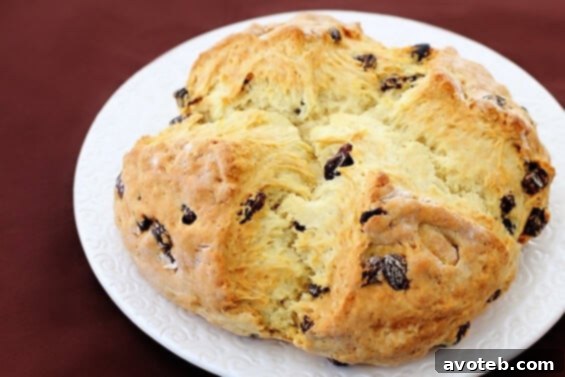
True to Christin’s word, the dough came together with remarkable ease. Mixing the ingredients was straightforward, and the gentle kneading required felt almost meditative. The anticipation grew as the simple ingredients transformed into a cohesive mass, ready for its journey to the oven. I shaped the dough into a classic round loaf and, with a sharp knife, scored the traditional “X” on top, a symbolic gesture often said to ward off evil spirits or, more practically, to help the bread bake evenly and ensure a tender interior. I admit, my “X” might not have been as deep or perfectly symmetrical as a seasoned baker’s, but the intention was there!
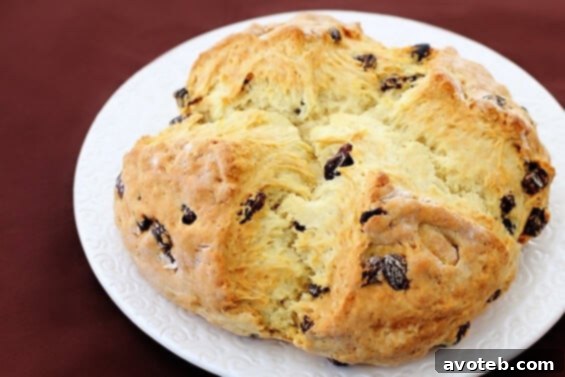
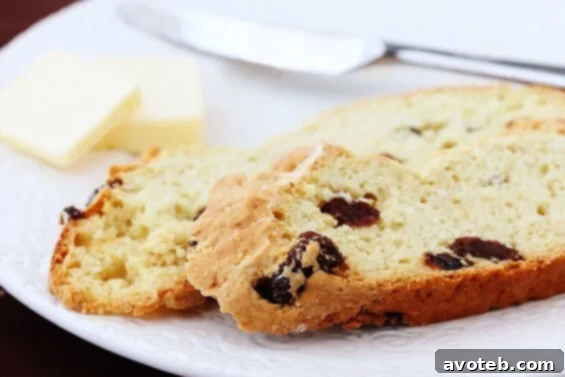
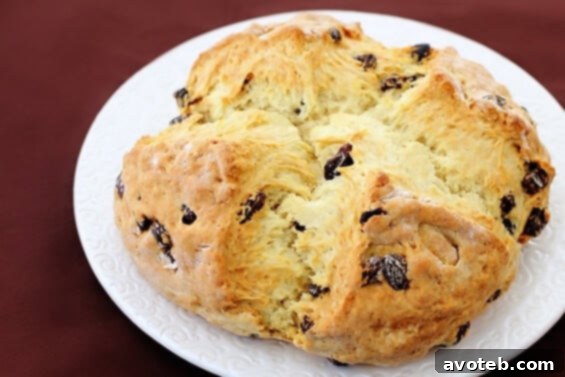
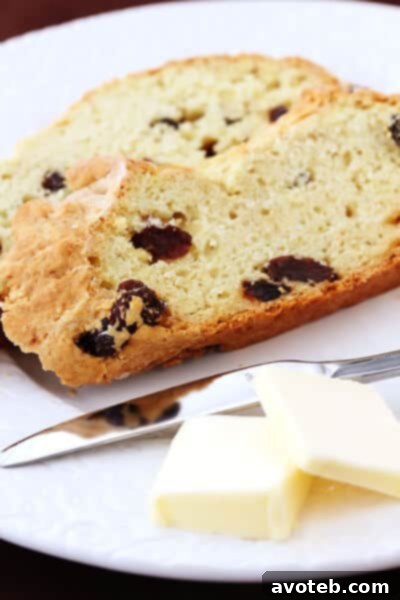
The bread baked beautifully, filling my kitchen with an inviting aroma that promised warmth and flavor. Watching it rise and achieve a glorious golden-brown crust was incredibly satisfying. When it finally emerged from the oven, cooling slightly on the rack, I couldn’t wait to slice into it. The result exceeded my expectations! The bread was wonderfully moist, with a subtle sweetness that perfectly balanced the wholesome flavor. The addition of plump raisins provided delightful bursts of sweetness and texture in every bite. As Christin wisely advised, it was “the best when served warm with good butter.” A generous slather of creamy butter melted into the warm, tender crumb, creating an utterly sublime experience. It was definitely a triumph and a testament to the simplicity and deliciousness of a truly authentic recipe.
Authentic & Easy Irish Soda Bread Recipe
Irish Soda Bread
Rating: 4.8 out of 5 stars from 6 reviews
- Prep Time: 5 minutes
- Cook Time: 35 minutes
- Total Time: 40 minutes
- Yield: 4-6 servings
Why You’ll Love This Recipe
This fresh Irish Soda Bread recipe is an absolute delight! It’s celebrated for its incredible freshness, delicious flavor, and surprisingly easy preparation. Perfect for beginners and seasoned bakers alike, this loaf promises a wonderfully moist interior and a beautifully golden crust, making it an irresistible treat for any occasion, especially for St. Patrick’s Day festivities.
Gather Your Simple Ingredients
- 2 cups all-purpose flour (ensures a tender crumb)
- 2 Tbsp. sugar (adds a hint of sweetness to balance the flavors)
- 1 tsp. baking powder (helps with the lift and texture)
- 1 tsp. baking soda (reacts with buttermilk for the classic soda bread rise)
- 1/2 tsp. salt (enhances all the other flavors)
- 3 Tbsp. cold butter, cut into small pieces (creates a rich, tender texture)
- 1/2 cup raisins or dried currants (for sweet bursts of flavor; feel free to adjust quantity)
- 3/4 cup buttermilk (crucial for activating the baking soda and contributing to moisture and tang)
Step-by-Step Guide to Baking Success
- Prepare Your Oven and Pan: Preheat your oven to a moderate 375 degrees Fahrenheit (190°C). Lightly grease a small baking sheet or line it with parchment paper to prevent sticking. This preparation ensures a smooth baking process and easy removal of your finished loaf.
- Combine Dry Ingredients and Butter: In a large mixing bowl, thoroughly whisk together the all-purpose flour, sugar, baking powder, baking soda, and salt. These dry ingredients form the foundation of your bread. Next, add the cold, diced butter. Using a fork, a pastry blender, or your fingertips, cut the butter into the flour mixture until it resembles coarse crumbs. This step is vital for creating a tender texture in the final bread.
- Incorporate Wet Ingredients and Form Dough: Stir in the raisins or dried currants, ensuring they are evenly distributed throughout the crumbly mixture. Then, pour in the buttermilk gradually, mixing gently until the dough is just moistened and begins to come together. Be careful not to overmix at this stage, as it can lead to a tough bread. The dough will be soft and slightly shaggy.
- Knead and Shape the Loaf: Turn the dough out onto a lightly floured surface. Knead it gently for only a minute or two until it forms a smooth, cohesive ball. Over-kneading will develop the gluten too much, resulting in a dense, chewy bread, which is not ideal for soda bread. Shape the dough into a round, 6-inch (15 cm) loaf and place it on your prepared baking sheet. With a sharp knife, cut a 1/4-inch (about 0.6 cm) deep cross on the top of the dough. This traditional score not only looks beautiful but also helps the bread rise and bake evenly.
- Bake to Golden Perfection: Transfer the baking sheet to the preheated oven. Bake for approximately 30 to 40 minutes, or until the bread is golden brown on top and cooked through. To test for doneness, you can insert a wooden skewer into the center (it should come out clean) or gently tap the bottom of the loaf – it should sound hollow.
Pro Tips for the Perfect Irish Soda Bread
Time-Saving Tip: For a quicker start, you can begin making the dough in a food processor. Simply pulse the dry ingredients with the cold butter until coarse crumbs form. However, make sure to stir in the raisins (or currants) and the buttermilk by hand to avoid overmixing the dough and developing too much gluten, which can make the bread tough.
Flavor Variations: Feel free to customize your soda bread! For an aromatic twist, add 1 tablespoon of orange zest to the dry ingredients. If you enjoy a savory note, a teaspoon of caraway seeds can be a wonderful addition, giving the bread a distinct, earthy flavor often found in traditional Irish recipes. You can also experiment with other dried fruits like cranberries or chopped dried apricots for different flavor profiles.
This cherished recipe comes from my friend, Christin, a true connoisseur of traditional Irish baking.
Why Irish Soda Bread Deserves a Spot in Your Kitchen
Irish Soda Bread is more than just a recipe; it’s a testament to simple, wholesome ingredients creating something truly extraordinary. Its beauty lies in its unfussy nature and its ability to deliver a warm, comforting loaf with minimal effort and no yeast required. This makes it an ideal baking project for anyone, regardless of their experience level. The blend of flour, baking soda, buttermilk, and a touch of sweetness comes together to produce a bread that is both hearty and tender, making it incredibly versatile.
Historically, soda bread became a staple in Irish households because of the ready availability of soft wheat (which doesn’t rise well with yeast) and buttermilk, a byproduct of butter making. The chemical reaction between the acidic buttermilk and the alkaline baking soda creates carbon dioxide, providing the necessary lift without the need for yeast or extensive proofing. This ingenious method made bread-making accessible and efficient, particularly important in times when quick, nutritious food was essential.
Perfect Pairings and Serving Suggestions
While Irish Soda Bread is undeniably delightful on its own, especially when warm, its versatility truly shines when paired with other dishes. Naturally, a generous spread of good quality Irish butter is the quintessential accompaniment, allowing its creamy richness to melt into the bread’s tender crumb. Beyond butter, consider slathering it with your favorite fruit jam or marmalade for a sweet breakfast or tea-time treat. For a more savory experience, Irish cheddar cheese makes an excellent partner, its sharp notes complementing the bread’s mild sweetness.
Beyond simple spreads, Irish Soda Bread is a fantastic companion to heartier meals. Its sturdy yet soft texture makes it perfect for sopping up the delicious juices of a hearty beef stew, a comforting vegetable soup, or a flavorful shepherd’s pie. It can even be toasted and served alongside scrambled eggs for a satisfying breakfast. The beauty of this bread is that it adapts effortlessly to various culinary contexts, enhancing both sweet and savory dishes.
So, whether you’re celebrating St. Patrick’s Day, looking for a simple yet satisfying baking project, or simply craving a taste of traditional Irish comfort, this Irish Soda Bread recipe is your gateway to a truly delicious experience. It’s incredibly rewarding to pull a fresh, golden loaf from your own oven, knowing you’ve created a piece of culinary history with such ease. Gather your ingredients, enjoy the process, and get ready to savor every heartwarming slice. Happy baking!