
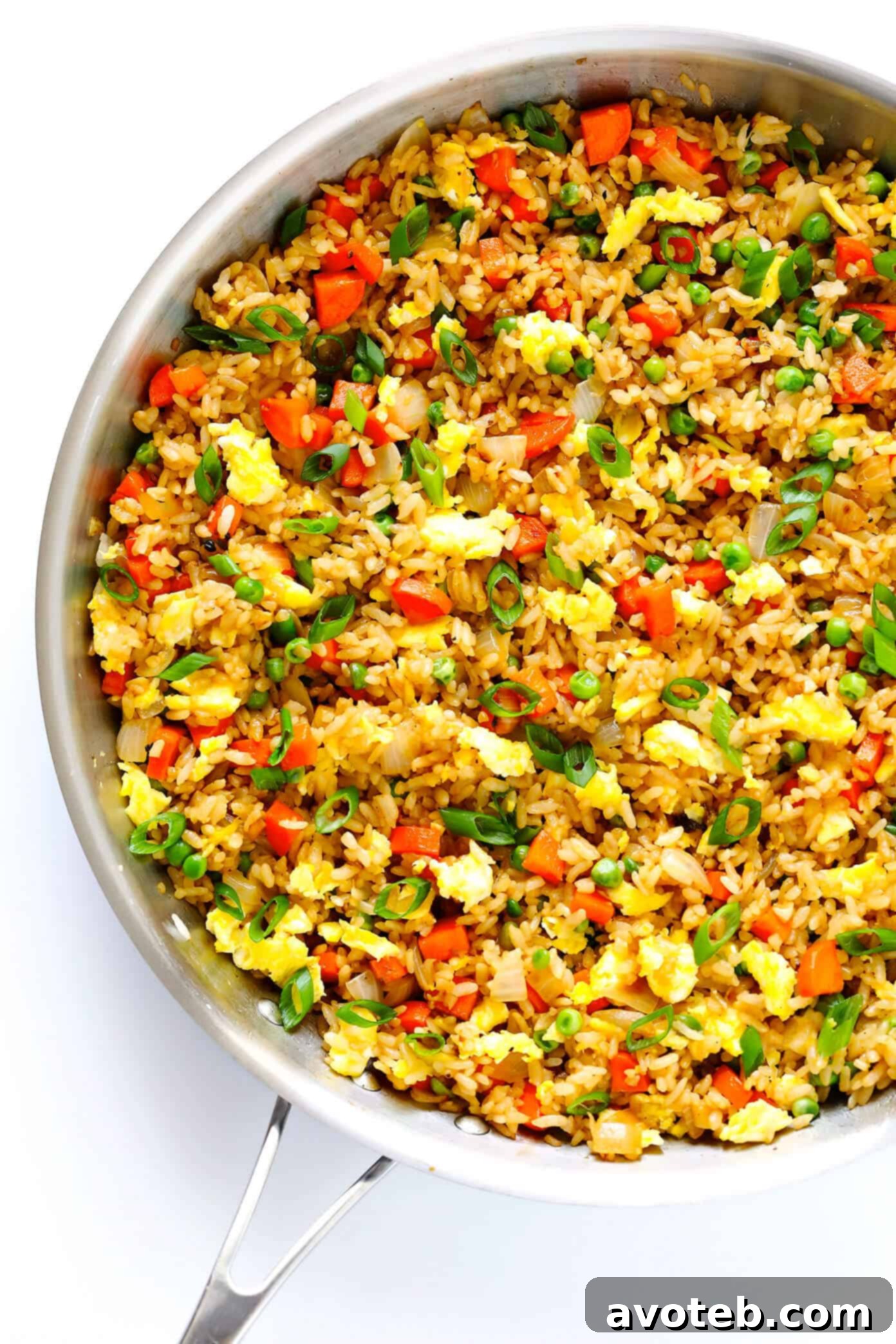
This is not just another fried rice recipe; it’s a culinary journey back to comforting flavors, expertly crafted to be quick, easy, and incredibly delicious. Prepare to discover your new favorite homemade fried rice.
Greetings, fellow food enthusiasts! Today, we’re diving deep into the heart of my kitchen archives to unearth a cherished recipe that has brought immense joy to countless meals: my signature homemade fried rice. It’s more than just a dish; it’s a taste of nostalgia, a testament to culinary persistence, and a celebration of simple, satisfying flavors.
My fascination with fried rice began in childhood. Every Saturday, without fail, my family upheld a beloved tradition: lunch at our local Chinese restaurant. For me, the order was immutable – a steaming bowl of egg drop soup followed by a generous plate of fried rice. That restaurant set an impossibly high standard for what fried rice could be. Their version was always perfect: each grain of rice wonderfully al dente with subtle crispy edges, infused with rich, savory depths, and generously loaded with vibrant vegetables, fluffy scrambled eggs, and tender protein. It was, quite simply, perfection.
When, after more than a decade of serving our community, that beloved restaurant regrettably closed its doors, a void was left in my Saturday routine – and my culinary heart. This sparked a years-long quest, an endless parade of fried rice batches, each meticulously tweaked and tasted in an attempt to replicate that elusive perfection. While no recreation can ever truly replace the original in my memory, the recipe I’ve finally perfected comes remarkably close. It’s become my ultimate go-to, a dish praised by thousands of our readers for its surprising speed, effortless customization, and profoundly flavorful, comforting essence. If you’ve been searching for a fried rice recipe that truly stands out, I am confident this will be your new culinary obsession.
Let’s embark on this delicious journey to create the ultimate homemade fried rice!
Unlock the Secret to Perfect Fried Rice: A 1-Minute Visual Guide
Essential Tips for Crafting the Best Fried Rice at Home
Achieving restaurant-quality fried rice at home is entirely within your reach. Over years of experimentation and countless batches, I’ve distilled the process down to a few critical techniques and ingredient choices. Master these, and you’ll be consistently turning out incredibly flavorful, perfectly textured fried rice every single time.
1) The Golden Rule: Always Use Cold Rice: This is arguably the most crucial tip for exceptional fried rice. Planning ahead to use thoroughly chilled, cooked rice is non-negotiable. Warm or even lukewarm rice, when introduced to a hot pan, will inevitably steam, leading to soggy, sticky clumps – the antithesis of good fried rice. The starch in cold rice has undergone retrogradation, making the grains firmer and less prone to sticking. Leftover refrigerated rice is ideal, but if you’re in a pinch (and who isn’t when a fried rice craving strikes?), simply cook a fresh batch. Then, spread it evenly on a baking sheet or a large, flat pan, cover it loosely with plastic wrap, and chill it in the refrigerator for at least 30 minutes, or in the freezer for 10-15 minutes, until it’s completely cold and firm, but not frozen solid. This step alone will elevate your fried rice game significantly.
2) Embrace the Butter for Unparalleled Flavor: While many recipes call for various oils, I’ve found that butter is the secret weapon for truly outstanding fried rice. There’s a distinct reason why Japanese steakhouses famously use generous slabs of butter in their fried rice preparations – it imparts an incredible richness, a subtle nuttiness, and facilitates beautiful browning and crisping of the rice grains. Unlike the lavish amounts used in some restaurant settings, this recipe calls for a modest 3 tablespoons for a substantial batch, yielding maximum flavor without excess greasiness. The difference in taste and texture is profound; once you try it with butter, you won’t go back.
3) Don’t Skimp on the Veggies: My biggest pet peeve with lackluster takeout fried rice is the scarcity of vegetables. Beyond adding delightful pops of color, a good assortment of fresh vegetables contributes significantly to the dish’s overall flavor, texture, and nutritional value. My childhood favorite Chinese restaurant always included both white and green onions, which are integral to this recipe. However, feel free to customize and enhance your fried rice with other stir-fry friendly vegetables like bell peppers, broccoli florets, mushrooms, or even corn. The more vibrant and varied your vegetable mix, the more appealing and wholesome your fried rice will be.
4) The Essential Flavor Boosters: Toasted Sesame Oil and Oyster Sauce: These two ingredients are non-negotiable for achieving that authentic, complex fried rice flavor. If you have dietary restrictions regarding seafood, you can omit the oyster sauce, and your fried rice will still be delicious. However, this ingredient truly transforms the dish, adding an umami depth that’s hard to replicate. Don’t be deterred by the name – quality oyster sauce offers a savory, slightly sweet flavor without any overt “oyster” taste. Toasted sesame oil, on the other hand, is an absolute must-have. Its deeply aromatic, nutty fragrance is one of my favorite kitchen scents, and it adds an unmistakable finishing note to fried rice. Remember, sesame oil is a finishing oil, meaning it’s added *after* the pan is removed from the heat to preserve its delicate flavor and aroma.
5) Cook with High Heat: When stir-frying, high heat is your ally. This intense heat is crucial for achieving the desired “wok hei” – the smoky, charred flavor characteristic of authentic stir-fries. It ensures that the rice and vegetables fry and brown effectively, preventing them from steaming and becoming watery or mushy. A super-hot pan allows for quick cooking, creating those lovely crispy bits of rice and tender-crisp vegetables.
6) Embrace the Browning for Texture: For those who appreciate fried rice with a delightful textural contrast – slightly crispy edges and browned rice grains – resist the urge to constantly stir. Allowing the rice to rest undisturbed for brief periods (about 15-20 seconds) between stirs enables it to develop a beautiful golden crust on the bottom. This technique, combined with the use of a good quality non-stick skillet or a well-seasoned cast-iron pan, will ensure your rice doesn’t stick while achieving that desirable crispiness.
7) Adjust Soy Sauce to Your Liking: Salt sensitivity varies greatly among individuals, and different brands of soy sauce can have dramatically different sodium levels. Therefore, this recipe starts with a conservative amount of soy sauce. Please, do not hesitate to add more at the very end, to taste! I almost always add an extra drizzle to my own portion, finding that it perfects the savory balance. Always taste and adjust before serving.
Homemade Fried Rice Ingredients: Your Culinary Palette
Crafting exceptional fried rice begins with selecting the right ingredients. Each component plays a vital role in achieving that perfect balance of flavor, texture, and aroma. Here’s a detailed look at what you’ll need (including helpful affiliate links for convenience):
- Cooked, Chilled Rice: The undisputed star of the show. While any variety of white or brown rice can work, short-grain white rice is often preferred for its texture. The absolute key here is that the rice must be thoroughly cooked and then completely chilled – ideally overnight in a sealed container in the refrigerator. Freshly-cooked, warm rice will not yield the desired result, leading to a sticky, clumpy mess. My trusty rice cooker makes perfect rice every time.
- Eggs: Beyond adding a rich flavor, scrambled eggs contribute wonderful texture and a boost of protein, making the dish more satisfying and wholesome.
- Carrots, Onions, Green Onions, and Peas: This classic medley forms the flavorful and colorful vegetable base of our fried rice. Carrots add sweetness and crunch, white onions provide a pungent depth, green onions offer a fresh, sharp bite (both cooked and as a garnish), and peas bring a subtle sweetness and vibrant color. Feel free to incorporate other stir-fry friendly vegetables as well.
- Garlic: Freshly minced garlic is indispensable for building a robust aromatic foundation. Its pungent flavor beautifully complements the other savory ingredients.
- Soy Sauce: I developed this recipe using low-sodium soy sauce for better control over the saltiness. If you opt for traditional soy sauce, you may need to adjust the quantity downward to prevent the dish from becoming overly salty.
- Oyster Sauce: A secret weapon for enhancing umami and complexity in fried rice. Despite its name, good quality oyster sauce offers a savory, slightly sweet, and rich flavor profile without tasting overtly like oysters. It’s readily available in the Asian section of most grocery stores or can be purchased conveniently on Amazon.
- Toasted Sesame Oil: This aromatic oil is a critical finishing touch. It contributes a distinctive nutty flavor and fragrance that defines classic fried rice. Ensure you use *toasted* sesame oil, as its untoasted counterpart has a different flavor profile. Find it in the Asian aisle or order from Amazon. Remember to add it off the heat to preserve its delicate notes.
- Butter: My preferred fat for stir-frying rice. It not only adds an incredible depth of flavor but also promotes beautiful browning and crisping of the rice grains, creating an irresistible texture.
Mastering Homemade Fried Rice: A Step-by-Step Guide
Creating this delicious homemade fried rice is a straightforward process, built on efficient cooking techniques and the right sequence of steps. Follow these instructions, and you’ll be enjoying a restaurant-quality meal in no time:
- Scramble the Eggs to Perfection: Begin by heating a large sauté pan (preferably non-stick or well-seasoned cast iron) over medium-high heat. Add a small pat of butter (about 1/2 tablespoon) and allow it to melt. Pour in your whisked eggs and quickly scramble them, breaking them into small, fluffy pieces as they cook. Once just set but still tender, transfer the cooked eggs to a separate plate and set aside. This prevents them from overcooking and becoming rubbery.
- Sauté the Vegetables and Aromatic Garlic: Return the sauté pan to the heat and add an additional 1 tablespoon of butter, letting it melt until fragrant. Add the diced white onions, carrots, frozen peas, and minced garlic to the pan. Season generously with a pinch of salt and black pepper. Sauté these vegetables for approximately 5 minutes, stirring occasionally, until the onions are translucent and the carrots are tender-crisp. You want them cooked through but still retaining a slight bite.
- Dynamic Stir-Frying of the Rice: Now, increase the burner heat to high. Push the sautéed vegetables to one side of the pan, creating an empty space. Melt the remaining 1 1/2 tablespoons of butter in this vacant half of the pan. Immediately add the chilled cooked rice, along with the soy sauce and oyster sauce (if using), into the melted butter. Stir everything together vigorously to combine the rice, vegetables, and sauces. Continue to sauté the rice on high heat, stirring every 15-20 seconds or so, for about 3 minutes. This critical step allows the rice to “fry,” developing those coveted slightly browned and crispy bits on the bottom. If you enjoy a crispier texture, let the rice rest for slightly longer between stirs to encourage browning.
- The Finishing Touch: Incorporate Remaining Ingredients: Once the rice has achieved the desired texture and browning, remove the pan from the heat. This is crucial for preserving the delicate flavor of the toasted sesame oil. Stir in the sliced green onions and the reserved scrambled eggs, ensuring they are evenly distributed throughout the fried rice.
- Taste, Season, and Perfect: Give your fried rice a taste test. Adjust the seasoning as needed with additional salt, black pepper, a touch more soy sauce for enhanced savoriness, or an extra drizzle of toasted sesame oil for more aroma. This final adjustment ensures the flavors are perfectly balanced to your preference.
- Serve and Savor: Dish up your freshly made homemade fried rice immediately, while it’s wonderfully warm and aromatic. Any leftovers can be stored in a sealed container in the refrigerator for up to 3 days, making it excellent for meal prep!
Endless Possibilities: Easy Fried Rice Variations
One of the most delightful aspects of homemade fried rice is its incredible versatility. It’s a fantastic canvas for using up leftover ingredients and letting your culinary creativity shine. The variations are virtually limitless, allowing you to tailor the dish to your tastes or whatever you have on hand. Here are some classic and popular add-ins to inspire you:
- Chicken Fried Rice: Easily add chicken by sautéing diced or shredded chicken in a separate pan while preparing your fried rice. For a convenient shortcut, consider using shredded rotisserie chicken or repurposing leftovers from my favorite baked chicken breasts recipe. Add the cooked chicken during the final mixing step.
- Pork Fried Rice: For a rich, savory option, sauté a boneless pork chop (diced) in a separate pan. Once cooked, dice it and stir into your fried rice along with the eggs.
- Beef Fried Rice: Whether you prefer tender steak or hearty ground beef, both make excellent additions. Brown ground beef or sauté thin strips of steak in a separate pan, then crumble or dice and mix into the rice.
- Shrimp Fried Rice: Quick-cooking and delicious, shrimp adds a lovely seafood element. Sauté about half a pound of peeled, raw shrimp in a separate pan until pink and cooked through, then fold them into the fried rice at the end.
- Vegetable Fried Rice: If you’re aiming for a completely plant-based meal or simply want to boost your vegetable intake, any stir-fry friendly vegetables will work beautifully. Consider adding broccoli florets, bell peppers, mushrooms, snap peas, corn, or even bok choy. Simply sauté them along with the initial mix of carrots, onions, peas, and garlic until tender-crisp.
- Kimchi Fried Rice: For a Korean-inspired twist, add chopped fresh kimchi. Its tangy, spicy, and fermented flavors provide an incredible kick and depth, transforming the dish into a vibrant and exciting meal.
- Pineapple Fried Rice: Embrace a sweeter, tropical profile with fresh pineapple. Chop fresh pineapple chunks and stir them into the fried rice for a burst of juicy sweetness, a traditional element in some Chinese and Thai variations.
Furthermore, if you’re looking to modify the base of your fried rice, consider these delicious and often healthier alternatives to traditional white rice:
- Fried Brown Rice: For a wholesome, nutty alternative, substitute cooked brown rice for white rice. Ensure it’s thoroughly chilled, just like white rice, for optimal frying.
- Quinoa Fried Rice: For a protein-packed, gluten-free option, quinoa makes an excellent base. Its texture and ability to absorb flavors are surprisingly similar to rice in this application. You can find my favorite recipe for Quinoa Fried Rice here.
What to Serve with Your Perfect Fried Rice: Complete Your Meal
While fried rice is incredibly satisfying on its own, it also pairs beautifully with a variety of other Asian-inspired dishes to create a more elaborate and well-rounded meal. Looking for some inspiration? Here are some of my favorite recipes to serve alongside your homemade fried rice:
- Egg Drop Soup or Hot and Sour Soup for a comforting start.
- 12-Minute Chicken & Broccoli for a quick and healthy protein.
- 20-Minute Moo Shu Pork (or Chicken) for a classic Chinese main.
- Beef & Broccoli, another takeout favorite made at home.
- Thai Basil Chicken for a fragrant and spicy option.
- Sesame Noodles with Broccoli and Almonds as a delicious side dish.
- Black Pepper Chicken for a bold and flavorful pairing.
Print Recipe
Fried Rice: The Ultimate Homemade Recipe
- Author: Ali
Prep Time: 5 minutes
Cook Time: 10 minutes
Total Time: 15 minutes
Yield: 4 – 6 servings 1x
Description
Learn how to make the best fried rice with this classic, easy-to-follow recipe. Ready in just 15 minutes, it’s effortlessly customizable with your favorite proteins and vegetables, delivering incredibly flavorful results that rival any Chinese takeout!
Ingredients
Scale
- 3 tablespoons butter, divided
- 2 large eggs, whisked
- 2 medium carrots, peeled and diced
- 1 small white onion, diced
- 1/2 cup frozen peas
- 3 cloves garlic, minced
- salt and black pepper to taste
- 4 cups cooked and chilled rice (short-grain white rice recommended)
- 3 green onions, thinly sliced
- 3-4 tablespoons low-sodium soy sauce, or more to taste
- 2 teaspoons oyster sauce (optional, but highly recommended for flavor depth)
- 1/2 teaspoon toasted sesame oil
Instructions
- Heat 1/2 tablespoon of butter in a large sauté pan over medium-high heat until melted. Add the whisked egg and cook until scrambled, stirring occasionally. Once cooked, remove the egg and transfer it to a separate plate.
- Add an additional 1 tablespoon of butter to the same pan and heat until melted. Add the diced carrots, white onion, frozen peas, and minced garlic. Season with a generous pinch of salt and pepper. Sauté for approximately 5 minutes, or until the onion and carrots are softened. Increase the heat to high, add the remaining 1 1/2 tablespoons of butter, and stir until melted. Immediately add the chilled rice, half of the green onions, soy sauce, and oyster sauce (if using). Stir well to combine all ingredients. Continue sautéing for an additional 3 minutes to fry the rice, stirring occasionally. For a crispier texture, allow the rice to rest briefly between stirs to brown on the bottom. Then, fold in the cooked scrambled eggs. Remove the pan from the heat and stir in the toasted sesame oil until thoroughly combined. Taste and adjust seasoning with extra soy sauce, salt, or pepper as needed.
- Serve your homemade fried rice immediately, while hot. Leftovers can be refrigerated in a sealed container for up to 3 days.
Equipment
Nonstick Pans
Buy Now →
Oyster Sauce
Buy Now →
Rice Cooker
Buy Now →
Notes
*Sauté pan selection: For the best results, a high-quality nonstick pan or a well-seasoned cast-iron skillet is highly recommended for this recipe. These types of pans help prevent sticking and promote even browning. However, any large sauté pan you have will work; simply be a bit more diligent with stirring to ensure the rice and eggs don’t stick to the bottom.