

My favorite shakshuka recipe is quick and easy to make with a richly-seasoned tomato sauce and a sprinkling of tangy feta cheese.

The Ultimate Easy Shakshuka Recipe: A Flavorful One-Pan Meal for Any Time of Day
Few dishes offer the comforting warmth and vibrant flavors quite like a perfectly crafted shakshuka. Imagine a sizzling pan filled with a rich, bubbling tomato sauce, seasoned with aromatic spices, cradling a few perfectly poached eggs. This traditional North African and Middle Eastern dish is not just a meal; it’s an experience, a delightful symphony of savory, tangy, and slightly spicy notes that will awaken your taste buds.
Shakshuka stands out as a true culinary gem for its simplicity and incredible depth of flavor. It’s the quintessential pantry-friendly, single-skillet, 20-minute meal that consistently tastes like so much more than the sum of its humble parts. All you really need are a few kitchen staples – onion, garlic, canned tomatoes, and a blend of warm, smoky spices – to create a heavenly sauce. This robust base eagerly awaits the gentle nestling of eggs, transforming into a complete, satisfying dish that is absolutely perfect for scooping up with a hunk of good, crusty bread.
While my personal preference leans towards topping my shakshuka with a generous handful of tangy crumbled feta and a sprinkle of fresh cilantro, the beauty of this dish lies in its endless adaptability. There are countless ways to customize this recipe to perfectly suit your palate and whatever ingredients you have on hand. No matter how you choose to prepare it, shakshuka remains one of those timeless, foolproof meals that you’ll undoubtedly find yourself coming back to again and again. It’s versatile enough for breakfast, brunch, lunch, or a quick weeknight dinner. Let’s dive in and simmer up a quick, delicious batch that promises to become a new favorite in your culinary repertoire!
What is Shakshuka? A Journey Through Flavor
Shakshuka, pronounced “shak-SHOO-ka,” is a beloved dish with roots in North Africa and the Middle East, though its exact origin is often debated. The name itself is Arabic for “a mixture,” aptly describing the harmonious blend of ingredients that come together in this iconic meal. At its core, shakshuka consists of eggs poached directly in a simmering sauce of tomatoes, chili peppers, and onions, often spiced with cumin, paprika, and other warming seasonings.
Historically, shakshuka served as a hearty and economical meal, making use of readily available ingredients. It has long been a staple breakfast or brunch item, particularly popular in Israel, Tunisia, Egypt, and other countries across the region. Its vibrant colors, comforting aromas, and satisfying flavors have earned it a cherished spot on tables worldwide, transcending cultural boundaries and becoming a favorite among food enthusiasts seeking wholesome, flavorful, and easy-to-prepare dishes. Whether enjoyed as a leisurely weekend brunch or a quick, nutritious weeknight dinner, shakshuka offers a taste of tradition with a modern, adaptable twist.
Essential Ingredients for the Perfect Shakshuka
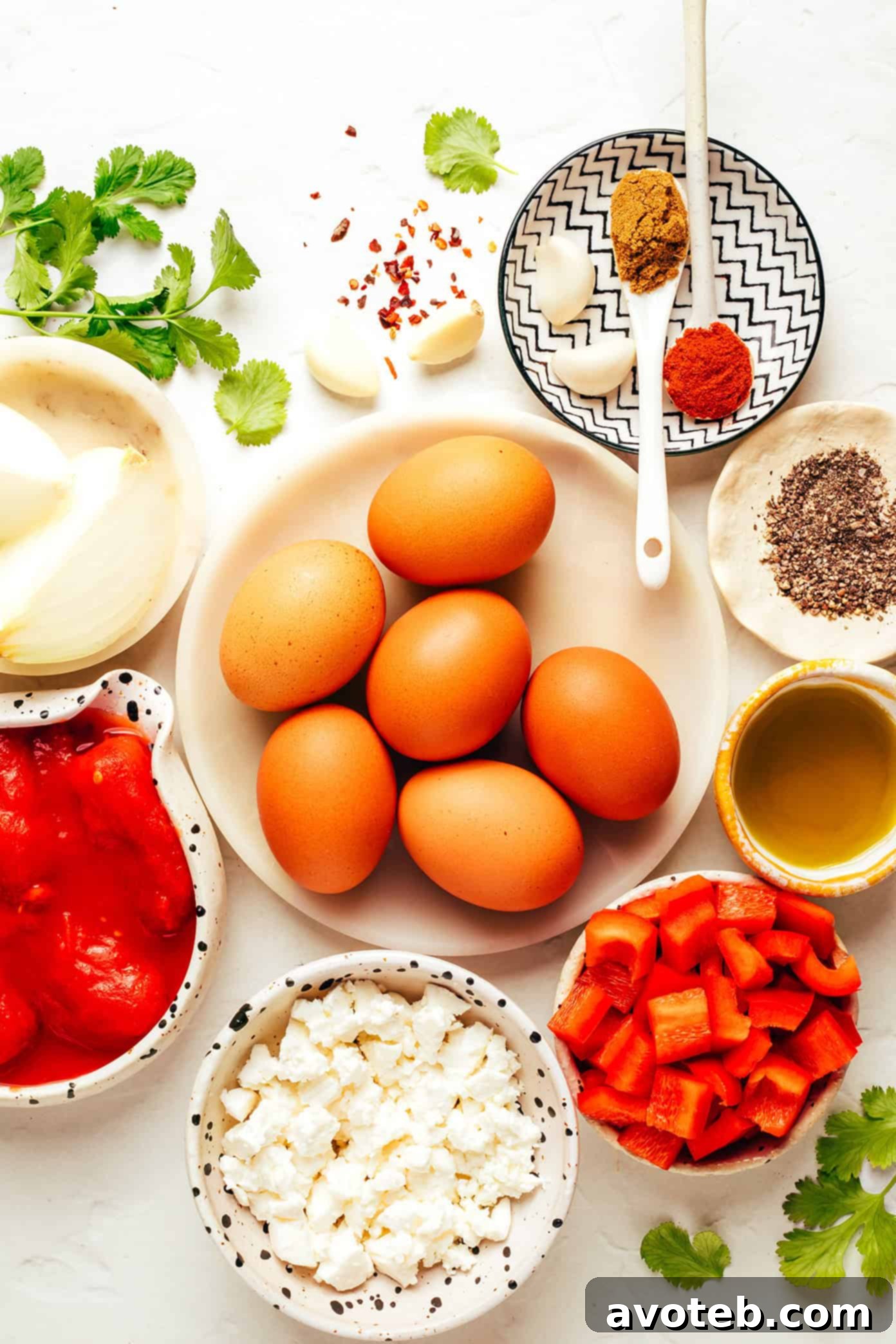
Crafting the perfect shakshuka starts with selecting quality ingredients that build layers of flavor. Here are a few quick notes and tips about the key components you will need to make this vibrant recipe:
The Heart of the Dish: Eggs
- Eggs: Eggs are unequivocally the heart of shakshuka. They are gently nestled into the simmering tomato sauce, where they poach beautifully, adding a rich, hearty dose of protein and a luxurious texture. Traditionally, the eggs are cooked until their whites are fully set, yet the yolks remain wonderfully runny, creating a creamy contrast with the sauce. However, you are absolutely welcome to cook them longer if you prefer a firmer, jammy yolk or even a fully cooked one. Fresh eggs tend to hold their shape better and offer a superior flavor.
The Robust Base: Tomatoes
- Tomatoes: The foundation of our vibrant and tangy shakshuka sauce is a large (28-ounce) can of whole tomatoes, packed with their juices. While diced or crushed tomatoes can work perfectly fine for convenience, I personally prefer using whole canned tomatoes. This allows me to roughly break them apart with a wooden spoon as they cook, providing a more rustic texture and ensuring a fresh, rich tomato flavor that truly shines through. Good quality canned tomatoes are crucial for a deep, satisfying sauce, especially when fresh tomatoes are not in season.
Aromatic Foundation: Onions, Bell Peppers, and Garlic
- Veggies: We’ll begin by sautéing a classic mixture of diced white or yellow onion and red bell pepper until they are soft, slightly caramelized, and fragrant. This step is vital for building a sweet and savory base for our sauce, adding essential flavor, texture, and nutritional value. The caramelization process brings out the natural sugars in the vegetables, enhancing the overall depth of the dish.
- Garlic: I am a firm believer in the power of garlic, and I love incorporating a generous amount into this tomato sauce for its pungent, aromatic kick. However, feel free to adjust the quantity to your personal taste – more or less, depending on how much you adore its flavor.
The Soul of Spice: Cumin, Paprika, and Heat
- Dried Seasonings: The unique character of shakshuka largely comes from its earthy and warm spice profile. We’ll use a harmonious blend of ground cumin and smoked paprika. Cumin lends an aromatic, earthy depth, while smoked paprika adds a beautiful reddish hue and a distinctive smoky sweetness. To introduce a gentle kick, a pinch of crushed red pepper flakes is included; you can adjust this amount to your desired level of heat. Don’t forget to taste the sauce as it simmers and season it liberally with fine sea salt and freshly-ground black pepper to bring out all the magnificent flavors.
Finishing Touches: Feta and Fresh Herbs
- Feta: Once the eggs are set, crumbled feta cheese is sprinkled generously over the shakshuka. Its delightfully creamy, tangy, and salty notes provide a perfect counterpoint to the richness and acidity of the tomato sauce, adding another layer of flavor and texture to each bite.
- Cilantro: Finally, a generous sprinkling of freshly chopped cilantro (or parsley, if you prefer, or even a mix of both) is added just before serving. This not only provides a beautiful pop of vibrant color but also introduces a bright, fresh herbal flavor that beautifully balances the warm, savory sauce, lifting the entire dish.
Recipe: Easy Feta Shakshuka
Ingredients
- 2 tablespoons olive oil
- 1 medium white or yellow onion, diced
- 1 large red bell pepper, diced
- 4 cloves garlic, minced
- 1 1/2 teaspoons each: ground cumin and smoked paprika
- 1/4 teaspoon crushed red pepper flakes (or more, to taste)
- 1 (28-ounce) can whole tomatoes with their juices
- Fine sea salt and freshly-ground black pepper, to taste
- 6 large eggs
- 3 ounces crumbled feta cheese, divided
- Chopped fresh cilantro or parsley, for garnish
Instructions
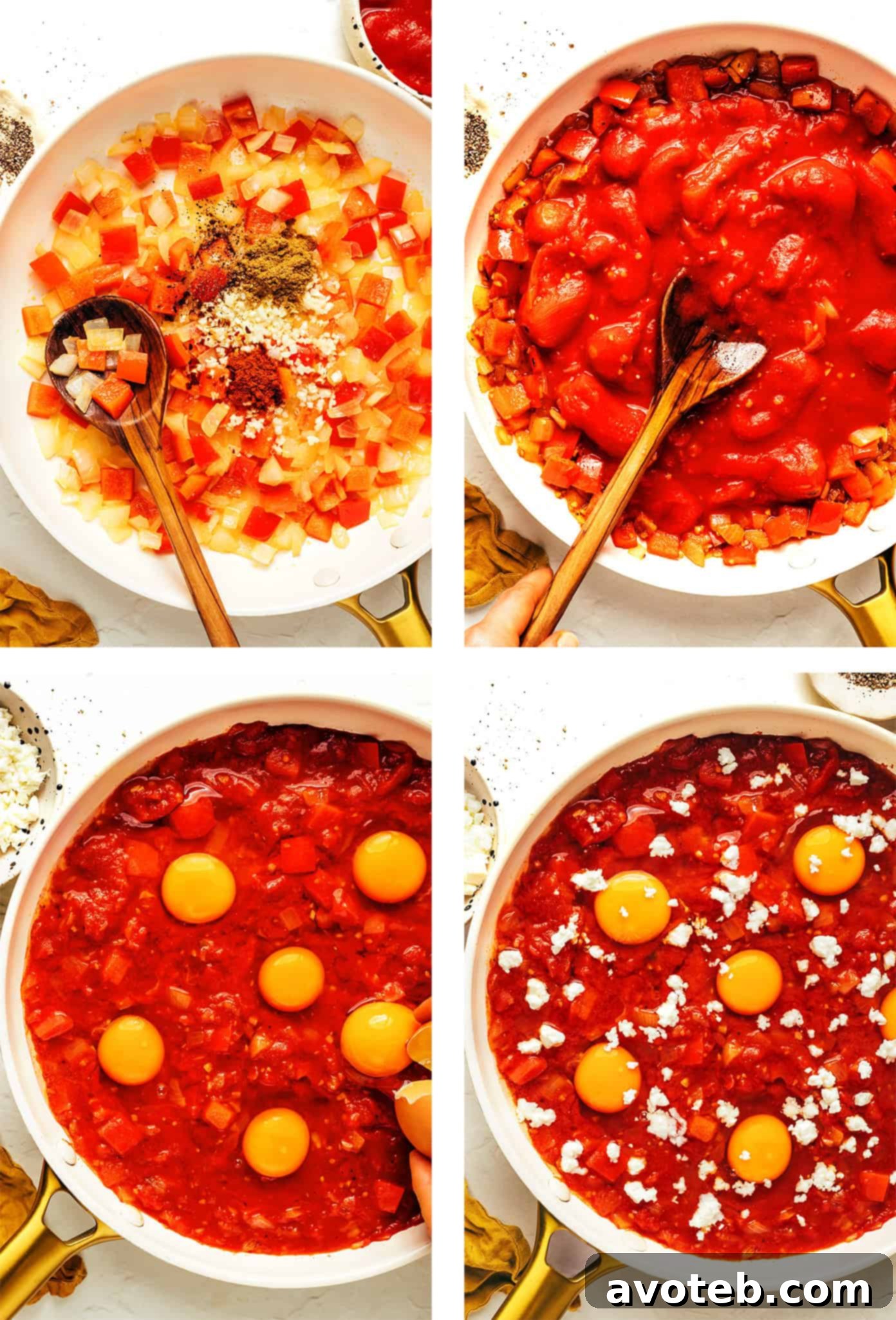
- Sauté the Veggies: Heat the olive oil in a large, wide sauté pan or cast-iron skillet over medium-high heat. Add the diced onion and red bell pepper and sauté for 5-7 minutes, stirring occasionally, until they are softened and beginning to caramelize.
- Add Aromatics and Spices: Reduce the heat to medium. Add the minced garlic, ground cumin, smoked paprika, and crushed red pepper flakes to the pan. Sauté for another 1-2 minutes, stirring frequently, until the spices are fragrant and the garlic is lightly golden. Be careful not to burn the garlic.
- Simmer the Sauce: Carefully add the canned whole tomatoes with their juices to the pan (be cautious, as the juices may sputter). Stir to combine, using a wooden spoon or spatula to gently break the whole tomatoes apart into smaller, rustic pieces as you stir. Bring the sauce to a simmer, then reduce the heat to medium-low to maintain a gentle simmer for 10-15 minutes, or until the sauce has slightly thickened and the flavors have melded. Taste the sauce and season generously with fine sea salt and freshly-ground black pepper as needed.
- Cook the Eggs: Using your spoon, create 6 small wells or indentations in the simmering tomato sauce. Gently crack one egg into each well. Sprinkle half of the crumbled feta cheese evenly over the entire mixture, including the eggs. Cover the pan with a lid (or a baking sheet if your pan doesn’t have one) and cook for 5-8 minutes. For runny yolks, cook for about 3-4 minutes. For jammy, slightly firmer yolks, cook for 5-6 minutes. For fully set yolks, cook for 7-8 minutes. Keep a close eye on the eggs, as cooking times can vary.
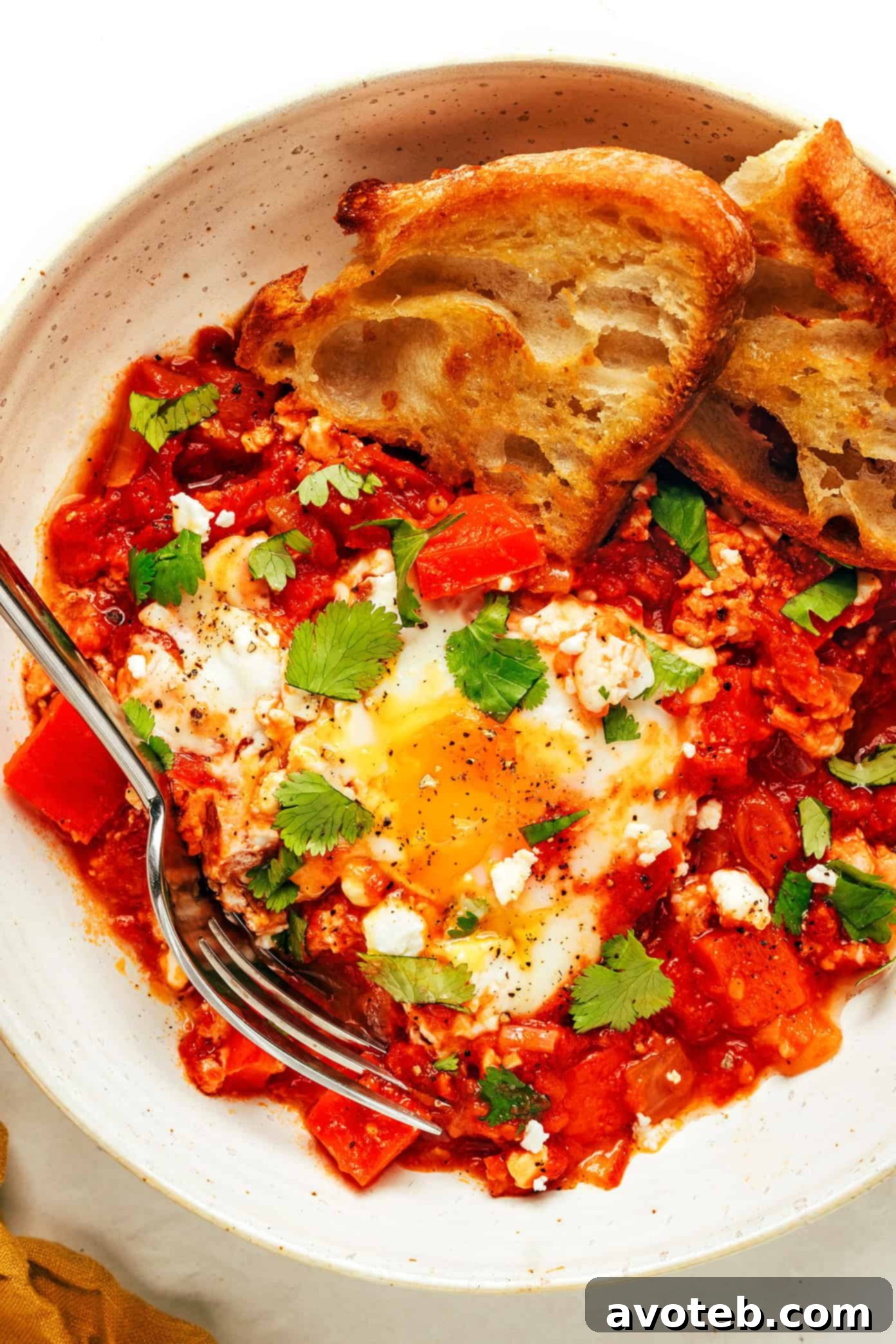
- Finish and Serve: Uncover the pan. Sprinkle the remaining crumbled feta cheese over the shakshuka, followed by a generous amount of chopped fresh cilantro or parsley. Serve immediately and warm, ideally with plenty of toasted crusty bread, pita bread, or warm tortillas for dipping. Enjoy your flavorful, homemade shakshuka!
Expert Tips for Shakshuka Success
While the detailed step-by-step instructions are provided above, here are a few extra tips and tricks to keep in mind as you cook to ensure your shakshuka turns out perfectly every time:
Choose Your Pan Wisely
- Use a wide, shallow pan with a lid: A larger sauté pan (ideally 10-12 inches) provides ample surface area, giving the eggs enough room to poach evenly without overcrowding. A lid is incredibly helpful as it traps steam, allowing the eggs to cook more quickly and consistently, resulting in perfectly set whites and tender yolks. If your sauté pan doesn’t come with a lid, you can easily improvise with a baking sheet, a larger pot lid, or even aluminum foil. If you cook the eggs uncovered, they’ll simply need a few more minutes to set. A cast-iron skillet is also an excellent choice, as it retains heat beautifully and can go from stovetop to table.
Achieving the Perfect Sauce Consistency
- Simmer until the sauce thickens: It’s crucial for the tomato sauce to simmer down and thicken slightly before you add the eggs. A thicker sauce provides a stable base, allowing you to create distinct wells that will hold the eggs securely in place as they poach. This also concentrates the flavors, making the sauce richer and more robust. Don’t rush this step; give it the full 10-15 minutes to reduce properly.
Mastering the Eggs
- Watch the eggs closely: The timing for perfectly poached eggs can vary significantly depending on several factors, including the size of your pan, the precise heat of your stove, and your personal preference for yolk consistency. Keep a very close eye on them during the last few minutes of cooking. For runny yolks, watch for the whites to just set. For jammy yolks, they will be slightly firmer to the touch. The key is to remove the pan from the heat as soon as they reach your desired doneness.
The Art of Garnishing
- Add toppings at the end: For the freshest flavor and visual appeal, always add fresh herbs like cilantro or parsley after the shakshuka has finished cooking and just before serving. This prevents them from wilting prematurely and ensures their vibrant color and bright flavor remain intact. Similarly, if you’re adding additional cheese like feta, a final sprinkle at the end provides an extra pop of flavor, a beautiful texture contrast, and a lovely melted finish from the residual heat.

Explore the Versatility: Shakshuka Variations
One of the most appealing aspects of shakshuka is its incredible versatility. While the classic recipe is undeniably delicious, it also serves as a fantastic canvas for culinary creativity. Here are a few more variations and ideas to customize this delightful dish to your liking:
Boost Your Veggies
- Add extra veggies or greens: Enhance the nutritional content and flavor by sautéing different diced vegetables into the tomato sauce alongside the onion and bell pepper. Consider adding zucchini, eggplant, mushrooms, cauliflower florets, or even diced sweet potato for a touch of sweetness. For an extra dose of greens, stir in a handful of baby spinach or chopped kale during the last few minutes of simmering, allowing them to wilt into the sauce.
Protein Power-Ups
- Add beans: For an extra boost of plant-based protein and fiber, stir a can of rinsed and drained white beans (such as cannellini or navy beans) or chickpeas into the tomato sauce as it simmers. This makes the dish even heartier and more filling, perfect for a substantial meal.
- Add meat: If you prefer a meatier dish, you can easily incorporate your choice of ground meat. Brown ground sausage, chorizo (for a spicy kick), ground chicken, beef, or even crumbled tofu at the beginning, before sautéing the onions and peppers. Drain any excess fat, then proceed with the recipe as directed. This adds a rich, savory depth to the shakshuka.
Spice It Up!
- Add more heat: For those who love a bit more spice, there are several ways to crank up the heat. Drizzle the finished shakshuka with a potent chili oil or chili crisp before serving. You could also sauté some finely diced fresh jalapeños, serrano peppers, or a pinch of cayenne pepper along with the other spices for an internal warmth. For a deeper, smoky heat, add a teaspoon of harissa paste to the sauce.
Cheese and Herb Alternatives
- Add different herbs: While cilantro is a popular choice, feel free to experiment with other fresh herbs. Sprinkle the finished shakshuka with fresh parsley, dill, fresh mint, or torn basil leaves for different aromatic profiles. Each herb brings its unique flavor to complement the rich tomato base.
- Add different cheese: If feta isn’t your preference, or you simply want to try something new, swap in other delicious cheeses. Crumbled goat cheese offers a milder tang and creaminess, cotija cheese provides a salty, crumbly texture, or pan-fried halloumi cubes can add a delightful chewy element. Even a sprinkle of grated Parmesan or mozzarella can work well.
Creative Serving Ideas
- Serve over grains: Transform your shakshuka into a wholesome grain bowl by skipping the traditional bread and instead serving it over a bed of fluffy cooked farro, quinoa, couscous, or even brown rice. This makes for a complete and balanced meal.
- With other sides: Beyond bread, consider serving shakshuka alongside a refreshing cucumber and tomato salad, a dollop of plain Greek yogurt for a creamy contrast, or even grilled halloumi cheese for an extra treat.
Why Shakshuka is More Than Just Breakfast: Health Benefits & Comfort
Shakshuka is celebrated not only for its incredible flavor and versatility but also for its impressive nutritional profile and comforting qualities. It truly is a dish that nourishes both body and soul.
From a health perspective, shakshuka is a powerhouse of essential nutrients. The eggs provide a complete source of high-quality protein, crucial for muscle repair, energy, and overall body function. The vibrant tomato base is packed with lycopene, a potent antioxidant, as well as Vitamin C, Vitamin K, and potassium. The onions and bell peppers contribute dietary fiber, additional vitamins, and antioxidants, while garlic is renowned for its immune-boosting properties. Even the spices like cumin and paprika offer anti-inflammatory benefits. This combination makes shakshuka a wonderfully balanced meal, low in calories yet high in satiety, helping you feel full and energized without heavy ingredients.
Beyond its nutritional advantages, shakshuka embodies the very essence of comfort food. The process of gently simmering the sauce, the captivating aroma of spices filling your kitchen, and the visual delight of eggs poaching in a rich, red base create an inviting atmosphere. It’s a meal that feels both special and effortless, perfect for sharing with loved ones around a cozy table. Its warmth and depth of flavor provide a sense of well-being, making it an ideal dish for any time of day when you crave something wholesome, delicious, and deeply satisfying.
Frequently Asked Questions About Shakshuka
Can I use fresh tomatoes instead of canned?
Absolutely! While canned tomatoes offer convenience and consistent flavor, especially out of season, you can definitely use fresh, ripe tomatoes. You’ll need about 2 pounds of fresh tomatoes. Blanch, peel, and chop them, then proceed with the recipe. Keep in mind that fresh tomatoes may release more liquid, so you might need to simmer the sauce longer to achieve the desired thickness.
Can I make shakshuka vegan?
Yes, you can adapt shakshuka to be vegan! Instead of eggs, you can create wells in the sauce and crack in silken tofu (for a soft, egg-like texture) or chickpeas. For a more egg-like substitute, there are various vegan egg replacers on the market that mimic the texture and appearance of eggs, or you can use a chickpea flour mixture. Omit the feta or use a vegan feta alternative.
How do I store and reheat leftover shakshuka?
Shakshuka is best enjoyed fresh, especially for the perfect egg yolk consistency. However, if you have leftovers, store the shakshuka (sauce and eggs) in an airtight container in the refrigerator for up to 3 days. To reheat, gently warm the sauce in a skillet over low heat until it’s warmed through. Be aware that reheating will likely cook the egg yolks further, making them firmer. You can also reheat it in the microwave, though the texture might change slightly.
More Delicious Breakfast and Brunch Inspiration
Looking for more simple and satisfying breakfast or brunch recipes to make this week? Here are a few of our favorites that are sure to brighten your morning:
- High Protein Egg Bites
- Easy Breakfast Tacos
- Muesli
- Easy Granola
- Healthy Banana Bread
We hope you enjoy making this incredible shakshuka recipe. Don’t forget to share your creations!
Tag @gimmesomeoven on Instagram and hashtag it #gimmesomeoven